Lithium iodide → (1-Heptenyl)di(isopropyl)silane
HRID 984504
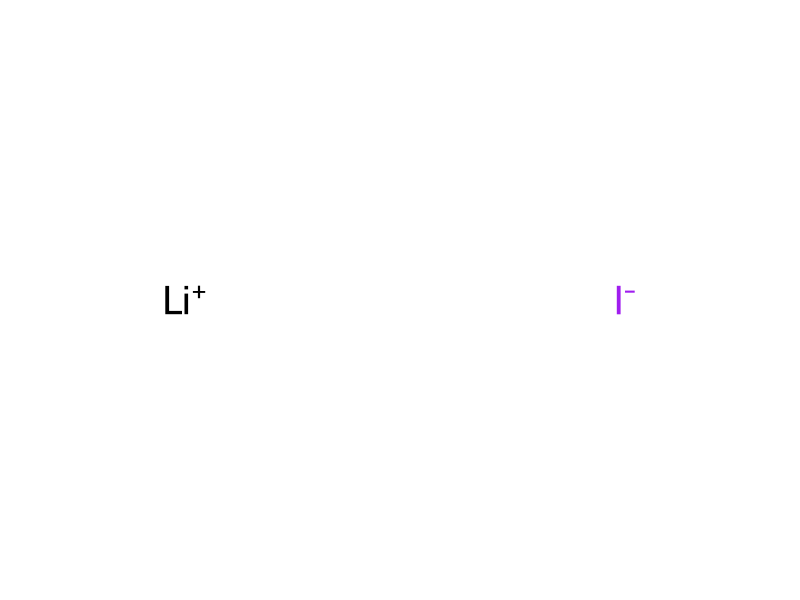
Reaction equation

I/[CH:2]=[CH:3]\[CH2:4][CH2:5][CH2:6][CH2:7][CH3:8].[I-].[Li+].C([Li])CCC.Cl[SiH:17]([CH:21]([CH3:23])[CH3:22])[CH:18]([CH3:20])[CH3:19]>>[CH:2]([SiH:17]([CH:21]([CH3:23])[CH3:22])[CH:18]([CH3:20])[CH3:19])=[CH:3][CH2:4][CH2:5][CH2:6][CH2:7][CH3:8]Participants
5




Procedure
To investigate the influence of the non-transferable groups on the silicon atom (and illustrate an alternative entry to the silanol precurors) di(isopropyl(silanols (E)-52 and (Z)-52 (Scheme 6) were prepared. Catalytic (H2PtCl6) hydrosilylation of 1-heptyne with chlorodi(isopropyl)silane followed by alkaline hydrolysis provided (E)-52 in 78% yield (25). The stereoisomer (Z)-52, was produced by a high yielding four-step synthesis starting from (Z)-1-iodo-1-heptene. Lithium-iodide exchange with n-butyllithium, followed by the addition of chlorodi(isopropyl)silane formed the intermediate (1-heptenyl)di(isopropyl)silane in 95% yield. Oxidation with chlorine (0.9 M solution in CCl4), followed by mild hydrolysis produced (Z)-52 in 90% yield over two steps.