Reaction equation

[Cl-].[Cr+3:2].[Cl-].[Cl-].[O:5]=[C:6]1[O:12][C@H:11]([C@H:13]([CH2:15][OH:16])[OH:14])[C:9]([OH:10])=[C:7]1[OH:8]>O>[O:5]=[C:6]1[O:12][C@H:11]([C@H:13]([CH2:15][OH:16])[OH:14])[C:9]([O-:10])=[C:7]1[OH:8].[Cr+3:2].[O:5]=[C:6]1[O:12][C@H:11]([C@H:13]([CH2:15][OH:16])[OH:14])[C:9]([O-:10])=[C:7]1[OH:8].[O:5]=[C:6]1[O:12][C@H:11]([C@H:13]([CH2:15][OH:16])[OH:14])[C:9]([O-:10])=[C:7]1[OH:8]Participants
4
Reactant 2

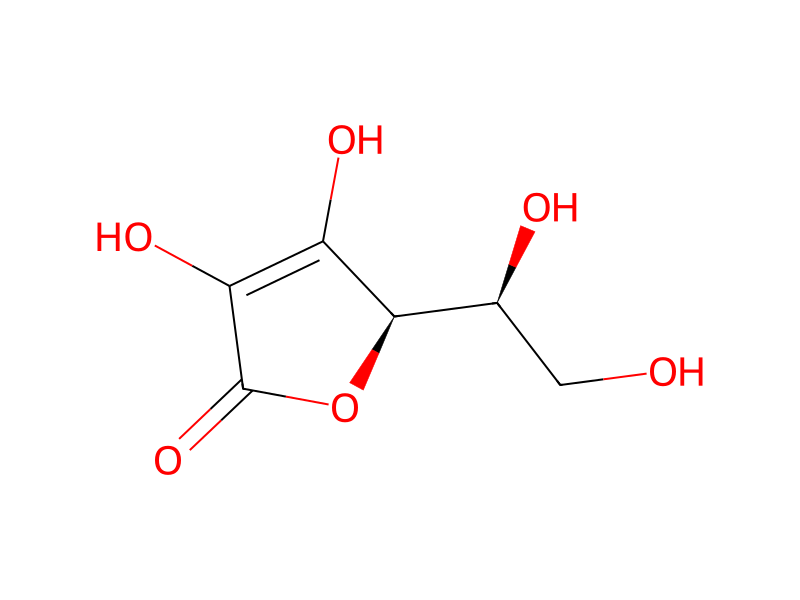
Product 1

Reagents, catalysts & solvents 1

Conditions
- Temperature
- 50 °C
Procedure
Half gram (1.85 mmole) of chromium chloride (CrCl3) was dissolved in 30 ml of deionized water to get a green solution. 1.0 g (5.5 mmole) of ascorbic acid (Asc) dissolved in 40 ml of deionized water, was added to the solution. The pH of the reaction mixture was adjusted to 4.5 (pK(Asc)4.2), and the reaction mixture was stirred for 3 hours at 50° C. to get a dark green solution. The solution was concentrated in vacuum and the large volume of ethanol 90% was added to get a green sediment. UV-VIS Spectrum for Cr-Asc showed two main absorbance peaks at 263 and 592 nm.
Workup
- customto get a green solution
- additionwas added to the solution
- customto get a dark green solution
- concentrationThe solution was concentrated in vacuum
- additionthe large volume of ethanol 90% was added
- customto get a green sediment
Sources & evidence
- ORD record
- ord-41998616a7dd415388b9f444902f1e40
- Source dataset
- uspto-grants-2002_10
- Patent number
- US06458351B2
Linked notes
Loading…