Ammonium formate → N-formyl-[9-(2,5-dichlorobenzyl)-9H-beta-carbolin-3-yl]methylamine
HRID 992576
Reaction equation

[N:1]([CH2:4][C:5]1[N:6]=[CH:7][C:8]2[N:9]([CH2:18][C:19]3[CH:24]=[C:23]([Cl:25])[CH:22]=[CH:21][C:20]=3[Cl:26])[C:10]3[C:15]([C:16]=2[CH:17]=1)=[CH:14][CH:13]=[CH:12][CH:11]=3)=[N+]=[N-].[CH:27]([O-])=[O:28].[NH4+]>C(O)C>[CH:27]([NH:1][CH2:4][C:5]1[N:6]=[CH:7][C:8]2[N:9]([CH2:18][C:19]3[CH:24]=[C:23]([Cl:25])[CH:22]=[CH:21][C:20]=3[Cl:26])[C:10]3[C:15]([C:16]=2[CH:17]=1)=[CH:14][CH:13]=[CH:12][CH:11]=3)=[O:28]Participants
4



Procedure
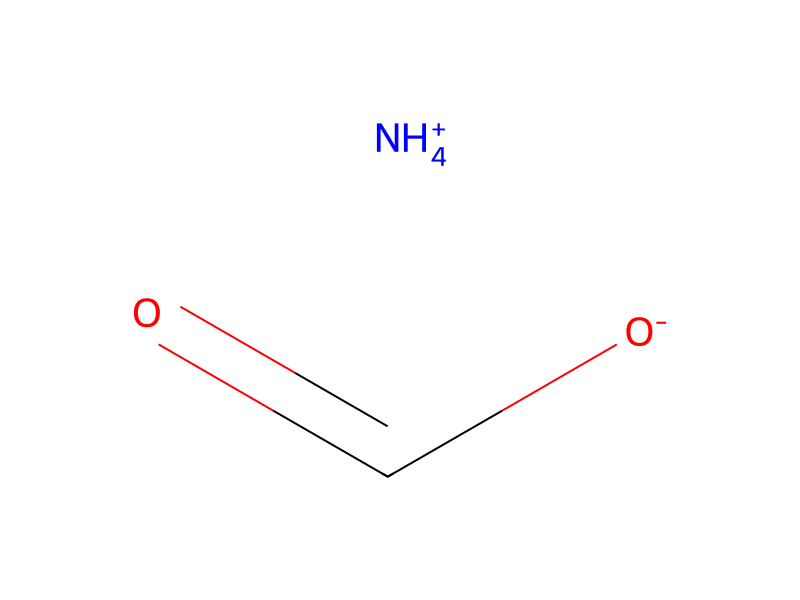
Reduction of this azide to the corresponding amine was carried out according to a published procedure of Gartiser et al., Tetrahedron Lett., 1983, 24:1609. A suspension of 3-azidomethyl-9-(2,5-dichlorobenzyl)-9H-β-carboline (4.60 g, 12 mmol), ammonium formate (3.90 g, 61.7 mmol), and 10% Pd-on-carbon (2.0 g, 20mol %) in ethanol (200 mL) was stirred at room temperature under nitrogen for 15 hours. The reaction mixture was filtered to remove the solids, and the filtrate concentrated and diluted with CH2Cl2 (100 mL). The resulting solution was washed with water (2×25 mL) and brine (25 mL), dried over anhydrous Na2SO4, and concentrated. The crude product was recrystallized from ethyl acetate, affording 3.0 grams (65%) of N-formyl-[9-(2,5-dichlorobenzyl)-9H-β-carbolin-3-yl]methylamine as a pale-yellow solid. 1H NMR (CDCl3) 6 8.65 (s, 1H), 8.30 (s, 1H), 8.24 (d, 1H), 7.95 (s, 1H), 7.58 (t, 7.40 (m, 3H), 7.20 (dd, 1H), 6.51 (s, 1H), 5.60 (s, 2H), 4.78 (d, 1H); MS monoisotopic mass (calculated) 383.1, MH+ (observed) 384.9.