
ピリドキシン
Pyridoxine
データを補完しています。しばらくしてからページを更新すると最新の内容を表示できます

基本情報
- CAS
65-23-6- 標準SMILES
Cc1ncc(CO)c(CO)c1O- InChIKey
LXNHXLLTXMVWPM-UHFFFAOYSA-N- 分子式
- C8H11NO3
- 平均分子量
- 169.18 g/mol
- 単同位体質量
- 169.07389321
概要
Pyridoxine is a hydroxymethylpyridine with hydroxymethyl groups at positions 4 and 5, a hydroxy group at position 3 and a methyl group at position 2. The 4-methanol form of vitamin B6, it is converted intoto pyridoxal phosphate which is a coenzyme for synthesis of amino acids, neurotransmitters, sphingolipids and aminolevulinic acid. It has a role as a cofactor, a mouse metabolite, a Saccharomyces cerevisiae metabolite, an Escherichia coli metabolite and a human metabolite. It is a member of methylpyridines, a vitamin B6, a monohydroxypyridine and a hydroxymethylpyridine.
名称と識別子
- 優先名称
- Pyridoxine
- IUPAC
- 4,5-bis(hydroxymethyl)-2-methylpyridin-3-ol
- 現地名
- ピリドキシン
- 英語名
- Pyridoxine
- 分子式
- C8H11NO3
- 分子量
- 169.18
名称と別名
pyridoxine65-23-6PyridoxolPyridoxin3-hydroxy-4,5-bis(hydroxymethyl)-2-methylpyridineAdermineGravidoxHydoxinPyridoxolum4,5-bis(hydroxymethyl)-2-methylpyridin-3-ol3,4-Pyridinedimethanol, 5-hydroxy-6-methyl-5-Hydroxy-6-methyl-3,4-pyridinedimethanol
名称をさらに表示
2-メチル-3-ヒドロキシピリジン-4,5-ジメタノール3-ヒドロキシ-2-メチルピリジン-4,5-ジメタノールピリビトール4,5-ビス(ヒドロキシメチル)-2-メチルピリジン-3-オールビーシックスピリドキシン5-ヒドロキシ-6-メチルピリジン-3,4-ジメタノールピリドキソール5-ヒドロキシ-6-メチル-3,4-ピリジンジメタノールヒドキシンピリドキソルアデルミン5-ヒドロキシ-6-メチルピリジン-3,4-ビスメタノールベザチン5-ヒドロキシ-6-メチルピリジン-3,4-ビス(メタノール)グラビドックス3-ヒドロキシ-2-メチル-4,5-ピリジンジメタノールピリドキシンHClビタミンB6(ピリドキシン)PYRIDOXINE HCLPyridoxine (Vitamin B6)(5-hydroxy-6-Methylpyridine-3,4-diyl)diMethanol
物性
構造計算による物性補完中
- XLogP
- -0.8
- 極性表面積
- 73.6 Ų
- 水素結合供与体数
- 3
- 水素結合受容体数
- 4
- 回転可能結合数
- 2
- 重原子数
- 12
- 形式電荷
- 0
- 複雑度
- 142
実験および物理化学的性質
Chemical ClassesBiological Agents -> Vitamins and Derivatives
Drugs
Pharmaceuticals -> Listed in ZINC15
Pharmaceuticals
CosmeticsHair conditioning; Antistatic; Skin conditioning
LogP-0.77
Food AdditivesUse unspecified -> FDA Substance added to food
Solubility79 mg/mL
Human Drugs
Breast Feeding; Lactation; Milk, Human; Vitamins
FDA approved drugs -> Active ingredient
FDA approved drugs -> Active ingredient
FDA approved drugs -> Active ingredient
Vitamins and minerals
Melting Point
159-162 °C
159 - 162 °C
Vapor Pressure0.00000028 [mmHg]
Physical Description
Dry Powder
White powder; [Alfa Aesar MSDS]
Solid
安全と法規制
安全情報は参考情報です。供給元の安全データシート(SDS)、適用法令、専門家による評価に代わるものではありません。
GHS分類
GHS Classification
This chemical does not meet GHS hazard criteria for 3.8% (2 of 52) of reports.
Warning
H315 (96.2%): Causes skin irritation [Warning Skin corrosion/irritation]
P261, P264, P264+P265, P271, P280, P302+P352, P304+P340, P305+P351+P338, P319, P321, P332+P317, P337+P317, P362+P364, P403+P233, P405, and P501 (click each P-code to see the statement)
Aggregated GHS information provided per 52 reports by companies from 8 notifications to the ECHA C&L Inventory. Each notification may be associated with multiple companies.
危険有害性情報
Regulatory Information
Chemical: 3,4-Pyridinedimethanol, 5-hydroxy-6-methyl-
3,4-Pyridinedimethanol, 5-hydroxy-6-methyl- is listed on the EPA's Chemical Data Reporting (CDR) system. Manufacturers and importers of 3,4-Pyridinedimethanol, 5-hydroxy-6-methyl- are required to report information about their production and use of this chemical to the EPA under the Toxic Substances Control Act (TSCA). (40 eCFR Part 711)
Status: Active Update: 28-05-2018 https://echa.europa.eu/registration-dossier/-/registered-dossier/25773
Pyridoxine: Does not have an individual approval but may be used under an appropriate group standard
Other Safety InformationEvaluation - Chemicals that are unlikely to require further regulation to manage risks to environment
Hazards Summary
Has been tested in humans to relieve nausea and vomiting during pregnancy; Chronic ingestion of gram quantities can cause ataxia and sensory neuropathy; Has demonstrated testicular toxicity in rats; [REPROTOX] An irritant; May have cumulative adverse effects; [Alfa Aesar MSDS] See Pyridoxine hydrochloride.
Hazard Classes and CategoriesSkin Irrit. 2 (96.2%)
毒性情報
化学と産業
薬理情報
ATC Code
A11HA02
A - Alimentary tract and metabolism
QA - Alimentary tract and metabolism
A11HA02
Protein BindingPyridoxine main active metabolite, pyridoxal 5’-phosphate, is released into the circulation (accounting for at least 60% of circulating vitamin B6) and is highly protein bound, primarily to albumin.
Pharmacodynamics
Vitamin B6 (pyridoxine) is a water-soluble vitamin used in the prophylaxis and treatment of vitamin B6 deficiency and peripheral neuropathy in those receiving isoniazid (isonicotinic acid hydrazide, INH). Vitamin B6 has been found to lower systolic and diastolic blood pressure in a small group of subjects with essential hypertension. Hypertension is another risk factor for atherosclerosis and coronary heart disease. Another study showed pyridoxine hydrochloride to inhibit ADP- or epinephrine-induced platelet aggregation and to lower total cholesterol levels and increase HDL-cholesterol levels, again in a small group of subjects. Vitamin B6, in the form of pyridoxal 5'-phosphate, was found to protect vascular endothelial cells in culture from injury by activated platelets. Endothelial injury and dysfunction are critical initiating events in the pathogenesis of atherosclerosis. Human studies have demonstrated that vitamin B6 deficiency affects cellular and humoral responses of the immune system. Vitamin B6 deficiency results in altered lymphocyte differentiation and maturation, reduced delayed-type hypersensitivity (DTH) responses, impaired antibody production, decreased lymphocyte proliferation and decreased interleukin (IL)-2 production, among other immunologic activities.
Mechanism of Action
Vitamin B6 is the collective term for a group of three related compounds, pyridoxine (PN), pyridoxal (PL) and pyridoxamine (PM), and their phosphorylated derivatives, pyridoxine 5'-phosphate (PNP), pyridoxal 5'-phosphate (PLP) and pyridoxamine 5'-phosphate (PMP). Although all six of these compounds should technically be referred to as vitamin B6, the term vitamin B6 is commonly used interchangeably with just one of them, pyridoxine. Vitamin B6, principally in its biologically active coenzyme form pyridoxal 5'-phosphate, is involved in a wide range of biochemical reactions, including the metabolism of amino acids and glycogen, the synthesis of nucleic acids, hemogloblin, sphingomyelin and other sphingolipids, and the synthesis of the neurotransmitters serotonin, dopamine, norepinephrine and gamma-aminobutyric acid (GABA).
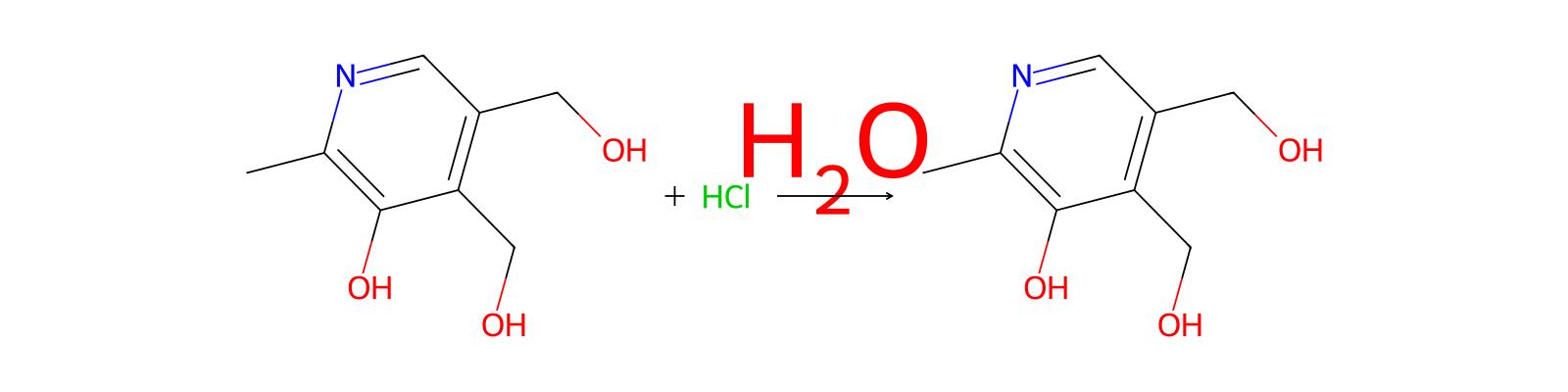
関連反応
5 件



化合物ノート
読み込み中…