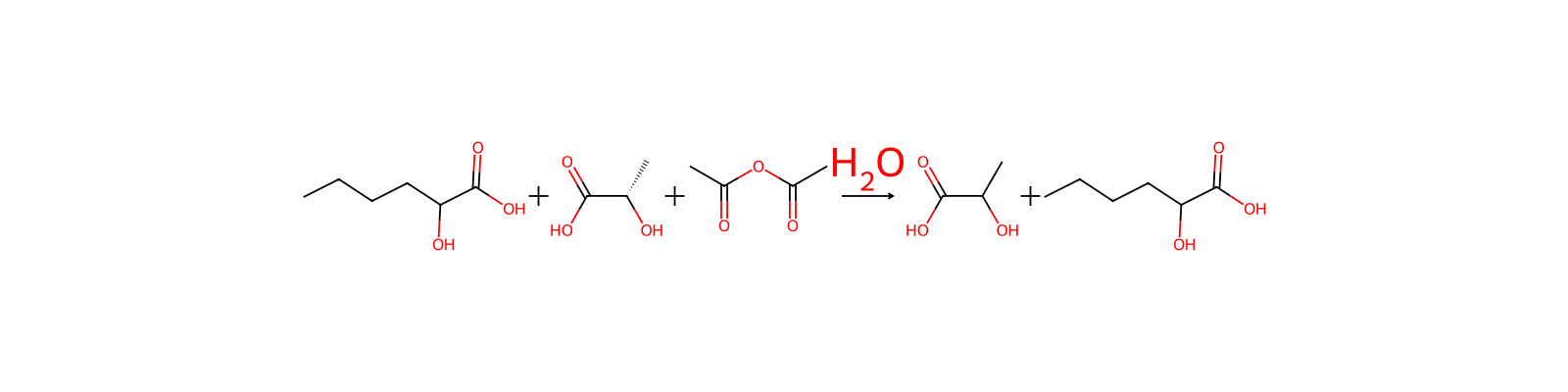
HRID 1408反応物として
L-Lactic Acid

79-33-4C[C@H](O)C(=O)OJVTAAEKCZFNVCJ-REOHCLBHSA-N(S)-lactic acid is an optically active form of lactic acid having (S)-configuration. It has a role as an Escherichia coli metabolite and a human metabolite. It is a (2S)-2-hydroxy monocarboxylic acid and a 2-hydroxypropanoic acid. It is a conjugate acid of a (S)-lactate. It is an enantiomer of a (R)-lactic acid.
79-33-4Liquid
Solid; [Merck Index] Hygroscopic solid; [Sigma-Aldrich MSDS]
Liquid
安全情報は参考情報です。供給元の安全データシート(SDS)、適用法令、専門家による評価に代わるものではありません。
Danger
H314: Causes severe skin burns and eye damage [Danger Skin corrosion/irritation]
P260, P264, P264+P265, P280, P301+P330+P331, P302+P361+P354, P304+P340, P305+P354+P338, P316, P317, P321, P363, P405, and P501 (click each P-code to see the statement)
This chemical does not meet GHS hazard criteria for < 0.1% (1 of 1219) of reports.
Danger
H314 (36.1%): Causes severe skin burns and eye damage [Danger Skin corrosion/irritation]
Chemical: Propanoic acid, 2-hydroxy-, (S)-
Propanoic acid, 2-hydroxy-, (2S)- is listed on the EPA's Chemical Data Reporting (CDR) system. Manufacturers and importers of Propanoic acid, 2-hydroxy-, (2S)- are required to report information about their production and use of this chemical to the EPA under the Toxic Substances Control Act (TSCA). (40 eCFR Part 711)
REACH registered substance: L-(+)-lactic acid (EC: 201-196-2)
(S)-2-Hydroxypropanoic acid: Does not have an individual approval but may be used under an appropriate group standard
Corrosive to rabbit skin, mildly irritating to guinea pig skin, and not irritating to pig skin; Not sensitizing in a study of guinea pigs; A 13-week oral study of rats produced a NOAEL of 500 mg/kg/day (highest tested dose); Studies on reproductive and developmental toxicity not considered necessary because lactic acid is a product of human intermediary metabolism; [EPA ChAMP: Interim Hazard Characterization] An irritant that may cause serious eye injury; [Sigma-Aldrich MSDS]
Occurs naturally in mammals--concentration increases in serum and muscle following exercise; [Merck Index] Used in the agricultural, chemical, leather processing, pharmaceuticals, and cosmetics industries; Used as an electroplating agent, food/feed additive, pH regulator, cleaning/washing agent, disinfectant, and tanning agent; [IUCLID] Used to flavor animal feeds; [ExPub: EFSA - FEEDAP] Used as a solvent and intermediate in chemical production, as a pH regulator in fabric finishing, and in paints, coatings, soaps, and cleaning products; [EPA ChAMP: Hazard Characterization] Used to make large scale and fine chemicals, pulp-paper-paper products, food products, and plastic products, in mining, health services, agriculture-forestry-fishing, and building and construction work; [ExPub: ECHA REACH Registrations] Permitted for use as an inert ingredient in non-food pesticide products; [EPA]
Electroplating [Category: Plate]
This is an endogenously produced metabolite found in the human body. It is used in metabolic reactions, catabolic reactions or waste generation.


DTXSID6034689CHEMBL330546CHEBI:422化学的特性Crystalline Solid
Skin Corr. 1C (36.1%)
Skin irritation - category 2
Skin corrosion/irritation - Category 1
Skin corrosion/irritation - Category 1
Skin Corr. 1C
Chronically high levels of Lactic acid are associated with at least a dozen inborn errors of metabolism including: 2-Methyl-3-hydroxybutyryl CoA dehydrogenase deficiency, Biotinidase deficiency, Fructose-1,6-diphosphatase deficiency, Glycogen Storage Disease Type 1A (GSD1A) or Von Gierke Disease, Glycogenosis, Type IB, Glycogenosis, Type IC, Glycogenosis, Type VI. Hers disease, Lactic Acidemia, Leigh Syndrome, Methylmalonate Semialdehyde Dehydrogenase Deficiency, Pyruvate Decarboxylase E1 Component Deficiency, Pyruvate dehydrogenase complex deficiency, Pyruvate dehydrogenase deficiency, Short Chain Acyl CoA Dehydrogenase Deficiency (SCAD Deficiency).
Accumulation of L-lactic acid in the body has been shown to be toxic. At times of lactic acidosis, when excess intracellular lactate is released into the blood, maintenance of electroneutrality of the blood requires that a cation be released into the blood, as well. This can reduce blood pH. Lactate may exert a strong action over GABAergic networks in the developing brain, making them more inhibitory than it was previously assumed, acting either through better support of metabolites, or alterations in base intracellular pH levels, or both. (Wikipedia)
Not listed by IARC.
No indication of carcinogenicity to humans (not listed by IARC).
EPA Safer Chemical Functional Use Classes -> Antimicrobial Actives;Chelating Agents;Preservatives and Antioxidants;Processing Aids and Additives
Safer Chemical Classes -> Green circle - The chemical has been verified to be of low concern
Fragrance Ingredients
Wholesale and Retail Trade
Propanoic acid, 2-hydroxy-, (2S)-: ACTIVE
解説L-乳酸は解糖の最終産物としてピルビン酸の還元によって生ずるが、乳酸デヒドロゲナーゼがこの反応を触媒する。柱状晶。融点53℃。比旋光度(+)2.6度で、吸湿性。休息時にも血液中に正常成分として少量存在するが、運動時には筋肉中のグリコーゲンから大量に生じ、血液中の濃度が増加する。
用途有機合成原料。医薬原料。
用途醸造工業?有機合成原料,食品添加物(飲料用他),乳酸塩?医薬原料 (NITE CHRIP)
使用Occurs in small quantities in the blood and muscle fluid of man and animals. The lactic acid concentration increases in muscle and blood after vigorous activity. L-(+)-Lactic acid is also present in liver, kidney, thymus gland, human amniotic fluid, and o
一般的な説明L-(+)-Lactic acid is the only naturally occurring lactic acid in humans and mammals. Commercially, few bacteria like Lactobacillus casei, L. delbrueckii, Streptococcus lactis produces L-Lactic acid by fermentation process. Lactic acid activates hydroxycarboxylic acid receptor, G-protein coupled receptor 81 (GPR81).
純化方法Purify lactic acid by fractional distillation at 0.1mm pressure, followed by fractional crystallisation from diethyl ether/isopropyl ether (1:1, dried with sodium). [Borsook et al. J Biol Chem 102 449 1933.] The solvent mixture, *benzene/diethyl ether (1:1) containing 5% pet ether (b 60-80o) has also been used. [Brin Biochemical Preparations 3 61 1953, Beilstein 3 IV 633.]
定義本品は、次の化学式で表される有機酸である。
定義ChEBI: An optically active form of lactic acid having (S)-configuration.