ホームMCPワークベンチSkills
ホームワークベンチ通知マイページ
llms.txt · MCPガイドプライバシーポリシー · 利用規約 · サポートv1.8.0
  1. ホーム
  2. /化合物

トリエチルアミン塩酸塩

Triethylamine hydrochloride
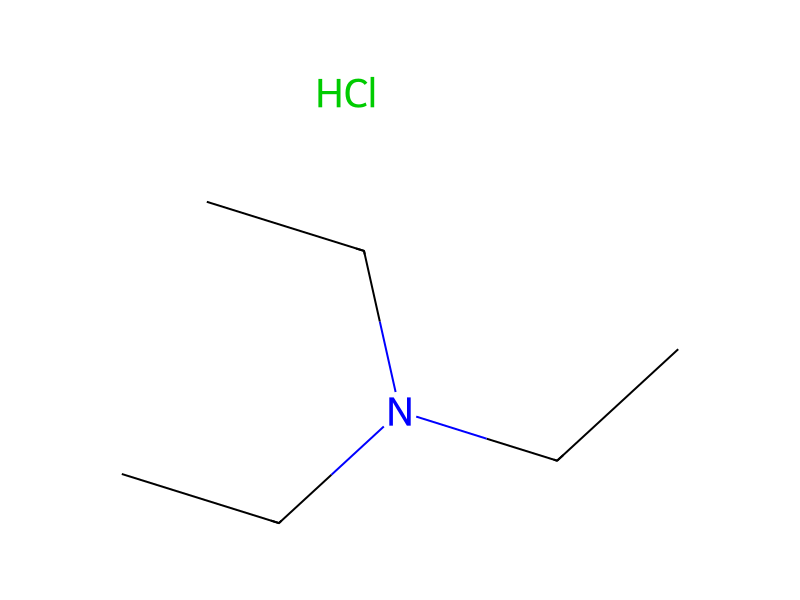
HCID 11130
ノートを作成反応を作成見積依頼を出す
印刷プレビュー
基本情報名称と識別子物性安全と法規制化学と産業関連反応化合物ノート
部分構造検索類似構造を探す

基本情報

CAS
554-68-7
標準SMILES
CCN(CC)CC.Cl
InChIKey
ILWRPSCZWQJDMK-UHFFFAOYSA-N
分子式
C6H15N.ClH
平均分子量
137.65 g/mol
単同位体質量
137.0971272

名称と識別子

優先名称
Triethylamine hydrochloride
IUPAC
N,N-diethylethanamine;hydrochloride
現地名
トリエチルアミン塩酸塩
英語名
Triethylamine hydrochloride
分子式
C6H16ClN
分子量
137.65

名称と別名

TRIETHYLAMINE HYDROCHLORIDE554-68-7Triethylammonium chlorideTRIETHYLAMINE HClEthanamine, N,N-diethyl-, hydrochlorideTriethylamine monohydrochlorideTriethylamine, hydrochlorideAmine, triethyl, hydrochloride0NX3818GCWNSC-30600Ethanamine, N,N-diethyl-, hydrochloride (1:1)DTXSID8060292
名称をさらに表示
トリエチルアミン塩酸塩トリエチルアミン·塩酸塩トリエチルアミン·塩酸トリエチルアミン―塩化水素(1/1)トリエチルアミン塩酸塩(塩酸トリエチルアミン)塩酸トリエチルアミントリエチルアンモニウムクロリドトリエチルアミン 塩酸塩トリエチルアミン塩酸塩, 98%Et3·HCl[E3N]HClTrimethylamine HciTriethylamine hydrocTriethylammoniumchloridTri-amine hydrochlorideTolzaoline bydrochlorideTriethylaminHydrochlorid
RefChem:6324DTXCID2041884209-067-2triethylaminehydrochlorideN,N-diethylethanamine;hydrochlorideEt3N HCltriethylamin hydrochlorideMFCD00012500

データベース識別子

CAS
554-68-7
PubChem CID
11130
ChEMBL
CHEMBL4446875
UNII
0NX3818GCW
EC Number
209-067-2

物性

構造計算による物性

極性表面積
3.2 Ų
水素結合供与体数
1
水素結合受容体数
1
回転可能結合数
3
重原子数
8
形式電荷
0
複雑度
25.7

実験および物理化学的性質

Chemical ClassesNitrogen Compounds -> Amines, Aliphatic
Density1.0689 g/cu cm 21 °C
Color/Form · 2 件

Crystals from alcohol

Hexagonal crsystals from alcohol

Solubility · 4 件

In water, 1X10+6 mg/L at 25 °C

Soluble in 0.7 parts water

Very soluble in ethanol, chloroform

Soluble in alcohol, chloroform; very slightly soluble in benzene. Practically insoluble in ether

Boiling Point245 °C (sublimes)
DecompositionWhen heated to decomposition it emits toxic vapors of /nitrogen oxides, HCl, chloride anione/
Melting Point260 °C (decomposes)
Vapor Pressure0.0000138 [mmHg]
Physical DescriptionSolid; [HSDB] White crystalline powder; [MSDSonline]
Stability/Shelf LifeStable under recommended storage conditions.

物理化学的性質

安全と法規制

安全情報は参考情報です。供給元の安全データシート(SDS)、適用法令、専門家による評価に代わるものではありません。

GHS分類

GHS Classification · 6 件

This chemical does not meet GHS hazard criteria for 21.4% (37 of 173) of reports.

Danger

H314 (11%): Causes severe skin burns and eye damage [Danger Skin corrosion/irritation]

P260, P261, P264, P264+P265, P271, P280, P301+P330+P331, P302+P352, P302+P361+P354, P304+P340, P305+P351+P338, P305+P354+P338, P316, P319, P321, P332+P317, P337+P317, P362+P364, P363, P403+P233, P405, and P501 (click each P-code to see the statement)

Aggregated GHS information provided per 173 reports by companies from 15 notifications to the ECHA C&L Inventory. Each notification may be associated with multiple companies.

Warning

危険有害性情報

Regulatory Information · 3 件

Chemical: Ethanamine, N,N-diethyl-, hydrochloride

REACH registered substance: Triethylammonium chloride (EC: 209-067-2)

Triethylammonium chloride: Does not have an individual approval but may be used under an appropriate group standard

Hazards SummaryEmergency treatment: Triethylamine; [HSDB] An irritant; [MSDSonline] See Triethylamine.
Toxic Combustion ProductsSpecial hazards arising from the substance or mixture: Carbon oxides, nitrogen oxides (NOx), hydrogen chloride gas.
Hazard Classes and CategoriesSkin Corr. 1B (11%)
Shipment Methods and Regulations · 1 件

No person may /transport,/ offer or accept a hazardous material for transportation in commerce unless that person is registered in conformance ... and the hazardous material is properly classed, described, packaged, marked, labeled, and in condition for shipment as required or authorized by ... /the hazardous materials regulations (49 CFR 171-177)./

化学と産業

用途と製造

UsesUsed to make quaternary ammonium compounds; [HSDB]
General Manufacturing Information · 2 件

Ethanamine, N,N-diethyl-, hydrochloride (1:1): ACTIVE

By using trimethylamine hydrochloride and triethylamine hydrochloride, it was determined that the stimulant action of nicotine in the brain paralleled the nicotine effect in the ganglia of rabbits.

応用分野 · 5 件

解説トリエチルアミン塩酸塩とは、強塩基性の有機アミン (3級アミン) であるにを加えて反応させたときにできる塩 (アンモニウム塩) です。 元のトリエチルアミンは液体で有機溶媒と混ざりますが、塩酸塩は固体で水溶性が高いという性質になっています。別名、トリエチルアンモニウムクロリドとも呼ばれ、化学式は(C2H5)3N · HCl 、CAS番号は554-68-7です。 通常は、白色の固体として存在しており、わずかにアミン臭がすることが特徴です。

用途試薬、有機合成原料、合成中間体、医薬.医薬中間体、はんだフラックス など。

用途有機合成原料。

使用Triethylamine Hydrochloride is a hydrochloride salt of triethyllamine (T775740). Triethylamine is used as a competing base for the separation of acidic basic and neutral drugs by reverse-phased high-performance liquid chromatography (HPLC). Triethylamine induces visual disturbances (such as foggy vision) in humans, and is also used in industry as a quenching agent in the ozonolysis of alkenes (e.g. (E)-2-Pentene [P227315]). Triethylamine is used in the purification of drugs which are pharmacologically or chemically similar through separation in reverse-phase HPLC (2).Drinking water contaminant candidate list 3 (CCL 3) compound as per United States Environmental Protection Agency (EPA). Environmental contaminants; Food contaminants.

使用用途トリエチルアミン塩酸塩は、主に医薬品や染料等の有機合成原料として用いられます。例えば、強塩基を用いてトリエチルアミンを遊離させ、これを他の分子と反応させます。また、疎水性のエチル基を3つ持つ性質と強塩基である性質を併せ持っているため、酸性物質と会合体を形成させて有機溶媒中に抽出する (イオンペアー抽出) 際のイオンペアー試薬として使用されることもあります。 抽出と同様に、イオンペアー高速液体クロマトグラフィー (HPLC) にも使用可能です。抽出と同様に、酸性物質と会合させてイオンペアーを形成することで、水溶性の酸性物質を逆相HPLCで分析できるようにします。ただし、HPLCではより効果の大きい4級アンモニウム塩であるテトラエチルアンモニウム塩酸塩が用いられるようになってきています。 液体クロマトグラフィー質量分析 (LC-MS) では揮発性が重要であるため、より揮発性が高いトリエチルアミン酢酸塩等が用いられることもあります。これらのイオンペアー試薬に対して、トリエチルアミン塩酸塩は比較的廉価であることが特徴です。また、弱酸性から中性の液性を示す性質を持つため、生化学実験でナトリウムイオンの影響を調べるときにの比較対象として用いることがあります。

調製方法

関連反応

548 件

反応記録を作成
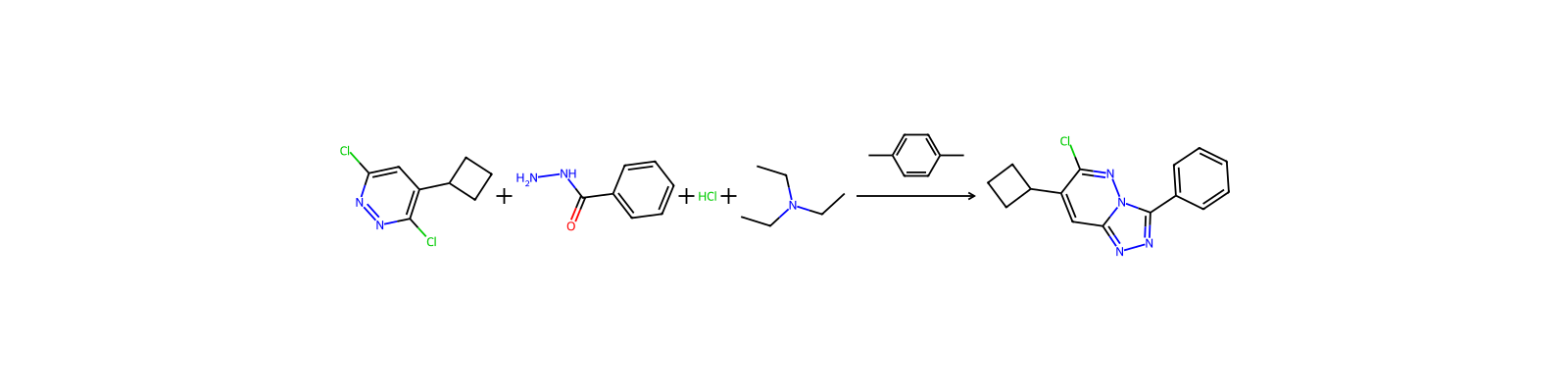
HRID 4944 の反応式
HRID 4944反応物としてuspto-grants-1993_09
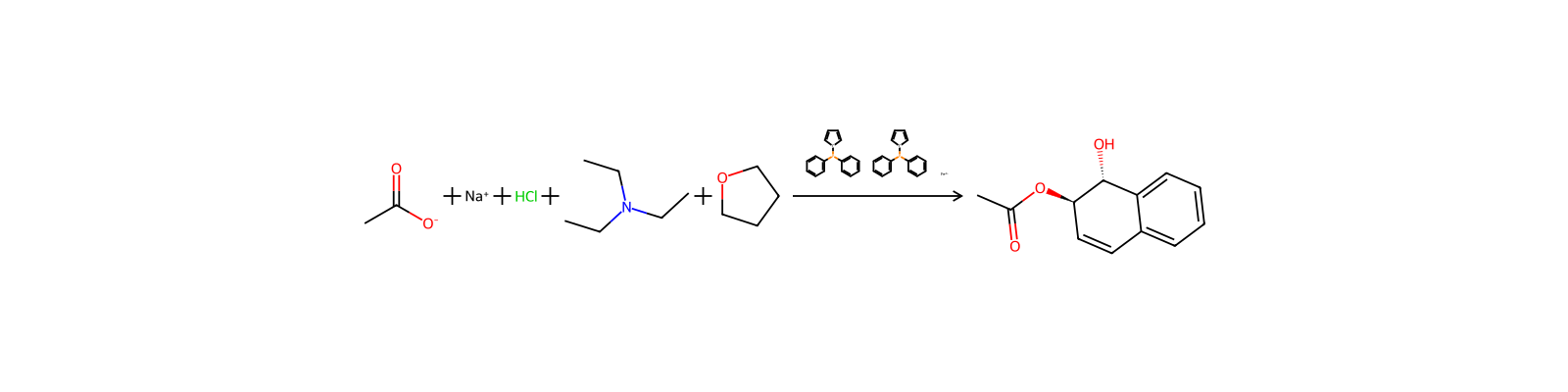
HRID 5924 の反応式
HRID 5924反応物としてuspto-grants-1993_09
HRID 11226 の反応式
HRID 11226反応物としてuspto-grants-2006_08
HRID 11822 の反応式
HRID 11822反応物としてuspto-grants-2006_08
HRID 18457 の反応式
HRID 18457反応物としてuspto-grants-2010_06
HRID 22827 の反応式
HRID 22827反応物としてuspto-grants-2005_02
HRID 28792 の反応式
HRID 28792反応物としてuspto-grants-2008_09
HRID 38180 の反応式
HRID 38180反応物としてuspto-grants-2013_09
1 / 69 ページ

化合物ノート

読み込み中…

このページの内容基本情報名称と識別子物性安全と法規制化学と産業関連反応化合物ノート
その他の操作
ノートを作成反応を作成見積依頼を出す
融点
261 °C · 261 °C (dec.)(lit.)
沸点
223.18 °C · 223.18°C (rough estimate)
比重(密度)
1.07 · 1.07
屈折率
1.453 · 1.4530 (estimate)
貯蔵温度
30 °C · Store below +30°C.
溶解性
1440 g/L · 1440g/L(20℃)
外見
結晶性粉末
色
ホワイトからオフホワイト
PH
5 · 5 (10g/l, H2O, 20℃)
水溶解度
1440 g/L · 1440g/L(20℃)
Merck
14 · 14,9666
BRN
3906409 · 3906409
InChI
1S/C6H15N.ClH/c1-4-7(5-2)6-3;/h4-6H2,1-3H3;1H
InChIKey
ILWRPSCZWQJDMK-UHFFFAOYSA-N
SMILES
Cl.CCN(CC)CC
CAS データベース
554 · 554-68-7(CAS DataBase Reference)
EPAの化学物質情報
Ethanamine, N,N-diethyl-, hydrochloride (554-68-7)

化学的性質

化学的特性White to off-white crystalline powder

Hazardous Reactivities and Incompatibilities
Incompatible materials: Strong oxidizing agents.

安全と保護具

Fire Fighting Procedures · 2 件

Suitable extinguishing media: Use water spray, alcohol-resistant foam, dry chemical, or carbon dioxide.

Wear self contained breathing apparatus for fire fighting if necessary.

Storage ConditionsKeep container tightly closed in a dry and well-ventilated place. Hygroscopic.
Cleanup Methods · 1 件

ACCIDENTAL RELEASE MEASURES: Personal precautions, protective equipment and emergency procedures: Use personal protective equipment. Avoid dust formation. Avoid breathing vapors, mist or gas. Ensure adequate ventilation. Evacuate personnel to safe areas. Avoid breathing dust. Environmental precautions: Do not let product enter drains. Methods and materials for containment and cleaning up: Pick up and arrange disposal without creating dust. Sweep up and shovel. Keep in suitable, closed containers for disposal.

Disposal Methods · 2 件

SRP: Recycle any unused portion of the material for its approved use or return it to the manufacturer or supplier. Ultimate disposal of the chemical must consider: the material's impact on air quality; potential migration in air, soil or water; effects on animal, aquatic and plant life; and conformance with environmental and public health regulations. If it is possible or reasonable use an alternative chemical product with less inherent propensity for occupational harm/injury/toxicity or environmental contamination.

Product: Offer surplus and non-recyclable solutions to a licensed disposal company. Contact a licensed professional waste disposal service to dispose of this material; Contaminated packaging: Dispose of as unused product.

Preventive Measures · 5 件

ACCIDENTAL RELEASE MEASURES: Personal precautions, protective equipment and emergency procedures: Use personal protective equipment. Avoid dust formation. Avoid breathing vapors, mist or gas. Ensure adequate ventilation. Evacuate personnel to safe areas. Avoid breathing dust. Environmental precautions: Do not let product enter drains.

Precautions for safe handling: Avoid contact with skin and eyes. Avoid formation of dust and aerosols. Provide appropriate exhaust ventilation at places where dust is formed. Normal measures for preventive fire protection.

Appropriate engineering controls: Handle in accordance with good industrial hygiene and safety practice. Wash hands before breaks and at the end of workday.

Gloves must be inspected prior to use. Use proper glove removal technique (without touching glove's outer surface) to avoid skin contact with this product. Dispose of contaminated gloves after use in accordance with applicable laws and good laboratory practices. Wash and dry hands.

SRP: Local exhaust ventilation should be applied wherever there is an incidence of point source emissions or dispersion of regulated contaminants in the work area. Ventilation control of the contaminant as close to its point of generation is both the most economical and safest method to minimize personnel exposure to airborne contaminants. Ensure that the local ventilation moves the contaminant away from the worker.

Personal Protective Equipment (PPE) · 4 件

Eye/face protection: Safety glasses with side-shields conforming to EN166. Use equipment for eye protection tested and approved under appropriate government standards such as NIOSH (US) or EN 166(EU).

Skin protection: Handle with gloves.

Body Protection: Impervious clothing. The type of protective equipment must be selected according to the concentration and amount of the dangerous substance at the specific workplace.

Respiratory protection: For nuisance exposures use type P95 (US) or type P1 (EU EN 143) particle respirator. For higher level protection use type OV/AG/P99 (US) or type ABEK-P2 (EU EN 143) respirator cartridges. Use respirators and components tested and approved under appropriate government standards such as NIOSH (US) or CEN (EU).

毒性情報

InteractionsIncreases in antibacterial and antifungal properties in vitro, due to the triethylammonium chloride complexation of N-substituted N'-cyano-O-(triphenylstannyl)isoureas, are discussed.
Toxicity Summary · 1 件

IDENTIFICATION AND USE: Triethylamine hydrochloride forms hexagonal crystals. It used in preparation of quaternary ammonium compounds. HUMAN EXPOSURE AND TOXICITY: There is no data available. ANIMAL STUDIES: The hemolytic actions of some short-chain alkylamine hydrochlorides were studied. Tertiary salts such as triethylamine hydrochloride produced incomplete hemolysis of dog erythrocytes in vitro, whereas primary salts produced complete hemolysis.

Non-Human Toxicity Excerpts · 1 件

/ALTERNATIVE and IN VITRO TESTS/ The hemolytic actions of some short-chain alkylamine hydrochlorides were studied. Tertiary salts such as triethylamine hydrochloride produced incomplete hemolysis of dog erythrocytes in vitro, whereas primary salts produced complete hemolysis. The decreased activity was attributed to the increased bulkiness and lipophilicity of successively alkyl-substituted amine cations. In each group of salts, the hemolytic activity increased with increased alkyl chain length.

Antidote and Emergency Treatment · 3 件

Immediate first aid: Ensure that adequate decontamination has been carried out. If patient is not breathing, start artificial respiration, preferably with a demand-valve resuscitator, bag-valve-mask device, or pocket mask, as trained. Perform CPR as necessary. Immediately flush contaminated eyes with gently flowing water. Do not induce vomiting. If vomiting occurs, lean patient forward or place on left side (head-down position, if possible) to maintain an open airway and prevent aspiration. Keep patient quiet and maintain normal body temperature. Obtain medical attention. /Organic bases/amines and related compounds/

Basic treatment: Establish a patent airway (oropharyngeal or nasopharyngeal airway, if needed). Suction if necessary. Watch for signs of respiratory insufficiency and assist ventilations if necessary. Administer oxygen by nonrebreather mask at 10 to 15 L/min. Monitor for pulmonary edema and treat if necessary ... . Monitor for shock and treat if necessary ... . Anticipate seizures and treat if necessary ... . For eye contamination, flush eyes immediately with water. Irrigate each eye continuously with 0.9% saline (NS) during transport ... . Do not use emetics. For ingestion, rinse mouth and administer 5 mL/kg up to 200 mL of water for dilution if the patent can swallow, has a strong gag reflex, and does not drool. Administer activated charcoal ... . Cover skin burns with dry sterile dressings after decontamination ... . /Organic bases/amines and related compounds/

Advanced treatment: Consider orotracheal or nasotracheal intubation for airway control in the patient who is unconscious, has severe pulmonary edema, or is in severe respiratory distress. Positive-pressure ventilation techniques with a bag-valve-mask device may be beneficial. Consider drug therapy for pulmonary edema ... . Monitor cardiac rhythm and treat arrhythmias as necessary ... . Start IV administration of D5W TKO /SRP: "To keep open", minimal flow rate/. Use 0.9% saline (NS) or lactated Ringer's (LR) if signs of hypovolemia are present. For hypotension with signs of hypovolemia, administer fluid cautiously. If patient is unresponsive to these measures, vasopressors may be helpful. Watch for signs of fluid overload ... . Administer 1% solution methylene blue if patient is symptomatic with severe hypoxia, cyanosis, and cardiac compromise not responding to oxygen. ... . Treat seizures with diazepam (Valium) or lorazepam (Ativan) ... . Use proparacaine hydrochloride to assist eye irrigation ... . /Organic bases/amines and related compounds/

安全データ

F
3
wgk
1
tsca
TSCA listed
rtecs
YE2111500
毒性
LDLo scu-mus: 600 mg/kg JPETAB 37,309,29
hs_code
29211910
risk_code
36/37/38-20/21/22
化審法
(2)-141
hazard_code
Xi,Xn
safety_code
26-36-36/37/39-22
Hazard Classifications
Eye Irrit. 2Skin Irrit. 2STOT SE 3
ストレージクラス
11 - Combustible Solids
有毒物質データの
554-68-7(Hazardous Substances Data)

純化方法Purify it like the bromide above. [Beilstein 4 IV 327.]

上流・下流製品情報

上流原料

トリエチルアミン

下流製品

2-(4-Chloromethylpiperidin-1-yl)pyrimidine-5-carboxamide ,97%チオテパ2-(4-Methylpiperazin-1-yl)pyrimidine-5-carbaldehyde2-(4-(Hydroxymethyl)piperidin-1-yl)pyrimidine-5-carboxamide2-(4-Methylpiperazin-1-yl)pyrimidine-5-carbonyl chlorideセフォタキシムナトリウムりん酸7-クロロビシクロ[3.2.0]ヘプタ-2,6-ジエン-6-イルジメチル1-(5-(Hydroxymethyl)pyrimidin-2-yl)piperidin-4-olリシノプリル二水和物2-(4-Methylpiperazin-1-yl)pyrimidine-5-carboxylic acid2-(4-Methylpiperazin-1-yl)pyrimidine-5-carbonitrile(2-(4-(Hydroxymethyl)piperidin-1-yl)pyrimidin-5-yl)methanol2-(4-Methylpiperazin-1-yl)pyrimidine-5-carboxamideEthyl 2-(4-methylpiperazin-1-yl)pyrimidine-5-carboxylateN-(1-イミノエチル)アミドチオりん酸O,O-ビス(4-クロロフェニル)2-(4-(Hydroxymethyl)piperidin-1-yl)pyrimidine-5-carboxylateEthyl 2-(4-hydroxypiperidin-1-yl)pyrimidine-5-carboxylate2-(4-メチルピペラジン-1-イル)ピリミジン-5-アミンN,O-ビス(トリメチルシリル)アセトアミドEthyl 2-(4-(ethoxycarbonyl)piperidin-1-yl)pyrimidine-5-carboxylate(2-(4-Methylpiperazin-1-yl)pyrimidin-5-yl)methanol2-クロロピリミジン-5-カルボン酸2-(4-Hydroxypiperidin-1-yl)pyrimidine-5-carboxylic acid2-(4-(ヒドロキシメチル)ピペリジン-1-イル)ピリミジン-5-カルボン酸エチルチオりん酸O,O-ジエチルO-(1-フェニル-1H-1,2,4-トリアゾール-3-イル)ベシル酸アトラクリウム2-(4-Hydroxypiperidin-1-yl)pyrimidine-5-carboxamide(2-(4-Methylpiperazin-1-yl)pyrimidin-5-yl)methanamine