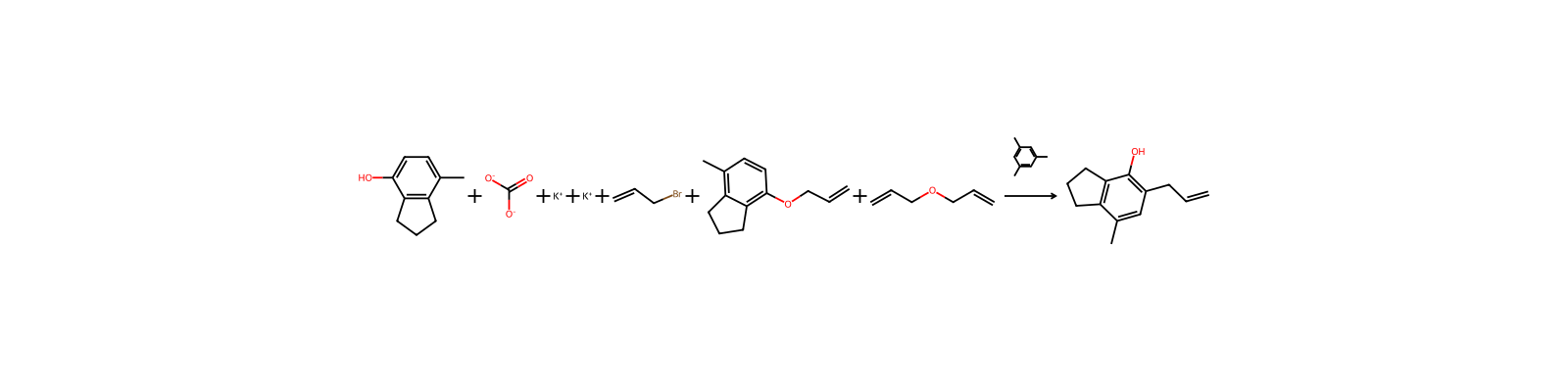
アリル エーテル
Diallyl ether

基本情報
- CAS
557-40-4- 標準SMILES
C=CCOCC=C- InChIKey
ATVJXMYDOSMEPO-UHFFFAOYSA-N- 分子式
- C6H10O
- 平均分子量
- 98.14 g/mol
- 単同位体質量
- 98.07316494
概要
Diallyl ether appears as a liquid with an odor of radishes. Less dense than water. May be toxic by ingestion, skin absorption, and inhalation, and may irritate skin and eyes. Vapors heavier than air. Used to make other chemicals.
名称と識別子
- 優先名称
- Diallyl ether
- IUPAC
- 3-prop-2-enoxyprop-1-ene
- 現地名
- アリル エーテル
- 英語名
- Allyl ether
- 分子式
- C6H10O
- 分子量
- 98.14
名称と別名
ALLYL ETHERDiallyl etherAllyletherEther, diallyl1-Propene, 3,3'-oxybis-Ether, propenylUNII-GI3WXY29NQGI3WXY29NQNSC 7619EINECS 209-174-4BRN 1736015AI3-02894
名称をさらに表示
アリル エーテル3-(アリルオキシ)-1-プロペンアリルエーテル3,3'-オキシビス(1-プロペン)ビス(2-プロペニル)エーテル4-オキサ-1,6-ヘプタジエン1,1'-オキシビス(2-プロペン)ジアリルエーテルアリル エ-テルAllylic EtherAllylethersether,diallylpropenyletherether,propenylAllyl ether 98%Allyl ether,99%
Allyl ether (8CI)NSC-7619ALLYL ETHER [MI]4-01-00-02086 (Beilstein Handbook Reference)3,3'-oxybis(prop-1-ene)(CH2=CHCH2)2ODTXSID8060321UN 2360
データベース識別子
- CAS
557-40-4- PubChem CID
- 11194
- DTXSID
DTXSID8060321- UNII
- GI3WXY29NQ
- EC Number
- 209-174-4
- Nikkaji
- J6.485H
物性
構造計算による物性
- XLogP
- 1.4
- 極性表面積
- 9.2 Ų
- 水素結合供与体数
- 0
- 水素結合受容体数
- 1
- 回転可能結合数
- 4
- 重原子数
- 7
- 形式電荷
- 0
- 複雑度
- 49.2
実験および物理化学的性質
Chemical ClassesFlammable agents - 3rd degree
SpringerMaterials PropertiesDensity
LogP0.7 (calculated)
DensityRelative density (water = 1): 0.8
SolubilitySolubility in water: none
Flash Point
20 °F (NFPA, 2010)
-6 °C
Boiling Point94 °C
Melting Point-6 °C
Vapor DensityRelative vapor density (air = 1): 3.4
Vapor PressureVapor pressure, kPa at 20 °C: 5.79
Physical Description
Diallyl ether appears as a liquid with an odor of radishes. Less dense than water. May be toxic by ingestion, skin absorption, and inhalation, and may irritate skin and eyes. Vapors heavier than air. Used to make other chemicals.
COLOURLESS LIQUID WITH CHARACTERISTIC ODOUR.
安全と法規制
安全情報は参考情報です。供給元の安全データシート(SDS)、適用法令、専門家による評価に代わるものではありません。
GHS分類
GHS Classification
Danger
H225 (100%): Highly Flammable liquid and vapor [Danger Flammable liquids]
P210, P233, P240, P241, P242, P243, P261, P262, P264, P264+P265, P270, P271, P280, P301+P317, P302+P352, P303+P361+P353, P304+P340, P305+P351+P338, P316, P317, P319, P321, P330, P332+P317, P337+P317, P361+P364, P362+P364, P370+P378, P403+P233, P403+P235, P405, and P501 (click each P-code to see the statement)
Aggregated GHS information provided per 40 reports by companies from 3 notifications to the ECHA C&L Inventory. Each notification may be associated with multiple companies.
危険有害性情報
Regulatory Information
Chemical: 1-Propene, 3,3'-oxybis-
The New Jersey Worker and Community Right to Know Act requires public and private employers to provide information about hazardous substances at their workplaces. (N.J.S.A. 34:5A-1 et. seq.)
DOT LabelFlammable Liquid Poison
Fire Hazards
Excerpt from ERG Guide 131 [Flammable Liquids - Toxic; polymerization hazard]:
· HIGHLY FLAMMABLE: Will be easily ignited by heat, sparks or flames.
Highly flammable. Vapour/air mixtures are explosive. Risk of fire and explosion on contact with acids or oxidizing agents.
Health Hazards
Excerpt from ERG Guide 131 [Flammable Liquids - Toxic; polymerization hazard]:
· TOXIC; may be fatal if inhaled, ingested or absorbed through skin.
DOT ID and Guide2360 131P
Reactive GroupEthers
UN ClassificationUN Hazard Class: 3; UN Subsidiary Risks: 6.1; UN Pack Group: II
化学と産業
用途と製造
General Manufacturing Information1-Propene, 3,3'-oxybis-: ACTIVE
応用分野
一般的な説明A liquid with an odor of radishes. Less dense than water. Flash point 20°F. May be toxic by ingestion, skin absorption, and inhalation, and may irritate skin and eyes. Vapors heavier than air. Used to make other chemicals.
上流・下流製品情報
下流製品
関連反応
57 件


化合物ノート
読み込み中…