ホームMCPワークベンチSkills
ホームワークベンチ通知マイページ
llms.txt · MCPガイドプライバシーポリシー · 利用規約 · サポートv1.8.0
  1. ホーム
  2. /化合物

セミカルバジド塩酸塩

Semicarbazide hydrochloride

HCID 11236
ノートを作成反応を作成見積依頼を出す
印刷プレビュー
基本情報概要名称と識別子物性安全と法規制化学と産業関連反応化合物ノート
部分構造検索類似構造を探す

基本情報

CAS
563-41-7
標準SMILES
Cl.NNC(N)=O
InChIKey
XHQYBDSXTDXSHY-UHFFFAOYSA-N
分子式
CH5N3O.ClH
平均分子量
111.53 g/mol
単同位体質量
111.0199395

概要

Snow white crystals. Used as a reagent for ketones and aldehydes with which it affords crystalline compounds having characteristic melting points. (EPA, 1998)

名称と識別子

優先名称
Semicarbazide hydrochloride
IUPAC
aminourea;hydrochloride
現地名
セミカルバジド塩酸塩
英語名
Semicarbazide hydrochloride
分子式
CH6ClN3O
分子量
111.53

名称と別名

SEMICARBAZIDE HYDROCHLORIDE563-41-7hydrazinecarboxamide hydrochlorideAminourea hydrochlorideSemicarbazide HClSemicarbazide chlorideAmidourea hydrochlorideHydrazinecarboxamide, monohydrochlorideCarbamylhydrazine hydrochlorideaminourea;hydrochlorideCarbamyl hydrazine.HClCH6ClN3O
名称をさらに表示
セミカルバジド塩酸塩塩酸セミカルバジドセミカルバジド·塩酸塩セミカルバジド·塩酸アミノウレアハイドロクロライドアミノ尿素塩酸塩カルバミルヒドラジン塩酸塩セミカルバジド塩酸塩標準品セミカルバジド酸セミカルバジド塩酸塩(塩酸セミカルバジド)セミカルバジド塩酸塩標準品(塩酸セミカルバジド標準品)塩酸セミカルバジド塩酸セミカルバジドセミカルバジド 塩酸塩SEMSEM·HClSCA-HClSEMICARBAZIDE HYDROCHLORIDE REAGENTHYDRAZINE CARBOXAMIDE MONOHYDROCHLORIDESemicarbasideSemicarbazide-13C15N2, 98%) 100 UG/
Semicarbazide monohydrochlorideHydrazinecarboxamide monohydrochlorideHydrazinecarboxamide, hydrochlorideEK 226Semicarbazide, monohydrochlorideDTXSID4020244MFCD00013009Semicarbazide, hydrochloride

データベース識別子

CAS
563-41-7
PubChem CID
11236
DTXSID
DTXSID4020244
ChEMBL
CHEMBL1256355
ChEBI
CHEBI:82532
UNII
34854VG84B
EC Number
209-247-0

物性

構造計算による物性

極性表面積
81.1 Ų
水素結合供与体数
4
水素結合受容体数
2
回転可能結合数
0
重原子数
6
形式電荷
0
複雑度
42.2

実験および物理化学的性質

Chemical ClassesNitrogen Compounds -> Other Nitrogen Compounds
LogPlog Kow = -2.75
Color/Form · 2 件

Prisms from dilute alcohol

White crystals

Solubility · 5 件

Very soluble (NTP, 1992)

Freely sol in water with acid reaction; very slightly sol in hot alcohol; Insol in anhyd ether

Insoluble in absolute alcohol

In water, 1X10+6 mg/L at 25 °C /Estimated/

9.2 [ug/mL] (The mean of the results at pH 7.4)

Boiling Point347 to 365 °F at 760 mmHg DECOMPOSES (NTP, 1992)
DecompositionWhen heated to decomposition it emits very toxic fumes of /nitrogen oxides and hydrogen chloride/.
Melting Point · 3 件

342 to 347 °F decomposes at 347-365 °F (EPA, 1998)

175-185 °C /decomposes/

MP: 96 °C /Base/

Vapor Pressure · 2 件

0.13 [mmHg]

0.13 mm Hg at 25 °C /Estimated/

Henry's Law ConstantHenry's Law constant = 1.5X10⁻¹² atm-cu m/mol at 25 °C /Estimated/

安全と法規制

安全情報は参考情報です。供給元の安全データシート(SDS)、適用法令、専門家による評価に代わるものではありません。

GHS分類

GHS Classification · 6 件

This chemical does not meet GHS hazard criteria for 2.2% (2 of 93) of reports.

Danger

H301 (96.8%): Toxic if swallowed [Danger Acute toxicity, oral]

P203, P260, P264, P264+P265, P270, P280, P301+P316, P302+P352, P305+P351+P338, P305+P354+P338, P317, P318, P319, P321, P330, P332+P317, P337+P317, P362+P364, P405, and P501 (click each P-code to see the statement)

Aggregated GHS information provided per 93 reports by companies from 9 notifications to the ECHA C&L Inventory. Each notification may be associated with multiple companies.

Warning

危険有害性情報

Regulatory Information · 4 件

Chemical: Hydrazinecarboxamide, monohydrochloride

REACH registered substance: Semicarbazide hydrochloride (EC: 209-247-0)

Semicarbazide hydrochloride: Does not have an individual approval but may be used under an appropriate group standard

The New Jersey Worker and Community Right to Know Act requires public and private employers to provide information about hazardous substances at their workplaces. (N.J.S.A. 34:5A-1 et. seq.)

DOT LabelPoison
Fire HazardsWhen heated to decomposition, it emits very toxic fumes of nitrogen oxides and hydrogen chloride. (EPA, 1998)
Health HazardsToxic by ingestion. (EPA, 1998)
Hazards SummaryToxic by ingestion; [Hawley] An irritant; [MSDSonline] See Semicarbazide.
Reactive GroupAmides and Imides
Reactivity ProfileWhen heated to decomposition, it emits very toxic fumes of nitrogen oxides and hydrogen chloride. [EPA, 1998].

化学と産業

薬理情報

Mechanism of Action · 1 件

Semicarbazide, a hydrazine derivative, is carcinogenic to mice but shows no or little mutagenicity in the Salmonella-microsome test. To clarify whether or not the genotoxic mechanism contributes to the non-mutagenic carcinogenicity of semicarbazide, ...DNA damage induced by semicarbazide /was investigated/ using 32P-5'-end-labeled DNA fragments obtained from the c-Ha-ras-1 protooncogene and the p53 tumor suppressor gene. Semicarbazide caused DNA damage frequently at the thymine and cytosine residues in the presence of Cu(II). Catalase and bathocuproine partially inhibited DNA damage, suggesting that hydrogen peroxide plus Cu(I) participates in DNA damage. When a high concentration of semicarbazide was used in the presence of catalase, DNA damage was induced, especially at G in 5'-AG and slightly at 5'-G in GG and GGG sequences. An electron paramagnetic resonance (EPR) spectroscopic study has confirmed that the reaction of semicarbazide with Cu(II) produces carbamoyl radicals (.CONH2), possibly generated via the nitrogen-centered radicals of semicarbazide. Azodicarbonamide also produced carbamoyl radicals and induced DNA damage frequently at 5'-G in GG and GGG sequences, suggesting that carbamoyl radicals participate in this sequence-specific DNA damage by semicarbazide. On the basis of... previous reports, ...the sequence-specific DNA damage at G in 5'-AG in the present study is due to the nitrogen-centered radicals. This study has shown that semicarbazide induces DNA damage in the presence of Cu(II) through the formation of hydrogen peroxide and Cu(I). In addition, semicarbazide-derived free radicals participate in DNA damage. DNA damage induced by these reactive species may be relevant to the carcinogenicity of semicarbazide. /Semicarbazide/

Absorption, Distribution and Excretion... Binds to cytosine residues in RNA, to deoxycytosine residues in DNA in vitro and to cytosine and deoxycytosine nucleosides

用途と製造

Uses · 5 件

Used as a chemical reagent; [Hawley] Semicarbazide is a product of nitrofurazone metabolism; Its presence in biological specimens is an indicator of nitrofurazone use as an animal feed additive; [HSDB]

Farming (Feed Additives) [Category: Industry]

関連反応

192 件
反応記録を作成
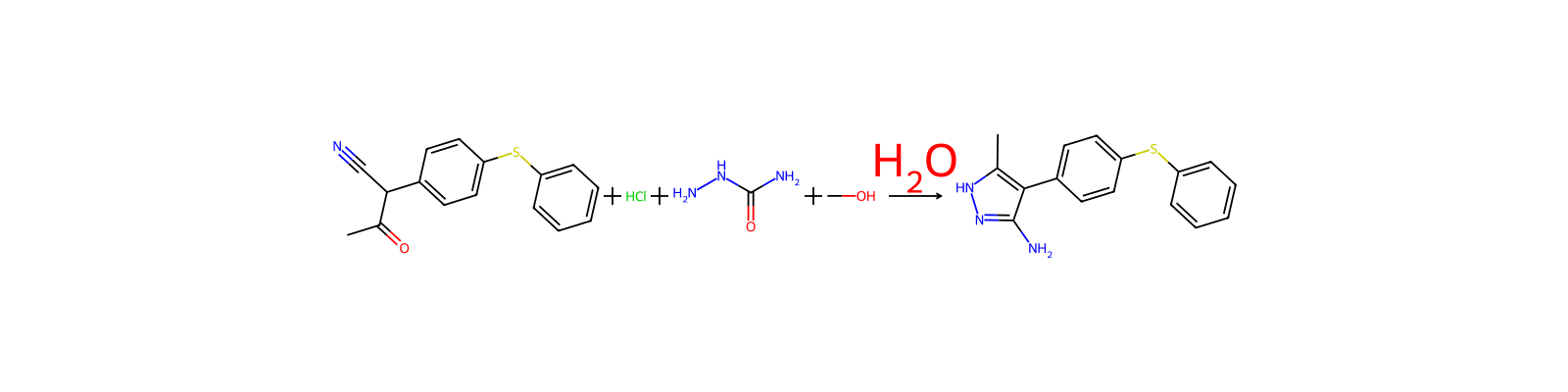
HRID 37131 の反応式
HRID 37131反応物としてuspto-grants-1995_05
HRID 41159 の反応式
HRID 41159反応物としてuspto-grants-2013_09
HRID 50041 の反応式
HRID 50041反応物としてuspto-grants-2004_03
HRID 126777 の反応式
HRID 126777反応物としてuspto-grants-1981_03
HRID 127192 の反応式
HRID 127192反応物としてuspto-grants-1981_03
HRID 127202 の反応式
HRID 127202反応物としてuspto-grants-1981_03
HRID 223649 の反応式
HRID 223649反応物としてuspto-grants-1982_10
HRID 224880 の反応式
HRID 224880反応物としてuspto-grants-1980_11
1 / 24 ページ

化合物ノート

読み込み中…

このページの内容基本情報概要名称と識別子物性安全と法規制化学と産業関連反応化合物ノート
その他の操作
ノートを作成反応を作成見積依頼を出す
Physical Description · 2 件

Snow white crystals. Used as a reagent for ketones and aldehydes with which it affords crystalline compounds having characteristic melting points. (EPA, 1998)

White solid; [Hawley] White powder; [MSDSonline]

Dissociation ConstantspKa = 10.8
Other Experimental Properties · 2 件

Ammonolysis with liquid NH3 gives 95% yield of free base

Hydroxyl radical reaction rate constant = 2X10-12 cu cm/molec-sec at 25 °C /Estimated/

物理化学的性質

融点
175 · 175-177 °C (dec.)(lit.)
沸点
394.09 ℃[at · 394.09℃[at 101 325 Pa]
比重(密度)
1.2908 · 1.2908 (rough estimate)
蒸気圧
0 · 0-0Pa at 25℃
屈折率
1.448 · 1.4480 (estimate)
貯蔵温度
15 °C · Store at +15°C to +25°C.
溶解性
2 O: · H2O: 0.1g/mL at20℃ 無色透明
外見
結晶性粉末および/またはチャンク
色
白い
PH
1.5 · 1.5 (100g/l, H2O, 20℃)
水溶解度
100 g/L · 100g/L(15℃)
Merck
14 · 14,8444
BRN
3593642 · 3593642
安定性
安定。強酸化剤、強塩基とは相容れない。
InChI
1S/CH5N3O.ClH/c2-1(5)4-3;/h3H2,(H3,2,4,5);1H
InChIKey
XHQYBDSXTDXSHY-UHFFFAOYSA-N
SMILES
Cl.NNC(N)=O
LogP
-4.99 · -4.99--1.9 at 20℃
CAS データベース
563 · 563-41-7(CAS DataBase Reference)
EPAの化学物質情報
Semicarbazide hydrochloride (563-41-7)

化学的性質

化学的特性Semicarbazide hydrochloride is a white crystalline solid.

Air and Water ReactionsWater soluble. Acid reaction in water. (NTP, 1992)
CERCLA Reportable Quantities · 1 件

Releases of CERCLA hazardous substances are subject to the release reporting requirement of CERCLA section 103, codified at 40 CFR part 302, in addition to the requirements of 40 CFR part 355. Semicarbazide hydrochloride is an extremely hazardous substance (EHS) subject to reporting requirements when stored in amounts in excess of its threshold planning quantity (TPQ) of 1,000/10,000 lbs.

Hazard Classes and Categories · 3 件

Acute Tox. 3 (96.8%)

Acute toxicity (Oral) - Category 3

Hazardous to the aquatic environment (Acute) - Category 3

安全と保護具

Fire Fighting(Non-Specific -- Poisonous Solid, n.o.s.) Wear self-contained (positive pressure if available) breathing apparatus and full protective clothing.
First Aid · 1 件

Signs and Symptoms of Semicarbazide Hydrochloride Exposure: No information on specific clinical effects of exposure to semicarbazide hydrochloride was found in available references. However, animal data indicate that signs and symptoms of acute exposure to semicarbazide hydrochloride may include loss of coordination, dizziness, tremors, convulsions, and seizures.

Nonfire Spill Response · 1 件

(Non-Specific -- Poisonous Solid, n.o.s.) Isolate hazard area. Stay upwind; keep out of low areas. Do not touch spilled material. Absorb small spills with sand or other noncombustible absorbent material and place into containers for later disposal. Take up small, dry spills with clean shovel; place material into clean, dry container and cover; move containers from spill area. Dike far ahead of large spills for later disposal. (EPA, 1998)

Disposal Methods · 1 件

SRP: The most favorable course of action is to use an alternative chemical product with less inherent propensity for occupational exposure or environmental contamination. Recycle any unused portion of the material for its approved use or return it to the manufacturer or supplier. Ultimate disposal of the chemical must consider: the material's impact on air quality; potential migration in soil or water; effects on animal, aquatic, and plant life; and conformance with environmental and public health regulations.

Isolation and EvacuationExcerpt from ERG Guide 154 [Substances - Toxic and/or Corrosive (Non-Combustible)]:
Protective Action Criteria (PAC) · 3 件

9.1 [mg/m3]

100 [mg/m3]

600 [mg/m3]

Personal Protective Equipment (PPE) · 1 件

For emergency situations, wear a positive pressure, pressure-demand, full facepiece self-contained breathing apparatus (SCBA) or pressure- demand supplied air respirator with escape SCBA and a fully-encapsulating, chemical resistant suit. (EPA, 1998)

毒性情報

Ecotoxicity Values · 2 件

EC50 Xenopus laevis (Clawed toad embryos; abnormal growth) 10,800 ug/L/96 hr (95% confidence interval: 9200-12,100); renewal

LC50 Xenopus laevis (Clawed toad embryos) ca. 6 g/L/96 hr, (95% confidence interval: 5.3-6.1 g/L); renewal

Food Survey Values · 1 件

Semicarbazide is present in certain foods packaged in glass jars and bottles in very low quantities (ppb or ug/kg of food) due to migration from the plastic gasket which forms the airtight seal in the metal lid. Amount of up to 25 ppb have been found in baby foods, which give an estimate of intake of around 2 ug/kg bw/day as a worst case for infants /age 4-12 months/. /Semicarbazide/

Natural Pollution Sources...is not known to occur as natural product.
Carcinogen Classification · 5 件

Semicarbazide hydrochloride

Group 3: Not classifiable as to its carcinogenicity to humans

Volume 12: (1976) Some Carbamates, Thiocarbamates and Carbazides

1987

1987

Non-Human Toxicity Excerpts · 5 件

/LABORATORY ANIMALS: Acute Exposure/ Administration of 200 mg/kg to acute spinal cats resulted in gradual and complete depression of dorsal root reflex and potential..., also decreased long-latency. Time course of these effects correlated with time course of induced depletion of gamma-aminobutyric acid in spinal cord.

/LABORATORY ANIMALS: Chronic Exposure or Carcinogenicity/ Fourteen chemicals of varied uses were tested for carcinogenicity by oral administration in male and female Charles River CD rats. ...Semicarbazide hydrochloride /was/ not carcinogenic under the test conditions.

/LABORATORY ANIMALS: Chronic Exposure or Carcinogenicity/ ... Admin to 25 male and 25 female 6-wk old Swiss mice for lifetime as 0.0625% solution in drinking water. Average daily intakes...3.3 mg/female and 4.8 mg/male. ... Tumors of vascular origin ... in 9/50 ... females, compared with 5/99 ... controls, and in 3/50 ... males, compared with 6/99 ... controls. ... Including 6 angiosarcomas and 2 angiomas of liver. ... In females, 37 lung tumors occurred in 25/50 ... compared with 31 in 21/99 female controls...no increase in incidence of lung tumors in treated males.

/LABORATORY ANIMALS: Chronic Exposure or Carcinogenicity/ ...6-8-wk old female DD mice were fed diet containing 0.1%...for 7 mo. at end of treatment, 8 survivors were killed and examined for lung tumors: 6 mice had total of 8 lung tumors, compared with 1 tumor in 20 controls.

For more Non-Human Toxicity Excerpts (Complete) data for SEMICARBAZIDE HYDROCHLORIDE (12 total), please visit the HSDB record page.

Populations at Special Risk · 1 件

Biological half-lives were significantly different among the three acetylation phenotypes (analysis of variance, P < 0.05): 3.94+/-1.70 hours for slow acetylators, 2.25+/-0.37 hours for intermediate acetylators, and 1.86+/-0.67 hours for rapid acetylators. /Hydrazine/

Evidence for CarcinogenicityNo data are available in humans. Limited evidence of carcinogenicity in animals. OVERALL EVALUATION: Group 3: The agent is not classifiable as to its carcinogenicity to humans.
Antidote and Emergency Treatment · 2 件

Basic treatment: Establish a patent airway. Suction if necessary. Watch for signs of respiratory insufficiency and assist ventilations if necessary. Administer oxygen by nonrebreather mask at 10 to 15 L/min. Monitor for pulmonary edema and treat if necessary ... . Anticipate seizures and treat if necessary ... . For eye contamination, flush eyes immediately with water. Irrigate each eye continuously with normal saline during transport ... . Do not use emetics. For ingestion, rinse mouth and administer 5 ml/kg up to 200 ml of water for dilution if the patient can swallow, has a strong gag reflex, and does not drool. Administer activated charcoal ... . Cover skin burns with dry, sterile dressings after decontamination ... . /Hydrazine and Related Compounds/

Advanced treatment: Consider orotracheal or nasotracheal intubation for airway control in the patient who is unconscious, has severe pulmonary edema, or is in respiratory arrest. Positive pressure ventilation techniques with a bag valve mask device may be beneficial. Monitor cardiac rhythm and treat arrhythmias if necessary ... . Start an IV with D5W /SRP: "To keep open", minimal flow rate/. Use lactated Ringer's if signs of hypovolemia are present. Consider drug therapy for pulmonary edema ... . For hypotension with signs of hypovolemia, administer fluid cautiously. Consider vasopressors for hypotension with a normal fluid volume. Watch for signs of fluid overload ... . Treat seizures with diazepam ... . Monitor for signs of hypoglycemia (decreased level of consciousness, tachycardia, pallor, dilated pupils, diaphoresis, and/or a dextrose strip or glucometer reading less than 50 mg/dl) and administer 50% dextrose if necessary. Draw blood sample before administration ... . Administer 1% solution methylene blue if patient is symptomatic with severe hypoxia, cyanosis, and cardiac compromise not responding to oxygen. ... . Use proparacaine hydrochloride to assist eye irrigation ... . /Hydrazine and Related Compounds/

Non-Human Toxicity Values · 3 件

LD50 Mouse oral 225 mg/kg

LD50 Mouse ip 145 mg/kg

LD50 Mouse sc 167 mg/kg

法規制情報

CERCLA Reportable Quantities · 1 件

Releases of CERCLA hazardous substances are subject to the release reporting requirement of CERCLA section 103, codified at 40 CFR part 302, in addition to the requirements of 40 CFR part 355. Semicarbazide hydrochloride is an extremely hazardous substance (EHS) subject to reporting requirements when stored in amounts in excess of its threshold planning quantity (TPQ) of 1,000/10,000 lbs.

安全データ

wgk
3
tsca
TSCA listed
rtecs
VT3500000
ridadr
UN 2811 6.1/PG 3
毒性
LD50 orally in Rabbit: 123 mg/kg
hs_code
2928000090
risk_code
22-40-36/38-25-45-23/24/25
消防法
危険物第5類
hazard_code
Xn,T
safety_code
24/25-22-45-53
hazard_class
6.1
packing_group
III
Hazard Classifications
Acute Tox. 3 OralEye Dam. 1Repr. 2Skin Corr. 1BSTOT RE 2 Oral
ストレージクラス
6.1A - Combustible acute toxic Cat. 1 and 2very toxic hazardous materials
有毒物質データの
563-41-7(Hazardous Substances Data)
危険度評価(NFPA 704基準/消防庁データ)
人的[青]=2

Reagent for ketones and aldehydes with which it affords crystal compound having characteristic melting points.

Isolation of hormones and isolation of certain fractions from essential oils.

.../Semicarbazide/ (SEM) is a known metabolite of the veterinary drug nitrofurazone and is used as an indicator for the use of the drug in food of animal origin. SEM has also been detected in seaweed derived products, which are widely used as food additives. /Semicarbazide/

Methods of Manufacturing · 3 件

Prepared by electrolytic reduction of nitrourea with cathodes of copper, nickel, lead, and mercury in hydrochloric acid solution

Commercial preparation from hydrazine hydrate, iron carbonyl, and carbon monoxide.

From hydrazine sulfate, potassium or sodium cyanate and sodium carbonate...

Formulations/Preparations...Available commercially in US in chemically pure & technical grades.
General Manufacturing Information · 3 件

Hydrazinecarboxamide, hydrochloride (1:1): ACTIVE

First reported preparation ... was by reaction of benzylidenesemicarbazide with hydrochloric acid. ...method used for commercial production is not known.

...Semicarbazide (SEM) is a minor thermal decomposition product of the blowing agent azodicarbonamide (ADC).

応用分野 · 3 件

用途ケトン、アルデヒドの確認試薬、シアン酸イオンの定量、医薬品合成原料

用途有機合成原料(医薬品)。

使用Semicarbazide hydrochloride is used as urease substrate and MAO inhibitor. Derivatizing agent for carbonyl compounds as their semicarbazones which produces crystalline compounds with characteristic melting points. Also used in heterocyclic synthesis. Semicarbazone formation has been used to separate carbonyl compounds from mixtures by adsorption onto silica gel from a hydrocarbon solution. Regeneration is by hydrolysis with oxalic acid.

調製方法 · 1 件

純化方法Crystallise the salt from aqueous 75% EtOH and dry it under vacuum over CaSO4. Alternatively crystallise it from a mixture of 3.6 mole % MeOH and 6.4 mole % of water. [Kovach et al. J Am Chem Soc 107 7360 1985.] IR: 700, 3500 cm-1 [Ingersoll et al. Org Synth Coll Vol I 485 1941, Davison & Christie J Chem Soc 3389 1955, Thiele & Stange Chem Ber 27 33 1894, pK: Bartlett J Am Chem Soc 54 2853 1923]. The free base crystallises as prisms from absolute EtOH, m 96o. [Curtius & Heidenreich Chem Ber 27 55 1894, Beilstein 3 IV 177.] TOXIC ORALLY, possible CARCINOGEN and TERATOGEN.

上流・下流製品情報

上流原料

抱水ヒドラジンヒドラジン一水和物セミカルバジド

下流製品

4,5-ジクロロ-3(2H)-ピリダジノン3-フェニル-4-ピラゾールカルボキシアルデヒド6-アザチミンEthyl 4-phenyl-1,2,3-thiadiazole-5-carboxylate3-アミノ-5-フェニルピラゾールセミカルバジド4-Chloro-2-(tetrahydro-2H-pyran-2-yl)-5-hydroxypyridazin-3(2H)-one5-クロロ-4-(クロロメチル)-1,2,3-チアジアゾールカルバゾクロム3-(4-フルオロフェニル)ピラゾール-4-カルボキシアルデヒド3-(クロロメチル)-1,2,4-トリアゾリン-5-オン5-オキソ-2,5-ジヒドロ-1H-ピラゾール-3-カルボン酸エチルナフタゾン1,2,4-トリアゾロ[4,3-a]ピリジン-3(2H)-オン5-[2-(trifluoromethyl)phenyl]-1,3,4-oxadiazol-2-amineAminoacetonesemicarbazonehydrochloride5-(2-Bromophenyl)-1,3,4-oxadiazol-2-amine