ホームMCPワークベンチSkills
ホームワークベンチ通知マイページ
llms.txt · MCPガイドプライバシーポリシー · 利用規約 · サポートv1.8.3
  1. ホーム
  2. /化合物

テトラキス(トリフェニルホスフィン)パラジウム(0)

Tetrakis(triphenylphosphine)palladium

HCID 11979704
反応を作成
印刷
基本情報概要名称と識別子物性安全と法規制化学と産業関連反応化合物ノート
部分構造検索類似構造を探す

基本情報

CAS
14221-01-3
標準SMILES
[Pd].c1ccc(P(c2ccccc2)c2ccccc2)cc1.c1ccc(P(c2ccccc2)c2ccccc2)cc1.c1ccc(P(c2ccccc2)c2ccccc2)cc1.c1ccc(P(c2ccccc2)c2ccccc2)cc1
InChIKey
NFHFRUOZVGFOOS-UHFFFAOYSA-N
分子式
C72H60P4Pd
平均分子量
1,155.6 g/mol
単同位体質量
1,154.26803

概要

Tetrakis(triphenylphosphine)palladium(0) is a coordination complex of palladium. It is widely used as a catalyst for coupling reactions. Palladium is a chemical element with the chemical symbol Pd and an atomic number of 46. It is found as a free metal alloyed with gold and other platinum group metals and in the rare minerals cooperite and polarite. (L794, L806)

名称と識別子

優先名称
Tetrakis(triphenylphosphine)palladium
IUPAC
palladium;tetrakis(triphenylphosphane)
現地名
テトラキス(トリフェニルホスフィン)パラジウム(0)
英語名
Tetrakis(triphenylphosphine)palladium
分子式
C72H60P4Pd
分子量
1155.561844

名称と別名

Tetrakis(triphenylphosphine)palladiumPD(PPH3)4Tetra(triphenylphosphine)palladiumPalladium, tetrakis(triphenylphosphine)-, (T-4)-EINECS 238-086-9N9O1RWZ93JDTXSID9065732palladiumtetrakis(triphenylphosphine)RefChem:897289DTXCID7034628Palladium, tetrakis(triphenylphosphine), (T4)238-086-9
名称をさらに表示
テトラキス(トリフェニルホスフィン)パラジウム(0)テトラキス(トリフェニルホスフィン)パラジウム(0) 【ジョンソン・マッセイ社製造】テトラキス(トリフェニルホスフィン)パラジウム(0), 99.8% (metals basis), Pd 9% minテトラキス(トリフェニルホスフィノ)パラジウム(IV)etrakis(triphenylphosphine)palladiuMTetrakis(triphenylphosphine)palladium(0), 99.8% (metals basis), Pd 9% minTetrakis(triphenylphosphine)palladiuPd(PPh3)4(tetrakis(triphenyl-phosphine)palladium(0))PS-DVBTetra(triphenylphosphine) palladium
14221-01-3Tetrakis(triphenylphosphine)palladium(0)Tetrakis(triphenylphosphine) palladium(0)MFCD00010012palladium;triphenylphosphanePalladium-tetrakis(triphenylphosphine)tetrakis(triphenylphosphine)palladium(o)Palladium (0) tetrakis(triphenylphosphine)

物性

構造計算による物性

極性表面積
0 Ų
水素結合供与体数
0
水素結合受容体数
0
回転可能結合数
12
重原子数
77
形式電荷
0
複雑度
202

実験および物理化学的性質

Chemical ClassesMetals -> Organic Compounds, Metal Salts
Physical DescriptionCrystals; [Sigma-Aldrich MSDS]

物理化学的性質

融点
103 · 103-107 °C
蒸気圧
0 Pa · 0Pa at 25℃
貯蔵温度
2 · 2-8°C
溶解性
クロロホルム(微量)、酢酸エチル(微量)、メタノール(微量)
外見
微粉末または血小板
色
明るい黄色からカーキ
水溶解度
不溶性
BRN
6704828 · 6704828
安定性
光に敏感、湿気に敏感
InChI
1S/4C18H15P.Pd/c4*1-4-10-16(11-5-1)19(17-12-6-2-7-13-17)18-14-8-3-9-15-18;/h4*1-15H;
InChIKey
NANALCPCPBPJAB-UHFFFAOYSA-N
SMILES
[Pd].c1ccc(cc1)P(c2ccccc2)c3ccccc3.c4ccc(cc4)P(c5ccccc5)c6ccccc6.c7ccc(cc7)P(c8ccccc8)c9ccccc9.c%10ccc(cc%10)P(c%11ccccc%11)c%12ccccc%12
LogP
5.69 at · 5.69 at 20℃
CAS データベース
14221 · 14221-01-3(CAS DataBase Reference)

安全と法規制

安全情報は参考情報です。供給元の安全データシート(SDS)、適用法令、専門家による評価に代わるものではありません。

GHS分類

GHS Classification · 5 件

This chemical does not meet GHS hazard criteria for 0.5% (1 of 193) of reports.

Warning

H302 (83.9%): Harmful if swallowed [Warning Acute toxicity, oral]

P261, P264, P270, P272, P273, P280, P301+P317, P302+P352, P321, P330, P333+P317, P362+P364, and P501 (click each P-code to see the statement)

Aggregated GHS information provided per 193 reports by companies from 11 notifications to the ECHA C&L Inventory. Each notification may be associated with multiple companies.

危険有害性情報

Regulatory Information · 3 件

Chemical: Palladium, tetrakis(triphenylphosphine)-, (T-4)-

REACH registered substance: Tetrakis(triphenylphosphine)palladium (EC: 238-086-9)

Palladium, tetrakis(triphenylphosphine)-, (T-4)-: Does not have an individual approval but may be used under an appropriate group standard

Other Safety InformationIMAP assessments - Palladium, tetrakis(triphenylphosphine)-, (T-4)-: Environment tier I assessment
Hazards SummaryMay cause irritation; [Sigma-Aldrich MSDS] See Palladium. See Triphenylphosphine.
Hazard Classes and CategoriesAcute Tox. 4 (83.9%)

毒性情報

Health EffectsContact with palladium may cause palladium sensitivity and allergy. Animal studies have shown that palladium may damage the liver and kidney. (L798)
Toxicity Summary · 1 件

Due to their ability to form strong complexes with both inorganic and organic ligands, palladium ions can disturb cellular equilibria, replace other essential ions, and interact with functional groups of macromolecules, such as proteins or DNA. Palladium complexes binding to DNA and RNA leads to strand breakage. Palladium ions are able to inhibit most major cellular functions, including DNA and RNA synthesis. Palladium compounds have been shown to bind to and inhibit various enzymes, including creatine kinase and prolyl hydroxylase. (L798)

化学と産業

薬理情報

Metabolism/Metabolites · 1 件

Palladium may be absorbed through oral, dermal, and inhalation exposure. Once in the body it distributes to the kidney, liver, spleen, lymph nodes, adrenal gland, lung and bone. Palladium's ability to form complexes allows it the bind to amino acids, proteins, DNA, and other macromolecules. Palladium and its metabolites are excreted in the urine and faeces. (A21)

用途と製造

UsesTetrakis(triphenylphosphine)palladium(0) is widely used as a catalyst for coupling reactions. (L806)
General Manufacturing InformationPalladium, tetrakis(triphenylphosphine)-, (T-4)-: ACTIVE

応用分野

用途Pd(PPh3)4 はカップリング反応の触媒として広く用いられる。優れた反応例として溝呂木?ヘック反応や薗頭萩原反応、右田小杉スティル反応、鈴木宮浦反応が挙げられる。これらの反応は、芳香族ハロゲン化物の0価パラジウムへの酸化的付加により反応が始まる。

使用Tetrakis(triphenylphosphine)palladium(0) is widely used as a catalyst for palladium-catalyzed coupling reactions.

調製方法 · 1 件

純化方法The palladium complex is recrystallised from EtOH. It should not be heated excessively as it dissociates to Pd(PPh3)3 and PdPh3 and then further to Pd(PPh3)2 and PPh3. It is also air sensitive as PPh3 is oxidized to PPh3O. It is stable only for short periods because on exposure to heat or air it turns from yellow to orange and dissociates in solution so the solutions should be used directly. However it can always be prepared freshly by mixing Pd(NO3)2 (2mmols) and PPh3(2mmols) in hot *C6H6 when vigorous evolution of nitric oxide occurs and a solid mass separates. This is collected and crystallised from EtOH. Its cryoscopic constant in *C6H6 (at 0.601g/20mL) corresponds to M 1156 [Malatesta & Angoletti J Chem Soc 1186 1957]. It is a useful catalyst for Suzuki coupling reactions [Trost Tetrahedron 33 2615 1977]. [Beilstein 16 IV 954.] This palladium catalyst bound to a polymer support (~0.06mmol/g) is also commercially available [cf Fenger & LeDrain Tetrahedron Lett 39 4287 1998]. [Beilstein 16 IV 954.]

関連反応

4,010 件
反応記録を作成
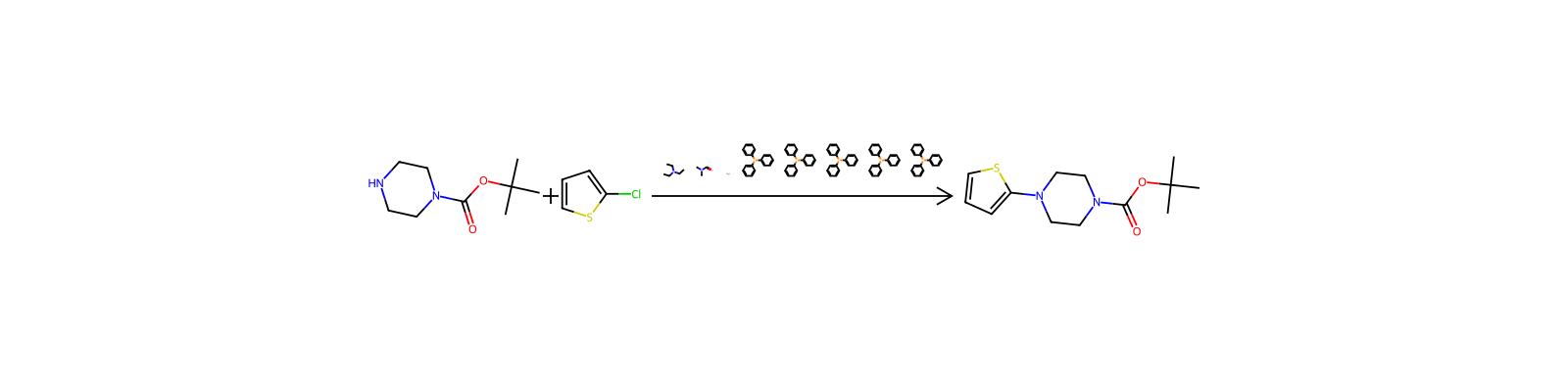
HRID 302 の反応式
HRID 302触媒として
HRID 517 の反応式
HRID 517触媒として
HRID 526 の反応式
HRID 526触媒として
HRID 565 の反応式
HRID 565触媒として
HRID 567 の反応式
HRID 567触媒として
HRID 568 の反応式
HRID 568触媒として
HRID 598 の反応式
HRID 598触媒として
HRID 647 の反応式
HRID 647触媒として
前へ1 / 502 ページ

化合物ノート

このページの内容基本情報概要名称と識別子物性安全と法規制化学と産業関連反応化合物ノート

データベース識別子

CAS
14221-01-3
PubChem CID
11979704
DTXSID
DTXSID9065732
EC Number
238-086-9
EPAの化学物質情報
Palladium, tetrakis(triphenylphosphine)-, (T-4)- (14221-01-3)
化学的性質 · 1 件

化学的特性Tetrakis(triphenylphosphine)palladium, commonly abbreviated as Pd(PPh₃)₄ or PdP₄, is a bright yellow crystalline solid that gradually darkens to brown upon exposure to air. It is sparingly soluble in saturated hydrocarbons but readily soluble in a variety of organic solvents, including chloroform (CHCl₃), dimethoxyethane (DME), tetrahydrofuran (THF), dimethylformamide (DMF), benzene, and toluene.


Signs and SymptomsSkin contact with palladium may cause contact dermatitis, erythema, and oedema. (L798)
Carcinogen ClassificationNo indication of carcinogenicity to humans (not listed by IARC).

安全データ

F
8-10-23
wgk
3
tsca
TSCA listed
hs_code
28439090
risk_code
20/22-40-36/37/38
hazard_code
Xi,Xn
hazard_note
Air sensitive/Light sensitive/Irritant
safety_code
22-24/25-36/37-37/39-26
hazard_class
MOISTURE SENSITIVE, STORED UNDER ARGON
Hazard Classifications
Acute Tox. 4 Oral
ストレージクラス
11 - Combustible Solids

上流・下流製品情報

上流原料

抱水ヒドラジンアセトニトリルエタノールtert-ブチルメチルエーテルトルエンヒドラジン一水和物ジエチルエーテル (無水)塩化パラジウム(II)酢酸エチルジメチルスルホキシドトリフェニルホスフィン

下流製品

3-アミノビフェニル3-(6-Formyl-pyridin-2-yl)-benzonitrile6-(3-Nitrophenyl)-2-pyridinecarboxaldehyde6-(4-Methylsulfanylphenyl)pyridine-2-carbaldehyde6-(4-メトキシフェニル)ピリジン-2-カルバルデヒドプルンバギン6-(Thiophen-3-yl)pyridine-2-carbaldehydeジミジウムブロミド3-アミノ-6-フェニルピリダジン4-フェニルエチニルフタル酸無水物2-クロロ-1H-ピロロ[2,3-D]ピリミジン6-(4-フルオロフェニル)ピリジン-2-カルブアルデヒド4-(6-Formylpyridin-2-yl)benzonitrile3-(3-ピリジニル)安息香酸1-(3-アミノピリジン-2-イル)エタノン6-(2-チエニル)-2-ピリジンカルボキシアルデヒド4-ヘキス-1-イニルベンズアルデヒド4-ベンジルオキシ-1H-インドール-3-アセトニトリル6-(4-Chlorophenyl)pyridine-2-carbaldehyde3-(4-Methylphenyl)benzaldehyde