
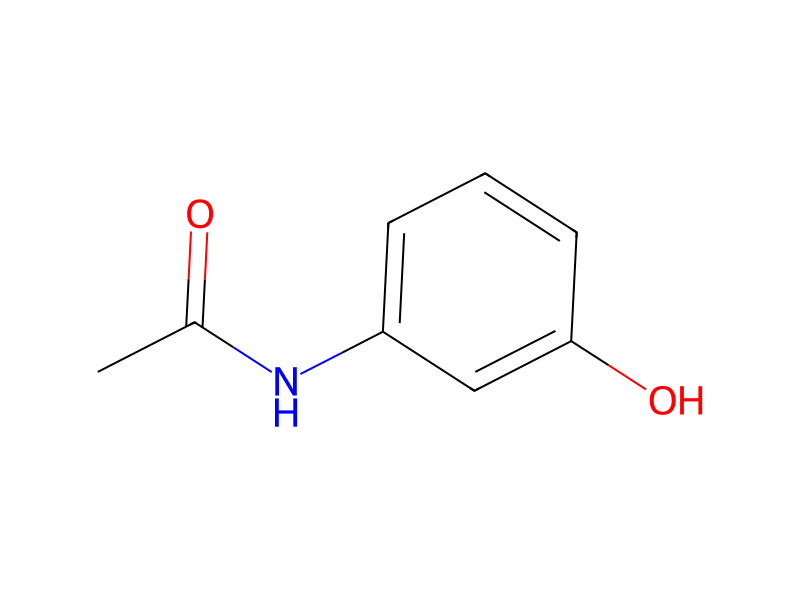
基本情報
- 標準SMILES
CC(=O)Nc1cccc(O)c1- InChIKey
QLNWXBAGRTUKKI-UHFFFAOYSA-N- 分子式
- C8H9NO2
- 平均分子量
- 151.16 g/mol
- 単同位体質量
- 151.06332853
概要
N-acetyl-m-aminophenol is a light gray solid. (NTP, 1992)
名称と識別子
- 優先名称
- 3-Hydroxyacetanilide
- IUPAC
- N-(3-hydroxyphenyl)acetamide
- 現地名
- 3'-ヒドロキシアセトアニリド
- 英語名
- 3-ACETAMIDOPHENOL
- 分子式
- C8H9NO2
- 分子量
- 151.16
名称と別名
3-Hydroxyacetanilideacetyl-m-aminophenolRefChem:8111923-AcetamidophenolMetacetamolN-(3-Hydroxyphenyl)acetamide621-42-13'-Hydroxyacetanilidem-AcetamidophenolN-Acetyl-m-aminophenolPeditussAcetamide, N-(3-hydroxyphenyl)-
名称をさらに表示
3'-ヒドロキシアセトアニリドm-アセチルアミノフェノール3-(アセチルアミノ)フェノールメタセタモールペディツスリスタールN-(3-ヒドロキシフェニル)アセトアミドm-アセトアミノフェノールメタリドm-ヒドロキシアセトアニリド3-アセチルアミノフェノールm-(N-アセチルアミノ)フェノールペジツスピラパップm-アセトアミドフェノールm-(アセチルアミノ)フェノール3-アセタミドフェノ-ル3-アセトアミドフェノール3‐アセトアミドフェノールm-ヒドロキシアセトアニリNebsbs479BS 479
MetalidPyrapapRystal3-(Acetylamino)phenolM-HYDROXYACETANILIDEm-(Acetylamino)phenolBS 749Metacetamolum
データベース識別子
- CAS
621-42-1- PubChem CID
- 12124
- DTXSID
DTXSID3022089- ChEMBL
CHEMBL9419- ChEBI
CHEBI:76987- UNII
- V942ZCN81H
- EC Number
- 210-687-0
- Nikkaji
- J6.832B
物性
構造計算による物性
- XLogP
- 0.7
- 極性表面積
- 49.3 Ų
- 水素結合供与体数
- 2
- 水素結合受容体数
- 2
- 回転可能結合数
- 1
- 重原子数
- 11
- 形式電荷
- 0
- 複雑度
- 147
実験および物理化学的性質
DrugsPharmaceutical
LogP0.73
Solubilityless than 1 mg/mL at 72 °F (NTP, 1992)
Melting Point406 °F (NTP, 1992)
Physical DescriptionN-acetyl-m-aminophenol is a light gray solid. (NTP, 1992)
Collision Cross Section
129.8 Ų [M+H]+ [CCS Type: TW; Method: Major Mix IMS/Tof Calibration Kit (Waters)]
137.29 Ų [M+Na]+ [CCS Type: TW; Method: calibrated with polyalanine and drug standards]
130.6 Ų [M+H]+ [CCS Type: TW; Method: calibrated with polyalanine and drug standards]
物理化学的性質
- 融点
- 145 · 145-148 °C(lit.)
- 沸点
- 273.17 °C · 273.17°C (rough estimate)
- 比重(密度)
- 1.249 · 1.249
- 屈折率
- 1.581 · 1.5810 (estimate)
- 貯蔵温度
- Keep in dark place,Inert atmosphere,Room temperature
- 溶解性
- クロロホルム(微量)、DMSO(微量)、メタノール
- 酸解離定数(Pka)
- 9.5 · 9.50±0.10(Predicted)
- 外見
- 結晶、結晶性粉末または針
- 色
- オフホワイトから黄褐色またはライトグレー
- PH
- 6 · 6-7 (H2O)(saturated solution)
- BRN
- 907998 · 907998
- InChI
- 1S/C8H9NO2/c1-6(10)9-7-3-2-4-8(11)5-7/h2-5,11H,1H3,(H,9,10)
- InChIKey
- QLNWXBAGRTUKKI-UHFFFAOYSA-N
- SMILES
- CC(=O)Nc1cccc(O)c1
- CAS データベース
- 621 · 621-42-1(CAS DataBase Reference)
- EPAの化学物質情報
- 3 · 3'-Hydroxyacetanilide (621-42-1)
化学的性質
化学的特性off-white to tan or light grey crystals,
安全と法規制
GHS分類
GHS Classification
Warning
H315 (100%): Causes skin irritation [Warning Skin corrosion/irritation]
P261, P264, P264+P265, P271, P280, P302+P352, P304+P340, P305+P351+P338, P319, P321, P332+P317, P337+P317, P362+P364, P403+P233, P405, and P501 (click each P-code to see the statement)
Aggregated GHS information provided per 46 reports by companies from 5 notifications to the ECHA C&L Inventory. Each notification may be associated with multiple companies.
危険有害性情報
Regulatory Information
Commission Regulation No 844/2012
3-Acetamidophenol: Does not have an individual approval but may be used under an appropriate group standard
DOT LabelPoison
Fire HazardsFlash point data for this compound are not available. It is probably combustible. (NTP, 1992)
Health HazardsSYMPTOMS: Symptoms of exposure to this compound may include irritation of the skin, eyes and mucous membranes.
Reactive GroupAmides and Imides
Reactivity Profile
Phenols do not behave as organic alcohols, as one might guess from the presence of a hydroxyl (-OH) group in their structure. Instead, they react as weak organic acids. Phenols and cresols are much weaker as acids than common carboxylic acids (phenol has pKa = 9.88). These materials are incompatible with strong reducing substances such as hydrides, nitrides, alkali metals, and sulfides. Flammable gas (H2) is often generated, and the heat of the reaction may ignite the gas. Heat is also generated by the acid-base reaction between phenols and bases. Phenols are sulfonated very readily (for example, by concentrated sulfuric acid at room temperature). The reactions generate heat. Phenols are also nitrated very rapidly, even by dilute nitric acid. Nitrated phenols often explode when heated. Many of them form metal salts that tend toward detonation by rather mild shock. Flammable gases are formed by the reaction of organic amides with strong reducing agents. Amides are very weak bases (weaker than water). Mixing amides with dehydrating agents such as P2O5 or SOCl2 generates the corresponding nitrile. The combustion of these compounds generates mixed oxides of nitrogen (NOx).
Air and Water ReactionsWater insoluble.
Hazard Classes and CategoriesSkin Irrit. 2 (100%)
安全と保護具
Fire FightingFires involving this material can be controlled with a dry chemical, carbon dioxide or Halon extinguisher. (NTP, 1992)
First Aid
EYES: First check the victim for contact lenses and remove if present. Flush victim's eyes with water or normal saline solution for 20 to 30 minutes while simultaneously calling a hospital or poison control center. Do not put any ointments, oils, or medication in the victim's eyes without specific instructions from a physician. IMMEDIATELY transport the victim after flushing eyes to a hospital even if no symptoms (such as redness or irritation) develop.
Nonfire Spill Response
SMALL SPILLS AND LEAKAGE: Should a spill occur while you are handling this chemical, FIRST REMOVE ALL SOURCES OF IGNITION, then you should dampen the solid spill material with 60-70% ethanol and transfer the dampened material to a suitable container. Use absorbent paper dampened with 60-70% ethanol to pick up any remaining material. Seal the absorbent paper, and any of your clothes, which may be contaminated, in a vapor-tight plastic bag for eventual disposal. Solvent wash all contaminated surfaces with 60-70% ethanol followed by washing with a soap and water solution. Do not reenter the contaminated area until the Safety Officer (or other responsible person) has verified that the area has been properly cleaned.
Isolation and EvacuationExcerpt from ERG Guide 154 [Substances - Toxic and/or Corrosive (Non-Combustible)]:
Personal Protective Equipment (PPE)
RECOMMENDED RESPIRATOR: Where the neat test chemical is weighed and diluted, wear a NIOSH-approved half face respirator equipped with an organic vapor/acid gas cartridge (specific for organic vapors, HCl, acid gas and SO2) with a dust/mist filter. (NTP, 1992)
安全データ
- F
- 1-8
- wgk
- 2
- tsca
- TSCA listed
- rtecs
- AE4100000
- ridadr
- 2811
- 毒性
- LD50 intraperitoneal in mouse: 1025mg/kg
- hs_code
- 29242995
- risk_code
- 36/37/38
- 化審法
- (3)-678
- hazard_code
- Xi,Xn
- hazard_note
- Irritant
- safety_code
- 26-36
- hazard_class
- 6.1(b)
- packing_group
- III
- Hazard Classifications
- Eye Irrit. 2Skin Irrit. 2
- ストレージクラス
- 11 - Combustible Solids
化学と産業
薬理情報
MeSH Pharmacological ClassificationCompounds capable of relieving pain without the loss of CONSCIOUSNESS.
用途と製造
General Manufacturing InformationAcetamide, N-(3-hydroxyphenyl)-: ACTIVE
応用分野
一般的な説明Light gray solid.
調製方法
純化方法Recrystallise the phenol from water. The 3,5-dinitrobenzamide complex gives orange-yellow crystals from hot H2O and has m 212o. [Beilstein 13 H 415, 13 I 132, 13 II 213, 13 III 950, 13 IV 977.]
上流・下流製品情報
上流原料
下流製品
サプライヤー50 社
国药集团化学试剂有限公司86-21-63210123 · [email protected]
杭州创引化工科技有限公司0571-87086220 13516718938 · [email protected]
梯希爱(上海)化成工业发展有限公司021-67121386 · [email protected]
上海凌富药物研究有限公司+86(21)5895 0110 19945755304 · [email protected]
艾吉析科技(上海)有限公司17717235263 · [email protected]
上海麦克林生化科技股份有限公司021-50706066 15221275939 · [email protected]
广州隽沐生物科技股份有限公司020-36607679; 13502246435 · [email protected]
苏州启航生物科技有限公司18151111370 · [email protected]
郑州汇聚化工有限公司13393710386 · [email protected]
普善实业(陕西)有限公司029-81310890 18165209495 · [email protected]
Dayang Chem (Hangzhou) Co.,Ltd.+86-0571-88938639 17705817739 · [email protected]
郑州鸿晟医药科技有限公司0371-55695890 15637198702 · [email protected]
Syntechem Co.,Ltd[email protected]
Ark Pharm, Inc.847-367-3680 · [email protected]
上海迈瑞尔生化科技有限公司4006356688 18621169109 · [email protected]
北京索莱宝科技有限公司010-50973130 17801761073 · [email protected]
武汉易泰科技有限公司上海分公司18930552037 · [email protected]
阿法埃莎(中国)化学有限公司400-6106006 · [email protected]
安耐吉化学&3A(安徽泽升科技股份有限公司)400-0056266 · [email protected]
北京博奥森生物技术有限公司400-901-9800 18611424007 · [email protected]
郑州研德生物科技有限公司0371-63682289 15538176268 · [email protected]
常州布克化工有限公司13606129753 13775119556 · [email protected]
菏泽博纳医药科技有限公司15865805009 · [email protected]
安徽海康药业有限责任公司86-0556-5800026 17709662922 · [email protected]
山东李比希生物医药科技有限公司15318973357; 15318973357 · [email protected]
上海健超生物科技有限公司15021035486 18081542813 · [email protected]
玛雅试剂+86 (573) 82222445 (0)18006601000 452520369 · [email protected]
四川库利南科技有限公司400-1166-196 18981987031 · [email protected]
天津希恩思生化科技有限公司400 638 7771 · [email protected]
上海法默生物科技有限公司02136680027 15800370750 · [email protected]
艾科试剂4008-755-333 18080918076 · [email protected]
赛默飞世尔科技(中国)有限公司800-810-5118 · [email protected]
北京伊诺凯科技有限公司400-810-7969 010-59572699 · [email protected]
TCI AMERICA800-4238616 · [email protected]
TOKYO CHEMICAL INDUSTRY CO., LTD.03-36680489 · [email protected]
TCI Europe320-37350700 · [email protected]
成都麦卡希化工有限公司028-85632863 18108198598 · [email protected]
贵州易妥化学科技有限公司18628235590 · [email protected]
上海湄水化工科技有限公司021-60549325 18616193163
深圳菲斯生物科技有限公司0755-83725350 13380397412 · [email protected]
泰州同新生物医药科技有限公司0523-86818997 18652728585 · [email protected]
成都零六生物科技有限公司400-1166-196 13458535857 · [email protected]
江苏艾康生物医药研发有限公司025-66028182 17714375163 · [email protected]
Sigma-Aldrich西格玛奥德里奇(上海)贸易有限公司021-61415566 800-8193336 · [email protected]
深圳振强药物研发有限公司+86-0755-66853366 +86-13670046396 · [email protected]
成都赛诺宁科技有限公司28-87999436 02887999436 · [email protected]
上海陶术生物科技股份有限公司+1-781-999-5354; +1-00000000000 · [email protected]
九鼎化学(上海)科技有限公司4009209199 · [email protected]
上海珈得尔化学技术有限公司021-4007787-550 400-7787-550 · [email protected]
Standardpharm Co. Ltd.86-714-3992388 · [email protected]
補足説明
定義ChEBI: A derivative of phenol which has an acetamido substituent located meta to the phenolic -OH group. It is a non-toxic regioisomer of paracetamol with analgesic properties, but has never been marketed as a drug.
関連反応
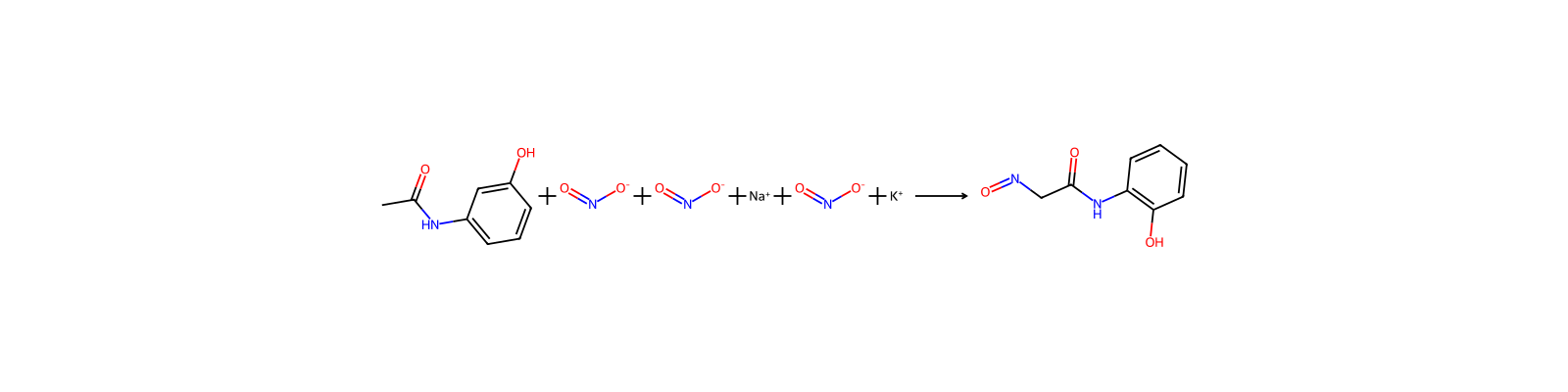
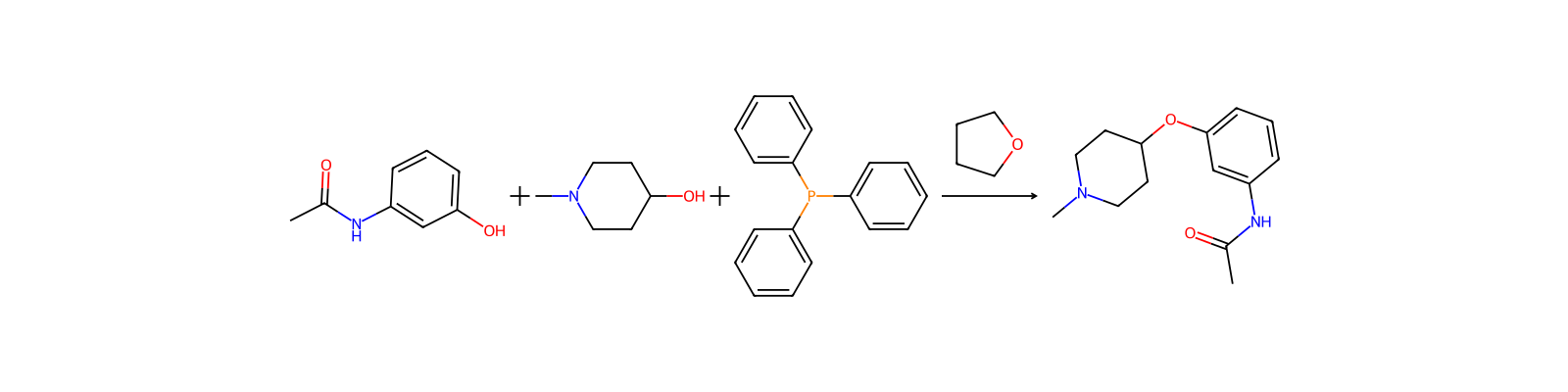
161 件




関連ノート
読み込み中…