
β-メチルスチレン
beta-Methylstyrene
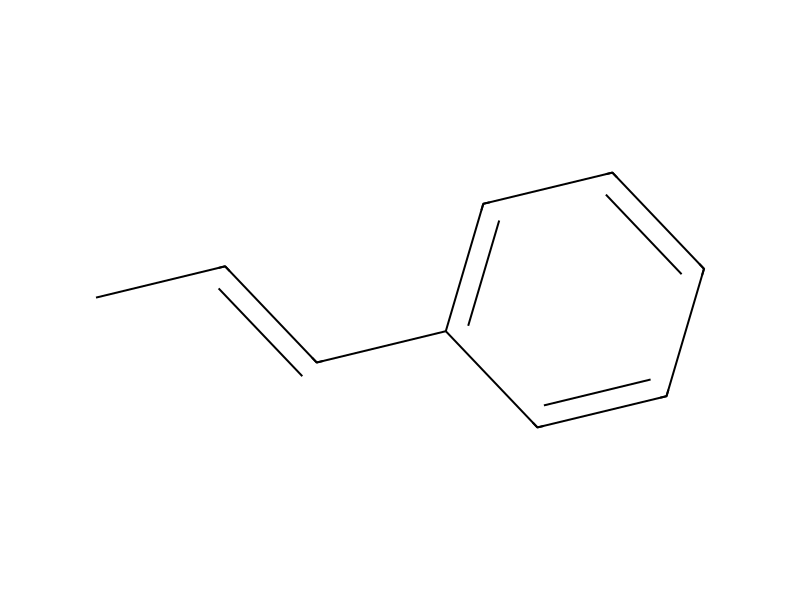
基本情報
- CAS
637-50-3- 標準SMILES
CC=Cc1ccccc1- InChIKey
QROGIFZRVHSFLM-UHFFFAOYSA-N- 分子式
- C9H10
- 平均分子量
- 118.18 g/mol
- 単同位体質量
- 118.07825032
概要
cis-beta-methylstyrene has been reported in Actaea simplex with data available.
名称と識別子
- 優先名称
- beta-Methylstyrene
- IUPAC
- prop-1-enylbenzene
- 現地名
- β-メチルスチレン
- 英語名
- β-Methylstyrene
- 分子式
- C9H10
- 分子量
- 118.18
名称と別名
Propenyl benzeneBETA-METHYL STYRENEBenzene, 1-propenyl-DTXSID20609199367GUB59ONSC-65591RefChem:1079702DTXCID7044059211-287-91-Propenylbenzene3-Phenyl-1-Propene637-50-3
名称をさらに表示
β-メチルスチレン1-フェニルプロピレン1-フェニル-1-プロペン(1-プロペニル)ベンゼンω-メチルスチレン1-フェニルプロペン1-プロペニルベンゼン1-(1-プロペニル)ベンゼンα-フェニルプロピレンイソアリルベンゼンβメチルスチレンβ-メチルスチレン (cis-, trans-混合物)1-フェニル-1-プロペン (cis-, trans-混合物)1-プロペニルベンゼン (cis-, trans-混合物)B-メチルスチレン (STABILIZED WITH TBC)Β-メチルスチレン (MIXTURE OF CIS-TRANS ISOMERS)b-メチルスチレン (stabilised with TBC)(プロパ-1-エン-1-イル)ベンゼンProp-1-en-1-ylbenzeneTRANS-B-METHYLSTYRENETRANS-BETA-METHYLSTYRENEB-METHYLSTYRENEBenzene, 1-propen-1-yl-
beta-MethylstyreneIsoallylbenzenePropenylbenzeneBenzene, propenyl-Prop-1-enylbenzenemethyl-styrene[(1Z)-Prop-1-en-1-yl]benzene3-methylvinylbenzene
データベース識別子
- CAS
637-50-3- PubChem CID
- 12500
- DTXSID
DTXSID2060919- EC Number
- 211-287-9
物性
構造計算による物性
- XLogP
- 3.2
- 極性表面積
- 0 Ų
- 水素結合供与体数
- 0
- 水素結合受容体数
- 0
- 回転可能結合数
- 1
- 重原子数
- 9
- 形式電荷
- 0
- 複雑度
- 86.2
実験および物理化学的性質
PolymersPlastics & Rubber -> Styrenes
LogPlog Kow = 3.35
Density0.9019 @ 25 °C
SolubilitySol in acetone, benzene, ether, ethanol
Boiling Point175.5 °C
Melting Point-27.3 °C
Vapor Pressure0.97 [mmHg]
Refractive IndexIndex of refraction = 1.5508 @ 20 °C
Physical DescriptionClear faintly yellow liquid; Stabilized with 0.01% butylated hydroxytoluene; [MSDSonline]
物理化学的性質
- 融点
- -27.1 °C · -27.1°C
- 沸点
- 175 °C · 175 °C(lit.)
- 比重(密度)
- 0.911 g/mL · 0.911 g/mL at 25 °C(lit.)
- 屈折率
- 20 · n20/D 1.550(lit.)
- 闪点
- 127 °F · 127 °F
- 貯蔵温度
- 2 · 2-8°C
- 水溶解度
- Insoluble in water
- 溶解性
- DMSO (Slightly), Ethyl Acetate (Slightly)
- 外見
- clear liquid
- 比重
- 0.91 · 0.91
- 色
- Colorless to Light yellow
- Henry's Law Constant
- 3.7 · 3.7×10-3 mol/(m3Pa) at 25℃, HSDB (2015)
- Dielectric constant
- 2.73 · 2.73
- CAS データベース
- 637 · 637-50-3(CAS DataBase Reference)
- EPAの化学物質情報
- Propenylbenzene (637-50-3)
安全と法規制
安全情報は参考情報です。供給元の安全データシート(SDS)、適用法令、専門家による評価に代わるものではありません。
GHS分類
GHS Classification
Danger
H226 (99.1%): Flammable liquid and vapor [Warning Flammable liquids]
P203, P210, P233, P240, P241, P242, P243, P261, P264+P265, P271, P272, P273, P280, P301+P316, P302+P352, P303+P361+P353, P304+P340, P305+P351+P338, P318, P319, P321, P331, P333+P317, P337+P317, P362+P364, P370+P378, P403+P233, P403+P235, P405, and P501 (click each P-code to see the statement)
Aggregated GHS information provided per 106 reports by companies from 3 notifications to the ECHA C&L Inventory. Each notification may be associated with multiple companies.
危険有害性情報
Regulatory InformationBenzene, 1-propenyl-: Does not have an individual approval but may be used under an appropriate group standard
Hazards SummaryAn irritant; [MSDSonline] See alpha-Methyl styrene.
Hazard Classes and CategoriesFlam. Liq. 3 (99.1%)
Shipment Methods and Regulations
No person may /transport,/ offer or accept a hazardous material for transportation in commerce unless that person is registered in conformance ... and the hazardous material is properly classed, described, packaged, marked, labeled, and in condition for shipment as required or authorized by ... /the hazardous materials regulations (49 CFR 171-177)./
The International Air Transport Association (IATA) Dangerous Goods Regulations are published by the IATA Dangerous Goods Board pursuant to IATA Resolutions 618 and 619 and constitute a manual of industry carrier regulations to be followed by all IATA Member airlines when transporting hazardous materials.
The International Maritime Dangerous Goods Code lays down basic principles for transporting hazardous chemicals. Detailed recommendations for individual substances and a number of recommendations for good practice are included in the classes dealing with such substances. A general index of technical names has also been compiled. This index should always be consulted when attempting to locate the appropriate procedures to be used when shipping any substance or article.
Shipping Name/ Number DOT/UN/NA/IMO
UN 2618; Methyl styrenes, inhibited
IMO 3.3; Methyl styrenes, inhibited
安全と保護具
Disposal Methods
SRP: At the time of review, criteria for land treatment or burial (sanitary landfill) disposal practices are subject to significant revision. Prior to implementing land disposal of waste residue (including waste sludge), consult with environmental regulatory agencies for guidance on acceptable disposal practices.
毒性情報
Toxicological InformationRanking: 586 (total points: -1)
Environmental Fate
TERRESTRIAL FATE: Based on a classification scheme(1), an estimated Koc value of 1,600(SRC), determined from a log Kow of 3.35(2) and a regression-derived equation(3), indicates that beta-methyl styrene is expected to have low mobility in soil(SRC). Volatilization of beta-methyl styrene from moist soil surfaces is expected to be an important fate process(SRC) given an estimated Henry's Law constant of 2.7X10⁻³ atm-cu m/mole(SRC), using a fragment constant estimation method(3). The potential for volatilization of beta-methyl styrene from dry soil surfaces may exist(SRC) based upon an estimated vapor pressure of 1 mm Hg(SRC), determined from a fragment constant method(4).
AQUATIC FATE: Based on a classification scheme(1), an estimated Koc value of 1,600(SRC), determined from a log Kow of 3.35(2) and a regression-derived equation(3), indicates that beta-methyl styrene is expected to adsorb to suspended solids and sediment(SRC). Volatilization from water surfaces is expected(3) based upon an estimated Henry's Law constant of 2.7X10⁻³ atm-cu m/mole(SRC), developed using a fragment constant estimation method(4). Using this Henry's Law constant and an estimation method(3), volatilization half-lives for a model river and model lake are 4 hrs and 4 days, respectively(SRC). According to a classification scheme(5), a BCF of 4 for goldfish(6), suggests bioconcentration in aquatic organisms is low(SRC).
ATMOSPHERIC FATE: According to a model of gas/particle partitioning of semivolatile organic compounds in the atmosphere(1), beta-methylstyrene, which has an estimated vapor pressure of 1 mm Hg at 25 °C(SRC), determined from a fragment constant method(2), is expected to exist solely as a vapor in the ambient atmosphere(SRC). Vapor-phase beta-methylstyrene is degraded in the atmosphere by reaction with photochemically-produced hydroxyl radicals and ozone(SRC); the half-life for the reaction in air is estimated to be 7 hrs for hydroxyl radicals(SRC), calculated from its rate constant of 3.2X10⁻¹¹ cu cm/molecule-sec at 25 °C(3). The half-lives for the reaction of cis- and trans-isomers of beta-methylstyrene in air are about 4 and 2 hrs for ozone(SRC), calculated from estimated rate constants of 6.8X10⁻¹⁷ and 1.6X10⁻¹⁶ cu cm/molecule-sec at 25 °C(4,5), respectively. Reaction with ozone rather than hydroxyl radicals may contribute the most to the atmospheric transformation of beta-methyl styrene, especially in urban environments(5). Both alpha- and p-methylstyrene weakly adsorb UV light in the environmentally significant range (wavelengths >290 nm)(6). Hence, beta-methylstyrene probably also has the potential for direct photolysis in the environment(SRC).
Adverse EffectsNeurotoxin - Acute solvent syndrome
Effluent Concentrations
beta-Methylstyrene was identified in the wastewater effluent of a petrochemical manufacturer that was discharging into the Calcasieu River, LA(1). For a national survey, beta- methylstyrene was detected in 1 of 21 industrial categories of wastewater effluents; wastewater from the organic chemicals and plastics manufacturing industries contained beta-methylstyrene at an average concn of <0.01 ug/L(2). The removal of lead from gasoline and its subsequent replacement with aromatic compounds has caused an increased release of compounds such as beta- methylstyrene to the atmosphere via fossil fuel combustion(4).
Soil Adsorption/Mobility
The Koc of beta-methyl styrene is estimated as 1,600(SRC), using a log Kow of 3.35(1) and a regression-derived equation(2). According to a classification scheme(3), this estimated Koc value suggests that beta-methyl styrene is expected to have low mobility in soil(SRC).
Artificial Pollution Sources
beta-Methylstyrene is an impurity contained in alpha-methylstyrene at a concn of about 0.5% by weight(1). Consequently, beta-methylstyrene may be released to the environment via effluents at sites where alpha-methylstyrene is produced or used. beta-Methylstyrene is also released to the environment via wastewater effluents from petrochemical and plastics industries(2,3). The removal of lead from gasoline and its subsequent replacement with aromatic compounds has caused an increased release of compounds such as beta-methylstyrene to the atmosphere via fossil fuel combustion(4).
Environmental Biodegradation
Data regarding the biodegradation of beta-methylstyrene in either soil or aquatic systems were not available. Pure culture studies showed that the bacteria, Pseudomonas desmolytica, was able to grow on beta-methylstyrene as a single carbon source(1). The degradation reaction mechanism followed beta-oxidation on the n-alkenyl side chain yielding phenylpropionaldehyde and benzoate, which were end metabolites because mineralization or further biotransformation could not be demonstrated(1). However, pure culture experiments provide little insight into the rate of biodegradation in soil or water(SRC).
Environmental BioconcentrationA BCF of 4 in goldfish was measured for beta-methylstyrene(1). According to a classification scheme(2), this BCF suggests the potential for bioconcentration in aquatic organisms is low(SRC).
Volatilization from Water/Soil
The Henry's Law constant for beta- methyl styrene is estimated as 2.7X10⁻³ atm-cu m/mole(SRC) using a fragment constant estimation method(1). This Henry's Law constant indicates that beta-methyl styrene is expected to volatilize from water surfaces(2). Based on this Henry's Law constant, the volatilization half-life from a model river (1 m deep, flowing 1 m/sec, wind velocity of 3 m/sec)(2) is estimated as 4 hours(SRC). The volatilization half-life from a model lake (1 m deep, flowing 0.05 m/sec, wind velocity of 0.5 m/sec)(2) is estimated as 4 days(SRC). beta-Methyl styrene's Henry's Law constant indicates that volatilization from moist soil surfaces may occur(SRC). The potential for volatilization of beta-methyl styrene from dry soil surfaces may exist(SRC) based upon an estimated vapor pressure of 1 mm Hg(SRC), determined from a fragment constant method(2).
Environmental Abiotic Degradation
The rate constant for the vapor-phase reaction of beta-methylstyrene with photochemically-produced hydroxyl radicals has been estimated as 5.9X10⁻¹¹ cu cm/molecule-sec at 25 °C(SRC) using a structure estimation method(1). This corresponds to an atmospheric half-life of about 7 hours at an atmospheric concentration of 5X10+5 hydroxyl radicals per cu cm(SRC). The rate constants for the vapor-phase reaction of cis- (estimated) and trans-beta-methylstyrene (measured) with ozone are 6.8X10⁻¹⁷ and 1.6X10⁻¹⁶ cu cm/molecule-sec at 25 °C(2,3), respectively, which correspond to atmospheric half-lives of about 4 and 2 hrs at an atmospheric concn of 7X10+11 ozone molecules per cu cm(SRC). Products of the trans-beta-methylstyrene-ozone reaction include benzaldehyde, acetaldehyde, acetic acid and benzoic acid(3). Experimental data showed that ozone rather than hydroxyl radicals may contribute the most to the atmospheric transformation of beta-methylstyrene, especially in urban environments(3). beta-Methylstyrene is not expected to undergo hydrolysis in the environment due to the lack of hydrolyzable functional groups(4). Both alpha- and p-methylstyrene weakly adsorb UV light in the environmentally significant range (wavelengths >290 nm)(5). Hence, beta-methylstyrene probably also has the potential for direct photolysis in the environment(SRC).
Probable Routes of Human ExposureOccupational exposure to beta-methyl styrene may occur through inhalation and dermal contact with this compound at workplaces where alpha-methyl styrene is produced or used. (SRC)
Environmental Water Concentrations
DRINKING WATER: beta-Methylstyrene was listed as a contaminant found in drinking water for a survey of US cities including Pomona, CA, Escondido, CA, Lake Tahoe and Orange Co, CA and Dallas, TX, Washington, DC, Cincinnati, OH, Philadelphia, PA, Miami, FL, New Orleans, LA, Ottumwa, IA, and Seattle, WA(1).
GROUND WATER: beta-Methylstyrene was identified at 2 of 3 groundwater sample-sites taken down gradient from a primary wastewater rapid infiltration facility at Fort Devens, MA at concn of 0.045 and 0.017 ug/l(1).
安全データ
- wgk
- 2
- rtecs
- DA8400500
- ridadr
- UN 2618 3/PG 3
- hs_code
- 2902.90.9000
- risk_code
- 10-37/38-41-43-51/53-65
- 化審法
- (3)-8
- 消防法
- 危-4-2-III
- hazard_code
- Xn,N,F,Xi
- safety_code
- 16-26-36/37/39-61-62
- hazard_class
- IRRITANT, LACHRYMATOR, FLAMMABLE
- packing_group
- III
- 有毒物質データの
- 637-50-3(Hazardous Substances Data)
化学と産業
用途と製造
UsesAn impurity of alpha-methylstyrene; [HSDB]
General Manufacturing Informationbeta-Methylstyrene is an impurity contained in alpha-methylstyrene at a concn of about 0.5% by weight(1).
応用分野
使用β-Methylstyrene is a styrene derivative that is used as a chemical intermediate in the manufacture of plasticizers, resins and polymers. β-Methylstyrene is also produced from the combustion of methamp hetamine.
上流・下流製品情報
上流原料
下流製品
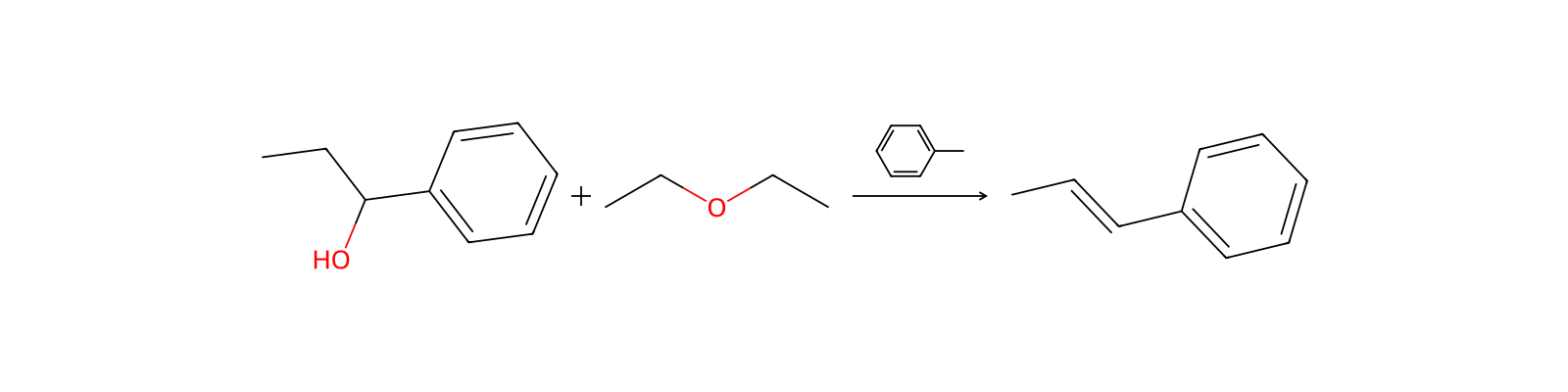
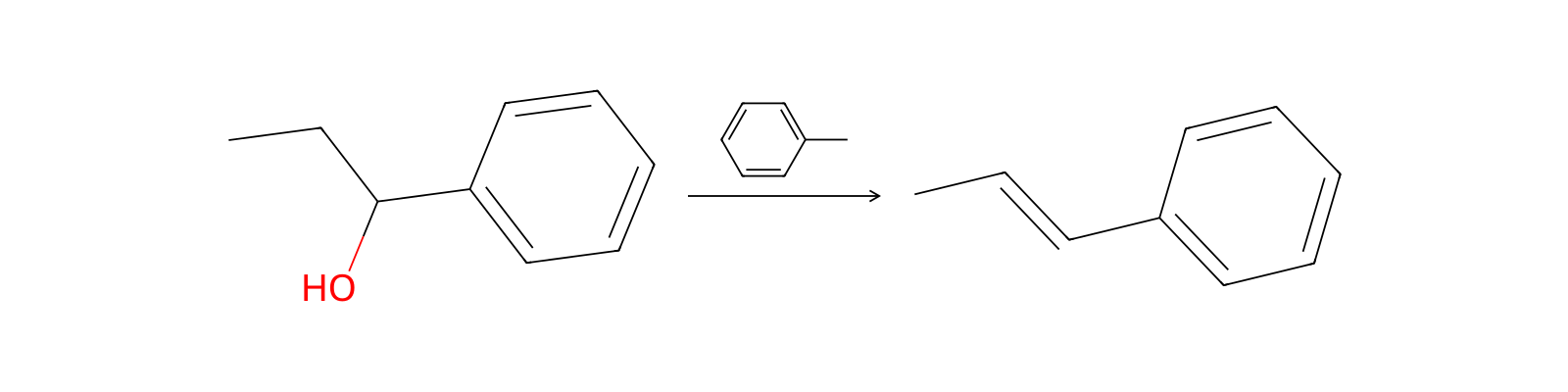
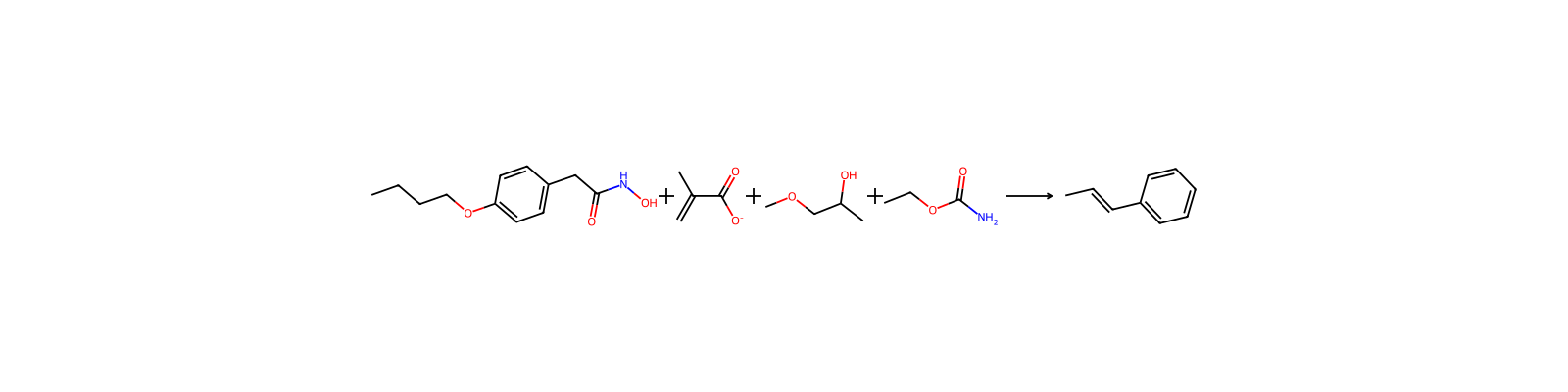
関連反応
35 件




化合物ノート
読み込み中…