

基本情報
- 標準SMILES
CNNC- InChIKey
DIIIISSCIXVANO-UHFFFAOYSA-N- 分子式
- C2H8N2
- 平均分子量
- 60.1 g/mol
- 単同位体質量
- 60.06874826
概要
1,2-Dimethylhydrazine can cause cancer according to an independent committee of scientific and health experts.
名称と識別子
- 優先名称
- 1,2-Dimethylhydrazine
- IUPAC
- 1,2-dimethylhydrazine
- 現地名
- 1,2-ジメチルヒドラジン
- 英語名
- 1,2-Dimethyl hydrazine
- 分子式
- C2H8N2
- 分子量
- 60.1
名称と別名
1,2-DIMETHYLHYDRAZINEHydrazomethane540-73-8N,N'-Dimethylhydrazinesym-DimethylhydrazineSDMHHydrazine, 1,2-dimethyl-1,2-Dimethylhydrazin1,2-Dimethyl-hydrazineSymmetrical-dimethylhydrazine1,2-DMHSymetryczna dwumetylohydrazyna
名称をさらに表示
ヒドラゾメタンsym-ジメチルヒドラジンN,N'-ジメチルヒドラジン1,2-ジメチルヒドラジン1,2ジメチルヒドラジンN,N′-ジメチルヒドラジン1,2-Dimethyl hydrazineDimethyl hydrazine (symmetrical)Hydrazine, 1,2-dimethyl- (7CI,8CI,9CI)
Dimethylhydrazine, symmetricalDTXSID0041228IX068S9745CHEBI:73755sym Dimethylhydrazine1,2 DimethylhydrazineN,N' Dimethylhydrazine1,2 Dimethyl hydrazine
データベース識別子
- CAS
540-73-8- PubChem CID
- 1322
- DTXSID
DTXSID0041228- ChEMBL
CHEMBL162921- ChEBI
CHEBI:73755- UNII
- IX068S9745
- Nikkaji
- J3.643I
物性
構造計算による物性
- XLogP
- -0.4
- 極性表面積
- 24.1 Ų
- 水素結合供与体数
- 2
- 水素結合受容体数
- 2
- 回転可能結合数
- 1
- 重原子数
- 4
- 形式電荷
- 0
- 複雑度
- 6
実験および物理化学的性質
Chemical Classes
Nitrogen Compounds -> Hydrazines
Carcinogens
pHAlkaline
SpringerMaterials PropertiesCoriolis coupling
LogP
log Kow = -0.54 /Estimated/
-0.54 (estimated)
Odor
FISHY, AMMONIA ODOR
Characteristic ammoniacal odor of aliphatic hydrazines
Density
0.8274 at 68 °F (USCG, 1999) - Less dense than water; will float
0.8274 at 20 °C/4 °C
0.83 g/cm³
Relative density of the vapour/air-mixture at 20 °C (air = 1): 1.1
0.8274 @ 20°C
Color/FormCLEAR, COLORLESS LIQ
Solubility
Miscible with alcohol, ether, dimethylformamide, hydrocarbons
Miscible with water: 1X10+6 mg/l at 25 °C
Solubility in water, g/100ml at 25 °C: 100
CorrosivityCorrosive to skin
Flash Point
5 °F
Less than 23 °C (Closed cup)
Boiling Point
177.8 °F at 760 mmHg (USCG, 1999)
81 °C @ 753 mm Hg
81 °C
81 °C @760 [mm Hg]
DecompositionWhen heated to decomposition it emits toxic fumes of /nitrgen oxides/.
物理化学的性質
- 融点
- -8.9 °C · -8.9°C
- 沸点
- 87.05 °C · 87.05°C
- 比重(密度)
- 0.8274 · 0.8274
- 屈折率
- 1.4209 · 1.4209
- 闪点
- 5 ° · <5°
- 酸解離定数(Pka)
- 9.29 · 9.29±0.70(Predicted)
- Henry's Law Constant
- 1.8 · 1.8×100 mol/(m3Pa) at 25℃, HSDB (2015)
- 安定性
- 安定。酸化剤、水、湿気と相容れない。
- EPAの化学物質情報
- 1 · 1,2-Dimethylhydrazine (540-73-8)
化学的性質
化学的特性colourless or yellow hygroscopic liquid which fumes in air
安全と法規制
GHS分類
GHS Classification
Danger
H301: Toxic if swallowed [Danger Acute toxicity, oral]
P203, P261, P262, P264, P270, P271, P273, P280, P301+P316, P302+P352, P304+P340, P316, P318, P321, P330, P361+P364, P391, P403+P233, P405, and P501 (click each P-code to see the statement)
Danger
H225: Highly Flammable liquid and vapor [Danger Flammable liquids]
P203, P210, P233, P240, P241, P242, P243, P260, P261, P262, P264, P264+P265, P270, P271, P280, P284, P301+P316, P301+P330+P331, P302+P352, P302+P361+P354, P303+P361+P353, P304+P340, P305+P354+P338, P316, P317, P318, P319, P320, P321, P330, P361+P364, P363, P370+P378, P403+P233, P403+P235, P405, and P501 (click each P-code to see the statement)
危険有害性情報
Hazards IdentificationToxic/poison by inhalation (TIH/PIH)
Regulatory Information
Hazard Traits - Carcinogenicity; Neurotoxicity
The New Jersey Worker and Community Right to Know Act requires public and private employers to provide information about hazardous substances at their workplaces. (N.J.S.A. 34:5A-1 et. seq.)
DOT LabelPoison Inhalation Hazard Flammable Liquid
Fire Hazards
Special Hazards of Combustion Products: None
· HIGHLY FLAMMABLE: Will be easily ignited by heat, sparks or flames.
Highly flammable. Gives off irritating or toxic fumes (or gases) in a fire. Vapour/air mixtures are explosive. Risk of fire and explosion on contact with oxidizing agents.
Fire Potential
Flammable
A very dangerous fire hazard when exposed to heat, flame, or oxidiziers.
Health Hazards
Breathing of vapor causes pulmonary irritation, delayed gastro-intestinal irritation, tremors, and convulsions. Contact with skin or mucous membranes causes chemical burns. Can be absorbed through skin to cause systemic intoxication and convulsions. (USCG, 1999)
· TOXIC; may be fatal if inhaled, ingested or absorbed through skin.
Hazards Summary
Liquid causes second or third degree burns after short contact; [CHRIS] Patients poisoned by hydrazines may develop methemoglobinemia and liver injury; Emergency treatment: Hydrazines; [HSDB] Inhalation of hydrazine compounds in high concentrations can induce seizures and coma; Corrosive to skin; [Merck Index] Toxic after absorption through skin; Inhalation of high concentrations can induce pulmonary irritation and edema; [CAMEO] A strong reducing agent; An eye and respiratory tract irritant; May injure liver; Can be absorbed through skin; The kidney is target organ in experimental animals; [ICSC] Danger of skin sensitization; [MAK] Causes convulsions and dyspnea in lethal-dose inhalation studies of rats; [RTECS]
DOT ID and Guide2382 131
Reactive GroupAzo, Diazo, Azido, Hydrazine, and Azide Compounds
EC ClassificationSymbol: T, N; R: 45-23/24/25-51/53; S: 53-45-61
UN ClassificationUN Hazard Class: 6.1; UN Subsidiary Risks: 3; UN Pack Group: I
Special Reports
Keller WC; Toxicity Assessment of Hydrazine Fuels; Aviation, Space, Environ Medicine 59 (11) A100-A106 25 references (1988).
DHHS/ATSDR; Toxicological Profile for Hydrazine PB/98/101025/AS (September 1997). Available at http://www.atsdr.cdc.gov/toxprofiles/tp100.html as of July 1, 2004.
安全と保護具
Fire Fighting
Excerpt from ERG Guide 131 [Flammable Liquids - Toxic]:
Use water in large amounts, powder, alcohol-resistant foam, carbon dioxide. In case of fire: keep drums, etc., cool by spraying with water.
First Aid Measures
Fresh air, rest. Refer immediately for medical attention.
First rinse with plenty of water for at least 15 minutes, then remove contaminated clothes and rinse again. Refer immediately for medical attention.
First rinse with plenty of water for several minutes (remove contact lenses if easily possible), then refer for medical attention.
Rinse mouth. Refer immediately for medical attention.
Accidental Release Measures
· CALL 911. Then call emergency response telephone number on shipping paper. If shipping paper not available or no answer, refer to appropriate telephone number listed on the inside back cover.
· ELIMINATE all ignition sources (no smoking, flares, sparks or flames) from immediate area.
First Aid
INHALATION: Remove victim from contaminated area, give artificial respiration and oxygen if needed; watch for signs of pulmonary edema; enforce absolute rest.
General First Aid:
Safe StorageFireproof. Separated from strong oxidants. Well closed. Store in an area without drain or sewer access.
Exposure Control and Personal Protection
· Wear positive pressure self-contained breathing apparatus (SCBA).
TIH (Toxic Inhalation Hazard) - Term used to describe gases and volatile liquids that are toxic when inhaled. Some are TIH materials themselves, e.g., chlorine, and some release TIH gases when spilled in water, e.g., chlorosilanes. [ERG 2016].
Fire Fighting Procedures
If material on fire or involved in fire: Do not extinguish fire unless flow can be stopped or safely confined. Use water in flooding quantities as fog. Use "alcohol" foam, dry chemical or carbon dioxide. Cool all affected containers with flooding quantities of water. Do not extinguish fire unless flow can be stopped. Apply water from as far a distance as possible. Keep run-off water out of sewers and water sources.
Storage Conditions
PRECAUTIONS FOR "CARCINOGENS": Storage site should be as close as practicable to lab in which carcinogens are to be used, so that only small quantities required for ... expt need to be carried. Carcinogens should be kept in only one section of cupboard, an explosion proof refrigerator or freezer (depending on chemicophysical properties ...) that bears appropriate label. An inventory ... should be kept, showing quantity of carcinogen & date it was acquired ... Facilities for dispensing ... should be contiguous to storage area. /Chemical Carcinogens/
Cleanup Methods
PRECAUTIONS FOR "CARCINOGENS": A high-efficiency particulate arrestor (HEPA) or charcoal filters can be used to minimize amt of carcinogen in exhausted air ventilated safety cabinets, lab hoods, glove boxes or animal rooms. ... Filter housing that is designed so that used filters can be transferred into plastic bag without contaminating maintenance staff is avail commercially. Filters should be placed in plastic bags immediately after removal. ... The plastic bag should be sealed immediately. ... The sealed bag should be labelled properly ... Waste liquids ... should be placed or collected in proper containers for disposal. The lid should be secured & the bottles properly labelled. Once filled, bottles should be placed in plastic bag, so that outer surface ... is not contaminated. ... The plastic bag should also be sealed & labelled. ... Broken glassware ... should be decontaminated by solvent extraction, by chemical destruction, or in specially designed incinerators. /Chemical Carcinogens/
Nonfire Spill ResponseExcerpt from ERG Guide 131 [Flammable Liquids - Toxic]:
Disposal Methods
Generators of waste (equal to or greater than 100 kg/mo) containing this contaminant, EPA hazardous waste number U099, must conform with USEPA regulations in storage, transportation, treatment and disposal of waste.
1,2-Dimethylhydrazine is a potential candidate for liquid injection incineration with a temperature range of 650 to 1600 °C and residence times of 0.1 to 2 seconds. Also a potential candidate for rotary kiln incineration with a temperature range of 820 to 1600 °C and residence times of seconds for liquids and gases; for solids, hours. Also a potential candidate for fluidized bed incineration with a temperature range of 450 to 980 °C and residence times of seconds for liquids and gases; longer for solids.
PRECAUTIONS FOR "CARCINOGENS": There is no universal method of disposal that has been proved satisfactory for all carcinogenic compounds & specific methods of chem destruction ... published have not been tested on all kinds of carcinogen containing waste. ... summary of avail methods & recommendations ... /given/ must be treated as guide only. /Chemical Carcinogens/
PRECAUTIONS FOR "CARCINOGENS": ... Incineration may be only feasible method for disposal of contaminated laboratory waste from biological expt. However, not all incinerators are suitable for this purpose. The most efficient type ... is probably the gas fired type, in which a first stage combustion with a less than stoichiometric air:fuel ratio is followed by a second stage with excess air. Some ... are designed to accept ... aqueous & organic solvent solutions, otherwise it is necessary ... to absorb soln onto suitable combustible material, such as sawdust. Alternatively, chem destruction may be used, esp when small quantities ... are to be destroyed in laboratory. /Chemical Carcinogens/
For more Disposal Methods (Complete) data for 1,2-DIMETHYLHYDRAZINE (9 total), please visit the HSDB record page.
Spillage Disposal
Evacuate danger area! Consult an expert! Personal protection: complete protective clothing including self-contained breathing apparatus. Do NOT let this chemical enter the environment. Collect leaking and spilled liquid in sealable containers as far as possible. Absorb remaining liquid in sand or inert absorbent. Then store and dispose of according to local regulations. Do NOT absorb in saw-dust or other combustible absorbents.
毒性情報
Interactions
Rats administered 1,2-dimethylhydrazine dihydrochloride also received water with 0.1% sodium barbiturate. Controls /were/ administered drug free water. Rats with sodium barbiturate supplemented water developed more intestinal tumors than did controls. /1,2-dimethylhydrazine dihydrochloride/
Carbon disulfide inhibited symmetrical 1,2-dimethylhydrazine dihydrochloride induced neoplasia of large bowel in female CF1 mice. /1,2-dimethylhydrazine dihydrochloride/
The effect on intestinal carcinogenesis of feeding a 20% wheat bran dietary supplement, either during and/or after the admin of carcinogen 1,2-dimethylhydrazine, was examined in male rats fed defined diets for 31 wk. In the rats fed bran during carcinogen admin, tumor yield was significantly greater. Benign and malignant tumors incr by 3.4 fold, adenomas by 3.5 fold, and adenocarcinomas by 3.25 fold over the yield found in the group fed a fiber free diet. Consumption of wheat bran, after completion of carcinogen exposure, reduced the yield of benign adenomas by 71.4% when compared with the group fed the fiber free diet. Those rats fed a wheat bran supplement during carcinogen admin and then switched to a fiber free diet afterwards had the highest tumor yield, 4.5 times as many benign and malignant tumors as in those rats consistently fed the fiber free diet and greater than or equal to 6 times as many adenomas as any of the other dietary groups.
The antioxidants, butylated hydroxyanisole and ascorbic acid, were tested for efficacy in prevention of exptl large bowel neoplasia. Carcinogenesis was induced in female CF-1 mice by admin 1,2-dimethylhydrazine 20 mg/kg orally for 24 weekly doses. Test animals received varying doses of ascorbic acid, butylated hydroxyanisole or both. Butylated hydroxyanisole was effective in prevention of large bowel neoplasms. Ascorbic acid demonstrated only a modest effect.
For more Interactions (Complete) data for 1,2-DIMETHYLHYDRAZINE (19 total), please visit the HSDB record page.
Environmental Fate
TERRESTRIAL FATE: Based on a classification scheme(1), an estimated Koc value of 25(SRC), determined from a structure estimation method(2), indicates that 1,2-dimethylhydrazine is expected to have very high mobility in soil(SRC). 1,2-Dimethylhydrazine is a weak base with an estimated pKa of 7.9(SRC), which was calculated using a method based on perturbed molecular orbital theory and linear free energy relations(3). This pKa value indicates that this compound will partially exist as a cation in moist soils, and cations may adsorb to soil more than neutral compounds(SRC). Volatilization of the protonated species from moist soils will not occur since cations do not volatilize. Volatilization of the free base may occur, based on an estimated Henry's Law constant of 5.5X10⁻⁶ atm-cu m/mole(SRC), calculated from its vapor pressure, 69.9 mm Hg(4), and water solubility, 1X10+6 mg/L(5). Volatilization from dry soils may occur based on the vapor pressure of this compound(4). No data exists regarding the degradation of 1,2-dimethylhydrazine in soils(SRC); however, 1,1-dimethylhydrazine was shown to degrade in soils through a combination of biotic and abiotic processes(6). 1,1-Dimethylhydrazine was degraded 0, 11, 11, and 50% in cleaned sand (100% sand), Vandenburg Air Force Base soil (99.1% sand, 0.4% clay, pH 6.1), organic soil (96% sand, 1% clay, 1% carbon, pH 6.4), and clay (69.3% sand, 27.95% clay, pH 3.7), respectively(6).
AQUATIC FATE: Based on a classification scheme(1), an estimated Koc value of 25(SRC), determined from a structure estimation method(2), indicates that 1,2-dimethylhydrazine is not expected to adsorb to suspended solids and sediment(SRC). 1,2-Dimethylhydrazine is a weak base with an estimated pKa of 7.9(SRC) which was calculated with a method based on perturbed molecular orbital theory and linear free energy relations(3). This pKa value indicates that this compound will partially exist as a cation in water, and cations may adsorb to suspended solids and sediment more than neutral compounds(SRC). Volatilization of the protonated species will not occur since cations do not volatilize. Volatilization of the free base may occur(4), based on an estimated Henry's Law constant of 5.5X10⁻⁶ atm-cu m/mole(SRC), calculated from its vapor pressure, 69.9 mm Hg(5), and water solubility, 1X10+6 mg/L(6). Based on this Henry's Law constant, the volatilization half-life from a model river (1 m deep, flowing 1 m/sec, wind velocity of 3 m/sec)(3) is estimated as 4 days(SRC). The volatilization half-life from a model lake (1 m deep, flowing 0.05 m/sec, wind velocity of 0.5 m/sec)(4) is estimated as 40 days(SRC). According to a classification scheme(7), an estimated BCF of 3(SRC), from an estimated log Kow of -0.54(8) and a regression-derived equation(9), suggests the potential for bioconcentration in aquatic organisms is low(SRC). 1,2-Dimethylhydrazine reacts directly with oxygen in water and is considered labile in water containing oxygen(10); the half-life for this reaction in water was estimated to be less than 10 days(SRC).
ATMOSPHERIC FATE: According to a model of gas/particle partitioning of semivolatile organic compounds in the atmosphere(1), 1,2-dimethylhydrazine, which has a measured vapor pressure of 69.9 mm Hg at 25 °C(2), will exist solely as a vapor in the ambient atmosphere. Vapor-phase 1,2-dimethylhydrazine is degraded in the atmosphere by reaction with photochemically-produced hydroxyl radicals(SRC); the half-life for this reaction in air is estimated to be about 3 hours(SRC), calculated from its rate constant of 1.3X10⁻¹⁰ cu cm/molecule-sec at 25 °C(SRC) that was derived using a structure estimation method(3). Reaction with atmospheric ozone is also expected to be significant. Although an estimated ozone half-life is not available for 1,2-dimethylhydrazine, half-lives ranging from 0.28 to 22 hrs can be estimated from measured rate constants for monomethylhydrazine, 1,1-dimethylhydrazine, and tetramethylhydrazine(4).
Adverse EffectsNeurotoxin - Other CNS neurotoxin
Exposure RoutesThe substance can be absorbed into the body by inhalation, through the skin and by ingestion.
Ecotoxicity Excerpts
/AQUATIC SPECIES/ /The effects of/ 1,2-DMH on embryo and larval stages of the South African clawed toad, Xenopus laevis /were studied/. Concentrations of 0, 10, 20, 40, 50, and 80 mg 1,2-DMH/l were used to determine an effective teratogenic level. Malformed embryos were 3, 4, 4, 5, 100 and 100%, respectively, at the dose levels tested in groups of 100 embryos. Embryo abnormalities included failure to elongate and tail kinks.
Signs and Symptoms
Cough. Sore throat.
MAY BE ABSORBED!
Redness. Pain.
Ongoing Test Status
The following link will take the user to the National Toxicology Program (NTP) Test Agent Search Results page, which tabulates all of the "Standard Toxicology & Carcinogenesis Studies", "Developmental Studies", and "Genetic Toxicity Studies" performed with this chemical. Clicking on the "Testing Status" link will take the user to the status (i.e., in review, in progress, in preparation, on test, completed, etc.) and results of all the studies that the NTP has done on this chemical. /1,2-Dimethylhydrazine dihydrochloride/ [http://ntp-apps.niehs.nih.gov/ntp_tox/index.cfm?fuseaction=ntpsearch.searchresults&searchterm=306-37-6]
ICSC Environmental DataThis substance may be hazardous to the environment. Special attention should be given to fish. Environmental effects from the substance have not been investigated adequately.
Medical Surveillance
PRECAUTIONS FOR "CARCINOGENS": Whenever medical surveillance is indicated, in particular when exposure to a carcinogen has occurred, ad hoc decisions should be taken concerning ... /cytogenetic and/or other/ tests that might become useful or mandatory. /Chemical Carcinogens/
Soil Adsorption/Mobility
Using a structure estimation method based on molecular connectivity indices(1), the Koc for 1,2-dimethylhydrazine can be estimated to be 25(SRC). According to a classification scheme(2), this estimated Koc value suggests that 1,2-dimethylhydrazine is expected to have very high mobility in soil. The pKa of 1,2-dimethylhydrazine is estimated as 7.9(SRC), using a method based on perturbed molecular orbital theory and linear free energy relations(3). This pKa value indicates that this compound will partially exist as a cation in moist soils and cations generally adsorb more strongly to organic carbon and clay than the corresponding free base(4).
Natural Pollution Sources/Symmetrical dimethylhydrazine/ has not been reported to occur as such in nature.
Human Toxicity Excerpts
/SIGNS AND SYMPTOMS/ Potential symptoms of overexposure are irritation of eyes and skin; choking, chest pain and dyspnea; lethargy; nausea; anoxia; convulsions; liver injury. /1,1-Dimethylhydrazine/
/OTHER TOXICITY INFORMATION/ Corrosive to skin!
法規制情報
RCRA Requirements
U099; As stipulated in 40 CFR 261.33, when hydrazine, 1,2-dimethyl-, as a commercial chemical product or manufacturing chemical intermediate or an off-specification commercial chemical product or a manufacturing chemical intermediate, becomes a waste, it must be managed according to Federal and/or State hazardous waste regulations. Also defined as a hazardous waste is any residue, contaminated soil, water, or other debris resulting from the cleanup of a spill, into water or on dry land, of this waste. Generators of small quantities of this waste may qualify for partial exclusion from hazardous waste regulations (40 CFR 261.5).
CERCLA Reportable Quantities
Persons in charge of vessels or facilities are required to notify the National Response Center (NRC) immediately, when there is a release of this designated hazardous substance, in an amount equal to or greater than its reportable quantity of 1 lb or 0.454 kg. The toll free number of the NRC is (800) 424-8802; In the Washington D.C. metropolitan area (202) 426-2675. The rule for determining when notification is required is stated in 40 CFR 302.4 (section IV. D.3.b).
安全データ
- rtecs
- MV2625000
- ridadr
- UN 2382
- risk_code
- 45-23/24/25-51/53
- hazard_code
- T,N
- safety_code
- 53-45-61
- hazard_class
- 6.1
- packing_group
- I
- 有毒物質データの
- 540-73-8(Hazardous Substances Data)
化学と産業
薬理情報
Mechanism of Action
Mucosal beta-glucuronidase production was assayed in coded, scraped mucosa samples from the duodenum/jejunum, ileum, right colon and left colon of normal and 1,2-dimethylhydrazine treated rats. Normal mucosal beta-glucuronidase production was highest in the left colon followed by the right colon, duodenum and ileum. Enzyme production in the left colon was significantly incr 24 hr after injection of 25 mg/kg body wt 1,2-dimethylhydrazine (1,2-DMH). No elevation was seen in other mucosal samples. Metab of 1,2-DMH to oxidized forms conjugated to glucuronic acid is well established. Thus, this study offers a possible role for carcinogen, ie, induction of a metabolic enzyme in its target tissue.
The role of alkylation of cell components in the induction of intestinal tumors induced by 1,2-dimethylhydrazine (SDMH) was studied in rats. Fifteen to 30 minutes after sc administration of (3)H labeled SDMH, which induces colonic tumors, marked radioactivity was found in blood, bile, urine & in contents of all regions of gastrointestinal tract. SDMH methylated DNA, RNA and proteins of intestinal mucosa, liver and kidney to a high degree. A carcinogenic SDMH metabolite forms in the liver, a conjugate with glucuronic acid. This glucuronide enters the gut both with bile and directly via the circulation. Microbial beta-glucuronidase releases the active metabolite which, in turn, alkylates tissue macromolecules.
.../In rats/, DNA was alkylated to a greater extent in liver than kidney or colon after a dose of 200 mg/kg bw /1,2-dimethylhydrazine (DMH)/ given ip or sc. The level of alkylation in liver was affected by route of administration, but alkylation of kidney DNA was greater after sc injection than after ip injection, whereas the reverse was the case in the colon. A number of methylated purines were detected in hydrolysates of DNA isolated from rats given DMH. These incl 7-methylguanine, O6-methylguanine, 3-methyladenine, 1-methyladenine and 7-methyladenine. The relative amount of these products were consistent with the hypothesis that alkylation was mediated by the metabolism of DMH to an alkylating species similar to dimethylnitrosamine /SRP: and diazomethane/. O6-Methylguanine was greater in liver than in colon or kidney.
One of the principal mechanisms thought to be involved in initiating carcinogenesis is the alkylation of specific sites on DNA, such as O6 position of guanine. Investigation has shown that study of whole liver does not localize alkylation or repair capacity in different cells types which give rise to neoplasia. Although hepatocytes account for >90% of the liver's mass, they only comprise 60-70% of its cells. The non-parenchymal cell population, which consists almost entirely of endothelial and kupffer cells, accounts for the remaining 30-40% and contains 10-20% of the DNA. The alkylation and repair of O6 and 7-methylguanine in the target and nontarget cells following oral administration of 1,2-dimethylhydrazine to rats was studied. Although initial formation of O6-methylguanine was less in DNA of non-parenchymal, removal of O6-methylguanine was significantly slower. This led to administration /of/ a 2nd daily dose. 7-methylguanine decreased at similar rates resulting in a 28 fold greater O6-methylguanine/7-methylguanine ratio in the target cell population.
For more Mechanism of Action (Complete) data for 1,2-DIMETHYLHYDRAZINE (8 total), please visit the HSDB record page.
Metabolism/Metabolites
Both human and rat colon activate 1,2-dimethylhydrazine (1,2-DMH) into chemical species that reacted with cellular macromolecules. When human and rat colons were compared, the metabolism of 1,2-dimethylhyrazine was qualitatively similar, /resulting in/ the same major carcinogen DNA adducts and metabolic profile. However, the mean binding levels of 1,2-dimethylhydrazine to colonic DNA were higher in rats than in humans.
N5-methyl-N5-formyl-2,5,6-triamino-4-hydroxypyrimidine was identified in rat liver DNA after treatment with 1,2-dimethylhydrazine.
Human colon microsomes catalyze the metabolism of 1,2-dimethylhydrazine (1,2-DMH). 1,2-DMH metabolism in all colonic segments is inhibited significantly by inhibitors of the cytochrome p450 dependent mixed function oxidase system.
The N-oxidation of 1,2-dimethylhydrazine catalyzed by purified mouse liver microsomal mixed function amine oxidase is shown.
For more Metabolism/Metabolites (Complete) data for 1,2-DIMETHYLHYDRAZINE (9 total), please visit the HSDB record page.
MeSH Pharmacological Classification
Highly reactive chemicals that introduce alkyl radicals into biologically active molecules and thereby prevent their proper functioning. Many are used as antineoplastic agents, but most are very toxic, with carcinogenic, mutagenic, teratogenic, and immunosuppressant actions. They have also been used as components in poison gases.
Substances that increase the risk of NEOPLASMS in humans or animals. Both genotoxic chemicals, which affect DNA directly, and nongenotoxic chemicals, which induce neoplasms by other mechanism, are included.
Chemical agents that increase the rate of genetic mutation by interfering with the function of nucleic acids. A clastogen is a specific mutagen that causes breaks in chromosomes.
Absorption, Distribution and Excretion
15-30 min after (3)H-1,2-dimethylhydrazine was admin to rats, marked radioactivity was found in blood, bile, urine, and in contents of all regions of GI tract.
1,2-Dimethylhydrazine is well absorbed from the colon of the rat, as shown by an in vivo perfusion technique. The absorption was enhanced significantly by bile acids and by hydroxy-fatty acids; fatty acids had no significant effect.
The tissue distribution and covalent binding of 3(H ) was examined in rats given 3(H]1,2-dimethylhydrazine according to various dose schedules. There was widespread covalent binding to protein, DNA and RNA of liver, kidney, duodenum, ileum and colon and this was greater when a large dose was given weekly than when the same dose was divided and given daily. However, while daily dosing resulted in a loss of cytochrome P450 in hepatic microsomes to 47% of control levels, weekly dosing had no effect.
用途と製造
Uses
Used in research and not used commercially; [HSDB] Used in the production of photographic chemicals; [CAMEO]
...Used only in small quantities as a research chemical. There are no known commercial uses, although it was evaluated experimentally as a high-energy rocket fuel.
U.S. Production
(1978) NOT PRODUCED COMMERCIALLY IN USA
(1982) NOT PRODUCED COMMERCIALLY IN USA
Methods of Manufacturing
Prepared from dibenzoylhydrazine. Electrosynthesis from nitromethane.
... SYMMETRICAL DIALKYLHYDRAZINES SUCH AS SYMMETRICAL 1,2-DIMETHYLHYDRAZINE CAN BE MADE BY (I) REDN OF CORRESPONDING AZINE USING LITHIUM ALUMINUM HYDRIDE, (II) HYDROLYSIS OF ALKYL SUBSTITUTED DIAZACYCLOPROPANES, OR (III) REACTION OF HYDRAZINE WITH ALKYL HALIDES.
Hydrazine is ... methylated readily. An indirect pathway via a diacyl compound is preferred for the synthesis of symmetrical dimethylhydrazine.
Formulations/Preparations99+% grade
応用分野
使用1,2-Dimethylhydrazine (SDMH) unlike its analog 1,1- dimethylhydrazine (UDMH) is used only in small quantities as a research chemical. There are no known commercial uses, although it was evaluated as a high-energy rocket fuel. The material is a fuming, strongly alkaline, moderately volatile liquid.
一般的な説明A colorless liquid with an ammonia-like odor. Less dense than water. Flash point is 5°F. Contact irritate skin, eyes, and mucous membranes. Very toxic by ingestion, inhalation and skin absorption. Used to make photographic chemicals.
補足説明
定義ChEBI: A member of the class of hydrazines that is hydrazine in which one of the hydrogens attached to each nitrogen is replaced by a methyl group. A powerful DNA alkylating agent and carcinogen, it is used to induce colon cancer in laboratory rats and mice.
関連反応
15 件


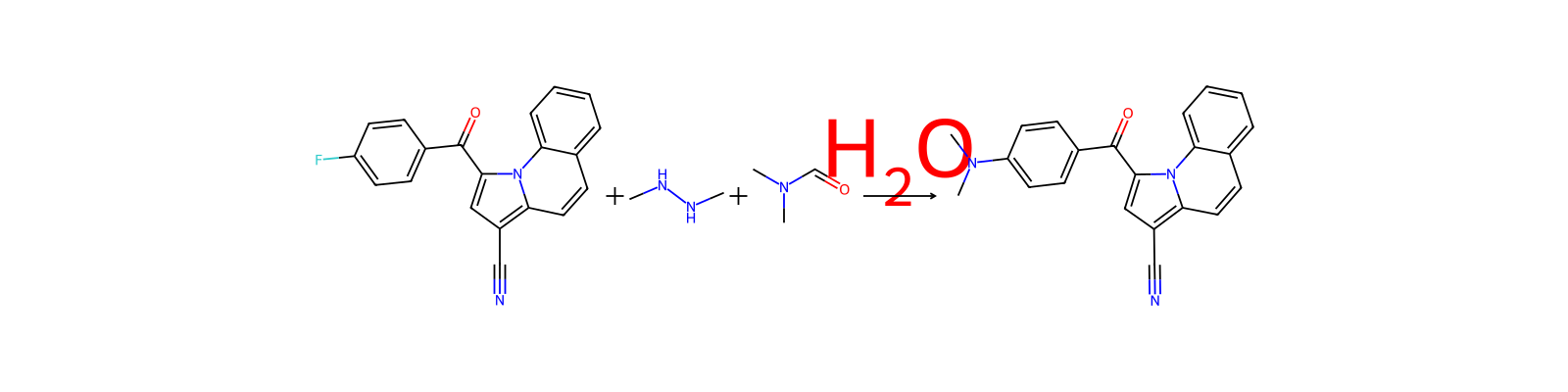


関連ノート
読み込み中…