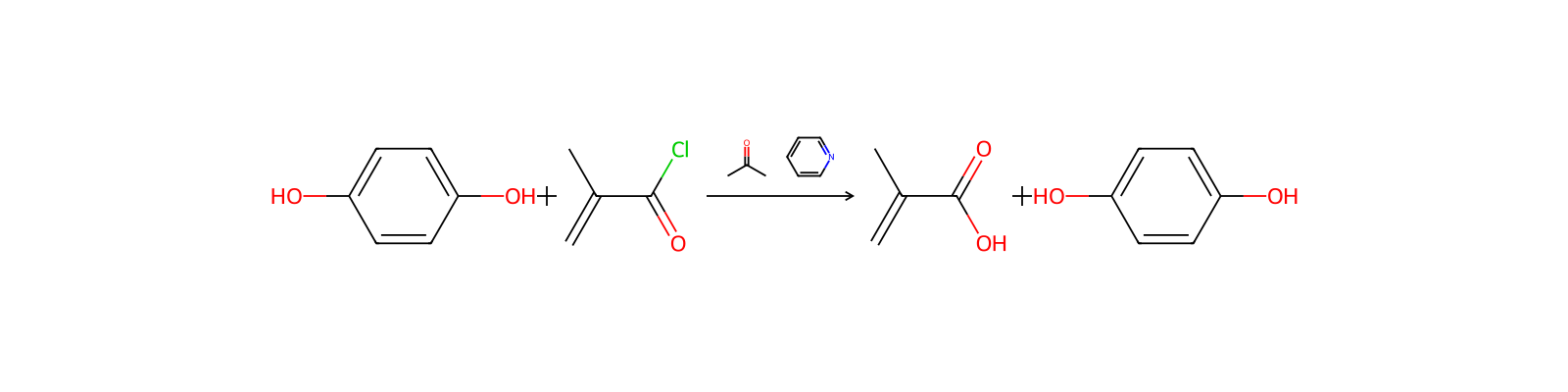
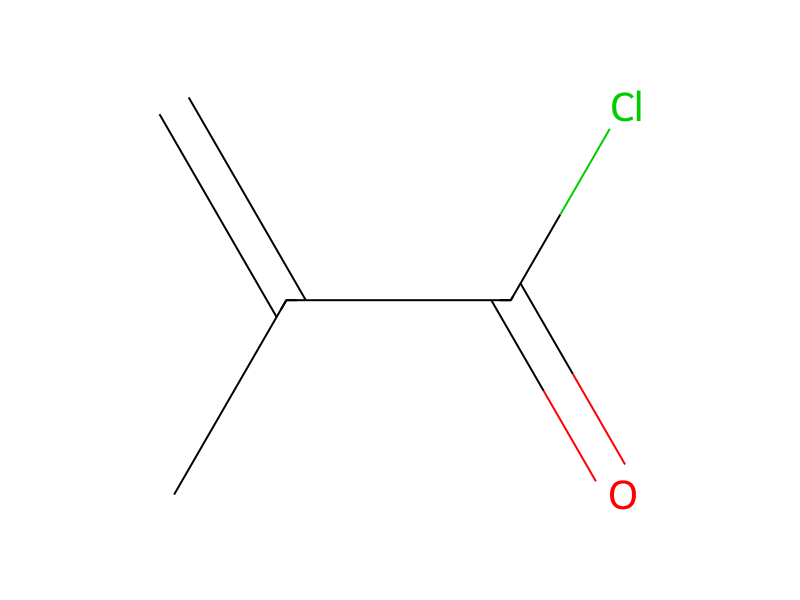
基本情報
- 標準SMILES
C=C(C)C(=O)Cl- InChIKey
VHRYZQNGTZXDNX-UHFFFAOYSA-N- 分子式
- C4H5ClO
- 平均分子量
- 104.53 g/mol
- 単同位体質量
- 104.00289246
概要
Methacryloyl chloride appears as a liquid of density 1.07 g / cm3, boiling point 95-96 °C, and flash point 55 °F. Highly toxic. Supplied in technical grades of varying purity.
名称と識別子
- 優先名称
- Methacryloyl chloride
- IUPAC
- 2-methylprop-2-enoyl chloride
- 現地名
- メタクリロイルクロリド
- 英語名
- Methacryloyl chloride
- 分子式
- C4H5ClO
- 分子量
- 104.53
名称と別名
METHACRYLOYL CHLORIDE920-46-7Methacrylyl chloride2-Methyl-2-propenoyl chlorideMethacrylic acid chlorideMethacryl chloride2-Propenoyl chloride, 2-methyl-Methacrylic chloride2-Methylpropenoyl chlorideMethylacryloyl chloride2-Methylpropenoic acid chlorideL76O6653IO
名称をさらに表示
メタクリロイルクロリドメタクリル酸クロリドメタクリルクロリド1-クロロ-2-メチル-2-プロペン-1-オン2-メチルアクリル酸クロリド2-メチルプロペン酸クロリド2-メチルプロペノイルクロリドメタクリロイルクロライド2-メチル-2-プロペノイルクロライドメタクリル酸クロライド2-メチル-2-プロペノイルクロリド塩化メタクリロイルMethacryloyl chlorid2-METHYL-ACRYLOYL CHLORIDEmethylacryloylchloridemethacrylchloridemethacrylolchloridemethacrylicchloride
alpha-Methylacryloyl chlorideDTXSID6061280RefChem:811289DTXCID8048785213-058-9Methacryloylchloride2-methylprop-2-enoyl chloride.alpha.-Methylacryloyl chloride
データベース識別子
- CAS
920-46-7- PubChem CID
- 13528
- DTXSID
DTXSID6061280- UNII
- L76O6653IO
- EC Number
- 213-058-9
- Nikkaji
- J38.880G
物性
構造計算による物性
- XLogP
- 1.7
- 極性表面積
- 17.1 Ų
- 水素結合供与体数
- 0
- 水素結合受容体数
- 1
- 回転可能結合数
- 1
- 重原子数
- 6
- 形式電荷
- 0
- 複雑度
- 85.5
実験および物理化学的性質
Chemical Classes
Toxic Gases & Vapors -> Other Toxic Gases & Vapors
Corrosives
SpringerMaterials PropertiesSchoenflies notation
Density
1.0871 at 68 °F (EPA, 1998) - Denser than water; will sink
1.0871 g/cu cm @ 20 °C
SolubilitySol in ether, acetone, chloroform
Boiling Point
205 °F at 760 mmHg (EPA, 1998)
96 °C
96 °C @760 [mm Hg]
DecompositionWhen heated to decomposition it emits toxic fumes of /hydrogen chloride/.
Melting Point
-60 °C
-60 °C
Vapor Pressure
45.5 [mmHg]
40 [mm Hg] @25 °C
Refractive IndexIndex of refraction: 1.4435 at 20 °C/D
Physical Description
Methacryloyl chloride appears as a liquid of density 1.07 g / cm3, boiling point 95-96 °C, and flash point 55 °F. Highly toxic. Supplied in technical grades of varying purity.
Liquid; [Hawley] Colorless liquid; [MSDSonline]
Other Experimental PropertiesHydrolyzed by water
物理化学的性質
- 融点
- -60 °C · -60°C
- 沸点
- 95 · 95-96 °C(lit.)
- 比重(密度)
- 1.08 g/mL · 1.08 g/mL at 20 °C
- 屈折率
- 20 · n20/D 1.442(lit.)
- 闪点
- 57 °F · 57 °F
- 貯蔵温度
- 2 · 2-8°C
- 溶解性
- クロロホルム
- 外見
- 液体
- 色
- 透明~微有色
- 水溶解度
- アルコール、エーテル、有機溶剤と混和します。水とわずかに混和する。
- BRN
- 878175 · 878175
- 安定性
- 光と湿気に敏感
- InChIKey
- VHRYZQNGTZXDNX-UHFFFAOYSA-N
- CAS データベース
- 920 · 920-46-7(CAS DataBase Reference)
- NISTの化学物質情報
- Methacryloyl chloride(920-46-7)
- EPAの化学物質情報
- Methacryloyl chloride (920-46-7)
化学的性質
化学的特性clear slightly colored liquid
安全と法規制
GHS分類
GHS Classification
Danger
H225 (100%): Highly Flammable liquid and vapor [Danger Flammable liquids]
P210, P233, P240, P241, P242, P243, P260, P261, P264, P270, P271, P272, P273, P280, P284, P301+P317, P301+P330+P331, P302+P352, P302+P361+P354, P303+P361+P353, P304+P340, P305+P354+P338, P316, P320, P321, P330, P333+P317, P362+P364, P363, P370+P378, P403+P233, P403+P235, P405, and P501 (click each P-code to see the statement)
Aggregated GHS information provided per 53 reports by companies from 6 notifications to the ECHA C&L Inventory. Each notification may be associated with multiple companies.
Danger
H225: Highly Flammable liquid and vapor [Danger Flammable liquids]
危険有害性情報
Regulatory Information
Status: Active Update: 12-03-2019 https://echa.europa.eu/registration-dossier/-/registered-dossier/23665
The New Jersey Worker and Community Right to Know Act requires public and private employers to provide information about hazardous substances at their workplaces. (N.J.S.A. 34:5A-1 et. seq.)
DOT LabelFlammable Liquid Poison Corrosive
Fire HazardsExcerpt from ERG Guide 131 [Flammable Liquids - Toxic]:
Health HazardsExcerpt from ERG Guide 131 [Flammable Liquids - Toxic]:
Hazards Summary
Flammable and corrosive; [Hawley] A strong skin irritant; [HSDB] Reacts with water evolving hydrogen chloride gas; Highly flammable and toxic; [CAMEO] A corrosive substance that can cause injury to the skin, eyes, and respiratory tract; Inhalation may cause chemical pneumonitis; [MSDSonline]
Reactive GroupAcyl Halides, Sulfonyl Halides, and Chloroformates
Reactivity AlertsHighly Flammable
Reactivity Profile
METHACRYLOYL CHLORIDE is incompatible with strong oxidizing agents, alcohols, bases (including amines). Can polymerize violently; but the polymerization reaction can be inhibited by the addition of phenolthiazine. May react vigorously or explosively if mixed with diisopropyl ether or other ethers in the presence of trace amounts of metal salts [J. Haz. Mat., 1981, 4, 291].
Air and Water ReactionsHighly flammable. Reacts with water to produce gaseous hydrogen chloride (corrosive and toxic).
Highly Hazardous SubstanceChemical: Methacryloyl Chloride
CERCLA Reportable Quantities
Releases of CERCLA hazardous substances are subject to the release reporting requirement of CERCLA section 103, codified at 40 CFR part 302, in addition to the requirements of 40 CFR part 355. Methacryloyl chloride is an extremely hazardous substance (EHS) subject to reporting requirements when stored in amounts in excess of its threshold planning quantity (TPQ) of 100 lbs.
Hazard Classes and Categories
Flam. Liq. 2 (100%)
Flammable liquids - Category 2
Corrosives, Flammable agents - 3rd degree, Reactive agents - 1st degree
安全と保護具
Fire FightingExcerpt from ERG Guide 131 [Flammable Liquids - Toxic]:
First AidNote: No information on specific clinical effects of acute exposure to methacryloyl chloride was found.
Nonfire Spill ResponseExcerpt from ERG Guide 131 [Flammable Liquids - Toxic]:
Disposal Methods
SRP: At the time of review, criteria for land treatment or burial (sanitary landfill) disposal practices are subject to significant revision. Prior to implementing land disposal of waste residue (including waste sludge), consult with environmental regulatory agencies for guidance on acceptable disposal practices.
Isolation and EvacuationExcerpt from ERG Guide 131 [Flammable Liquids - Toxic]:
Protective Action Criteria (PAC)
0.055 [mg/m3]
0.60 [mg/m3]
2.6 [mg/m3]
Personal Protective Equipment (PPE)
For emergency situations, wear a positive pressure, pressure-demand, full facepiece self-contained breathing apparatus (SCBA) or pressure- demand supplied air respirator with escape SCBA and a fully-encapsulating, chemical resistant suit. (EPA, 1998)
毒性情報
Adverse EffectsDermatotoxin - Skin burns.
Human Toxicity ExcerptsConcn of up to 113 ppm were found in a plant handling the material. Medical reports of acute exposures revealed no resp symptoms, but skin toxicity and a severe corneal burn. /Methacrylic acid/
Non-Human Toxicity Excerpts
... severe corneal burns have been reported after acute exposure to methacrylic acid. /Methacrylic acid/
Direct contact with liquid methacrylic acid can result in blindness ... /Methacrylic acid/
Antidote and Emergency Treatment
Basic treatment: Establish a patent airway. Suction if necessary. Watch for signs of respiratory insufficiency and assist ventilations if needed. Administer oxygen by nonrebreather mask at 10 to 15 L/min. Monitor for pulmonary edema and treat if necessary ... . Monitor for shock and treat if necessary ... . Anticipate seizures and treat if necessary ... . For eye contamination, flush eyes immediately with water. Irrigate each eye continuously with normal saline during transport ... . Do not use emetics. For ingestion, rinse mouth and administer 5 mL/kg up to 200 mL of water for dilution if the patient can swallow, has a strong gag reflex, and does not drool ... . Cover skin burns with dry sterile dressings after decontamination ... . /Poisons A and B/
Advanced treatment: Consider orotracheal or nasotracheal intubation for airway control in the patient who is unconscious, has severe pulmonary edema, or is in respiratory arrest. Positive-pressure ventilation techniques with a bag-valve-mask device may be beneficial. Monitor cardiac rhythm and treat arrhythmias as necessary ... . Start an IV with D5W TKO /SRP: "To keep open", minimal flow rate/. Use lactated Ringer's if signs of hypovolemia are present. Watch for signs of fluid overload. Consider drug therapy for pulmonary edema ... . For hypotension with signs of hypovolemia, administer fluid cautiously. Watch for signs of fluid overload ... . Treat seizures with diazepam (Valium) ... . Use proparacaine hydrochloride to assist eye irrigation ... . /Poisons A and B/
Toxicity DataLC50 (rat) = 60 mg/m3/4h
Non-Human Toxicity Values
LC50 Rat ihl 60 mg/cu m/4 hr
LC50 Mouse ihl 115 mg/cu m/2 hr
法規制情報
CERCLA Reportable Quantities
Releases of CERCLA hazardous substances are subject to the release reporting requirement of CERCLA section 103, codified at 40 CFR part 302, in addition to the requirements of 40 CFR part 355. Methacryloyl chloride is an extremely hazardous substance (EHS) subject to reporting requirements when stored in amounts in excess of its threshold planning quantity (TPQ) of 100 lbs.
安全データ
- F
- 21
- wgk
- 3
- tsca
- TSCA listed
- rtecs
- OZ5791000
- ridadr
- UN 3383 6.1/PG 1
- hs_code
- 29161900
- risk_code
- 11-26/27/28-34-26-22-43-52/53
- 化審法
- (2)-1029
- 消防法
- 危-4-1-II
- hazard_code
- F,T+,Xi
- hazard_note
- Irritant
- safety_code
- 26-28-36/37/39-45-27-16-33-29
- hazard_class
- 6.1
- packing_group
- I
- 有毒物質データの
- 920-46-7(Hazardous Substances Data)
化学と産業
用途と製造
Uses
Used in the production of hydrogel for contact lenses; [HSDB]
A hydrogel with 80% water absorption was obtained from reaction of 2-hydroxyethyl methacrylate, containing small amounts of ethylene glycol dimethacrylate with the reaction product of poly(vinylpyrrolidinone) & methacryloyl chloride /contact lenses/
Formulations/PreparationsAvailable forms: Technical 90% stabilized with phenothiazine
General Manufacturing Information2-Propenoyl chloride, 2-methyl-: ACTIVE
応用分野
用途有機合成中間体,塗料用樹脂?フォトレジスト?光学レンズ?医療器具原料
用途有機合成原料。
一般的な説明Methacryloyl chloride is the clear to slightly colored acid chloride of methacrylic acid. It appears as a liquid of density 1.07g/cm3, boiling point 95-96°C, and flash point 55°F. Highly toxic. Supplied in technical grades of varying purity. Monomethyl ether hydroquinone is added as a stabilizer to prevent auto polymerization. Reaction with diisopropyl ether in presence of metal salts is rigorous.
調製方法
純化方法Purify the ester by fractional distillation. If it contains the acid (OH bands in the IR) then add redistilled SOCl2 (with cooling) and cuprous chloride (ca to 2%), reflux the mixture gently for 1hour and fractionate it through a 1metre column packed with glass helices. Redistillation then provides the acid chloride in high purity as a colourless liquid. It is necessary to keep the apparatus moisture free (use CaCl2 tubes), Stabilise it with 0.05% of 2,6-di-tert-butyl-4-methylphenol. [Lal & Green J Org Chem 20 1032 1955, Beilstein 2 IV 1537.]
上流・下流製品情報
下流製品
関連反応
674 件


関連ノート
読み込み中…