
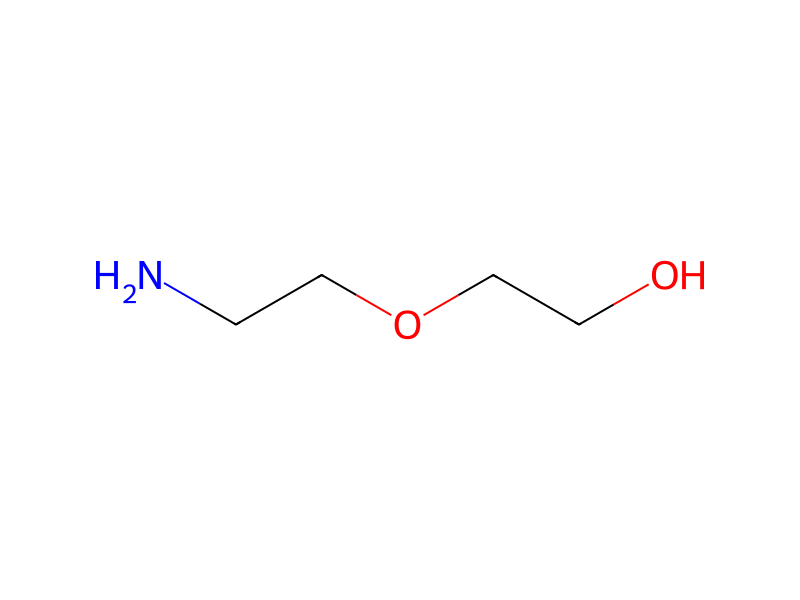
基本情報
- 標準SMILES
NCCOCCO- InChIKey
GIAFURWZWWWBQT-UHFFFAOYSA-N- 分子式
- C4H11NO2
- 平均分子量
- 105.14 g/mol
- 単同位体質量
- 105.07897859
概要
2-(2-aminoethoxy)ethanol appears as a colorless liquid with a faint fishlike odor. Combustible but difficult to ignite. Corrosive to tissue. Combustion produces toxic oxides of nitrogen.
名称と識別子
- 優先名称
- Diglycolamine
- IUPAC
- 2-(2-aminoethoxy)ethanol
- 英語名
- 2-Aminoethoxyethanol
- 分子式
- C4H11NO2
- 分子量
- 105.13564
名称と別名
2-(2-AMINOETHOXY)ETHANOL929-06-6Diglycolamine2-Aminoethoxyethanol2-(2-Hydroxyethoxy)ethylamineDiethylene glycol monoamineEthanol, 2-(2-aminoethoxy)-Diethylene glycol amine1-Amino-2-(2-hydroxyethoxy)ethane5-Hydroxy-3-oxapentylamine2-Amino-2'-hydroxydiethyl etherDiglycolamine agent
名称をさらに表示
2-(Hydroxyethoxy)ethylamineDTXSID6027341beta-(beta-Hydroxyethoxy)ethylaminebeta-Hydroxy-beta'-aminoethyl etherbeta-Hydroxy-beta'-aminodiethyl ether6R5Y84T8W9NSC-86108DTXCID907341
データベース識別子
- CAS
929-06-6- PubChem CID
- 13578
- DTXSID
DTXSID6027341- ChEMBL
CHEMBL3183757- UNII
- 6R5Y84T8W9
- EC Number
- 213-195-4
- Nikkaji
- J7.177C
物性
構造計算による物性
- XLogP
- -1.5
- 極性表面積
- 55.5 Ų
- 水素結合供与体数
- 2
- 水素結合受容体数
- 3
- 回転可能結合数
- 4
- 重原子数
- 7
- 形式電荷
- 0
- 複雑度
- 32.9
実験および物理化学的性質
Chemical Classes
Nitrogen Compounds -> Other Nitrogen Compounds
Corrosives
OdorMILD AMINE ODOR
Density
1.0572 @ 20 °C/20 °C
1.05 @25 °C
ViscositySLIGHTLY VISCOUS
Color/FormCOLORLESS LIQUID
SolubilityMISCIBLE WITH WATER AND ALCOHOLS
Flash Point
Flash point =126 °C
260 °F (126.6 °C)
Boiling Point
221 °C
220 °C @760 [mm Hg]
Melting Point
FP: -12.5 °C
-16 °C
Vapor Pressure0.05 [mm Hg] @20 °C
Physical Description
2-(2-aminoethoxy)ethanol appears as a colorless liquid with a faint fishlike odor. Combustible but difficult to ignite. Corrosive to tissue. Combustion produces toxic oxides of nitrogen.
Liquid
A colorless liquid with a faint fishlike odor; [CAMEO]
Collision Cross Section235.8 Ų [M+H]+ [CCS Type: DT; Buffer gas: N2; Ionization: ESI+; Dataset: TOXCAST; Source Identifier: DTXSID6027341]
物理化学的性質
- 沸点
- 221 °C · 221 °C
- 比重(密度)
- 1.0572 g/cm3 · 1.0572 g/cm3
- 酸解離定数(Pka)
- 14.37 · 14.37±0.10(Predicted)
安全と法規制
GHS分類
GHS Classification
Danger
H290 (49.3%): May be corrosive to metals [Warning Corrosive to Metals]
P234, P260, P264, P264+P265, P280, P301+P330+P331, P302+P361+P354, P304+P340, P305+P354+P338, P316, P317, P321, P363, P390, P405, P406, and P501 (click each P-code to see the statement)
Aggregated GHS information provided per 897 reports by companies from 13 notifications to the ECHA C&L Inventory. Each notification may be associated with multiple companies.
危険有害性情報
Regulatory Information
Chemical: Ethanol, 2-(2-aminoethoxy)-
Ethanol, 2-(2-aminoethoxy)- is listed on the EPA's Chemical Data Reporting (CDR) system. Manufacturers and importers of Ethanol, 2-(2-aminoethoxy)- are required to report information about their production and use of this chemical to the EPA under the Toxic Substances Control Act (TSCA). (40 eCFR Part 711)
Status: Active Update: 14-03-2023 https://echa.europa.eu/registration-dossier/-/registered-dossier/13361
2-(2-Aminoethoxy) ethanol: Does not have an individual approval but may be used under an appropriate group standard
The New Jersey Worker and Community Right to Know Act requires public and private employers to provide information about hazardous substances at their workplaces. (N.J.S.A. 34:5A-1 et. seq.)
DOT LabelCorrosive
Fire Hazards
Excerpt from ERG Guide 154 [Substances - Toxic and/or Corrosive (Non-Combustible)]:
· Non-combustible, substance itself does not burn but may decompose upon heating to produce corrosive and/or toxic fumes.
Health Hazards
Excerpt from ERG Guide 154 [Substances - Toxic and/or Corrosive (Non-Combustible)]:
· TOXIC and/or CORROSIVE; inhalation, ingestion or skin contact with material may cause severe injury or death.
Hazards Summary
Allergic contact dermatitis reported in a machinist; Corrosive to skin; [Quick CPC] Causes burns; harmful if swallowed; Inhalation of high concentration may cause chemical pneumonitis; [MSDSonline] Skin designation; Danger of skin sensitization; [MAK]
DOT ID and Guide3055 154
Reactive GroupAlcohols and Polyols
Reactivity Profile
2-(2-AMINOETHOXY)ETHANOL is an organic compound with both amine and alcohol substituents. Neutralizes acids in exothermic reactions to form salts plus water. May be incompatible with isocyanates, halogenated organics, peroxides, phenols (acidic), epoxides, anhydrides, and acid halides. Flammable gaseous hydrogen is generated in combination with strong reducing agents, such as hydrides.
DOT Emergency Guidelines
/GUIDE 154: SUBSTANCES - TOXIC AND/OR CORROSIVE (NON-COMBUSTIBLE)/ Health: TOXIC; inhalation, ingestion, or skin contact with material may cause severe injury or death. Contact with molten substance may cause severe burns to skin and eyes. Avoid any skin contact. Effects of contact or inhalation may be delayed. Fire may produce irritating, corrosive and/or toxic gases. Runoff from fire control or dilution water may be corrosive and/or toxic and cause pollution.
/GUIDE 154: SUBSTANCES - TOXIC AND/OR CORROSIVE (NON-COMBUSTIBLE)/ Fire or Explosion: Non-combustible, substance itself does not burn but may decompose upon heating to produce corrosive and/or toxic fumes. Some are oxidizers and may ignite combustibles (wood, paper, oil, clothing, etc.). Contact with metals may evolve flammable hydrogen gas. Containers may explode when heated.
/GUIDE 154: SUBSTANCES - TOXIC AND/OR CORROSIVE (NON-COMBUSTIBLE)/ Public Safety: CALL Emergency Response Telephone Number ... . As an immediate precautionary measure, isolate spill or leak area in all directions for at least 50 meters (150 feet) for liquids and at least 25 meters (75 feet) for solids. Keep unauthorized personnel away. Stay upwind. Keep out of low areas. Ventilate enclosed areas.
/GUIDE 154: SUBSTANCES - TOXIC AND/OR CORROSIVE (NON-COMBUSTIBLE)/ Protective Clothing: Wear positive pressure self-contained breathing apparatus (SCBA). Wear chemical protective clothing that is specifically recommended by the manufacturer. It may provide little or no thermal protection. Structural firefighters' protective clothing provides limited protection in fire situations ONLY; it is not effective in spill situations where direct contact with the substance is possible.
For more DOT Emergency Guidelines (Complete) data for 2-(2-AMINOETHOXY)ETHANOL (8 total), please visit the HSDB record page.
DOT Hazard Classification
2-(2-Aminoethoxy) ethanol
UN3055
Class 8 Corrosive material (49 eCFR § 173.136)
PG III: the degree of danger presented by the material is minor
Air and Water ReactionsWater soluble.
Hazard Classes and Categories
Met. Corr. 1 (49.3%)
Corrosives
安全と保護具
Fire FightingExcerpt from ERG Guide 154 [Substances - Toxic and/or Corrosive (Non-Combustible)]:
Accidental Release Measures
· CALL 911. Then call emergency response telephone number on shipping paper. If shipping paper not available or no answer, refer to appropriate telephone number listed on the inside back cover.
· ELIMINATE all ignition sources (no smoking, flares, sparks or flames) from immediate area.
First Aid
Excerpt from ERG Guide 154 [Substances - Toxic and/or Corrosive (Non-Combustible)]:
General First Aid:
Exposure Control and Personal Protection
· Wear positive pressure self-contained breathing apparatus (SCBA).
0.2 [ppm]
Nonfire Spill ResponseExcerpt from ERG Guide 154 [Substances - Toxic and/or Corrosive (Non-Combustible)]:
Isolation and Evacuation
Excerpt from ERG Guide 154 [Substances - Toxic and/or Corrosive (Non-Combustible)]:
Immediate precautionary measure
Protective Action Criteria (PAC)
9.0 [mg/m3]
99 [mg/m3]
590 [mg/m3]
Personal Protective Equipment (PPE)Excerpt from ERG Guide 154 [Substances - Toxic and/or Corrosive (Non-Combustible)]:
Emergency Response Planning GuidelinesSmall Fire
毒性情報
Adverse EffectsDermatotoxin - Skin burns.
Human Toxicity ExcerptsSTRONG IRRITANT TO TISSUE.
安全データ
- 注意喚起語
- 危険
- 危険有害性情報
- コード 危険有害性情報 危険有害性クラス 区分 注意喚起語 シンボル P コード H314
化学と産業
用途と製造
Uses
Used as an emulsifying agent in metalworking fluids;
Metal Machining [Category: Heat or Machine]
REMOVAL OF ACID COMPONENTS FROM GASES, ESPECIALLY CARBON DIOXIDE & HYDROGEN SULFIDE FROM NATURAL GAS; INTERMEDIATE
U.S. Production2023: 8,500,000 - <10,000,000 lb
Consumer UsesNot Known or Reasonably Ascertainable
Industry UsesIntermediate
Household ProductsInformation on 2 consumer products that contain Diglycolamine in the following categories is provided:
General Manufacturing Information
Wholesale and Retail Trade
Ethanol, 2-(2-aminoethoxy)-: ACTIVE
サプライヤー50 社
国药集团化学试剂有限公司86-21-63210123 · [email protected]
梯希爱(上海)化成工业发展有限公司021-67121386 · [email protected]
天津始加生物医药科技有限公司15022261580 · [email protected]
上海阿拉丁生化科技股份有限公司400-6206333 13167063860 · [email protected]
Shandong chuangyingchemical Co., Ltd.18853181302 · [email protected]
南通润丰石油化工有限公司66017690 19952660367 · [email protected]
河北创海生物科技有限公司+86-86-13131129325 · [email protected]
爱斯特(成都)生物制药股份有限公司+86-28-85122536 85324413 · [email protected]
山东前元高分子材料有限公司18678041314 18765609661 · [email protected]
Hebei Yanxi Chemical Co., Ltd.+86-17531190177 · [email protected]
科瑞迪化学400-821-5857 021-64326257 · [email protected]
Syntechem Co.,Ltd[email protected]
上海迈瑞尔生化科技有限公司4006356688 18621169109 · [email protected]
天津中信凯泰化工有限公司022-66880623 · [email protected]
阿法埃莎(中国)化学有限公司400-6106006 · [email protected]
安耐吉化学&3A(安徽泽升科技股份有限公司)400-0056266 · [email protected]
上海瀚鸿科技股份有限公司021-54306202 13764082696 · [email protected]
济南世纪通达化工有限公司15605418165
上海比阳实业有限公司+86-15021878111 · [email protected]
山东西亚化学有限公司13355009207 13355009207 · [email protected]
上海德茂化工有限公司+86-021-35121141 18019063037
玛雅试剂+86 (573) 82222445 (0)18006601000 452520369 · [email protected]
四川库利南科技有限公司400-1166-196 18981987031 · [email protected]
天津希恩思生化科技有限公司400 638 7771 · [email protected]
Xiamen AmoyChem Co., Ltd+86-86-5926051114 · [email protected]
艾科试剂4008-755-333 18080918076 · [email protected]
上海思域化工科技有限公司86-21-34053660 · [email protected]
赛默飞世尔科技(中国)有限公司800-810-5118 · [email protected]
北京伊诺凯科技有限公司400-810-7969 010-59572699 · [email protected]
TCI AMERICA800-4238616 · [email protected]
TOKYO CHEMICAL INDUSTRY CO., LTD.03-36680489 · [email protected]
TCI Europe320-37350700 · [email protected]
上海贤鼎生物科技有限公司4009209199 · [email protected]
上海乐晨国际贸易有限公司021-67256163 · [email protected]
北京环宇世纪化学科技有限公司hysj_bj.com
安徽科迪达化工有限公司0554-2106669 · [email protected]
成都零六生物科技有限公司400-1166-196 13458535857 · [email protected]
上海麦克林生化科技股份有限公司15221275939 15221275939 · [email protected]
杭州杰恒化工有限公司0571-87396432 · [email protected]
江苏艾康生物医药研发有限公司025-66028182 17714375163 · [email protected]
上海凯赛化工有限公司021-33516722 13701817765 · [email protected]
成都润泽本土化工有限公司13096311329 028-88469284 616445927 · [email protected]
池州凯隆进出口贸易有限公司[email protected]
Sigma-Aldrich西格玛奥德里奇(上海)贸易有限公司021-61415566 800-8193336 · [email protected]
江苏倍达医药科技有限公司0512-63009836 18994340901 · [email protected]
上海昕凯医药科技有限公司21-619849051-1 18521059765 · [email protected]
成都瑞欧克科技有限公司028-64353063 · [email protected]
Ring Specialty Chemicals Inc.+1 416 493 6870 · [email protected]
尤尼威尔化学品(上海)有限公司021-61932772 13012862996 · [email protected]
厦门志信化学有限公司+86-5922680277 +86-13806087780 · [email protected]
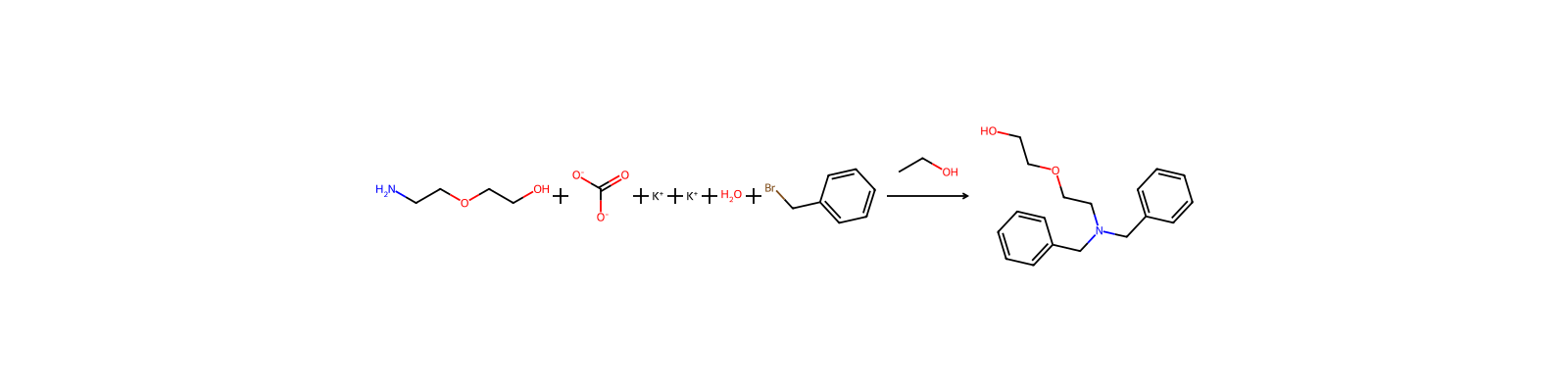
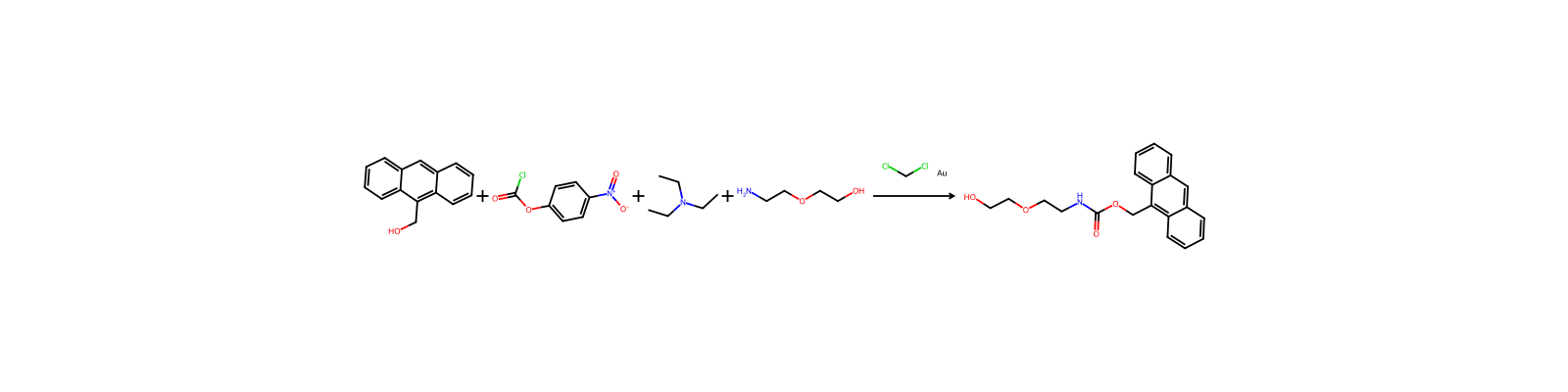
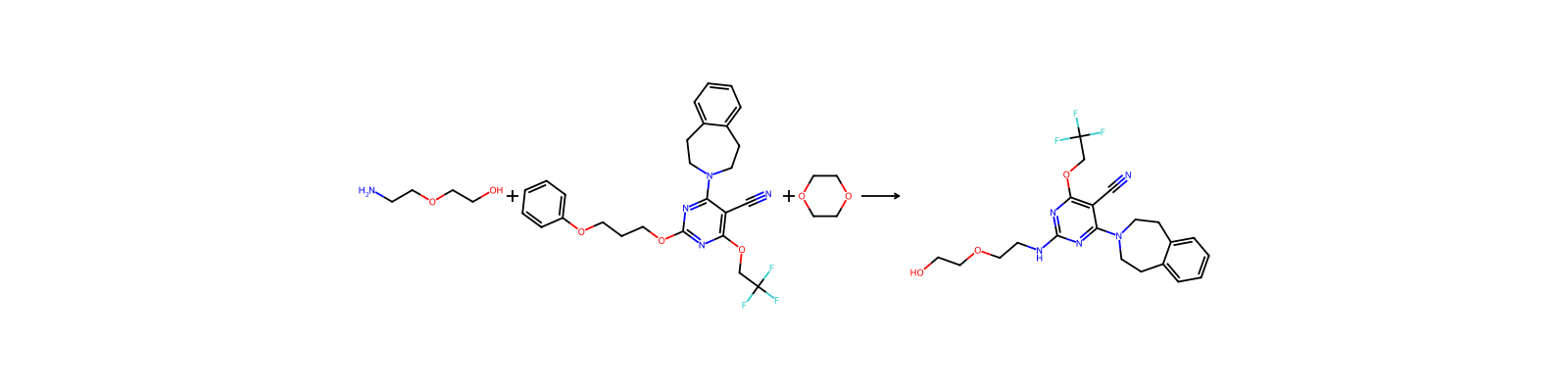
関連反応
175 件




関連ノート
読み込み中…