

基本情報
- 標準SMILES
C[C@H]1COc2c(N3CCN(C)CC3)c(F)cc3c(=O)c(C(=O)O)cn1c23- InChIKey
GSDSWSVVBLHKDQ-JTQLQIEISA-N- 分子式
- C18H20FN3O4
- 平均分子量
- 361.4 g/mol
- 単同位体質量
- 361.14378434
概要
Levofloxacin is an optically active form of ofloxacin having (S)-configuration; an inhibitor of bacterial topoisomerase IV and DNA gyrase. It has a role as an antibacterial drug, an EC 5.99.1.3 [DNA topoisomerase (ATP-hydrolysing)] inhibitor, a topoisomerase IV inhibitor and a DNA synthesis inhibitor. It is a 9-fluoro-3-methyl-10-(4-methylpiperazin-1-yl)-7-oxo-2,3-dihydro-7H-[1,4]oxazino[2,3,4-ij]quinoline-6-carboxylic acid, a quinolone antibiotic and a fluoroquinolone antibiotic. It is a conjugate acid of a levofloxacin(1-). It is an enantiomer of a dextrofloxacin.
名称と識別子
- 優先名称
- Levofloxacin
- IUPAC
- (2S)-7-fluoro-2-methyl-6-(4-methylpiperazin-1-yl)-10-oxo-4-oxa-1-azatricyclo[7.3.1.05,13]trideca-5(13),6,8,11-tetraene-11-carboxylic acid
名称と別名
LEVOFLOXACIN100986-85-4LevaquinQuixin(-)-OfloxacinIquixCravit(S)-OfloxacinLevofloxacineTavanicLevofloxacinoLevofloxacinum
名称をさらに表示
ElequineOftaquixL-OfloxacinFloxacinLevofloxacin AnhydrousDR-3355NofaxinVolequin
データベース識別子
- CAS
100986-85-4- PubChem CID
- 149096
- DTXSID
DTXSID0041060- ChEMBL
CHEMBL33、CHEMBL5315124- ChEBI
CHEBI:63598- UNII
- RIX4E89Y14
- EC Number
- 600-146-0
- Nikkaji
- J142.436J
物性
構造計算による物性
- XLogP
- -0.4
- 極性表面積
- 73.3 Ų
- 水素結合供与体数
- 1
- 水素結合受容体数
- 8
- 回転可能結合数
- 2
- 重原子数
- 26
- 形式電荷
- 0
- 複雑度
- 634
実験および物理化学的性質
Drugs
Pharmaceuticals -> Anti infectives for systemic use -> Antibacterials for systemic use
Pharmaceuticals -> Antibiotics
Pharmaceuticals -> Used in Switzerland
Pharmaceuticals -> Antibiotics
LogPlog Kow = -0.39
Color/Form
Light yellowish -white to yellow-white crystal or crystalline powder
Needles from ethanol + ethyl ether
Solubility
Sparingly soluble
Freely soluble in glacial acetic acid, chloroform; sparingly soluble in water
>54.2 [ug/mL] (The mean of the results at pH 7.4)
Human Drugs
Breast Feeding; Lactation; Milk, Human; Anti-Infective Agents; Antibacterial Agents; Quinolones; Fluoroquinolones
FDA approved drugs -> Active ingredient
EMA approved medicines: Human medicine
FDA approved drugs -> Active ingredient
Pharmaceuticals
Antituberculosis medicines
DecompositionWhen heated to decomposition material emits toxic fumes of /nitrogen oxides and hydrogen fluoride/.
Melting Point
225-227C
225-227 °C (decomposes)
Optical RotationSpecific optical rotation: -76.9 deg at 23 °C/D ( c = 0.385 in 05N NaOH)
Physical DescriptionSolid
Dissociation Constants
8.12
6.1
6
8.6
6.25
pKa1 = 6.24 (carboxylic acid moiety)
Collision Cross Section
188.5 Ų [M+H]+ [CCS Type: TW; Method: calibrated with polyalanine and drug standards]
191.4 Ų [M+H]+ [CCS Type: TW; Method: calibrated with Waters Major Mix]
176.98 Ų [M+H-H2O]+ [CCS Type: TW; Method: calibrated with polyalanine and drug standards]
Other Experimental PropertiesThe molecule exists as a zwitterion at the pH conditions in the small intestine.
安全と法規制
GHS分類
GHS Classification
Danger
H302 (98.3%): Harmful if swallowed [Warning Acute toxicity, oral]
P203, P233, P260, P261, P263, P264, P270, P271, P272, P280, P284, P301+P317, P302+P352, P304+P340, P318, P321, P330, P333+P317, P342+P316, P362+P364, P403, P405, and P501 (click each P-code to see the statement)
Aggregated GHS information provided per 174 reports by companies from 11 notifications to the ECHA C&L Inventory. Each notification may be associated with multiple companies.
危険有害性情報
Fire PotentialThis material is assumed to be combustible.
FDA Requirements
The Approved Drug Products with Therapeutic Equivalence Evaluations identifies currently marketed prescription drug products, including levofloxacin, approved on the basis of safety and effectiveness by FDA under sections 505 of the Federal Food, Drug, and Cosmetic Act.
Toxic Combustion ProductsEmits toxic fumes under fire conditions.
Hazard Classes and CategoriesAcute Tox. 4 (98.3%)
安全と保護具
Fire Fighting ProceduresWater spray, dry chemical, carbon dioxide, or foam as appropriate for surrounding fire and materials.
Storage ConditionsStore in tight, light-resistant container as defined in the USP-NF. This material should be handled and stored per label instructions to ensure product integrity.
Cleanup Methods
Wear approved respiratory protection, chemically compatible gloves and protective clothing. Wipe up spillage or collect spillage using a high efficiency vacuum cleaner. Avoid breathing dust. Place spillage in appropriately labelled container for disposal. Wash spill site.
Disposal Methods
SRP: Expired or waste pharmaceuticals shall carefully take into consideration applicable DEA, EPA, and FDA regulations. It is not appropriate to dispose by flushing the pharmaceutical down the toilet or discarding to trash. If possible return the pharmaceutical to the manufacturer for proper disposal being careful to properly label and securely package the material. Alternatively, the waste pharmaceutical shall be labeled, securely packaged and transported by a state licensed medical waste contractor to dispose by burial in a licensed hazardous or toxic waste landfill or incinerator.
SRP: At the time of review, regulatory criteria for small quantity disposal are subject to significant revision, however, household quantities of waste pharmaceuticals may be managed as follows: Mix with wet cat litter or coffee grounds, double bag in plastic, discard in trash.
Preventive Measures
Engineering controls such as exhaust ventilation are recommended.
As with all dry powders it is advisable to ground mechanical equipment in contact with dry material to dissipate the potential buildup of static electricity.
As a general rule, when handling USP Reference Standards avoid all contact and inhalation of dust, mists, and/or vapors associated with the material. Wash thoroughly after handling.
SRP: Local exhaust ventilation should be applied wherever there is an incidence of point source emissions or dispersion of regulated contaminants in the work area. Ventilation control of the contaminant as close to its point of generation is both the most economical and safest method to minimize personnel exposure to airborne contaminants. Ensure that the local ventilation moves the contaminant away from the worker.
Personal Protective Equipment (PPE)
Respiratory Protection: Use a NIOSH-approved respirator, if it is determined to be necessary by an industrial hygiene survey involving air monitoring. In the event that a respirator is not required, an approved dust mask should be used. Gloves: Chemically compatible. Eye Protection: Safety glasses or goggles. Protective Clothing: Protect exposed skin.
毒性情報
TreatmentIn the event of an acute overdosage, the stomach should be emptied. The patient should be observed and appropriate hydration maintained. Levofloxacin is not efficiently removed by hemodialysis or peritoneal dialysis. (L1009)
Interactions
Warfarin: Potential pharmacologic interaction (increased prothrombin time). Monitor prothrombin time or other suitable coagulation tests and monitor for bleeding.
Theophylline: Pharmacokinetic interaction unlikely. However, pharmacokinetic interaction (increased theophylline half-life and increased risk of theophylline-related adverse effects) occurs with some other quinolones. Closely monitor serum theophylline concentrations and adjust theophylline dosage accordingly; consider that adverse theophylline effects (e.g., seizures) may occur with or without elevated theophylline concentrations.
Sucralfate: Potential pharmacokinetic interaction (decreased levofloxacin absorption); no pharmacokinetic interaction if given 2 hours apart. Administer levofloxacin at least 2 hours before or 2 hours after sucralfate.
Probenecid: Potential pharmacokinetic interaction (increased levofloxacin AUC and half-life). Not considered clinically important; dosage adjustments are not required.
For more Interactions (Complete) data for Levofloxacin (16 total), please visit the HSDB record page.
Health Effects
Irreversible peripheral neuropathy, central nervous system toxicity, cardiovascular toxicity, tendon / articular toxicity, and hepatic toxicity. Toxic epidermal necrolysis, coagulation abnormalities and pancytopenia are other possible adverse effect of levofloxacin. Administration of commercial levofloxin (Levaquin), increased risk of tendinitis and tendon rupture in all ages. This adverse reaction most frequently involves the Achilles tendon (L1009, L1017).
Hepatotoxicity
In short term studies, levofloxacin has been associated with minor elevations in serum ALT and AST levels in 2% to 5% of patients. The abnormalities were usually asymptomatic and transient and rarely require dose modification. With its wide scale use, levofloxacin has been implicated in in at least 50 instances of clinically apparent liver injury mostly in isolated case reports. The clinical presentation and course are typical of the hepatotoxicity of other fluoroquinolones, and the injury is likely a class effect. The latency to onset is usually short (1 to 3 weeks) and the onset is often abrupt with a hepatocellular or mixed pattern of injury, jaundice and, in some instances, hepatic failure. Cholestatic hepatitis can also occur. Immunoallergic features such as fever, rash and eosinophilia are common, but not particularly prominent. Autoantibodies are rare. The liver injury is usually self-limited, but several cases of acute liver failure have been linked to fluoroquinolones as well as instances of prolonged jaundice, cholestasis and vanishing bile duct syndrome. Levofloxacin, like ciprofloxacin, has also been implicated hypersensitivity reactions including rare cases of Stevens Johnson syndrome and toxic epidermal necrolysis, which may be accompanied by liver injury. While liver injury from levofloxacin is rare, the fluoroquinolones collectively are among the most frequent causes of clinically apparent liver injury including fatal cases and cases of chronic liver injury and bile duct paucity.
Ecotoxicity Values
EC50; Species: Microcystis aeruginosa (Blue-Green Algae); Conditions: freshwater, static, 20 °C; Concentration: 7.9 ug/L for 5 days (95% confidence interval: 6.4-9.4 ug/L); Effect: population, decreased chlorophyll A concentration /100% purity formulation/
EC50; Species: Pseudokirchneriella subcapitata (Green Algae); Conditions: freshwater, static, 20 °C; Concentration: 7400 ug/L for 3 days (95% confidence interval: 6400-8400 ug/L); Effect: population, decreased chlorophyll A concentration /100% purity formulation/
EC50; Species: Lemna minor (Duckweed); Conditions: freshwater, renewal, 20 °C; Concentration: 51 ug/L for 7 days (95% confidence interval: 8.6-94 ug/L); Effect: population, decreased abundance (counted number of fronds) /100% purity formulation/
Environmental Fate
TERRESTRIAL FATE: Based on a classification scheme(1), a Koc value of 44,143 for the sterioisomer,ofloxacin(2) indicates that levofloxacin is expected to be immobile in soil(SRC). The pKa1 of levofloxacin is 6.24 (carboxylic acid moiety)(1) and pKa2 = 8.74 for analogous ciprofloxacin for the nitrogen on the piperazinyl ring(3); at pHs greater than 6.24, the acid will be primarily dissociated and at pHs less than approximately 8.74, the nitrogen will be primarily protonated(SRC); therefore, levofloxacin will have an ionic charge at any environmental pH(SRC). Volatilization from moist soil is not expected because the compound exists as an ion and ions do not volatilize. Levofloxacin is not expected to volatilize from dry soil surfaces(SRC) based upon an estimated vapor pressure of 9.8X10⁻¹³ mm Hg at 25 °C(SRC), determined from a fragment constant method(4). Using the OECD closed bottle biodegradation study, 0% degradation over a 40-day incubation period was observed for analogous ciprofloxacin(5), indicating that biodegradation may not be an important environmental fate process for levofloxacin in soil(SRC).
AQUATIC FATE: Based on a classification scheme(1), a Koc value of 44,143(2) indicates that levofloxacin is expected to adsorb to suspended solids and sediment(SRC). The pKa1 of levofloxacin is 6.24 (carboxylic acid moiety)(1) and pKa2 = 8.74 for analogous ciprofloxacin for the nitrogen on the piperazinyl ring(3); at pHs greater than 6.24, the acid will be primarily dissociated and at pHs less than approximately 8.74, the nitrogen will be primarily protonated(SRC); therefore, levofloxacin will have an ionic charge at any environmental pH(SRC). Due to this ionic state, volatilization from water surfaces is not expected to be an important fate process(SRC). According to a classification scheme(4), an estimated BCF of 3(SRC), from a log Kow of -0.39 for sterioisomer ofloxacin(5) and a regression-derived equation(6), suggests the potential for bioconcentration in aquatic organisms is low(SRC). Using the OECD closed bottle biodegradation study, 0% degradation over a 40-day incubation period was observed for analogous ciprofloxacin(7), indicating that biodegradation may not be an important environmental fate process for levofloxacin in water(SRC).
AQUATIC FATE: Using outdoor aquatic field microcosms, levofloxacin, at concentrations of 1.00, 10.00, 100.00, and 300.00 ug/L exhibited half-lives of 6.2, 6.5, 6.0, and 6.3 days, overall mean of 6.3 days, with photodegradation being the main loss process. Photoproducts have been identified as analogues altered at the N-methylpiperazine moiety and reached a maximum by 2 hours after which their concentrations decreased(1). Therefore levofloxacin may be susceptible to direct photolysis by sunlight(SRC).
ATMOSPHERIC FATE: According to a model of gas/particle partitioning of semivolatile organic compounds in the atmosphere(1), levofloxacin, which has an estimated vapor pressure of 8.8X10⁻¹³ mm Hg at 25 °C(SRC), determined from a fragment constant method(2), is expected to exist solely in the particulate phase in the ambient atmosphere. Particulate-phase levofloxacin may be removed from the air by wet or dry deposition(SRC). Levofloxacin in solution is susceptible to photodegradation in natural light, exhibiting a mean half-life of 6.3 days(4), and therefore may be susceptible to direct photolysis by sunlight(SRC).
Adverse Effects
The primary adverse effects of levofloxacin include nausea, photosensitivity, diarrhea, headache, tendinitis, tendon rupture, hyper-hypoglycemia, seizures, prolonged QT interval, and peripheral neuropathy. Clinicians should carefully prescribe levofloxacin to patients with a history of prolonged QT intervals. Avoid or minimize exposure to natural or artificial sunlight while taking levofloxacin to reduce the occurrence of phototoxicity. Research has determined prolonged levofloxacin is linked with a higher risk of fungal and bacterial superinfection (eg, pseudomembranous colitis).
Exposure RoutesIngestion; injection; skin contact (L1017).
Absorption of ofloxacin after single or multiple doses of 200 to 400 mg is predictable, and the amount of drug absorbed increases proportionately with the dose.
Toxicity Summary
The elimination half-life of levofloxacin ranges from 27 to 35 hours in adults with renal impairment, depending on severity, compared with 6 to 8 hours in healthy adults. This prolonged half-life indicates that dosing adjustment is necessary for these patients.Neurotoxicity, including non-convulsive status epilepticus, has been reported with levofloxacin. Levofloxacin has a low potential for acute toxicity; however, the stomach needs to be emptied during an acute overdose. The patient should be under observation with adequate maintenance of hydration. Hemodialysis or peritoneal dialysis can not adequately remove levofloxacin. The role of enhancing drug elimination with forced dilution is not clear. Activated oral charcoal administration is also a recommended approach with appropriate conditions.
Levofloxacin inhibits bacterial type II topoisomerases, topoisomerase IV and DNA gyrase. Levofloxacin, like other fluoroquinolones, inhibits the A subunits of DNA gyrase, two subunits encoded by the gyrA gene. This results in strand breakage on a bacterial chromosome, supercoiling, and resealing; DNA replication and transcription is inhibited.
Ecotoxicity Excerpts
/AQUATIC SPECIES/ Toxicity tests were performed with seven fluoroquinolone antibiotics, ciprofloxacin, lomefloxacin, ofloxacin, levofloxacin, clinafloxacin, enrofloxacin, and flumequine, on five aquatic organisms. Overall toxicity values ranged from 7.9 to 23,000 ug/L. The cyanobacterium Microcystis aeruginosa was the most sensitive organism (5-day growth and reproduction, effective concentrations [EC50s] ranging from 7.9 to 1,960 ug/L and a median of 49 ug/L), followed by duckweed (Lemna minor, 7-day reproduction, EC50 values ranged from 53 to 2,470 ug/L with a median of 106 ug/L) and the green alga Pseudokirchneriella subcapitata (3-day growth and reproduction, EC50 values ranged from 1,100 to 22,700 ug/L with a median 7,400 ug/L). Results from tests with the crustacean Daphnia magna (48-hr survival) and fathead minnow (Pimephales promelas, 7-day early life stage survival and growth) showed limited toxicity with no-observed-effect concentrations at or near 10 mg/L. Fish dry weights obtained in the ciprofloxacin, levofloxacin, and ofloxacin treatments (10 mg/L) were significantly higher than in control fish. The hazard of adverse effects occurring to the tested organisms in the environment was quantified by using hazard quotients. An estimated environmental concentration of 1 ug/L was chosen based on measured environmental concentrations previously reported in surface water; at this level, only M. aeruginosa may be at risk in surface water. However, the selective toxicity of these compounds may have implications for aquatic community structure.
Signs and SymptomsSide effects include disorientation, dizziness, drowsiness, hot and cold flashes, nausea, slurring of speech, swelling and numbness in the face.
Soil Adsorption/Mobility
Using a centric flurisol (Germany; 80.1% sand; 16.7% silt; 2.5% clay; pH 5.3), a measured Koc of 44,143 was reported for the steroisomer, ofloxacin(1). According to a classification scheme(2), this Koc value suggests that levofloxacin is expected to be immobile in soil. The pKa1 of levofloxacin is 6.24 (carboxylic acid moiety)(1) and pKa2 = 8.74 for analogous ciprofloxacin for the nitrogen on the piperazinyl ring(3); at pHs greater than 6.24, the acid will be primarily dissociated and at pHs less than 8.74, the nitrogen will be primarily protonated(SRC); therefore, levofloxacin will have an ionic charge at any environmental pH(SRC).
法規制情報
FDA Requirements
The Approved Drug Products with Therapeutic Equivalence Evaluations identifies currently marketed prescription drug products, including levofloxacin, approved on the basis of safety and effectiveness by FDA under sections 505 of the Federal Food, Drug, and Cosmetic Act.
化学と産業
薬理情報
ATC Code
J01MA12
J - Antiinfectives for systemic use
S - Sensory organs
QS - Sensory organs
QJ - Antiinfectives for systemic use
J01MA12
Protein BindingLevofloxacin is 24-38% protein-bound in plasma, primarily to albumin. The extent of protein-binding is independent of its plasma concentration.
Pharmacodynamics
Levofloxacin is bactericidal and exerts its antimicrobial effects via inhibition of bacterial DNA replication. It has a relatively long duration of action in comparison with other antibiotics that allows for once or twice daily dosing. Levofloxacin is associated with QTc-interval prolongation and should be used with caution in patients with other risk factors for prolongation (e.g. hypokalemia, concomitant medications). Levofloxacin has demonstrated _in vitro_ activity against a number of aerobic gram-positive and gram-negative bacteria and may carry some activity against certain species of anaerobic bacteria and other pathogens such as _Chlamydia_ and _Legionella_. Resistance to levofloxacin may develop, and is generally due to mutations in DNA gyrase or topoisomerase IV, or via alterations to drug efflux. Cross-resistance may occur between levofloxacin and other fluoroquinolones, but is unlikely to develop between levofloxacin and other antibiotic classes (e.g. macrolides) due to significant differences in chemical structure and mechanism of action. As antimicrobial susceptibility patterns are geographically distinct, local antibiograms should be consulted to ensure adequate coverage of relevant pathogens prior to use.
Mechanism of Action
Levofloxacin, like other fluoroquinolone antibiotics, exerts its antimicrobial activity via the inhibition of two key bacterial enzymes: DNA gyrase and topoisomerase IV. Both targets are type II topoisomerases, but have unique functions within the bacterial cell. DNA gyrase is an enzyme found only in bacteria that introduces negative supercoils into DNA during replication - this helps to relieve torsional strain caused by the introduction of positive supercoils during replication, and these negative supercoils are essential for chromosome condensation and the promotion of transcription initiation. It is comprised of four subunits (two A subunits and two B subunits) of which the A subunits appear to be the target of fluoroquinolone antibiotics. Bacterial topoisomerase IV, in addition to contributing to the relaxation of positive supercoils, is essential at the terminal stages of DNA replication and functions to “unlink” newly replicated chromosomes to allow for the completion of cell division. Inhibition of these enzymes by levofloxacin likely occurs via complexation with the topoisomerase enzymes. The end result is a blockade of DNA replication, thus inhibiting cell division and resulting in cell death.
Levofloxacin is the L-isomer of the racemate, ofloxacin, a quinolone antimicrobial agent. The antibacterial activity of ofloxacin resides primarily in the L-isomer. The mechanism of action of levofloxacin and other fluoroquinolone antimicrobials involves inhibition of bacterial topoisomerase IV and DNA gyrase (both of which are type II topoisomerases), enzymes required for DNA replication, transcription, repair and recombination.
Fluoroquinolones prolong the QT interval by blocking voltage-gated potassium channels, especially the rapid component of the delayed rectifier potassium current I(Kr), expressed by HERG (the human ether-a-go-go-related gene). According to the available case reports and clinical studies, moxifloxacin carries the greatest risk of QT prolongation from all available quinolones in clinical practice and it should be used with caution in patients with predisposing factors for Torsades de pointes (TdP).
Biological Half-Life
The average terminal elimination half-life of levofloxacin is 6-8 hours.
The mean terminal plasma elimination half-life of levofloxacin ranges from approximately 6 to 8 hours following single or multiple doses of levofloxacin given orally or intravenously.
The pharmacokinetics of oral levofloxacin and its penetration into inflammatory fluid were studied in 6 healthy male subjects (ages 18-45 yr) who received 500 mg drug every 12 hr for 5 doses or 500 mg every 24 hr for 3 doses in an open crossover design. ... Mean terminal elimination half-lives in plasma were 7.9 and 8 hr for the 2 regimens, respectively, and the same values were seen for inflammatory fluid. ...
After single oral administration of (14)C-levofloxacin at a dose of 20 mg kg(-1) under non-fasting conditions, the absorption, distribution and excretion of radioactivity were studied in albino and pigmented rats. ... The uveal tract concentrations reached the maximum value (C(max)) of 26.33 +/- 0.75 ug eq. g(-1) at 24 hr after dosing and declined slowly with a terminal half-life of 468.1 hr (19.5 days).
Metabolism/Metabolites
Only 2 metabolites, desmethyl-levofloxacin and levofloxacin-N-oxide, have been identified in humans, neither of which appears to carry any relevant pharmacological activity. Following oral administration, less than 5% of the administered dose was recovered in the urine as these metabolites, indicating very little metabolism of levofloxacin in humans. The specific enzymes responsible for the demethylation and oxidation of levofloxacin have yet to be ascertained.
Levofloxacin is stereochemically stable in plasma and urine and does not invert metabolically to its enantiomer, D-ofloxacin. Levofloxacin undergoes limited metabolism in humans and is primarily excreted as unchanged drug in the urine. Following oral administration, approximately 87% of an administered dose was recovered as unchanged drug in urine within 48 hours, whereas less than 4% of the dose was recovered in feces in 72 hours. Less than 5% of an administered dose was recovered in the urine as the desmethyl and N-oxide metabolites, the only metabolites identified in humans. These metabolites have little relevant pharmacological activity.
Mainly excreted as unchanged drug (87%); undergoes limited metabolism in humans. Levofloxacin is rapidly and essentially completely absorbed after oral administration. It is distributed into body tissues, especially in the skin and lung tissues. Levofloxacin is stereochemically stable in plasma and urine and does not invert metabolically to its enantiomer, D-ofloxacin. Levofloxacin undergoes limited metabolism in humans and is primarily excreted as unchanged drug in the urine. Following oral administration, approximately 87% of an administered dose was recovered as unchanged drug in urine within 48 hours, whereas less than 4% of the dose was recovered in feces in 72 hours. Less than 5% of an administered dose was recovered in the urine as the desmethyl and N-oxide metabolites, the only metabolites identified in humans. These metabolites have little relevant pharmacological activity. Levofloxacin is excreted largely as unchanged drug in the urine (L1009). Route of Elimination: Mainly excreted as unchanged drug in the urine. Half Life: 6-8 hours
FDA Pharmacological Classification
6GNT3Y5LMF
LEVOFLOXACIN
Established Pharmacologic Class [EPC] - Fluoroquinolone Antibacterial
Chemical Structure [CS] - Fluoroquinolones
Levofloxacin is a Fluoroquinolone Antibacterial.
MeSH Pharmacological Classification
Substances capable of killing agents causing urinary tract infections or of preventing them from spreading.
Substances that inhibit the growth or reproduction of BACTERIA.
Compounds that inhibit the activity of DNA TOPOISOMERASE II. Included in this category are a variety of ANTINEOPLASTIC AGENTS which target the eukaryotic form of topoisomerase II and ANTIBACTERIAL AGENTS which target the prokaryotic form of topoisomerase II.
Drugs and compounds which inhibit or antagonize the biosynthesis or actions of CYTOCHROME P-450 CYP1A2.
Absorption, Distribution and Excretion
Absorption of levofloxacin following oral administration is rapid and essentially complete, with an oral bioavailability of approximately 99%. Due to its nearly complete absorption, the intravenous and oral formulations of levofloxacin may be interchangeable. The Tmax is generally attained 1-2 hours following administration and the Cmax is proportional to the given dose - an intravenous dose of 500mg infused over 60 minutes resulted in a Cmax of 6.2 ± 1.0 µg/mL whereas a 750mg dose infused over 90 minutes resulted in a Cmax of 11.5 ± 4.0 µg/mL. Oral administration with food prolongs the Tmax by approximately 1 hour and slightly decreases the Cmax, but these changes are not likely to be clinically significant. Systemic absorption following oral inhalation is approximately 50% lower than that observed following oral administration.
The majority of administered levofloxacin is excreted unchanged in the urine. Following the administration of a single oral dose of levofloxacin, approximately 87% was eliminated unchanged in the urine within 48 hours and less than 4% was eliminated in the feces within 72 hours.
Levofloxacin is widely distributed in the body, with an average volume of distribution following oral administration between 1.09-1.26 L/kg (~89-112 L). Concentrations in many tissues and fluids may exceed those observed in plasma. Levofloxacin is known to penetrate well into skin tissue, fluids (e.g. blisters), lung tissue, and prostatic tissue, amongst others.
The average apparent total body clearance of levofloxacin ranges from 8.64-13.56 L/h, and its renal clearance ranges from 5.76-8.52 L/h. The relative similarity of these ranges indicates a small degree of non-renal clearance.
The mean volume of distribution of levofloxacin generally ranges from 74 to 112 L after single and multiple 500 mg or 750 mg doses, indicating widespread distribution into body tissues. Levofloxacin reaches its peak levels in skin tissues and in blister fluid of healthy subjects at approximately 3 hours after dosing. The skin tissue biopsy to plasma AUC ratio is approximately 2 and the blister fluid to plasma AUC ratio is approximately 1 following multiple once-daily oral administration of 750 mg and 500 mg doses of levaquin, respectively, to healthy subjects. Levofloxacin also penetrates well into lung tissues. Lung tissue concentrations were generally 2- to 5-fold higher than plasma concentrations and ranged from approximately 2.4 to 11.3 ug/g over a 24-hour period after a single 500 mg oral dose.
Levofloxacin pharmacokinetics are linear and predictable after single and multiple oral or IV dosing regimens. Steady-state conditions are reached within 48 hours following a 500 mg or 750 mg once-daily dosage regimen. The mean + or - SD peak and trough plasma concentrations attained following multiple once-daily oral dosage regimens were approximately 5.7 + or - 1.4 and 0.5 + or - 0.2 ug/mL after the 500 mg doses, and 8.6+ or - 1.9 and 1.1 + or - 0.4 ug/mL after the 750 mg doses, respectively. The mean + or - SD peak and trough plasma concentrations attained following multiple once-daily IV regimens were approximately 6.4 + or - 0.8 and 0.6 + or - 0.2 ug/mL after the 500 mg doses, and 12.1+ or - 4.1 and 1.3 + or - 0.71 ug/mL after the 750 mg doses, respectively. Oral administration of a 500 mg dose of levaquin with food prolongs the time to peak concentration by approximately 1 hour and decreases the peak concentration by approximately 14% following tablet and approximately 25% following oral solution administration. Therefore, levaquin tablets can be administered without regard to food. It is recommended that levaquin oral solution be taken 1 hour before or 2 hours after eating.
Tissue LocationsProstate
用途と製造
Uses
MEDICATION
Use (kg; approx.) in Germany (2009): >7500
For the treatment of bacterial conjunctivitis caused by susceptible strains of the following organisms: <i>Corynebacterium</i> species, <i>Staphylococus aureus</i>, <i>Staphylococcus epidermidis</i>, <i>Streptococcus pneumoniae</i>, <i>Streptococcus</i> (Groups C/F/G), Viridans group streptococci, <i>Acinetobacter lwoffii</i>, <i>Haemophilus influenzae</i>, <i>Serratia marcescens</i>. Levofloxacin is a synthetic chemotherapeutic agent used to treat severe and life threatening bacterial infection (L1009).
Formulations/Preparations
Table: Levofloxacin Preparations [Table#7973]
Parenteral Injection, for IV infusion: equivalent to levofloxacin 5 mg/mL (250, 500, or 750 mg) in 5% Dextrose; Levaquin in Dextrose Injection Premix (in flexible containers) (Ortho-McNeil).
Ophthalmic: Solution 0.5%, Quixin (Vistakon)
Tavanic (levofloxacin; 250 and 500 mg film-coated tablets and 5mg/mL solution for infusion)
Use ClassificationPharmaceuticals
General Manufacturing Information
The more active levo isomer of ofloxacin (a racemic mixture of D,L,-isomers) that has improved activity against gram-potitive pathogens (in particular against S. pneumoniae) compared to ciprofloxacin.
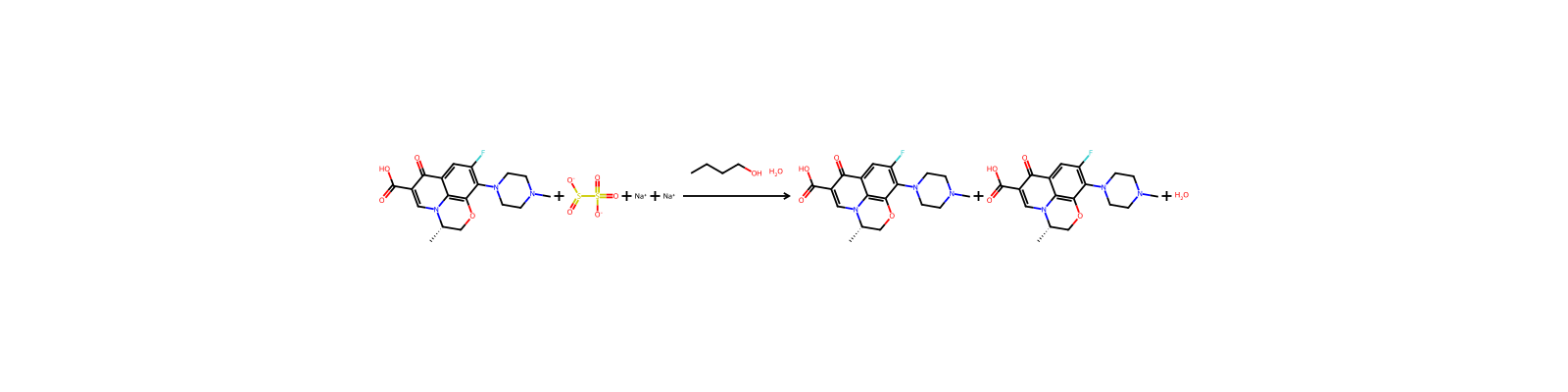
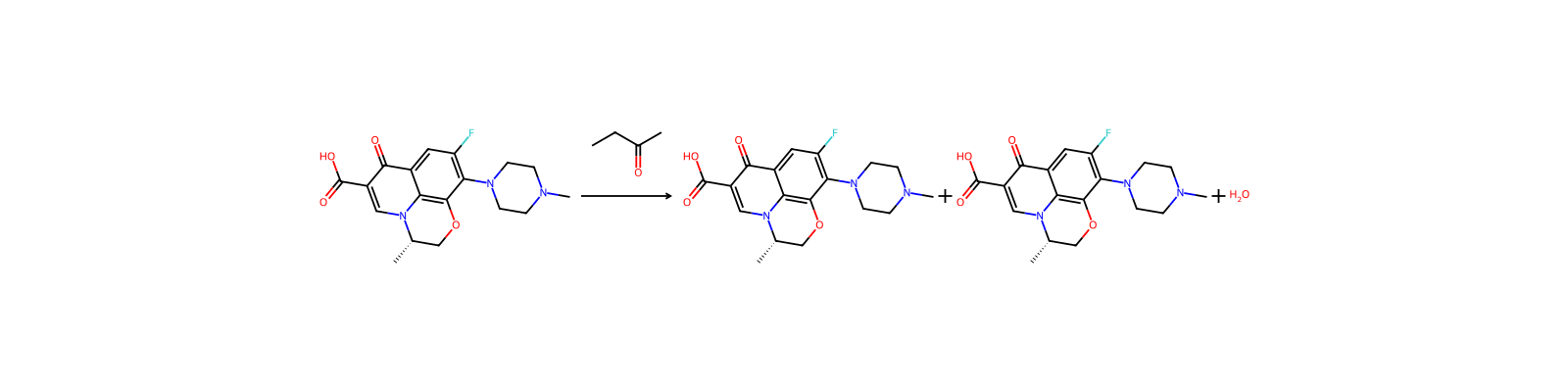
Prepared as the hemihydrate
The methyl group at the C-3 position in the oxazine ring results in the formation of isoenantiomers; ofloxacin occurs as a racemic mixture of the two isomers. The S-(-)isomer is 8-128 times as active against susceptible gram-positive and gram-negative organisms as the R-(+)isomer and approximately twice as active as racemic ofloxacin.
関連反応
24 件





関連ノート
読み込み中…