

基本情報
- 標準SMILES
CCCCCCCCCCCCCCCCCCN- InChIKey
REYJJPSVUYRZGE-UHFFFAOYSA-N- 分子式
- C18H39N
- 平均分子量
- 269.5 g/mol
- 単同位体質量
- 269.30825025
概要
Octadecylamine appears as a white solid. Insoluble in water and less dense than water. Hence floats on water. Contact may irritate skin, eyes and mucous membranes. May be toxic by ingestion. Used to make other chemicals.
名称と識別子
- 優先名称
- Octadecylamine
- IUPAC
- octadecan-1-amine
- 現地名
- ステアリルアミン
- 英語名
- Octadecanamine
- 分子式
- C18H39N
- 分子量
- 269.51
名称と別名
OCTADECYLAMINEoctadecan-1-amine124-30-11-OctadecanamineStearylamineStearamine1-Octadecylamine1-Aminooctadecanen-OctadecylamineStearyl amineArmofilmn-Stearylamine
名称をさらに表示
ステアリルアミンアルミーン1180ステアラミン1-オクタデカンアミンオクタデカン-1-アミンケマミンP990ケマミンP-990アラミン7アドゲネン142オクタデシルアミンアルモフィルムN-オクタデシルアミン1-アミノオクタデカン(ステアリルアミン)1-アミノオクタデカンN‐オクタデシルアミンオクダデシルアミン1-オクタデシルアミン1-オクタデシルアミン, 98%OctadecyLA18EighteenaMineFENTAMINE A18
MonooctadecylamineArmeen 18DNissan amine ABOktadecylaminAlamine 7Alamine 7DNoram SHAdogenen 142
データベース識別子
- CAS
124-30-1、61788-45-2- PubChem CID
- 15793
- DTXSID
DTXSID1025801- ChEMBL
CHEMBL55860- ChEBI
CHEBI:63866- UNII
- FFV58UNY7O
- EC Number
- 204-695-3
- Nikkaji
- J10.159A
物性
構造計算による物性
- XLogP
- 8.5
- 極性表面積
- 26 Ų
- 水素結合供与体数
- 1
- 水素結合受容体数
- 1
- 回転可能結合数
- 16
- 重原子数
- 19
- 形式電荷
- 0
- 複雑度
- 145
実験および物理化学的性質
Chemical ClassesNitrogen Compounds -> Amines, Aliphatic
Cosmetics
Cosmetic ingredients (Stearamine) -> CIR (Cosmetic Ingredient Review)
Personal care product
Antistatic
LogP7.7
Food AdditivesBOILER WATER ADDITIVE -> FDA Substance added to food
Density
0.8618 at 68 °F (NTP, 1992) - Less dense than water; will float
0.8618 @ 20 °C/4 °C
0.86 g/cm³
Solubility
less than 1 mg/mL at 72 °F (NTP, 1992)
Insol in water; sol in alcohol, ether, benzene; very sol in chloroform; miscible in acetone
Solubility in water: very poor
Flash Point
300 °F (NTP, 1992)
148 °C c.c.
Boiling Point
660 °F at 760 mmHg (NTP, 1992)
346.8 °C @ 760 mm Hg
346.8 °C
DecompositionWhen heated to decomposition it emits toxic fumes of nitroxides.
Melting Point
120 to 126 °F (NTP, 1992)
52.9 °C
49 - 52 °C
52.9 °C
Vapor Density9.29 (NTP, 1992) - Heavier than air; will sink (Relative to Air)
Vapor Pressure0.0000438 [mmHg]
物理化学的性質
- 融点
- 50 · 50-52 °C(lit.)
- 沸点
- 232 °C32 · 232 °C32 mm Hg(lit.)
- 比重(密度)
- 0.862 · 0.862
- 蒸気圧
- 10 mm · 10 mm Hg ( 72 °C)
- 屈折率
- 1.4522 · 1.4522
- 闪点
- 300 °F · 300 °F
- 貯蔵温度
- 30 °C · Store below +30°C.
- 外見
- プリル
- 酸解離定数(Pka)
- 10.6 · 10.6(at 25℃)
- 色
- 白い
- 水溶解度
- 実質的に不溶
- 凝固点
- 53.1 ℃ · 53.1℃
- BRN
- 636111 · 636111
- Henry's Law Constant
- 1 · 1.0×10-2 mol/(m3Pa) at 25℃, HSDB (2015)
- 化粧品成分の機能
- 帯電防止
- InChI
- 1S/C18H39N/c1-2-3-4-5-6-7-8-9-10-11-12-13-14-15-16-17-18-19/h2-19H2,1H3
- InChIKey
- REYJJPSVUYRZGE-UHFFFAOYSA-N
- SMILES
- CCCCCCCCCCCCCCCCCCN
- LogP
- 4.33 at · 4.33 at 25℃
- CAS データベース
- 124 · 124-30-1(CAS DataBase Reference)
- NISTの化学物質情報
- 1 · 1-Octadecanamine(124-30-1)
- EPAの化学物質情報
- Stearamine (124-30-1)
化学的性質
化学的特性White prills
安全と法規制
GHS分類
GHS Classification
Danger
H304: May be fatal if swallowed and enters airways [Danger Aspiration hazard]
P260, P264, P264+P265, P273, P280, P301+P316, P302+P352, P305+P354+P338, P317, P319, P321, P331, P332+P317, P362+P364, P391, P405, and P501 (click each P-code to see the statement)
This chemical does not meet GHS hazard criteria for 0.8% (7 of 907) of reports.
Danger
H302 (49.3%): Harmful if swallowed [Warning Acute toxicity, oral]
危険有害性情報
Regulatory Information
Chemical: 1-Octadecanamine
1-Octadecanamine is listed on the EPA's Chemical Data Reporting (CDR) system. Manufacturers and importers of 1-Octadecanamine are required to report information about their production and use of this chemical to the EPA under the Toxic Substances Control Act (TSCA). (40 eCFR Part 711)
Status: Active Update: 12-04-2023 https://echa.europa.eu/registration-dossier/-/registered-dossier/14418
1-Octadecanamine: HSNO Approval: HSR001542 Approved with controls
Other Safety InformationIMAP assessments - 1-Octadecyl- and hydrogenated tallow alkyl- amines: Human health tier II assessment
DOT LabelCorrosive
Fire Hazards
This compound is combustible. (NTP, 1992)
Combustible. Gives off irritating or toxic fumes (or gases) in a fire.
Health HazardsACUTE/CHRONIC HAZARDS: Exposure to this compound may cause sensitization of the skin. (NTP, 1992)
Hazards Summary
A skin, eye, and respiratory tract irritant; [ICSC] May cause skin sensitization; A primary skin irritant in animals; A 2-year feeding study of rats showed no adverse effects to food consumption, hematology, or histopathology at 500 ppm; Effects at 3000 ppm include anorexia and some histological changes to GI tract, mesenteric nodes, and liver; [HSDB] A moderate skin irritant in rabbits; [RTECS] A skin irritant that may cause serious eye injury; Not likely to induce skin sensitization; No evidence of mutagenicity; Not likely to have carcinogenic potential or reproductive toxicity; [ECHA] An irritant; Harmful if swallowed; [Alfa Aesar MSDS]
Reactive GroupAmines, Phosphines, and Pyridines
Reactivity Profile
OCTADECYLAMINE neutralizes acids in exothermic reactions to form salts plus water. May be incompatible with isocyanates, halogenated organics, peroxides, phenols (acidic), epoxides, anhydrides, and acid halides. Flammable gaseous hydrogen may be generated in combination with strong reducing agents, such as hydrides.
Chemical DangersDecomposes on burning. This produces toxic fumes including nitrogen oxides. The solution in water is a weak base. Reacts with acids, acid anhydrides, acid chlorides and oxidants.
Air and Water ReactionsInsoluble in water.
Hazard Classes and Categories
Acute Tox. 4 (49.3%)
Aspiration hazard - category 1
Skin corrosion/irritation - Category 2
Serious eye damage/eye irritation - Category 1
Asp. Tox. 1
安全と保護具
Fire Fighting
Fires involving this compound can be controlled with dry chemical, carbon dioxide or Halon extinguishers. (NTP, 1992)
Use water spray, powder, foam, carbon dioxide.
First Aid Measures
Fresh air, rest.
Rinse and then wash skin with water and soap.
First rinse with plenty of water for several minutes (remove contact lenses if easily possible), then refer for medical attention.
Rinse mouth. Give one or two glasses of water to drink.
First Aid
EYES: First check the victim for contact lenses and remove if present. Flush victim's eyes with water or normal saline solution for 20 to 30 minutes while simultaneously calling a hospital or poison control center. Do not put any ointments, oils, or medication in the victim's eyes without specific instructions from a physician. IMMEDIATELY transport the victim after flushing eyes to a hospital even if no symptoms (such as redness or irritation) develop.
Safe StorageSeparated from acids, acid anhydrides, acid chlorides and oxidants.
Nonfire Spill Response
SMALL SPILLS AND LEAKAGE: If you spill this chemical, FIRST REMOVE ALL SOURCES OF IGNITION, then dampen the solid spill material with toluene, then transfer the dampened material to a suitable container. Use absorbent paper dampened with toluene to pick up any remaining material. Your contaminated clothing and absorbent paper should be sealed in a vapor-tight plastic bag for eventual disposal. Solvent-wash all contaminated surfaces with toluene followed by washing with a soap and water solution. Do not reenter the contaminated area until the Safety Officer (or other responsible person) has verified that the area has been properly cleaned.
Disposal Methods
SRP: At the time of review, criteria for land treatment or burial (sanitary landfill) disposal practices are subject to significant revision. Prior to implementing land disposal of waste residue (including waste sludge), consult with environmental regulatory agencies for guidance on acceptable disposal practices.
Spillage Disposal
Personal protection: particulate filter respirator adapted to the airborne concentration of the substance. Sweep spilled substance into covered sealable containers. Carefully collect remainder. Then store and dispose of according to local regulations.
Isolation and EvacuationExcerpt from ERG Guide 154 [Substances - Toxic and/or Corrosive (Non-Combustible)]:
Eye PreventionWear safety goggles.
Fire PreventionNO open flames.
Inhalation RiskNo indication can be given about the rate at which a harmful concentration of this substance in the air is reached on evaporation at 20 °C.
Skin PreventionProtective gloves.
毒性情報
InteractionsIF (3)H-METHOTREXATE IS COMPLETELY ENTRAPPED IN LIPOSOMES CONCN OF DRUG IN LIVER & SPLEEN INCR. IF DICETYL PHOSPHATE IN LIPOSOMES IS REPLACED BY STEARYLAMINE GREATER PROP OF LIPOSOMES IS TAKEN UP BY LIVER & SPLEEN.
Environmental Fate
TERRESTRIAL FATE: Based on a classification scheme(1), an estimated log Koc value of 5.5(SRC), determined from an estimated log Kow of 7.7(2,SRC) and a regression-derived equation(3), indicates that octadecylamine is expected to be immobile in soil(SRC). A pKa value of 10.65(4) indicates that the protonated form will be the dominant species in moist soil surfaces and cationic molecules generally adsorb strongly to soils(SRC). Volatilization of octadecylamine from moist soil surfaces is not expected to be an important fate process since the protonated form is expected to be the dominant species based on the pKa value(4). Volatilization of octadecylamine from dry soil surfaces is not expected(SRC) based upon the estimated vapor pressure of 4.4X10⁻⁵ mm Hg at 25 °C(5). A 32% of theoretical BOD in an activated sludge inoculum was observed over a 15-day incubation period(6), suggesting that biodegradation may be rapid in the environment(SRC).
AQUATIC FATE: Based on a classification scheme(1), an estimated log Koc value of 5.5(SRC), determined from an estimated log Kow of 7.7(2,SRC) and a regression-derived equation(3), indicates that octadecylamine is expected to adsorb to suspended solids and sediment in water(SRC). A pKa value of 10.65(4) indicates that the protonated form will be the dominant species in water and volatilization from water surfaces is not expected to be an important fate process(SRC). According to a classification scheme(5), an estimated log BCF of 5.6(3,SRC), from its estimated log Kow(2,SRC), suggests the potential for bioconcentration in aquatic organisms is very high(SRC). A 32% of theoretical BOD in an activated sludge inoculum was observed over a 15-day incubation period(6), suggesting that biodegradation may be rapid in the environment(SRC).
ATMOSPHERIC FATE: According to a model of gas/particle partitioning of semivolatile organic compounds in the atmosphere(1), octadecylamine, which has an estimated vapor pressure of 4.4X10⁻⁵ mm Hg at 25 °C(2), is expected to exist in both the vapor and particulate phases in the ambient atmosphere. Vapor-phase octadecylamine is degraded in the atmosphere by reaction with photochemically-produced hydroxyl radicals(SRC); the half-life for this reaction in air is estimated to be 10 hours(SRC) from its estimated rate constant of 3.4X10⁻¹¹ cu cm/molecule-sec at 25 °C(SRC), determined from a structure estimation method(3). Particulate-phase octadecylamine will be removed from the atmosphere by wet and dry depostion(SRC).
Exposure RoutesThe substance can be absorbed into the body by ingestion.
Toxicity Summary
The safety of Lauramine and Stearamine has not been documented and substantiated. The CIR Expert Panel cannot conclude whether these ingredients are safe for use in cosmetic products until the appropriate safety data have been obtained and evaluated.
The available data are insufficient to support safety
Signs and Symptoms
Cough. Sore throat.
Redness. Pain.
Redness. Pain.
ICSC Environmental DataEnvironmental effects from the substance have not been investigated adequately.
Soil Adsorption/Mobility
The Koc of octadecylamine is estimated as approximately 3.198X10+5(SRC), using an estimated log Kow of 7.7(1,SRC) and a regression-derived equation(2). According to a classification scheme(3), this estimated Koc value suggests that octadecylamine is expected to be immobile in soil(SRC).
Human Toxicity Excerpts
SAID TO BE PRIMARY SKIN SENSITIZER.
The effects of non-drug-containing liposomes of different compositions and sizes on the proliferation of nine cancer-derived and one normal cultured human cell lines were determined. Stearylamine- and cardiolipin-containing liposomes were toxic (ID50) at 200 uM liposomal lipid concentrations or less ...
Artificial Pollution SourcesOctadecylamine's production and use as a corrosion protection agent in steam plants(1) may result in its release to the environment through various waste streams(SRC).
Environmental BiodegradationA 32& of theoretical BOD using an activated sludge inoculum was observed for octadecylamine over a 15-day incubation period(1), suggesting that biodegradation may be rapid in the environment(SRC).
Environmental Bioconcentration
An estimated log BCF of 5.6 was calculated for octadecylamine(SRC), using an estimated log Kow of 7.7(1,SRC) and a regression-derived equation(2). According to a classification scheme(3), this BCF suggests the potential for bioconcentration in aquatic organisms is low(SRC).
Volatilization from Water/Soil
The Henry's Law constant for octadecylamine is estimated as 9.4X10⁻⁴ atm-cu m/mole(SRC), using a fragment constant estimation method(1). This Henry's Law constant indicates that the neutral form of octadecylamine is expected to volatilize from water surfaces(2). Based on this Henry's Law constant, the volatilization half-life from a model river (1 m deep, flowing 1 m/sec, wind velocity of 3 m/sec)(2) is estimated as approximately 6 hours(SRC). The volatilization half-life from a model lake (1 m deep, flowing 0.05 m/sec, wind velocity of 0.5 m/sec)(2) is estimated as approximately 167 hours(SRC). A pKa of 10.65(3) indicates octadecylamine will exist predominately in the protonated form at environmental pHs and therefore volatilization from water and moist soil surfaces is not expected to be an important fate process(SRC). Octadecylamine is not expected to volatilize from dry soil surfaces(SRC) based upon an estimated vapor pressure of 4.4X10⁻⁵ mm Hg at 25 °C(4).
安全データ
- wgk
- 2
- tsca
- TSCA listed
- rtecs
- RG4150000
- ridadr
- 3259
- 毒性
- LD50 orally in Rabbit: 2395 mg/kg
- hs_code
- 29211980
- risk_code
- 36/37/38-41-38-65-50/53-48/22
- 化審法
- (2)-133, (2)-176, (2)-185 優先評価化学物質
- hazard_code
- Xi,N,Xn
- safety_code
- 26-36-37/39-28B-62-61-60-36/37/39
- hazard_class
- 8
- packing_group
- III
- Hazard Classifications
- Aquatic Acute 1Aquatic Chronic 1Asp. Tox. 1Eye Dam. 1Skin Irrit. 2STOT RE 2
- ストレージクラス
- 11 - Combustible Solids
- 有毒物質データの
- 124-30-1(Hazardous Substances Data)
化学と産業
薬理情報
Cellular LocationsMembrane
用途と製造
Uses
CIR ingredient: Stearamine
Used as a corrosion inhibitor (steam systems), mold releasing agent (manufacturing of battery cases), anti-caking and flotation agent, anti-stripping agent (asphalt emulsions for highways), and chemical intermediate; Also used for various applications in the petroleum industry; [HSDB] Used for metal extraction, refining, and processing of metals; [IUCLID]
Petroleum Production and Refining [Category: Industry]
ANTICORROSIVE AGENT
MOLD RELEASE AGENT IN MFR OF BATTERY CASES; CORROSION INHIBITOR IN STEAM PLANTS; CHEMICAL INTERMEDIATE FOR OCTADECYL ISOCYANATE; CHEMICAL INTERMEDIATE FOR OTHER SURFACE-ACTIVE AGENTS; ANTICAKING AGENT; FLOTATION AGENT; AGENT IN VARIOUS ASPECTS OF PETROLEUM INDUSTRY; ANTISTRIPPING AGENT IN ASPHALT EMULSIONS FOR HIGHWAYS
Surface protection against condensate corrosion in steam systems.
U.S. Production
2023: 550,000 - <1,000,000 lb
(1972) 2.46X10+8 GRAMS
(1975) PROBABLY GREATER THAN 1.36X10+6 GRAMS
(1984) 1.11X10+9 g
Industry UsesEmulsifier
Methods of ManufacturingCATALYTIC HYDROGENATION OF STEARYL NITRILE
Use ClassificationCosmetics -> Antistatic
General Manufacturing Information
All Other Chemical Product and Preparation Manufacturing
1-Octadecanamine: ACTIVE
EIGHTEEN CARBON STRAIGHT CHAIN AMINE SOMETIMES USED AS ANTICORROSIVE AGENT IN LIVE STEAM LINES.
応用分野
用途乳化剤、浸潤剤、分散剤、浮遊選鉱剤、陽イオン活性剤の製造、防水剤の原料。
用途界面活性剤原料
使用Octadecylamine is used in biological studies for the formation of ion pairing as alternative to improve encapsulation and stability and to reduce skin irritation of retinoic acid loaded in solid lipid nanoparticles.
一般的な説明A white solid. Insoluble in water and less dense than water. Hence floats on water. Contact may irritate skin, eyes and mucous membranes. May be toxic by ingestion. Used to make other chemicals.
調製方法
Octadecylamine is manufactured under the trade names of Adogen 142D (Ashland), Alamine 7D (General Mills), Armeen 18D (Armak), Kemamine P- 990D (Humko), and Jetamine 18D (Jetco).
上流・下流製品情報
上流原料
下流製品
サプライヤー50 社
国药集团化学试剂有限公司86-21-63210123 · [email protected]
梯希爱(上海)化成工业发展有限公司021-67121386 · [email protected]
上海阿拉丁生化科技股份有限公司400-6206333 13167063860 · [email protected]
山东隆汇化工有限公司531-88613858 15562516958 · [email protected]
韶远科技(上海)有限公司021-50795510 4000665055 · [email protected]
科瑞迪化学400-821-5857 021-64326257 · [email protected]
上海将来实业股份有限公司400-0066400 13621662912 · [email protected]
Ark Pharm, Inc.847-367-3680 · [email protected]
上海迈瑞尔生化科技有限公司4006356688 18621169109 · [email protected]
阿法埃莎(中国)化学有限公司400-6106006 · [email protected]
安耐吉化学&3A(安徽泽升科技股份有限公司)400-0056266 · [email protected]
上海瀚鸿科技股份有限公司021-54306202 13764082696 · [email protected]
上海景颜化工科技有限公司13817811078 · [email protected]
山东西亚化学有限公司13355009207 13355009207 · [email protected]
玛雅试剂+86 (573) 82222445 (0)18006601000 452520369 · [email protected]
四川库利南科技有限公司400-1166-196 18981987031 · [email protected]
天津希恩思生化科技有限公司400 638 7771 · [email protected]
斯百全化学(上海)有限公司021-021-021-67601398-809-809-809 15221380277 · [email protected]
北京泰亚杰科技有限公司021-33690831-8001 13552411790;18616022633 · [email protected]
上海源叶生物科技有限公司13636370518 · [email protected]
艾科试剂4008-755-333 18080918076 · [email protected]
上海思域化工科技有限公司86-21-34053660 · [email protected]
赛默飞世尔科技(中国)有限公司800-810-5118 · [email protected]
北京伊诺凯科技有限公司400-810-7969 010-59572699 · [email protected]
TCI AMERICA800-4238616 · [email protected]
TOKYO CHEMICAL INDUSTRY CO., LTD.03-36680489 · [email protected]
TCI Europe320-37350700 · [email protected]
南京杜莱生物技术有限公司025-84699383-8003;025-846993838003-8003 18013301590 · [email protected]
上海将来实业股份有限公司021-61552785 · [email protected]
安徽科迪达化工有限公司0554-2106669 · [email protected]
HBCChem, Inc.+1-510-219-6317 · [email protected]
成都零六生物科技有限公司400-1166-196 13458535857 · [email protected]
上海麦克林生化科技股份有限公司15221275939 15221275939 · [email protected]
杭州杰恒化工有限公司0571-87396432 · [email protected]
上海有朋化工有限公司021-69005955 13701776567 · [email protected]
北京海力扬化学科技有限公司13718199399 · [email protected]
四川海诺威科技有限公司13708085536 13708085536 · [email protected]
上海凯赛化工有限公司021-33516722 13701817765 · [email protected]
上海彤源化工有限公司021-021-69182866 13701855675 · [email protected]
上海孚一生物科技有限公司+86 (21) 61124340
成都润泽本土化工有限公司13096311329 028-88469284 616445927 · [email protected]
北京华扬致成科技有限公司13716033033 · [email protected]
上海蓝润化学有限公司021-69515658 ; 69515628 13701998368 · [email protected]
上海容立化学科技有限公司021-69992220 13701886816 · [email protected]
上海康拓化工有限公司021-69185552 13701777608 · [email protected]
湖北巨胜科技有限公司027-59599241 18871490274 · [email protected]
池州凯隆进出口贸易有限公司[email protected]
Sigma-Aldrich西格玛奥德里奇(上海)贸易有限公司021-61415566 800-8193336 · [email protected]
潍坊市前进精细化工有限公司18753684562 · [email protected]
北京诺其雅盛生物科技有限公司4000-819-385 010-62329685 13718666987
補足説明
定義本品は、次の化学式で表される脂肪族アミンである。
定義ChEBI: An 18-carbon primary aliphatic amine.
関連反応
158 件



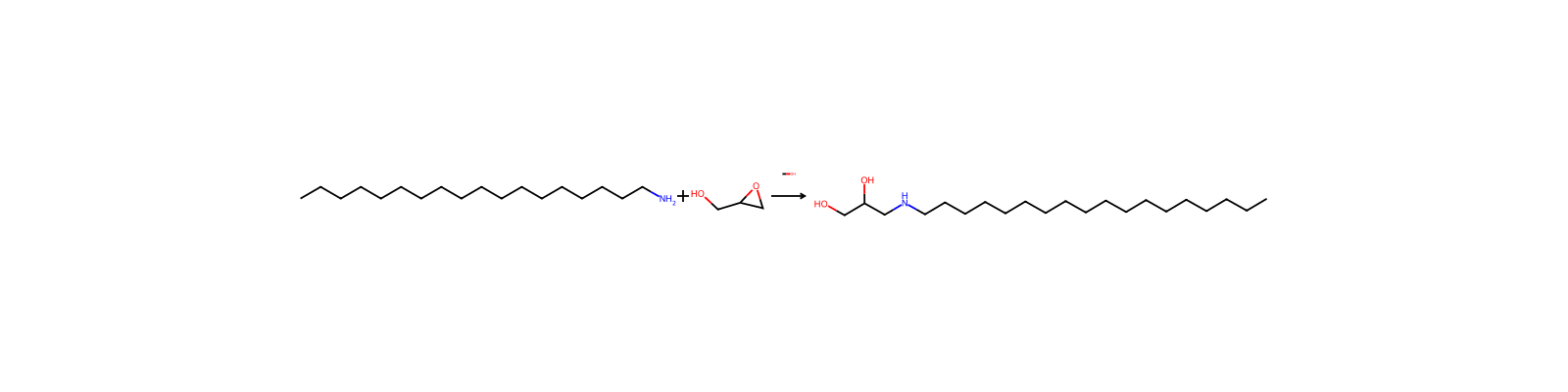

関連ノート
読み込み中…