
1,6-ジアミノヘキサン
Hexamethylenediamine
基本情報
- CAS
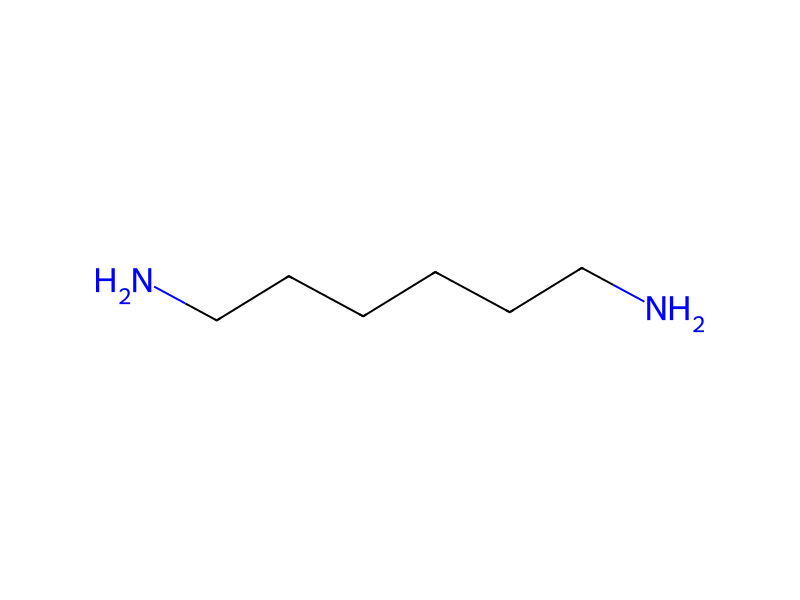
124-09-4- 標準SMILES
NCCCCCCN- InChIKey
NAQMVNRVTILPCV-UHFFFAOYSA-N- 分子式
- C6H16N2
- 平均分子量
- 116.2 g/mol
- 単同位体質量
- 116.13134852
概要
Hexamethylenediamine, solid is a colorless crystalline solid. It is soluble in water. It is corrosive to metals and tissue. Produces toxic oxides of nitrogen during combustion.
名称と識別子
- 優先名称
- Hexamethylenediamine
- IUPAC
- hexane-1,6-diamine
- 現地名
- 1,6-ジアミノヘキサン
- 英語名
- Hexamethylenediamine
- 分子式
- C6H16N2
- 分子量
- 116.2
名称と別名
1,6-HexanediamineHexamethylenediamine124-09-4HEXANE-1,6-DIAMINEHMDA1,6-HexylenediamineHEXAMETHYLENE DIAMINE1,6-Diamino-n-hexanediaminohexaneHexane, 1,6-diamino-HEX-NH2NCI-C61405
名称をさらに表示
1,6-ジアミノヘキサンヘキサン-1,6-ジアミンヘキサメチレンジアミン1,6-ヘキサンジアミンヘキサメチレンジアミン)ヘキサン-1,6-ジイルジアミン1,6‐ヘキサンジアミン1,6-ジアミノヘキサン ヘキサメチレンジアミン1,6-ジアミノヘキサン, 98+%1,6-Hexamethylenediamine1,6-DIAMINOHEXANEHEXANEDIAMINEHexamethylendiamineHexylenediamine1,6-diamino-hexan
NSC 9257CCRIS 6224H2N(CH2)6NH2HSDB 189DTXSID5024922UNII-ZRA5J5B2QWEINECS 204-679-6HEXANEMETHYLENEDIAMINE-
データベース識別子
- CAS
124-09-4、73398-58-0- PubChem CID
- 16402
- DTXSID
DTXSID5024922- ChEMBL
CHEMBL303004- ChEBI
CHEBI:39618- UNII
- ZRA5J5B2QW
- EC Number
- 204-679-6
- Nikkaji
- J10.055B
物性
構造計算による物性
- XLogP
- -0.2
- 極性表面積
- 52 Ų
- 水素結合供与体数
- 2
- 水素結合受容体数
- 2
- 回転可能結合数
- 5
- 重原子数
- 8
- 形式電荷
- 0
- 複雑度
- 31.5
実験および物理化学的性質
Chemical Classes
Nitrogen Compounds -> Amines, Aliphatic
Corrosives
DrugsPharmaceuticals -> Listed in ZINC15
SpringerMaterials PropertiesBoiling point
Odor
ODOR OF PIPERIDINE
Weak, fishy
Density
(anhyd.) 0.799 at 140.0 °F (70% soln.) 0.933 at 20 °C (USCG, 1999)
(anhyd) 0.799 at 60 °C (liquid)
Relative density (water = 1): 0.93
0.799 at 140 °F (70% sol), 0.933 at 20 °C
Color/Form
COLORLESS LEAFLETS
RHOMBIC BIPYRAMIDAL PLATES
Solubility
greater than or equal to 100 mg/mL at 73 °F (NTP, 1992)
FREELY SOL IN WATER; SLIGHTLY SOL IN ALC, BENZENE
SOMEWHAT SOL IN ETHER
Water solubility = 2,460,000 mg/l at 4.5 °C
Solubility in water: soluble
Flash Point
178 °F (NTP, 1992)
85 °C
160 °F OC
85 °C c.c.
178 °F
Boiling Point
401 °F at 760 mmHg (NTP, 1992)
205 °C
199-205 °C
401 °F
Melting Point
108 °F (NTP, 1992)
42 °C
23-41 °C
108 °F
Vapor Density
4.01 (NTP, 1992) - Heavier than air; will sink (Relative to Air)
4.01 (AIR= 1)
Relative vapor density (air = 1): 3.8
4.01
Odor Threshold
0.0041 mg/cu m
0.0032 mg/cu m
物理化学的性質
- 融点
- 42 · 42-45 °C(lit.)
- 沸点
- 204 · 204-205 °C
- 比重(密度)
- 0.89 g/mL · 0.89 g/mL at 25 °C(lit.)
- 蒸気密度
- 4 · 4 (vs air)
- 蒸気圧
- 0.25 hPa · 0.25 hPa (20 °C)
- 屈折率
- 20 · n20/D 1.439(lit.)
- 闪点
- 201 °F · 201 °F
- 貯蔵温度
- 30 °C · Store below +30°C.
- 溶解性
- アルコール: 可溶(lit.)
- 酸解離定数(Pka)
- 11.857 · 11.857(at 0℃)
- 外見
- 解決
- 色
- 白色、保管中に変色することがあります
- PH
- 12.4 · 12.4 (100g/l, H2O, 25℃)
- 臭い (Odor)
- ピリジン臭
- 爆発限界(explosive limit)
- 0.9 · 0.9-7.6%(V)
- 水溶解度
- 490 g/L · 490g/L(20℃)
- Merck
- 14 · 14,4695
- BRN
- 1098307 · 1098307
- Henry's Law Constant
- 1 · 1.0×103 mol/(m3Pa) at 25℃, Nguyen (2013)
- 安定性
- 安定。可燃性。強酸化剤、強酸、有機物とは相容れない。
- 化粧品成分の機能
- バッファリング
- InChI
- 1S/C6H16N2/c7-5-3-1-2-4-6-8/h1-8H2
- InChIKey
- NAQMVNRVTILPCV-UHFFFAOYSA-N
- SMILES
- NCCCCCCN
- LogP
- 0.4 at · 0.4 at 25℃
- CAS データベース
- 124 · 124-09-4(CAS DataBase Reference)
- NISTの化学物質情報
- 1 · 1,6-Hexanediamine(124-09-4)
- EPAの化学物質情報
- Hexamethylenediamine (124-09-4)
化学的性質
化学的特性Hexamethylenediamine(HMDA) is a strong organic base, e.g., a 10 % aqueous solution has a pH of 12.3 (20°C), and forms stable salts with both organic and inorganic acids. The most important salt is that produced by neutralization with adipic acid (salt strike): the so-called nylon salt or AH salt. This compound is the raw material for the preparation of nylon by thermal dehydration under vacuum.
化学性质アンモニア臭のある白色結晶(融点40.5℃)で,水に易溶,アルコールに可溶
安全と法規制
安全情報は参考情報です。供給元の安全データシート(SDS)、適用法令、専門家による評価に代わるものではありません。
GHS分類
GHS Classification
Danger
H302: Harmful if swallowed [Warning Acute toxicity, oral]
P260, P261, P264, P270, P271, P280, P301+P317, P301+P330+P331, P302+P352, P302+P361+P354, P304+P340, P305+P354+P338, P316, P317, P319, P321, P330, P362+P364, P363, P403+P233, P405, and P501 (click each P-code to see the statement)
Danger
H302+H312 (38.6%): Harmful if swallowed or in contact with skin [Warning Acute toxicity, oral; acute toxicity, dermal]
P260, P261, P264, P264+P265, P270, P271, P280, P301+P317, P301+P330+P331, P302+P352, P302+P361+P354, P304+P340, P305+P354+P338, P316, P317, P319, P321, P330, P362+P364, P363, P403+P233, P405, and P501 (click each P-code to see the statement)
危険有害性情報
Regulatory Information
Chemical: 1,6-Hexanediamine
1,6-Hexanediamine is listed on the EPA's Chemical Data Reporting (CDR) system. Manufacturers and importers of 1,6-Hexanediamine are required to report information about their production and use of this chemical to the EPA under the Toxic Substances Control Act (TSCA). (40 eCFR Part 711)
REACH registered substance: Hexamethylenediamine (EC: 204-679-6)
1,6-Hexanediamine: Does not have an individual approval but may be used under an appropriate group standard
The New Jersey Worker and Community Right to Know Act requires public and private employers to provide information about hazardous substances at their workplaces. (N.J.S.A. 34:5A-1 et. seq.)
Other Safety InformationIMAP assessments - 1,6-Hexanediamine: Human health tier II assessment
DOT Label
Corrosive
Corrosive
Fire Hazards
Excerpt from ERG Guide 153 [Substances - Toxic and/or Corrosive (Combustible)]:
Excerpt from ERG Guide 153 [Substances - Toxic and/or Corrosive (Combustible)]:
· Combustible material: may burn but does not ignite readily.
· Combustible material: may burn but does not ignite readily.
Combustible.
Fire PotentialCOMBUSTIBLE WHEN EXPOSED TO HEAT OR FLAME...
Health Hazards
Vapors cause irritation of eyes and respiratory tract. Liquid irritates eyes and skin, may cause dermatitis. (USCG, 1999)
Excerpt from ERG Guide 153 [Substances - Toxic and/or Corrosive (Combustible)]:
· TOXIC and/or CORROSIVE; inhalation, ingestion or skin contact with material may cause severe injury or death.
· TOXIC and/or CORROSIVE; inhalation, ingestion or skin contact with material may cause severe injury or death.
Hazards Summary
A corrosive substance that can cause injury to the skin, eyes, and respiratory tract; Inhalation of high concentrations may cause pulmonary edema; [ICSC] Allergic dermatitis, rhinitis, and asthma were reported in exposed workers. One case of acute hepatitis was reported. In animal experiments, 6 guinea pigs receiving orally 0.02 grams/day for 20-95 days are slowly poisoned and have weight loss, hemolytic anemia, leukopenia, liver damage, and kidney damage; Similar effects are seen in high-dose inhalation studies in rats inhaling 1.25 mg/m3 (0.26 ppm) 4 hours per day for 8 days; [HSDB] Exposed workers complain of skin and respiratory tract irritation; [ACGIH] Does not meet criteria for dermal sensitizer since animal studies were negative and human reports not confirmed; [AIHA] A corrosive substance that can cause injury to the skin, eyes, and respiratory tract; [MSDSonline]
DOT ID and Guide
2280 153
1783 153
Reactive Group
Amines, Phosphines, and Pyridines
Amines, Phosphines, and Pyridines
EC ClassificationSymbol: C; R: 21/22-34-37; S: (1/2)-22-26-36/37/39-45
UN ClassificationUN Hazard Class: 8; UN Pack Group: III
Special ReportsDHHS/NTP; NTP Technical Report on Toxicity Studies of 1,6-Hexanediamine Dihydrochloride Administered by Drinking Water and Inhalation to F344/N Rats and B6C3F1 Mice. Toxicity Rpt Series No. 24 NIH Publication No. 93-3347 (1993)
安全と保護具
Fire Fighting
Excerpt from ERG Guide 153 [Substances - Toxic and/or Corrosive (Combustible)]:
Excerpt from ERG Guide 153 [Substances - Toxic and/or Corrosive (Combustible)]:
Use water in large amounts, powder, alcohol-resistant foam, carbon dioxide. In case of fire: keep drums, etc., cool by spraying with water.
First Aid Measures
Fresh air, rest. Half-upright position. Artificial respiration may be needed. Refer for medical attention.
Rinse skin with plenty of water or shower. Refer for medical attention .
First rinse with plenty of water for several minutes (remove contact lenses if easily possible), then refer for medical attention.
Rest. Refer for medical attention .
Accidental Release Measures
· CALL 911. Then call emergency response telephone number on shipping paper. If shipping paper not available or no answer, refer to appropriate telephone number listed on the inside back cover.
· ELIMINATE all ignition sources (no smoking, flares, sparks or flames) from immediate area.
· CALL 911. Then call emergency response telephone number on shipping paper. If shipping paper not available or no answer, refer to appropriate telephone number listed on the inside back cover.
· ELIMINATE all ignition sources (no smoking, flares, sparks or flames) from immediate area.
First Aid
EYES: First check the victim for contact lenses and remove if present. Flush victim's eyes with water or normal saline solution for 20 to 30 minutes while simultaneously calling a hospital or poison control center. Do not put any ointments, oils, or medication in the victim's eyes without specific instructions from a physician. IMMEDIATELY transport the victim after flushing eyes to a hospital even if no symptoms (such as redness or irritation) develop.
Excerpt from ERG Guide 153 [Substances - Toxic and/or Corrosive (Combustible)]:
General First Aid:
General First Aid:
Safe StorageSeparated from strong oxidants and strong acids. Well closed.
Exposure Control and Personal Protection
· Wear positive pressure self-contained breathing apparatus (SCBA).
· Wear positive pressure self-contained breathing apparatus (SCBA).
Fire Fighting Procedures
Extinguish with water, foam, dry chemical, or carbon dioxide.
If material on fire or involved in fire: Do not extinguish fire unless flow can be stopped. Use water in flooding quantities as fog. Cool all affected containers with flooding quantities of water. Apply water from as far a distance as possible. Solid streams of water may be ineffective. Use "alcohol" foam, dry chemical or carbon dioxide. /Hexamethylene diamine solution/
If material on fire or involved in fire: Use water in flooding quantities as fog. Cool all affected containers with flooding quantities of water. Apply water from as far a distance as possible. Solid streams of water may be ineffective. Use "alcohol" foam, dry chemical or carbon dioxide. /Hexamethylene diamine, solid/
Cleanup Methods
TREATMENT OF WASTE WATER CONTAINING HEXAMETHYLENEDIAMINE FROM POLYAMIDE MFG IN REVERSE OSMOSIS APPARATUS WITH CELLULOSE ACETATE MEMBRANES WAS STUDIED TO DETERMINE THE EFFECT OF HCL ADDITION ON TRANSPORT OF COMPONENTS OF THE SOLN THROUGH A MEMBRANE & TO ASSESS THE POSSIBILITY OF CHANGING THE PH OF THE CONCN FORMED IN THE APPARATUS.
Nonfire Spill Response
Excerpt from ERG Guide 153 [Substances - Toxic and/or Corrosive (Combustible)]:
Excerpt from ERG Guide 153 [Substances - Toxic and/or Corrosive (Combustible)]:
Disposal Methods
SRP: At the time of review, criteria for land treatment or burial (sanitary landfill) disposal practices are subject to significant revision. Prior to implementing land disposal of waste residue (including waste sludge), consult with environmental regulatory agencies for guidance on acceptable disposal practices.
FEASIBILITY OF MICROBIAL DECOMP OF ORGANIC WASTES UNDER CONDITIONS EXISTING IN DEEP WELLS WAS INVESTIGATED. UNDER AEROBIC CONDITIONS TEMP IS NOT A CONSTRAINT; THERMOPHILIC BACTERIA DECOMP A WIDE VARIETY OF COMPOUNDS. GROWTH OF THERMOPHILIC BACTERIA IS POSSIBLE WITH HEXAMETHYLENEDIAMINE.
(1) Add to layer of sodium bisulfite. Spray with water and neutralize. ...
Spillage Disposal
Personal protection: complete protective clothing including self-contained breathing apparatus. Do NOT let this chemical enter the environment. Collect leaking and spilled liquid in sealable containers as far as possible. Carefully collect remainder. Then store and dispose of according to local regulations.
Preventive Measures
If material not on fire and not involved in fire: Keep sparks, flames, and other sources of ignition away. Keep material out of water sources and sewers. Build dikes to contain flow as necessary. /Hexamethylene diamine solution/
If material not on fire and not involved in fire: Keep sparks, flames, and other sources of ignition away. Keep material out of water sources and sewers. /Hexamethylene diamine, solid/
Personnel protection: Avoid breathing vapors. Keep upwind. Avoid bodily contact with the material. ... Do not handle broken packages unless wearing appropriate personal protective equipment. Wash away any material which may have contacted the body with copious amounts of water or soap and water. ... If contact with the material anticipated, wear appropriate chemical protective clothing. /Hexamethylene diamine solution; hexamethylene diamine, solid/
毒性情報
Environmental Fate
TERRESTRIAL FATE: Based on a recommended classification scheme(1), an estimated Koc value of 286(SRC), determined from a structure estimation method(2), indicates that hexamethylene diamine is expected to have moderate mobility in soil(SRC). Volatilization of hexamethylene diamine is not expected from moist soil surfaces(SRC) given an estimated Henry's Law constant of 3.2X10⁻⁹ atm-cu m/mole(SRC), using a fragment constant estimation method(3). Volatilization of hexamethylene diamine from dry soil surfaces is not expected(SRC) based on an extrapolated vapor pressure of 0.12 mm Hg(SRC) at 25 °C(4). Biodegradation is expected to be an important environmental fate process for this compound(SRC). Standard BOD dilution techniques with activated sludge indicate that hexamethylene diamine biodegrades under aerobic conditions(5-7).
AQUATIC FATE: Based on a recommended classification scheme(1), an estimated Koc value of 286(SRC), determined from a structure estimation method(2), indicates that hexamethylene diamine is expected to adsorb to suspended solids and sediment in water(SRC). Hexamethylene diamine is not expected to volatilize from water surfaces(3,SRC) based on an estimated Henry's Law constant of 3.2X10⁻⁹ atm-cu m/mole(SRC), developed using a fragment constant estimation method(4). An experimental pKa value of 11(5), indicates that hexamethylene diamine will not dissociate significantly at environmentally important pH values(SRC). Biodegradation is expected to occur slowly in aqueous environments(SRC). Degradation rates of 4% and 10% were observed for hexamethylene diamine (50 ppm) incubated in water from the Mino River, Japan and seawater off the coast of Japan over a 3 day incubation period(6). According to a classification scheme(7), an estimated BCF value of 1(3,SRC), from an estimated log Kow of 0.35(8,SRC), suggests that bioconcentration in aquatic organisms is low(SRC).
ATMOSPHERIC FATE: According to a model of gas/particle partitioning of semivolatile organic compounds in the atmosphere(1), hexamethylene diamine, which has an extrapolated vapor pressure of 0.12 mm Hg at 25 °C(2,SRC), is expected to exist solely as a vapor in the ambient atmosphere. Vapor-phase hexamethylene diamine is degraded in the atmosphere by reaction with photochemically-produced hydroxyl radicals(SRC); the half-life for this reaction in air is estimated to be about 6 hours(3,SRC).
Adverse EffectsOccupational hepatotoxin - Secondary hepatotoxins: the potential for toxic effect in the occupational setting is based on cases of poisoning by human ingestion or animal experimentation.
Exposure RoutesThe substance can be absorbed into the body by inhalation of its aerosol, through the skin and by ingestion.
Signs and Symptoms
Burning sensation. Cough. Laboured breathing. Shortness of breath. Sore throat. Symptoms may be delayed.
MAY BE ABSORBED! Redness. Skin burns. Pain. Blisters.
Redness. Pain. Severe deep burns.
Abdominal cramps. Abdominal pain. Burning sensation. Shock or collapse.
Ongoing Test Status
The following link will take the user to the National Toxicology Program (NTP) Test Agent Search Results page, which tabulates all of the "Standard Toxicology & Carcinogenesis Studies", "Developmental Studies", and "Genetic Toxicity Studies" performed with this chemical. Clicking on the "Testing Status" link will take the user to the status (i.e., in review, in progress, in preparation, on test, completed, etc.) and results of all the studies that the NTP has done on this chemical. /1,6-Hexanediamine dihydrochloride/ [http://ntp-apps.niehs.nih.gov/ntp_tox/index.cfm?fuseaction=ntpsearch.searchresults&searchterm=6055-52-3]
ICSC Environmental DataThe substance is toxic to aquatic organisms.
Soil Adsorption/MobilityBased on a recommended classification scheme(1), an estimated Koc value of 286(SRC), determined from a structure estimation method(2), indicates that hexamethylene diamine is expected to have moderate mobility in soil(SRC).
TSCA Test Submissions
1,6-Hexanediamine (CAS # 124-09-4) was evaluated for acute oral toxicity in Long Evans rats (5/sex/group) administered single gavage (free base) doses of 485, 679, 950, 1,330, and 1,960 mg/kg bodyweight and in additional groups given gavage doses of 950, 1,330, 1,860, 2,600, and 3,640 mg/kg. Treatment was associated with progressively more serious signs of toxicity with greater dosages. Pharmacotoxic signs upon oral administration of hexanediamine at doses of 485-1860 mg/kg bodyweight included immediate hypokinesis, hyperventilation, coarse body tremors, and abdominal grip. At doses of 1860 mg/kg and above, the adverse responses were profound and all animals were dead within 24 hours of dosing. An LD50 was 830 mg/kg with 95% confidence limits of 730 and 950 mg/kg. Necropsy of study lethalities revealed severe irritation of the mucous membranes and extensive gastrointestinal hemorrhaging.
Hexamethylene Diamine, (CAS # 124-09-4) was evaluated in Charles River COBS CD rats (26/sex/group) administered measured dietary doses of 0, 50, 150, and 500 mg/kg bodyweight at 78.02% concentration in two successive generations (F0 and F1). A control group received the basal laboratory diet with an ethanol (solvent) concentration equivalent to that in the high-dose diet. F0 and F1 were mated once to produce F1 and F2 progeny, respectively. Treatment was associated with reduced bodyweight gains in high- and mid-dose F0 and F1 males and in high-dose F1 females. Food consumption was reduced in F0 and F1 females. High-dose F0 and F1 females demonstrated significantly lower weight gains during gestational periods. Fertility indices of dams and sires and the testes weights of males without litters did not reveal an adverse effect of treatment. Copulation, gestation, weaning intervals, and dynamics of dams were comparable to controls at all treatment levels in both generations. A 500 mg/kg high dose was associated with significant (p<0.05) reductions in both F1 and F2 progeny numbers as well as pup weights on lactation days 14 and 21. Smaller viable litter sizes did not correlate with increased numbers of dead pups. Survival through weaning was comparable in the progeny of control and all treated rats of both generations. Antemortem pathology on terminal necropsy of all high-dose and control parents revealed no gross lesions and no microscopic changes related to treatment. A dietary "no effect" level was 150 mg/kg day and researchers concluded that fetal developmental toxicity was produced only at levels associated with significant maternal toxicity.
Hexamethylene diamine (1,6-diaminohexane, CAS# 124-09-4) was administered in the diet to groups of 52 rats (26 males and 26 females) at doses of 50, 150, and 500 mg/kg/day for two generations. A control group received the basal laboratory diet. The F0 and F1 generations were each mated once to produce F1 and F2 generations. Treatment related changes included reduction in weight in F0 males and F1 males and females and reduced food consumption among F0 and F1 males and females in the high dose group. The high dose group also showed reduced litter size, and decreased pup weight on lactation days 14 and 21 for both generations. No other treatment effects were noted with regard to lactation, female body weights, fertility indices, copulatory interval, gestation length, pup survival or appearance, or testes weight or appearance. The authors conclude that the 150 mg/kg/day level can be considered the dietary "no effect" level. This EPA status report only includes a summary of this study.
Human Toxicity Excerpts
CONJUNCTIVAL & UPPER RESPIRATORY TRACT IRRITATION HAS BEEN OBSERVED IN WORKERS HANDLING HEXAMETHYLENEDIAMINE. ONE WORKER, OUT OF 20 STUDIED, DEVELOPED ACUTE HEPATITIS FOLLOWED BY DERMATITIS WHICH WAS ATTRIBUTED TO HEXAMETHYLENEDIAMINE. NO ANEMIA WAS OBSERVED.
...CASE...DESCRIBED IN ITALY IN WHICH 20 WORKERS WERE EXPOSED TO HEXAMETHYLENE DIAMINE & 8 SUFFERED FROM IRRITATION TO EYES & UPPER RESPIRATORY TRACT, WHILE ONE CONTRACTED DERMATITIS, & ANOTHER, ACUTE LIVER DISEASE. DERMATITIS HAS...BEEN DESCRIBED IN FRANCE...
Workers involved in the production of condensers were examined. Their contact with hexamethylenediamine, capon lacquer, and epoxide tar results in development of allergic diseases, such as atopic forms of bronchial asthma, allergic rhinitis and dermatitis.
Artificial Pollution SourcesHexamethylene diamine's production and use as a chemical intermediate in the production of nylon-type polyimide resins(1) may result in its release to the environment through a variety of waste streams(SRC).
Environmental Biodegradation
Biodegradation is expected to be an important environmental fate for this compound(SRC). Using a standard BOD dilution technique and an activated sludge inoculum, a theoretical BOD of 56% was observed during a 14 day incubation period(1). Using standard BOD dilution techniques and activated sludge inocula, theoretical BOD values of 41% to 56% were observed during a 14 day incubation period following a 6 day acclimation period(2). Based on 14 day BOD data, hexamethylene diamine is considered biodegradable(3). Following a 3 day acclimation period, 90% biodegradation of hexamethylene diamine in an activated sludge inoculum was observed during a 6 day incubation period, with an average COD of 26% per day(4). Degradation rates of 4% and 10% were observed for hexamethylene diamine (50 ppm) incubated in water from the Mino River, Japan and seawater off the coast of Japan over a 3 day incubation period(5). A theoretical oxygen demand between 20 and 60% was observed for hexamethylene diamine in a Warburg apparatus during a 5 day incubation period(6).
Environmental Bioconcentration
An estimated BCF value of 1 was calculated for hexamethylene diamine(SRC), using an estimated log Kow of 0.35(1,SRC) and a recommended regression-derived equation(2). According to a classification scheme(3), this BCF value suggests that bioconcentration in aquatic organisms is low(SRC).
安全データ
- F
- 10-34
- wgk
- 3
- tsca
- TSCA listed
- rtecs
- MO1180000
- ridadr
- UN 2280 8/PG III (HEXAMETHYLENEDIAMINE, SOLID)
- 毒性
- LD50 orally in Rabbit: 850 mg/kg LD50 dermal Rabbit 1110 mg/kg
- PRTR法
- 第一種指定化学物質
- hs_code
- 2921 22 00
- risk_code
- 34-37-21/22-20/21/22
- 化審法
- (2)-153
- 安衛法
- 57,57-2
- hazard_code
- C
- safety_code
- 26-36/37/39-45-22-27
- hazard_class
- 8
- packing_group
- III
- 毒劇物取締法
- 劇物
- 自然発火温度
- 305 °C
- 環境リスク評価
- 1,6-ヘキサンジアミン(124-09-4)
- Hazard Classifications
- Acute Tox. 4 DermalAcute Tox. 4 OralEye Dam. 1Skin Corr. 1BSTOT SE 3
- ストレージクラス
- 8A - Combustible corrosive hazardous materials
- 有毒物質データの
- 124-09-4(Hazardous Substances Data)
化学と産業
薬理情報
Absorption, Distribution and Excretion
.../HEXAMETHYLENE IS/ ABSORBED THROUGH THE SKIN.
Following oral administration of (14)C-labeled 1,6-diaminohexane to male rats, approx 20% of the administered dose was recovered as (14)CO2 after 72 hr. Urinary and fecal excretion accounted for 47 and 27% of the administered radioactivity, respectively. Of several tissues examined, the highest concn of residual radioactivity were found in the prostate at 24 and 72 hr post-administration.
An isocyanate generation apparatus was developed and stable isocyanate atmospheres were obtained. At a concn of 5 ug 1,6-hexamethylene diisocyanate (HD) per cu m the precision was found to be 7% (n = 5). Three volunteers were each exposed to the different concn of HI (11.9, 20.5, and 22.1 micrograms/ cu m) and three concns of isophorone diisocyanate (IPDI) (12.1, 17.7, and 50.7 micrograms/cu m), in an exposure chamber. The duration of the exposure was 2 hr. Urine and blood samples were collected, and hydrolyzed under alkaline conditions to the HI and IPDI corresponding amines, 1,6-hexamethylene diamine (HDA) and isophorone diamine (IPDA), determined as their pentafluoropropionic anhydride amides (HDA-PFPA and IPDA-PFPA). The HDA- and IPDA-PFPA derivatives were analyzed using liquid chromatography mass spectrometry with thermospray monitoring negative ions. When working up samples from the exposed persons without hydrolysis, no HDA or IPDA was seen. The average urinary excretion of the corresponding amine was 39% for HI and 27% for IPDI . An association between the estimated inhaled dose and the total excreted amount was seen. The average urinary elimination half-time for HDA was 2.5 hr and for IPDA, 2.8 hr. The hydrolysis condition giving the highest yield of HDA and IPDA in urine was found to be hydrolysis wi the 3 M sodium hydroxide during 4 hr. No HDA or IPDA could be found in hydrolyzed plasma (< ca 0.1 micrograms/l) .
用途と製造
Uses
Used as an intermediate to make polyamides with applications in fiber, plastics, polyurethane coatings and adhesives, specialty nylons (monofilaments and inks), and specialty chemicals (biocides, petroleum additives, and phenol purification); [eChemPortal: SIDSUNEP]
CHEM INT FOR NYLON-TYPE POLYAMIDE RESINS
Used to prepare hexamethylene diisocyanate.
U.S. Exports
(1972) NEGLIGIBLE
(1984) 9.99X10+9 g
U.S. Imports
(1972) 1.68X10+8 GRAMS
(1975) 7.31X10+6 GRAMS
(1984) 7.78x10+7 g
U.S. Production
2023: 1,000,000,000 - <2,500,000,000 lb
(1972) 3.88X10+11 GRAMS
(1975) 3.40X10+11 GRAMS
Capacity (Jan 1, 1996): Total capacity 1330 million lbs. 930 million lbs (adiponitrile from butadiene); 200 million lbs (adiponitrlie from acrylonitrile); 200 million lbs (transferred adiponitrile).
Consumption Patterns88% USED IN PRODN OF NYLON 66; 12% USED IN OTHER APPLICATIONS INCLUDING THE PRODN OF NYLON 610 AND 612 (1972)
Industry UsesIntermediate
Methods of Manufacturing
PREPARED BY REDUCING ADIPONITRILE WITH SODIUM AND ALCOHOL: SLOTTA, TSCHESCHE, BER 62, 1404 (1929). MFR: FAITH, KEYES & CLARK'S INDUSTRIAL CHEMICALS, FA LOWENHEIM, MK MORAN, EDS (WILEY INTERSCIENCE, NEW YORK, 4TH ED, 1975) PP 442-4.
1) REACTION ADIPIC ACID AND AMMONIA (CATALYTIC VAPOR-PHASE) TO YIELD ADIPONITRILE, FOLLOWED BY LIQ-PHASE CATALYTIC HYDROGENATION. 2) CHLORINATION OF BUTADIENE FOLLOWED BY REACTION WITH SODIUM CYANIDE (CUPROUS CHLORIDE CATALYST) TO 1,4-DICYANOBUTYLENE, & HYDROGENATION.
Formulations/PreparationsGrade or purity: Anhydrous: 99.8%; 70% soln
General Manufacturing Information
Not Known or Reasonably Ascertainable
1,6-Hexanediamine: ACTIVE
/NYLON/ MANUFACTURING PROCESS STARTS WITH HIGH-PRESSURE SYNTHESIS OF ADIPIC ACID & HEXAMETHYLENE DIAMINE WHICH ARE HEATED...IN ABSENCE OF AIR TO FORM AMIDE LINKAGES... WATER IS REMOVED & MOLTEN NYLON (...NYLON 66) IS EXTRUDED IN RIBBON-LIKE FORM.../TO BE MELTED & FILAMENTS FORMED/. /POLYAMIDES/
応用分野
解説ヘキサメチレンジアミン1,6-hexanediamine.C6H16N2(116.21).NH2(CH2)6NH2.1,6-ジブロモヘキサンのフタルイミドカリウムによるアミノ化や,工業的には,アジポニトリルをアンモニアの存在下で接触水素還元してつくる.融点42 ℃,沸点205 ℃,100 ℃(2.6 kPa).二酸化炭素を吸収して炭酸塩をつくる.水,エタノール,ベンゼンに可溶.ナイロン66,そのほかのポリマーの合成原料に用いられる.皮膚を強く刺激する.LD50 750 mg/kg(ラット,経口)
用途有機合成原料。
用途ナイロン6 6 の原料、医薬品原料
用途ポリアミドの製造(ナイロン66の原料)、界面活性剤の原料
使用Hexamethylenediamine is mainly used as a monomer to make nylon 6-6. Its derivative hexamethylene diisocyanate (HDI) is used in the production of polyurethane. It acts as a cross-linking agent in epoxy resins. Other applications include fiber, plastics, polyurethane coatings, lubricants, water treatment products and specialty chemicals (biocides, petroleum additives, and phenol purification).
一般的な説明Hexamethylenediamine, solution appears as a clear colorless liquid. Burns although some effort is required to ignite. Soluble in water. Corrosive to metals and tissue. Produces toxic oxides of nitrogen during combustion. Used to make nylon.
使用用途ヘキサメチレンジアミンは、腐食防止剤、化学中間体、硬化剤に使用されています。特に、合成繊維であるナイロン66やの原料であるヘキサメチレンジイソシアネートの原料として広く使われています。 ヘキサメチレンジアミンは、工業用製品や生活用品に必要な原料となるなど、汎用性の高い化学物質です。
調製方法
製造方法Virtually all hexamethylenediamine is now produced by the catalytic hydrogenation of adiponitrile[111-69-3] :NC(CH2)4CN + 4H2 → H2N(CH2)6NH2.
製造方法ヘキサメチレンジアミンの製造方法は、ナイロン66の原料であるヘキサメチレンジアミンとアジピン酸が同一の出発原料から製造可能なADA法が一般的です。この製造方法はナイロン66の製造に必要なの酸化及びアジピン酸製造設備のスケールメリットを目的に開発されましたが、製造コストが高いというデメリットがありました。 そのため、1960年代の初期にからヘキサメチレンジアミンの原料となるを製造する電解還元二量化法が開発されました。
合成方法アジピン酸の脱水,アクリロニトリルの還元二量化,ブタジエンに青酸を付加させることによりアジポニトリルを得る
純化方法Crystallise it in a stream of nitrogen. It sublimes in a vacuum. [Beilstein 4 IV 1320.]
上流・下流製品情報
上流原料
下流製品
補足説明
定義ChEBI: Hexamethylenediamine is a C6 alkane-alpha,omega-diamine. It has a role as a human xenobiotic metabolite. It derives from a hydride of a hexane.
関連反応
213 件





化合物ノート
読み込み中…