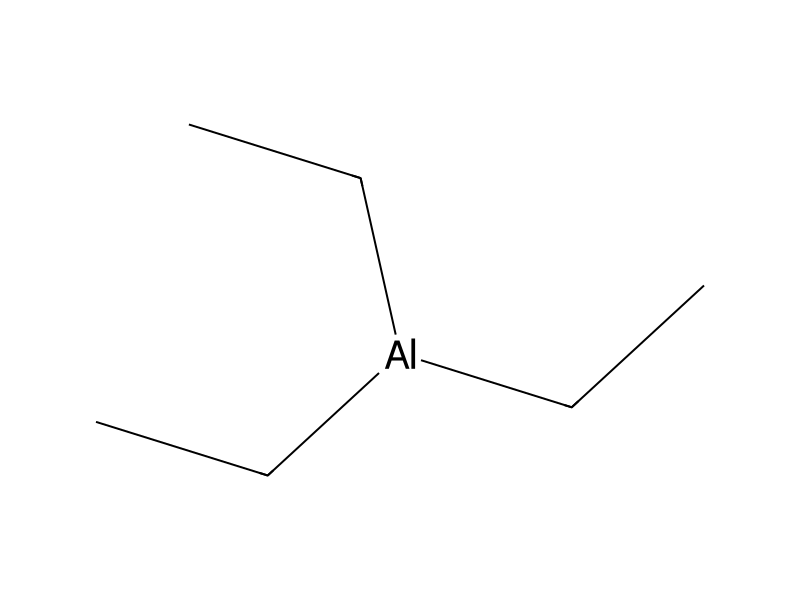
97-93-8C[CH2][Al]([CH2]C)[CH2]CVOITXYVAKOUIBA-UHFFFAOYSA-NAluminum triethyl appears as a colorless liquid. Flammable gas is produced on contact with water. (USCG, 1999)
Metals -> Metals, Organic Compounds
Flammable agents - 4th degree
0.836 at 68 °F (USCG, 1999) - Less dense than water; will float
0.832 @ 25 °C
0.837 @ 20°C
-63 °F (NFPA, 2010)
-63 °F (-53 °C)
367.9 °F at 760 mmHg (USCG, 1999)
194 °C
194 °C @760 [mm Hg]
DECOMP TO AL(OH)3 + C2H6
When heated to decomposition, it emits acrid smoke and irritating fumes.
-51 °F (USCG, 1999)
-52.5 °C (freezing point)
-52.5 °C
0.02 [mmHg]
安全情報は参考情報です。供給元の安全データシート(SDS)、適用法令、専門家による評価に代わるものではありません。
Danger
H250 (100%): Catches fire spontaneously if exposed to air [Danger Pyrophoric liquids]
P210, P222, P223, P231, P231+P232, P233, P260, P264, P264+P265, P280, P301+P330+P331, P302+P335+P334, P302+P361+P354, P304+P340, P305+P354+P338, P316, P317, P321, P363, P370+P378, P402+P404, P405, and P501 (click each P-code to see the statement)
Aggregated GHS information provided per 351 reports by companies from 12 notifications to the ECHA C&L Inventory. Each notification may be associated with multiple companies.
Danger
H225: Highly Flammable liquid and vapor [Danger Flammable liquids]
Chemical: Aluminium, triethyl-
Aluminum, triethyl- is listed on the EPA's Chemical Data Reporting (CDR) system. Manufacturers and importers of Aluminum, triethyl- are required to report information about their production and use of this chemical to the EPA under the Toxic Substances Control Act (TSCA). (40 eCFR Part 711)
Status: Active Update: 13-03-2023 https://echa.europa.eu/registration-dossier/-/registered-dossier/11479
Triethylaluminum: HSNO Approval: HSR006341 Approved with controls
The New Jersey Worker and Community Right to Know Act requires public and private employers to provide information about hazardous substances at their workplaces. (N.J.S.A. 34:5A-1 et. seq.)
Flammable, dangerous fire risk; ignites spontaneously in air ...
Aluminum is poorly absorbed following either oral or inhalation exposure and is essentially not absorbed dermally. The bioavailability of aluminum is strongly influenced by the aluminum compound and the presence of dietary constituents which can complex with aluminum and enhance or inhibit its absorption. Aluminum binds to various ligands in the blood and distributes to every organ, with highest concentrations found in bone and lung tissues. In living organisms, aluminum is believed to exist in four different forms: as free ions, as low-molecular-weight complexes, as physically bound macromolecular complexes, and as covalently bound macromolecular complexes. Absorbed aluminum is excreted principally in the urine and, to a lesser extent, in the bile, while unabsorbed aluminum is excreted in the faeces. (L739)
Used as a catalyst (thermoplastic polymers) and pyrophoric fuel; Used for gas plating of aluminum; [Hawley] Used in incendiary munitions; [Sullivan, p. 979] Organic aluminum compounds are some of the most important, highest volume, highest value organometallic compounds in production. [Ullmann]
Aluminum Producing [Category: Industry]
Catalyst intermediate for polymerization of olefins, expecially ethylene; pyrophoric fuels; production of alpha-olefins and long chain alcohols; gas plating of aluminum.
The addition of triethylaluminum to liquid rocket propellants and to flame-thrower fuels /makes/ them hypergolic, ie, ignite spontaneously.
Catalyst; with compounds of early transition metals as Ziegler-Natta polymerization catalysts; intermediates in organic syntheses. /Aluminum alkyls/
Intermediates in organic phosphate insecticides, silicones, special saturated hydrocarbons, terpene alcohols, and organic acids. /Aluminum alkyls/
2023: 25,000,000 - <40,000,000 lb
(1975) PROBABLY GREATER THAN 9.08X10+5 GRAMS
(1977) PROBABLY GREATER THAN 4.54X10+6 GRAMS
読み込み中…
97-93-8DTXSID60266162.6X10-2 mm Hg @ 25 °C /Extrapolated/
4 [mm Hg] @83 °C
化学的特性Colorless liquid. Miscible with saturated hydrocarbons.
Certain polymerization catalysts, such as aluminum alkyls, react & burn violently on contact with water. /Aluminum alkyls/
Aluminum alkyls are organic aluminum compounds that are highly reactive and dangerous because of spontaneous burning in air. /Aluminum alkyls/
Prophoric material in flammable solvent. Vapors are heavier than air & may travel to a source of ignition & flash back. /Aluminum alkyls/
Liquid may cause second or third degree burns after brief skin contact. [CHRIS] Inhalation may induce acute pulmonary edema; [CHEMINFO MSDS] Pulmonary irritant and corrosive to the skin; [Sullivan, p. 981] Organoaluminum compounds are corrosive; Harmful if absorbed through the skin or inhaled; The butyl alkyls and below are pyrophoric; Aluminum alkyls are eye irritants; [HSDB] Organic aluminum compounds can cause irritation or burns, depending upon concentration; [Ullmann] TLV withdrawn for aluminum alkyls because of inadequate toxicological data; [ACGIH] See Aluminum. See ORGANOMETALS.
Anon; Information profiles on Potential Occupaional Hazards: Aluminum & Compounds, 2nd Draft (Revised); GRA & I Issue 21 NTIS/PB89-216238 (1989)> TD3: Information profiles are working papers used by the National Institute for Occupational Safety and Health to assist the Institute in establishing priorities. The proile summarizes data on organic and inorganic substances containing aluminum as the only metal. Each summary presents data on known and suspected health effects, the extent of worker exposure, physical and chemical properties and the industrial importance of the following aluminum compounds: aluminum metal, aluminum ammonium sulfate, aluminum chlorhydrate, aluminum chloride anhydrous, aluminum chloride hydrous, aluminum distearate, aluminum ethoxide, aluminum fluoride, aluminum hydride, aluminum hydroxide, aluminum nitrate, aluminum oxide, aluminum ortho-phosphate, aluminum potassium sulfate, aluminum silicate, aluminum sodium sulfate, aluminum sulfate, calcium aluminum silicate, diethylaluminum chloride, sodium aluminate, tri-n-butylaluminum, triethylaluminum, tri-n-hexylaluminum, triisobutylaluminum, tri-n-octylaluminum. Detailed literature searches are conducted to identify information to be used in the profile sumaries. Sponsored by National Inst. for Occupational Safety and Health, Rockville, MD.
Stop flow of liquid before extinguishing fire. Fight fire from protected location or maximum possible distance. DO NOT use water as straight stream directly on spilled material. Violent reaction may result. Water fog can be used to control fires. Use graphite powder, soda ash, or powdered sodium chloride to extinguish fire. On solvent-based materials use dry chemical or carbon dioxide. Use water spray cautiously to keep fire-exposed containers cool.
CO2, dry sand, dry chemical. ... Do not use water, foam or halogenated fire-fighting agents.
Stop flow of liquid before extinguishing fire. Use dry chemical or carbon dioxide. DO NOT use water as straight stream directly on spilled material. Water fog can be used to control fire. DO NOT use halogenated extinguishing agents on spilled material. Violent reaction may result. Use water spray to keep fire-exposed containers cool. Fight fire from protected location or maximum possible distance. /Aluminum Alkyls/
Separate from oxidizing materials, acids, alcohols, air, and water. Store in a cool, dry, well-ventilated location. Must be stored in a dry location. Outside or detached storage is preferred. Inside storage should be in a standard flammable liquids storage warehouse, room or cabinet.
Extremely reactive with air, moisture and compounds containing active hydrogen and therefore must be kept under a blanket of inert gas. /Aluminum alkyls/
In general, materials ... toxic as stored or which can decompose into toxic components ... Should be stored in cool ... ventilated place, out of ... sun, away from ... fire hazard ... be periodically inspected and monitored. Incompatible materials should be isolated ...
All possibility of contact with water must be avoided. Solution containing not more than 20% of these compounds in non-reactive solvents, however, can be handled without risk of spontaneous ignition. /Aluminum alkyls/
For more Storage Conditions (Complete) data for TRIETHYLALUMINUM (6 total), please visit the HSDB record page.
Approach release from upwind. Keep water away from release. Do not use foam to blanket release and suppress vapors. Stop or control the leak, if this can be done without undue risk. Spills may ignite spontaneously if solvent evaporates. Control runoff and isolate discharged material for proper disposal.
Aluminum compounds are treated under anhydrous conditions to prevent violent reactions, recover solvent, and form Al compounds suitable for landfill by reaction with anhydrous hydrolysis agent, eg calcium hydroxide. /Aluminum compounds/
SRP: The most favorable course of action is to use an alternative chemical product with less inherent propensity for occupational exposure or environmental contamination. Recycle any unused portion of the material for its approved use or return it to the manufacturer or supplier. Ultimate disposal of the chemical must consider: the material's impact on air quality; potential migration in soil or water; effects on animal, aquatic, and plant life; and conformance with environmental and public health regulations.
Irrigate eyes with water. Wash contaminated areas of body with soap and water.
SRP: The scientific literature for the use of contact lenses in industry is conflicting. The benefit or detrimental effects of wearing contact lenses depend not only upon the substance, but also on factors including the form of the substance, characteristics and duration of the exposure, the uses of other eye protection equipment, and the hygiene of the lenses. However, there may be individual substances whose irritating or corrosive properties are such that the wearing of contact lenses would be harmful to the eye. In those specific cases, contact lenses should not be worn. In any event, the usual eye protection equipment should be worn even when contact lenses are in place.
Work clothing that becomes wet or significantly contaminated should be removed and replaced. /Aluminum (soluble salts and alkyls, as Al)/
Workers whose clothing may have become contaminated should change into uncontaminated clothing before leaving the work premises. /Aluminum (soluble salts and alkyls, as Al)/
For more Preventive Measures (Complete) data for TRIETHYLALUMINUM (6 total), please visit the HSDB record page.
8 hr Time Weighted Avg (TWA): 1 mg/cu m (respirable fraction). /Aluminum metal and insoluble compounds/
Excursion Limit Recommendation: Excursions in worker exposure levels may exceed 3 times the TLV-TWA for no more than a total of 30 minutes during a work day, and under no circumstances should they exceed 5 times the TLV-TWA, provided that the TLV-TWA is not exceeded. /Aluminum metal and insoluble compounds/
A4: Not classifiable as a human carcinogen. /Aluminum metal and insoluble compounds/
1.1 [mg/m3]
12 [mg/m3]
69 [mg/m3]
Aluminum targets the nervous system and causes decreased nervous system performance and is associated with altered function of the blood-brain barrier. The accumulation of aluminum in the body may cause bone or brain diseases. High levels of aluminum have been linked to Alzheimer's disease. A small percentage of people are allergic to aluminium and experience contact dermatitis, digestive disorders, vomiting or other symptoms upon contact or ingestion of products containing aluminium. (L739, L740)
The main target organs of aluminum are the central nervous system and bone. Aluminum binds with dietary phosphorus and impairs gastrointestinal absorption of phosphorus. The decreased phosphate body burden results in osteomalacia (softening of the bones due to defective bone mineralization) and rickets. Aluminum's neurotoxicity is believed to involve several mechanisms. Changes in cytoskeletal protein functions as a results of altered phosphorylation, proteolysis, transport, and synthesis are believed to be one cause. Aluminum may induce neurobehavioral effects by affecting permeability of the blood-brain barrier, cholinergic activity, signal transduction pathways, lipid peroxidation, and impair neuronal glutamate nitric oxide-cyclic GMP pathway, as well as interfere with metabolism of essential trace elements because of similar coordination chemistries and consequent competitive interactions. It has been suggested that aluminum's interaction with estrogen receptors increases the expression of estrogen-related genes and thereby contributes to the progression of breast cancer (A235), but studies have not been able to establish a clear link between aluminum and increased risk of breast cancer (A15468). Certain aluminum salts induce immune responses by activating inflammasomes. (L739, A235, A236)
Inhalating aluminum dust causes coughing and abnormal chest X-rays. A small percentage of people are allergic to aluminium and experience contact dermatitis, digestive disorders, vomiting or other symptoms upon contact or ingestion of products containing aluminium. (L739, L740)
/SIGNS AND SYMPTOMS/ Irritating to skin, eyes, and respiratory system.
/OTHER TOXICITY INFORMATION/ Vapors of the pyrophoric alkyls (butyls and below) are nontoxic because they are completely consumed, but inhalation of the metallic oxide smoke (Al2O3) at 15 mg/cu m or greater can result in symptoms such as "metal fume fever." /Aluminum alkyls/
Not listed by IARC. IARC classified aluminum production as carcinogenic to humans (Group 1), but did not implicate aluminum itself as a human carcinogen. (L135) A link between use of aluminum-containing antiperspirants and increased risk of breast cancer has been proposed (A235), but studies have not been able to establish a clear link (A15468).
LC50 (rat) = 10,000 mg/m3/15 min
LC50: 10 g/m3 over 15 minutes (Inhalation, Rat) (T14)
(AZ) ARIZONA 73 ug/l /Aluminum/
(CA) CALIFORNIA 200 ug/l /Aluminum/
(ME) MAINE 1430 ug/l /Aluminum/
Aluminum powder is added to recycled triethylaluminum and the slurry reacts first with hydrogen ... to produce diethylaluminum hydride, which ... reacts with ethylene ... to produce triethylaluminum.
By introduction of ethylene and hydrogen into an autoclave containing aluminum. The reaction proceeds at moderate temperature and varying pressures.
The trialkylaluminums are prepared from aluminum, hydrogen and olefins; this improved "direct synthesis" was developed by Ziegler and co-workers. /Trialkylaluminums/
Not Known or Reasonably Ascertainable
Aluminum, triethyl-: ACTIVE
... Aluminum triethyl ... used to initiate at normal temp and pressures certain polymerization reactions which had previously to be conducted at very high pressures. ... induce regular arrangement of atomic groups such as is found in natural polymers. By their use, synthetic rubber identical to natural rubber has been produced.
解説Al(C2H5)3(114.17).アルミニウムとジエチル亜鉛との反応で生成する.工業的には,アルミニウムとエテンと水素から直接合成される.無色の液体.沸点207 ℃(外挿法による.190 ℃ で分解).凝固点-46 ℃.nD6.5"1.480.d025"0.8324.粘度2.58 cP(25 ℃).有機溶媒に可溶で,ベンゼン中では二量体になっている.空気中で自然発火し,水に接触すると爆発する.エーテル,ホスフィン化合物などのルイス塩基と付加物をつくる.塩化チタン(Ⅳ)と組み合わせてチーグラー-ナッタ触媒を構成する.また,エチル化試薬としても重要である.[CAS 97-93-8]森北出版「化学辞典(第2版)
用途ZIEGLER - NATTA型オレフィン?ジオレフィン重合触媒の一成分、有機合成反応用試薬,3-5族化合物半導体のエピタキシャル成長
使用Triethylaluminum, in combination withmany transition metal complexes, is used as Ziegler-Natta polymerization and hydrogenationcatalyst. Also, it is used as intermediatein organic syntheses.
一般的な説明A colorless liquid. Flammable gas is produced on contact with water.
使用用途トリエチルアルミニウムは、ロケットエンジンの点火器・ナパーム剤や高性能ジェット燃料への添加剤など高性能燃料の成分として多く用いられています。これは、トリエチルアルミニウムが酸化されやすく空気中では自然発火する性質を持つためです。 また、反応性が高いことから、化学材料・反応剤としても多く用いられます。代表的な用途は窒化アルミ製造原料、アルミメッキ原料、及びトリエチルガリウム (TEG) 製造原料や医薬合成の反応剤、化学工業における重合触媒などです。 その他には、有機アルミニウム試薬として、実験室スケールの有機合成一般にも用いられています。
In a typical example, a slurry is prepared containing 7 wt % aluminum powder (0.1 wt% zirconium catalyst content) and 45 wt% recycled triethylaluminum in a paraffin hydrocarbon fraction, boiling range 177 – 260 ℃. The slurry is pumped into the reactor at a rate of 1.5 m3/h, at a reactor temperature of 132 ℃, while hydrogen is introduced at the bottom to maintain a partial pressure of 10 MPa. Excess hydrogen is removed in flash drum, wherein pressure is decreased to 3 MPa and temperature is lowered to prevent thermal reversal of the reaction. In the ethylation reactor sufficient ethylene is added to react completely with the Al – H bonds. Temperature is held at around 85 ℃ or somewhat higher. The addition rate increases with temperature, but carboalumination of ethylene also can occur to formn-butyl groups, especially at higher temperatures. Hydrogen and ethylene partial pressure is kept low in ethylation reactor to minimize hydrogenation of ethylene to ethane and to reduce excess carboalumination products. Excess ethylene and hydrogen are removed in flash drum. A portion of the triethylaluminum product solution is recycled to reactor.
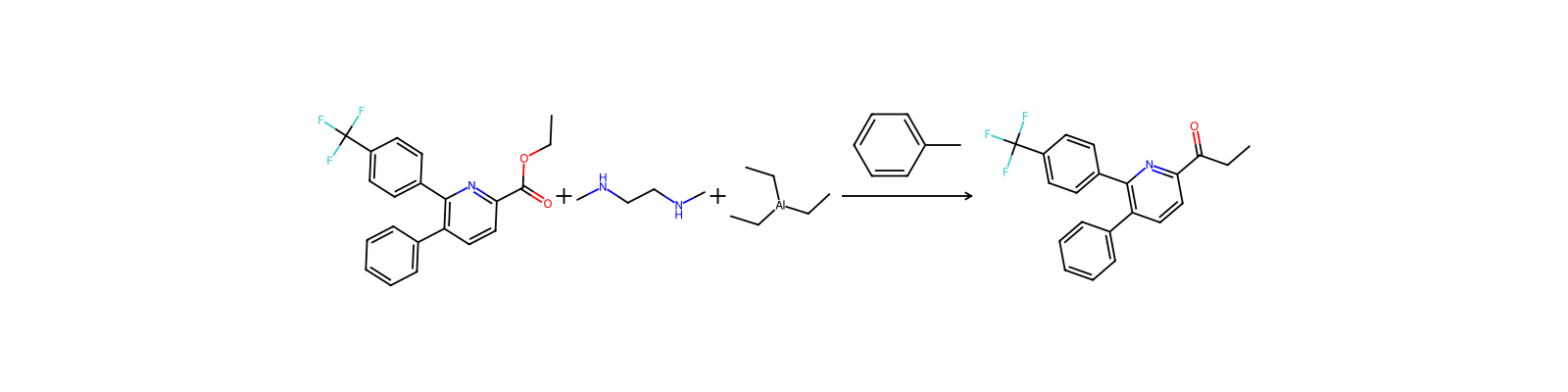
合成方法図2. トリエチルアルミニウムの合成方法 トリエチルアルミニウムは、ととの反応により合成可能です。工業的には、・水素・アルミニウムを用いた多段階反応により効率的に合成されています。その他に、Al2Cl3Et3から合成する合成ルートも存在します。
純化方法Purify it by fractionation in an inert atmosphere under a vacuum in a 50cm column containing a heated nichrome spiral, taking the fraction b 112-114o/27mm. It is very sensitive to H2O and should be stored under N2. It should not contain chloride ions which can be shown by hydrolysis and testing with AgNO3. [Baker & Sisler J Am Chem Soc 75 4828 5193 1953, NMR: Brownstein et al. J Am Chem Soc 81 3826 1959, Beilstein 4 IV 4398.]