HRID 31915反応物として
データを補完しています。しばらくしてからページを更新すると最新の内容を表示できます
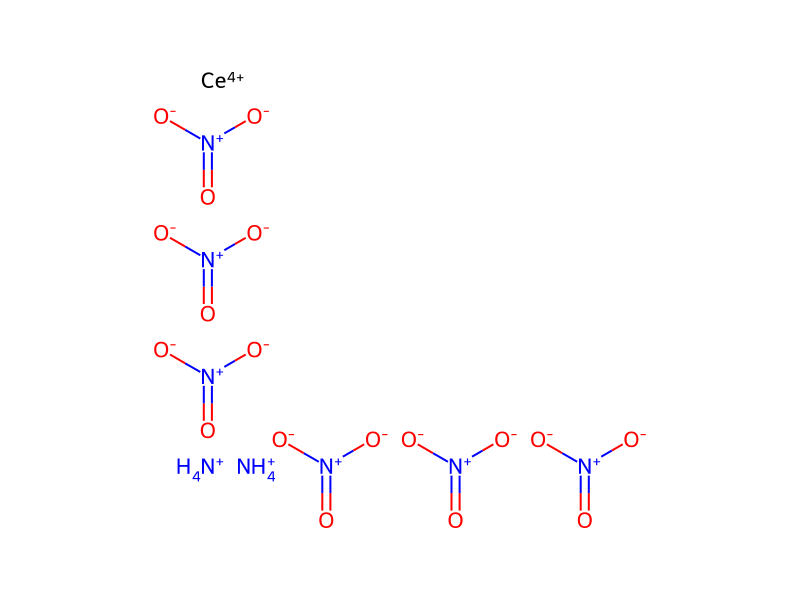
10139-51-2O=[N+]([O-])[O-].O=[N+]([O-])[O-].O=[N+]([O-])[O-].O=[N+]([O-])[O-].O=[N+]([O-])[O-].O=[N+]([O-])[O-].[Ce+4].[NH4+].[NH4+]XMPZTFVPEKAKFH-UHFFFAOYSA-PCeric ammonium nitrate is a inorganic compound of nitrate and ammonium. It is used as an oxidising agent in organic synthesis. Nitrite is a toxic compound known to cause methemoglobinemia. (L1137, L1622)
10139-51-2、16774-21-3安全情報は参考情報です。供給元の安全データシート(SDS)、適用法令、専門家による評価に代わるものではありません。
Danger
H272 (99.4%): May intensify fire; oxidizer [Danger Oxidizing liquids; Oxidizing solids]
P210, P220, P260, P261, P264, P264+P265, P270, P271, P272, P273, P280, P301+P317, P301+P330+P331, P302+P352, P302+P361+P354, P304+P340, P305+P351+P338, P305+P354+P338, P316, P317, P319, P321, P330, P332+P317, P333+P317, P337+P317, P362+P364, P363, P370+P378, P391, P403+P233, P405, and P501 (click each P-code to see the statement)
Aggregated GHS information provided per 175 reports by companies from 19 notifications to the ECHA C&L Inventory. Each notification may be associated with multiple companies.
0.054 [mg/m3]
0.58 [mg/m3]
3.5 [mg/m3]
Methemoglobinemia can be treated with supplemental oxygen and methylene blue 1% solution administered intravenously slowly over five minutes followed by IV flush with normal saline. Methylene blue restores the iron in hemoglobin to its normal (reduced) oxygen-carrying state. (L1613)
Nitrate's toxicity is a result of it's conversion to nitrite once in the body. Nitrite causes the autocatalytic oxidation of oxyhemoglobin to hydrogen peroxide and methemoglobin. This elevation of methemoglobin levels is a condition known as methemoglobinemia, and is characterized by tissue hypoxia, as methemoglobin cannot bind oxygen. (A2450, L1613)
Nitrate and nitrite poisoning causes methemoglobinemia. Symptoms include cyanosis, cardiac dysrhythmias and circulatory failure, and progressive central nervous system (CNS) effects. CNS effects can range from mild dizziness and lethargy to coma and convulsions. (L1137)
Intake of some amount of nitrates and nitrites is a normal part of the nitrogen cycle in humans. In vivo conversion of nitrates to nitrites can occur in the gastrointestional tract under the right conditions, significantly enhancing nitrates' toxic potency. The major metabolic pathway for nitrate is conversion to nitrite, and then to ammonia. Nitrites, nitrates, and their metabolites are excreted in the urine. (L1137)