反応式

[Cl:1][C:2]1[CH2:6][CH:5]([C:7]([O:9][CH3:10])=[O:8])[N:4]([C:11]2[CH:12]=[N:13][CH:14]=[CH:15][CH:16]=2)[N:3]=1.[N+]([O-])([O-])=O.[Ce+4].[NH4+].[NH4+].[N+]([O-])([O-])=O.[N+]([O-])([O-])=O.[N+]([O-])([O-])=O.[N+]([O-])([O-])=O.[N+]([O-])([O-])=O.O1CCCC1>O>[Cl:1][C:2]1[CH:6]=[C:5]([C:7]([O:9][CH3:10])=[O:8])[N:4]([C:11]2[CH:12]=[N:13][CH:14]=[CH:15][CH:16]=2)[N:3]=1参加物
5




実験手順
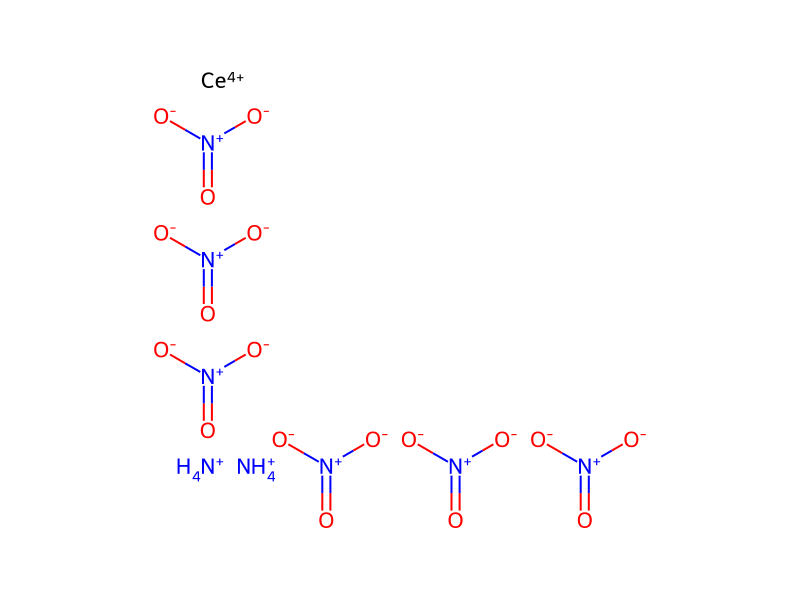
In step b of Scheme 2, methyl 3-chloro-1-(pyridin-3-yl)-4,5-dihydro-1H-pyrazole-5-carboxylate (6c) is oxidized with diammonium cerium (IV) nitrate (CAN) in water and polar solvents such as tetrahydrofuran at temperatures from about 0° C. to about 30° C. to yield methyl 3-chloro-1-(pyridin-3-yl)-1H-pyrazole-5-carboxylate (6d). It was surprisingly discovered that the oxidation in step b can also proceed with potassium permanganate (KMnO4) as the oxidant in polar solvents such as acetone at temperatures from about 0° C. to about 30° C. However, many standard oxidation procedures such as, for example potassium persulfate (K2S2O8), iodine pentoxide (I2O5), copper oxide (CuO), and hydrogen peroxide were found to be inoperative.
出典と根拠
- ORDレコード
- ord-b97d2d1d8aee4941b85b5295b8212e23
- 出典データセット
- uspto-grants-2016_09
- 特許番号
- US09434712B2
関連ノート
読み込み中…