
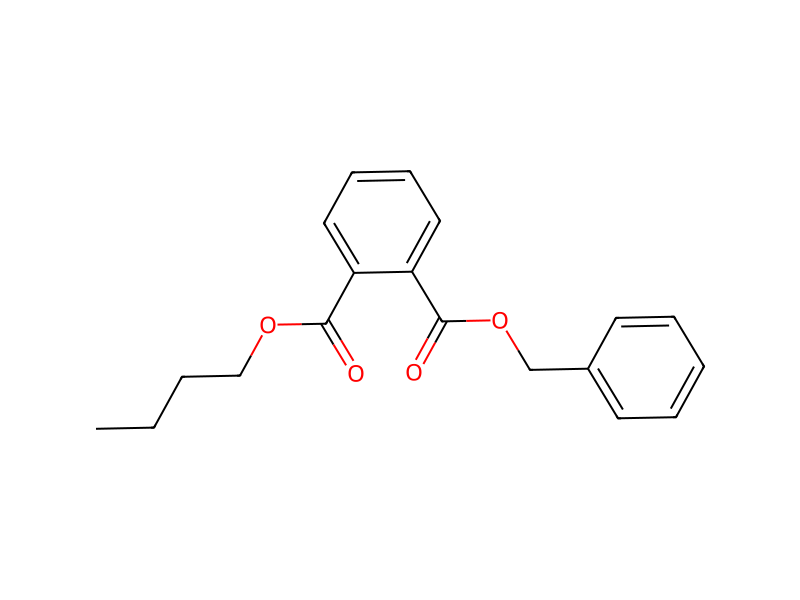
基本情報
- 標準SMILES
CCCCOC(=O)c1ccccc1C(=O)OCc1ccccc1- InChIKey
IRIAEXORFWYRCZ-UHFFFAOYSA-N- 分子式
- C19H20O4
- 平均分子量
- 312.4 g/mol
- 単同位体質量
- 312.13615912
概要
Butyl Benzyl Phthalate can cause developmental toxicity according to The National Toxicology Program's Center for the Evaluation of Risks to Human Reproduction.
名称と識別子
- 優先名称
- Butyl Benzyl Phthalate
- IUPAC
- 2-O-benzyl 1-O-butyl benzene-1,2-dicarboxylate
- 現地名
- フタル酸ベンジルブチル
- 英語名
- Benzyl butyl phthalate
- 分子式
- C19H20O4
- 分子量
- 312.36
名称と別名
Benzyl butyl phthalate85-68-7BUTYL BENZYL PHTHALATESicolPalatinol BBUnimoll BBSanticizer 160Butylbenzyl phthalaten-Butyl benzyl phthalateSicol 160Benzyl n-butyl phthalatePhthalic acid, benzyl butyl ester
名称をさらに表示
フタル酸ベンジルブチルブチルベンジルフタラートフタル酸ブチルベンジルフタル酸1-ブチル2-ベンジルサンチサイザー160ベンジルブチルフタラートシコール160ユニモールBBフタル酸ノルマル-ブチル=ベンジルパラチノールBBフタル酸1-ベンジル-2-ブチルフタル酸1-ベンジル2-ブチルブチルベンジルフタレ-トフタル酸ベンジルN-ブチル標準品フタルサンエステルルイn-ブチルベンジルフタレートフタル酸n-ブチル=ベンジルフタル酸n-ブチル=ベンジル(BBP)フタル酸ブチルベンジル (BBP)フタル酸ブチルベンジル:BBPBBPBenzyl butyl esterPHTHALIC ACID, BENZYLBUTYL ESTERCW17mZFMSF01
1,2-Benzenedicarboxylic acid, butyl phenylmethyl esterBenzyl butylphthalateDTXSID3020205NCI-C543752-O-benzyl 1-O-butyl benzene-1,2-dicarboxylateKetjenflex 160Diacizer D 160Butyl phenylmethyl 1,2-benzenedicarboxylate
データベース識別子
- CAS
85-68-7- PubChem CID
- 2347
- DTXSID
DTXSID3020205- ChEMBL
CHEMBL1450327- ChEBI
CHEBI:34595- UNII
- YPC4PJX59M
- EC Number
- 201-622-7
- Nikkaji
- J45.539C
物性
構造計算による物性
- XLogP
- 4.9
- 極性表面積
- 52.6 Ų
- 水素結合供与体数
- 0
- 水素結合受容体数
- 4
- 回転可能結合数
- 9
- 重原子数
- 23
- 形式電荷
- 0
- 複雑度
- 374
実験および物理化学的性質
Chemical Classes
Carcinogens
Phthalate
Semi-Volatile Organic Compound (SVOC)
PolymersPlastics & Rubber -> Phthalate Esters
CosmeticsCosmetic ingredients (Butyl Benzyl Phthalate) -> CIR (Cosmetic Ingredient Review)
SpringerMaterials PropertiesBoiling point
PesticidesPesticide -> EPA IRIS
LogP
log Kow = 4.73
4.77
4.5
OdorSlight odor
TasteBitter
Density
1.12 at 68 °F (USCG, 1999) - Denser than water; will sink
1.119 g/cu cm at 25 °C
Relative density (water = 1): 1.1
1.116 @25 °C
Color/FormClear, oil liquid
Solubility
less than 0.1 mg/mL at 72.5 °F (NTP, 1992)
In water, 2.69 mg/L at 25 °C
Solubility in water, mg/l: 0.71 (very poor)
Flash Point
390 °F (NTP, 1992)
390 °F (199 °C) (Closed Cup)
198 °C
物理化学的性質
- 融点
- -35 °C · <-35°C
- 沸点
- 370 °C · 370°C
- 比重(密度)
- 1.1 g/mL · 1.1 g/mL at 25 °C(lit.)
- 蒸気密度
- 10.8 · 10.8 (vs air)
- Pour Point
- -45 · -45
- 蒸気圧
- 0.16 mm · 0.16 mm Hg ( 150 °C)
- 屈折率
- 20 · n20/D 1.54(lit.)
- 闪点
- 230 °F · >230 °F
- 貯蔵温度
- room temp
- 溶解性
- 100 mg/mL · DMSO: 100 mg/mL (320.14 mM)
- 外見
- 油性液体
- 比重
- 1.1 · 1.1
- 色
- クリア
- 由来生物
- rabbit
- 水溶解度
- 0.000269 g/100mL · 0.000269g/100mL
- 凝固点
- -35 ℃ · -35℃
- BRN
- 2062204 · 2062204
- Henry's Law Constant
- (x 10-6 atmm3/mol): 1.3 at 25 °C (calculated, Howard, 1989)
- 主な用途
- 洗浄剤化粧品環境食品および飲料パーソナルケア
- 化粧品成分の機能
- 可塑剤
- InChI
- 1S/C19H20O4/c1-2-3-13-22-18(20)16-11-7-8-12-17(16)19(21)23-14-15-9-5-4-6-10-15/h4-12H,2-3,13-14H2,1H3
- InChIKey
- IRIAEXORFWYRCZ-UHFFFAOYSA-N
- SMILES
- CCCCOC(=O)c1ccccc1C(=O)OCc2ccccc2
- LogP
- 4.84 at · 4.84 at 20℃
- CAS データベース
- 85 · 85-68-7(CAS DataBase Reference)
- NISTの化学物質情報
- Phthalic acid, benzyl butyl ester(85-68-7)
- EPAの化学物質情報
- Butyl benzyl phthalate (85-68-7)
化学的性質
化学的特性Benzyl butyl phthalate is a clear, oily liquid with a slight odor.
安全と法規制
GHS分類
GHS Classification
Danger
H360Df: May damage the unborn child; Suspected of damaging fertility [Danger Reproductive toxicity]
P203, P273, P280, P318, P391, P405, and P501 (click each P-code to see the statement)
Danger
H360 (> 99.9%): May damage fertility or the unborn child [Danger Reproductive toxicity]
P203, P273, P280, P318, P391, P405, and P501 (click each P-code to see the statement)
危険有害性情報
Regulatory Information
Chemical: 1,2-Benzenedicarboxylic acid, 1-butyl 2-(phenylmethyl) ester
Hazard Traits - Developmental Toxicity; Endocrine Toxicity; Hepatotoxicity and Digestive System Toxicity; Immunotoxicity; Neurotoxicity; Reproductive Toxicity; Respiratory Toxicity
Regulation (EC) No 178/2002 (amended)
1,2-Benzenedicarboxylic acid, 1-butyl 2-(phenylmethyl) ester is listed on the EPA's Chemical Data Reporting (CDR) system. Manufacturers and importers of 1,2-Benzenedicarboxylic acid, 1-butyl 2-(phenylmethyl) ester are required to report information about their production and use of this chemical to the EPA under the Toxic Substances Control Act (TSCA). (40 eCFR Part 711)
REACH registered substance: Benzyl butyl phthalate (EC: 201-622-7)
Restricted substance: Benzyl butyl phthalate (BBP)
Other Safety InformationIMAP assessments - C4-6 side chain transitional phthalates: Human health tier II assessment
DOT LabelClass 9
Fire Hazards
Special Hazards of Combustion Products: Irritating vapors of unburned chemical may form in fires. (USCG, 1999)
Combustible. Gives off irritating or toxic fumes (or gases) in a fire.
Fire PotentialCombustible
Health HazardsProlonged contact with liquid causes some irritation of eyes and skin. (USCG, 1999)
Hazards Summary
Animal tests show that this substance possibly causes toxicity to human reproduction or development. [ICSC] Like dioctyl phthalate, it may cause CNS depression and mild liver toxicity after ingestion of large amounts; [HSDB] Causes damage to testes and genital tract in high-dose animal studies; No human data; [REPROTOX] Low oral toxicity; Oral LD50 (rat) >2000 mg/kg; Has effects on the CNS, kidneys, and liver at high doses; Some evidence of carcinogenicity in male rats; Further studies on reproductive effects in animals are needed; [Reference #1] An irritant; [MSDSonline] See PHTHALATE ESTERS.
FDA RequirementsButyl benzyl phthalate is an indirect food additive for use only as a component of adhesives.
Reactive GroupEsters, Sulfate Esters, Phosphate Esters, Thiophosphate Esters, and Borate Esters
EC ClassificationSymbol: T, N; R: 61-62-50/53; S: 45-53-60-61
UN ClassificationUN Hazard Class: 9; UN Pack Group: III
Special Reports
DHHS/NTP-CERHR Monograph on the Potential Human Reproductive and Developmental Effects of Butyl Benzyl Phthalate (BBP) (2003) NIH Publication No. 03-4487. BBP is one of 7 phthalate chemicals evaluated by the NTP CERHR Phthalates Expert Panel. These phthalates were selected for evaluation because of high production volume, extent of human exposures, use in children's products, and/or published evidence of reproductive or developmental toxicity. NTP-CERHR monographs are transmitted to federal and state agencies, interested parties, and the public and are available in electronic PDF format on the CERHR web site and in printed text or CD-ROM from the CERHR.[Available from, as of May 20, 2008: http://cerhr.niehs.nih.gov]
European Chemicals Bureau; IUCLID Robust Summaries & Test Plans: Phthalate Esters Category, Benzyl butyl phthalate (85-68-7) (2000 CD-ROM edition) contains information on use, toxicology, and environmental effects of this chemical as supplied to the European Union by industry.[Available from, as of May 20, 2008: http://esis.jrc.ec.europa.eu/]
Pierce RC et al; Natl Res Counc Can Assoc Comm Sci Criter Environ Qual Publ 0(17583) 1-100 (1980) the Physical-chemical properties, analytical determination & environmental dynamics of phthalate esters (industrial plasticizers) are reviewed.
Nat'l Research Council Canada; Phthalate Esters In The Aquatic Environment (1980) NRCC No. 17583
For more Special Reports (Complete) data for BUTYL BENZYL PHTHALATE (8 total), please visit the HSDB record page.
安全と保護具
Fire Fighting
Excerpt from ERG Guide 171 [Substances (Low to Moderate Hazard)]:
Use alcohol-resistant foam, powder, carbon dioxide, water spray.
First Aid Measures
Fresh air, rest.
Remove contaminated clothes. Rinse and then wash skin with water and soap.
First rinse with plenty of water for several minutes (remove contact lenses if easily possible), then refer for medical attention.
Rinse mouth.
First Aid
EYES: First check the victim for contact lenses and remove if present. Flush victim's eyes with water or normal saline solution for 20 to 30 minutes while simultaneously calling a hospital or poison control center. Do not put any ointments, oils, or medication in the victim's eyes without specific instructions from a physician. IMMEDIATELY transport the victim after flushing eyes to a hospital even if no symptoms (such as redness or irritation) develop.
Safe StorageStore in an area without drain or sewer access. Separated from strong oxidants.
Firefighting HazardsPoisonous gases are produced in fire.
Exposure Control and Personal Protection20.0 [mg/m3], inhalable fraction[German Research Foundation (DFG)]
Fire Fighting Procedures
To fight fire, use spray or mist, carbon dioxide, dry chemical.
Water may cause frothing. Use dry chemical, carbon dioxide, or foam extinguishers.
From a secure, explosion-proof location, use water spray to cool exposed containers. If cooling streams are ineffective (venting sound increases in volume and pitch, tank discolors, or shows any signs of deforming), withdraw immediately to a secure position.
If material involved in fire: Extinguish fire using agent suitable for type of surrounding fire (Material itself does not burn or burns with difficulty.). Use dry chemical or carbon dioxide. Keep run-off water out of sewers and water sources.
For more Fire Fighting Procedures (Complete) data for BUTYL BENZYL PHTHALATE (7 total), please visit the HSDB record page.
Storage Conditions
Keep container tightly closed in a dry and well-ventilated place. Containers which are opened must be carefully resealed and kept upright to prevent leakage. Storage class (TRGS 510): Non-combustible, acute toxic Cat.3 / toxic hazardous materials or hazardous materials causing chronic effects
Store in tightly closed containers in a cool, well-ventilated area away from incompatible materials. Metal containers involving the transfer of this chemical should be grounded and bonded. Drums must be equipped with self-closing valves, pressure vacuum bungs, and flame arresters. Use only nonsparkling tools and equipment, especially when opening and closing containers of this chemical. Sources of ignition such as smoking and open flames are prohibited this chemical is used, handled, or stored in a manner that could create a potential fire or explosion hazard.
Cleanup Methods
Environmental considerations-land spill: Dig a pit, pond, lagoon, holding area to contain liquid or solid material. Dike surface flow using soil, sand bags, foamed polyurethane, or foamed concrete. Absorb bulk liquid with fly ash, cement powder, or commercial sorbents. /SRP: If time permits, pits, ponds, lagoons, soak holes, or holding areas should be sealed with an impermeable flexible membrane liner./
Environmental considerations-water spill: Use natural barriers or oil spill control booms to limit spill travel. Remove trapped material with suction hoses.
Environmental considerations-air spill: Apply water spray or mist to knock down vapors.
ACCIDENTAL RELEASE MEASURES Personal precautions, protective equipment and emergency procedures Use personal protective equipment. Avoid breathing vapours, mist or gas. Ensure adequate ventilation. Evacuate personnel to safe areas. For personal protection see section Environmental precautions Prevent further leakage or spillage if safe to do so. Do not let product enter drains. Discharge into the environment must be avoided. Methods and materials for containment and cleaning up Soak up with inert absorbent material and dispose of as hazardous waste. Keep in suitable, closed containers for disposal.
Nonfire Spill ResponseExcerpt from ERG Guide 171 [Substances (Low to Moderate Hazard)]:
Disposal Methods
SRP: Recycle any unused portion of the material for its approved use or return it to the manufacturer or supplier. Ultimate disposal of the chemical must consider: the material's impact on air quality; potential migration in air, soil or water; effects on animal, aquatic and plant life; and conformance with environmental and public health regulations. If it is possible or reasonable use an alternative chemical product with less inherent propensity for occupational harm/injury/toxicity or environmental contamination.
Incineration: It should be atomized into an incinerator and combustion may be improved by mixing with a more flammable solvent (acetone or benzene).
Product Offer surplus and non-recyclable solutions to a licensed disposal company. Contact a licensed professional waste disposal service to dispose of this material. Contaminated packaging Dispose of as unused product.
Spillage Disposal
Personal protection: filter respirator for organic gases and vapours adapted to the airborne concentration of the substance. Do NOT let this chemical enter the environment. Collect leaking and spilled liquid in sealable containers as far as possible. Absorb remaining liquid in sand or inert absorbent. Then store and dispose of according to local regulations.
毒性情報
Body Burden
The mean concentration of butyl benzyl phthalate detected in human adipose tissue in the US was reported as 0.19 ug/g(1). Butyl benzyl phthalate was found in the serum of 2 of 41 young (17-47 months) Puerto Rican girls with premature breast development at 54-117 ug/L(2). The degradation product of butyl benzyl phthalate, monobenzyl phthalate (MBzP), was detected at 13.0-88.7 ug/g creatinine in 97% of 2540 urine samples collected in the United States National Health and Nutrition Examination Survey (1999-2000)(3). MbzP was detected in all 25 samples collected from pregnant New York women at 5.60-120 ug/g creatinine; samples were collected Mar to Sept 2000(4). MBzP was detected in >90% of the urine samples collected from 3236 people (ages 6-49 years old) during the Canadian Health Measures Survey 2007-2009(5). MBzP was detected in the serum of 350 of 501 female and 338 of 502 male seniors from Uppsala, Sweden at 0.38-17.3 and 0.41-35.7 mg/mL, respectively(6).
The butyl benzyl phthalate degradation product, monobenzyl phthalate (MBzP), was analyzed in urine, breast milk and cord blood to determine exposure(1). Urine samples from 100 pregnant women were collected in the third trimester (Dec 2001-Nov 2002) and MBzP was detected in 64% of the samples at 0.08-235 ug/g. Urine samples from 30 two to three year olds (2003-2004) contained MBzP in 96% of the samples at 0.45-78.13 ug/g. Urine samples from 59 five to six year olds (2006-2007) contained MBzP in 97% of the samples at 0.35-79.10 ug/g. MBzP was detected in 3 of 30 cord blood samples that were collected upon delivery at <0.25-0.70 ug/L. MBzP was also detected in 3 of 30 breast milk samples, from this same population, at <0.25-0.70 ug/L. All samples were collected from residents of central Taiwan(1).
Interactions
Although risk assessments are typically conducted on a chemical-by-chemical basis, the 1996 Food Quality Protection Act (FQPA) required the Environmental Protection Agency (EPA) to consider cumulative risk of chemicals that act via a common mechanism of toxicity. To this end, we are conducting studies with mixtures to provide a framework for assessing the cumulative effects of "antiandrogenic" chemicals. Rats were dosed during pregnancy with antiandrogens singly or in pairs at dosage levels equivalent to about one half of the ED50 for hypospadias or epididymal agenesis. The pairs include: AR antagonists (vinclozolin plus procymidone), phthalate esters (DBP plus BBP and DEHP plus DBP), a phthalate ester plus an AR antagonist (DBP plus procymidone), and linuron plus BBP. We predicted that each chemical by itself would induce few malformations; however, by mixing any two chemicals together, about 50% of the males would be malformed. All binary combinations produced cumulative, dose-additive effects on the androgen-dependent tissues. We also conducted a mixture study combining seven "antiandrogens" together. These chemicals elicit antiandrogenic effects at two different sites in the androgen signaling pathway (i.e., AR antagonist or inhibition of androgen synthesis). In this study, the complex mixture behaved in a dose-additive manner. Our results indicate that compounds that act by disparate mechanisms of toxicity display cumulative, dose-additive effects when present in combination. /Mixtures/
Butyl benzyl phthalate (BBP), an endocrine disruptor present in the environment, exerts its genomic effects via intracellular steroid receptors and elicits non-genomic effects by interfering with membrane ion-channel receptors. We previously found that BBP blocks the calcium signaling coupled with P2X receptors in PC12 cells (Liu & Chen, 2006). Osteoblast P2X receptors were recently reported to play a role in cell proliferation and bone remodeling. In this present study, the effects of BBP on ATP-induced responses were investigated in human osteosarcoma HOS cells. These receptors mRNA had been detected, named P2X4, P2X7, P2Y2, P2Y4, P2Y5, P2Y9, and P2Y11, in human osteosarcoma HOS cells by RT-PCR. The enhancement of cell proliferation and the decrease of cytoviability had both been shown to be coupled to stimulation via different concentrations of ATP. BBP suppressed the ATP-induced calcium influx (mainly coupled with P2X) and cell proliferation but not the ATP-induced intracellular calcium release (mainly coupled with P2Y) and cytotoxicity in human osteosarcoma HOS cells. Suramin, a common P2 receptor's antagonist, blocked the ATP-induced calcium signaling, cell proliferation, and cytotoxicity. We suggest that P2X is mainly responsible for cell proliferation, and P2Y might be partially responsible for the observed cytotoxicity. BBP suppressed the calcium signaling coupled with P2X, suppressing cell proliferation. Since the importance of P2X receptors during bone metastasis has recently become apparent, the possible toxic risk of environmental BBP during bone remodeling is a public problem of concern.
During recent decades the prevalence of IgE-mediated (atopic) allergic diseases in Western Europe and the USA has been increasing dramatically. It has been suggested that one possible cause is the presence in the environment of chemicals that may act as adjuvants, enhancing immune and allergic responses. Certain commonly used phthalate plasticizers such as butyl benzyl phthalate (BBP) have been implicated in this way. In the current experiments, the impact of BBP, applied by a physiologically relevant exposure route, on the vigour of immune responses induced in BALB/c strain mice has been examined. Mice were immunized via subcutaneous injection with the reference allergen ovalbumin (OVA) and received concurrent topical treatment with doses of BBP that induced significant changes in liver weight. The generation of specific anti-OVA IgE and IgG1 antibodies was measured by passive cutaneous anaphylaxis and by enzyme-linked immunosorbant assays, respectively. Topical administration of BBP was without impact on anti-OVA IgE antibody responses, regardless of whether BBP was applied locally or distant to the site of OVA immunization. However, same-site treatment with high-dose BBP (100 mg) did result in a modest elevation in anti-OVA IgG1 antibody production, a subclass of antibody used as a surrogate marker of IgE responses. Taken together with human exposure data, these results suggest that the doses of phthalate encountered in the home environment are unlikely to be a major factor contributing to the increased incidence of asthma and allergy in the developed world.
Target OrgansHepatic
Health Effects
Phthalate esters are endocrine disruptors. Animal studies have shown that they disrupt reproductive development and can cause a number of malformations in affected young, such as reduced anogenital distance (AGD), cryptorchidism, hypospadias, and reduced fertility. The combination of effects associated with phthalates is called 'phthalate syndrome’. (A2883)
Ecotoxicity Values
EC50; Species: Selenastrum capricornutum (alga); Concentration: 110 ug/L for 96 hr; toxic effect: chlorophyll a /Conditions of bioassay not specified in source examined/
EC50; Species: Selenastrum capricornutum (alga); Concentration: 130 ug/L for 96 hr; toxic effect: cell number /Conditions of bioassay not specified in source examined/
EC50; Species: Skeletonema costatum (alga); Concentration: 170 ug/L for 96 hr; toxic effect: chlorophyll a /Conditions of bioassay not specified in source examined/
EC50; Species: Skeletonema costatum (alga); Concentration: 190 ug/L for 96 hr; toxic effect: cell number /Conditions of bioassay not specified in source examined/
For more Ecotoxicity Values (Complete) data for BUTYL BENZYL PHTHALATE (42 total), please visit the HSDB record page.
Environmental Fate
TERRESTRIAL FATE: Based on a classification scheme(1), log Koc values of 3.21-3.997(2-4), indicate that butyl benzyl phthalate is expected to have low to no mobility in soil(SRC). Volatilization of butyl benzyl phthalate from moist soil surfaces is expected(SRC) given an estimated Henry's Law constant of 1.3X10⁻⁶ atm-cu m/mole(SRC), based upon its vapor pressure, 8.25X10⁻⁶ mm Hg(5), and water solubility, 2.69 mg/L(5). However, adsorption to soil is expected to attenuate volatilization(SRC). Butyl benzyl phthalate is not expected to volatilize from dry soil surfaces(SRC) based upon its vapor pressure(5). An 80.9% of theoretical BOD using activated sludge in the Japanese MITI test(6) suggests that biodegradation is an important environmental fate process in soil(SRC).
AQUATIC FATE: Based on a classification scheme(1), log Koc values of >4.7, measured in suspended solids(2), indicate that butyl benzyl phthalate is expected to adsorb to suspended solids and sediment(SRC). Volatilization from water surfaces is expected(3) based upon an estimated Henry's Law constant of 1.3X10⁻⁶ atm-cu m/mole(SRC), derived from its vapor pressure, 8.25X10⁻⁶ mm Hg(4), and water solubility, 2.69 mg/L(4). Using this Henry's Law constant and an estimation method(3), volatilization half-lives for a model river and model lake are 52 and 380 days, respectively(SRC). However, volatilization from water surfaces is expected to be attenuated by adsorption to suspended solids and sediment in the water column. The volatilization half-life from a model pond is about 380 years when adsorption is considered(5). The hydrolysis half-life of butyl benzyl phthalate was calculated to be 1.4 years and 51 days at pH values of 7 and 8, respectively(6). According to a classification scheme(7), a BCF of 9.4 in bluegill sunfish(8), suggests bioconcentration in aquatic organisms is low(SRC). Biodegradation in river die-away tests resulted in half-lives of approximately 0.32(9) to 13 days(10), suggesting that biodegradation may be an important environmental fate process in water(SRC).
ATMOSPHERIC FATE: According to a model of gas/particle partitioning of semivolatile organic compounds in the atmosphere(1), butyl benzyl phthalate, which has a vapor pressure of 8.25X10⁻⁶ mm Hg at 25 °C(2), will exist in both the vapor and particulate phases in the ambient atmosphere. Vapor-phase butyl benzyl phthalate is degraded in the atmosphere by reaction with photochemically-produced hydroxyl radicals(SRC); the half-life for this reaction in air is estimated to be 35 hours(SRC), calculated from its rate constant of 1.1X10⁻¹¹ cu cm/molecule-sec at 25 °C(SRC) that was derived using a structure estimation method(3). Particulate-phase butyl benzyl phthalate may be removed from the air by wet and dry deposition(SRC). Butyl benzyl phthalate contains chromophores that absorb at wavelengths >290 nm(4) and, therefore, may be susceptible to direct photolysis by sunlight(SRC).
Food Survey Values
Butyl benzyl phthalate was analyzed for, but not detected in vodka(1). The mean butyl benzyl phthalate concentration was reported as 0.039, 0.4, 0.08, 7.4, 0.01, 0.13, 0.04, 0.005 and 0.09 ug/g in beverages, other dairy, eggs, fat and oils, fish, meat, poultry, vegetables and other foods, respectively(2). Food samples collected over four days from University P&M restaurant contained butyl benzyl phthalate at 63.0, 92.3, 3.27, 3.29 and 2.37 ng/g wet weight in lasagne, roast beef, fried vegetables, stewed apples and fruit salad, respectively(3). Butyl benzyl phthalate was not detected (detection limit 2 ng/g wet weight) in fish terrine, mixed salad, corn salad, radishes, chicken leg, mixed steak, Basmati rice, fried potatoes, plain yogurt, Gruyere cheese, Camembert cheese, granny apple or black grapes(3).
Adverse EffectsOccupational hepatotoxin - Secondary hepatotoxins: the potential for toxic effect in the occupational setting is based on cases of poisoning by human ingestion or animal experimentation.
Exposure Routes
The substance can be absorbed into the body by inhalation of its aerosol and by ingestion.
Oral (L1208) ; inhalation (L1208) ; dermal (L1208)
Milk ConcentrationsENVIRONMENTAL: The mean concentration of butyl benzyl phthalate in dairy milk and infant formula powder was 0.0012 and 0.044 ug/g, respectively(1).
Toxicity Summary
Safe in the present practices of use and concentration. Ingredient, concentration, and use information are available in documents discoverable at https://cir-reports.cir-safety.org
IDENTIFICATION AND USE: Butyl benzyl phthalate (BBP) is a clear oily liquid that is used as a plasticizer mainly in polyvinyl chloride for vinyl floor tile, vinyl foams and carpet backing and in cellulose plastics and polyurethane. HUMAN EXPOSURE AND TOXICITY: BBP was not observed to be a primary irritant or sensitizer in skin patch tests with volunteers. Prenatal exposure to BBP may influence the risk of developing eczema in early childhood. BBP was also positively associated with airway inflammation in children. BBP was positive in E-Screen assay used to measure the proliferation of MCF-7 cells, a human breast cancer cell line. In another study proteomic changes in proteins secreted by human hepatocellular carcinomas (HepG2) cells exposed to BBP were evaluated. These proteins were found to be involved in apoptosis, signaling, tumor progression, energy metabolism, and cell structure and motility. BBP treatment of plasmacytoid DC cells suppressed IFN-gamma but enhanced IL-13 production by CD4+ T cells. ANIMAL STUDIES: The acute toxicity of this compound is low, with oral LD50 values in rats being greater than 2 g/kg body weight. Target organs following acute exposure include the hematological and central nervous systems. Repeated dose toxicity studies of this compound in the rat show decreases in body weight gain and increases in organ to body weight ratios, particularly for the kidney and liver. Histopathological effects on the pancreas and kidney and hematological effects have also been observed. At higher doses, degenerative effects on the testes and, occasionally histopathological effects on the liver have been reported. In specialized investigations, peroximal proliferation in the liver has been noted. The chronic toxicity and carcinogenicity of BBP bioassays in rats and mice, indicated that there was some evidence of carcinogenicity in male rats, based on an increased incidence of pancreatic tumors, and equivocal evidence in female rats, based on marginal increases in pancreatic and bladder tumors. Dietary restriction prevented full expression of the pancreatic tumors. There was no evidence for the carcinogenicity of BBP in mice. BBP is not genotoxic. In a range of studies, including those designed to investigate the reproductive effects of BBP on the testes and endocrine hormone in male rats, a modified mating protocol and a one generation study, adverse effects on the testes and, consequently fertility have generally been observed only at doses higher than those that induce effects on other organs (such as the kidney and liver), although decreases in sperm counts have been observed at doses similar to those that induce effects in the kidney and liver. Reduction in testes weight and daily sperm production in the offspring were reported at relatively low level in rats exposed in utero and during lactation. Neither BBP nor its principal metabolites have been uteritrophic in vivo in rats or mice, In several well conducted studies in rats and mice, butyl benzyl phthalate induced marked developmental effects, but only at dose levels that induce significant maternal toxicity. BBP administration disrupts normal learning and social behavior in rats, and these effects could be related to alterations of amygdala function. ECOTOXICITY STUDIES: A range of toxicity tests with aquatic organisms has indicated the adverse effects occur at exposure concentrations greater than 100 ug/L. Behavioral changes in fish were noted after sublethal BBP exposure.
Phthalate esters are endocrine disruptors. They decrease foetal testis testosterone production and reduce the expression of steroidogenic genes by decreasing mRNA expression. Some phthalates have also been shown to reduce the expression of insulin-like peptide 3 (insl3), an important hormone secreted by the Leydig cell necessary for development of the gubernacular ligament. Animal studies have shown that these effects disrupt reproductive development and can cause a number of malformations in affected young. (A2883)
Average Daily Intake
The average daily intake of butyl benzyl phthalate was estimated as 0.085 ug/kg/day based on a food survey conducted in Albany, NY in 2011(1). The median concentration of monobenzyl phthalate in urine samples from 36 Japanese people collected May to June 2004 was 2.4 ug/L; this translates to an exposure rate of 0.074-0.11 ug/kg/day of the parent compound butyl benzyl phthalate(2). Based on analysis of urine samples from the German population, the average daily intake of butyl benzyl phthalate was 0.2-9.2, 0.2-6.8 and 0.2-4.5 ug/kg body weight/day in children, females and males, respectively(3).
法規制情報
FDA RequirementsButyl benzyl phthalate is an indirect food additive for use only as a component of adhesives.
TSCA Requirements
Pursuant to section 8(d) of TSCA, EPA promulagated a model Health and Safety Data Reporting Rule. The section 8(d) model rule requires manufacturers, importers, and processors of listed chemical substances and mixtures to submit to EPA copies and lists of unpublished health and safety studies. Butyl benzyl phthalate is included on this list. Effective date 04/29/83; Sunset date 04/29/93.
CERCLA Reportable Quantities
Persons in charge of vessels or facilities are required to notify the National Response Center (NRC) immediately, when there is a release of this designated hazardous substance, in an amount equal to or greater than its reportable quantity of 100 lb or 45.4 kg. The toll free number of the NRC is (800) 424-8802. The rule for determining when notification is required is stated in 40 CFR 302.4 (section IV. D.3.b).
State Drinking Water Guidelines
(MN) MINNESOTA 100 ug/L
(FL) FLORIDA 140 ug/L
安全データ
- wgk
- 2
- tsca
- TSCA listed
- rtecs
- TH9990000
- ridadr
- UN 3082 9/PG 3
- 毒性
- Acute oral LD50 for guinea pigs 13,750 mg/kg, mice 4,170 mg/kg, rats 2,330 mg/kg (quoted, RTECS, 1985).
- PRTR法
- 第一種指定化学物質
- hs_code
- 29173400
- risk_code
- 61-50/53-62
- 化審法
- (3)-1312
- 消防法
- 危-4-4-III
- hazard_code
- T,N
- safety_code
- 53-45-60-61
- hazard_class
- 9
- packing_group
- III
- 自然発火温度
- 450 °F
- 環境リスク評価
- フタル酸ブチルベンジル(85-68-7)
- Hazard Classifications
- Aquatic Acute 1Aquatic Chronic 1Repr. 1B
- ストレージクラス
- 6.1C - Combustible acute toxic Cat.3toxic compounds or compounds which causing chronic effects
- 有毒物質データの
- 85-68-7(Hazardous Substances Data)
化学と産業
薬理情報
Biological Half-Life
The half-lives of butyl benzyl phthalate (BBP), monophthalate (MP), and total (14)C in blood (20 ng/kg, intravenously) were 10 min, 5.9 hr, and 6.3 hr, respectively.
The half-life of BBP in blood is 10 min following an oral administration of 5 g/kg to dogs.
Metabolism/Metabolites
BBP was not found in the bile, but monobutyl glucuronide and monobenzyl phthalate glucuronide (26 and 13% of the dose, respectively) and trace amounts of free monoesters (2% of the dose) and unidentified metabolites (14% of the dose) were present. Although BBP is an asymetrical diester with the potential of forming equal amounts of monobutyl phthalate and monobenzyl phthalate, larger quantities of monobutyl phthalate were formed (monobutyl phthalate= 44% vs monobenzyl phthalate= 16% of the dose). ...
The urinary monoester metabolites of seven commonly used phthalates /were measured/ in approximately 2,540 samples collected from participants of the National Health and Nutrition Examination Survey (NHANES), 1999-2000, who were greater than or equal to 6 years of age. ... Detectable levels of metabolites monoethyl phthalate (MEP), monobutyl phthalate (MBP), monobenzyl phthalate (MBzP), and mono-(2-ethylhexyl) phthalate (MEHP) /were found/ in > 75% of the samples, suggesting widespread exposure in the United States to diethyl phthalate, dibutyl phthalate or diisobutylphthalate, benzylbutyl phthalate, and di-(2-ethylhexyl) phthalate, respectively. ... Monoisononyl phthalate, mono-cyclohexyl phthalate, and mono-n-octyl phthalate /were detected infrequently/, suggesting that human exposures to di-isononyl phthalate, dioctylphthalate, and dicyclohexyl phthalate, respectively, are lower than those listed above, or the pathways, routes of exposure, or pharmacokinetic factors such as absorption, distribution, metabolism, and elimination are different. Non-Hispanic blacks had significantly higher concentrations of MEP than did Mexican Americans and non-Hispanic whites. Compared with adolescents and adults, children had significantly higher levels of MBP, MBzP, and MEHP but had significantly lower concentrations of MEP. Females had significantly higher concentrations of MEP and MBzP than did males, but similar MEHP levels. Of particular interest, females of all ages had significantly higher concentrations of the reproductive toxicant MBP than did males of all ages; however, women of reproductive age (i.e., 20-39 years of age) had concentrations similar to adolescent girls and women 40 years of age...
Three groups of eight volunteers were administered stable isotope-labelled ... benzylbutylphthalate. ... For benzylbutylphthalate, 67% and 78% was eliminated as monobenzylphthalate and only 6% (measured for the high dose only) was eliminated as monobutylphthalate. ...
n-Butyl benzyl phthalate (BBP) ... has been orally administered to female Wistar rats with four doses (150, 475, 780 and 1500 mg/kg body weight/day) for 3 consecutive days. Metabolites recovered in urine were analyzed by gas chromatography-mass spectrometry (GC-MS) after 24, 48 and 72 hours. Six metabolites were identified. Mono-n-butyl phthalate (MBuP) and mono-n-benzyl phthalate (MBeP) represented respectively 29-34% and 7-12% of the total recovered metabolites. Hippuric acid, the main metabolite of benzoic acid, represented the second major metabolite (51-56%). Phthalic acid, benzoic acid and an omega-oxidized metabolite of MBuP were also recovered in urine but in small quantities. BBP was never identified in urine. Total urinary metabolites recovery represented 56% of the dose administered in the first 24 hours. However, total recovery decreased when the dose increases (43% at 780 mg/kg body weight/day, only 30% at 1500 mg/kg body weight/day). Whatever the time was, BBP metabolites recovered in urine were all present and in the same proportions for the two lowest doses. Discrepancy in metabolites quantities expressed as percentages of the dose observed in urine of rat treated with the highest BBP dose disappeared with time as MBuP, MBeP and hippuric acid recovery has significantly increased at day 3. ...
For more Metabolism/Metabolites (Complete) data for BUTYL BENZYL PHTHALATE (9 total), please visit the HSDB record page.
Phthalate esters are first hydrolyzed to their monoester derivative. Once formed, the monoester derivative can be further hydrolyzed in vivo to phthalic acid or conjugated to glucuronide, both of which can then be excreted. The terminal or next-to-last carbon atom in the monoester can also be oxidized to an alcohol, which can be excreted as is or first oxidized to an aldehyde, ketone, or carboxylic acid. The monoester and oxidative metabolites are excreted in the urine and faeces. (A2884)
MeSH Pharmacological ClassificationAn agent that causes the production of physical defects in the developing embryo.
Absorption, Distribution and Excretion
This study examined the extent of dermal absorption of a series of phthalate diesters in the rat. Those tested were dimethyl, diethyl, dibutyl, diisobutyl, dihexyl, di(2-ethylhexyl), diisodecyl, and benzyl butyl phthalate. Hair from a skin area (1.3 cm in diameter) on the back of male F344 rats was clipped, the 14C-phthalate diester was applied in a dose of 157 umol/kg, and the area of application was covered with a perforated cap. The rat was restrained and housed for 7 days in a metabolic cage that allowed separate collection of urine and feces. Urine and feces were collected every 24 hr, and the amount of carbon-14 excreted was taken as an index of the percutaneous absorption. At 24 hr, diethyl phthalate showed the greatest excretion (26%). As the length of the alkyl side chain increased, the amount of carbon-14 excreted in the first 24 hr decreased significantly. The cumulative percentage dose excreted in 7 days was greatest for diethyl, dibutyl, and diisobutyl phthalate, about 50-60% of the applied 14C; and intermediate (20-40%) for dimethyl, benzyl butyl, and dihexyl phthalate. Urine was the major route of excretion of all phthalate diesters except for diisodecyl phthalate. This compound was poorly absorbed and showed almost no urinary excretion. After 7 days, the percentage dose for each phthalate that remained in the body was minimal and showed no specific tissue distribution. Most of the unexcreted dose remained in the area of application. These data show that the structure of the phthalate diester determines the degree of dermal absorption. Absorption maximized with diethyl phthalate and then decreased significantly as the alkyl side chain length increased.
... Male Fischer-344 rats were dosed with (14)C-labeled butyl benzyl phthalate (BBP) at 2, 20, 200, or 2000 mg/kg orally or 20 mg/kg iv to detect the effects of dose on rates and routes of excretion. In 24 hr, 61-74% of the dose was excreted in the urine and 13-19% in the feces at 2-200 mg/kg. At 2000-mg/kg, 16% of the (14)C was excreted in the urine and 57% in the feces. Urinary (14)C was composed of monophthalate glucuronides derivatives (MP: 10-42% of the dose) and monophthalate glucuronides (2-21% of the dose). At 4 hr after iv administration of BBP (20 mg/kg), 53-58% of the dose was excreted in the bile of anesthetized rats. BBP was not found in the bile, but monobutyl glucuronide and monobenzyl phthalate glucuronide (26 and 13% of the dose, respectively) and trace amts of free monoesters (2% of the dose) and unidentified metabolites (14% of the dose) were present. ... The half-lives of BBP, MP, and total (14)C in blood (20 mg/kg, iv) were 10 min, 5.9 hr, and 6.3 hr, respectively. ...
Following intravenous administration of 20 mg/kg of (14)C-BBP, 55% of the dose was excreted into bile and 34% was excreted into the urine.
Beagle dogs were given a 5 g/kg bw oral dose of butyl benzyl phthalate divided over a 4 hr period. Unchanged butyl benzyl phthalate in the feces comprised 88-91% of the dose. While butyl benzyl phthalate was not present in the urine, some 4.2% of the dose was present as phthalic acid
For more Absorption, Distribution and Excretion (Complete) data for BUTYL BENZYL PHTHALATE (8 total), please visit the HSDB record page.
用途と製造
Uses
CIR ingredient: Butyl Benzyl Phthalate
Used as an organic intermediate and a plasticizer for PVC-based flooring products, polyvinyl acetate emulsion adhesives, polyvinyl and cellulose resins, vinyl foams, and other plastics; [HSDB] Used as a plasticizer mainly in PVC for vinyl floor tile, vinyl foams, and carpet backing; [Reference #1]
PLASTICIZER FOR PVC-BASED FLOORING PRODUCTS, POLYVINYL ACETATE EMULSION ADHESIVES, OTHER PLASTICS, EG, ETHYL CELLULOSE, IN COATINGS, EG, FOR AUTOMOBILES
Plasticizer for polyvinyl and cellulose resins, organic intermediate.
It is used as a plasticizer for polyvinyl chloride plastics, particularly vinyl floor tile, vinyl leather, and cloth coating. It may be used in sealants, foams, adhesives, coating and inks, car care products, and cosmetics.
Congress has permanently banned three types of phthalates (DEHP, DBP, BBP) in any amount greater than 0.1 percent (computed for each phthalate, individually) in (1) children's toys and (2) certain child care articles. /Di-(2-ethylhexyl) phthalate (DEHP), dibutyl phthalate (DBP), or benzyl butyl phthalate (BBP)/
U.S. Production
2023: 1,000,000 - <8,500,000 lb
(1977) 6.81X10+10 G
(1981) 7.47X10+10 G
Over 100 million pounds of butyl benzyl phthalate (BBP) were produced in 1978.
Production volumes for non-confidential chemicals reported under the Inventory Update Rule. [Table#3855]
For more U.S. Production (Complete) data for BUTYL BENZYL PHTHALATE (7 total), please visit the HSDB record page.
Consumer UsesPlasticizer
Industry UsesNot Known or Reasonably Ascertainable
Methods of Manufacturing
... First synthesized by the reaction of the monobutyl ester of phthalic acid with benzyl chloride in neutral aqueous or alcoholic solution. Commercial production in the USA based on the same process with the monobutyl ester produced by the reaction of phthalic anhydride with n-butyl alcohol in the presence of an acidic catalyst. In Japan, the monobutyl ester is treated with benzyl alcohol in the presence of an acid catalyst.
BBP is manufactured via by the sequential addition of butanol and benzyl chloride to phthalic anhydride.
Formulations/PreparationsGrade: Technical.
Household ProductsInformation on 55 consumer products that contain Butyl benzyl phthalate in the following categories is provided:
General Manufacturing Information
Adhesive Manufacturing
1,2-Benzenedicarboxylic acid, 1-butyl 2-(phenylmethyl) ester: ACTIVE
A gas-permeable contact lens composition consisted of a partially esterified cellulose polymer and a compatible plasticizer /including butyl benzyl phthalate/ in an amount sufficient to incr the oxygen permeability of the cellulose polymer greater than or equal to 13% higher than that of the unplasticized polymer.
Congress has permanently banned three types of phthalates (DEHP, DBP, BBP) in any amount greater than 0.1 percent (computed for each phthalate, individually) in (1) children's toys and (2) certain child care articles. /Di-(2-ethylhexyl) phthalate (DEHP), dibutyl phthalate (DBP), or benzyl butyl phthalate (BBP)/
応用分野
解説フタル酸ベンジルブチルはいフタル酸エステルの一つ。無色透明の油状の液体。可塑剤としてプラスチックに添加され、シーリング材・床壁用タイル・塗料・人造皮革・室内装飾用品などに使われる。フタル酸ベンジルブチル。フタル酸ブチルベンジル。小学館 デジタル大辞泉について 情報 | 凡例
用途可塑剤、染料、顔料、塗料、インク、接着剤、潤滑剤
用途ポリサルファイド用可塑剤(建築シーリング剤?窓枠シーリング剤), セラミックバインダー用?アクリル系塗料用可塑剤 (NITE CHRIP)
用途環境試料中のフタル酸エステルの分析(HPLC)用標準品、GC-MS分析標準品。
使用A phthalate metabolite with genotoxic effect.
一般的な説明A clear colorless liquid with a mild odor. Primary hazard is to the environment. Immediate steps should be taken to limit spread to the environment. Easily penetrates the soil to contaminate groundwater and nearby waterways.
調製方法
BBP is manufactured by the sequential addition of butanol and benzyl chloride to phthalic anhydride. It is used as a plasticizer for polyvinyl chloride plastics, particularly vinyl floor tile, vinyl leather, and cloth coating.
上流・下流製品情報
上流原料
関連反応
1 件
関連ノート
読み込み中…