反応式

C1C=C([N+]([O-])=O)N(CCO)C=1C(N)=O.O.[C:16]([CH2:19][C:20](=[O:22])[CH3:21])(=[O:18])[CH3:17].CCCCOC(C1C(C(OCC2C=CC=CC=2)=O)=CC=CC=1)=O>CC(C)=O>[C:16]([CH2:19][C:20](=[O:22])[CH3:21])(=[O:18])[CH3:17].[CH3:17][C:16]([CH3:19])=[O:18]参加物

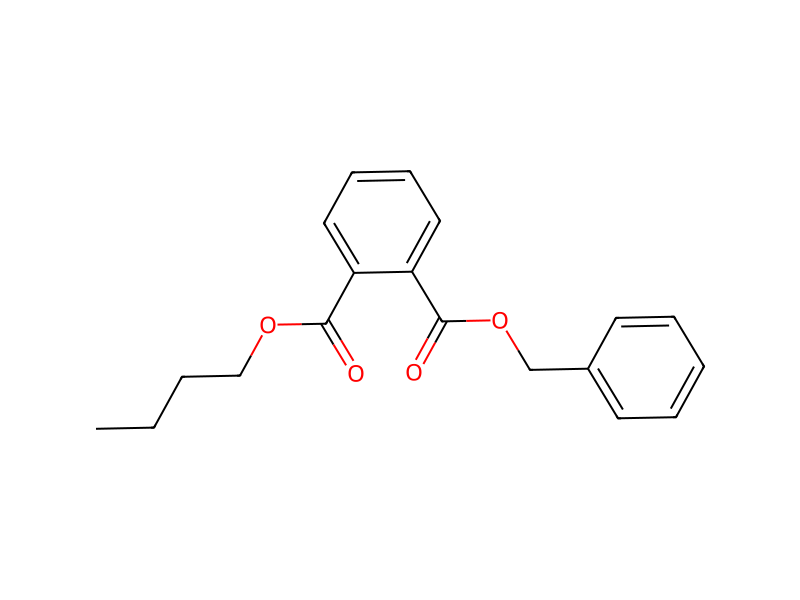



実験手順
On the first day, 1.31 grams of dispersant, NP-10 (Union Carbide), 1.6 grams of high-resistivity water (very pure water prepared in-house for semiconductor work) and 15 grams of solvent mixture (made from 172 ml acetone and 28 ml acetylacetone) were added and mixed well in a 250 ml polypropylene bottle. Then, 13.0 grams of borosilicate glass powder and 8.75 grams of quartz were added into the mixture and ball milled overnight using 10 mm diameter ZrO2 balls. On the second day, 0.2 gram of binder, Butvar B79 (Monsanto) was added into the mixture and ball milled for one hour. Then 2.41 grams of B79, 2.61 grams of plasticizer, Santicizer 160 (butyl phthalate from Monsanto) were added into the bottle and milled for about 3 hours to obtain a creamy, smooth mixture known as a slip or slurry. The slip was cast on a carrier of Fujimori Mylar™ using a 6 inch wide doctor blade having a 16 mil gap at 14 ft/min at room temperature.
後処理
- additionwere added
- custommilled overnight
- additionOn the second day, 0.2 gram of binder, Butvar B79 (Monsanto) was added into the mixture and ball
- custommilled for one hour
- custommilled for about 3 hours
- customto obtain a creamy, smooth mixture
- customat room temperature
出典と根拠
- ORDレコード
- ord-fc9f3bca285e4359abfa9a73511196ee
- 出典データセット
- uspto-grants-1998_06
- 特許番号
- US05766528
関連ノート
読み込み中…