
ベタキソロール
Betaxolol
データを補完しています。しばらくしてからページを更新すると最新の内容を表示できます

基本情報
- CAS
63659-18-7- 標準SMILES
CC(C)NCC(O)COc1ccc(CCOCC2CC2)cc1- InChIKey
NWIUTZDMDHAVTP-UHFFFAOYSA-N- 分子式
- C18H29NO3
- 平均分子量
- 307.4 g/mol
- 単同位体質量
- 307.21474379
概要
Betaxolol is a propanolamine that is 3-aminopropane-1,2-diol in which the hydrogen of the primary hydoxy is substituted by a 4-[2-(cyclopropylmethoxy)ethyl]phenyl group and one of the hydrogens attached to the amino group is substituted by isopropyl. It is a selective beta1-receptor blocker and is used in the treatment of glaucoma as well as hypertension, arrhythmias, and coronary heart disease. It is also used to reduce non-fatal cardiac events in patients with heart failure. It has a role as a beta-adrenergic antagonist, an antihypertensive agent and a sympatholytic agent.
名称と識別子
- 優先名称
- Betaxolol
- IUPAC
- 1-[4-[2-(cyclopropylmethoxy)ethyl]phenoxy]-3-(propan-2-ylamino)propan-2-ol
- 現地名
- ベタキソロール
- 英語名
- Betaxolol
- 分子式
- C18H29NO3
- 分子量
- 307.43
名称と別名
betaxolol63659-18-7BetaxololumDTXSID2022674SL 75212O0ZR1R6RZ21-[4-[2-(cyclopropylmethoxy)ethyl]phenoxy]-3-(propan-2-ylamino)propan-2-ol1-(4-(2-(Cyclopropylmethoxy)ethyl)phenoxy)-3-((1-methylethyl)amino)-2-propanolALO-140102 FREE BASE2-Propanol, 1-(4-(2-(cyclopropylmethoxy)ethyl)phenoxy)-3-((1-methylethyl)amino)-SL-7521210 FREE BASECHEBI:3082
名称をさらに表示
1-[4-[2-(シクロプロピルメトキシ)エチル]フェノキシ]-3-[(1-メチルエチル)アミノ]-2-プロパノールベタキソロール1-[4-[2-(シクロプロピルメトキシ)エチル]フェノキシ]-3-(イソプロピルアミノ)-2-プロパノール1-[4-[2-(シクロプロピルメトキシ)エチル]フェノキシ]-3-イソプロピルアミノ-2-プロパノール1-{4-[2-(シクロプロピルメトキシ)エチル]フェノキシ}-3-[(プロパン-2-イル)アミノ]プロパン-2-オールZB-5C06849βxololBetaxololsBetoptic SBetaprololBetaxolol BaseBetaxolol, >=98%Betaxolol USP/EP/BP
DTXCID1026741-(isopropylamino)-3-[p-(cyclopropylmethoxyethyl)phenoxy]-2-propanol1-{4-[2-(Cyclopropylmethoxy)ethyl]phenoxy}-3-[(propan-2-yl)amino]propan-2-ol1-{4-[2-(cyclopropylmethoxy)ethyl]phenoxy}-3-(propan-2-ylamino)propan-2-ol1-[4-[2-(cyclopropylmethoxy)ethyl]phenoxy]-3-[(1-methylethyl)amino]-2-propanolbetaxololoOxodalBetoptic susp
物性
構造計算による物性補完中
- XLogP
- 2.8
- 極性表面積
- 50.7 Ų
- 水素結合供与体数
- 2
- 水素結合受容体数
- 4
- 回転可能結合数
- 11
- 重原子数
- 22
- 形式電荷
- 0
- 複雑度
- 286
実験および物理化学的性質
DrugsPharmaceuticals
LogP
2.4
2.81
Solubility2.98e-02 g/L
Human Drugs
Breast Feeding; Lactation; Milk, Human; Antihypertensive Agents; Adrenergic Beta-Antagonists; Antiglaucoma Agents; Antiarrhythmics
Pharmaceuticals
Melting Point
70-72 °C
70 - 72 °C
Physical DescriptionSolid
Dissociation Constants
9.21
9.4
物理化学的性質
- 融点
- 61 · 61-63°C
- 沸点
- 448 · 448.0±40.0 °C(Predicted)
- 比重(密度)
- 1.067 · 1.067±0.06 g/cm3(Predicted)
- 貯蔵温度
- -20 °C · -20°C Freezer
- 溶解性
- クロロホルム(微量)、メタノール(微量)
安全と法規制
安全情報は参考情報です。供給元の安全データシート(SDS)、適用法令、専門家による評価に代わるものではありません。
GHS分類
GHS Classification
Warning
H302 (100%): Harmful if swallowed [Warning Acute toxicity, oral]
P203, P264, P270, P273, P280, P301+P317, P318, P330, P405, and P501 (click each P-code to see the statement)
The GHS information provided by 1 company from 1 notification to the ECHA C&L Inventory.
危険有害性情報
Hazard Classes and CategoriesAcute Tox. 4 (100%)
毒性情報
Hepatotoxicity
Betaxolol therapy has been associated with a low rate of mild-to-moderate elevations of serum aminotransferase levels which are usually asymptomatic and transient and resolve even with continuation of therapy. There have been no well documented cases of clinically apparent, acute liver injury attributable to betaxolol. Thus, hepatotoxicity due to betaxolol must be very rare, if it occurs at all. Most commonly used beta-blockers have been linked to rare instances of clinically apparent liver injury, typically with onset within 2 to 12 weeks, a hepatocellular pattern of liver enzyme elevations, rapid recovery on withdrawal, and little evidence of hypersensitivity (rash, fever, eosinophilia) or autoantibody formation.
Adverse Effects
Betaxolol has both local and systemic adverse effects. The ocular adverse drug reactions include transient irritation (25% to 40%), burning, pruritus, punctate keratitis, and blurry vision. Compared to topical timolol (a nonselective β-blocker), betaxolol showed a higher incidence of ocular adverse effects. Compared to nonselective topical β-adrenergic receptor blockers, betaxolol is less likely to cause adverse effects on pulmonary function. However, betaxolol use still requires caution in patients with underlying pulmonary disease. Symptomatic pulmonary obstruction due to betaxolol has been reported in patients with underlying asthma or chronic obstructive pulmonary disease. A post-marketing study in the United States identified 56 spontaneous adverse effect reports, with 8 cases requiring hospitalization due to asthma exacerbation.
化学と産業
薬理情報
ATC Code
S01ED02
C - Cardiovascular system
S - Sensory organs
QS - Sensory organs
QC - Cardiovascular system
Protein Binding50%
Pharmacodynamics
Betaxolol is a competitive, beta(1)-selective (cardioselective) adrenergic antagonist. Betaxolol is used to treat hypertension, arrhythmias, coronary heart disease, glaucoma, and is also used to reduce non-fatal cardiac events in patients with heart failure. Activation of beta(1)-receptors (located mainly in the heart) by epinephrine increases the heart rate and the blood pressure, and the heart consumes more oxygen. Drugs such as betaxolol that block these receptors therefore have the reverse effect: they lower the heart rate and blood pressure and hence are used in conditions when the heart itself is deprived of oxygen. They are routinely prescribed in patients with ischemic heart disease. In addition, beta(1)-selective blockers prevent the release of renin, which is a hormone produced by the kidneys which leads to constriction of blood vessels. Betaxolol is lipophilic and exhibits no intrinsic sympathomimetic activity (ISA) or membrane stabilizing activity.
Mechanism of Action
Betaxolol selectively blocks catecholamine stimulation of beta(1)-adrenergic receptors in the heart and vascular smooth muscle. This results in a reduction of heart rate, cardiac output, systolic and diastolic blood pressure, and possibly reflex orthostatic hypotension. Betaxolol can also competitively block beta(2)-adrenergic responses in the bronchial and vascular smooth muscles, causing bronchospasm.
Biological Half-Life14-22 hours
Metabolism/MetabolitesPrimarily hepatic. Approximately 15% of the dose administered is excreted as unchanged drug, the remainder being metabolites whose contribution to the clinical effect is negligible.
FDA Pharmacological Classification
O0ZR1R6RZ2
関連反応
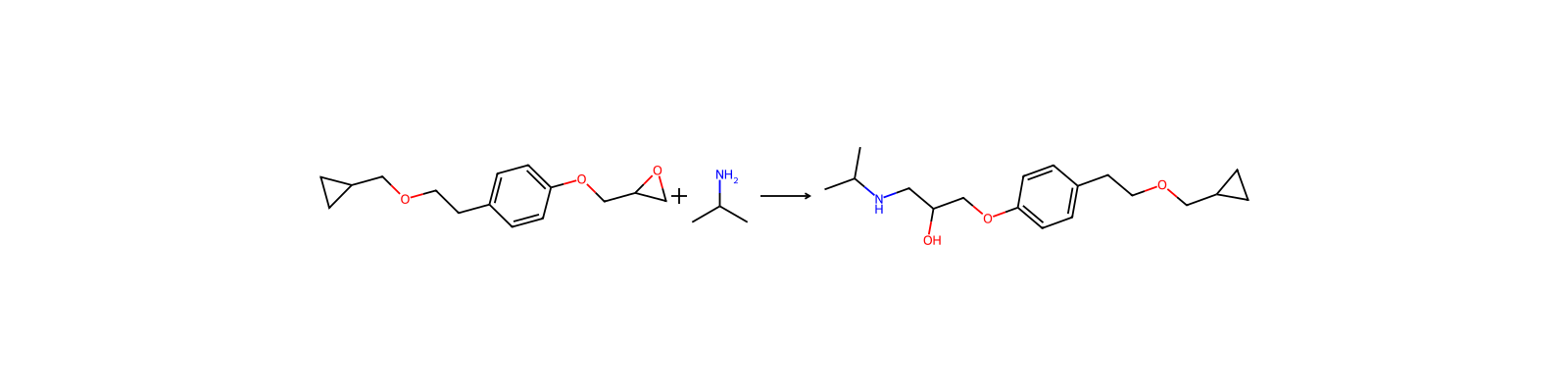
9 件


化合物ノート
読み込み中…