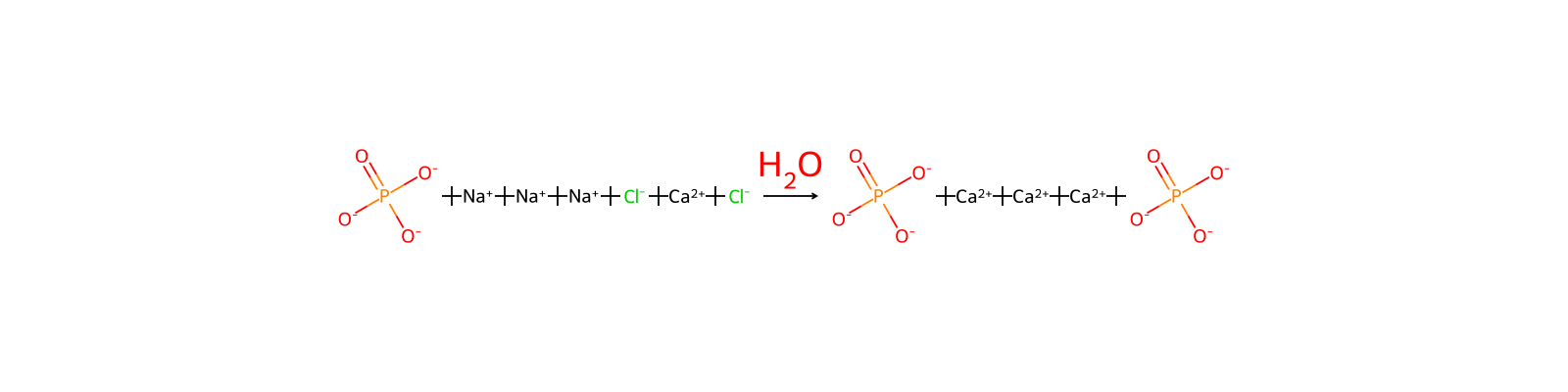
りん酸三ナトリウム·12水和物
Trisodium Phosphate
基本情報
- CAS
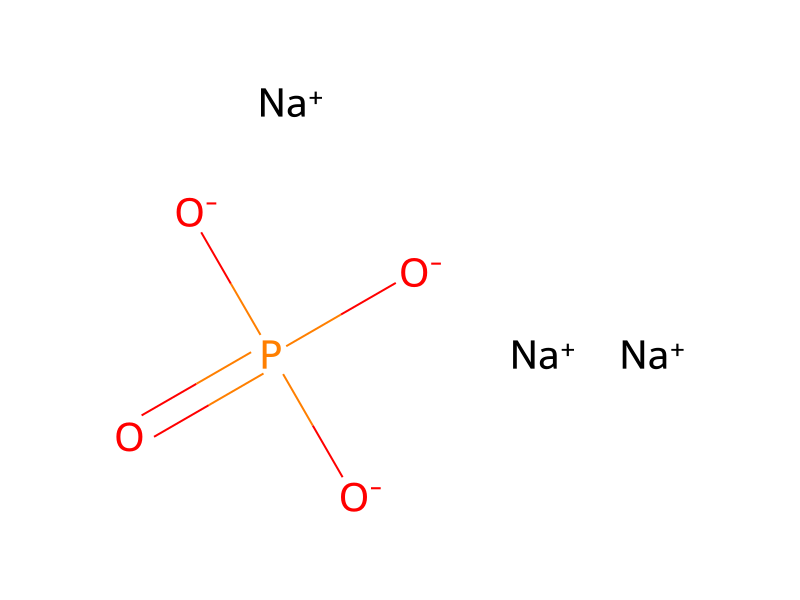
10101-89-0- 標準SMILES
O=P([O-])([O-])[O-].[Na+].[Na+].[Na+]- InChIKey
RYFMWSXOAZQYPI-UHFFFAOYSA-K- 分子式
- Na3PO4
- 平均分子量
- 163.941 g/mol
- 単同位体質量
- 163.92272832
概要
Sodium phosphate, tribasic appears as a colorless to white crystalline solid. Noncombustible.
名称と識別子
- 優先名称
- Trisodium Phosphate
- IUPAC
- trisodium;phosphate
- 現地名
- りん酸三ナトリウム·12水和物
- 英語名
- Sodium phosphate tribasic dodecahydrate
- 分子式
- H6NaO5P
- 分子量
- 140.01
名称と別名
TRISODIUM PHOSPHATE7601-54-9TrometeTrisodium orthophosphateTribasic sodium phosphateOakitePhosphoric acid, trisodium saltTrinatriumphosphatNutrifos STPDri-TriSodium phosphate, anhydrousPhosphoric acid trisodium salt
名称をさらに表示
オルトりん酸三ナトリウム12水和物りん酸ナトリウム·10水和物りん酸三ナトリウム·12水和物りん酸ナトリウム10水和物リン酸三ナトリウム(水)第三燐酸ソーダ·12水塩りん酸ナトリウム,第三 12水りん酸三ナトリウム?12水りん酸三ナトリウム12水りん酸三ナトリウム?12水和物三塩基性リン酸ナトリウム十二水和物 ACS REAGENT,≥98%三塩基性リン酸ナトリウム十二水和物 PURISS. P.A.,ACS REAGENT,≥98.0% (T)りん酸ナトリウム三塩基性十二水和物りん酸ナトリウム十二水和物りん酸三ナトリウム・12水三塩基性リン酸ナトリウム 十二水和物りん酸三ナトリウム1 2 水りん酸ナトリウム十二水和物, 97%りん酸ナトリウム十二水和物, 98+% (ACS)りん酸三ナトリウム・12水和物TSPSODIUM PHOSPHATE TRIBASICSODIUM PHOSPHATE DODECAHYDRATETRI-SODIUM PHOSPHATE DODECAHYDRATEsodiuM phosphatTRI-SODIUM ORTHOPHOSPHATE DODECAHYDRATEKH2PO9TSP, 12-HYDRATETSP dodecahydrateTRISODIUM PHOSHATE
Antisal 4Tertiary sodium phosphateSodium phosphate (Na3PO4)Tribasic sodium orthophosphateSodium tertiary phosphateEmulsiphos 440/660Sodium orthophosphate, tertiaryTribasic sodium-phosphate
データベース識別子
- CAS
10101-89-0、65185-91-3、68130-75-6、7601-54-9、96337-98-3- PubChem CID
- 24243
- DTXSID
DTXSID2035223- ChEMBL
CHEMBL363100- ChEBI
CHEBI:37583- UNII
- SX01TZO3QZ
- EC Number
- 231-509-8、265-604-0、619-207-8
- Nikkaji
- J3.742G
物性
構造計算による物性
- 極性表面積
- 86.3 Ų
- 水素結合供与体数
- 0
- 水素結合受容体数
- 4
- 回転可能結合数
- 0
- 重原子数
- 8
- 形式電荷
- 0
- 複雑度
- 36.8
実験および物理化学的性質
Chemical Classes
Other Classes -> Salts, Basic
Metals -> Phosphates, Metallic Salts
Reactive agents - 1st degree
Polymers
Plastics -> N.a.
Plastics -> Pigments agents
Cosmetics
Cosmetic ingredients (Trisodium Phosphate) -> CIR (Cosmetic Ingredient Review)
Chelating; Buffering
pH
Between 11,5 and 12,5 (1 % solution)
The aqueous soln is strongly alkaline. pH of 0.1% soln: 11.5; of 0.5% soln: 11.7; of 1.0% soln: 11.9.
Food AdditivesANTICAKING AGENT OR FREE-FLOW AGENT, DRYING AGENT, EMULSIFIER OR EMULSIFIER SALT, FORMULATION AID, HUMECTANT, NUTRIENT SUPPLEMENT, PH CONTROL AGENT, SEQUESTRANT -> FDA Substance added to food
Density
1.62 at 68 °F (Hydrate) 2.52 anhydrous (USCG, 1999) - Denser than water; will sink
2.54 g/cu cm
Relative density (water = 1): 2.5
Color/FormColorless crystals
Solubility
Freely soluble in water. Insoluble in ethanol
Colorless or white crystals. When rapidly heated melts at about 75 °C. Does not lose the last mol of water even on moderate ignition. Specific gravity 1.6. Soluble in 3.5 parts water, 1 part boiling water; insol in alcohol. /Dodecahydrate/
14.5 g/100 g water at 25 °C
25.8 g sol in 100 g water at 20 °C
Qualitative solubility: soluble in water
Solubility in water, g/l at 20 °C: 121 (good)
CorrosivityWhen wet, mild steel or brass may be corroded by trisodium phosphate.
Boiling PointThe hydrate loses 11 moles of water at 212 °F. (USCG, 1999)
Decomposition
When heated to decomposition it emits toxic fumes of sodium oxide and phosphoxides.
75 °C
Melting Point
170.06 °F (USCG, 1999)
170 °F
1583 °C
物理化学的性質
- 融点
- 75 °C · 75 °C
- 比重(密度)
- 1.62 g/mL · 1.62 g/mL at 25 °C
- 貯蔵温度
- 5 °C · Store at +5°C to +30°C.
- 溶解性
- 2 O: · H2O: 0.5M at20℃、透明、無色
- 外見
- 個体
- 比重
- 1.62 · 1.62
- 色
- 白い
- PH
- 12 · 12 (10g/l, H2O, 20℃)
- 水溶解度
- 258 g/L · 258g/L(20℃)
- Merck
- 14 · 14,8662
- 安定性
- 安定。強酸とは相容れない。乾いた状態に保ちます。
- InChI
- 1S/3Na.H3O4P.12H2O/c;;;1-5(2,3)4;;;;;;;;;;;;/h;;;(H3,1,2,3,4);12*1H2/q3*+1;;;;;;;;;;;;;/p-3
- InChIKey
- ASTWEMOBIXQPPV-UHFFFAOYSA-K
- SMILES
- O.O.O.O.O.O.O.O.O.O.O.O.[Na+].[Na+].[Na+].[O-]P([O-])([O-])=O
- LogP
- -2.148 · -2.148 (est)
- CAS データベース
- 10101 · 10101-89-0(CAS DataBase Reference)
- EPAの化学物質情報
- Trisodium phosphate dodecahydrate (10101-89-0)
- Absorption
- 0.023 at · ≤0.023 at 280 in H2O at 0.5M≤0.035 at 260 in H2O at 0.5M
化学的性質
化学的特性colorless or white crystal(s); used to soften water, as a detergent and metal cleaner [MER06] [HAW93] [STR93]
安全と法規制
安全情報は参考情報です。供給元の安全データシート(SDS)、適用法令、専門家による評価に代わるものではありません。
GHS分類
GHS Classification
This chemical does not meet GHS hazard criteria for 5.5% (77 of 1393) of reports.
Warning
H315 (90.2%): Causes skin irritation [Warning Skin corrosion/irritation]
P261, P264, P264+P265, P271, P280, P302+P352, P304+P340, P305+P351+P338, P319, P321, P332+P317, P337+P317, P362+P364, P403+P233, P405, and P501 (click each P-code to see the statement)
Aggregated GHS information provided per 1393 reports by companies from 35 notifications to the ECHA C&L Inventory. Each notification may be associated with multiple companies.
Danger
危険有害性情報
Regulatory Information
Chemical: Phosphoric acid, sodium salt (2:3)
Chemical: Phosphoric acid, trisodium salt
Regulation (EC) No 178/2002 (amended)
Phosphoric acid, sodium salt (1:3) is listed on the EPA's Chemical Data Reporting (CDR) system. Manufacturers and importers of Phosphoric acid, sodium salt (1:3) are required to report information about their production and use of this chemical to the EPA under the Toxic Substances Control Act (TSCA). (40 eCFR Part 711)
REACH registered substance: Trisodium orthophosphate (EC: 231-509-8)
Sodium orthophosphate, tribasic: Does not have an individual approval but may be used under an appropriate group standard
Other Safety Information
IMAP assessments - Trisodium phosphate: Human health tier II assessment
IMAP assessments - Phosphoric acid, sodium salt (2:3): Human health tier I assessment
DOT LabelCorrosive
Fire Hazards
Behavior in Fire: At fire temperature decomposes to emit highly toxic and irritating phosphorus oxides. (USCG, 1999)
Not combustible. Gives off irritating or toxic fumes (or gases) in a fire.
Fire PotentialNONFLAMMABLE. /SODIUM PHOSPHATE, TRIBASIC DODECAHYDRATE/
Health Hazards
INHALATION: Will produce local irritation in the respiratory tract. A burning sensation in the nose and throat, as well as coughing (and in high concentrations, choking) may be noted. May cause lung irritation. EYES: Immediate and severe pain followed by conjuctival edema and corneal clouding. Cataracts may form. SKIN: Immediate local reactions, including reddening, itching and irritation, followed by loss of surface layers of the skin. INGESTION: Severe tissue damage to all portions of the gastrointestinal tract. Symptoms include pain and burning wherever contact is made. Nausea, vomiting, cramps, and diarrhea may occur. Tissue corrosion and ulceration may result if untreated. (USCG, 1999)
Hazards Summary
Corrosive to skin and eyes after contact and to stomach after ingestion; A respiratory tract irritant; [CAMEO] Solution is a strong base. Inhalation of dust may induce pneumonitis; [ICSC]
A corrosive substance that can cause injury to the skin, eyes, and respiratory tract; Inhalation of dust may cause pulmonary edema; [ICSC] An irritant; [MSDSonline] The human fatal dose by mouth is about 50 grams. [AIHA]
FDA Requirements
Sodium phosphate (mono-, di-, & tribasic) used as a multiple purpose food substance in food for human consumption is generally recognized as safe when used in accordance with good manufacturing practice. /Sodium phosphate (mono-, di-, & tribasic)/
Sodium phosphate (mono-, di-, & tribasic) used as a sequesterant in food for human consumption is generally recognized as safe when used in accordance with good manufacturing practice. /Sodium phosphate (mono-, di-, & tribasic)/
Sodium phosphate (mono-, di-, & tribasic) used as a nutrient in food for human consumption is generally recognized as safe when used in accordance with good manufacturing practice. /Sodium phosphate (mono-, di-, & tribasic)/
Sodium phosphate (mono-, di-, & tribasic) used as a general purpose food additive animal drugs, feeds, and related products is generally recognized as safe when used in accordance with good manufacturing or feeding practice. /Sodium phosphate (mono-, di-, & tribasic/
For more FDA Requirements (Complete) data for TRISODIUM PHOSPHATE (6 total), please visit the HSDB record page.
Reactive GroupSalts, Basic
UN ClassificationUN Hazard Class: 8; UN Pack Group: III
EPA Safer ChemicalChemical: Trisodium phosphate
FIFRA Requirements
Residues of the following chemical substances are exempted from the requirement of a tolerance when used in accordance with good manufacturing practice as ingredients in an antimicrobial pesticide formulation, provided that the substance is applied on a semi-permanent or permanent food-contact surface (other than being applied on food packaging) with adequate draining before contact with food. (a) The following chemical substances when used as ingredients in an antimicrobial pesticide formulation may be applied to: Food-contact surfaces in public eating places, dairy-processing equipment, and food-processing equipment and utensils. Phosphoric acid, trisodium salt is included on this list. Limit: When ready for use, the end-use concentration is not to exceed 5916 ppm.
Residues of the following chemical substances are exempted from the requirement of a tolerance when used in accordance with good manufacturing practice as ingredients in an antimicrobial pesticide formulation, provided that the substance is applied on a semi-permanent or permanent food-contact surface (other than being applied on food packaging) with adequate draining before contact with food. ... (c) The following chemical substances when used as ingredients in an antimicrobial pesticide formulation may be applied to: Food-processing equipment and utensils. Phosphoric acid, trisodium salt is included on this list. Limit: When ready for use, the end-use concentration is not to exceed 5916 ppm.
As the federal pesticide law FIFRA directs, EPA is conducting a comprehensive review of older pesticides to consider their health and environmental effects and make decisions about their continued use. Under this pesticide reregistration program, EPA examines newer health and safety data for pesticide active ingredients initially registered before November 1, 1984, and determines whether the use of the pesticide does not pose unreasonable risk in accordance to newer saftey standards, such as those described in the Food Quality Protection Act of 1996. Pesticides for which EPA had not issued Registration Standards prior to the effective date of FIFRA '88 were divided into three lists based upon their potential for human exposure and other factors, with List B containing pesticides of greater concern than those on List C, and with List C containing pesticides of greater concern than those on List D. Trisodium phosphate is found on List D. Case No: 4053; Pesticide type: fungicide, herbicide, antimicrobial; Case Status: None of the active ingredients in the case are being supported for reregistration by their registrants. All are unsupported, or some are unsupported and some are cancelled. Cases described as "unsupported" generally are being processed for cancellation.; Active ingredient (AI): trisodium phosphate; AI Status: The active ingredient is no longer contained in any registered products. Thus, we characterize it as "cancelled.".
安全と保護具
Fire Fighting
Excerpt from ERG Guide 154 [Substances - Toxic and/or Corrosive (Non-Combustible)]:
In case of fire in the surroundings, use appropriate extinguishing media.
First Aid Measures
Fresh air, rest. Half-upright position. Refer immediately for medical attention.
Remove contaminated clothes. Rinse skin with plenty of water or shower for at least 15 minutes. Refer immediately for medical attention .
Rinse with plenty of water for several minutes (remove contact lenses if easily possible). Refer immediately for medical attention.
Rinse mouth. Do NOT induce vomiting. Give one or two glasses of water to drink. Rest. Refer immediately for medical attention.
First AidGet medical aid.
Safe StorageSeparated from strong acids. Dry. Well closed.
Firefighting HazardsBehavior in fire: May melt with loss of steam. /Sodium Phosphates/
Fire Fighting ProceduresIf material is on fire or involved in fire: Extinguish fire using agent suitable for type of surrounding fire. (Material itself does not burn or burns with difficulty.)
Cleanup Methods
/SRP: If time permits, pits, ponds, lagoons, soak holes, or holding areas should be sealed with an impermeable flexible membrane liner./Environmental Consideration: Land spill Dig a pit, pond, lagoon, holding area to contain liquid or solid material. Cover solids with a plastic sheet to prevent dissolving in rain or fire fighting water.
Environmental Considerations: Water Spill Neutralize with agricultural lime (CaO), crushed limestone (CaCO3), or sodium bicarbonate (NaHCO3). Adjust pH to neutral (pH=7). Use mechanical dredges or lifts to remove immobilized masses of pollutants and precipitates.
Nonfire Spill ResponseExcerpt from ERG Guide 154 [Substances - Toxic and/or Corrosive (Non-Combustible)]:
Disposal Methods
SRP: The most favorable course of action is to use an alternative chemical product with less inherent propensity for occupational exposure or environmental contamination. Recycle any unused portion of the material for its approved use or return it to the manufacturer or supplier. Ultimate disposal of the chemical must consider: the material's impact on air quality; potential migration in soil or water; effects on animal, aquatic, and plant life; and conformance with environmental and public health regulations.
Spillage DisposalPersonal protection: complete protective clothing including self-contained breathing apparatus. Sweep spilled substance into covered containers. Carefully collect remainder. Then store and dispose of according to local regulations.
Preventive Measures
SRP: Local exhaust ventilation should be applied wherever there is an incidence of point source emissions or dispersion of regulated contaminants in the work area. Ventilation control of the contaminant as close to its point of generation is both the most economical and safest method to minimize personnel exposure to airborne contaminants.
SRP: Contaminated protective clothing should be segregated in such a manner so that there is no direct personal contact by personnel who handle, dispose, or clean the clothing. Quality assurance to ascertain the completeness of the cleaning procedures should be implemented before the decontaminated protective clothing is returned for reuse by the workers. Contaminated clothing should not be taken home at end of shift, but should remain at employee's place of work for cleaning.
SRP: When working with strong solutions of acids or bases or other caustic or corrosive materials, always wear a full face mask. When working with caustic or corrosive gases or vapors, a full face mask will not protect the eyes or prevent inhaling the material. A full face respirator is required.
If material is not on fire and not involved in fire: Keep material out of water sources and sewers. Build dikes to contain flow as necessary.
For more Preventive Measures (Complete) data for TRISODIUM PHOSPHATE (7 total), please visit the HSDB record page.
Isolation and EvacuationExcerpt from ERG Guide 154 [Substances - Toxic and/or Corrosive (Non-Combustible)]:
毒性情報
Interactions
In rabbits fed an arteriosclerosis-inducing diet, simultaneous feeding of trisodium phosphate (50 mg/kg diet) prevented for the 1st month the rise in plasma total lipids and total cholesterol seen in the unmedicated controls. For the next month, these parameters increased to some extent, but less than in the controls. The mechanism of action is thought to involve the metabolism of inorganic phosphate.
Ecotoxicity Values
LC50; Species: Gambusia affinis (Western mosquitofish, adult female); Conditions: freshwater, static, 17-22 °C, pH 7.4-10.3, alkalinity <100 mg/L CaCO3, turbidity 70-150 mg/L; Concentration: 88300 ug/L for 24 hr
LC50; Species: Gambusia affinis (Western mosquitofish, adult female); Conditions: freshwater, static, 17-22 °C, pH 7.4-10.3, alkalinity <100 mg/L CaCO3, turbidity 70-150 mg/L; Concentration: 28500 ug/L for 96 hr
LC50; Species: Clarias gariepinus (Zambezi barbel, fingerling); Conditions: freshwater, static; Concentration: 748169.5 ug/L for 96 hr
Adverse Effects
Dermatotoxin - Skin burns.
Dermatotoxin - Skin burns.
Exposure RoutesSerious local effects by all routes of exposure.
Toxicity Summary
The CIR Expert Panel concluded that the following 31 ingredients are safe in the present practices of use and concentration in cosmetics as described in this safety assessment, when formulated to be non-irritating...Trisodium Phosphate...
Safe for use in cosmetics, with qualifications
Signs and Symptoms
Cough. Sore throat. Burning sensation. Shortness of breath.
Skin burns. Pain.
Redness. Pain. Severe deep burns.
Cough. Sore throat. Abdominal pain. Burning sensation. Shock or collapse.
ICSC Environmental DataEnvironmental effects from the substance have not been investigated adequately.
Human Toxicity Excerpts
/SIGNS AND SYMPTOMS/ Acute exposures to trisodium phosphate may cause irritation of the respiratory system with subsequent coughing and pain. In severe exposures pulmonary edema may develop.
/SIGNS AND SYMPTOMS/ Splash of aq soln in human eyes ... /causes/ slight transient injury. ... Known ... to have caused moderate permanent corneal opacification & vascularization similar to ... sodium hydroxide. In one of latter cases soln was hot, & this undoubtedly incr its injurious effect.
/SIGNS AND SYMPTOMS/ Aq soln are highly alkaline and may produce caustic burn.
/SIGNS AND SYMPTOMS/ The estimated fatal dose of sodium phosphates is 50 g. The corrosive effect is strong irritation & erythema, blistering. /Alkalies & phosphates; from table/
For more Human Toxicity Excerpts (Complete) data for TRISODIUM PHOSPHATE (9 total), please visit the HSDB record page.
Non-Human Toxicity Excerpts
/LABORATORY ANIMALS: Acute Exposure/ The Bucher method for judging the irritative potentials of chemicals predicted that trisodium phosphate (15%) was strongly irritating. Scoring of irritative activity of chemical solutions was done according to their pH and osmolality.
/LABORATORY ANIMALS: Chronic Exposure or Carcinogenicity/ Two-year toxicology and carcinogenesis studies of chlorinated trisodium phosphate, an inclusion complex of trisodium phosphate and sodium hypochlorite used in various cleaning compounds, were conducted by administering 0,500, or 1,000 mg/kg (dose volume: 10 mL/kg) of the chemical in water by gavage, 5 days per week for 103 weeks, to groups of 50 male and 50 female B6C3F1 mice. ... Under the conditions of these 2-year gavage studies, there was no evidence of carcinogenicity for either male or female B6C3F1 mice given chlorinated trisodium phosphate by gavage in water for 103 weeks at doses of 500 or 1,000 mg. Survival of dosed female mice was 78% and 72% after 80 weeks and 32% and 42% at the termination of the study. The studies in male and female F344/N rats were considered to be inadequate studies of carcinogenicity because the experiments were terminated at 35 weeks due to poor survival. /Chlorinated trisodium phosphate/
Probable Routes of Human Exposure
NIOSH (NOES Survey 1981-1983) has statistically estimated that 2,163 workers (278 of these were female) were potentially exposed to trisodium phosphate in the US(1). Occupational exposure to trisodium phosphate may occur through inhalation and dermal contact with this compound at workplaces where trisodium phosphate is produced or used.
Antidote and Emergency Treatment
/SRP:/ Immediate first aid: Ensure that adequate decontamination has been carried out. If patient is not breathing, start artificial respiration, preferably with a demand-valve resuscitator, bag-valve-mask device, or pocket mask, as trained. Perform CPR as necessary. Immediately flush contaminated eyes with gently flowing water. Do not induce vomiting. If vomiting occurs, lean patient forward or place on left side (head-down position, if possible) to maintain an open airway and prevent aspiration. Keep patient quiet and maintain normal body temperature. Obtain medical attention. /Inorganic acids and related compounds/
/SRP:/ Basic treatment: Establish a patent airway (oropharyngeal or nasopharyngeal airway, if needed). Suction if necessary. Watch for signs of respiratory insufficiency and assist respirations if needed. Administer oxygen by nonrebreather mask at 10 to 15 L/min. Monitor for pulmonary edema and treat if necessary ... . Monitor for shock and treat if necessary ... . For eye contamination, flush eyes immediately with water. Irrigate each eye continuously with 0.9% saline (NS) during transport ... . Do not use emetics. Activated charcoal is not effective. For ingestion, rinse mouth and administer 5 ml/kg up to 200 ml of water for dilution if the patient can swallow, has a strong gag reflex, and does not drool ... . Do not attempt to neutralize because of exothermic reaction. Cover skin burns with dry, sterile dressings after decontamination ... . /Inorganic acids and related compounds/
/SRP:/ Advanced treatment: Consider orotracheal or nasotracheal intubation for airway control in the patient who is unconscious, has severe pulmonary edema, or is in severe respiratory distress. Early intubation, at the first sign of upper airway obstruction, may be necessary. Positive-pressure ventilation techniques with a bag valve mask device may be beneficial. Consider drug therapy for pulmonary edema ... . Consider administering a beta agonist such as albuterol for severe bronchospasm ... . Monitor cardiac rhythm and treat arrhythmias as necessary ... . Start IV administration of D5W /SRP: "To keep open", minimal flow rate/. Use 0.9% saline (NS) or lactated Ringer's(LR) if signs of hypovolemia are present. For hypotension with signs of hypovolemia, administer fluid cautiously. Consider vasopressors if patient is hypotensive with a normal fluid volume. Watch for signs of fluid overload ... . Use proparacaine hydrochloride to assist eye irrigation ... . /Inorganic acids and related compounds/
National Toxicology Program Studies
Two-year toxicology and carcinogenesis studies of chlorinated trisodium phosphate, an inclusion complex of trisodium phosphate and sodium hypochlorite used in various cleaning compounds, were conducted by administering 0,500, or 1,000 mg/kg (dose volume: 10 mL/kg) of the chemical in water by gavage, 5 days per week for 103 weeks, to groups of 50 male and 50 female B6C3F1 mice. Groups of mice receiving 250 mg/kg were included in these studies but were removed after 6 months because of a lack of toxicity in the 500 and 1,000 mg/kg groups. Two-year studies were begun in male and female F34M rats at doses of 0, 500, 1,000, or 2,000 mg/kg of chlorinated trisodium phosphate in water by gavage (10 mL/kg). The 2,000 mg/kg groups were killed at 15 weeks because of poor survival, and the other groups were killed at 35 weeks because of toxicity in the 1,000 mg/kg group. ... Under the conditions of these 2-year gavage studies, there was no evidence of carcinogenicity for either male or female B6C3F1 mice given chlorinated trisodium phosphate by gavage in water for 103 weeks at doses of 500 or 1,000 mg. Survival of dosed female mice was 78% and 72% after 80 weeks and 32% and 42% at the termination of the study. The studies in male and female F344/N rats were considered to be inadequate studies of carcinogenicity because the experiments were terminated at 35 weeks due to poor survival. /Chlorinated trisodium phosphate/
Chlorinated trisodium phosphate was weakly mutagenic in strain TA1535 of Salmonella typhimurium in the presence of Aroclor 1254 induced male Sprague-Dawley rat or male Syrian hamster liver S9. This compound was not mutagenic in strains TA97, TA98, or TA100. /Chlorinated trisodium phosphate/
法規制情報
FDA Requirements
Sodium phosphate (mono-, di-, & tribasic) used as a multiple purpose food substance in food for human consumption is generally recognized as safe when used in accordance with good manufacturing practice. /Sodium phosphate (mono-, di-, & tribasic)/
Sodium phosphate (mono-, di-, & tribasic) used as a sequesterant in food for human consumption is generally recognized as safe when used in accordance with good manufacturing practice. /Sodium phosphate (mono-, di-, & tribasic)/
Sodium phosphate (mono-, di-, & tribasic) used as a nutrient in food for human consumption is generally recognized as safe when used in accordance with good manufacturing practice. /Sodium phosphate (mono-, di-, & tribasic)/
Sodium phosphate (mono-, di-, & tribasic) used as a general purpose food additive animal drugs, feeds, and related products is generally recognized as safe when used in accordance with good manufacturing or feeding practice. /Sodium phosphate (mono-, di-, & tribasic/
For more FDA Requirements (Complete) data for TRISODIUM PHOSPHATE (6 total), please visit the HSDB record page.
FIFRA Requirements
Residues of the following chemical substances are exempted from the requirement of a tolerance when used in accordance with good manufacturing practice as ingredients in an antimicrobial pesticide formulation, provided that the substance is applied on a semi-permanent or permanent food-contact surface (other than being applied on food packaging) with adequate draining before contact with food. (a) The following chemical substances when used as ingredients in an antimicrobial pesticide formulation may be applied to: Food-contact surfaces in public eating places, dairy-processing equipment, and food-processing equipment and utensils. Phosphoric acid, trisodium salt is included on this list. Limit: When ready for use, the end-use concentration is not to exceed 5916 ppm.
Residues of the following chemical substances are exempted from the requirement of a tolerance when used in accordance with good manufacturing practice as ingredients in an antimicrobial pesticide formulation, provided that the substance is applied on a semi-permanent or permanent food-contact surface (other than being applied on food packaging) with adequate draining before contact with food. ... (c) The following chemical substances when used as ingredients in an antimicrobial pesticide formulation may be applied to: Food-processing equipment and utensils. Phosphoric acid, trisodium salt is included on this list. Limit: When ready for use, the end-use concentration is not to exceed 5916 ppm.
As the federal pesticide law FIFRA directs, EPA is conducting a comprehensive review of older pesticides to consider their health and environmental effects and make decisions about their continued use. Under this pesticide reregistration program, EPA examines newer health and safety data for pesticide active ingredients initially registered before November 1, 1984, and determines whether the use of the pesticide does not pose unreasonable risk in accordance to newer saftey standards, such as those described in the Food Quality Protection Act of 1996. Pesticides for which EPA had not issued Registration Standards prior to the effective date of FIFRA '88 were divided into three lists based upon their potential for human exposure and other factors, with List B containing pesticides of greater concern than those on List C, and with List C containing pesticides of greater concern than those on List D. Trisodium phosphate is found on List D. Case No: 4053; Pesticide type: fungicide, herbicide, antimicrobial; Case Status: None of the active ingredients in the case are being supported for reregistration by their registrants. All are unsupported, or some are unsupported and some are cancelled. Cases described as "unsupported" generally are being processed for cancellation.; Active ingredient (AI): trisodium phosphate; AI Status: The active ingredient is no longer contained in any registered products. Thus, we characterize it as "cancelled.".
CERCLA Reportable Quantities
Persons in charge of vessels or facilities are required to notify the National Response Center (NRC) immediately, when there is a release of this designated hazardous substance, in an amount equal to or greater than its reportable quantity of 5000 lb or 2270 kg. The toll free number of the NRC is (800) 424-8802. The rule for determining when notification is required is stated in 40 CFR 302.4 (section IV. D.3.b).
Clean Water Act Requirements
Sodium phosphate, tribasic is designated as a hazardous substance under section 311(b)(2)(A) of the Federal Water Pollution Control Act and further regulated by the Clean Water Act Amendments of 1977 and 1978. These regulations apply to discharges of this substance. This designation includes any isomers and hydrates, as well as any solutions and mixtures containing this substance.
安全データ
- wgk
- 1
- tsca
- Yes
- rtecs
- TC9575000
- ridadr
- UN 3262 8/PG 3
- 毒性
- LD50 orally in Rabbit: 7400 mg/kg
- hs_code
- 2835291000
- risk_code
- 34-35-36/38
- hazard_code
- C
- safety_code
- 26-36/37/39-45-24/25
- hazard_class
- 8
- packing_group
- III
- Hazard Classifications
- Eye Irrit. 2Skin Irrit. 2STOT SE 3
- ストレージクラス
- 8A - Combustible corrosive hazardous materials
- 危険度評価(NFPA 704基準/消防庁データ)
- 人的[青]=0
化学と産業
薬理情報
Bionecessity
Phosphate is a major intracellular anion which participates in providing energy for metabolism of substances and contributes to important metabolic and enzymatic reactions in almost all organs and tissues. Phosphate exerts a modifying influence on calcium concentrations, a buffering effect on acid-base equilibrium, and has a major role in the renal excretion of hydrogen ions. /Phosphate/
Phosphate as a nutrient is also a limiting factor to plant growth. /Phosphate/
Absorption, Distribution and Excretion
Sodium orthophosphate is poorly absorbed & relatively nontoxic /SRP: systemically/
/Ortho/ phosphate is absorbed from, and to a limited extent secreted into, the gastrointestinal tract. Transport of phosphate from the gut lumen is an active, energy-dependent process that is modified by several factors. ... Vitamin D stimulates phosphate absorption, an effect reported to precede its action on calcium ion transport. In adults, about two thirds of the ingested phosphate is absorbed, and that which is absorbed is almost entirely excreted into the urine. In growing children, phosphate balance is positive. Concentrations of phosphate in plasma are higher in children than in adults. This "hyperphosphatemia" decreases the affinity of hemoglobin for oxygen and is hypothesized to explain the physiological "anemia" of childhood. /Phosphates/
用途と製造
Uses
CIR ingredient: Trisodium Phosphate
Used in soaps and detergents; Used in paper and leather manufacturing; [CHEMINFO] Used in scouring powders, photographic developers, water softeners, boiler scale removers, and food additives; [HSDB]
Pulp and Paper Processing [Category: Industry]
Used in photographic developers and detergents ; Also used to clarify sugar, remove boiler scale, soften water, make paper, and tan leather; [Merck Index] Used in dairy substitutes, to remove insecticides from fruit, and to inhibit mold; [HSDB] Used mainly in the dodecahydrate form as an alkaline source, e.g., heavy-duty cleaner and scouring agent; [AIHA]
Pulp and Paper Processing [Category: Industry]
For trisodium phosphate (USEPA/OPP Pesticide Code: 076406) there are 0 labels match. /SRP: Not registered for current use in the U.S., but approved pesticide uses may change periodically and so federal, state and local authorities must be consulted for currently approved uses./
U.S. Exports(1984) 1.74X10+10 G /SODIUM PHOSPHATES, NSPF/
U.S. Production
2023: 4,000,000 - <5,500,000 lb
(1972) 5.25X10+10 GRAMS
(1975) 5.1X10+10 GRAMS
Well over 100 million lb of trisodium phosphate is consumed annually in the USA.
Production volumes for non-confidential chemicals reported under the Inventory Update Rule. [Table#1680]
Consumption Patterns
46% AS AN INDUSTRIAL & INSTITUTIONAL DETERGENT BUILDER & IN WATER TREATMENT; 27% AS A HOUSEHOLD DETERGENT BUILDER & IN WATER TREATMENT; 19% IN ELASTOMERS & FOR EXPORT; 7% IN HOUSEHOLD SCOURING CLEANSERS; 1% AS EMULSIFIER IN PROCESSED CHEESE (1973).
Consumer UsesLubricating agent
Industry UsespH regulating agent
Methods of Manufacturing
Sodium monophosphates are usually produced by neutralization of phosphoric acid with soda ash or caustic soda. The latter is predominantly used in Germany, while in the United States, the less expensive soda ash prevails. The basicity of sodium carbonate is insufficient for the formation of trisodium phosphate, so that caustic soda must be used in this step. The phosphates crystallize from the solutions as hydrates and are separated by centrifugation. Anhydrous salts are obtained by dehydration in rotary dryers or directly from the solutions by spray drying or in rotary kilns. Both thermal phosphoric acid and the cheaper wet phosphoric acid are used as starting materials. The very pure thermal phosphoric acid is generally used in the production of food-grade phosphates. /Sodium monophosphates/
Trisodium phosphate is mainly produced as the dodecahydrate by complete neutralization of phosphoric acid with caustic soda or soda ash and subsequent crystallization. Since neutralization with soda ash does not proceed beyond the stage of the disodium salt, caustic soda must be added to complete the reaction. Frequently, mother liquors of mono- or disodium phosphate production or crystalline disodium phosphates are used as starting materials. In another process, trisodium phosphate is obtained by digestion of the phosphate-rich neutralization sludges, which accumulate in the purification of wet phosphoric acid by precipitation, with caustic soda and with addition of water glass
By mixing soda ash and phosphoric acid in proper proportions to form disodium phosphate and then adding caustic soda.
Sodium hydroxide & monazite (Ce, La, Th)PO4 (salt formation/separation; byproduct of thorium dioxide/rare earth oxide, hydrate production).
Formulations/Preparations
Trisodium phosphate, 1-4% in Crest Fluoride gel and Crest Fluoride toothpaste.
Anhydrous, technical grades: anhydrous and crystalline, granular and powder food grades.
Grade: Commercial, high purity, CP /chemically pure - a grade designation signifying a minimum of impurities, but not 100% purity/, FCC (anhydrous), anhydrous salt
Household ProductsInformation on 36 consumer products that contain Trisodium phosphate anhydrous in the following categories is provided:
Use Classification
EPA Safer Chemical Functional Use Classes -> Oxidants and Oxidant Stabilizers
Safer Chemical Classes -> Yellow triangle - The chemical has met Safer Choice Criteria for its functional ingredient-class, but has some hazard profile issues
Food additives
Food Additives -> ACIDITY_REGULATOR; SEQUESTRANT; STABILIZER -> JECFA Functional Classes
Food Additives -> ACIDITY_REGULATOR; SEQUESTRANT; STABILIZER -> JECFA Functional Classes
Food Additives -> ACIDITY_REGULATOR; SEQUESTRANT; STABILIZER -> JECFA Functional Classes
General Manufacturing Information
Petroleum Lubricating Oil and Grease Manufacturing
Phosphoric acid, sodium salt (1:3): ACTIVE
Phosphoric acid, sodium salt (2:3): INACTIVE
... AS MICROBIOLOGICAL /INHIBITOR/ ... & AS SYNERGIST FOR OTHER PRESERVATIVES. ... IMMERSING FRUITS IN A SOLUTION OF TSP ... & DRYING THEM SO THAT A FILM OF THE PHOSPHATE REMAINS, PARTICULARLY IN SURFACE CUTS, SCRATCHES, OR ABRASIONS, THE DECAY OF FRUITS WAS DELAYED FOR A SIGNIFICANT PERIOD OF TIME.
... THE PHOSPHATES PREFERRED FOR TENDERIZATION OF BEEF /INCLUDED/ ... TSP.
... MIXING APPROX 1% TRISODIUM PHOSPHATE WITH STARCH RENDERED IT FLUIDIZABLE FOR TREATMENT IN A FLUID BED, WHERE IT COULD BE HEATED TO DEXTRINIZE THE STARCH.
応用分野
用途清缶剤、染色助剤
説明Sodium phosphate tribasic dodecahydrate is also known as trisodium phospate or TSP. It is a highly soluble in water and widely used as a cleaning agent. The pH of a 1% solution is typically around 12, making this reagent sufficiently alkaline for saponification of grease and oils. In combination with surfactants, TSP is an excellent agent for cleaning everything from laundry to concrete driveways. This versatility and low manufacturing price made TSP the basis for a plethora of cleaning products sold in the mid-20th century. Trisodium phosphate is used in the isolation of mycobacteria, including culturing of tubercle bacilli. Has been used as a protein precipitant in certain applications and in co-precipitation and fractionization of nucleotides. May be used for the preservation of biologically active soil samples. Because of the alkaline pH, TSP disrupts cytoplasmic and outer membranes of Salmonella enterica cells making it useful in preventing the spread of bacteria. It is used in photographic developing, clarifying sugar, removing boiler scale, softening water and manufacturing of paper. They are added to many foods as an emulsifier to prevent oil separation. It can be utilized as a leavening agent. Some instances of these foods include the batter coating on breaded fish or chicken, and commercially baked cakes. Adding this item to food increases the shelf life of the food, maintaining the texture and visual aspect of the food.
使用Sodium phosphate tribasic dodecahydrate is often used in the formulation of various buffers.
一般的な説明Sodium phosphate tribasic dodecahydrate is a hydrated trisodium salt of phosphoric acid. It is widely used in various water treatment methods.
調製方法
純化方法It crystallises from warm dilute aqueous NaOH (1mL/g) on cooling to 0o.
上流・下流製品情報
上流原料
下流製品
関連反応
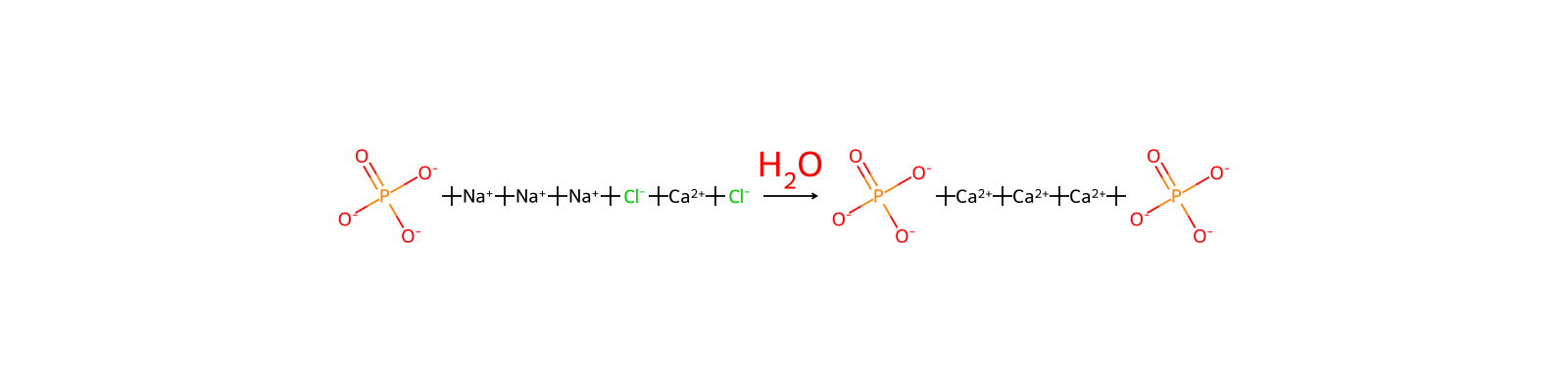
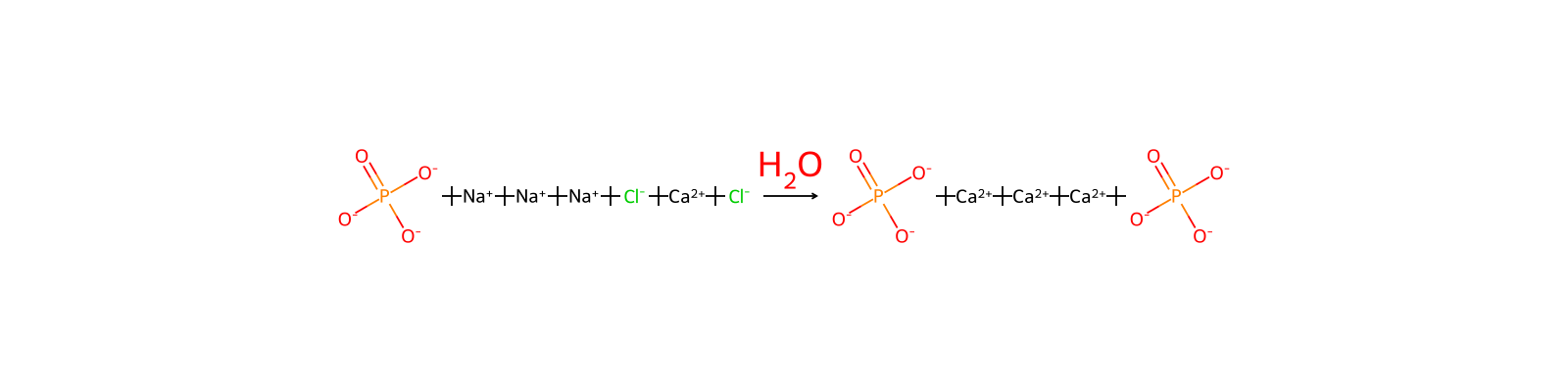
365 件


化合物ノート
読み込み中…