
臭素酸
Bromic acid
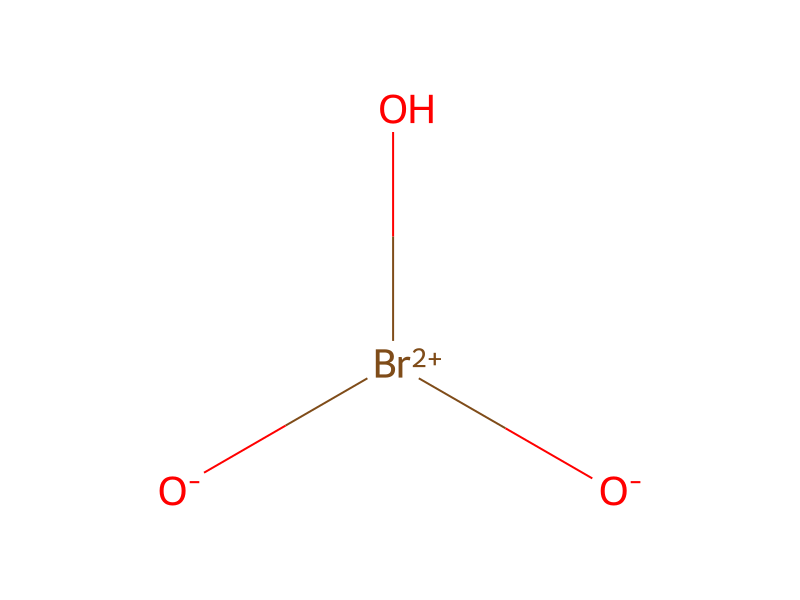
基本情報
- CAS
7789-31-3- 標準SMILES
[O-][Br+2]([O-])O- InChIKey
YTFCQDDTLVUOCN-UHFFFAOYSA-N- 分子式
- BrHO3
- 平均分子量
- 128.91 g/mol
- 単同位体質量
- 127.91090599
概要
Bromic acid is a bromine oxoacid. It is a conjugate acid of a bromate.
名称と識別子
- 優先名称
- Bromic acid
- IUPAC
- bromic acid
- 現地名
- 臭素酸
- 英語名
- Bromic acid
- 分子式
- BrHO3
- 分子量
- 128.91
名称と別名
Bromic acid7789-31-3908X3OZ87JDTXSID7064861CHEBI:49382HBrO3BromsaeurehydroxidodioxidobromineRefChem:121511(BrO2(OH))DTXCID9048065232-158-3
名称をさらに表示
臭素酸Bromhydric acid
Bromsaureacide bromiqueacido bromicoacidum bromicumUNII-908X3OZ87JEINECS 232-158-3BROMIC ACID [MI]BROMIC ACID (HBRO3)
データベース識別子
- CAS
7789-31-3- PubChem CID
- 24445
- DTXSID
DTXSID7064861- ChEMBL
CHEMBL1161635- ChEBI
CHEBI:49382- UNII
- 908X3OZ87J
- EC Number
- 232-158-3
- Nikkaji
- J95.891C
物性
構造計算による物性
- XLogP
- -0.1
- 極性表面積
- 54.4 Ų
- 水素結合供与体数
- 1
- 水素結合受容体数
- 3
- 回転可能結合数
- 0
- 重原子数
- 4
- 形式電荷
- 0
- 複雑度
- 46.2
実験および物理化学的性質
Chemical ClassesToxic Gases & Vapors -> Acids, Inorganic
Physical DescriptionFound only in aqueous solution: Colorless liquid; Turns yellow on standing; [Merck Index]
物理化学的性質
- 融点
- 100 ℃ · decomposes at 100℃ [CRC10]
- 比重(密度)
- 3.28 · 3.28 [HAW93]
- 溶解性
- 2 O · soluble in H2O
- 外見
- 水溶液中でのみ安定
- 色
- stable only in aqueous solution
- 水溶解度
- 93 · aq メディアにのみ存在可能 [HAW93]
- EPAの化学物質情報
- Bromic acid (7789-31-3)
化学的性質
化学的特性colorless or slightly yellowish liquid; stable only in very dilute aqueous solutions; oxidizing agent; used in dyes [HAW93]
安全と法規制
安全情報は参考情報です。供給元の安全データシート(SDS)、適用法令、専門家による評価に代わるものではありません。
危険有害性情報
Hazards SummaryA strong skin, eye, and mucous membrane irritant; [Merck Index] Unstable and exists only in dilute solutions; A strong tissue irritant; [Hawley] See Bromine.
毒性情報
Treatment
EYES: irrigate opened eyes for several minutes under running water. INGESTION: do not induce vomiting. Rinse mouth with water (never give anything by mouth to an unconscious person). Seek immediate medical advice. SKIN: should be treated immediately by rinsing the affected parts in cold running water for at least 15 minutes, followed by thorough washing with soap and water. If necessary, the person should shower and change contaminated clothing and shoes, and then must seek medical attention. INHALATION: supply fresh air. If required provide artificial respiration.
Health Effects
Bromine vapour causes irritation and direct damage to the mucous membranes. Elemental bromine also burns the skin. The bromide ion is a central nervous system depressant and chronic exposure produces neuronal effects. This is called bromism and can result in central reactions reaching from somnolence to coma, cachexia, exicosis, loss of reflexes or pathologic reflexes, clonic seizures, tremor, ataxia, loss of neural sensitivity, paresis, papillar edema of the eyes, abnormal speech, cerebral edema, delirium, aggressiveness, and psychoses. Bromate is also a potential carcinogen. (L625, L626, L627, L638)
Exposure RoutesOral (L96) ; inhalation (L96) ; dermal (L96)
Toxicity Summary
Bromine is a powerful oxidizing agent and is able to release oxygen free radicals from the water in mucous membranes. These free radicals are also potent oxidizers and produce tissue damage. In additon, the formation of hydrobromic and bromic acids will result in secondary irritation. The bromide ion is also known to affect the central nervous system, causing bromism. This is believed to be a result of bromide ions substituting for chloride ions in the in actions of neurotransmitters and transport systems, thus affecting numerous synaptic processes. (L626, L627, A543)
Signs and Symptoms
Bromine vapour causes irritation and direct damage to the mucous membranes. Symptoms include lacrimation, rhinorrhoea, eye irritation with mucous secretions from the oropharyngeal and upper airways, coughing, dyspnoea, choking, wheezing, epistaxis, and headache. The bromide ion is a central nervous system depressant producing ataxia, slurred speech, tremor, nausea, vomiting, lethargy, dizziness, visual disturbances, unsteadiness, headaches, impaired memory and concentration, disorientation and hallucinations. This is called bromism. (L626, L627)
Carcinogen ClassificationPotassium bromate: 2B, possibly carcinogenic to humans. (L135)
安全データ
- tsca
- TSCA listed
- ridadr
- 3139
- hazard_class
- 5.1
- packing_group
- II
化学と産業
薬理情報
Metabolism/Metabolites
Bromine is mainly absorbed via inhalation, but may also enter the body through dermal contact. Bromine salts can be ingested. Due to its reactivity, bromine quickly forms bromide and may be deposited in the tissues, displacing other halogens. (L626)
用途と製造
UsesUsed as an oxidizing agent; [Merck Index] Used in dyes, intermediates, and pharmaceuticals; [Hawley]
General Manufacturing InformationBromic acid: INACTIVE
応用分野
使用Oxidizing agent.
使用用途臭素酸や臭素酸の塩は基本的に、酸化剤として使用されます。具体的には、合成原料、医薬品原料、染料の合成反応の中間処理剤として用いられる場合が多いです。 例えば、臭素酸カリウムは食品添加物 (小麦粉品質改良剤、魚肉製品添加剤) 、分析試薬に使用されます。また、臭素酸ナトリウムは医薬部外品添加物 (パーマネントウェーブ用剤) 、試薬などの用途があります。 ただし、臭素酸は強酸性、強酸化剤のため人体に有毒です。皮膚、眼、粘膜を侵すので、取り扱いに注意を要します。
調製方法
製造方法Bromic acid is prepared by adding sulfuric acid to barium bromate.Ba(BrO3)2 + H2SO4 → 2HBrO3 + BaSO4The product is distilled and absorbed in water. A 50% solution may be obtained by slow evaporation of the dilute solution in vacuum at -12°C.
上流・下流製品情報
上流原料
下流製品
関連反応
24 件




化合物ノート
読み込み中…