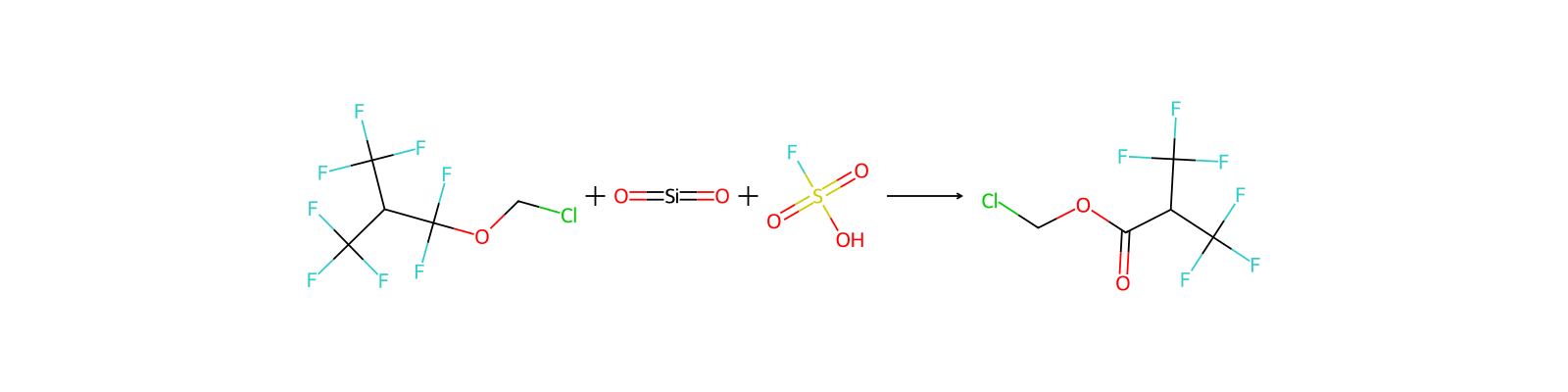
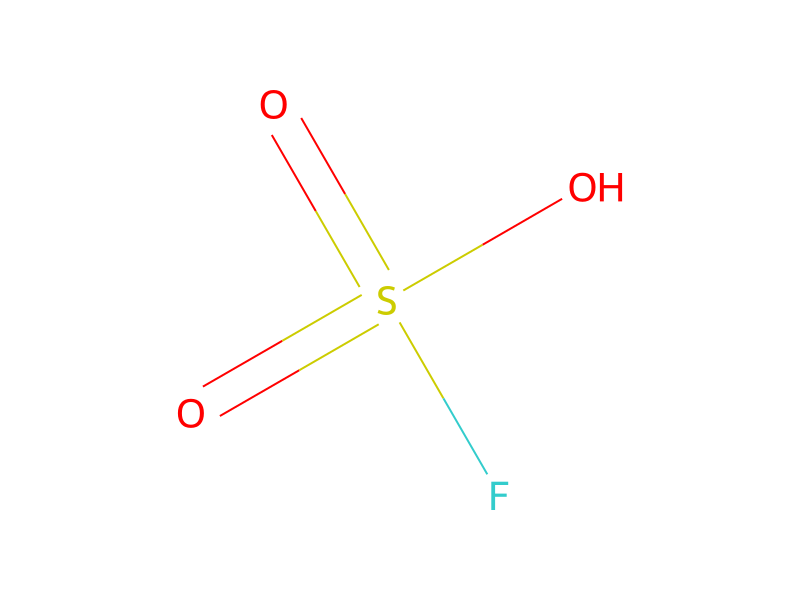
基本情報
- CAS
7789-21-1- 標準SMILES
O=S(=O)(O)F- InChIKey
UQSQSQZYBQSBJZ-UHFFFAOYSA-N- 分子式
- FHO3S
- 平均分子量
- 100.07 g/mol
- 単同位体質量
- 99.96304311
概要
Fluorosulfonic acid appears as a fuming liquid. Boiling point 163 °C. Density 1.73 g / cm3. Corrosive to metals and to tissue. Both very short contact and the fumes can cause severe painful burns. Used as a catalyst in organic synthesis, in electroplating and as a fluorinating agent.
名称と識別子
- 優先名称
- Fluorosulfuric acid
- IUPAC
- sulfurofluoridic acid
- 現地名
- フルオロ硫酸
- 英語名
- Fluorosulfonic acid
- 分子式
- FHO3S
- 分子量
- 100.07
名称と別名
Fluorosulfonic acidFluorosulfuric acid7789-21-1Fluosulfuric acidMonofluorosulfuric acidFLUOSULFONIC ACIDFluorosulfuric acid (HSO3F)Fluorosulphonic acidDTXSID3033511PPX0648643DTXCID1013511RefChem:140969
名称をさらに表示
フルオロスルホン酸フルオリド硫酸フルオロ硫酸HSO3FfluorosulfonicFluorsulfonsureNcgc00091007-01fluosulfuricacidFluorosulforic Acid
232-149-4sulfurofluoridic acidFluorosulphuric acidHSDB 467EINECS 232-149-4UN1777UNII-PPX0648643MFCD00066174
データベース識別子
- CAS
7789-21-1- PubChem CID
- 24603
- DTXSID
DTXSID3033511- ChEMBL
CHEMBL1207889- ChEBI
CHEBI:193136- UNII
- PPX0648643
- EC Number
- 232-149-4
- Nikkaji
- J95.177C
物性
構造計算による物性
- XLogP
- -0.3
- 極性表面積
- 62.8 Ų
- 水素結合供与体数
- 1
- 水素結合受容体数
- 4
- 回転可能結合数
- 0
- 重原子数
- 5
- 形式電荷
- 0
- 複雑度
- 92.6
実験および物理化学的性質
Chemical Classes
Other Classes -> Organic Acids
Corrosives
pHCONSIDERABLY MORE ACIDIC THAN CONCN H2SO4
Density
1.73 at 77 °F (USCG, 1999) - Denser than water; will sink
1.726 AT 25 °C/4 °C
Relative density (water = 1): 1.7
1.726 @25 °C
Color/FormCOLORLESS LIQUID; REDDISH-BROWN COLOR WITH ACETONE
Solubility
SOL IN NITROBENZENE
Solubility in water: reaction
CorrosivityHIGHLY CORROSIVE
Boiling Point
324.9 °F at 760 mmHg (USCG, 1999)
163 °C @ 760 MM HG
FORMS STABLE SALTS WHICH ARE LITTLE HYDROLYZED BY WATER & WHICH MAY BE RECRYSTALLIZED FROM WATER; BP: 110 °C AT 120 MM HG; 77.0 °C @ 18 MM HG
163 °C
163 °C @760 [mm Hg]
DecompositionSEE FLUOSULFONATES. ...WHEN HEATED TO DECOMPOSITION, THEY EMIT HIGHLY TOXIC FUMES OF FLUORIDES AND OXIDES OF SULFUR. ... /FLUOSULFONATES/
Melting Point
-125.1 °F (USCG, 1999)
-89 °C
-89 °C
-89 °C
Vapor DensityRelative vapor density (air = 1): 3.4
Vapor Pressure
2.5 [mmHg]
Vapor pressure, kPa at 25 °C: 0.33
Physical Description
Fluorosulfonic acid appears as a fuming liquid. Boiling point 163 °C. Density 1.73 g / cm3. Corrosive to metals and to tissue. Both very short contact and the fumes can cause severe painful burns. Used as a catalyst in organic synthesis, in electroplating and as a fluorinating agent.
Colorless liquid that fumes in moist air; [Merck Index] Colorless to light yellow liquid with a choking odor; [CHRIS]
COLOURLESS LIQUID WITH CHARACTERISTIC ODOUR.
物理化学的性質
- 融点
- 87.3 °C · −87.3 °C(lit.)
- 沸点
- 165.5 °C · 165.5 °C(lit.)
- 比重(密度)
- 1.726 g/mL · 1.726 g/mL at 25 °C(lit.)
- 蒸気密度
- 3.5 · 3.5 (vs air)
- 蒸気圧
- 2.5 mm · 2.5 mm Hg ( 25 °C)
- 貯蔵温度
- 2 · 2-8°C
- 溶解性
- 2 O · reacts with H2O
- 外見
- 無色の液体
- 酸解離定数(Pka)
- -6.29 · -6.29±0.15(Predicted)
- 色
- colorless
- 臭い (Odor)
- 刺激臭
- 水溶解度
- 6 · 水中で激しく加水分解します。アセトン中赤褐色 [MER06]
- Merck
- 13 · 13,4206
- 安定性
- 安定。ガラスを腐食させるおそれがあります。多くの金属、塩基と互換性がありません。
- InChI
- 1S/FHO3S/c1-5(2,3)4/h(H,2,3,4)
- InChIKey
- UQSQSQZYBQSBJZ-UHFFFAOYSA-N
- SMILES
- OS(F)(=O)=O
- CAS データベース
- 7789 · 7789-21-1(CAS DataBase Reference)
- EPAの化学物質情報
- Fluorosulfuric acid (7789-21-1)
化学的性質
化学的特性colourless liquid
安全と法規制
GHS分類
GHS Classification
Danger
H314: Causes severe skin burns and eye damage [Danger Skin corrosion/irritation]
P260, P261, P264, P271, P280, P301+P330+P331, P302+P361+P354, P304+P340, P305+P354+P338, P316, P317, P321, P363, P405, and P501 (click each P-code to see the statement)
Danger
H314 (100%): Causes severe skin burns and eye damage [Danger Skin corrosion/irritation]
P260, P261, P264, P264+P265, P271, P280, P301+P330+P331, P302+P361+P354, P304+P340, P305+P354+P338, P316, P317, P321, P363, P405, and P501 (click each P-code to see the statement)
危険有害性情報
Hazards IdentificationWater-reactive material (WR)
Regulatory Information
Chemical: Fluorosulfuric acid
Fluorosulfuric acid is listed on the EPA's Chemical Data Reporting (CDR) system. Manufacturers and importers of Fluorosulfuric acid are required to report information about their production and use of this chemical to the EPA under the Toxic Substances Control Act (TSCA). (40 eCFR Part 711)
Status: Active Update: 01-12-2021 https://echa.europa.eu/registration-dossier/-/registered-dossier/1784
The New Jersey Worker and Community Right to Know Act requires public and private employers to provide information about hazardous substances at their workplaces. (N.J.S.A. 34:5A-1 et. seq.)
DOT LabelCorrosive
Fire Hazards
Special Hazards of Combustion Products: Toxic and irritating fumes of hydrogen fluoride and sulfuric acid may form in fires.
· EXCEPT FOR ACETIC ANHYDRIDE (UN1715), THAT IS FLAMMABLE, some of these materials may burn, but none ignite readily.
Not combustible but enhances combustion of other substances. Gives off irritating or toxic fumes (or gases) in a fire.
Health Hazards
Inhalation of fumes causes severe irritation of nose and throat. Contact of liquid with eyes or skin causes very severe burns of mouth and stomach. (USCG, 1999)
· CORROSIVE and/or TOXIC; inhalation, ingestion or contact (skin, eyes) with vapors, dusts or substance may cause severe injury, burns or death.
Hazards Summary
Highly corrosive to skin; [Quick CPC] Reacts with water producing hydrofluoric acid and sulfuric acid; [HSDB] Corrosive to skin, eyes, and respiratory tract; Inhalation may cause pulmonary edema; [ICSC] See the Process, Toxic Gas from Spilling Chemical in Water.
DOT ID and Guide1777 137
Reactive GroupAcids, Strong Non-oxidizing
EC ClassificationSymbol: C; R: 20-35; S: (1/2)-26-45
UN ClassificationUN Hazard Class: 8; UN Pack Group: I
Reactivity AlertsKnown Catalytic Activity
Reactivity Profile
FLUOROSULFONIC ACID is very strongly acidic [Merck]. Reacts exothermically with chemical bases (examples: amines, amides, and inorganic hydroxides). These reactions can generate dangerously large amounts of heat in small spaces. Reacts violently with water to generate hydrofluoric acid and sulfuric acid. Reacts with active metals, including such structural metals as aluminum and iron, to release hydrogen, a flammable gas. Can initiate the polymerization of certain alkenes. Reacts with cyanide compounds to release gaseous hydrogen cyanide. Generates flammable and/or toxic gases in contact with dithiocarbamates, isocyanates, mercaptans, nitrides, nitriles, sulfides, and strong reducing agents. Additional gas-generating reactions occur with sulfites, nitrites, thiosulfates (to give H2S and SO3), dithionites (SO2), and carbonates. May catalyze (increase the rate of) chemical reactions.
安全と保護具
Fire Fighting
Excerpt from ERG Guide 137 [Substances - Water-Reactive - Corrosive]:
NO water. In case of fire in the surroundings, use appropriate extinguishing media. In case of fire: keep drums, etc., cool by spraying with water. NO direct contact with water.
First Aid Measures
Fresh air, rest. Half-upright position. Artificial respiration may be needed. Refer for medical attention.
Remove contaminated clothes. Rinse skin with plenty of water or shower. Refer for medical attention .
First rinse with plenty of water for several minutes (remove contact lenses if easily possible), then refer for medical attention.
Rinse mouth. Do NOT induce vomiting. Refer for medical attention .
Accidental Release Measures
· CALL 911. Then call emergency response telephone number on shipping paper. If shipping paper not available or no answer, refer to appropriate telephone number listed on the inside back cover.
· Do not touch damaged containers or spilled material unless wearing appropriate protective clothing.
First Aid
Get medical attention quickly following all exposures to this compound.
General First Aid:
Safe StorageDry. Well closed. Separated from food and feedstuffs. See Chemical Dangers.
Exposure Control and Personal Protection
· Wear positive pressure self-contained breathing apparatus (SCBA).
TIH (Toxic Inhalation Hazard) - Term used to describe gases and volatile liquids that are toxic when inhaled. Some are TIH materials themselves, e.g., chlorine, and some release TIH gases when spilled in water, e.g., chlorosilanes. [ERG 2016].
Nonfire Spill ResponseExcerpt from ERG Guide 137 [Substances - Water-Reactive - Corrosive]:
Spillage Disposal
Evacuate danger area! Consult an expert! Personal protection: complete protective clothing including self-contained breathing apparatus. Do NOT absorb in saw-dust or other combustible absorbents. NEVER direct water jet on liquid. Collect leaking and spilled liquid in sealable plastic containers as far as possible. Absorb remaining liquid in sand or inert absorbent. Then store and dispose of according to local regulations.
Isolation and Evacuation
Excerpt from ERG Guide 137 [Substances - Water-Reactive - Corrosive]:
Immediate precautionary measure
When spilled in water
When spilled in water
Eye PreventionWear face shield or eye protection in combination with breathing protection.
Fire PreventionNO contact with flammables.
Inhalation RiskNo indication can be given about the rate at which a harmful concentration of this substance in the air is reached on evaporation at 20 °C.
毒性情報
Adverse EffectsDermatotoxin - Skin burns.
Exposure RoutesThe substance can be absorbed into the body by inhalation and by ingestion.
Signs and Symptoms
Sore throat. Cough. Burning sensation. Shortness of breath. Laboured breathing. Symptoms may be delayed.
Redness. Serious skin burns. Pain.
Redness. Pain. Severe deep burns.
Sore throat. Burning sensation. Nausea. Vomiting. Abdominal cramps. Shock or collapse.
ICSC Environmental DataThis substance may be hazardous to the environment. Special attention should be given to aquatic organisms.
法規制情報
DHS Chemicals of Interest (COI)
Fluorosulfonic acid
A Commercial Grade
A Placarded Amount
Chemical or material that can be mixed with readily available materials.
安全データ
- wgk
- 1
- tsca
- TSCA listed
- rtecs
- LP0715000
- ridadr
- UN 1777
- risk_code
- 20-35
- 化審法
- 1-315
- hazard_code
- C,T
- hazard_note
- Corrosive/Toxic
- safety_code
- 26-45
- hazard_class
- 8
- packing_group
- I
- Hazard Classifications
- Acute Tox. 4 InhalationSkin Corr. 1A
- ストレージクラス
- 8A - Combustible corrosive hazardous materials
- 有毒物質データの
- 7789-21-1(Hazardous Substances Data)
化学と産業
用途と製造
Uses
Used in the chemical industry as a fluorinating agent and catalyst; Used in electropolishing; [HSDB]
Toxic Gas from Spilling Chemical in Water [Category: Other]
FLUORINATING AGENT; CATALYST IN ALKYLATION, ACYLATION, POLYMERIZATION & CONDENSATION REACTIONS; IN HYDROFLUORINATION OF OLEFINS; IN PRODN OF SUBSTITUTED PYRIDINES; IN PRODN OF PETROLEUM PRODUCTS; PREPN OF MAGIC ACID
IN ELECTROPOLISHING
U.S. Production2020: 1,000,000 - <5,000,000 lb
Methods of Manufacturing
THORPE, KIRMAN, J CHEM SOC 61: 921 (1892); MEYER, SCHRAMM, Z ANORG ALLGEM CHEM 206: 25 (1932); KWASNIK IN HANDBOOK OF PREPARATIVE INORG CHEM, VOL 1, G BRAUER, ED (ACADEMIC PRESS, NEW YORK, 2ND ED, 1963) PP 177.
REACTION OF ANHYDROUS HYDROGEN FLUORIDE WITH SULFURIC ACID ANHYDRIDE.
General Manufacturing InformationFluorosulfuric acid: ACTIVE
応用分野
解説HSO3F(100.07).フルオロスルホン酸ともいう.氷冷した液状の三酸化硫黄にフッ化水素気体を通じるか,または発煙硫酸とフッ化水素カリウムKHF2との反応で生じる.酸は,硫酸のOH基1個をF原子で置き換えた形の分子構造.塩は,正四面体型の [SO3F]- を含む.S-O約1.43 Å,S-F約1.56 Å.∠O-S-O約113°,∠O-S-F約106°.室温では無色で,やや粘性のある液体.融点-87.3 ℃,沸点162.6 ℃.密度1.74 g cm-3(20 ℃).900 ℃ まで安定である.森北出版「化学辞典(第2版)
説明Fluorosulphuric acid (FSO3H) is a free-flowing colourless fuming liquid. It is soluble in polar organic solvents such as acetic acid, ethyl acetate, and nitrobenzene but poorly soluble in nonpolar solvents such as alkanes. FSO3H is corrosive to metals and body tissues, corrodes glass, and is incompatible with many metals and bases. With its strong acidity, FSO3H dissolves almost all organic compounds that are even weak proton acceptors. FSO3H hydrolyses slowly to HF and sulphuric acid (H2SO4). The related triflic acid (CF3SO3H) retains the high acidity of FSO3H but is more hydrolytically stable. FSO3H is one of the strongest known simple Bronsted acids. FSO3H is useful for regenerating mixtures of HF and H2SO4 for etching lead glass. FSO3H isomerises alkanes and the alkylation of hydrocarbons with alkenes, although it is unclear if such applications are of commercial importance. FSO3H is used as a catalyst in organic synthesis and in electroplating and as a fluorinating agent and as a laboratory fluorinating agent. FSO3H has been reported as a highly toxic and corrosive chemical substance. FSO3H is non-combustible but enhances combustion of other substances. It gives off irritating or toxic fumes (or gases) in a fire. FSO3H hydrolyses to release HF. Addition of water to FSO3H causes very violent reactions similar to the addition of water to H2SO4. Addition of FSO3H to water is a much more violent process than addition of H2SO4. The combination of FSO3H and others is categorised as ‘magic acids and super acids’. Very short contact and the fumes of FSO3H cause severe painful burns.
使用Catalyst in organic synthesis, electropolishing, fluorinating agent.
一般的な説明A fuming liquid. Boiling point 163°C. Density 1.73 g / cm3. Corrosive to metals and to tissue. Both very short contact and the fumes can cause severe painful burns. Used as a catalyst in organic synthesis, in electroplating and as a fluorinating agent.
上流・下流製品情報
下流製品
サプライヤー30 社
江苏星科元信息科技有限公司400-605-7200 15335295587
Dayang Chem (Hangzhou) Co.,Ltd.+86-0571-88938639 17705817739 · [email protected]
上海迈瑞尔生化科技有限公司4006356688 18621169109 · [email protected]
江苏普乐司生物科技有限公司0513-66017706 18551496367 · [email protected]
南通合润生物科技有限公司18362409333 · [email protected]
合肥天健化工有限公司551-65418679 15856988503;15837135945 · [email protected]
上氟科技021-65170832 15601903708
PT CHEM GROUP LIMITED+86-85511178; +86-85511178 · [email protected]
HBCChem, Inc.+1-510-219-6317 · [email protected]
成都零六生物科技有限公司400-1166-196 13458535857 · [email protected]
Sigma-Aldrich西格玛奥德里奇(上海)贸易有限公司021-61415566 800-8193336 · [email protected]
郑州科豫隆化工产品有限公司17319789407 17319789407 · [email protected]
启源(广东)医药化工有限公司18026564465 · [email protected]
河南久化生物科技有限公司15738884691 153248764872949584887 237654463 · [email protected]
成都康巴斯生物科技有限公司18582381569 · [email protected]
Shaanxi Didu New Materials Co. Ltd+86-86-17392712779 +86-13289823923 · [email protected]
河南天孚化工有限公司+86-0371-55170693 +86-19937530512 · [email protected]
厦门盈融达化工有限公司+86-0592-6210733 · [email protected]
career henan chemical co+86-0371-86658258 · [email protected]
湖南嘉航医药科技有限公司85567275 15200744171 · [email protected]
海蔚化学86-21-51086038 · [email protected]
陕西缔都医药化工有限公司029-029-029-81148696 18161915376 · [email protected]
Hefei Hirisun Pharmatech Co., Ltd+8615056975894 · [email protected]
ANHUI WITOP BIOTECH CO., LTD+8618071025641 · [email protected]
XIAMEN AMITY INDUSTRY AND TRADE CO., LTD.+8618950047208 · [email protected]
Qingdao RENAS Polymer Material Co., Ltd.+86-0532-86867058 +86-18562606086 · [email protected]
上海宝杨宝欣生物科技有限公司021-56698539 19921169802 · [email protected]
湖北奕化新材料科技有限公司17754433341 18086038039
广东翁江化学试剂有限公司0751-2815983 13927872582 · [email protected]
Hefei TNJ Chemical Industry Co.,Ltd.+86-0551-65418671 +86-189 4982 3763 · [email protected]
関連反応
41 件


化合物ノート
読み込み中…