
基本情報
- 標準SMILES
ClI- InChIKey
QZRGKCOWNLSUDK-UHFFFAOYSA-N- 分子式
- ClI
- 平均分子量
- 162.36 g/mol
- 単同位体質量
- 161.87332568
概要
Iodine monochloride appears as black crystals or a reddish brown oily liquid with a pungent odor. Melting point 27 °C (alpha form) or 14 °C (beta form). Corrosive to metals and tissue.
名称と識別子
- 優先名称
- Iodine chloride
- 現地名
- よう素クロリド
- 英語名
- Iodine monochloride
- 分子式
- ClI
- 分子量
- 162.36
名称と別名
IODINE MONOCHLORIDE7790-99-0Iodine chlorideIodochlorineIodine chloride (ICl)Wijs' chlorideChlorine iodide (ClI)Protochlorure D'iode0SMG5NLU45DTXSID1064879RefChem:148492DTXCID7048087
名称をさらに表示
よう素(I)クロリド一塩化よう素よう素クロリド塩化よう素塩化よう素(I)一塩化よう素,ジクロロメタン溶液ウィイス試薬 SOLUTION VOLUMETRIC,0.1 M ICLウイス試薬ウィイス溶液一塩化ヨウ素 溶液IClWIJS REAGENTWIJS SOLUTIONIodine MonochloridIODOCHLORIDEiodochloraneCHLORINE IODIDEIODOMONOCHLORIDE
232-236-7ChloroiodideProtochlorure d'iode [French]HSDB 601UNII-0SMG5NLU45EINECS 232-236-7MFCD00011354UN1792
データベース識別子
- CAS
7790-99-0- PubChem CID
- 24640
- DTXSID
DTXSID1064879- UNII
- 0SMG5NLU45
- EC Number
- 232-236-7
- Nikkaji
- J95.175G
物性
構造計算による物性
- XLogP
- 1.7
- 極性表面積
- 0 Ų
- 水素結合供与体数
- 0
- 水素結合受容体数
- 0
- 回転可能結合数
- 0
- 重原子数
- 2
- 形式電荷
- 0
- 複雑度
- 2
実験および物理化学的性質
Chemical Classes
Other Classes -> Halogenated Aliphatics, Saturated
Corrosives
Density3.10 @ 29 °C/4 °C
Color/FormBLACK CRYSTALS OR REDDISH-BROWN LIQ
Solubility
SOL IN WATER, ALC, ETHER, CARBON DISULFIDE, ACETIC ACID
SOL IN HYDROCHLORIC ACID
Boiling Point97 °C, DECOMP
DecompositionWhen heated to decomposition, it emits highly toxic fumes of /hydrogen chloride and hydrogen iodide/ and may explode.
Melting PointALPHA 27.2; BETA 13.9 °C
Food Contact SubstancesFCS -> FDA Inventory of Food Contact Substances Listed in 21 CFR
Physical Description
Iodine monochloride appears as black crystals or a reddish brown oily liquid with a pungent odor. Melting point 27 °C (alpha form) or 14 °C (beta form). Corrosive to metals and tissue.
Black solid or reddish-brown liquid; Solid occurs as alpha (mp = 27.2 deg C) and beta (mp = 13.9 deg C) forms; Soluble in water; [Merck Index] Black crystalline solid with an acrid odor; Insoluble in water; [MSDSonline]
Other Experimental Properties
CRYSTALS OCCUR IN ALPHA (STABLE) & BETA (LABILE) FORMS
BLACK NEEDLES (RUBY RED BY TRANSMITTED LIGHT) /ALPHA FORM/; BLACK PLATELETS (BROWNISH RED BY TRANSMITTED LIGHT) /BETA FORM/
RHOMBIC 6-SIDED PLATES /BETA/; NEEDLES, CUBIC /ALPHA/
物理化学的性質
- 融点
- 25 · 25-27°C
- 沸点
- 97.4 °C · 97.4 °C (lit.)
- 比重(密度)
- 3.24 g/mL · 3.24 g/mL at 25 °C (lit.)
- 蒸気密度
- 5.5 · 5.5 (vs air)
- 闪点
- 96 · 96-98°C
- 貯蔵温度
- 2 · 2-8°C
- 溶解性
- 酢酸: 可溶(lit.)
- 外見
- 液体
- 色
- 赤茶色
- PH
- 1 · <1 (H2O, 20°C)
- 水溶解度
- 分解する
- 比熱容量
- 0.22 J/ · Cp(gas): 0.22 J/(g·K), at 25℃
- Merck
- 14 · 14,5017
- BRN
- 3902972 · 3902972
- Henry's Law Constant
- 1.1 · 1.1×100 mol/(m3Pa) at 25℃, Wagman et al. (1982)
- 安定性
- 安定。有機材料、強塩基、金属とは相容れない。空気、光、湿気に敏感。
- InChI
- 1S/ClI/c1-2
- InChIKey
- QZRGKCOWNLSUDK-UHFFFAOYSA-N
- SMILES
- ClI
- CAS データベース
- 7790 · 7790-99-0(CAS DataBase Reference)
- NISTの化学物質情報
- Iodine monochloride(7790-99-0)
- EPAの化学物質情報
- Iodine chloride (ICl) (7790-99-0)
化学的性質
化学的特性Iodine monochloride is a reddish brown liquid or black crystals, there are two variants of crystals. α-type is black needles, stable, ruby red under light. β-type is black flakes, unstable, brownish red under light. It has the odor of chlorine and iodine. It does not absorb moisture but can form iodine pentoxide when contacting air. Soluble in water, ethanol, ether, carbon disulfide, and acetic acid, relative density (d0) α-type 3.1822, (d34) β-type 3.24. Melting point α-type 27.2 ℃, β-type 13.9 ℃. Boiling point α-type 97.4°C, β-type 97.4, 100°C (decomposition). It also exhibits corrosive properties. It has the flavor of chlorine and iodine, and it is oxidative and strongly corrosive, and iodination with organic matter, it also shows chlorination, and it can be used for the substitution of the aromatic ring.
安全と法規制
GHS分類
GHS Classification
Danger
H226 (17.8%): Flammable liquid and vapor [Warning Flammable liquids]
P210, P233, P240, P241, P242, P243, P260, P261, P262, P264, P264+P265, P270, P271, P280, P284, P301+P316, P301+P330+P331, P302+P352, P302+P361+P354, P303+P361+P353, P304+P340, P305+P354+P338, P316, P317, P319, P321, P330, P342+P316, P361+P364, P363, P370+P378, P403, P403+P233, P403+P235, P405, and P501 (click each P-code to see the statement)
Aggregated GHS information provided per 73 reports by companies from 13 notifications to the ECHA C&L Inventory. Each notification may be associated with multiple companies.
危険有害性情報
Regulatory Information
Chemical: Iodine chloride (ICl)
Status: Active Update: 17-04-2018 https://echa.europa.eu/registration-dossier/-/registered-dossier/13573
Iodine monochloride: Does not have an individual approval but may be used under an appropriate group standard
The New Jersey Worker and Community Right to Know Act requires public and private employers to provide information about hazardous substances at their workplaces. (N.J.S.A. 34:5A-1 et. seq.)
DOT LabelCorrosive
Fire Hazards
Excerpt from ERG Guide 157 [Substances - Toxic and/or Corrosive (Non-Combustible / Water-Sensitive)]:
· Non-combustible, substance itself does not burn but may decompose upon heating to produce corrosive and/or toxic fumes.
· Non-combustible, substance itself does not burn but may decompose upon heating to produce corrosive and/or toxic fumes.
Fire PotentialALUMINUM FOIL, AFTER CONTINUED CONTACT WITH IODINE MONOCHLORIDE, IGNITES SPONTANEOUSLY & BURNS WITH BLUISH-WHITE FLAME.
Health Hazards
Excerpt from ERG Guide 157 [Substances - Toxic and/or Corrosive (Non-Combustible / Water-Sensitive)]:
· TOXIC and/or CORROSIVE; inhalation, ingestion or contact (skin, eyes) with vapors, dusts or substance may cause severe injury, burns or death.
· TOXIC and/or CORROSIVE; inhalation, ingestion or contact (skin, eyes) with vapors, dusts or substance may cause severe injury, burns or death.
Hazards Summary
Reacts with air forming iodine pentoxide; Causes skin burns; [Merck Index] A strong skin and eye irritant; [Hawley] Reacts with water evolving heat and toxic and corrosive fumes; Exposure may cause severe injury, burns, or death; [CAMEO] Corrosive to skin and eyes; [eChemPortal: ERMA] A corrosive substance that can cause injury to the skin, eyes, and respiratory tract; Inhalation may cause chemical pneumonitis; [MSDSonline] See Iodine for the TLV of Iodides.
DOT ID and Guide
1792 157
3498 157
Reactive GroupOxidizing Agents, Strong
Reactivity AlertsStrong Oxidizing Agent
Reactivity Profile
IODINE MONOCHLORIDE is moderately explosive when heated [Lewis]. Reacts with rubber and many organic materials. Enflames (after a period of delay) with aluminum foil [Mellor 2:119(1946-1947)]. Reacts dangerously with other active metals. Reacts vigorously with cadmium sulfide, lead sulfide, silver sulfide, and zinc sulfide [Mellor 2, Supp. 1:502(1956)]. Combines very exothermically with phosphorus trichloride [Mellor 2, Supp. 1:502(1956)]. Forms Iodine pentaoxide in air which reacts explosively when warmed with carbon, sulfur, sugar, resin, or powdered combustible elements [Mellor 8: 841(1946-1947)].
DOT Emergency Guidelines
/GUIDE 157: SUBSTANCES - TOXIC AND/OR CORROSIVE (NON-COMBUSTIBLE/WATER -SENSITIVE)/ Health: TOXIC; inhalation, ingestion or contact (skin, eyes) with vapors, dusts or substance may cause severe injury, burns, or death. Reaction with water or moist air will release toxic, corrosive or flammable gases. Reaction with water may generate much heat which will increase the concentration of fumes in the air. Fire will produce irritating, corrosive and/or toxic gases. Runoff from fire control or dilution water may be corrosive and/or toxic and cause pollution.
/GUIDE 157: SUBSTANCES - TOXIC AND/OR CORROSIVE (NON-COMBUSTIBLE/WATER -SENSITIVE)/ Fire or Explosion: Non-combustible, substance itself does not burn but may decompose upon heating to produce corrosive and/or toxic fumes. Vapors may accumulate in confined areas (basement, tanks, hopper/tank cars etc.). Substance will react with water (some violently), releasing corrosive and/or toxic gases. Contact with metals may evolve flammable hydrogen gas. Containers may explode when heated or contaminated with water.
/GUIDE 157: SUBSTANCES - TOXIC AND/OR CORROSIVE (NON-COMBUSTIBLE/WATER -SENSITIVE)/ Public Safety: CALL Emergency Response Telephone Number ... . As an immediate precautionary measure, isolate spill or leak area in all directions for at least 50 meters (150 feet) for liquids and at least 25 meters (75 feet) for solids. Keep unauthorized personnel away. Stay upwind. Keep out of low areas. Ventilate enclosed areas.
/GUIDE 157: SUBSTANCES - TOXIC AND/OR CORROSIVE (NON-COMBUSTIBLE/WATER -SENSITIVE)/ Protective Clothing: Wear positive pressure self-contained breathing apparatus (SCBA). Wear chemical protective clothing that is specifically recommended by the manufacturer. It may provide little or no thermal protection. Structural firefighters' protective clothing provides limited protection in fire situations ONLY; it is not effective in spill situations where direct contact with the substance is possible.
For more DOT Emergency Guidelines (Complete) data for IODINE MONOCHLORIDE (8 total), please visit the HSDB record page.
DOT Hazard Classification
Iodine monochloride, liquid
UN3498
Class 8 Corrosive material (49 eCFR § 173.136)
PG II: the degree of danger presented by the material is medium
Iodine monochloride, solid
UN1792
安全と保護具
Fire FightingExcerpt from ERG Guide 157 [Substances - Toxic and/or Corrosive (Non-Combustible / Water-Sensitive)]:
Accidental Release Measures
· CALL 911. Then call emergency response telephone number on shipping paper. If shipping paper not available or no answer, refer to appropriate telephone number listed on the inside back cover.
· ELIMINATE all ignition sources (no smoking, flares, sparks or flames) from immediate area.
· CALL 911. Then call emergency response telephone number on shipping paper. If shipping paper not available or no answer, refer to appropriate telephone number listed on the inside back cover.
· ELIMINATE all ignition sources (no smoking, flares, sparks or flames) from immediate area.
First Aid
Excerpt from ERG Guide 157 [Substances - Toxic and/or Corrosive (Non-Combustible / Water-Sensitive)]:
General First Aid:
General First Aid:
Exposure Control and Personal Protection
· Wear positive pressure self-contained breathing apparatus (SCBA).
· Wear positive pressure self-contained breathing apparatus (SCBA).
Storage Conditions
MAY BE STORED IN BROWN GLASS-STOPPERED BOTTLES.
IN GENERAL MATERIALS...TOXIC AS STORED OR WHICH CAN DECOMP INTO TOXIC COMPONENTS...SHOULD BE STORED IN COOL...VENTILATED PLACE, OUT OF... SUN, AWAY FROM...FIRE HAZARD...BE PERIODICALLY INSPECTED & MONITORED. INCOMPATIBLE MATERIALS SHOULD BE ISOLATED.
Nonfire Spill ResponseExcerpt from ERG Guide 157 [Substances - Toxic and/or Corrosive (Non-Combustible / Water-Sensitive)]:
Preventive MeasuresBASIC...METHODS ARE LOCAL EXHAUST...& DIL OR GENERAL VENTILATION.
Isolation and Evacuation
Excerpt from ERG Guide 157 [Substances - Toxic and/or Corrosive (Non-Combustible / Water-Sensitive)]:
Immediate precautionary measure
Immediate precautionary measure
Personal Protective Equipment (PPE)Excerpt from ERG Guide 157 [Substances - Toxic and/or Corrosive (Non-Combustible / Water-Sensitive)]:
Emergency Response Planning Guidelines
· Note: Some foams will react with the material and release corrosive/toxic gases.
· Note: Some foams will react with the material and release corrosive/toxic gases.
毒性情報
Adverse EffectsDermatotoxin - Skin burns.
Human Toxicity ExcerptsCAUTION: ATTACKS SKIN, FORMING DARK, PAINFUL PATCHES...
安全データ
- F
- 1-8-10
- wgk
- 3
- tsca
- TSCA listed
- rtecs
- NN1650000
- ridadr
- UN 3498 8/PG II (IODINE MONOCHLORIDE, LIQUID)
- PRTR法
- 1-186
- hs_code
- 3822 00 00
- risk_code
- 34-42-35-10-40-67-37
- 安衛法
- 特定化学物質障害予防規則:第2類物質(特有),57,57-2
- 消防法
- 危-6-HC-I
- hazard_code
- C
- safety_code
- 26-36/37/39-45-23
- hazard_class
- 8
- packing_group
- II
- Hazard Classifications
- Eye Dam. 1Skin Corr. 1BSTOT SE 3
- ストレージクラス
- 8A - Combustible corrosive hazardous materials
- 有毒物質データの
- 7790-99-0(Hazardous Substances Data)
化学と産業
薬理情報
Absorption, Distribution and ExcretionIODINE MONOCHLORIDE HAS ABILITY TO PENETRATE BACTERIAL CELL & ACCUM IN CELL WALL & PROTOPLASTS.
用途と製造
Uses
Used in analytical chemistry and as a topical antimicrobial agent; [Merck Index] Used in organic synthesis; [Hawley]
IN WIJS' SOLN TO DETERMINE IODINE VALUES OF FATS & OILS; TOPICAL ANTI-INFECTIVE
ANTIBACTERIAL AGENT
Methods of ManufacturingFROM THE ELEMENTS: CORNOG, KARGES, INORG SYN 1, 165 (1939); BUCKLES, BADER, IBID 9, 130 (1967).
General Manufacturing Information
Iodine chloride (ICl): ACTIVE
VET: 1% SOLN OF IODINE MONOCHLORIDE KILLS CLOSTRIDIUM PERFRINGENS TYPES C & D SPORES WITHIN 20 MIN & 0.75% SOLN...USED AS DISINFECTANT FOR...UDDERS OF DAIRY CATTLE.
VET: IODINE MONOCHLORIDE HAS ABILITY TO PENETRATE BACTERIAL CELL & ACCUM IN CELL WALL & PROTOPLASTS. BACTERIAL DEATH PRESUMED...RESULT OF MALFUNCTIONING ENZYME SYSTEMS & PROTEIN COAGULATION.
IODINE CHLORIDE IN CONCN OF 0.5% OR 1% SHOWED STRONGER BACTERICIDAL ACTIVITY AGAINST MICROFLORA ISOLATED FROM HUMAN ORAL CAVITIES THAN DID IODINE CHLORIDE IN MORE DIL CONCN.
USED AS REAGENT IN DETERMINATION OF PYRETRINS.
応用分野
用途調製液(ウィイス液)原料。有機合成原料。酸化剤。
用途ウィイス法による油脂のヨウ素価測定に用いられる。芳香族ヨウ素化合物の製造においてはヨウ素供給源として働き、炭素とケイ素の結合を切断するなど、有機合成で重要な役割を果たす。 また、アルケンの二重結合に塩素?ヨウ素を含むアルカンを付与する。
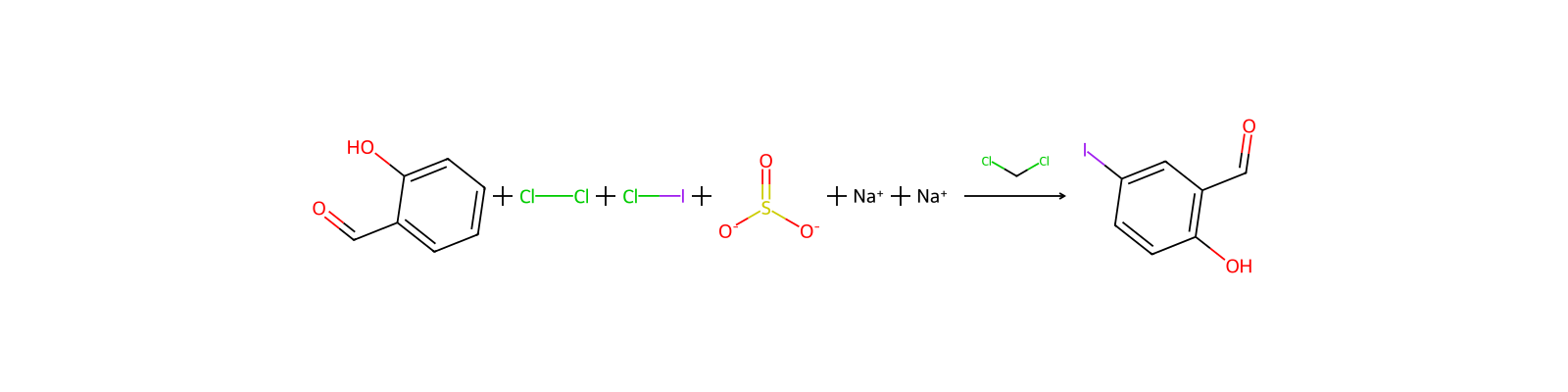
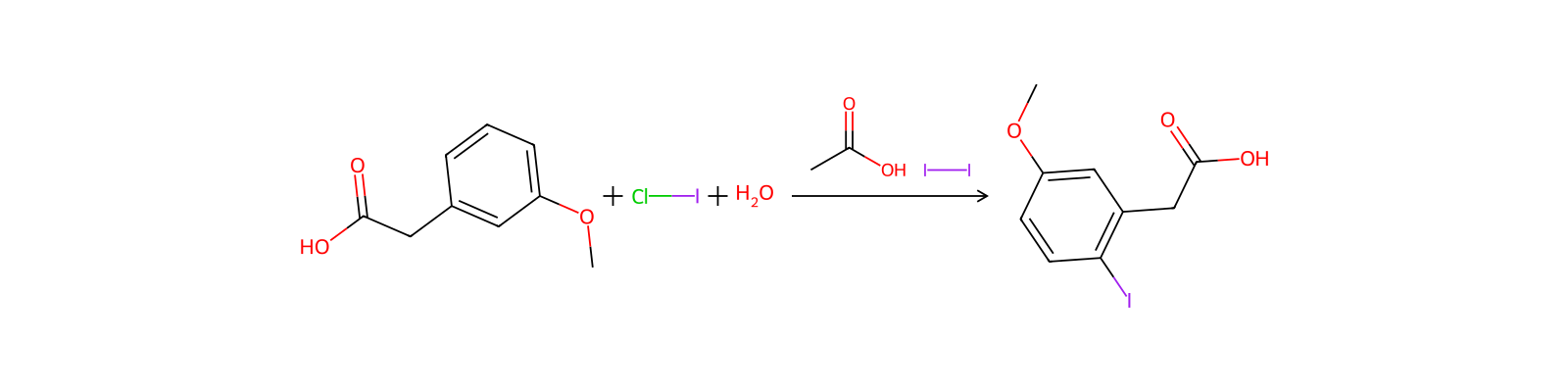
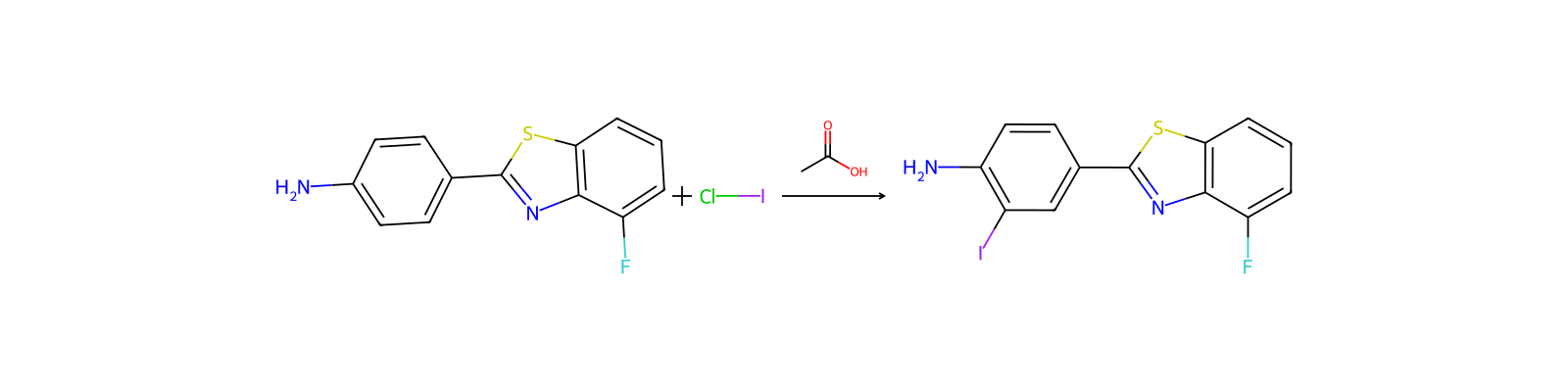
使用Iodine monochloride is used to estimate theiodine values of fats and oils and as a topicalanti-infective (Merck 1996). For determination of iodine absorption number of fats Iodine monochloride is used as a catalyst in organic synthesis. It is the source of electrophilic iodine in the synthesis of certain aromatic iodides.
調製方法
製造方法Iodine monochloride is prepared by the action of liquid or dry chlorine on astoichiometric quantity of solid iodine. Aqueous solutions of ICl are preparedby passing chlorine gas into a suspension of iodine in moderately stronghydrochloric acid: 5I2 + 4HCl + 3Cl2 → 10ICl + 2H2 Alternatively, iodine monochloride may be made by oxidation of iodine withiodic acid in strong hydrochloric acid solution: 2I2 + HIO3 + 2HCl → 2ICl + 3HIO
純化方法Purify it by repeated fractional crystallisation from its melt at low temperatures. The black crystals melt to a red-brown liquid. [Cornog & Karges Inorg Synth I 165 1939.]
上流・下流製品情報
下流製品
サプライヤー50 社
国药集团化学试剂有限公司86-21-63210123 · [email protected]
北京华美互利生物化工010-56205725 · [email protected]
上海阿拉丁生化科技股份有限公司400-6206333 13167063860 · [email protected]
上海莉凯化工技术有限公司16628776521 · [email protected]
合肥翰刚医药科技有限公司+8618062405514 · [email protected]
上海泰矶林实业有限公司02150630626 17717886015 · [email protected]
青岛拓海碘制品有限公司18669835223 · [email protected]
Baoji Guokang Healthchem co.,ltd+8615604608665 15604608665 · [email protected]
Dayang Chem (Hangzhou) Co.,Ltd.+86-0571-88938639 17705817739 · [email protected]
上海迈瑞尔生化科技有限公司4006356688 18621169109 · [email protected]
阿法埃莎(中国)化学有限公司400-6106006 · [email protected]
安耐吉化学&3A(安徽泽升科技股份有限公司)400-0056266 · [email protected]
武汉卡诺斯科技有限公司027-83238443 15327105076 · [email protected]
上海瀚鸿科技股份有限公司021-54306202 13764082696 · [email protected]
上海景颜化工科技有限公司13817811078 · [email protected]
池州捷峰生物科技有限公司0566-8928158 · [email protected]
上海忆嵘生物科技有限公司18049974220 · [email protected]
山东西亚化学有限公司13355009207 13355009207 · [email protected]
HONG KONG IPURE BIOLOGY CO.,LIMITED86 18062405514 18062405514 · [email protected]
四川库利南科技有限公司400-1166-196 18981987031 · [email protected]
天津希恩思生化科技有限公司400 638 7771 · [email protected]
Xiamen AmoyChem Co., Ltd+86-86-5926051114 · [email protected]
河南萬象化工有限公司(优势生产供应!)0371-56669001 13949088811 · [email protected]
南京维奥化工有限公司Please Send Email 18652950785 · [email protected]
南京化学试剂股份有限公司025-58369808 17895012682 · [email protected]
斯百全化学(上海)有限公司021-021-021-67601398-809-809-809 15221380277 · [email protected]
艾科试剂4008-755-333 18080918076 · [email protected]
赛默飞世尔科技(中国)有限公司800-810-5118 · [email protected]
北京伊诺凯科技有限公司400-810-7969 010-59572699 · [email protected]
深圳康特腾科技有限公司86-0755-86635001 · [email protected]
越林试剂021-62960152 · [email protected]
上海泽信化工科技有限公司021-60136491 15901897992
宁波台康化工有限公司0574-87365517 18074210286 · [email protected]
北京环宇世纪化学科技有限公司hysj_bj.com
上海湄水化工科技有限公司021-60549325 18616193163
上海将来实业股份有限公司021-61552785 · [email protected]
HBCChem, Inc.+1-510-219-6317 · [email protected]
美岚实业(上海)有限公司021-58958189 · [email protected]
上海爱蝶实业有限公司021-58957966 18930537195 · [email protected]
成都零六生物科技有限公司400-1166-196 13458535857 · [email protected]
广拓化学(上海)有限公司021-60899189-8001 18918189673 · [email protected]
上海御略医药科技有限公司021-60345187 13671753212 · [email protected]
上海德榜化工有限公司021-61531158 · [email protected]
上海麦克林生化科技股份有限公司15221275939 15221275939 · [email protected]
杭州杰恒化工有限公司0571-87396432 · [email protected]
上海嵩爰化工科技有限公司010-1234567 18521000990 · [email protected]
上海有朋化工有限公司021-69005955 13701776567 · [email protected]
江苏艾康生物医药研发有限公司025-66028182 17714375163 · [email protected]
上海凯赛化工有限公司021-33516722 13701817765 · [email protected]
上海彤源化工有限公司021-021-69182866 13701855675 · [email protected]
関連反応
789 件




関連ノート
読み込み中…