
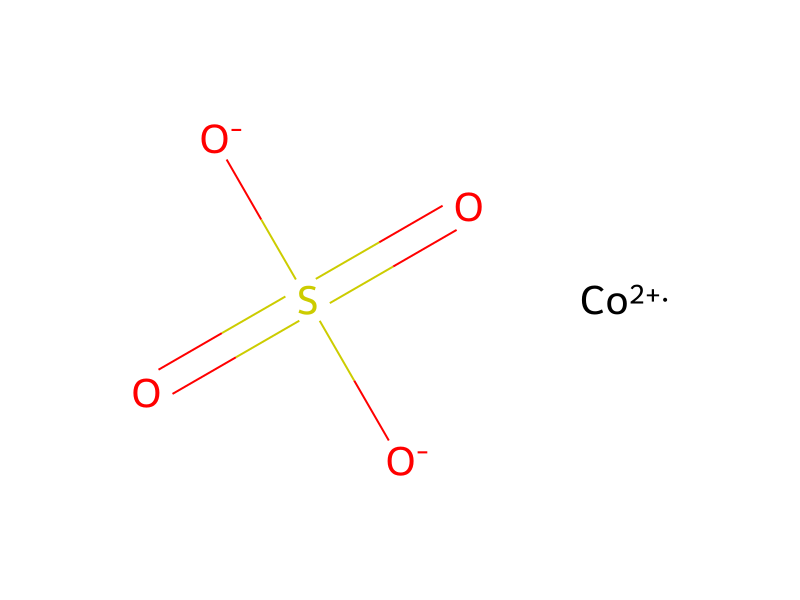
基本情報
- 標準SMILES
O=S(=O)([O-])[O-].[Co+2]- InChIKey
KTVIXTQDYHMGHF-UHFFFAOYSA-L- 分子式
- CoO4S
- 平均分子量
- 155 g/mol
- 単同位体質量
- 154.884923
名称と識別子
- 優先名称
- Cobalt Sulfate
- IUPAC
- cobalt(2+) sulfate
- 現地名
- 硫酸コバルト(II)
- 英語名
- Cobalt sulfate
- 分子式
- CoO4S
- 分子量
- 155
名称と別名
Cobalt sulfateCobaltous sulfateCobalt(2+) sulfate10124-43-3Cobalt(II) sulfateCobalt BrownCobalt monosulfateCobalt(II) sulphateCobalt (2+) sulfateCobalt sulfate (1:1)Cobalt(II) sulfate (1:1)Cobalt sulfate (CoSO4)
名称をさらに表示
硫酸コバルト(II)硫酸第一コバルト乾燥硫酸コバルト硫酸コバルト硫酸コバルト(Ⅱ)Cobalt Sulphatecobaltsulfate(coso4)CobaltsulfatC026305cobaltbrownCOBATOUSSULPHATEKobalt(II)-sulfat
Sulfuric acid, cobalt(2+) salt (1:1)Cobaltous sulfate salt (1:1)CoSO4H7965X29HXCOBALTOUS SULPHATECOBALT(2+) SULPHATEDTXSID1031042CHEBI:53470
データベース識別子
- CAS
10124-43-3- PubChem CID
- 24965
- DTXSID
DTXSID1031042- ChEBI
CHEBI:53470- UNII
- H7965X29HX
- EC Number
- 233-334-2
- Nikkaji
- J43.793J
物性
構造計算による物性
- 極性表面積
- 88.6 Ų
- 水素結合供与体数
- 0
- 水素結合受容体数
- 4
- 回転可能結合数
- 0
- 重原子数
- 6
- 形式電荷
- 0
- 複雑度
- 62
実験および物理化学的性質
pHAcidic salts, such as cobalt sulfate ... resulting aqueous solutions contain moderate concentrations of hydrogen ions and have pH's of less than 7.0. They react as acids to neutralize bases.
OdorOdorless
Density
1.948 at 68 °F (USCG, 1999) - Denser than water; will sink
3.71 at 25 °C/4 °C
Light red crystalline solid; loses waters of crystallization when heated above 42 °C, producing the monohydrate at 100 °C and anhydrous salt above 250 °C; density: 2.01 kg/L at 25 °C /Cobalt(II) sulfate hexahydrate/
Density: 1.948 g/cu cm; loses heptahydrate at 420 °C /Cobalt(II) sulfate heptahydrate/
3.71 g/cm³
3.71 @25 °C
Color/Form
Red to lavender dimorphic, othorhombic crystals
Red orthorhombic crystals
Red powder
Rose-pink solid
Solubility
Odorless; heat of solution: 23 BTU/lb= 13 cal/g= 0.54X10+5 J/kg; solubility: 35.040 lb/100 lb water at 70 °F /Cobaltous sulfate heptahydrate/
In water, 330 g/L at 20 °C
38.3 g/100 g water at 25 °C
Dissolves slowly in boiling water
84 g/100 mL water at 100 °C
For more Solubility (Complete) data for Cobaltous sulfate (6 total), please visit the HSDB record page.
Decomposition
When heated to decomposition it emits toxic fumes of SOx
The substance decomposes on heating to 735 /deg/ C, producing toxic fumes of sulfur oxides
When heated to decomposition it emits toxic vapors of SOx and Co. /Cobalt sulfate heptahydrate/
735 °C. This produces toxic fumes of sulfur oxides. The dust reacts with strong oxidants. This generates fire and explosion hazard.
Melting Point
735 °C
735 °C
Physical Description
Cobalt sulfate is an odorless rose-pink solid. Sinks and mixes with water. (USCG, 1999)
Dry Powder; Large Crystals; Large Crystals; Liquid; Dry Powder; Large Crystals
Red to lavender solid; [Merck Index] Blue odorless powder; Soluble in water (362 g/L at 20 deg C); [MSDSonline]
LAVENDER-TO-DARK-BLUE CRYSTALS.
Stability/Shelf LifeStable to 708 °C.
Relative Evaporation RateEvaporation at 20 °C is negligible
Other Experimental Properties
Stable to 708 °C
Mol wt: 281.10; red-pink, monoclinic crystals; index of refraction: 1.477, 1.483, 1.489; density: 1.948 at 25 °C/25 °C; MP: 96.8 °C; BP: 420 °C (loses 7H2O); solubility: 60.4 g/100 cc water at 3 °C, 67 g/100 cc water at 70 °C, 2.5 g/100 cc alcohol at 3 °C, 54.5 g/100 cc methanol at 18 °C /Cobaltous sulfate heptahydrate/
Mol wt: 263.08; red monoclinic crystals; index of refraction: 1.531, 1.549, 1.552; density: 2.019 at 15 °C/15 °C; MP: 95 °C (loses 2H2O) /Hexahydrate/
Mol wt: 173.011; red monoclinic crystals; density: 3.08 g/cu cm; water solubility 38.3 g/100 g water at 25 °C /Cobaltous sulfate monohydrate/
Pink to red monoclinic, prismatic crystals; on heating dehydrates to the hexahydrate (monoclinic prismatic crystala) at 41.5 °C, and to the monohydrate at 71 °C. /Cobaltous sulfate heptahydrate/
Structure reported to be Co(H2SO5) /Cobaltous sultate monohydrate/
物理化学的性質
- 融点
- 1140 ℃ · decomposes at 1140℃ [JAN85]
- 比重(密度)
- 425 · d425 3.71
- 蒸気圧
- 0 Pa · 0Pa at 20℃
- 屈折率
- 1.639 · 1.639
- 溶解性
- 2 O: · H2O: 可溶
- 外見
- 赤い斜方晶
- 色
- red orthorhombic crystals, crystalline
- 臭い (Odor)
- Odorless
- 水溶解度
- 6 · 沸騰水にゆっくり溶かす[MER06]; g/100g 水溶液: 19.7±0.1(0℃), 27.2±0.1(25℃), 27.8(100℃); 固相, CoSO4・7H2O(0℃,25℃) ,CoSO4・H2O(100℃)[KRU93]
- Merck
- 13 · 13,2473
- InChI
- InChI=1S/Co.H2O4S.H2O/c;1-5(2,3)4;/h;(H2,1,2,3,4);1H2/q+2;;/p-2
- InChIKey
- BGORGFZEVHFAQU-UHFFFAOYSA-L
- SMILES
- S([O-])([O-])(=O)=O.O.[Co+2]
- LogP
- -1.031 · -1.031 (est)
- CAS データベース
- 10124 · 10124-43-3(CAS DataBase Reference)
- NISTの化学物質情報
- Cobalt sulfate(10124-43-3)
- EPAの化学物質情報
- Cobalt(II) sulfate (10124-43-3)
化学的性質
化学的特性Red powder or rose pink crystalline solid. Odorless.
安全と法規制
GHS分類
GHS Classification
Danger
H302: Harmful if swallowed [Warning Acute toxicity, oral];H317: May cause an allergic skin reaction [Warning Sensitization, Skin];H334: May cause allergy or asthma symptoms or breathing difficulties if inhaled [Danger Sensitization, respiratory];H341: Suspected of causing genetic defects [Warning Germ cell mutagenicity];H350i: May cause cancer by inhalation [Danger Carcinogenicity];H360F ***: May damage fertility [Danger Reproductive toxicity];H400: Very toxic to aquatic life [Warning Hazardous to the aquatic environment, acute hazard];H410: Very toxic to aquatic life with long lasting effects [Warning Hazardous to the aquatic environment, long-term hazard]
P203, P233, P260, P261, P264, P270, P271, P272, P273, P280, P284, P301+P317, P302+P352, P304+P340, P318, P321, P330, P333+P317, P342+P316, P362+P364, P391, P403, P405, and P501 (click each P-code to see the statement)
Danger
危険有害性情報
Regulatory Information
Chemical: Sulfuric acid, cobalt(2+) salt (1:1)
Hazard Traits - Carcinogenicity; Reproductive Toxicity; Respiratory Toxicity;Authoritative List - EC Annex VI CMRs - Cat. 1B; EC Annex VI Resp. Sens. - Cat. 1; NTP RoC - reasonable; Prop 65;Report - regardless of intended function of ingredient in the product
Sulfuric acid, cobalt(2+) salt (1:1) is listed on the EPA's Chemical Data Reporting (CDR) system. Manufacturers and importers of Sulfuric acid, cobalt(2+) salt (1:1) are required to report information about their production and use of this chemical to the EPA under the Toxic Substances Control Act (TSCA). (40 eCFR Part 711)
Status: Active Update: 30-03-2023 https://echa.europa.eu/registration-dossier/-/registered-dossier/15094;Status: Active Update: 03-11-2010 https://echa.europa.eu/registration-dossier/-/registered-dossier/1428
Substance: Cobalt(II) sulphate;EC: 233-334-2;Date of inclusion: >15-Dec-2010;Reason for inclusion: Carcinogenic (Article 57a); Toxic for reproduction (Article 57c)
Cobalt (II) sulphate: Does not have an individual approval but may be used under an appropriate group standard
Other Safety InformationIMAP assessments - Soluble cobalt (II) and salts: Human health tier II assessment
Fire Hazards
Special Hazards of Combustion Products: Toxic cobalt oxide fumes may form in fire. (USCG, 1999)
Not combustible. Gives off irritating or toxic fumes (or gases) in a fire.
Health HazardsInhalation causes shortness of breath and coughing; permanent disability may occur. Ingestion causes pain and vomiting. Contact with eyes or skin causes irritation. (USCG, 1999)
Hazards SummaryMay cause skin sensitization and asthma after prolonged contact; [ICSC] An irritant; May cause skin and respiratory sensitization after prolonged contact; [MSDSonline] See Cobalt.
FDA Requirements
Trace minerals added to animal feeds. These substances added to animal feeds as nutritional dietary supplements are generally recognized as safe when added at levels consistent with good feeding practice. All substances listed may be in anhydrous or hydrated form. Cobalt sulfate is included on this list.
Reactive GroupSalts, Acidic
EC ClassificationSymbol: T, N; R: 49-60-22-42/43-68-50/53; S: 53-45-60-61; Note: E, 1
Special Reports
DHHS/NTP; NTP Report on the Toxicity Studies of Cobalt Sulfate Heptahydrate in F344/N Rats and B6C3F1 Mice (Inhalation Studies) NTP TOX 5 (1991) NIH Pub No. 91-3124
National Toxicology Program. Eleventh Report on Carcinogens (2005). The Report on Carcinogens is an informational scientific and public health document that identifies and discusses substances (including agents, mixtures, or exposure circumstances) that may pose a carcinogenic hazard to human health. Cobaltous Sulfate (10124-43-3) is listed as reasonably anticipated to be a human carcinogen.[Available from, as of July 31, 2009: http://ntp.niehs.nih.gov/ntp/roc/eleventh/profiles/s048zcob.pdf]
Reactivity Profile
Acidic salts, such as COBALT SULFATE, are generally soluble in water. The resulting solutions contain moderate concentrations of hydrogen ions and have pH's of less than 7.0. They react as acids to neutralize bases. These neutralizations generate heat, but less or far less than is generated by neutralization of inorganic acids, inorganic oxoacids, and carboxylic acid. They usually do not react as either oxidizing agents or reducing agents but such behavior is not impossible. Many of these compounds catalyze organic reactions.
Atmospheric Standards
Listed as a hazardous air pollutant (HAP) generally known or suspected to cause serious health problems. The Clean Air Act, as amended in 1990, directs EPA to set standards requiring major sources to sharply reduce routine emissions of toxic pollutants. EPA is required to establish and phase in specific performance based standards for all air emission sources that emit one or more of the listed pollutants. Cobaltous sulfate is included on this list.
Chemical DangersDecomposes at 735 °C. This produces toxic fumes of sulfur oxides. The dust reacts with strong oxidants. This generates fire and explosion hazard.
安全と保護具
Fire FightingIn case of fire in the surroundings, use appropriate extinguishing media.
First Aid Measures
Fresh air, rest. Refer for medical attention.
Remove contaminated clothes. Rinse and then wash skin with water and soap. Seek medical attention if you feel unwell.
First rinse with plenty of water for several minutes (remove contact lenses if easily possible), then refer for medical attention.
Rinse mouth. Give one or two glasses of water to drink. Refer for medical attention .
First Aid
INHALATION: move to fresh air; if breathing has stopped, begin artificial respiration and call a doctor.;INGESTION: give large amount of water; induce vomiting; call a doctor.;EYES: flush with water for at least 15 min.; consult a physician if irritation persists.;SKIN: flush with water. (USCG, 1999)
Safe StorageSeparated from strong oxidants. Store in an area without drain or sewer access. Provision to contain effluent from fire extinguishing.
Firefighting HazardsHigh concentrations of dust may present a dust explosion hazard.
Exposure Control and Personal ProtectionBiological Exposure Indices (BEI) [ACGIH] - Cobalt in urine = 15 ug/L; sample at end of shift at end of workweek;
Fire Fighting ProceduresSpecial firefighting procedures: None required; however, when fighting chemical fires, self-contained breathing apparatus and protective clothing is recommended.
Storage Conditions
Separated from strong oxidants.
This material should be stored in sealed containers to avoid dampness and dust. Partly used containers should be sealed. Otherwise, no special precautions are required.
Cleanup Methods
The spill should first be contained and the area should be cleaned by wet-sweeping or vacuum cleaning (HEPA filter). Minimize the creation of dust. Approved NIOSH respirator for dust should be worn.
Liquid material spills can be copiously flushed with water and channeled to a treatment system or holding tank for reclamation or proper disposal. Spills of dry material can be removed by vacuuming or wet mopping. Some spills can be removed by hosing, first with a mist of water to dampen the spilled material and then with a more forceful stream that flushes it into a holding tank or other facility for handling contaminated water. Work surfaces or contaminated clothing should never be cleaned by dry sweeping or blowing with pressurized hoses. Recovery systems used to reclaim waste metals should comply with federal, state, and local regulations. All waste materials generated in the handling of cobalt-containing substances should be disposed of in compliance with federal, state, and local regulations. /Cobalt and cobalt salts/
Disposal Methods
SRP: Recycle any unused portion of the material for its approved use or return it to the manufacturer or supplier. Ultimate disposal of the chemical must consider: the material's impact on air quality; potential migration in air, soil or water; effects on animal, aquatic and plant life; and conformance with environmental and public health regulations. If it is possible or reasonable use an alternative chemical product with less inherent propensity for occupational harm/injury/toxicity or environmental contamination.
Sweep spilled substance into containers; if appropriate, moisten first to prevent dusting. Carefully collect remainder, then remove to safe place. Do NOT let this chemical enter the environment.
Spillage Disposal
Personal protection: particulate filter respirator adapted to the airborne concentration of the substance. Do NOT let this chemical enter the environment. Sweep spilled substance into covered containers. If appropriate, moisten first to prevent dusting. Carefully collect remainder. Then store and dispose of according to local regulations.
Preventive Measures
Handling: Keep from freezing. Avoid contact with skin and eyes. Avoid breathing dust. Use only with adequate ventilation. Always use gloves and safety glasses when opening/emptying containers or processing this material. Do not eat or drink in work area. Wash in soap and water after exposure to any dust.
Use local exhaust ventilation directed towards the source of dust and which is adequate to limit personal exposure to levels which do not exceed the PEL or TLV. If such equipment is not available use respirators ... .
SRP: Local exhaust ventilation should be applied wherever there is an incidence of point source emissions or dispersion of regulated contaminants in the work area. Ventilation control of the contaminant as close to its point of generation is both the most economical and safest method to minimize personnel exposure to airborne contaminants. Ensure that the local ventilation moves the contaminant away from the worker.
Employers should institute programs that emphasize good personal hygiene to prevent skin and respiratory irritation caused by cobalt containing dusts. After working with cobalt products, workers should thoroughly wash their hands and face before drinking, eating, or smoking. If skin contact with cobalt solutions occurs, the worker should wash the affected skin promptly. The employer should provide showers if workers have substantial contact with cobalt. These workers should be encouraged to wash or shower after each workshift. Employers should prohibit smoking or carrying of tobacco products, and should prohibit eating, food handling, or food storage within the work area. /Cobalt and cobalt salts/
For more Preventive Measures (Complete) data for Cobaltous sulfate (6 total), please visit the HSDB record page.
毒性情報
TreatmentTreatment of cobalt poisoning is symptomatic. (L29)
Interactions
The present study was carried out to investigate clearance of protoporphyrin IX (PpIX) in the presence of metal ions in the cream applied on healthy skin of mice in vivo. The photosensitizer PpIX was induced in normal mouse skin by topical application of 5-aminolevulinic acid (ALA). Fluorescence spectroscopy was used to study porphyrin kinetics. Topical application of ferrous, cobalt or zinc sulfate significantly diminished the fluorescence of PpIX in mouse skin. These results show that the clearance kinetics of PpIX observed after exogenous application of ALA are determined by the conversion of PpIX into heme, and not by the clearance of PpIX from the body. Application of a vehicle containing ferrous or cobalt sulfate after photodynamic therapy might be an approach in clinical practice for the reduction of cutaneous photosensitivity and elimination of undesirable photoreactions in skin and lesions.
Near toxic concentrations of cadmium sulfate, mercuric chloride, and nickel sulfate reduced interferon action in tissue cultures, but increased intake by the intact mouse of lead acetate and mercuric chloride did not reduce interferon action. Lead and nickel given orally inhibited the protective activity of Newcastle disease virus against encephalomyocarditis virus-induced mortality, whereas cadmium, mercury, cobalt sulfate, and sodium arsenite given orally and deficiency of zinc did not influence this action. Excess lead and cobalt and deficiency of zinc, but not excess cadmium, mercury, or nickel, inhibited the protective activity of poly I/poly C against encephalomyocarditis virus-induced mortality. These results illustrate the various actions of increased concentrations of certain metals or a deficiency of zinc on interferon action or on actions of interferon inducers.
In rats a combination of a protein deficient diet and cobalt administration, resulted in severe cardiomyopathy, showing cardiac damage remarkably similar to that seen in humans. Rats were preconditioned to protein restriction for ten days (4% casein in diet), then received cobalt sulfate by oral gavage for two weeks. Cobalt sulfate, containing from 4.0 to 12.5 mg cobalt/kg bw/day was administered, severe cardiomyopathy was seen in those animals receiving 12.5 mg cobalt/kg bw/day in combination with the low protein diet.
Health EffectsExposure to high amount of cobalt can cause heart, lung, kidney, and liver damage. Skin contact is known to result in contact dermatitis. Cobalt may also have mutagenic and carcinogenic effects. (L29, L30)
Ecotoxicity Values
EC50; Species: Tetrahymena pyriformis (Ciliate) exponential growth phase (log), stratin GL 1000 cells/mL; Conditions: freshwater, static, 25 °C, pH 7; Concentration: 4890 ug/L for 1 hr; Effect: biochemistry, decreased fluorescence /> or =98% purity/
LC50; Species: Daphnia magna (Water Flea) age 12 hr neonate, fed; Conditions: freshwater, static, 20.4 °C, pH 8.35, hard water, alkalinity 234 mg/L CaCO3, dissolved oxygen 7.93 mg/L; Concentration: 7370 ug/L for 48 hr /Technical/
LC50; Species: Daphnia magna (Water Flea) age 12 hr neonate, not fed; Conditions: freshwater, static, 20.4 °C, pH 8.35, hard water, alkalinity 234 mg/L CaCO3, dissolved oxygen 7.93 mg/L; Concentration: 6830 ug/L for 48 hr (95% confidence interval: 5100-8990 ug/L) /Technical/
LC50; Species: Daphnia magna (Water Flea) organisms at different life stages, neonate-adult; Conditions: freshwater, renewal, 20.3 °C, pH 8.31, hard water, alkalinity 198 mg/L CaCO3, dissolved oxygen 7.44 mg/L; Concentration: 27 ug/L for 28 days /Technical/
For more Ecotoxicity Values (Complete) data for Cobaltous sulfate (9 total), please visit the HSDB record page.
Environmental Fate
ATMOSPHERIC FATE: Inorganic cobalt compounds are nonvolatile and released into the atmosphere in particulate form(1). Particulate-phase cobalt compounds are removed from the air by wet and dry deposition(SRC). Cobalt has been detected in atmospheric deposition(2) and in rain-snow precipitation(3).
Adverse Effects
Skin Sensitizer - An agent that can induce an allergic reaction in the skin.;Asthma - Reversible bronchoconstriction (narrowing of bronchioles) initiated by the inhalation of irritating or allergenic agents.;IARC Carcinogen - Class 2: International Agency for Research on Cancer classifies chemicals as probable (2a), or possible (2b) human carcinogens.;NTP Carcinogen - Reasonably anticipated to be a human carcinogen.
Exposure Routes
The substance can be absorbed into the body by inhalation and by ingestion.
Inhalation (L29) ; oral (L29) ; dermal (L29)
Toxicity Summary
IDENTIFICATION: Cobalt sulfate is a red powder. It is used in storage batteries; in cobalt-electroplating baths; as drier for lithographic inks, and varnishes; in ceramics, enamels, and glazes to prevent discoloring; in cobalt pigments for decorating porcelain. HUMAN EXPOSURE AND TOXICITY: Cardiomyopathy has been observed in individuals who consume large quantities of beer where cobalt sulfate was added as a foam stabilizer. Repeated or prolonged contact may cause skin sensitization. Repeated or prolonged inhalation exposure may cause asthma. The substance may have effects on the heart, thyroid and bone marrow, resulting in cardiomyopathy, goiter and polycythemia. ANIMAL STUDIES: Rats and mice exposed short term to cobalt sulfate by inhalation exhibited necrosis and inflammation of the respiratory tract epithelium. Rats developed thymus necrosis and testicular atrophy. Rats exposed for 2-3 months to cobalt sulfate in the diet for 24 weeks had significant reductions in heart enzyme activity levels. Rats and mice were exposed to cobalt sulfate heptahydrate by inhalation 6 hr/day, 5 days/week for 13 weeks developed adverse effects throughout the respiratory system. At higher concentrations both rats and mice developed squamous metaplasia of the larynx. At high doses, rats developed chronic inflammation of the larynx along with more severe effects in the nose, larynx and lung. Mice exhibited acute inflammation of the nose, larynx and lungs. Mice also exhibited hyperplasia of the mediastinal lymph nodes and testicular atrophy and increased esterous cycle in females. Both rats and mice exhibited histiocytic infiltrates of the lung at similar exposure levels. Sperm motility was decreased in mice and mice that received high dosages developed increased abnormal sperm and decreased testis and epididymal weights. Rats exposed for 2-3 months of copper sulfate in the diet exhibited increased heart weight and degenerative heart lesions. Rats exposed to cobalt sulfate in their die
Cobalt is believed to exhibit its toxicity through a oxidant-based and free radical-based processes. It produces oxygen radicals and may be oxidized to ionic cobalt, causing increased lipid peroxidation, DNA damage, and inducing certain enzymes that lead to cell apoptosis. Cobalt has also been shown to block inorganic calcium channels, possibly impairing neurotransmission. Cobalt can also chelate lipoic acids, impairing oxidation of pyruvate or fatty acids. In addition, cobalt may inhibit DNA repair by interacting with zinc finger DNA repair proteins, and has also been shown to inhibit heme synthesis and glucose metabolism. Cobalt may activate specific helper T-lymphocyte cells and interact directly with immunologic proteins, such as antibodies (IgA and IgE) or Fc receptors, resulting in immunosensitization. (L29)
Signs and Symptoms
Cough. Sore throat. Shortness of breath.
Redness. Pain.
Nausea. Vomiting. Abdominal pain.
Cobalt inhalation can cause asthma-like breathing problems. Skin contact is known to result in contact dermatitis, which is characterized by irritation and rashes. Ingesting large amounts of cobalt may cause nausea and vomiting. (L2090)
Ongoing Test Status
The following link will take the user to the National Toxicology Program (NTP) Test Status of Agents Search page, which tabulates the results and current status of tests such as "Short-Term Toxicity Studies", "Long-term Carcinogenicity Studies", "Developmental Studies", "Genetic Toxicology Studies", etc., performed with this chemical. Testing status for cobalt sulfate heptahydrate is available. /Cobalt sulfate heptahydrate/[Available from, as of March 24, 2017: https://ntpsearch.niehs.nih.gov/?e=True&ContentType=Testing+Status]
ICSC Environmental DataThe substance is toxic to aquatic organisms. The substance may cause long-term effects in the aquatic environment. It is strongly advised not to let the chemical enter into the environment.
Natural Pollution SourcesCobaltous sulfate (hexahydrate/heptahydrate) occurs in nature as the mineral bieberite(1,2). Bieberite is an uncommon oxidation product of cobalt-bearing sulfide-arsenides minerals(3).
法規制情報
Regulatory Information
Chemical: Sulfuric acid, cobalt(2+) salt (1:1)
Hazard Traits - Carcinogenicity; Reproductive Toxicity; Respiratory Toxicity;Authoritative List - EC Annex VI CMRs - Cat. 1B; EC Annex VI Resp. Sens. - Cat. 1; NTP RoC - reasonable; Prop 65;Report - regardless of intended function of ingredient in the product
Sulfuric acid, cobalt(2+) salt (1:1) is listed on the EPA's Chemical Data Reporting (CDR) system. Manufacturers and importers of Sulfuric acid, cobalt(2+) salt (1:1) are required to report information about their production and use of this chemical to the EPA under the Toxic Substances Control Act (TSCA). (40 eCFR Part 711)
Status: Active Update: 30-03-2023 https://echa.europa.eu/registration-dossier/-/registered-dossier/15094;Status: Active Update: 03-11-2010 https://echa.europa.eu/registration-dossier/-/registered-dossier/1428
Substance: Cobalt(II) sulphate;EC: 233-334-2;Date of inclusion: >15-Dec-2010;Reason for inclusion: Carcinogenic (Article 57a); Toxic for reproduction (Article 57c)
Cobalt (II) sulphate: Does not have an individual approval but may be used under an appropriate group standard
FDA Requirements
Trace minerals added to animal feeds. These substances added to animal feeds as nutritional dietary supplements are generally recognized as safe when added at levels consistent with good feeding practice. All substances listed may be in anhydrous or hydrated form. Cobalt sulfate is included on this list.
Atmospheric Standards
Listed as a hazardous air pollutant (HAP) generally known or suspected to cause serious health problems. The Clean Air Act, as amended in 1990, directs EPA to set standards requiring major sources to sharply reduce routine emissions of toxic pollutants. EPA is required to establish and phase in specific performance based standards for all air emission sources that emit one or more of the listed pollutants. Cobaltous sulfate is included on this list.
安全データ
- wgk
- 2
- tsca
- TSCA listed
- ridadr
- UN 3082 9/PG 3
- risk_code
- 49-42/43-51/53-50/53-22-68-60
- hazard_code
- T,N
- safety_code
- 53-23-36/37-45-61-60-22
- Hazard Classifications
- Acute Tox. 4 OralAquatic Acute 1Aquatic Chronic 1Carc. 1B InhalationEye Irrit. 2Muta. 2Repr. 1BResp. Sens. 1Skin Sens. 1
- ストレージクラス
- 6.1C - Combustible acute toxic Cat.3toxic compounds or compounds which causing chronic effects
- 有毒物質データの
- 10124-43-3(Hazardous Substances Data)
化学と産業
薬理情報
Mechanism of Action
Cellular metabolism depends on the availability of oxygen and the major regulator of oxygen homeostasis is hypoxia-inducible factor 1 (HIF-1), a highly conserved transcription factor that plays an essential role in cellular and systemic homeostatic responses to hypoxia. HIF-1 is a heterodimeric transcription factor composed of hypoxia-inducible HIF-1alpha and constitutively expressed HIF-1beta. Under hypoxic conditions, the two subunits dimerize, allowing translocation of the HIF-1 complex to the nucleus where it binds to hypoxia-response elements (HREs) and activates expression of target genes implicated in angiogenesis, cell growth, and survival. The HIF-1 pathway is essential to normal growth and development, and is involved in the pathophysiology of cancer, inflammation, and ischemia. Thus, there is considerable interest in identifying compounds that modulate the HIF-1 signaling pathway. To assess the ability of environmental chemicals to stimulate the HIF-1 signaling pathway, we screened a National Toxicology Program collection of 1408 compounds using a cell-based beta-lactamase HRE reporter gene assay in a quantitative high-throughput screening (qHTS) format. Twelve active compounds were identified. These compounds were tested in a confirmatory assay for induction of vascular endothelial growth factor, a known hypoxia target gene, and confirmed compounds were further tested for their ability to mimic the effect of a reduced-oxygen environment on hypoxia-regulated promoter activity. Based on this testing strategy, three compounds (o-phenanthroline, iodochlorohydroxyquinoline, cobalt sulfate heptahydrate) were confirmed as hypoxia mimetics, whereas two compounds (7-diethylamino-4-methylcoumarin and 7,12-dimethylbenz(a)anthracence) were found to interact with HIF-1 in a manner different from hypoxia. /Cobalt sulfate heptahydrate/
Metabolism/Metabolites
Cobalt is absorbed though the lungs, gastrointestinal tract, and skin. Since it is a component of the vitamin B12 (cyanocobalamin), it is distributed to most tissues of the body. It is transported in the blood, often bound to albumin, with the highest levels being found in the liver and kidney. Cobalt is excreted mainly in the urine and faeces. (L29)
Absorption, Distribution and Excretion
The effects of cobalt sulfate administered to pregnant C57BI mice, OFA-SD rats, and New Zealand rabbits was studied on fetal and postnatal offspring. Cobalt concentration in the maternal blood was increased in proportion to the administered doses. Cobalt crossed the placenta and appeared in the fetal blood and amniotic fluid. Regardless of the administered dose of cobalt sulfate, cobalt concentration in the blood peaked 2 hr after administration.
Sheep given a single dose of hydrated cobalt sulfate were killed. ...The livers contained 400-1200 ppm of cobalt. In cattle dying after a massive overdose of hydrated cobalt sulfate livers contained 5-300 ppm, kidneys 30-200 ppm. /Hydrated cobalt sulfate/
Following longer-term exposure (8 weeks) to cobalt sulfate in the diet, exposed rats showed a 30-fold increase in the cobalt concentration in the myocardium, a 26-fold increase in the concentration in the soleus muscle, and a 100-fold increase in the concentration in serum compared with nonexposed controls. Long-term oral exposure of rats to cobalt chloride resulted in significantly increased levels of cobalt in the liver, kidney, muscle, brain, and testes of treated rats.
Cobalt metabolism and toxicology are summarized. The biological functions of cobalt are updated in the light of recent understanding of cobalt interference with the sensing in almost all animal cells of oxygen deficiency (hypoxia). Cobalt (Co(2+)) stabilizes the transcriptional activator hypoxia-inducible factor (HIF) and thus mimics hypoxia and stimulates erythropoietin (Epo) production, but probably also by the same mechanism induces a coordinated up-regulation of a number of adaptive responses to hypoxia, many with potential carcinogenic effects. This means on the other hand that cobalt (Co(2+)) also may have beneficial effects under conditions of tissue hypoxia, and possibly can represent an alternative to hypoxic preconditioning. Cobalt is acutely toxic in larger doses, and in mammalian in vitro test systems cobalt ions and cobalt metal are cytotoxic and induce apoptosis and at higher concentrations necrosis with inflammatory response. Cobalt metal and salts are also genotoxic, mainly caused by oxidative DNA damage by reactive oxygen species, perhaps combined with inhibition of DNA repair. Of note, the evidence for carcinogenicity of cobalt metal and cobalt sulfate is considered sufficient in experimental animals, but is as yet considered inadequate in humans. Interestingly, some of the toxic effects of cobalt (Co(2+)) have recently been proposed to be due to putative inhibition of Ca(2+) entry and Ca(2+)-signaling and competition with Ca(2+) for intracellular Ca(2+)-binding proteins. The tissue partitioning of cobalt (Co(2+)) and its time-dependence after administration of a single dose have been studied in man, but mainly in laboratory animals. Cobalt is accumulated primarily in liver, kidney, pancreas, and heart, with the relative content in skeleton and skeletal muscle increasing with time after cobalt administration. In man the renal excretion is initially rapid but decreasing over the first days, followed by a second, slow phase lasting several weeks, and
用途と製造
Uses
Used as a pigment (ceramics, glazes, and enamels), catalyst, paint and ink drier, and soil additive; Also used in electroplating, storage batteries, and veterinary medicine (prevent and treat of cobalt-deficiency in ruminants; [HSDB]
Electroplating [Category: Plate];Battery Manufacturing [Category: Industry];Painting (Pigments, Binders, and Biocides) [Category: Paint]
Ceramics making [Category: Hobbies];Enameling [Category: Hobbies]
Usual source of water-soluble cobalt since it is the most economical and it shows less tendency to deliquesc or dehydrate than the chloride or nitrate. Used in storage batteries; in cobalt-electroplating baths; as drier for lithographic inks, varnishes; in ceramics, enamels, glazes to prevent discoloring; in cobalt pigments for decorating porcelain.
Additive to soils, catalyst.
... used in feed supplements.
U.S. Imports(1986) 7.97X10+4 lb
U.S. Production
2023: 1,000,000 - <2,500,000 lb;2022: 400,000 - <550,000 lb;2021: 550,000 - <700,000 lb;2020: 550,000 - <700,000 lb
Non-confidential 2012 Chemical Data Reporting (CDR) information on the production and use of chemicals manufactured or imported into the United States. Chemical: Sulfuric acid, cobalt(2+) salt (1:1). National Production Volume: 1,000,000 - 10,000,000 lb/yr.
Consumer UsesLaboratory chemicals;Processing aids not otherwise specified
Industry UsesProcessing aids not otherwise specified;Plating agent;Intermediate;Pigment;Catalyst;Soil amendments (fertilizers)
Methods of Manufacturing
Action of sulfuric acid on cobaltous oxide.
Cobaltous ... sulfate ... /is/ formed by the interaction of the metal ... hydroxide, or carbonate with /sulfuric/ ... acid.
Formulations/Preparations
Cobalt Brown: a pigment prepared by calcining a mixture of ammonium sulfate, cobalt sulfate, and ferrous sulfate.
Cobalt Vitriol: Cobaltous sulfate, CoSO4.7H2O /Heptahydrate/
Liquid, crystal grades; crystals and soln form, feed, technical and reagent grades
Powder grades; crystal, feed grades /Monohydrate/
General Manufacturing Information
All Other Basic Inorganic Chemical Manufacturing;Pesticide, Fertilizer, and Other Agricultural Chemical Manufacturing;Mining (except Oil and Gas) and support activities;Wholesale and Retail Trade;Primary Metal Manufacturing;Paint and Coating Manufacturing
Sulfuric acid, cobalt(2+) salt (1:1): ACTIVE
応用分野
用途化学物質製造段階の触媒
用途他のコバルト塩と同様、ガラスや陶磁器の彩色用顔料となる他、電池や電気めっき、不可視インク原料としての用途もある。ミネラル補給目的で、飼料に添加される。かつては泡の安定を目的としてビールに添加されたり、貧血の治療薬としても用いられた。
説明The blue, crystalline hydrate Co2(SO4)3.18H2O is prepared by the oxidation of cobalt(II) sulphate in 8N sulphuric acid either electrolytically or chemically with ozone or fluorine. It is stable in the dry state, but is decomposed by water with evolution of oxygen; it is fairly stable in solution in dilute sulphuric acid. Cobalt(III) alums MCo(SO4)2.12H2O (M = K, Rb, Cs or NH4) can be isolated as blue crystals from the mixed cooler solutions of the two sulphates in dilute sulphuric acid. The potassium alum is diamagnetic, the rubidium salt has a magnetic moment less than 1 B.M. and the ammonium alum has a moment of 2.1 B.M. at 304°K. The hydrated sulphate also has a small positive magnetic susceptibility. The sulphate is believed like the alums to contain the [Co(H2O)6]3+ ion.
使用Ceramics, pigments, glazes, in plating baths for cobalt, additive to soils, catalyst, paint and ink drier, storage batteries.
一般的な説明Odorless rose-pink solid. Sinks and mixes with water.
調製方法
純化方法Crystallise it three times from conductivity water (1.3mL/g) between 100o and 0o depending on which hydrate is required. The heptahydrate crystallises below 44o and is efflorescent with m 97o . Between 44o and 70o the monoclinic hexahydrate CoSO4.6H2O m 41.5o is formed, and above 70o the monohydrate CoSO4.H2O m 71o is obtained. The pale reddish or lavender-coloured anhydrous salt is obtained by heating the hydrate above 250o, boiling with conc H2SO4 or heating with (NH4)2SO4).
上流・下流製品情報
下流製品
サプライヤー50 社
北京华美互利生物化工010-56205725 · [email protected]
阿诺西(上海)生物技术有限公司400-1107768 15058188853 · [email protected]
Shandong chuangyingchemical Co., Ltd.18853181302 · [email protected]
南通润丰石油化工有限公司66017690 19952660367 · [email protected]
上海莉凯化工技术有限公司16628776521 · [email protected]
山东隆汇化工有限公司531-88613858 15562516958 · [email protected]
广州纳珑化工有限公司13192879270; 13192879270 · [email protected]
茂名市雄大化工有限公司18607606943 13929797612
济南溪川化工科技有限公司18615562062 · [email protected]
四川华南无机盐有限公司15223036127 · [email protected]
上海光铧科技有限公司13801626616 · [email protected]
杭州品高化工有限公司0571-87658025 · [email protected]
山东欣合新材料有限公司15665828542 15662672320 · [email protected]
天津市恒兴化学试剂制造有限公司022-26772349 15822233318 · [email protected]
武汉零加一化工有限公司15972036926 15972036926 · [email protected]
江苏星科元信息科技有限公司400-605-7200 15335295587
Baoji Guokang Healthchem co.,ltd+8615604608665 15604608665 · [email protected]
Dayang Chem (Hangzhou) Co.,Ltd.+86-0571-88938639 17705817739 · [email protected]
Hebei Yanxi Chemical Co., Ltd.+86-17531190177 · [email protected]
江苏豪隆化工有限公司0513-89083520 13328092525 · [email protected]
陕西林奈生物化工有限公司15327269642 · [email protected]
济南源茂化工有限公司15665725027 18854103888 · [email protected]
江苏普乐司生物科技有限公司0513-66017706 18551496367 · [email protected]
山东宇硕化工有限公司18866159232 18866159232 · [email protected]
武汉市聚舜化工有限公司027-02783261126 18971318572 · [email protected]
济南飞越化工有限公司18615221057 · [email protected]
广东云星生物技术有限公司0751-18902340975/189023400307 18902340307 · [email protected]
湖北晟威新材料有限公司15207170057 15207170057
山东晟腾化工有限公司13688633386 15866781319 · [email protected]
济南圣丰工贸有限公司186-15597515 17615809616
武汉市皇臻生物化工有限公司13795480948 · [email protected]
山东铭耀化工有限公司13287741688
广东大小化工有限公司1866-171603 18666171603 · [email protected]
Xiamen AmoyChem Co., Ltd+86-86-5926051114 · [email protected]
武汉普洛夫生物科技有限公司17612776928 · [email protected]
北京京土恒盛化工科技有限公司00-13911456598 13911456598 · [email protected]
北京环宇世纪化学科技有限公司hysj_bj.com
上海将来实业股份有限公司400-0066400 13621662912 · [email protected]
湖北瑞今化学有限公司027 83642615 13995607107 · [email protected]
上海麦克林生化科技股份有限公司15221275939 15221275939 · [email protected]
上海乾劲化工科技有限公司021-20900665 17321230821 · [email protected]
济南琳盛化工有限公司18769772272 · [email protected]
武汉弘德悦欣医药科技有限公司027-83855396 15271852016
广东翁江化学试剂有限公司0751-2815987 13927875076 · [email protected]
厦门志信化学有限公司+86-5922680277 +86-13806087780 · [email protected]
安耐吉化学&3A(安徽泽升科技股份有限公司)400-0056266 · [email protected]
广东翁江化学试剂有限公司0751-2886766 13927870850 · [email protected]
昆山中莱特贸易有限公司0512-55170668 13913095008;13770601296 · [email protected]
荆州市尹杰化工有限公司18008658728 · [email protected]
启源(广东)医药化工有限公司18026564465 · [email protected]
関連反応
8 件




関連ノート
読み込み中…