反応式

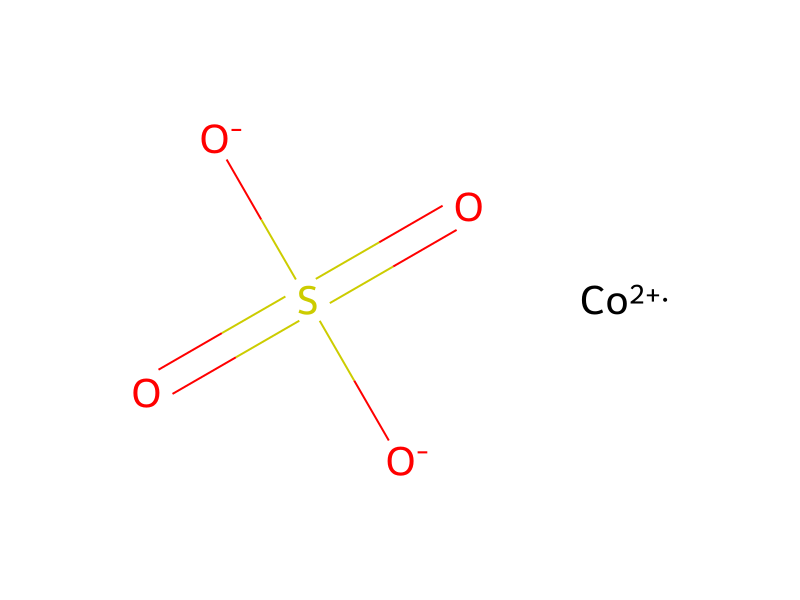
[S:1]([O-:5])([O-:4])(=[O:3])=[O:2].[Co+2:6].[Ni:7].[C:8](=[O:11])([O-:10])[O-:9].[Na+].[Na+]>S([O-])([O-])(=O)=O.[Ni+2].O>[S:1]([O-:5])([O-:4])(=[O:3])=[O:2].[Ni+2:7].[S:1]([O-:5])([O-:4])(=[O:3])=[O:2].[Co+2:6].[C:8](=[O:9])([O-:11])[O-:10].[Co+2:6].[Ni+2:7].[C:8](=[O:9])([O-:11])[O-:10]参加物




実験手順
Subsequently, a mixed solution of nickel sulfate and cobalt sulfate is prepared by dissolving in water nickel sulfate and cobalt sulfate at a molar ratio of Co to Ni of 20%, and a solution of sodium carbonate is added to the mixed solution, and nickel-cobalt carbonate is obtained by co-precipitation. By washing the obtained nickel-cobalt carbonate in water and drying at 80° C. to make it powdery, a nickel-cobalt carbonate (Ni0.8Co0.2CO3) in which secondary particles similar to spherical or elliptic spherical particles in shape have been formed is prepared. By mixing the nickel-cobalt carbonate thus prepared and a lithium hydroxide hydrate of which the D50 value is 30 μm, the D90 value is 50 μm, and in which particles 100 μm or greater in particle size do not exist at a molar ratio of Li/(Ni+Co) of 1/1, and calcining at a temperature of 700° C. in an oxidizing atmosphere for 20 hours and grinding, LiNi0.8Co0.22 is obtained. The lithium composite metal oxide prepared in this manner is Example 15 in Table 2.
出典と根拠
- ORDレコード
- ord-6ec1e7f8b082436d84bec98ed93da7b5
- 出典データセット
- uspto-grants-2001_02
- 特許番号
- US06193946B1
関連ノート
読み込み中…