基本情報
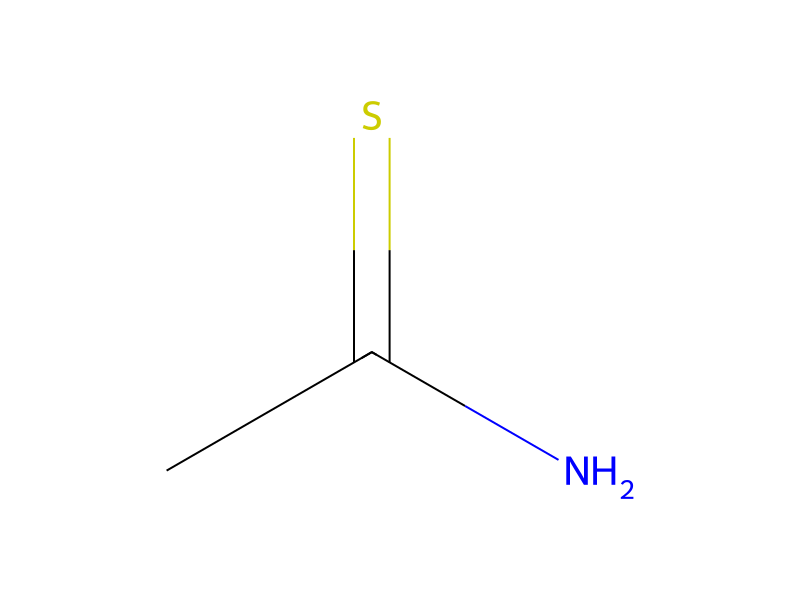
- 標準SMILES
CC(N)=S- InChIKey
YUKQRDCYNOVPGJ-UHFFFAOYSA-N- 分子式
- C2H5NS
- 平均分子量
- 75.14 g/mol
- 単同位体質量
- 75.01427016
概要
Thioacetamide can cause cancer according to an independent committee of scientific and health experts.
名称と識別子
- 優先名称
- Thioacetamide
- IUPAC
- ethanethioamide
- 現地名
- チオアセトアミド
- 英語名
- Thioacetamide
- 分子式
- C2H5NS
- 分子量
- 75.13
名称と別名
THIOACETAMIDEEthanethioamide62-55-5AcetothioamideThiacetamideAcetamide, thio-Thioacetimidic acidAcetimidic acid, thio-USAF CB-21USAF EK-1719ThiacetamidAcetic acid, thiono-, amide
名称をさらに表示
チオアセトアミドエタンチオアミドアセトイミドチオ酸1-イミノエタンチオールチオアセトアミド STANDARDチオアセトアミド, ACSチオアセトアミド Standard, 1000 µg/mL in Acetonitrileチオアセトアミド, ACS, 99% minチオアセタミドTAACH3CSNH2THIOACETAMIDE ACS REAGENTusafcb-21usafek-1719hioacetamideThioactamide
DTXSID9021340NSC-2120075T165X8MDTXCID901340CHEBI:32497NSC2120ThioacetamidSulfo-amine
データベース識別子
- CAS
62-55-5、65680-21-9- PubChem CID
- 2723949
- DTXSID
DTXSID9021340- ChEMBL
CHEMBL38737- ChEBI
CHEBI:32497- UNII
- 075T165X8M
- EC Number
- 200-541-4
- Nikkaji
- J2.350G
物性
構造計算による物性
- XLogP
- -0.3
- 極性表面積
- 58.1 Ų
- 水素結合供与体数
- 1
- 水素結合受容体数
- 1
- 回転可能結合数
- 0
- 重原子数
- 4
- 形式電荷
- 0
- 複雑度
- 33
実験および物理化学的性質
Chemical Classes
Other Classes -> Sulfur Compounds
Carcinogens
SpringerMaterials Properties15N nuclear magnetic resonance spectrum
LogP
log Kow = -0.26
-0.46/-0.36
OdorSlight odor of mercaptans
Color/Form
Crystals from benzene
Colorless leaflets
Yellow tablets
CRYSTALS FROM ALC, PLATES FROM ETHER
Solubility
5 to 10 mg/mL at 68 °F (NTP, 1992)
In ethanol 26.4 g/100 g; sparingly sol in ether
Miscible in benzene
MISCIBLE IN PETROLEUM ETHER
In water, 1.63X10+5 mg/l @ 25 °C.
Solubility in water: good
DecompositionWhen heated to decomposition, it emits very toxic fumes of /nitrogen oxides and sulfur oxides/.
Melting Point
234 to 237 °F (NTP, 1992)
113-114 °C
113-116 °C
115.5 °C
Odor ThresholdMedium odor threshold level: 94.7 ppm in 50% aqueous ethylene glycol.
Vapor Pressure15.2 [mmHg]
Physical Description
Thioacetamide appears as white crystals with a mercaptan odor.
Colorless solid; [ICSC] Colorless or yellow solid with a mild odor of mercaptans; [HSDB] White solid; [CAMEO] Colorless crystalline solid with an odor of rotten eggs; [Alfa Aesar MSDS]
COLOURLESS CRYSTALS WITH CHARACTERISTIC ODOUR.
Stability/Shelf LifeRELATIVELY STABLE COMPD IN NEUTRAL AQ SOLN
物理化学的性質
- 融点
- 108 · 108-112 °C (lit.)
- 沸点
- 111.7 · 111.7±23.0 °C(Predicted)
- 比重(密度)
- 1.37 · 1.37
- 屈折率
- 1.53 · 1.5300 (estimate)
- 貯蔵温度
- Inert atmosphere,Room Temperature
- 溶解性
- 2 % · passes test 2%
- 外見
- 固体
- 酸解離定数(Pka)
- 13.25 · 13.25±0.29(Predicted)
- 色
- オフホワイトからややベージュ
- PH
- 5.2 · 5.2 (100g/l, H2O, 20℃)
- 水溶解度
- 16.3 g/100mL · 16.3g/100mL(25℃)
- Merck
- 14 · 14,9319
- BRN
- 506006 · 506006
- Henry's Law Constant
- 1.5 · 1.5×100 mol/(m3Pa) at 25℃, HSDB (2015)
- 安定性
- 安定性 水、鉱酸とは相容れない。
- InChI
- 1S/C2H5NS/c1-2(3)4/h1H3,(H2,3,4)
- InChIKey
- YUKQRDCYNOVPGJ-UHFFFAOYSA-N
- SMILES
- CC(N)=S
- CAS データベース
- 62 · 62-55-5(CAS DataBase Reference)
- NISTの化学物質情報
- Ethanethioamide(62-55-5)
- EPAの化学物質情報
- Thioacetamide (62-55-5)
化学的性質
化学的特性Thioacetamide is combustible, crystalline compound. Slight mercaptan odor.
化学性质融点112~114℃
安全と法規制
GHS分類
GHS Classification
Danger
H302: Harmful if swallowed [Warning Acute toxicity, oral]
P203, P264, P264+P265, P270, P273, P280, P301+P317, P302+P352, P305+P351+P338, P318, P321, P330, P332+P317, P337+P317, P362+P364, P405, and P501 (click each P-code to see the statement)
Danger
H302 (100%): Harmful if swallowed [Warning Acute toxicity, oral]
P203, P264, P264+P265, P270, P273, P280, P301+P317, P302+P352, P305+P351+P338, P318, P321, P330, P332+P317, P337+P317, P362+P364, P405, and P501 (click each P-code to see the statement)
危険有害性情報
Regulatory Information
Chemical: Ethanethioamide
Hazard Traits - Carcinogenicity
Status: Active Update: 30-09-2010 https://echa.europa.eu/registration-dossier/-/registered-dossier/1779
Thioacetamide: Does not have an individual approval but may be used under an appropriate group standard
The New Jersey Worker and Community Right to Know Act requires public and private employers to provide information about hazardous substances at their workplaces. (N.J.S.A. 34:5A-1 et. seq.)
Other Safety InformationIMAP assessments - Ethanethioamide: Human health tier II assessment
Fire Hazards
Flash point data on this compound are not available; it is probably combustible. (NTP, 1992)
Combustible.
Health Hazards
SYMPTOMS: The symptoms following exposure to this compound may include skin and eye irritation, liver damage, fatigue, nausea, eczema, central nervous system depression, acidosis, vomiting, respiratory depression, hypotension, unconsciousness, tremors, convulsions, anorexia and conjunctivitis.
Hazards Summary
Reports of degenerative liver changes following ingestion of the juice of oranges dipped for 2-5 seconds in 5% solution; Cirrhosis and other adverse changes (including tumors) of the liver observed in rats, mice, and dogs in feeding studies; [HSDB] May cause liver injury; A possible human carcinogen; [ICSC] A skin and eye irritant; [eChemPortal: ESIS] A skin and strong eye irritant; [Alfa Aesar MSDS]
Reactive GroupAmides and Imides
EC ClassificationSymbol: T; R: 45-22-36/38-52/53; S: 53-45-61; Note: E
Special Reports
REVIEW:[NEAL RA, HALPERT J; TOXICOLOGY OF THIONO-SULFUR COMPOUNDS; ANNU REV PHARMACOL TOXICOL 22: 321 (1982)]
National Toxicology Program. Eleventh Report on Carcinogens (2005). The Report on Carcinogens is an informational scientific and public health document that identifies and discusses substances (including agents, mixtures, or exposure circumstances) that may pose a carcinogenic hazard to human health. Thioacetamide (62-55-5) is listed as reasonably anticipated to be a human carcinogen.[Available from, as of July 31, 2009: http://ntp.niehs.nih.gov/ntp/roc/eleventh/profiles/s172thio.pdf]
RCRA Requirements
U218; As stipulated in 40 CFR 261.33, when thioacetamide, as a commercial chemical product or manufacturing chemical intermediate or an off-specification commercial chemical product or a manufacturing chemical intermediate, becomes a waste, it must be managed according to Federal and/or State hazardous waste regulations. Also defined as a hazardous waste is any residue, contaminated soil, water, or other debris resulting from the cleanup of a spill, into water or on dry land, of this waste. Generators of small quantities of this waste may qualify for partial exclusion from hazardous waste regulations (40 CFR 261.5).
Reactivity ProfileTHIOACETAMIDE reacts with aqueous acid to generate hydrogen sulfide. Forms addition compounds and sulfides with salts of heavy metals. Hydrolyzed by acids or bases (NTP, 1992).
Chemical DangersDecomposes on burning. This produces toxic fumes of nitrogen oxides and sulfur oxides.
Packaging and LabellingDo not transport with food and feedstuffs.
安全と保護具
Fire Fighting
Fires involving this chemical should be controlled with a dry chemical, carbon dioxide, or Halon extinguisher. (NTP, 1992)
Use water spray, powder, alcohol-resistant foam, carbon dioxide.
First Aid Measures
Fresh air, rest.
Remove contaminated clothes. Rinse skin with plenty of water or shower.
First rinse with plenty of water for several minutes (remove contact lenses if easily possible), then refer for medical attention.
Rinse mouth.
First Aid
EYES: First check the victim for contact lenses and remove if present. Flush victim's eyes with water or normal saline solution for 20 to 30 minutes while simultaneously calling a hospital or poison control center. Do not put any ointments, oils, or medication in the victim's eyes without specific instructions from a physician. IMMEDIATELY transport the victim after flushing eyes to a hospital even if no symptoms (such as redness or irritation) develop.
Safe StorageSeparated from food and feedstuffs.
Storage Conditions
PRECAUTIONS FOR "CARCINOGENS": Storage site should be as close as practical to lab in which carcinogens are to be used, so that only small quantities required for ... expt need to be carried. Carcinogens should be kept in only one section of cupboard, an explosion-proof refrigerator or freezer (depending on chemicophysical properties ...) that bears appropriate label. An inventory ... should be kept, showing quantity of carcinogen & date it was acquired ... Facilities for dispensing ... should be contiguous to storage area. /Chemical Carcinogens/
Cleanup Methods
PRECAUTIONS FOR "CARCINOGENS": A high-efficiency particulate arrestor (HEPA) or charcoal filters can be used to minimize amt of carcinogen in exhausted air ventilated safety cabinets, lab hoods, glove boxes or animal rooms ... Filter housing that is designed so that used filters can be transferred into plastic bag without contaminating maintenance staff is avail commercially. Filters should be placed in plastic bags immediately after removal ... The plastic bag should be sealed immediately ... The sealed bag should be labelled properly ... Waste liquids ... should be placed or collected in proper containers for disposal. The lid should be secured & the bottles properly labelled. Once filled, bottles should be placed in plastic bag, so that outer surface ... is not contaminated ... The plastic bag should also be sealed & labelled. ... Broken glassware ... should be decontaminated by solvent extraction, by chemical destruction, or in specially designed incinerators. /Chemical Carcinogens/
Nonfire Spill Response
SMALL SPILLS AND LEAKAGE: If a spill of this chemical occurs, FIRST REMOVE ALL SOURCES OF IGNITION, then you should dampen the solid spill material with acetone and transfer the dampened material to a suitable container. Use absorbent paper dampened with acetone to pick up any remaining material. Seal your contaminated clothing and the absorbent paper in a vapor-tight plastic bag for eventual disposal. Solvent wash all contaminated surfaces with acetone followed by washing with a soap and water solution. Do not reenter the contaminated area until the Safety Officer (or other responsible person) has verified that the area has been properly cleaned.
Disposal Methods
At the time of review, criteria for land treatment or burial (sanitary landfill) disposal practices are subject to significant revision. Prior to implementing land disposal of waste residue (including waste sludge), consult with environmental regulatory agencies for guidance on acceptable disposal practices.
Thioacetamide is a potential candidate for incineration. Recommended incineration types: Rotary kiln with a temperature range 820 to 1600 °C and a residence time of hours; Fluidized bed with a temperature range 840 to 1800 °C and a residence time of several seconds or longer.
PRECAUTIONS FOR "CARCINOGENS": There is no universal method of disposal that has been proved satisfactory for all carcinogenic compounds & specific methods of chem destruction ... published have not been tested on all kinds of carcinogen-containing waste. ... summary of avail methods & recommendations ... /given/ must be treated as guide only. /Chemical Carcinogens/
PRECAUTIONS FOR "CARCINOGENS": ... Incineration may be only feasible method for disposal of contaminated laboratory waste from biological expt. However, not all incinerators are suitable for this purpose. The most efficient type ... is probably the gas-fired type, in which a first-stage combustion with a less than stoichiometric air:fuel ratio is followed by a second stage with excess air. Some ... are designed to accept ... aqueous & organic-solvent solutions, otherwise it is necessary ... to absorb soln onto suitable combustible material, such as sawdust. Alternatively, chem destruction may be used, esp when small quantities ... are to be destroyed in laboratory. /Chemical Carcinogens/
For more Disposal Methods (Complete) data for THIOACETAMIDE (7 total), please visit the HSDB record page.
Spillage Disposal
Personal protection: complete protective clothing including self-contained breathing apparatus. Sweep spilled substance into covered containers. If appropriate, moisten first to prevent dusting. Carefully collect remainder. Then store and dispose of according to local regulations.
Preventive Measures
VENTILATION CONTROL: BASIC VENTILATION METHODS ARE LOCAL EXHAUST VENTILATION & DILUTION OR GENERAL VENTILATION.
PRECAUTIONS FOR "CARCINOGENS": Smoking, drinking, eating, storage of food or of food & beverage containers or utensils, & the application of cosmetics should be prohibited in any laboratory. All personnel should remove gloves, if worn, after completion of procedures in which carcinogens have been used. They should ... wash ... hands, preferably using dispensers of liq detergent, & rinse ... thoroughly. Consideration should be given to appropriate methods for cleaning the skin, depending on nature of the contaminant. No standard procedure can be recommended, but the use of organic solvents should be avoided. Safety pipettes should be used for all pipetting. /Chemical Carcinogens/
PRECAUTIONS FOR "CARCINOGENS": In animal laboratory, personnel should remove their outdoor clothes & wear protective suits (preferably disposable, one-piece & close-fitting at ankles & wrists), gloves, hair covering & overshoes. ... Clothing should be changed daily but ... discarded immediately if obvious contamination occurs ... /also,/ workers should shower immediately. In chemical laboratory, gloves & gowns should always be worn ... however, gloves should not be assumed to provide full protection. Carefully fitted masks or respirators may be necessary when working with particulates or gases, & disposable plastic aprons might provide addnl protection. If gowns are of distinctive color, this is a reminder that they should not be worn outside of lab. /Chemical Carcinogens/
PRECAUTIONS FOR "CARCINOGENS": ... Operations connected with synth & purification ... should be carried out under well-ventilated hood. Analytical procedures ... should be carried out with care & vapors evolved during ... procedures should be removed. ... Expert advice should be obtained before existing fume cupboards are used ... & when new fume cupboards are installed. It is desirable that there be means for decreasing the rate of air extraction, so that carcinogenic powders can be handled without ... powder being blown around the hood. Glove boxes should be kept under negative air pressure. Air changes should be adequate, so that concn of vapors of volatile carcinogens will not occur. /Chemical Carcinogens/
For more Preventive Measures (Complete) data for THIOACETAMIDE (10 total), please visit the HSDB record page.
Eye PreventionWear safety spectacles.
Fire PreventionNO open flames.
毒性情報
Interactions
DISTRIBUTION OF PU /SRP: plutonium/ IN RATS WAS INFLUENCED BY ORAL ADMIN OF THIOACETAMIDE (300 MG/KG). RATS INJECTED IP WITH PLUTONIUM CITRATE RETAINED 71.5 & 23.6% OF RECOVERED ACTIVITY IN THE CARCASS & LIVER, RESPECTIVELY, WHEREAS RATS WHICH HAD BEEN TREATED WITH THIOACETAMIDE 24 HR PREVIOUSLY CONTAINED 35.8 & 59.5% OF THE PU IN THE CARCASS & LIVER RESPECTIVELY.
PHENOBARBITAL PRETREATMENT POTENTIATED HEPATIC NECROSIS PRODUCED BY THIOACETAMIDE.
ADRENALECTOMY PROTECTED RATS AGAINST THE HEPATOTOXIC ACTION OF THIOACETAMIDE INJECTED IP AT 200 MG/KG BW. THIS PROTECTIVE EFFECT COULD BE REVERSED BY HYDROCORTISONE GIVEN TWICE DAILY INTRAPERITONEALLY AT 0.5 TO 2.5 MG/RAT.
STROPHANTHIN-G PROTECTED RATS AGAINST LIVER NECROSIS CAUSED BY THIOACETAMIDE.
For more Interactions (Complete) data for THIOACETAMIDE (10 total), please visit the HSDB record page.
Environmental Fate
TERRESTRIAL FATE: Based on a classification scheme(1), an estimated Koc value of 17(SRC), determined from an log Kow of -0.26(2) and a regression-derived equation(3), indicates that thioacetamide is expected to have very high mobility in soil(SRC). Volatilization of thioacetamide from moist soil surfaces is expected to be an important fate process(SRC) given an estimated Henry's Law constant of 6.4X10⁻⁶ atm-cu m/mole(SRC), using a fragment constant estimation method(4). The potential for volatilization of thioacetamide from dry soil surfaces may exist(SRC) based upon an estimated vapor pressure of 15 mm Hg(SRC), determined from a fragment constant method(5). Thioacetamide was not biodegraded by activated sludge after 5 days(6), and therefore may be resistant to biodegradation in soil(SRC).
AQUATIC FATE: Based on a classification scheme(1), an estimated Koc value of 17(SRC), determined from an log Kow of -0.26(2) and a regression-derived equation(3), indicates that thioacetamide is not expected to adsorb to suspended solids and sediment(SRC). Volatilization from water surfaces is expected(3) based upon an estimated Henry's Law constant of 6.4X10⁻⁴ atm-cu m/mole(SRC), developed using a fragment constant estimation method(4). Using this Henry's Law constant and an estimation method(3), volatilization half-lives for a model river and model lake are 3 days and 39 days, respectively(SRC). According to a classification scheme(5), an estimated BCF of 3(SRC), from its log Kow(2) and a regression-derived equation(6), suggests the potential for bioconcentration in aquatic organisms is low(SRC). Thioacetamide was not biodegraded by activated sludge after 5 days(7), and therefore may be resistant to biodegradation in aqueous systems(SRC).
ATMOSPHERIC FATE: According to a model of gas/particle partitioning of semivolatile organic compounds in the atmosphere(1), thioacetamide, which has an estimated vapor pressure of 15 mm Hg at 25 °C(SRC), determined from a fragment constant method(2), is expected to exist solely as a vapor in the ambient atmosphere(SRC). Vapor-phase thioacetamide is degraded in the atmosphere by reaction with photochemically-produced hydroxyl radicals(SRC); the half-life for this reaction in air is estimated to be 18 hours(SRC), calculated from its rate constant of 21X10-12 cu cm/molecule-sec at 25 °C(SRC) determined using a structure estimation method(3).
Adverse EffectsOccupational hepatotoxin - Secondary hepatotoxins: the potential for toxic effect in the occupational setting is based on cases of poisoning by human ingestion or animal experimentation.
Exposure RoutesThe substance can be absorbed into the body by inhalation of its aerosol and by ingestion.
Medical Surveillance
PRECAUTIONS FOR "CARCINOGENS": Whenever medical surveillance is indicated, in particular when exposure to a carcinogen has occurred, ad hoc decisions should be taken concerning ... /cytogenetic and/or other/ tests that might become useful or mandatory. /Chemical Carcinogens/
Soil Adsorption/Mobility
The Koc of thioacetamide is estimated as 17(SRC), using a log Kow of -0.26(1) and a regression-derived equation(2). According to a classification scheme(3), this estimated Koc value suggests that thioacetamide is expected to have very high mobility in soil(SRC).
Natural Pollution SourcesThioacetamide has not been reported to occur in nature.
Human Toxicity Excerpts...SEVERAL PEOPLE DEVELOPED DEGENERATIVE CHANGES IN LIVER FROM DRINKING JUICE OF ORANGES WHICH HAD BEEN IMMERSED FOR 2-5 SEC IN 5% SOLN OF THIOACETAMIDE TO PREVENT GROWTH OF BLUE & GREEN MOLDS.
Artificial Pollution SourcesThioacetamide's production and use as a substitute for hydrogen sulfide in the laboratory(1) may result in its release to the environment through various waste streams(SRC).
Environmental BiodegradationAEROBIC: Thioacetamide was not biodegraded by activated sludge after 5 days(1), and therefore may be resistant to biodegradation in the environment(SRC).
Carcinogen Classification
Thioacetamide
Group 2B: Possibly carcinogenic to humans
Volume 7: (1974) Some Anti-thyroid and Related Substances, Nitrofurans and Industrial Chemicals
1987
1987
Environmental Bioconcentration
An estimated BCF of 3 was calculated for thioacetamide(SRC), using a log Kow of -0.26(1) and a regression-derived equation(2). According to a classification scheme(3), this BCF suggests the potential for bioconcentration in aquatic organisms is low(SRC).
法規制情報
RCRA Requirements
U218; As stipulated in 40 CFR 261.33, when thioacetamide, as a commercial chemical product or manufacturing chemical intermediate or an off-specification commercial chemical product or a manufacturing chemical intermediate, becomes a waste, it must be managed according to Federal and/or State hazardous waste regulations. Also defined as a hazardous waste is any residue, contaminated soil, water, or other debris resulting from the cleanup of a spill, into water or on dry land, of this waste. Generators of small quantities of this waste may qualify for partial exclusion from hazardous waste regulations (40 CFR 261.5).
CERCLA Reportable Quantities
Persons in charge of vessels or facilities are required to notify the National Response Center (NRC) immediately, when there is a release of this designated hazardous substance, in an amount equal to or greater than its reportable quantity of 10 lb or 4.54 kg. The toll free number of the NRC is (800) 424-8802; In the Washington D.C. metropolitan area (202) 426-2675. The rule for determining when notification is required is stated in 40 CFR 302.4 (section IV. D.3.b).
安全データ
- F
- 10
- wgk
- 3
- tsca
- TSCA listed
- rtecs
- AC8925000
- ridadr
- 2811
- 毒性
- MLD orally in rats: 200 mg/kg (Ambrose)
- PRTR法
- 第二種指定化学物質
- hs_code
- 29309070
- risk_code
- 45-22-36/38-52/53
- 化審法
- (9)-806
- hazard_code
- T
- safety_code
- 53-45-61-99
- hazard_class
- 9
- Hazard Classifications
- Acute Tox. 4 OralAquatic Chronic 3Carc. 1BEye Irrit. 2Skin Irrit. 2
- ストレージクラス
- 6.1C - Combustible acute toxic Cat.3toxic compounds or compounds which causing chronic effects
- 有毒物質データの
- 62-55-5(Hazardous Substances Data)
化学と産業
薬理情報
Mechanism of Action
Multiple injections of thioacetamide ... decrease the synthesis of cytochrome p450b and the amounts of its translatable mRNA.
A factor was isolated from /thioacetamide-induced/ fibrogenic rat liver which stimulates collagen synthesis in cultured fibrolblasts without affecting their rate of proliferation.
Altered transport of nuclear RNA sequences is an early response to carcinogens. Nuclear envelopes were isolated and assayed for nucleoside triphosphatase (NTPase) activity, on the premise that this enzymatic activity participates in RNA transport. A common feature of the action of ... thioacetamide ... at low doses without significant toxicity, was to increase nuclear envelopes NTPase activity and to increase RNA transport, as assessed by the appearance of rapiidly labeled RNA in the cytoplasm and by in vitro assay. The increases in NTPase were specific for the nuclear envelope fraction, and early toxic effects of higher doses initially masked the increases. The induced increases in nuclear envelope NTPase were long-lived. In contrast, increases in nuclear envelope NTPase were observed only during the regenerative phase of carbon tetrachloride intoxication; the CCl4-induced increase was short-lived and returned promptly to control levels. These changes in NTPase activity were not associated with parallel changes in phosphorylation/dephosphorylation of nuclear envelope proteins. Increases in nuclear envelope NTPase and alterations in RNA transport, without attendant nuclear replication, may relate to altered nuclear RNA restriction. This change in a regulatory phenomenon may make these cells more susceptible to further modification, potentially playing a role in the initiation phase of carcinogenesis.
Metabolism/Metabolites
...THIOACETAMIDE IS METABOLIZED IN VIVO TO ACETAMIDE WHICH IS ITSELF CARCINOGENIC...ACETAMIDE IS THEN HYDROLYZED TO ACETATE...
THIOACETAMIDE, A PRE- OR PROCARCINOGEN, MUST UNDERGO BIOCHEMICAL METABOLIC ACTIVATION BY HOST. /FROM TABLE/
HEPATOTOXICITY OF THIOACETAMIDE MAY BE MEDIATED BY ITS METAB TO THIOACETAMIDE SULFINE WHICH IN TURN, IS METABOLIZED TO AN ULTIMATE TOXIC METABOLITE.
THIOACETAMIDE IS OXIDIZED TO THIOACETAMIDE S-OXIDE BY RAT LIVER MICROSOMES & BY A MIXED-FUNCTION OXIDASE SYSTEM.
For more Metabolism/Metabolites (Complete) data for THIOACETAMIDE (9 total), please visit the HSDB record page.
Absorption, Distribution and Excretion
WHEN 5 MG (3)H-THIOACETAMIDE WERE ADMIN ORALLY IN DIET TO MALE ALBINO RATS... RADIOACTIVITY WAS FOUND IN ALL ORGANS EXAMINED (LIVER, KIDNEY & ADRENAL GLAND) & WAS HIGHEST IN LIVER.
WHOLE-BODY AUTORADIOGRAPHY SHOWED THAT AN IV DOSE OF ANTITHYROID AGENT, (35)S-THIOACETAMIDE, WAS TAKEN UP IN LIVER, KIDNEYS (MEDULLA), HEART MUSCLE, HARDERIAN GLANDS, SPLEEN, LYMPH NODES, & GI TRACT OF RATS. ABOUT 80% WAS EXCRETED IN 24-HR URINE.
THE DISTRIBUTION OF LABELED THIOACETAMIDE WAS STUDIED AS A FUNCTION OF TIME IN LIVER, KIDNEYS, PLASMA, AND MUSCLE OF RATS. THE DEVELOPMENT OF CENTRILOBULAR HEPATIC NECROSIS WAS FIRST OBSERVED 6 HOURS AFTER PEAK PLASMA LEVELS OF THIOACETAMIDE-S-OXIDE WERE OBTAINED (9 HOURS AFTER ADMINISTRATION OF THIOACETAMIDE).
用途と製造
Uses
Used as a replacement for gaseous hydrogen sulfide in qualitative analysis; Used formerly as a stabilizer of motor fuel containing tetraethyl lead and mordant of seed grain (combined with mercury); [HSDB]
Petroleum Production and Refining [Category: Industry]
As replacement for gaseous hydrogen sulfide in qualitative analysis.
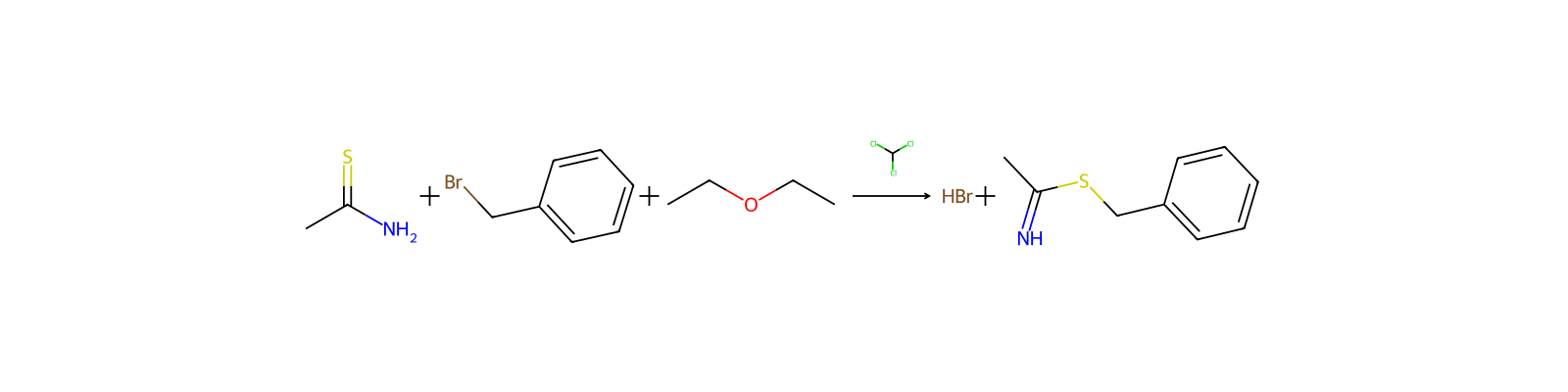
The addition of thioacetamide to 1,4-benzoquinone produces modest yields of 2-substituted 3a-Hydroxy-1,3-benzothiazol-6(3aH)-ones.
Stabilizer of motor fuel containing tetraethyl lead ... mordant of seed grain in combination with mercury /Former use/
U.S. Imports(1977) AT LEAST 4.54X10+5 G
U.S. Production
(1977) AT LEAST 4.54X10+5 G
(1982) NO EVIDENCE OF COMMERCIAL PRODN IN U.S.
Methods of ManufacturingPrepn: prepd by heating ammonium acetate and aluminum sulfide: Kindler, Finndorf, Ber 54, 1080 (1921); from acetonitrile + H2S: Kindler, Ann 431, 203 (1923); from acetamide + K3PS4: Schultz, Ranke, Arch Pharm 294, 82 (1961).
General Manufacturing InformationEthanethioamide: ACTIVE
応用分野
解説チオアセトアミド (英: Thioacetamide) とは、分子式C2H5NSで表される、チオアミドの一種の有機化合物です。 別名には、「アセトチオアミド」「エタンチオアミド」「アセトイミドチオ酸」などがあります。CAS登録番号は、62-55-5です。チオアセトアミド水溶液と多くの金属カチオンはそれぞれ対応する硫化物を作り、古典的定性分析で使われます。人体に対して有害な物質です。
用途染料、 医薬?医薬中間体、合成中間体、写真薬
説明Thioacetamide (TAA) is not known to occur in nature. It is prepared by heating ammonium acetate and aluminum sulfide.
使用Thioacetamide is a carcinogen, a hepatotoxicant. Thioacetamide induces acute chronic liver injury through the activation of protein synthesis of RNA, DNA, and gamma-glutamyl transpeptitase. Thioacetamide has been used in the synthesis of [emailprotected] nano-array core-shell structure.
一般的な説明Thioacetamide occurs as a colorless leaf-like material with aslight Sulfur-like odor. It is used as a substitute for HydrogenSulfide in the laboratory and as a stabilizer of motor fuel.
使用用途チオアセトアミドの主な用途は、染料、医薬品および医薬品中間体、合成中間体、写真・印刷薬品です。例えば、カドミウムイオンの溶液にチオアセトアミド水溶液を加えた後に加温することで、硫化カドミウムが得られます。この硫化カドミウムは、黄色顔料であるカドミウムイエローの主成分です。 このほか、チオアセトアミドは、古典的定性分析におけるの供給源であり、金属硫化物の沈殿試薬 (均質沈殿法) 、金属イオンの系統分析の分属試薬に使用されています。
調製方法
合成方法酢酸アンモニウムと硫化アルミニウムとの反応や,アセトニトリルと硫化水素との反応,またはアセトアミドの硫化反応で得られる
純化方法Crystallise the amide from absolute diethyl ether or *benzene. Dry it at 70o in a vacuum and store it over P2O5 at 0o under nitrogen. (It develops an obnoxious odour on storage, and absorption at 269nm decreases, hence it should be freshly recrystallised before use). [Beilstein 2 IV 565.]
上流・下流製品情報
上流原料
下流製品
サプライヤー50 社
国药集团化学试剂有限公司86-21-63210123 · [email protected]
梯希爱(上海)化成工业发展有限公司021-67121386 · [email protected]
衢州润东化工有限公司0570-8789886 18892685668 · [email protected]
上海阿拉丁生化科技股份有限公司400-6206333 13167063860 · [email protected]
上海麦克林生化科技股份有限公司021-50706066 15221275939 · [email protected]
河南赢创生物科技有限公司16650615803 · [email protected]
上海如吉生物科技发展有限公司+86-21-65211385-8001 36031160 · [email protected]
科瑞迪化学400-821-5857 021-64326257 · [email protected]
Syntechem Co.,Ltd[email protected]
上海迈瑞尔生化科技有限公司4006356688 18621169109 · [email protected]
武汉易泰科技有限公司上海分公司18930552037 · [email protected]
大连美仑生物技术有限公司0411-62910999 13889544652 · [email protected]
阿法埃莎(中国)化学有限公司400-6106006 · [email protected]
安耐吉化学&3A(安徽泽升科技股份有限公司)400-0056266 · [email protected]
北京亿思研科技开发中心010-56645598 13366904824 · [email protected]
上海瀚鸿科技股份有限公司021-54306202 13764082696 · [email protected]
泰州凯美迪生物医药技术有限公司0523-86200218 18994667082 · [email protected]
上海景颜化工科技有限公司13817811078 · [email protected]
武汉泰易成生化药业有限公司027-88320699 · [email protected]
上海隆盛化工有限公司58099637 13585536065 · [email protected]
合肥天健化工有限公司551-65418679 15856988503;15837135945 · [email protected]
武汉丰泰威远科技有限公司027-87465837 19945049750 · [email protected]
孝感深远化工有限公司15527621225; 15527621225 · [email protected]
山东西亚化学有限公司13355009207 13355009207 · [email protected]
玛雅试剂+86 (573) 82222445 (0)18006601000 452520369 · [email protected]
四川库利南科技有限公司400-1166-196 18981987031 · [email protected]
天津希恩思生化科技有限公司400 638 7771 · [email protected]
湖南汇百侍生物科技有限公司0731-85526065 13308475853 · [email protected]
上海乔木化学科技有限公司021-60451683 15021268886 · [email protected]
斯百全化学(上海)有限公司021-021-021-67601398-809-809-809 15221380277 · [email protected]
北京泰亚杰科技有限公司021-33690831-8001 13552411790;18616022633 · [email protected]
上海源叶生物科技有限公司13636370518 · [email protected]
艾科试剂4008-755-333 18080918076 · [email protected]
上海思域化工科技有限公司86-21-34053660 · [email protected]
赛默飞世尔科技(中国)有限公司800-810-5118 · [email protected]
北京伊诺凯科技有限公司400-810-7969 010-59572699 · [email protected]
南京诺利斯医药科技有限公司13901585132 · [email protected]
江苏艾康生物医药研发有限公司025-66113011 13913916777 · [email protected]
上海健超生物科技有限公司150-2103-5486 18017383231 · [email protected]
TOKYO CHEMICAL INDUSTRY CO., LTD.03-36680489 · [email protected]
上海贤鼎生物科技有限公司4009209199 · [email protected]
深圳康特腾科技有限公司86-0755-86635001 · [email protected]
南京杜莱生物技术有限公司025-84699383-8003;025-846993838003-8003 18013301590 · [email protected]
Xunteng International Trading Co.,Limited—
重庆卡兰医药有限公司023-62879767 · [email protected]
北京环宇世纪化学科技有限公司hysj_bj.com
湖北鑫源顺医药化工有限公司13971561712, 13995564702, 027-50664929 · [email protected]
上海湄水化工科技有限公司021-60549325 18616193163
上海将来实业股份有限公司400-0066400 13621662912 · [email protected]
上海将来实业股份有限公司021-61552785 · [email protected]
補足説明
定義ChEBI: Thioacetamide is a thiocarboxamide consiting of acetamide having the oxygen replaced by sulfur. It has a role as a hepatotoxic agent. It is functionally related to an acetamide.
関連反応
451 件




関連ノート
読み込み中…