

基本情報
- 標準SMILES
CN1CCC(=C2c3ccccc3C=Cc3ccccc32)CC1- InChIKey
JJCFRYNCJDLXIK-UHFFFAOYSA-N- 分子式
- C21H21N
- 平均分子量
- 287.4 g/mol
- 単同位体質量
- 287.16739967
名称と識別子
- 優先名称
- Cyproheptadine
- IUPAC
- 1-methyl-4-(2-tricyclo[9.4.0.03,8]pentadeca-1(15),3,5,7,9,11,13-heptaenylidene)piperidine
- 現地名
- シプロヘプタジン
- 英語名
- Cyproheptadine
- 分子式
- C21H21N
- 分子量
- 287.4
名称と別名
CYPROHEPTADINE129-03-3PeriactinolEiproheptadineDronactinCiproheptadinaCyproheptadinumCiprovitMK 1414-(5H-Dibenzo(a,d)cyclohepten-5-ylidene)-1-methylpiperidine1-Methyl-4-(5H-dibenzo(a,d)cycloheptenylidene)piperidine5-(1-Methylpiperidylidene-4)-5H-dibenzo(a,d)cyclopheptene
名称をさらに表示
4-(5H-ジベンゾ[a,d]シクロヘプテン-5-イリデン)-1-メチルピペリジンペリアクチン4-[5H-ジベンゾ[a,d]シクロヘプテン-5-イリデン]-1-メチルピペリジンシプロヘプタジン5-(1-メチルピペリジン-4-イリデン)-5H-ジベンゾ[a,d]シクロヘプテンペリアクチノールサイプロヘプタジン1-メチル-4-{トリシクロ[9.4.0.03,8]ペンタデカ-1(15),3,5,7,9,11,13-ヘプタエン-2-イリデン}ピペリジンPeriactinCyproheptadienePeriactineCypoheptadineAKOS NCG1-0040
1-Methyl-4-(5-dibenzo(a,e)cycloheptatrienylidene)piperidine4-(5-Dibenzo(a,d)cyclohepten-5-ylidine)-1-methylpiperidineDTXSID80228724-(5H-Dibenzo[a,d]cyclohepten-5-ylidene)-1-methylpiperidine2YHB6175DOPiperidine, 4-(5H-dibenzo(a,d)cyclohepten-5-ylidene)-1-methyl-Piperidine, 4-(5H-dibenzo[a,d]cyclohepten-5-ylidene)-1-methyl-1-Methyl-4-(5H-dibenzo[a,d]cycloheptenylidene)piperidine
データベース識別子
- CAS
129-03-3- PubChem CID
- 2913
- DTXSID
DTXSID8022872- ChEMBL
CHEMBL516- ChEBI
CHEBI:4046- UNII
- 2YHB6175DO
- EC Number
- 204-928-9
- Nikkaji
- J5.419D
物性
構造計算による物性
- XLogP
- 4.7
- 極性表面積
- 3.2 Ų
- 水素結合供与体数
- 0
- 水素結合受容体数
- 1
- 回転可能結合数
- 0
- 重原子数
- 22
- 形式電荷
- 0
- 複雑度
- 423
実験および物理化学的性質
LogP
4.69
Log P= 4.69
4.7
Color/FormCRYSTALS FROM DIL ETHANOL
Solubility
WHITE TO SLIGHTLY YELLOW, CRYSTALLINE POWDER; ODORLESS; SLIGHT BITTER TASTE; NONHYGROSCOPIC; 1 G SOL IN 1.5 ML METHANOL, 16 ML CHLOROFORM, 35 ML ALCOHOL, 275 ML WATER; PRACTICALLY INSOL IN ETHER /HCL/
1.36e-02 g/L
Melting Point
112.3-113.3
112.3-113.3 °C
215 - 217 °C
Physical DescriptionSolid
Stability/Shelf LifeRELATIVELY STABLE IN LIGHT, STABLE @ ROOM TEMP. /HCL/
Kovats Retention Index
2333;2355;2340;2356;2400;2348.4;2360.4;2366;2355;2360;2366;2382
2357.6
Collision Cross Section
170.35 Ų [M+H]+ [CCS Type: TW; Method: calibrated with polyalanine and drug standards];165.25 Ų [M+K]+ [CCS Type: TW; Method: calibrated with polyalanine and drug standards];163.65 Ų [M+Na]+ [CCS Type: TW; Method: calibrated with polyalanine and drug standards]
Other Experimental PropertiesCRYSTALS FROM ABSOLUTE ETHANOL + ETHER. UV MAX (0.1 N H2SO4): 224,285 NM (E AT 1 CM AND 1%= 1,656,355) /HCL/
物理化学的性質
- 融点
- 112.3 · 112.3-113.3°
- 沸点
- 419.7 °C · 419.7°C (rough estimate)
- 比重(密度)
- 0.9917 · 0.9917 (rough estimate)
- 屈折率
- 1.824 · 1.8240 (estimate)
- 貯蔵温度
- -20 °C · Store at -20°C
- 外見
- Solid
- 酸解離定数(Pka)
- 8.87 · pKa 8.87 (Uncertain)
- 色
- EtOH (aq) からの結晶
- 水溶解度
- 317.6 ug/L · 317.6ug/L(22.5℃)
- CAS データベース
- 129 · 129-03-3(CAS DataBase Reference)
- NISTの化学物質情報
- Cyproheptadine(129-03-3)
安全と法規制
危険有害性情報
Other Safety InformationIMAP assessments - Piperidine, 4-(5H-dibenzo[a,d]cyclohepten-5-ylidene)-1-methyl-: Human health tier I assessment;IMAP assessments - Piperidine, 4-(5H-dibenzo[a,d]cyclohepten-5-ylidene)-1-methyl-: Environment tier I assessment
FDA Requirements
Manufacturers, packers, and distributors of drug and drug products for human use are responsible for complying with the labeling, certification, and usage requirements as prescribed by the Federal Food, Drug, and Cosmetic Act, as amended (secs 201-902, 52 Stat. 1040 et seq., as amended; 21 U.S.C. 321-392).
Special ReportsKaliner MA; am Fam Physician 45 (3): 1337-42 (1992). Nonsedating antihistamines: pharmacology, clinical efficacy and adverse effects.
安全と保護具
Storage ConditionsStore below 40 °C (104 °F), preferably between 15 and 30 °C (59 and 86 °F), unless otherwise specified by manufacturer. Store in a well-closed container.
Disposal Methods
SRP: At the time of review, criteria for land treatment or burial (sanitary landfill) disposal practices are subject to significant revision. Prior to implementing land disposal of waste residue (including waste sludge), consult with environmental regulatory agencies for guidance on acceptable disposal practices.
毒性情報
Treatment
If vomiting has not occurred spontaneously the patient should be induced to vomit with syrup of ipecac. If the patient is unable to vomit, perform gastric lavage followed by activated charcoal. Isotonic or 1/2 isotonic saline is the lavage of choice. Precautions against aspiration must be taken especially in infants and children. When life threatening CNS signs and symptoms are present, intravenous physostigmine salicylate may be considered. Dosage and frequency of administration are dependent on age, clinical response, and recurrence after response. (See package circulars for physostigmine products.) Saline cathartics, as milk of magnesia, by osmosis draw water into the bowel and, therefore, are valuable for their action in rapid dilution of bowel content. Stimulants should not be used. Vasopressors may be used to treat hypotension. (L1712)
Interactions
Concurrent use may potentiate the CNS depressant effects of either these medications /alcohol or other CNS depression-producing medications/ or antihistamines; also, concurrent use of maprotiline or tricyclic antidepressants may potentiate the anticholinergic effects of either antihistamines or these medications. /Antihistamines/
Anticholinergic effects may be potentiated when these medications /anticholinergics or other medications with anticholinergic activity/ are used concurrently with antihistamines; patients should be advised to report occurrence of gastrointestinal problems promptly since paralytic ileus may occur with concurrent therapy. /Antihistamines/
Concurrent use of monoamine oxidase (MAO) inhibitors with antihistamines may prolong the intensify the anticholinergic and CNS depressant effects of antihistamines; concurrent use is not recommended. /Antihistamines/
Concurrent use /of ototoxic medications/ with antihistamines may mask the symptoms of ototoxicity such as tinnitus, dizziness, or vertigo. /Antihistamines/
For more Interactions (Complete) data for CYPROHEPTADINE (12 total), please visit the HSDB record page.
Hepatotoxicity
Unlike most first generation antihistamines, cyproheptadine has been associated with several instances of clinically apparent liver injury. The few cases that have been described had a time to onset of 1 to 6 weeks and a cholestatic or mixed pattern of liver enzyme elevations. Immunoallergic and autoimmune features were not present and most patients recovered rapidly without residual. Acute liver failure due to cyproheptadine has not been described.;Likelihood score: C (probable rare cause of clinically apparent liver injury).
Exposure RoutesWell absorbed after oral administration.
Toxicity Summary
Cyproheptadine competes with free histamine for binding at HA-receptor sites. This antagonizes the effects of histamine on HA-receptors, leading to a reduction of the negative symptoms brought on by histamine HA-receptor binding. Cyproheptadine also competes with serotonin at receptor sites in smooth muscle in the intestines and other locations. Antagonism of serotonin on the appetite center of the hypothalamus may account for Cyproheptadine's ability to stimulate appetite.
Signs and SymptomsDrowsiness, epigastric distress (dysphagia), nausea, vomiting, (it is noted that these side effects are much more common in people with neuromuscular disorders). [Wikipedia]
Human Toxicity ExcerptsThis compound is thought to inhibit the contractile effect of serotinin on smooth muscles by competing with serotonin for its receptor. 41 Pregnancies were treated with 4 to 16 mg and no teratogenic effects were observed.
Carcinogen ClassificationNo indication of carcinogenicity to humans (not listed by IARC).
Drug Induced Liver Injury
Drug-Induced Liver Injury Severity and Toxicity (DILIst)
cyproheptadine
DILI Positive
Oral
DOI:10.1016/j.drudis.2019.09.022
Non-Human Toxicity Excerpts
In experiments on chick embryos from various age groups, studies have been made of the effect of a blockader of serotonin receptors: cyproheptadine, and blockader of adrenoreceptors: propranolol, on rhythmic activity of the amnion in vivo after injection of the substances into amniotic fluid. Stimulating effect of propranolol from the 9th to the 19th day of incubation and inhibitory effect of cyproheptadine from the 5th to the 19th day of incubation were revealed. These results indicate the existence of serotonin and noradrenaline in the amniotic fluid of chick embryo. High performance liquid chromatography directly confirmed this conclusion.
CYPROHEPTADINE, THE MAIN CONSTITUENT OF THE APPETITE STIMULANT TONIC, MAGNADYN IS A POTENT ANTIHISTAMINE DRUG USED IN THE TREATMENT OF RHINITIS, PRURITUS, URTICARIA, NELSON S SYNDROME & CUSHING S SYNDROME. ITS GENOTOXIC EFFECT WAS INVESTIGATED ON SWISS ALBINO MOUSE BONE MARROW AND PERIPHERAL BLOOD CELLS THROUGH MICRONUCLEUS ANALYSIS. THE TONIC WAS ADMINISTERED ORALLY IN THREE DIFFERENT DOSES VIZ: 0.1 MG/KG, 0.5 MG/KG AND 2.5 MG/KG OF CYPROHEPTADINE IN 0.15 ML QUANTITY. THE THERAPEUTIC DOSE OF 0.5 MG/KG WAS ADMINISTERED DAILY FOR 45 DAYS. ADEQUATE NEGATIVE AND CYCLOPHOSPHAMIDE (50 MG/KG) TREATED POSITIVE CONTROLS WERE MAINTAINED. THE ANIMALS WERE SACRIFICED AT 24, 48 AND 72 HOURS OF ADMINISTRATION TO ASCERTAIN THE DOSE AND TIME-YIELD EFFECT OF THE DRUG. THE DATA WERE SUBJECTED TO MANN-WHITNEY U-TEST. THE EFFECT OF THE DRUG ON MICRONUCLEUS INDUCTION WAS NOT STATISTICALLY SIGNIFICANT IN BOTH THE TESTS. THERE WAS NO SIGNIFICANT CHANGE IN THE P/N RATIO. THE INCIDENCE OF MICRONUCLEUS IN PCE & NCE OF BOTH THE BONE MARROW AND PERIPHERAL BLOOD CELLS OF THE TREATED ANIMALS WERE STATISTICALLY NONSIGNIFICANT COMPARED TO NEGATIVE CONTROL EVEN AFTER LONG TERM ADMINISTRATION. THE ABOVE STUDY CLEARLY SHOWED THAT CYPROHEPTADINE IS NEITHER CLASTOGENIC NOR MITOCLASTIC IN THE PRESENT TEST SYSTEM.
The clonal insulin producing cell line RINm5F was evaluated as model for the action of cyproheptadine (CPH)-like diabetogenic compounds in the rat pancreas. Treatment with 10 ug CPH and selected structural analogs under culture conditions produced a progressive loss of cellular insulin which reached 30% of control within 24 hours. Comparison of the activities of the analogs 4-diphenylmethylpiperidine (4-DPMP) and 2-diphenylmethylpiperidine (2-DPMP) to produce cellular insulin depletion showed that 4-DPMP was as active as CPH but 2-DPMP had no activity at the highest concn employed (10 microM). The CPH metabolite desmethyl CPH-epoxide was five times more active than the parent compound in producing loss of insulin in RINm5F cells. These results are consistent with previously published results of CPH actions in vivo. An inhibition of insulin biosynthesis with no loss of preproinsulin mRNA occurred in RINm5F cells treated with CPH or DMCPH-epoxide. This suggests that an effect on transcription may not be the primary action by which CPH and its analogs inhibit insulin synthesis in vivo.
Antidote and Emergency Treatment
For treatment of overdose: Since there is no specific antidote for overdose with antihistamines, treatment is symptomatic and supportive with possible utilization of the following: Induction of emesis (syrup of ipecac recommended); however, precaution against aspiration is necessary, especially in infants and children. Gastric lavage (isotonic or 0.45% sodium chloride solution) if patient is unable to vomit within 3 hours of ingestion. Saline cathartics (milk of magnesia) are sometimes used. Vasopressors to treat hypotension; however, epinephrine should not be used since it may further lower blood pressure. Oxygen and intravenous fluids. Precaution against use of stimulants (analeptic agents) because they may cause seizures. /Antihistamines/
Effects During Pregnancy and Lactation
◉ Summary of Use during Lactation;Unless it is intentionally being used to lower maternal serum prolactin levels, cyproheptadine should be avoided during lactation because it may interfere with lactation, particularly in combination with a sympathomimetic such as pseudoephedrine or before lactation is well established. The nonsedating antihistamines are preferred alternatives.;◉ Effects in Breastfed Infants;Relevant published information on cyproheptadine was not found as of the revision date. In one telephone follow-up study, mothers reported irritability and colicky symptoms 10% of infants exposed to various antihistamines and drowsiness was reported in 1.6% of infants. None of the reactions required medical attention and none of the infants were exposed to cyproheptadine.;◉ Effects on Lactation and Breastmilk;Cyproheptadine 16 to 24 mg daily lowers serum prolactin in the treatment of amenorrhea-galactorrhea syndrome because of its antiserotonin activity. Additionally, antihistamines in relatively high doses given by injection can decrease basal serum prolactin in nonlactating women and in early postpartum women. However, suckling-induced prolactin secretion is not affected by antihistamine pretreatment of postpartum mothers. Whether lower oral doses of cyproheptadine has the same effect on serum prolactin or whether the effects on prolactin have any consequences on breastfeeding success have not been studied. The prolactin level in a mother with established lactation may not affect her ability to breastfeed.
法規制情報
FDA Requirements
Manufacturers, packers, and distributors of drug and drug products for human use are responsible for complying with the labeling, certification, and usage requirements as prescribed by the Federal Food, Drug, and Cosmetic Act, as amended (secs 201-902, 52 Stat. 1040 et seq., as amended; 21 U.S.C. 321-392).
安全データ
- 毒性
- LD50 orl-rat: 295 mg/kg 27ZQAG -,69,72
- hs_code
- 29143900
- 有毒物質データの
- 129-03-3(Hazardous Substances Data)
化学と産業
薬理情報
ATC Code
R - Respiratory system;R06 - Antihistamines for systemic use;R06A - Antihistamines for systemic use;R06AX - Other antihistamines for systemic use;R06AX02 - Cyproheptadine
QR - Respiratory system;QR06 - Antihistamines for systemic use;QR06A - Antihistamines for systemic use;QR06AX - Other antihistamines for systemic use;QR06AX02 - Cyproheptadine
Pharmacodynamics
Cyproheptadine has been observed to antagonize several pharmacodynamic effects of serotonin in laboratory animals, including bronchoconstriction and vasodepression, and has demonstrated similar efficacy in antagonizing histamine-mediated effects. The reason for its efficacy in preventing anaphylactic shock has not been elucidated, but appears to be related to its anti-serotonergic effects.
Mechanism of Action
Cyproheptadine appears to exert its antihistamine and antiserotonin effects by competing with free histamine and serotonin for binding at their respective receptors. Antagonism of serotonin on the appetite center of the hypothalamus may account for cyproheptadine's ability to stimulate the appetite.
CYPROHEPTADINE...IS A SEROTONIN & HISTAMINE ANTAGONIST...
... It is an effective H1 blocker. Cyproheptadine also has prominent 5-H blocking activity on smooth muscle by virtue of its binding to 5-HT2A receptors. ... It has weak anticholinergic activity and possess mild central depressant properties.
Metabolism/Metabolites
The principal metabolite found in human urine has been identified as a quaternary ammonium glucuronide conjugate of cyproheptadine.
In humans, the metabolism of a number of tertiary amine containing pharmacological agents to quaternary ammonium linked glucuronides, catalyzed by UDP-glucuronosyltransferase (UGT), represents a unique and important metabolic pathway for these compounds. A full length cDNA encoding human UGTl.4 (the so-called minor human bilirubin UGT) was inserted into the expression vector pREP9 and transfected into human embryonic kidney 293 cells, and stable transfectants were obtained after geneticin selection. As expected, the expressed protein had low catalytic activity toward bilirubin. However, expressed human UGTl.4 protein exhibited glucuronidation activity toward tertiary amine substrates, such as imipramine, cyproheptadine, tripelennamine, and chlorpromazine, which form quaternary ammonium linked glucuronides. Carcinogenic primary amines (beta-naphthylamine, benzidine, and 4-aminobiphenyl) also reacted with the expressed UGTl.4 protein at rates approximately 10-fold higher than the rates for quaternary ammonium glucuronide formation. Although a number of other UGT gene products are capable of catalyzing the glucuronidation of primary amine substrates, expressed human UGTl.4 protein is the only UGT isoform that has been shown to conjugate tertiary amine substrates, forming quaternary ammonium linked glucuronides.
Cyproheptadine has known human metabolites that include Cyproheptadine N-glucuronide.
Hepatic (cytochrome P-450 system) and some renal. Route of Elimination: After a single 4 mg oral dose of14C-labelled cyproheptadine HCl in normal subjects, given as tablets 2% to 20% of the radioactivity was excreted in the stools. At least 40% of the administered radioactivity was excreted in the urine.
MeSH Pharmacological Classification
Agents, usually topical, that relieve itching (pruritus).
Drugs used for their effects on the gastrointestinal system, as to control gastric acidity, regulate gastrointestinal motility and water flow, and improve digestion.
Drugs that selectively bind to but do not activate histamine H1 receptors, thereby blocking the actions of endogenous histamine. Included here are the classical antihistaminics that antagonize or prevent the action of histamine mainly in immediate hypersensitivity. They act in the bronchi, capillaries, and some other smooth muscles, and are used to prevent or allay motion sickness, seasonal rhinitis, and allergic dermatitis and to induce somnolence. The effects of blocking central nervous system H1 receptors are not as well understood.
Drugs that bind to but do not activate serotonin receptors, thereby blocking the actions of serotonin or SEROTONIN RECEPTOR AGONISTS.
Agents that are used to treat allergic reactions. Most of these drugs act by preventing the release of inflammatory mediators or inhibiting the actions of released mediators on their target cells. (From AMA Drug Evaluations Annual, 1994, p475)
Absorption, Distribution and Excretion
A single study examining the difference in absorption of orally administered versus sublingually administered cyproheptadine in five healthy males demonstrated a mean Cmax of 30.0 mcg/L and 4.0 mcg/L, respectively, and a mean AUC of 209 mcg.h/L and 25 mcg.h/L, respectively. The Tmax of orally and sublingually administered cyproheptadine was 4 hours and 9.6 hours, respectively.
Approximately 2-20% of the radioactivity from an orally administered radio-labeled dose of cyproheptadine is excreted in the feces, of which approximately 34% is unchanged parent drug (less than 5.7% of the total dose). At least 40% of radioactivity is recovered in the urine.
H1 antagonists are eliminated more rapidly by children than by adults and more slowly in those with severe liver disease. /H1 Receptor Antagonists/
The H1 antagonists are well absorbed from the gastrointestinal tract. Following oral administration, peak plasma concentrations are achieved in 2 to 3 hours ... . /H1 Receptor Antagonists/
To investigate the pharmacokinetics of cyproheptadine (CPH) and its metabolites, the plasma concn and urinary excretion of CPH and its detectable metabolites were determined after iv admin of parent or synthesized metabolites to rats. The plasma CPH concn time course was subjected to biexponential calculation following the iv admin of CPH, producing the temporal and low plasma concn of desmethylcyproheptadine (DMCPH) and the sustained plasma concn of desmethylcyproheptadine epoxide (DMCPHepo). DMCPH was also eliminated according to the biexponential equation, after iv admin of performed DMCPH, forming DMCPHepo in plasma. On the other hand, no detectable DMCPHepo was found in plasma after the iv admin of cyproheptadine epoxide (CPHepo). All cmpd administered had large distribution volumes and were most entirely excreted as DMCPHepo in urine; this excretion continued for a long time. However, the urinary excretion pattern of DMCPHepo after CPHepo was different from those after CPH and MCPH. The mean residence times of the epoxidized metabolites estimated from the urinary data were much longer than those from the plasma concn data, suggesting either a gradual reflux of the metabolites from a tissue depot into systemic circulation under those plasma concn close of detection limit, or one interaction which delays excretion into the urine. This study suggests that both metabolic pathways of CPH, through DMCPH nd CPHepo, to DMCPHepo are possible, but that the demethylation largely occurs prior to epoxidation; also that the extensive and persistent distribution of DMCPHepo to tissues may relate to the toxicity of CPH reported in rats.
Twelve diphenhydramine and cyproheptadine derivatives were synthesized and screened for Hl-receptor antagonist activity at the isolated guinea pig ileum and for H2-receptor antagonist activity at the isolated guinea pig right atrium. The cmpd showed high Hl- and H2-receptor antagonist activity. The incorporation of the diphenhydramine and cyproheptadine components provided high affinity to Hl-receptors. All compounds elicited a dual mode of competitive and noncompetitive antagonism. The nitroethenediamines with 4-fluoro-4-methyl-substituted diphenhydramine as the Hl-receptor antagonist moiety displayed the most potent Hl- and H2-receptor antagonist effects.
Cellular LocationsMembrane
Metabolite PathwaysCyproheptadine H1-Antihistamine Action
用途と製造
Uses
MEDICATION
Used as an antihistaminic/anticholinergic and antiserotonergic agent. For treatment of perennial and seasonal allergic rhinitis, vasomotor rhinitis, allergic conjunctivitis due to inhalant allergens and foods, mild uncomplicated allergic skin manifestations of urticaria and angioedema, amelioration of allergic reactions to blood or plasma, cold urticaria, dermatographism, and as therapy for anaphylactic reactions adjunctive to epinephrine.
Methods of ManufacturingDibenzosuberenone-5 + isonipecotic acid (condensation/decarboxylation)
Formulations/PreparationsAvailable commercially as the free base and as the hydrochloride sesquihydrate salt.
Use ClassificationPharmaceuticals
応用分野
説明Cyproheptadine has antianaphylactic activity that is associated with its ability to slow down the release of histamine and other mediators from fat cells.
使用Antihistaminic; antipruritic.
上流・下流製品情報
上流原料
下流製品
サプライヤー35 社
北京华美互利生物化工010-56205725 · [email protected]
Career Henan Chemica Co+86-0371-86658258 +86-13203830695 · [email protected]
广州佳途科技股份有限公司81960175 18933936954 · [email protected]
上海毕得医药科技股份有限公司400-1647117 13681763483 · [email protected]
河北展药生物科技有限公司15369953316 +8615369953316 · [email protected]
Dayang Chem (Hangzhou) Co.,Ltd.+86-0571-88938639 17705817739 · [email protected]
LGM Pharma1-(800)-881-8210 · [email protected]
Zhejiang J&C Biological Technology Co.,Limited+1-2135480471 · [email protected]
湖北扬信医药科技有限公司0714-3999001 19171453112 · [email protected]
上海遐瑞医药科技有限公司+86 21 61551611
广州爱纯医药科技有限公司020-39119399 18927568969 · [email protected]
PT CHEM GROUP LIMITED+86-85511178; +86-85511178 · [email protected]
陕西缔都医药化工有限公司029-81024372 17792795018 · [email protected]
青岛海智微元生物科技有限公司18317699790 18317699790 · [email protected]
HANGZHOU LEAP CHEM CO., LTD.+86-571-87711850 +86-15355479329 · [email protected]
上海一飞生物科技有限公司021-65675885 18964387627 · [email protected]
上海陶术生物科技股份有限公司13564774135 · [email protected]
成都标样生物科技有限公司028-81700200 13308200041 · [email protected]
河北贞佳新材料有限公司0319-5925599 13315915972
金锦乐(湖南)化学有限公司18001959627(微信同号) 18001959627 · [email protected]
Shaanxi Dideu New Materials Co. Ltd18192503167 · [email protected]
Shaanxi Didu New Materials Co. Ltd+86-86-17392712779 +86-13289823923 · [email protected]
杭州洁汉化工有限公司+86-571-86217390; +8618058761490 · [email protected]
江苏艾康生物医药研发有限公司025-58859352 19370895928 · [email protected]
河南天孚化工有限公司+86-0371-55170693 +86-19937530512 · [email protected]
厦门盈融达化工有限公司+86-0592-6210733 · [email protected]
成都圣美凯生物科技有限公司028-85157043 15882256948 · [email protected]
海蔚化学86-21-51086038 · [email protected]
TargetMol中国(陶术生物)4008200310 15002144251 · [email protected]
SHANGHAI KEAN TECHNOLOGY CO., LTD.+8613817748580 · [email protected]
上海安谱实验科技股份有限公司18502138905 · [email protected]
南京世洲生物科技有限公司17301488900 · [email protected]
上海安毕达生物科技有限公司021-61629020 18201956406 · [email protected]
Henan Fengda Chemical Co., Ltd+86-371-86557731 +86-13613820652 · [email protected]
广州优南科技有限公司020-82000279 18988941452 · [email protected]
補足説明
定義ChEBI: The product resulting from the formal oxidative coupling of position 5 of 5H-dibenzo[a,d]cycloheptene with position 4 of 1-methylpiperidine resulting in the formation of a double bond between the two fragments. t is a sedating antihistamine with antimuscarinic and calcium-channel blocking actions. It is used (particularly as the hydrochloride sesquihydrate) for the relief of allergic conditions including rhinitis, conjunctivitis due to inhalant allergens and food , urticaria and angioedema, and in pruritic skin disorders. Unlike other antihistamines, it is also a seratonin receptor antagonist, making it useful in conditions such as vascular headache and anorexia.
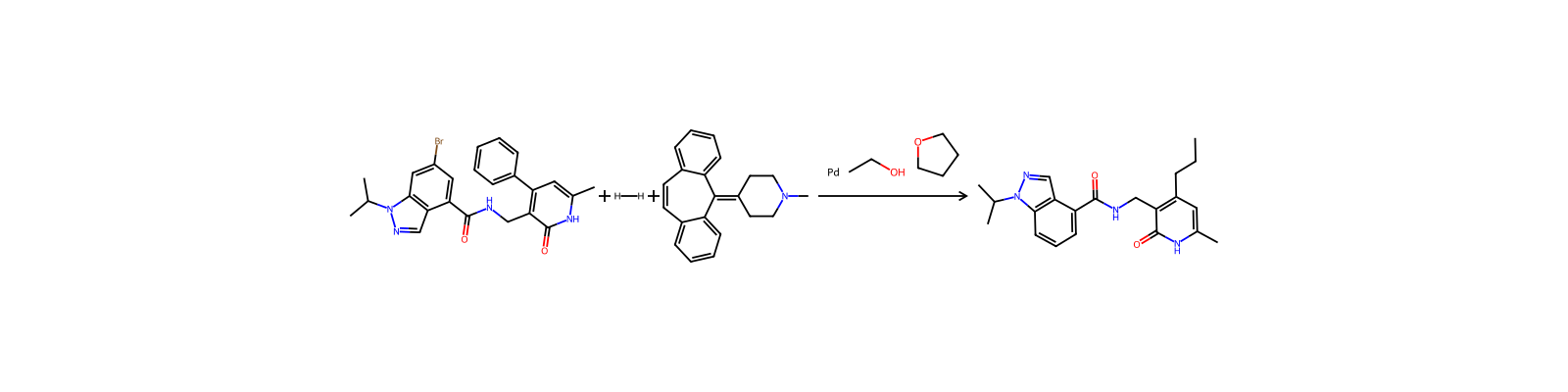
関連反応
19 件


関連ノート
読み込み中…