
基本情報
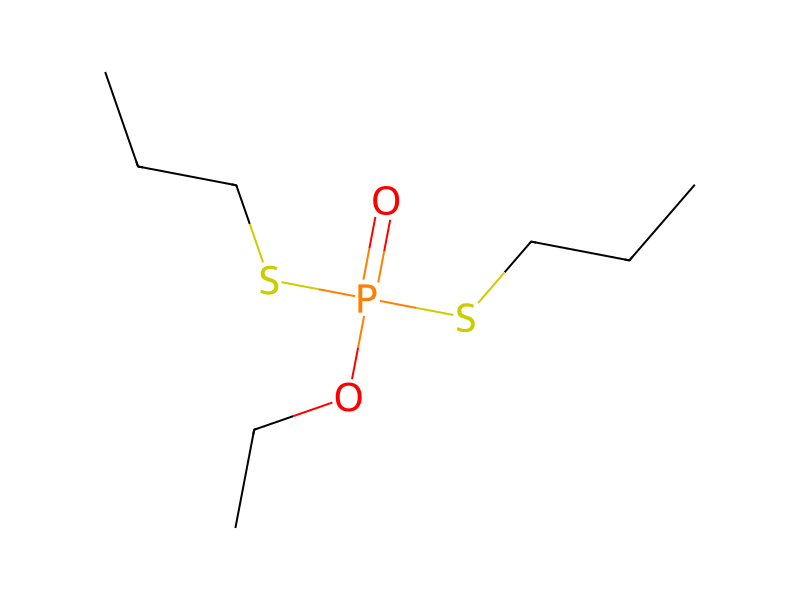
- 標準SMILES
CCCSP(=O)(OCC)SCCC- InChIKey
VJYFKVYYMZPMAB-UHFFFAOYSA-N- 分子式
- C8H19O2PS2
- 平均分子量
- 242.3 g/mol
- 単同位体質量
- 242.05640919
名称と識別子
- 優先名称
- Ethoprophos
- IUPAC
- 1-[ethoxy(propylsulfanyl)phosphoryl]sulfanylpropane
- 現地名
- ジチオりん酸O-エチルS,S-ジプロピル
- 英語名
- Ethoprophos
- 分子式
- C8H19O2PS2
- 分子量
- 242.34
名称と別名
Ethoprophosethoprop13194-48-4RovokilO-Ethyl S,S-dipropyl phosphorodithioateMOCAPJoltPhosethopropPhophosO-Ethyl S,S-dipropyl dithiophosphatePhosphorodithioic acid, O-ethyl S,S-dipropyl esterMobil V-C 9-104
名称をさらに表示
エトプロップモーキャップエトプロホスローキャッププロホスジチオりん酸O-エチルS,S-ジプロピルロボキルモカップ10Gモカップモカップ6ECエトプロホス標準品エトプロホス標準液O-エチル=S, S-ジプロピル=ホスホロジチオアートCS_N-13110-250MG_プロホスエトプロホスエトプロップ STANDARDエトプロップ Standard, 100 µg/mL in Methanolエトプロップ Standard, 1000 µg/mL in Hexaneエチル ビス(プロピルスルファニル)ホスフィナートO-エチルS,S-ジプロピルホスホロジチオエート標準品O-エチルS,S-ジプロピルホスホロジチオエート標準液PROPHOSEthoprofosvc9-104v-c9-104MOCAP(R)
ProfosVirginia-carolina VC 9-104V-C Chemical V-C 9-104DTXSID4032611VC 9-104O-Ethyl S,S-dipropylphosphorodithioateENT 27,318Phosphorodithioic acid O-ethyl S,S-dipropyl ester
データベース識別子
- CAS
13194-48-4- PubChem CID
- 3289
- DTXSID
DTXSID4032611- ChEMBL
CHEMBL1894994- ChEBI
CHEBI:38665- UNII
- 765Y5683OQ
- EC Number
- 236-152-1
- Nikkaji
- J8.092F
物性
構造計算による物性
- XLogP
- 3.6
- 極性表面積
- 76.9 Ų
- 水素結合供与体数
- 0
- 水素結合受容体数
- 4
- 回転可能結合数
- 8
- 重原子数
- 13
- 形式電荷
- 0
- 複雑度
- 152
実験および物理化学的性質
LogP
log Kow = 3.59 @ 21 °C
3.6
Density
1.094 at 68 °F (EPA, 1998) - Denser than water; will sink
1.094 g/cu cm @ 20 °C
Relative density (water = 1): 1.09
1.09 @ 20°C
Color/Form
Pale yellow liquid
Pale yellow oil
Solubility
Readily sol in most organic solvents
SOLUBLE IN KEROSENE
Solubility >300 g/kg @ 20 °C in acetone, ethanol, xylene, 1,2-dichloroethane, diethyl ether, ethyl acetate, petroleum spirit, cyclohexane
In water, 750 mg/l @ 20-25 °C
Solubility in water, g/100ml at 20 °C: 0.075
CorrosivityNon-corrosive to metals
Boiling Point
187 to 196 °F at 0.2 mmHg (EPA, 1998)
86-91 °C @ 0.2 mm Hg
at 0.03kPa: 86-91 °C
Decomposition
When heated to decomposition it emits very toxic fumes of /phosphorus oxides and sulfur oxides/.
room temperature. This produces flammable n-propylmercaptan (see ICSC 1492). Decomposes on heating. This produces toxic fumes including phosphorus oxides and sulfur oxides.
Melting Point
-13 °C
-13 °C
-13 °C
Vapor DensityRelative vapor density (air = 1): 8.4
Vapor Pressure
0.00035 mmHg at 78.8 °F (EPA, 1998)
0.00035 [mmHg]
3.8X10⁻⁴ mm Hg @ 20-25 °C
Vapor pressure, Pa at 20-25 °C: 0.05
0.00038 [mm Hg] @25 °C
Physical Description
Ethorop is one of a family of organophosphorus pesticides. It is combustible though it may require some effort to ignite. It is very toxic by skin absorption and inhalation. It may or may not be water soluble.
Pale yellow liquid; [Merck Index] Colorless to yellow liquid with a strong odor of mercaptans; [Reference #1]
PALE YELLOW LIQUID WITH CHARACTERISTIC ODOUR.
Stability/Shelf Life
Very stable in neutral and weakly acidic media. Rapidly hydrolysed in alkaline media. Stable in water up to 100 °C at pH 7.
... Thermally stable for 8 hr at 150 °C.
物理化学的性質
- 融点
- -13 °C · -13 °C
- 沸点
- 86 · 86-91°C
- 比重(密度)
- 420 · d420 1.094
- 蒸気圧
- 4.65 x · 4.65 x 10-2 Pa (26 °C)
- 闪点
- 100 °C · 100 °C
- 貯蔵温度
- 4 °C · APPROX 4°C
- 溶解性
- 5 mg/mL; · DMF: 5mg/mL; DMSO: 5mg/mL; Ethanol: 1.6mg/mL
- 水溶解度
- 700 mg · 700 mg l-1 (20 °C)
- Merck
- 13 · 13,3782
- BRN
- 8139788 · 8139788
- Henry's Law Constant
- 6.1 · 6.1×101 mol/(m3Pa) at 25℃, HSDB (2015)
- 安定性
- Hygroscopic
- 主な用途
- 農業環境
- InChI
- 1S/C8H19O2PS2/c1-4-7-12-11(9,10-6-3)13-8-5-2/h4-8H2,1-3H3
- InChIKey
- VJYFKVYYMZPMAB-UHFFFAOYSA-N
- SMILES
- CCCSP(=O)(OCC)SCCC
- CAS データベース
- 13194 · 13194-48-4(CAS DataBase Reference)
- NISTの化学物質情報
- Ethoprophos(13194-48-4)
- EPAの化学物質情報
- Ethoprop (13194-48-4)
化学的性質
化学的特性Ethoprophos is a pale yellow liquid.
安全と法規制
GHS分類
GHS Classification
Danger
H301: Toxic if swallowed [Danger Acute toxicity, oral];H310: Fatal in contact with skin [Danger Acute toxicity, dermal];H317: May cause an allergic skin reaction [Warning Sensitization, Skin];H330: Fatal if inhaled [Danger Acute toxicity, inhalation];H400: Very toxic to aquatic life [Warning Hazardous to the aquatic environment, acute hazard];H410: Very toxic to aquatic life with long lasting effects [Warning Hazardous to the aquatic environment, long-term hazard]
P260, P261, P262, P264, P270, P271, P272, P273, P280, P284, P301+P316, P302+P352, P304+P340, P316, P320, P321, P330, P333+P317, P361+P364, P362+P364, P391, P403+P233, P405, and P501 (click each P-code to see the statement)
Danger
危険有害性情報
Regulatory Information
Hazard Traits - Carcinogenicity; Environmental tox;Authoritative List - CWA 303(d); Prop 65;Report - regardless of intended function of ingredient in the product
Regulation (EC) No 1107/2009 (amended)
Ethoprop is listed in the dataset of EPA Human Health Benchmarks for Pesticides under the Safe Drinking Water Act (40 eCFR 141)
07/52/EC, Reg. (EU) 2018/917, Reg. (EU) 2019/344, Reg. (EU) No 1178/2013, Reg. (EU) No 540/2011
Status: Active Update: 30-05-2022 https://echa.europa.eu/registration-dossier/-/registered-dossier/33573
The New Jersey Worker and Community Right to Know Act requires public and private employers to provide information about hazardous substances at their workplaces. (N.J.S.A. 34:5A-1 et. seq.)
Other Safety InformationIMAP assessments - Phosphorodithioic acid, O-ethyl S,S-dipropyl ester: Human health tier I assessment;IMAP assessments - Phosphorodithioic acid, O-ethyl S,S-dipropyl ester: Environment tier I assessment
DOT LabelPoison
Fire Hazards
(Non-Specific -- Organophosphorus Pesticide, Liquid, n.o.s.) Container may explode in heat of fire. Fire and runoff from fire control water may produce irritating or poisonous gases. Stable in water. Hydrolyzed in alkali. (EPA, 1998)
Combustible. Gives off irritating or toxic fumes (or gases) in a fire. Heating will cause rise in pressure with risk of bursting.
Health HazardsThis material is extremely toxic; the probable oral lethal dose for humans is 5-50 mg/kg, or between 7 drops and 1 teaspoonful for a 150 lb. person. It is a cholinesterase inhibitor which affects the nervous system. (EPA, 1998)
Hazards Summary
Decomposes at room temperature evolving n-Propylmercaptan (flammable); A cholinesterase inhibitor that may have effects on the nervous system causing convulsions and respiratory depression; Can be absorbed through skin and eyes; [ICSC] No significant adverse effects besides cholinesterase inhibition observed in sub-chronic animal feeding studies; [HSDB] The average of two baseline respective cholinesterase activity determinations three days apart, with no exposures to enzyme inhibiting pesticides for at least 30 days, is recommended for each worker prior to exposure to cholinesterase inhibitors because of large inter-individual differences in published baseline values. To be established at least once a year. Removal from workplace exposures is recommended until the cholinesterase activity returns to within 20% of baseline. [TLVs and BEIs] See 1-Propanethiol.
Reactive GroupEsters, Sulfate Esters, Phosphate Esters, Thiophosphate Esters, and Borate Esters
EC ClassificationSymbol: T+, N; R: 25-26/27-43-50/53; S: (1/2)-27/28-36/37/39-45-60-61
UN ClassificationUN Hazard Class: 6.1; UN Pack Group: I
Special Reports
USEPA/Office of Pesticide Programs; Interim Reregistration Eligibility Decision (IRED) for Ethoprop. EPA issues an IRED for a pesticide that is undergoing reregistration, requires a reregistration eligibility decision, and also needs a cumulative assessment under FQPA. The IRED, issued after EPA completes the individual pesticide\'s aggregate risk assessment, may include taking risk reduction measures -- for example, reducing risks to workers or eliminating uses that the registrant no longer wishes to maintain -- to gain the benefits of these changes before the final RED can be issued following the Agency\'s consideration of cumulative risks.[Available from, as of July 24, 2003: http://www.epa.gov/pesticides/reregistration/status.htm]
FIFRA Requirements
Tolerances are established for residues of the nematocide and insecticide (O-ethyl S,S-Dipropyl phosphorodithioate) in or on the following raw agricultural commodities: banana; bean, lima; bean, snap; cabbage; corn, fodder; corn, forage; corn, fresh (including sweet K=CWHR); corn, grain; cucumber; peanut; peanut, hay; pineapple; potato; sugarcane; and sweet potato.
As the federal pesticide law FIFRA directs, EPA is conducting a comprehensive review of older pesticides to consider their health and environmental effects and make decisions about their future use. Under this pesticide reregistration program, EPA examines health and safety data for pesticide active ingredients initially registered before November 1, 1984, and determines whether they are eligible for reregistration. In addition, all pesticides must meet the new safety standard of the Food Quality Protection Act of 1996. Ethoprop is found on List A, which contains most food use pesticides and consists of the 194 chemical cases (or 350 individual active ingredients) for which EPA issued registration standards prior to FIFRA, as amended in 1988. Case No: 0106; Pesticide type: insecticide, fungicide, (nematicide); Registration Standard Date: 06/01/88; Case Status: OPP is reviewing data from the pesticide's producers regarding its human health and/or environmental effects, or OPP is determining the pesticide's eligibility for reregistration and developing the Reregistration Eligibility Decision (RED) document.; Active ingredient (AI): Ethoprop; Data Call-in (DCI) Date(s): 09/15/92, 06/08/94, 10/13/95; AI Status: The producers of the pesticide has made commitments to conduct the studies and pay the fees required for reregistration, and are meeting those commitments in a timely manner.
Classified for restricted use and limited to use by or under the direct supervision of a certified applicator. Formulation: emulsifiable concentrates 40% and greater; Use Pattern: aquatic uses; Classification: restricted; Criteria Influencing Restriction: acute dermal toxicity.
Classified for restricted use and limited to use by or under the direct supervision of a certified applicator. Formulation: all granular and fertilizer formulations; Use Pattern: all uses; Classification: under evaluation.
Based on its review, EPA has identified risk mitigation measures that the Agency believes are necessary to address the human health and environmental risks associated with the current use of ethoprop, and various types of additional data that are necessary to confirm these risk mitigation measures. The Agency is now publishing its interim decision on the reregistration eligibility of and risk management decision for the current uses of ethoprop and its associated human health and environmental risks. The reregistration eligibility and tolerance reassessment decisions for ethoprop will be issued once the cumulative risks for all of the OP pesticides are considered. The Agency may need to pursue further risk management measures for ethoprop once cumulative risks are considered. The ...Interim Reregistration Eligibility Decision for Ethoprop, which was approved on September 28, 2001, contains the Agencys decision on the individual chemical ethoprop.
Reactivity Profile
Organothiophosphates, such as ETHOPROPHOS, are susceptible to formation of highly toxic and flammable phosphine gas in the presence of strong reducing agents such as hydrides. Partial oxidation by oxidizing agents may result in the release of toxic phosphorus oxides.
安全と保護具
Fire Fighting
(Non-Specific -- Organophosphorus Pesticide, Liquid, n.o.s.) Stay upwind; keep out of low areas. Move containers from fire area if you can do it without risk. Fight fire from maximum distance. Dike fire control water for later disposal; do not scatter the material. Wear positive pressure breathing apparatus and special protective clothing.;(Non-Specific -- Organophosphorus Pesticide, Liquid, n.o.s.) This material may burn but does not ignite readily. For small fires, use dry chemical, carbon dioxide, water spray, or foam. For large fires, use water spray, fog, or foam. (EPA, 1998)
Use water spray, dry powder, carbon dioxide, alcohol-resistant foam. In case of fire: keep drums, etc., cool by spraying with water. NO direct contact with water.
First Aid Measures
Fresh air, rest. Artificial respiration may be needed. Refer immediately for medical attention.
Remove contaminated clothes. Rinse and then wash skin with water and soap. Refer immediately for medical attention. Wear protective gloves when administering first aid.
First rinse with plenty of water for several minutes (remove contact lenses if easily possible), then refer for medical attention.
Rinse mouth. Give a slurry of activated charcoal in water to drink. Refer immediately for medical attention.
First Aid
Warning: Effects may be delayed up to 12 hours. Caution is advised.;Note: Ethoprophos is a cholinesterase inhibitor.;Signs and Symptoms of Ethoprophos Exposure: Acute exposure to ethoprophos may produce the following signs and symptoms: sweating, pinpoint pupils, blurred vision, headache, dizziness, profound weakness, muscle spasms, seizures, and coma. Mental confusion and psychosis may occur. Excessive salivation, nausea, vomiting, anorexia, diarrhea, and abdominal pain may also occur. The heart rate may decrease following oral exposure or increase following dermal exposure. Chest pain may be noted. Hypotension (low blood pressure) may be observed, although hypertension (high blood pressure) is not uncommon. Respiratory symptoms include dyspnea (shortness of breath), pulmonary edema, respiratory depression, and respiratory paralysis.;Emergency Life-Support Procedures: Acute exposure to ethoprophos exposure may require decontamination and life support for the victims. Emergency personnel should wear protective clothing appropriate to the type and degree of contamination. Air-purifying or supplied-air respiratory equipment should also be worn, as necessary. Rescue vehicles should carry supplies such as plastic sheeting and disposable plastic bags to assist in preventing spread of contamination.;Inhalation Exposure:;1. Move victims to fresh air. Emergency personnel should avoid self-exposure to ethoprophos.;2. Evaluate vital signs including pulse and respiratory rate, and note any trauma. If no pulse is detected, provide CPR. If not breathing, provide artificial respiration. If breathing is labored, administer 100% humidified oxygen or other respiratory support.;3. Obtain authorization and/or further instructions from the local hospital for administration of an antidote or performance of other invasive procedures.;4. Transport to a health care facility.;Dermal/Eye Exposure:;1. Remove victims from exposure. Emergency personnel should avoid self-exposure to ethoprophos.;2. Evaluate vital signs including pulse and respiratory rate, and note any trauma. If no pulse is detected, provide CPR. If not breathing, provide artificial respiration. If breathing is labored, administer 100% humidified oxygen or other respiratory support.;3. Remove contaminated clothing as soon as possible.;4. If eye exposure has occurred, eyes must be flushed with lukewarm water for at least 15 minutes.;5. Wash exposed skin areas three times with soap and water.;6. Obtain authorization and/or further instructions from the local hospital for administration of an antidote or performance of other invasive procedures.;7. Transport to a health care facility.;Ingestion Exposure:;1. Evaluate vital signs including pulse and respiratory rate, and note any trauma. If no pulse is detected, provide CPR. If not breathing, provide artificial respiration. If breathing is labored, administer 100% humidified oxygen or other respiratory support.;2. Obtain authorization and/or further instructions from the local hospital for administration of an antidote or performance of other invasive procedures.
Safe StorageProvision to contain effluent from fire extinguishing. Separated from food and feedstuffs. Store in an area without drain or sewer access. Ventilation along the floor.
Exposure Control and Personal Protection
Biological Exposure Indices (BEI) [ACGIH] - Acetylcholinesterase activity in red blood cells = 70% of individual's baseline; Butylcholinesterase activity in serum or plasma = 60% of individual's baseline; Sample at end of shift; [TLVs and BEIs]
Fire Fighting Procedures
If material on fire or involved in fire: Do not extinguish fire unless flow can be stopped. Use water in flooding quantities as fog. Solid streams of water may be ineffective. Cool all affected containers with flooding quantities of water. Apply water from as far a distance as possible. Use "alcohol" foam, dry chemical or carbon dioxide. /Organophosphorus pesticides, liquid, flammable, toxic; Organophosphorus pesticides, liquid, toxic/
If material on fire or involved in fire: Use water in flooding quantities as fog. Extinguish fire using agent suitable for type of surrounding fire. (Material itself does not burn or burns with difficulty.) /Organophosphorus pesticides, solid, toxic/
Cleanup Methods
Environmental considerations: Air spill: Apply water spray or mist to knock down vapors. /Organophosphorus pesticides, liquid, flammable, toxic; Organophosphorus pesticides, liquid, toxic; Organophosphorus pesticides, solid, toxic/
Environmental considerations: Water spill: Use natural barriers or oil spill control booms to limit spill travel. Remove trapped material with suction hoses. /Organophosphorus pesticides, liquid, flammable, toxic; Organophosphorus pesticides, liquid, toxic; Organophosphorus pesticides, solid, toxic/
Environmental considerations: Land spill: Dig a pit, pond, lagoon, holding area to contain liquid or solid material. /SRP: If time permits, pits, ponds, lagoons, soak holes, or holding areas should be sealed with an impermeable flexible membrane liner./ Dike surface flow using soil, sand bags, foamed polyurethane, or foamed concrete. Absorb bulk liquid with fly ash, cement powder, or commercial sorbents. /Organophosphorus pesticides, liquid, flammable, toxic; Organophosphorus pesticides, liquid, toxic; Organophosphorus pesticides, solid, toxic/
Nonfire Spill Response
Excerpt from ERG Guide 152 [Substances - Toxic (Combustible)]:;ELIMINATE all ignition sources (no smoking, flares, sparks or flames) from immediate area. Do not touch damaged containers or spilled material unless wearing appropriate protective clothing. Stop leak if you can do it without risk. Prevent entry into waterways, sewers, basements or confined areas. Cover with plastic sheet to prevent spreading. Absorb or cover with dry earth, sand or other non-combustible material and transfer to containers. DO NOT GET WATER INSIDE CONTAINERS. (ERG, 2024)
Disposal Methods
SRP: The most favorable course of action is to use an alternative chemical product with less inherent propensity for occupational exposure or environmental contamination. Recycle any unused portion of the material for its approved use or return it to the manufacturer or supplier. Ultimate disposal of the chemical must consider: the material's impact on air quality; potential migration in soil or water; effects on animal, aquatic, and plant life; and conformance with environmental and public health regulations.
Spillage Disposal
Personal protection: complete protective clothing including self-contained breathing apparatus. Collect leaking and spilled liquid in sealable containers as far as possible. Absorb remaining liquid in sand or inert absorbent. Then store and dispose of according to local regulations. Do NOT let this chemical enter the environment.
Preventive Measures
Do not contaminate water, food, feed by storage or disposal.
Avoid contact with skin and eyes and inhalation of fumes and dust.
If material not on fire and not involved in fire: Keep sparks, flames, and other sources of ignition away. Keep material out of water sources and sewers. /Organophosphorus pesticides, solid, toxic
If material not on fire and not involved in fire: Keep sparks, flames, and other sources of ignition away. Keep material out of water sources and sewers. Build dikes to contain flow as necessary. Attempt to stop leak if without undue personnel hazard. Use water spray to knock-down vapors. /Organophosphorus pesticides, liquid, toxic/
For more Preventive Measures (Complete) data for ETHOPROP (10 total), please visit the HSDB record page.
Isolation and Evacuation
Excerpt from ERG Guide 152 [Substances - Toxic (Combustible)]:;IMMEDIATE PRECAUTIONARY MEASURE: Isolate spill or leak area in all directions for at least 50 meters (150 feet) for liquids and at least 25 meters (75 feet) for solids.;SPILL: Increase the immediate precautionary measure distance, in the downwind direction, as necessary.;FIRE: If tank, rail tank car or highway tank is involved in a fire, ISOLATE for 800 meters (1/2 mile) in all directions; also, consider initial evacuation for 800 meters (1/2 mile) in all directions. (ERG, 2024)
毒性情報
Treatment
If the compound has been ingested, rapid gastric lavage should be performed using 5% sodium bicarbonate. For skin contact, the skin should be washed with soap and water. If the compound has entered the eyes, they should be washed with large quantities of isotonic saline or water. In serious cases, atropine and/or pralidoxime should be administered. Anti-cholinergic drugs work to counteract the effects of excess acetylcholine and reactivate AChE. Atropine can be used as an antidote in conjunction with pralidoxime or other pyridinium oximes (such as trimedoxime or obidoxime), though the use of '-oximes' has been found to be of no benefit, or possibly harmful, in at least two meta-analyses. Atropine is a muscarinic antagonist, and thus blocks the action of acetylcholine peripherally.
Interactions
Because different classes of enzymes may be inhibited, the effects of organophosphorus pesticide poisoning may be complex and potentially at least could involve interactions with drugs as well as with other pesticides or chemicals. Potentiation may also involve solvents or other components of formulated pesticides. Certain drugs such a phenothiazines, antihistamines, CNS depressants, barbiturates, xanthines (theophylline), aminoglycosides and parasympathomimetic agents are to be avoided because of increased toxicity. /Organophosphorus pesticides/
Health Effects
Acute exposure to cholinesterase inhibitors can cause a cholinergic crisis characterized by severe nausea/vomiting, salivation, sweating, bradycardia, hypotension, collapse, and convulsions. Increasing muscle weakness is a possibility and may result in death if respiratory muscles are involved. Accumulation of ACh at motor nerves causes overstimulation of nicotinic expression at the neuromuscular junction. When this occurs symptoms such as muscle weakness, fatigue, muscle cramps, fasciculation, and paralysis can be seen. When there is an accumulation of ACh at autonomic ganglia this causes overstimulation of nicotinic expression in the sympathetic system. Symptoms associated with this are hypertension, and hypoglycemia. Overstimulation of nicotinic acetylcholine receptors in the central nervous system, due to accumulation of ACh, results in anxiety, headache, convulsions, ataxia, depression of respiration and circulation, tremor, general weakness, and potentially coma. When there is expression of muscarinic overstimulation due to excess acetylcholine at muscarinic acetylcholine receptors symptoms of visual disturbances, tightness in chest, wheezing due to bronchoconstriction, increased bronchial secretions, increased salivation, lacrimation, sweating, peristalsis, and urination can occur. Certain reproductive effects in fertility, growth, and development for males and females have been linked specifically to organophosphate pesticide exposure. Most of the research on reproductive effects has been conducted on farmers working with pesticides and insecticdes in rural areas. In females menstrual cycle disturbances, longer pregnancies, spontaneous abortions, stillbirths, and some developmental effects in offspring have been linked to organophosphate pesticide exposure. Prenatal exposure has been linked to impaired fetal growth and development. Neurotoxic effects have also been linked to poisoning with OP pesticides causing four neurotoxic effects in humans: cholinergi
Ecotoxicity Values
LC50 Colinis virginianus (Bobwhite) 33 ppm in 5 day diet (95% confidence limit 27-40 ppm), age 14 days /technical material, 95.8%/
LC50 Coturnix japonica (Japanese quail) 100 ppm in 5 day diet (95% confidence limit 85-117 ppm), age 14 days /technical material, 95.8%/
LC50 Phasianus colchicus (Ring-necked pheasant) 118 ppm in 5 day diet (95% confidence limit 103-134 ppm), age 10 days /technical material, 95.8%/
LC50 Anas platyrhynchos (Mallard duck, /5 day old/) 287 ppm in 5 day diet (95% confidence limit 215-382 ppm), age 5 days /technical material, 95.8%/
For more Ecotoxicity Values (Complete) data for ETHOPROP (27 total), please visit the HSDB record page.
Environmental Fate
TERRESTRIAL FATE: Based on a classification scheme(1), Koc values in the range of 70-120(2-4), indicate that ethoprop is expected to have high mobility in soil(SRC). Volatilization of ethoprop from moist soil surfaces is not expected to be an important fate process(SRC), given a Henry's Law constant of 1.62X10⁻⁷ atm-cu m/mole(SRC), derived from ethoprop's vapor pressure, 0.00038 mm Hg(2) and water solubility, 750 mg/l(2). Ethoprop is not expected to volatilize from dry soil surfaces(SRC) based upon its vapor pressure(2). However, under laboratory conditions, volatilization of ethoprop residue after 12 hours was reported as 1.4-3.6, 2.3-4.5, and 6.5-20.2% from sandy loam soil with 1, 10 and 20 % moisture levels, respectively(7). The US Department of Agriculture's Pesticide Properties Database lists a soil half-life of 25 days for ethoprop(2), but half-lives may range from 3-56 days(4). Due to microbial adaptation, ethoprop degrades more rapidly in soils that have had prior exposure to ethoprop(5,6). Half-lives for photolysis of ethoprop in soil in the sunlight and shade were 4.7 and 12.3 days, respectively(7).
AQUATIC FATE: Based on a classification scheme(1), Koc values ranging from 70-120(2-3), indicate that ethoprop is not expected to adsorb to suspended solids and sediment(SRC). Volatilization from water surfaces is not expected(4) based upon a Henry's Law constant of 1.62X10⁻⁷ atm-cu m/mole(SRC), derived from a vapor pressure of 0.00038 mm Hg(2) and water solubility 750 mg/l(2). According to a classification scheme(5), BCFs ranging from 4-17(6) suggest the potential for bioconcentration in aquatic organisms is low(SRC). Ethoprop is very stable in neutral and weakly acidic media, but is rapidly hydrolyzed in alkaline media(7). The major degradation pathway for ethoprop under both aerobic and anaerobic conditions is hydrolysis to O-ethyl-S-propyl-phosphorothioic acid(8). The hydrolytic half-lives of ethoprop in distilled, river, brackish and open sea water were 25, 133, 65, and 81 days, respectively(9). Half-lives of 75 and 90 days have been found in sand sediment/water and silt loam sediment/water systems(10).
ATMOSPHERIC FATE: According to a model of gas/particle partitioning of semivolatile organic compounds in the atmosphere(1), ethoprop, which has a vapor pressure of 0.00038 mm Hg at 20-25 °C(2), is expected to exist solely as a vapor in the ambient atmosphere. Vapor-phase ethoprop is degraded in the atmosphere by reaction with photochemically-produced hydroxyl radicals(SRC); the half-life for this reaction in air is estimated to be 5.6 hours(SRC), calculated from its rate constant of 6.9X10⁻¹¹ cu cm/molecule-sec at 25 °C(SRC), that was derived using a structure estimation method(3). While ethoprop was found to undergo photolysis on soil(4), no data were found regarding photolysis by sunlight in air(SRC).
Food Survey Values
In a summary of pesticide residue findings of the US Food and Drug Admin's regulatory monitoring of domestic foods which may be eaten by infants/children for fiscal years 1985-1991, ethoprop was detected (concn of 0.14 ppm) in 1 of 2464 apple samples(1). In a US monitoring survey of 6970 produce samples (fruits and vegetables) collected between 1989 and 1991, ethoprop was not detected in any sample at a detection limit of 0.05 ppm(2). In 1989 monitoring conducted by the California Dept of Food and Agric, ethoprop was not detected (detection limit not reported) in any cabbage (1 sample) or potato (10 samples) samples(3). Ethoprop was detected in the ethyl acetate and dichloromethane extracts of brown rice, potato, cabbage, lettuce, carrot, cucumber, apple, strawberry, and banana obtain from a local retail store in Japan(4). Ethoprop was found in foods in an 1994 US regulatory monitoring study(5).
Adverse EffectsOccupational hepatotoxin - Secondary hepatotoxins: the potential for toxic effect in the occupational setting is based on cases of poisoning by human ingestion or animal experimentation.;Other Poison - Organophosphate
Exposure Routes
The substance can be absorbed into the body in hazardous amounts by inhalation, through the skin, through the eyes and by ingestion.
Oral (L1655) ; inhalation (L1655) ; dermal (L1655)
Milk ConcentrationsMany of the organophosphorus insecticides are excreted in the milk ... /Organophosphorus insecticides/
Toxicity Summary
Ethoprop is a cholinesterase or acetylcholinesterase (AChE) inhibitor. A cholinesterase inhibitor (or 'anticholinesterase') suppresses the action of acetylcholinesterase. Because of its essential function, chemicals that interfere with the action of acetylcholinesterase are potent neurotoxins, causing excessive salivation and eye-watering in low doses, followed by muscle spasms and ultimately death. Nerve gases and many substances used in insecticides have been shown to act by binding a serine in the active site of acetylcholine esterase, inhibiting the enzyme completely. Acetylcholine esterase breaks down the neurotransmitter acetylcholine, which is released at nerve and muscle junctions, in order to allow the muscle or organ to relax. The result of acetylcholine esterase inhibition is that acetylcholine builds up and continues to act so that any nerve impulses are continually transmitted and muscle contractions do not stop. Among the most common acetylcholinesterase inhibitors are phosphorus-based compounds, which are designed to bind to the active site of the enzyme. The structural requirements are a phosphorus atom bearing two lipophilic groups, a leaving group (such as a halide or thiocyanate), and a terminal oxygen.
Ecotoxicity Excerpts
/BIRDS and MAMMALS/ In a reproduction study, the LOEC for Northern bobwhite quail (Colinus virginianus) was 7.5 ppm based on reductions in viable and live embryos, eggs set of eggs laid, and female body weights. /96.8% ai/ /from table/
/BIRDS and MAMMALS/ In a reproduction study, the LOEC for Mallard duck (Anas platyrhynchos) was 40 ppm based on reductions in eggs laid, eggs set, viable and live 3 wk embryos. /96.8% ai/ /from table/
/AQUATIC SPECIES/ In a freshwater fish early life-stage toxicity study using Fathead minnow (Pimephales promelus) under flow-through conditions, the NOEC was 0.024 ppm, and the LOEC was 0.054 ppm based on affected larval growth. /Technical ethoprop/ /from table/
/AQUATIC SPECIES/ The data indicate that ethoprop /(96.5-96.8% ai)/ significantly reduced growth and reproduction /of Waterflea (Daphnia magna), a freshwater invertebrate,/ at concentrations greater than 0.8 and 2.4 ppb, respectively.
For more Ecotoxicity Excerpts (Complete) data for ETHOPROP (7 total), please visit the HSDB record page.
Plant Concentrations
BEAN & CORN PLANTS WERE GROWN IN SOIL TREATED WITH LABELED MOCAP. ONLY SMALL FRACTION OF LABELED MOCAP WAS TAKEN UP FROM SOIL... MOST OF THE RADIOACTIVITY REMAINED IN THE SOIL.
Ethoprop has been detected in a variety of plants that were seeded in soil treated with ethoprop several days to several weeks before seeding(1-3); residues in plants were generally higher with higher rates of ethoprop application(1-3); residues of ethoprop in various plants were as follows: whole onion (0.12-1.34 ppm)(1), radishes (0.12-0.66 ppm)(1), carrots (0.14-0.81 ppm)(1); eggplant (0.027-0.086 ppm)(1); carrots (0.06-0.78 ppm)(2); peas (0.01-2.12 ppm)(2); lima beans (0.02-4.16 ppm)(2); radishes (0.01-0.14 ppm)(2); string beans (0.01-0.11 ppm)(2); turnips (0.01-0.15 ppm)(2); turnip roots (<0.005-0.018 ppm)(3); onions (<0.005-0.068 ppm)(3); radishes (0.005-0.345ppm)(3).
法規制情報
Regulatory Information
Hazard Traits - Carcinogenicity; Environmental tox;Authoritative List - CWA 303(d); Prop 65;Report - regardless of intended function of ingredient in the product
Regulation (EC) No 1107/2009 (amended)
Ethoprop is listed in the dataset of EPA Human Health Benchmarks for Pesticides under the Safe Drinking Water Act (40 eCFR 141)
07/52/EC, Reg. (EU) 2018/917, Reg. (EU) 2019/344, Reg. (EU) No 1178/2013, Reg. (EU) No 540/2011
Status: Active Update: 30-05-2022 https://echa.europa.eu/registration-dossier/-/registered-dossier/33573
The New Jersey Worker and Community Right to Know Act requires public and private employers to provide information about hazardous substances at their workplaces. (N.J.S.A. 34:5A-1 et. seq.)
FIFRA Requirements
Tolerances are established for residues of the nematocide and insecticide (O-ethyl S,S-Dipropyl phosphorodithioate) in or on the following raw agricultural commodities: banana; bean, lima; bean, snap; cabbage; corn, fodder; corn, forage; corn, fresh (including sweet K=CWHR); corn, grain; cucumber; peanut; peanut, hay; pineapple; potato; sugarcane; and sweet potato.
As the federal pesticide law FIFRA directs, EPA is conducting a comprehensive review of older pesticides to consider their health and environmental effects and make decisions about their future use. Under this pesticide reregistration program, EPA examines health and safety data for pesticide active ingredients initially registered before November 1, 1984, and determines whether they are eligible for reregistration. In addition, all pesticides must meet the new safety standard of the Food Quality Protection Act of 1996. Ethoprop is found on List A, which contains most food use pesticides and consists of the 194 chemical cases (or 350 individual active ingredients) for which EPA issued registration standards prior to FIFRA, as amended in 1988. Case No: 0106; Pesticide type: insecticide, fungicide, (nematicide); Registration Standard Date: 06/01/88; Case Status: OPP is reviewing data from the pesticide's producers regarding its human health and/or environmental effects, or OPP is determining the pesticide's eligibility for reregistration and developing the Reregistration Eligibility Decision (RED) document.; Active ingredient (AI): Ethoprop; Data Call-in (DCI) Date(s): 09/15/92, 06/08/94, 10/13/95; AI Status: The producers of the pesticide has made commitments to conduct the studies and pay the fees required for reregistration, and are meeting those commitments in a timely manner.
Classified for restricted use and limited to use by or under the direct supervision of a certified applicator. Formulation: emulsifiable concentrates 40% and greater; Use Pattern: aquatic uses; Classification: restricted; Criteria Influencing Restriction: acute dermal toxicity.
Classified for restricted use and limited to use by or under the direct supervision of a certified applicator. Formulation: all granular and fertilizer formulations; Use Pattern: all uses; Classification: under evaluation.
Based on its review, EPA has identified risk mitigation measures that the Agency believes are necessary to address the human health and environmental risks associated with the current use of ethoprop, and various types of additional data that are necessary to confirm these risk mitigation measures. The Agency is now publishing its interim decision on the reregistration eligibility of and risk management decision for the current uses of ethoprop and its associated human health and environmental risks. The reregistration eligibility and tolerance reassessment decisions for ethoprop will be issued once the cumulative risks for all of the OP pesticides are considered. The Agency may need to pursue further risk management measures for ethoprop once cumulative risks are considered. The ...Interim Reregistration Eligibility Decision for Ethoprop, which was approved on September 28, 2001, contains the Agencys decision on the individual chemical ethoprop.
CERCLA Reportable Quantities
Releases of CERCLA hazardous substances are subject to the release reporting requirement of CERCLA section 103, codified at 40 CFR part 302, in addition to the requirements of 40 CFR part 355. Ethoprophos is an extremely hazardous substance (EHS) subject to reporting requirements when stored in amounts in excess of its threshold planning quantity (TPQ) of 1,000 lbs.
State Drinking Water Guidelines(FL) FLORIDA 0.7 ug/l
安全データ
- wgk
- 3
- rtecs
- TE4025000
- ridadr
- UN 2810
- 毒性
- LC50 (96-hour) for rainbow trout 13.8 mg/L, bluegill sunfish 2.1 mg/L and goldfish 13.6 mg/L (Hartley and Kidd, 1987); acute oral LD50 for rats 262 mg/kg (Hartley and Kidd, 1987), 34 mg/kg (RTECS, 1985).
- PRTR法
- 1-13
- hs_code
- 29309090
- risk_code
- 25-26/27-43-50/53
- 安衛法
- 57,57-2
- 消防法
- 危-4-3-III
- hazard_code
- T+;N,N,T+
- safety_code
- 27-28-36/37/39-45-60-61-27/28
- hazard_class
- 6.1(a)
- packing_group
- II
- 毒劇物取締法
- II
- Hazard Classifications
- Acute Tox. 1 DermalAcute Tox. 1 InhalationAcute Tox. 2 OralAquatic Acute 1Aquatic Chronic 1Skin Sens. 1
- ストレージクラス
- 6.1A - Combustible, acute toxic Cat. 1 and 2very toxic hazardous materials
- 有毒物質データの
- 13194-48-4(Hazardous Substances Data)
化学と産業
薬理情報
Mechanism of Action
Organophosphorus insecticides exert their acute effects in both insects and mammals by inhibiting acetylcholinesterase (AChE) in the nervous system with subsequent accumulation of toxic levels of acetylcholine (ACh), which is a neurotransmitter. In many cases, the organophosphorylated enzyme is fairly stable, so that recovery from intoxication may be slow. /Organophosphorus Pesticides/
The first essential step in the initiation of the delayed neuropathic effect of an organophosphate is phosphorylation of a target protein in the nervous system. The protein has esteratic enzyme activity. The phosphorylation, which was originally studied radiochemically, can be monitored conveniently as progressive inhibition of the activity of this enzyme, which is now referred to as Neuropathy Target Esterase (NTE or Neurotoxic Esterase)... . The second, and equally essential, step is the transformation of the phosphorylated NTE to a modified form: one of the remaining ester bonds of the inhibitor molecule attached to the NTE active site undergoes a biochemical cleavage leaving an ionized acidic residue bound to the protein: this residue is negatively charged and the reaction is referred to as "aging". Both inhibition and aging of inhibited NTE are essential to initiate neuropathy, but the role of the negative charge in the initiation of axonal degeneration is not known. The process of "aging" of inhibited NTE has some analogy with the better-known "aging" of inhibited AChE. However, the analogy does not last above the level of enzyme inhibition. Acute toxicity arises directly from the loss of catalytic activity of AChE, leading to accumulation of excess physiological substrate. Mere loss of catalytic activity of NTE (without aging) does not initiate neuropathy. There is no evidence of a deleterious accumulation of a physiological substrate for NTE or lack of hydrolysis products after inhibition in vivo, and the effect of the negative charge may be focused on some quite separate process. /Organophosphorus Pesticides/
Biological Half-Life
In a metabolism study, ethoprop was administered to Crl:CD(SD)BR rats as a single IV bolus (males and females); single oral bolus (females, metabolism and pharmacokinetic studies; males, metabolism only); or by multiple oral doses. ...Terminal elimination t1/2 in blood was 92-135 hours.
Metabolism/Metabolites
After admin of labeled Mocap by stomach tube to rats, urine contained traces of methyl propyl sulfide, methyl propyl sulfoxide and methyl propyl sulfone... Major water-sol metabolite was o-ethyl-s-propyl phosphorothioic acid. This was also obtained with liver microsomes and supernatant. Rat urine also contained o-ethyl phosphoric acid, s-propyl phosphorothiolic acid and s,s-dipropyl phosphorodithioic acid. Rat and rabbit liver supernatant enzymes de-ethylated Mocap in the presence of glutathione and formed s-ethylglutathione.
In a metabolism study, ethoprop was administered to Crl:CD(SD)BR rats as a single IV bolus (males and females); single oral bolus (females, metabolism and pharmacokinetic studies; males, metabolism only); or by multiple oral doses. Following oral administration, ethoprop was completely absorbed and completely metabolized. ...Metabolism was by dealkylation of one or both S-propyl groups, followed by hydroxylation and probably conjugation. Two urinary metabolites were identified by HPLC while 3 others were believed to be possible conjugates of those metabolites. The TLC profiles of fecal metabolites were similar to the profiles for urinary metabolites.
Metabolism of organophosphates occurs principally by oxidation, by hydrolysis via esterases and by reaction with glutathione. Demethylation and glucuronidation may also occur. Oxidation of organophosphorus pesticides may result in moderately toxic products. In general, phosphorothioates are not directly toxic but require oxidative metabolism to the proximal toxin. The glutathione transferase reactions produce products that are, in most cases, of low toxicity. Paraoxonase (PON1) is a key enzyme in the metabolism of organophosphates. PON1 can inactivate some organophosphates through hydrolysis. PON1 hydrolyzes the active metabolites in several organophosphates insecticides as well as, nerve agents such as soman, sarin, and VX. The presence of PON1 polymorphisms causes there to be different enzyme levels and catalytic efficiency of this esterase, which in turn suggests that different individuals may be more susceptible to the toxic effect of organophosphate exposure.
Absorption, Distribution and Excretion
In a metabolism study, ethoprop was administered to Crl:CD(SD)BR rats as a single IV bolus (males and females); single oral bolus (females, metabolism and pharmacokinetic studies; males, metabolism only); or by multiple oral doses. Following oral administration, ethoprop was completely absorbed and completely metabolized. Excretion was by urinary (>50% administered dose), fecal (7-16%), and respiratory (11-19%) routes and was essentially complete by 48 hours.
用途と製造
Uses
Used as non-systemic nematicide and soil insecticide for use on ornamentals, potatoes, fruits, nuts, and other crops; [HSDB]
Use is restricted due to acute dermal toxicity (formulations containing 10% or greater); [Reference #1]
Farming (Pesticides) [Category: Industry]
For ethoprop (USEPA/OPP Pesticide Code: 041101) ACTIVE products with label matches. /SRP: Registered for use in the U.S. but approved pesticide uses may change periodically and so federal, state and local authorities must be consulted for currently approved uses./
/SRP: FORMER USE/ ... WIREWORM AND FLEABEETLE LARVAE CONTROL. ... IT IS RECOMMENDED FOR CORN ROOTWORM, CUTWORM & WIREWORM CONTROL ON CORN; WIREWORM CONTROL ON WHITE POTATO; & CORN ROOTWORM CONTROL ON PEANUTS AT PEGGING AND ROOT BORER CONTROL ON BANANA AND PLAINTAIN.
Non-systemic nematicide and soil insecticide with contact action. /For/ control of plant-parasitic nematodes and soil insects in ornamentals, potatoes, sweet potatoes, tomatoes, vegetables, maize, soya beans, peanuts, cucurbits, strawberries, citrus, tobacco, bananas, pineapples, sugar cane, turf, and other crops, at 1.6-6.6 kg/ha.
Consumption Patterns55% AS AN INSECTICIDE & NEMATOCIDE ON CORN, PEANUTS, SUGARCANE, SWEET POTATOES, & SEEDLINGS; 45% AS AN INSECTICIDE & NEMATOCIDE ON TOBACCO (1974)
Methods of ManufacturingREACTION OF S,S-DIPROPYL O-ETHYL PHOSPHORODITHIOITE AND HYDROGEN PEROXIDE
Formulations/Preparations
AVAILABLE AS AN EMULSIFIABLE CONCENTRATE AT 4 LB/US GAL (US) & 10% GRANULAR FORMULATION.
'MOCAP', GRANULES (100 G AI/KG); EMULSIFIABLE CONCENTRATE (700 G/L).
MOCAP PLUS 4-2 EC (WITH DISYSTON).
Aventis CropScience has registrations for technical grades (95.9% and 94.4% active ingredient (ai)), emulsifiable concentrates (EC) (one product is solely ethoprop at 69.6% ai and the other is 46% ethoprop and 23% disulfoton), granulars (3% [one product, which is a multiple ai with 10% pentachloronitrobenzene (PCNB)], 10% [one product is solely ethoprop and other products are multiple ai, one with 8.8% phorate and the other 5.6% disulfoton], 15%, and 20% ai), and a gel in water-soluble packaging (68.2% ai). Micro- Flo Co. has a registration for a granular (3% ai as a multiple ai with 10% PCNB). Note that Aventis has indicated that their gel formulation and multiple ai products (with disulfoton, phorate, and PCNB) are not currently marketed, and has requested voluntary cancellation of these products.
'Rhocap' (Aventis); 'Vimoca' (Vipesco) mixtures: 'Holdem' (+ phorate) (Aventis); ...Discontinued names: 'Prophos' * (Rhone-Poulenc).
Use ClassificationEnvironmental transformation -> Pesticides (parent, predecessor)
General Manufacturing Information
The WHO Recommended Classification of Pesticides by Hazard identifies Ethoprophos (technical grade) as Class IA: extremely hazardous; Main Use: insecticide-applied to soil: not used with herbicides or plant growth regulators.
.../IT/ MAY BE USED AT PLANTING TIME WITH NO WAITING PERIOD.
Must be mixed with soil or carried by water into soil.
Ethoprop is a restricted use chemical for most products containing 10% or more of the active ingredient, due to acute dermal toxicity.
応用分野
説明Introduced in the 1960s, ethoprop is a nonsystemic insecticide/nematicide. The mobility of ethoprop in soil and its half-life are strongly dependent on soil organic matter (21). It is not known to be carcinogenic and is available as granules or emulsifiable concentrates.
使用Ethoprophos is an organophosphate non-systemic nematicide and soil insecticide. Ethoprophos is an acetylcholinesterase (AChE) inhibitor.
一般的な説明Ethorop is one of a family of organophosphorus pesticides. Mocap is combustible though Mocap may require some effort to ignite. Mocap is very toxic by skin absorption and inhalation. Mocap may or may not be water soluble.
上流・下流製品情報
上流原料
下流製品
サプライヤー50 社
阿诺西(上海)生物技术有限公司400-1107768 15058188853 · [email protected]
上海阿拉丁生化科技股份有限公司400-6206333 13167063860 · [email protected]
Hebei Chuanghai Biotechnology Co., Ltd+86-17732866630 · [email protected]
艾吉析科技(上海)有限公司17717235263 · [email protected]
上海麦克林生化科技股份有限公司021-50706066 15221275939 · [email protected]
江苏智芯廷科技有限公司18221391031 · [email protected]
上海艾梯西生物科技有限公司18721763493
上海毕楷科技有限公司18516304666
四川库利南科技有限公司400-1166-196 18981987031 · [email protected]
Xiamen AmoyChem Co., Ltd+86-86-5926051114 · [email protected]
艾科试剂4008-755-333 18080918076 · [email protected]
上海遐瑞医药科技有限公司+86 21 61551611
南京生利德生物科技有限公司025-57798810 18652991625 · [email protected]
郑州安步防护用具有限公司+86-0371-88006763; +86-15988602810 · [email protected]
上海丽康新材料有限公司+86-16631818819 +86-17736933208 · [email protected]
上海湄水化工科技有限公司021-60549325 18616193163
天津阿尔塔科技有限公司022-65378550-8551 · [email protected]
天津普西唐生物医药科技有限公司010-60605840 · [email protected]
陕西缔都医药化工有限公司029-81024372 17792795018 · [email protected]
凯试(上海)科技有限公司021-50135380 · [email protected]
九鼎化学(上海)科技有限公司4009209199 · [email protected]
常州安奈凯医药科技有限公司+86-0519-8359-8696 · [email protected]
HANGZHOU LEAP CHEM CO., LTD.+86-571-87711850 +86-15355479329 · [email protected]
广东翁江化学试剂有限公司0751-2886766 13927870850 · [email protected]
上海岚克医药科技发展有限公司0086-21-58956006
上海西陇生化科技有限公司021-52907766-8042
上海源叶生物科技有限公司13636370518 · [email protected]
上海新平精细化学品有限公司18221735425 · [email protected]
泰安市嘉叶生物科技有限公司15318151873;13127280945 · [email protected]
山东小野化学股份有限公司0539-6362799 20)
河南中梵实业发展有限公司+86-18906033525 · [email protected]
Shaanxi Didu New Materials Co. Ltd+86-86-17392712779 +86-13289823923 · [email protected]
杭州洁汉化工有限公司+86-571-86217390; +8618058761490 · [email protected]
上海百舜生物科技有限公司021-37581181 · [email protected]
河南天孚化工有限公司+86-0371-55170693 +86-19937530512 · [email protected]
厦门盈融达化工有限公司+86-0592-6210733 · [email protected]
北京坛墨质检科技有限公司010-52889049 · [email protected]
上海宏叶生物科技有限公司400-9205774 400-920-5774 · [email protected]
career henan chemical co+86-0371-86658258 · [email protected]
深圳聚合生化科技有限公司+86-400-002-6226 · [email protected]
海蔚化学86-21-51086038 · [email protected]
Aladdin Scientific[email protected]
爆牛贸易重庆有限公司+86-023-6139-8061 +86-86-13650506873 · [email protected]
ANHUI WITOP BIOTECH CO., LTD+8618071025641 · [email protected]
XIAMEN AMITY INDUSTRY AND TRADE CO., LTD.+8618950047208 · [email protected]
上海迈瑞尔生化科技有限公司18621169109 · [email protected]
SHANGHAI KEAN TECHNOLOGY CO., LTD.+8613817748580 · [email protected]
SUZHOU SENFEIDA CHEMICAL CO.,LTD+86-0512-83500002 +86-15195660023 · [email protected]
ANHUI BYERSEN BIOTECH CO. LTD+86-15385096007 +86-17755058861 · [email protected]
上海安谱实验科技股份有限公司18502138905 · [email protected]
関連反応
1 件
関連ノート
読み込み中…