ホームMCPワークベンチSkills
ホームワークベンチ通知マイページ
llms.txt · MCPガイドプライバシーポリシー · 利用規約 · サポートv1.8.0
  1. ホーム
  2. /化合物

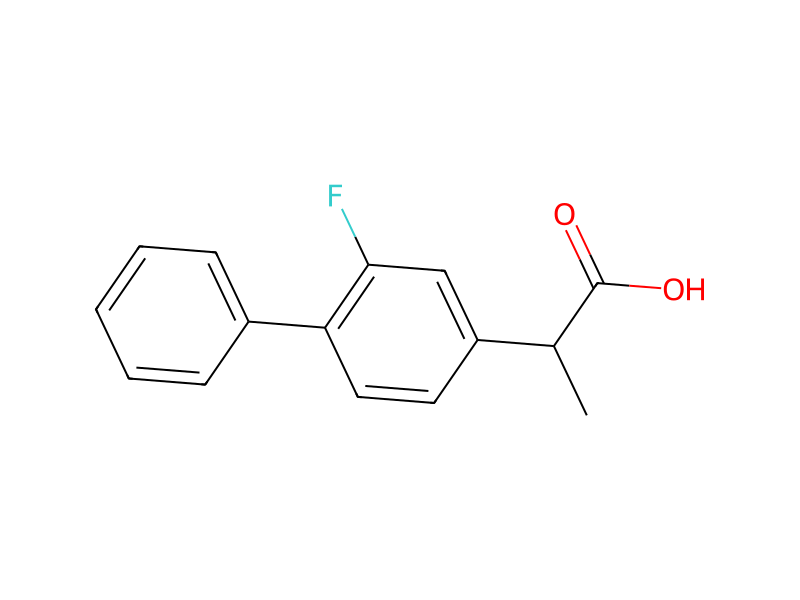
フルルビプロフェン

Flurbiprofen

HCID 3394
ノートを作成反応を作成見積依頼を出す
印刷プレビュー

データを補完しています。しばらくしてからページを更新すると最新の内容を表示できます
基本情報概要名称と識別子物性安全と法規制化学と産業関連反応化合物ノート
部分構造検索類似構造を探す

基本情報

CAS
5104-49-4
標準SMILES
CC(C(=O)O)c1ccc(-c2ccccc2)c(F)c1
InChIKey
SYTBZMRGLBWNTM-UHFFFAOYSA-N
分子式
C15H13FO2
平均分子量
244.26 g/mol
単同位体質量
244.08995788

概要

Flurbiprofen can cause developmental toxicity and female reproductive toxicity according to state or federal government labeling requirements.

名称と識別子

優先名称
Flurbiprofen
IUPAC
2-(3-fluoro-4-phenylphenyl)propanoic acid
現地名
フルルビプロフェン
英語名
Flurbiprofen
分子式
C15H13FO2
分子量
244.26

名称と別名

flurbiprofen5104-49-4AnsaidFrobenAntadys2-(3-fluoro-4-phenylphenyl)propanoic acid2-(2-fluorobiphenyl-4-yl)propanoic acidCebutidZepolasFlubiprofenFlurbiprofeneFlurbiprofeno
名称をさらに表示
フルルビプロフェンフルルバンアップノンヤクバン2-(2-フルオロ-1,1'-ビフェニル-4-イル)プロピオン酸ファルケンセブチドステイバンオクフェンフロベンα-メチル-3-フルオロ-4-フェニルベンゼン酢酸フループフルガリン2-(2-フルオロ-4-ビフェニリル)プロパン酸アンメタリン2-(2-フルオロビフェニル-4-イル)プロピオン酸アンサイド2-(4-フェニル-3-フルオロフェニル)プロパン酸フルルビプロフエンゼポラス2-(2-Fluoro-[1,1'-biphenyl]-4-yl)propanoic acidrac-Flurbiprofenfp70ANSIDEAdfeed
3-Fluoro-4-phenylhydratropic acidFlurbiprofenumBTS-18322U-27182BTS 183222-Fluoro-alpha-methyl-(1,1'-biphenyl)-4-acetic acid(+-)-2-Fluoro-alpha-methyl-4-biphenylacetic acidDTXSID0037231

データベース識別子

CAS
5104-49-4、51543-38-5
PubChem CID
3394
DTXSID
DTXSID0037231
ChEMBL
CHEMBL563
ChEBI
CHEBI:5130
UNII
5GRO578KLP
EC Number
225-827-6、257-262-6
Nikkaji
J73.105F

物性

構造計算による物性補完中

XLogP
4.2
極性表面積
37.3 Ų
水素結合供与体数
1
水素結合受容体数
3
回転可能結合数
3
重原子数
18
形式電荷
0
複雑度
286

実験および物理化学的性質

Drugs · 3 件

Pharmaceuticals -> Musculo-skeletal system -> Anti-inflammatory and antirheumatic products

Pharmaceuticals

Pharmaceuticals -> Analgesics and anti-inflammatories

LogP3.8
Solubility2.49e-02 g/L
Human Drugs · 4 件

Breast Feeding; Lactation; Milk, Human; Analgesic Agents; Anti-inflammatory Agents, Nonsteroidal

FDA approved drugs -> Active ingredient

FDA approved drugs -> Active ingredient

Pharmaceuticals

Melting Point · 2 件

110-111 °C

110 - 111 °C

Physical DescriptionSolid
Dissociation Constants · 3 件

4.03

4.22

4.3

Collision Cross Section155.9 Ų [M+K]+ [CCS Type: TW; Method: calibrated with polyalanine and drug standards]

物理化学的性質

安全と法規制

安全情報は参考情報です。供給元の安全データシート(SDS)、適用法令、専門家による評価に代わるものではありません。

GHS分類

GHS Classification · 4 件

Danger

H301 (98.2%): Toxic if swallowed [Danger Acute toxicity, oral]

P203, P261, P264, P264+P265, P270, P271, P280, P301+P316, P302+P352, P304+P340, P305+P351+P338, P318, P319, P321, P330, P332+P317, P337+P317, P362+P364, P403+P233, P405, and P501 (click each P-code to see the statement)

Aggregated GHS information provided per 114 reports by companies from 15 notifications to the ECHA C&L Inventory. Each notification may be associated with multiple companies.

危険有害性情報

Regulatory InformationHazard Traits - Developmental Toxicity; Reproductive Toxicity
Other Safety InformationIMAP assessments - [1,1'-Biphenyl]-4-acetic acid, 2-fluoro-.alpha.-methyl-: Environment tier I assessment
Hazard Classes and CategoriesAcute Tox. 3 (98.2%)

毒性情報

Treatment · 1 件

Patients should be managed by symptomatic and supportive care following overdose with a nonsteroidal anti-inflammatory drug. There are no specific antidotes. Emesis and/or activated charcoal (60 to 100 g in adults, 1 to 2 g/kg in children) and/or osmotic cathartic may be indicated in patients seen within 4 hours of ingestion with symptoms, or following a large overdose (5 to 10 times the usual dose). Forced diuresis, alkalization of urine, hemodialysis, or hemoperfusion may not be useful due to high protein binding. (L1712)

Hepatotoxicity · 1 件

Prospective studies show that mild elevations in serum aminotransferase levels can occur in up to 15% of patients taking NSAIDs such as flurbiprofen, but the abnormalities are generally transient, mild and asymptomatic, often resolving even with drug continuation. Marked aminotransferase elevations above 3 times the upper limit of normal (ULN) occur in less than 1% of patients. Clinically apparent liver injury with jaundice from flurbiprofen is rare and only individual case descriptions have been published. The latency to onset is within 1 to 4 weeks of starting. The pattern of enzyme elevations is typically cholestatic, but hepatocellular cases have been described. Immunoallergic features are present in some cases (low grade fever, rash), but are generally not prominent, and autoantibody formation is rare. Most cases resolve promptly on stopping therapy. Flurbiprofen is not mentioned in large case series on drug induced liver injury or acute liver failure from the United States, but was listed as the second most common agent implicated in drug-induced liver injury in a case series from Turkey, one of which was fatal.

化学と産業

薬理情報

ATC Code · 6 件

R02AX01

S - Sensory organs

M - Musculo-skeletal system

M - Musculo-skeletal system

R - Respiratory system

QM - Musculo-skeletal system

Protein Binding> 99% bound, primarily to albumin. Binds to a different primary binding site on albumin than anticoagulants, sulfonamides and phenytoin.
Pharmacodynamics · 1 件

Flurbiprofen, a nonsteroidal anti-inflammatory agent (NSAIA) of the propionic acid class, is structually and pharmacologically related to fenoprofen, ibuprofen, and ketoprofen, and has similar pharmacological actions to other prototypica NSAIAs. Flurbiprofen exhibits antiinflammatory, analgesic, and antipyretic activities. The commercially available flurbiprofen is a racemic mixture of (+)S- and (-) R-enantiomers. The S-enantiomer appears to possess most of the anti-inflammatory, while both enantiomers may possess analgesic activity.

Mechanism of Action · 1 件

Similar to other NSAIAs, the anti-inflammatory effect of flurbiprofen occurs via reversible inhibition of cyclooxygenase (COX), the enzyme responsible for the conversion of arachidonic acid to prostaglandin G2 (PGG2) and PGG2 to prostaglandin H2 (PGH2) in the prostaglandin synthesis pathway. This effectively decreases the concentration of prostaglandins involved in inflammation, pain, swelling and fever. Flurbiprofen is a non-selective COX inhibitor and inhibits the activity of both COX-1 and -2. It is also one of the most potent NSAIAs in terms of prostaglandin inhibitory activity.

Biological Half-LifeR-flurbiprofen, 4.7 hours; S-flurbiprofen, 5.7 hours
Metabolism/Metabolites · 2 件

Hepatic. Cytochrome P450 2C9 plays an important role in the metabolism of flurbiprofen to its major metabolite, 4’-hydroxy-flurbiprofen. The 4’-hydroxy-flurbiprofen metabolite showed little anti-inflammatory activity in animal models of inflammation.

Hepatic. Cytochrome P450 2C9 plays an important role in the metabolism of flurbiprofen to its major metabolite, 4’-hydroxy-flurbiprofen. The 4’-hydroxy-flurbiprofen metabolite showed little anti-inflammatory activity in animal models of inflammation. Route of Elimination: Flurbiprofen is poorly excreted into human milk. Following dosing with flurbiprofen, less than 3% of flurbiprofen is excreted unchanged in the urine, with about 70% of the dose eliminated in the urine as parent drug and metabolites. Renal elimination is a significant pathway of elimination of flurbiprofen metabolites. Half Life: R-flurbiprofen, 4.7 hours; S-flurbiprofen, 5.7 hours

関連反応

717 件
反応記録を作成
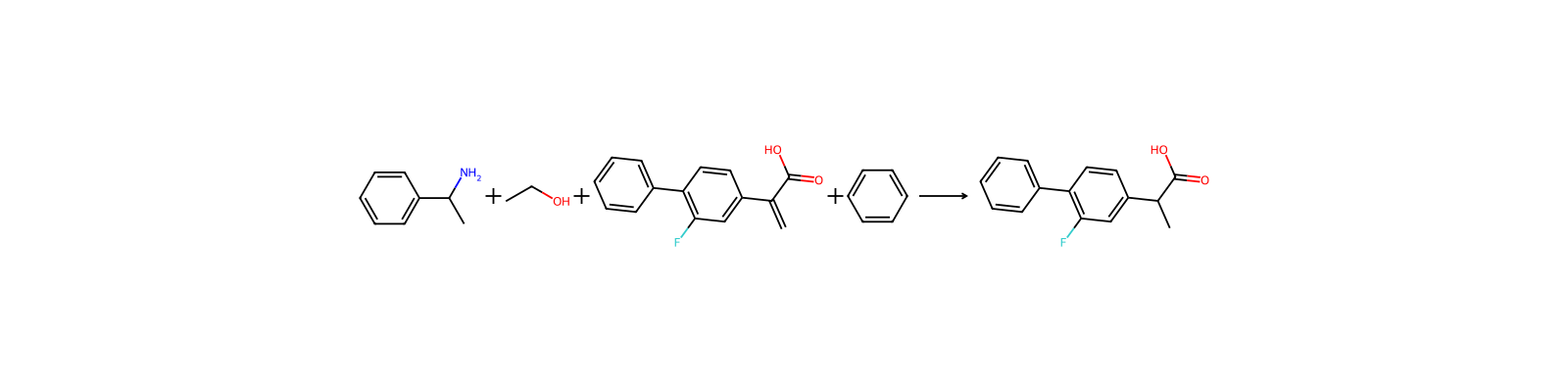
HRID 5285 の反応式
HRID 5285反応物としてuspto-grants-1993_09
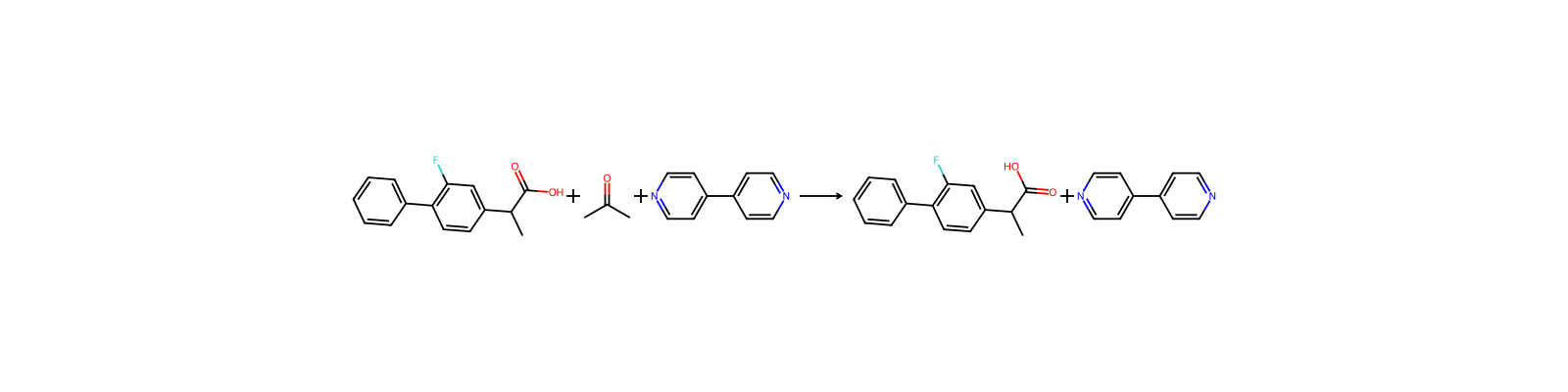
HRID 107050 の反応式
HRID 107050生成物としてTraining data from https://doi.org/10.1039/C8SC04228D (2/10)
HRID 108060 の反応式
HRID 108060生成物としてTraining data from https://doi.org/10.1039/C8SC04228D (2/10)
HRID 125699 の反応式
HRID 125699生成物として反応物としてTraining data from https://doi.org/10.1039/C8SC04228D (2/10)
HRID 153611 の反応式
HRID 153611反応物としてTraining data from https://doi.org/10.1039/C8SC04228D (9/10)
HRID 260385 の反応式
HRID 260385反応物としてuspto-grants-1996_06
HRID 316181 の反応式
HRID 316181生成物として反応物としてTraining data from https://doi.org/10.1039/C8SC04228D (8/10)
HRID 434580 の反応式
HRID 434580生成物としてuspto-grants-1983_08
1 / 90 ページ

化合物ノート

読み込み中…

このページの内容基本情報概要名称と識別子物性安全と法規制化学と産業関連反応化合物ノート
その他の操作
ノートを作成反応を作成見積依頼を出す
融点
110 · 110-112 °C(lit.)
沸点
376.2 · 376.2±30.0 °C(Predicted)
比重(密度)
1.1795 · 1.1795 (estimate)
貯蔵温度
Sealed in dry,Room Temperature
溶解性
50 mg/mL · メタノール:可溶50mg/mL
酸解離定数(Pka)
3.8 · pKa 3.80(H2O) (Uncertain)
外見
白い固体
色
ホワイトからオフホワイト
由来生物
synthetic
水溶解度
8 mg/L · 8mg/L(室温)
Merck
14 · 14,4199
InChI
InChI=1S/C15H13FO2/c1-10(15(17)18)12-7-8-13(14(16)9-12)11-5-3-2-4-6-11/h2-10H,1H3,(H,17,18)
InChIKey
SYTBZMRGLBWNTM-UHFFFAOYSA-N
SMILES
FC1C=C(C=CC=1C1C=CC=CC=1)C(C)C(=O)O
CAS データベース
5104 · 5104-49-4(CAS DataBase Reference)
EPAの化学物質情報
1 · [1,1'-Biphenyl]-4-acetic acid, 2-fluoro-?-methyl- (5104-49-4)

化学的性質

化学的特性White to Off-White Crystalline Solid

Exposure RoutesFluribiprofen is rapidly and almost completely absorbed following oral administration. Peak plasma concentrations are reached 0.5 - 4 hours after oral administration.
Toxicity Summary · 1 件

Similar to other NSAIAs, the anti-inflammatory effect of flurbiprofen occurs via reversible inhibition of cyclooxygenase (COX), the enzyme responsible for the conversion of arachidonic acid to prostaglandin G2 (PGG2) and PGG2 to prostaglandin H2 (PGH2) in the prostaglandin synthesis pathway. This effectively decreases the concentration of prostaglandins involved in inflammation, pain, swelling and fever. Flurbiprofen is a non-selective COX inhibitor and inhibits the activity of both COX-1 and -2. It is also one of the most potent NSAIAs in terms of prostaglandin inhibitory activity.

Signs and SymptomsSymptoms of a flurbiprofen overdose may include nausea, vomiting, stomach pain, dizziness, drowsiness, black or bloody stools, coughing up blood, urinating less than usual or not at all, shallow breathing, fainting, or coma.
Carcinogen ClassificationNo indication of carcinogenicity to humans (not listed by IARC).
Drug Induced Liver Injury · 6 件

Benchmark Dataset for the Liver Toxicity Knowledge Base (LTKB)

flurbiprofen

Ocufen®

NSAIDs

3

less-DILI-concern drugs

Effects During Pregnancy and Lactation◉ Summary of Use during Lactation
Toxicity DataLD50: 10 mg/kg (Oral, Dog) (A308)

安全データ

wgk
3
rtecs
DU8341000
ridadr
UN 2811 6.1/PG 2
hs_code
29163990
risk_code
25-23/24/25
hazard_code
T,C
safety_code
36/37/39-45
hazard_class
6.1(b)
packing_group
III
Hazard Classifications
Acute Tox. 3 Oral
ストレージクラス
6.1C - Combustible acute toxic Cat.3toxic compounds or compounds which causing chronic effects
FDA Pharmacological Classification · 6 件

5GRO578KLP

FLURBIPROFEN

Mechanisms of Action [MoA] - Cyclooxygenase Inhibitors

Chemical Structure [CS] - Anti-Inflammatory Agents, Non-Steroidal

Established Pharmacologic Class [EPC] - Nonsteroidal Anti-inflammatory Drug

Flurbiprofen is a Nonsteroidal Anti-inflammatory Drug. The mechanism of action of flurbiprofen is as a Cyclooxygenase Inhibitor.

MeSH Pharmacological Classification · 3 件

Compounds capable of relieving pain without the loss of CONSCIOUSNESS.

Anti-inflammatory agents that are non-steroidal in nature. In addition to anti-inflammatory actions, they have analgesic, antipyretic, and platelet-inhibitory actions. They act by blocking the synthesis of prostaglandins by inhibiting cyclooxygenase, which converts arachidonic acid to cyclic endoperoxides, precursors of prostaglandins. Inhibition of prostaglandin synthesis accounts for their analgesic, antipyretic, and platelet-inhibitory actions; other mechanisms may contribute to their anti-inflammatory effects.

Compounds or agents that combine with cyclooxygenase (PROSTAGLANDIN-ENDOPEROXIDE SYNTHASES) and thereby prevent its substrate-enzyme combination with arachidonic acid and the formation of eicosanoids, prostaglandins, and thromboxanes.

Absorption, Distribution and Excretion · 3 件

Fluribiprofen is rapidly and almost completely absorbed following oral administration. Peak plasma concentrations are reached 0.5 - 4 hours after oral administration.

Flurbiprofen is poorly excreted into human milk. Following dosing with flurbiprofen, less than 3% of flurbiprofen is excreted unchanged in the urine, with about 70% of the dose eliminated in the urine as parent drug and metabolites. Renal elimination is a significant pathway of elimination of flurbiprofen metabolites.

14 L [Normal Healthy Adults]

Cellular LocationsCytoplasm
Metabolite PathwaysFlurbiprofen Action Pathway

用途と製造

Uses · 2 件

Use (kg; approx.) in Germany (2009): >250

Flurbiprofen tablets are indicated for the acute or long-term symptomatic treatment of rheumatoid arthritis, osteorarthritis and anklosing spondylitis. It may also be used to treat pain associated with dysmenorrhea and mild to moderate pain accompanied by inflammation (e.g. bursitis, tendonitis, soft tissue trauma). Topical ophthalmic formulations may be used pre-operatively to prevent intraoperative miosis.

Use ClassificationPharmaceuticals
応用分野 · 6 件

用途イブプロフェン類縁体の非ス テロイド系抗炎症剤です。フルルビプロフェ ンはシクロオキシゲナーゼ(COX)を阻害す ることで、発熱・炎症作用を抑制します。

用途プロピオン酸系化合物です。 シクロオキシゲナーゼ(COX)を阻害し、プ ロスタグランジン生合成抑制作用を示します。

用途フルルビプロフェンとは、で表されるフェニルアルカン酸誘導体の1種である。プロパン酸系の非ステロイド性抗炎症薬として、関節炎による痛みの緩和などに用いられる。

説明Flurbiprofen synthesis was originally reported in 1974. During a study of the pharmacological properties of a large number of substituted phenylalkanoic acids, including ibuprofen and ibufenac, the most potent were found to be substituted 2-(4-biphenyl)propionic acids. Further toxicological and pharmacological studies indicated that flurbiprofen possessed the most favorable therapeutic profile, so it was selected for further clinical development. It was not marketed until 1987, when it was introduced as the sodium salt as Ocufen, the first topical NSAID indicated for ophthalmic use in the United States. The indication for Ocufen is the same as that for Profenal—that is, to inhibit intraoperative miosis induced by prostaglandins in cataract surgery.

使用An anti-inflammatory used as an analgesic.

一般的な説明Flurbiprofen (Ansaid, Ocufen, Froben), is another drug inthis class indicated for both acute and long-term managementof RA and OA but with a more complex mechanism ofaction. Unlike the other drugs in this class, it does not undergochiral inversion (i.e., the conversion of the “inactive”[R]-enantiomer to the active, [S]-enantiomer). Similar to aspirinand other salicylates, both flurbiprofen enantiomersblock COX-2 induction as well as inhibiting the nuclearfactor-κB-mediated polymorphonuclear leukocyte apoptosissignaling; therefore, both enantiomers are believed to contributeequally to its overall anti-inflammatory action.(R)-flurbiprofen is actually a strong clinical candidate forthe treatment of Alzheimer disease, because it has beenshown to reduce Aβ42 production by human cells.

上流・下流製品情報

上流原料

2-フルオロジフェニルモルホリン炭酸 ジエチル硫黄

下流製品

フルルビプロフェンアキセチル[1,1'-Biphenyl]-4-acetic acid, 2-fluoro-α-methyl-, di-1-naphthalenylmethyl ester, (αR)-[1,1'-Biphenyl]-4-acetic acid, 2-fluoro-α-methyl-, di-9-phenanthrenylmethyl ester, (αR)-