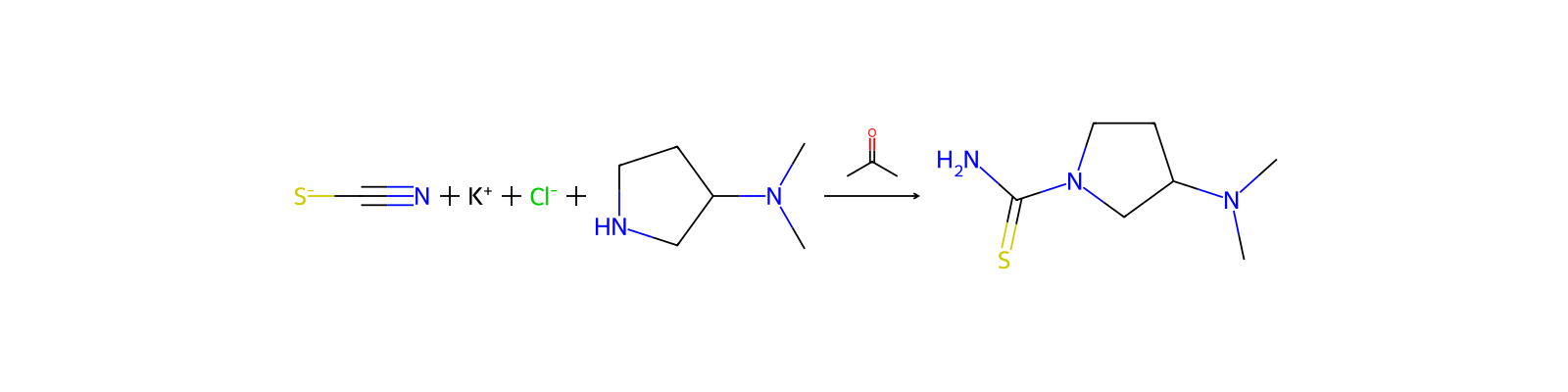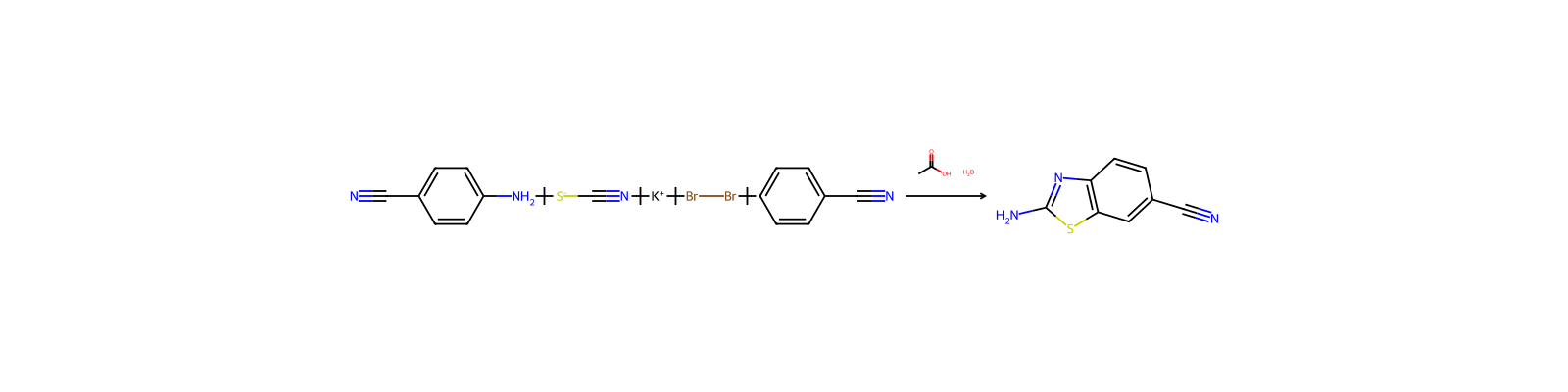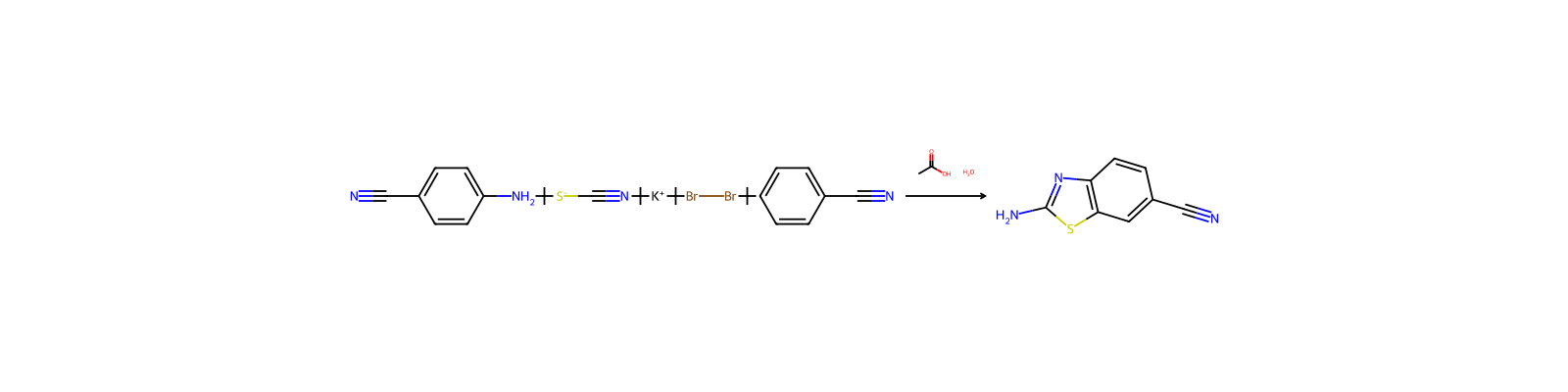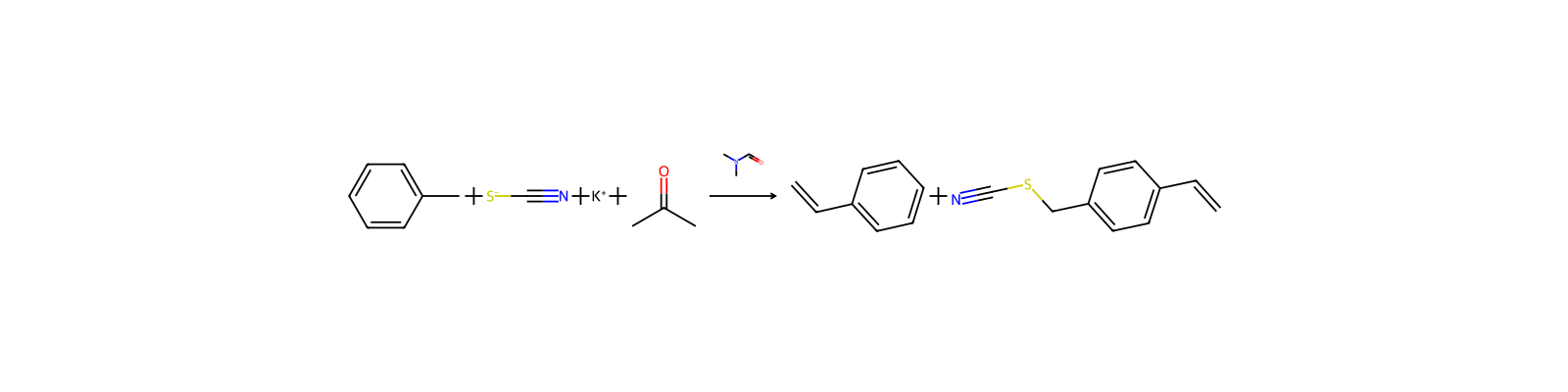
HRID 1934反応物として
Potassium thiocyanate

333-20-0N#C[S-].[K+]ZNNZYHKDIALBAK-UHFFFAOYSA-MPotassium thiocyanate is a potassium salt which is the monopotassium salt of thiocyanic acid. It contains a thiocyanate.
333-20-0DTXSID7029619CHEMBL2106973CHEBI:30951Fungicides
Active substance -> EU Pesticides database: Not approved
1.9 g/cm³
1.89 @25 °C
173 °C
173 °C
Colorless deliquescent solid; [Merck Index]
COLOURLESS-TO-WHITE HYGROSCOPIC CRYSTALS.
安全情報は参考情報です。供給元の安全データシート(SDS)、適用法令、専門家による評価に代わるものではありません。
Danger
H302+H312+H332 (45.4%): Harmful if swallowed, in contact with skin or if inhaled [Warning Acute toxicity, oral; acute toxicity, dermal; acute toxicity, inhalation]
P261, P264, P264+P265, P270, P271, P273, P280, P301+P317, P302+P352, P304+P340, P305+P351+P338, P305+P354+P338, P317, P321, P330, P337+P317, P362+P364, P391, and P501 (click each P-code to see the statement)
Aggregated GHS information provided per 284 reports by companies from 24 notifications to the ECHA C&L Inventory. Each notification may be associated with multiple companies.
Danger
H302: Harmful if swallowed [Warning Acute toxicity, oral]
Chemical: Thiocyanic acid, potassium salt
Commission Regulation (EU) No 188/2011
Thiocyanic acid, potassium salt (1:1) is listed on the EPA's Chemical Data Reporting (CDR) system. Manufacturers and importers of Thiocyanic acid, potassium salt (1:1) are required to report information about their production and use of this chemical to the EPA under the Toxic Substances Control Act (TSCA). (40 eCFR Part 711)
05/751/EC, Reg. (EU) No 108/2014
REACH registered substance: Potassium thiocyanate (EC: 206-370-1)
Potassium thiocyanate: Does not have an individual approval but may be used under an appropriate group standard
Toxic effects include skin eruptions, psychosis, and collapse; [Merck Index] May cause CNS effects (excitement and convulsions); Prolonged or repeated exposure may cause thyroid and CNS effects leading to impaired function and hypothyroidism; [ICSC] Human ingestion of 80 mg/kg causes hallucinations, convulsions, and muscle weakness; Human ingestion of 428 mg/kg causes toxic psychosis, hallucinations, and gastritis; [RTECS] Sheep exposed orally during gestation produced goiter in newborn lambs; Effects to female fertility observed in rats at high doses; Another study demonstrated maternal and fetal toxicity with no increase in congenital defects; [REPROTOX] Harmful by ingestion, inhalation, and skin absorption; Targets the CNS, cardiovascular system, and thyroid; [Sigma-Aldrich MSDS] See Sodium thiocyanate.
Used to make mustard oil, for printing and dyeing textiles, in photography (intensifier), and as a therapeutic hypotensive; [Merck Index] Used as a contact fungicide for green house vegetables and ornamentals and green house and open field strawberries; [ExPub: EFSA: DAR - Vol. 1]
Farming (Pesticides) [Category: Industry]
解説チオシアン酸カリウム (英: Potassium thiocyanate) とは、無臭の無色結晶です。 カリウム、硫黄、炭素と窒素からなる無機化合物で、化学式はKSCN、分子量は97.18、CAS登録番号は333-20-0になります。擬ハロゲン化物であるチオシアン酸アニオンの重要な塩の一つで、ロダン化カリウム (英: Potassium rhodanide)、ロダンカリなどの別名を持ちます。 チオシアン酸カリウムは、カリウムカチオンとチオシアン酸アニオンで構成されており、チオシアン酸アニオンは三重結合を介して炭素に結合した窒素と、単結合を介して炭素に結合した硫黄という構造をしています。
用途ハロゲン化物の定量(チオシアン酸-銀滴定、フォルハルト法)
用途鉄(III)の比色定量、合成樹脂、殺虫殺菌剤、色素の合成原料、写真補助剤、メッキ原料。
用途合成樹脂、殺虫殺菌剤
用途人工マスタード油の製造、織物の印刷や染色、写真の増感剤、化学分析
用途チオ尿素、染料、医薬の製造原料、織物の染色およびナッセン、写真の補力に用いられる。水に溶解するときに温度が相当下がるので寒剤としても使用される。
化学的特性Potassium thiocyanate, KSCN,also known as potassium sulfocyanate and potassium rhodanide, is a colorless deliquescent crystalline solid that melts at 173°C (343 OF) and decomposes at 500°C(932 OF). Soluble in water and alcohol,it has no odor and a saline taste.Potassium thiocyanate is used in printing and dyeing textiles, freezing mixtures, manufacturing chemicals, photography and medicine.
Acute Tox. 4 (100%)
Acute toxicity - category 4
Acute toxicity (Oral) - Category 4
Fresh air, rest.
Remove contaminated clothes. Rinse skin with plenty of water or shower.
First rinse with plenty of water for several minutes (remove contact lenses if easily possible), then refer for medical attention.
Rinse mouth. Give a slurry of activated charcoal in water to drink. Refer for medical attention .
Cough. Further see Ingestion.
Confusion. Convulsions. Nausea. Vomiting. Weakness.
使用Potassium Thiocyanate has been used as a catalyst in a one-pot reaction of dialkyl acetylenedicarboxylates with indane-1,3-dione. Potassium Thiocyanate has been used as a selective bacterial inhibitor to create ESS-3 broth to allow co-enrichment of the target pathogens and suppress growth of some non-target pathogens
一般的な説明Potassium thiocyanate is an inorganic potassium salt. Phase transitions in potassium thiocyanate (KSCN) have been investigated by X-ray diffraction studies. The order-disorder type transition with respect to the orientation of the thiocyanate ions was identified. Its polarized infrared spectrum has been reported. It participates in the ring-opening of aziridines. The reaction was carried out in the presence of sulfated zirconia to afford the corresponding β-aminothiocyanates.
使用用途チオシアン酸カリウムは、「」「医薬」「合成樹脂の製造原料」「めっき原料」等として利用されています。他にも、「写真」「織物の染色および捺染」等の補助剤としても用いられています。 水に溶解する際に大きく吸熱する性質をもつため、寒剤としても使用されています。医薬品分野では血圧降下剤、農業分野では殺虫剤、殺菌剤等として利用されています。また、分析試薬としてハロゲン化物の定量や銀イオンの分析などの化学実験でも利用されています。
製造方法Potassium thiocyanate may be made by adding caustic potash to a solution of ammonium thiocyanate, followed by evaporation of the solution. NH4SCN + KOH →KSCN + NH4OHAlso, the compound can be prepared by heating potassium cyanide with sulfur:KCN + S →KSCN.
純化方法Crystallise it from H2O if much chloride ion is present in the salt, otherwise from EtOH or MeOH (optionally by addition of Et2O). Filter off on a Büchner funnel without paper, and dry it in a desiccator at room temperature before heating for 1hour at 150o, with a final 10-20minutes at 200o to remove the last traces of solvent [Kolthoff & Lingane J Am Chem Soc 57 126 1935]. Store it in the dark.
定義本品は、チオシアン酸のカリウム塩であり、次の化学式で表される。
定義ChEBI: A potassium salt which is the monopotassium salt of thiocyanic acid.