Potassium Permanganate
データを補完しています。しばらくしてからページを更新すると最新の内容を表示できます
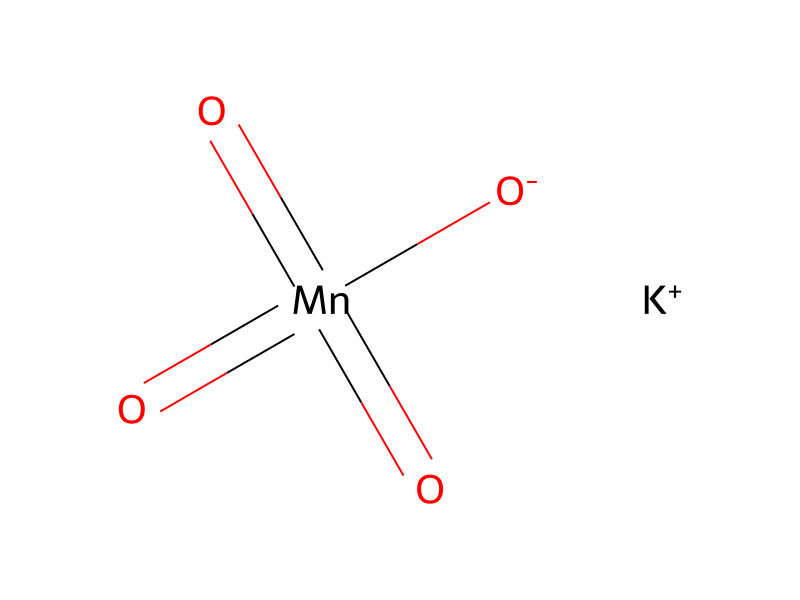
7722-64-7[K+].[O]=[Mn](=[O])(=[O])[O-]VZJVWSHVAAUDKD-UHFFFAOYSA-NPotassium permanganate appears as a purplish colored crystalline solid. Noncombustible but accelerates the burning of combustible material. If the combustible material is finely divided the mixture may be explosive. Contact with liquid combustible materials may result in spontaneous ignition. Contact with sulfuric acid may cause fire or explosion. Used to make other chemicals and as a disinfectant.
Bactericides, Fungicides, Molluscicides
Active substance -> EU Pesticides database: Not approved
2.7 at 59 °F (USCG, 1999) - Denser than water; will sink
2.7 g/cu cm
2.7 g/cm³
2.7 @25 °C
Dark purple or bronze-like crystals; Almost opaque by transmitted light and of a blue metallic luster by reflected air.
Purple orthorhombic crystals
Bipyrimidal rhombic prisms
安全情報は参考情報です。供給元の安全データシート(SDS)、適用法令、専門家による評価に代わるものではありません。
Danger
H272: May intensify fire; oxidizer [Danger Oxidizing liquids; Oxidizing solids]
P203, P210, P220, P264, P270, P273, P280, P301+P317, P318, P330, P370+P378, P391, P405, and P501 (click each P-code to see the statement)
This chemical does not meet GHS hazard criteria for 7.8% (37 of 472) of reports.
Danger
H272 (91.7%): May intensify fire; oxidizer [Danger Oxidizing liquids; Oxidizing solids]
Chemical: Permanganic acid (HMnO4), potassium salt
List II Chemical: A chemical, other than a List I chemical, specified by regulation that, in addition to legitimate uses, is used in manufacturing a controlled substance in violation of the Act. (21 eCFR 1310.02)
Permanganic acid (HMnO4), potassium salt (1:1) is listed on the EPA's Chemical Data Reporting (CDR) system. Manufacturers and importers of Permanganic acid (HMnO4), potassium salt (1:1) are required to report information about their production and use of this chemical to the EPA under the Toxic Substances Control Act (TSCA). (40 eCFR Part 711)
2008/768
Status: Active Update: 25-04-2023 https://echa.europa.eu/registration-dossier/-/registered-dossier/14531
Permanganic acid, potassium salt: HSNO Approval: HSR001342 Approved with controls
Behavior in Fire: May cause fire on contact with combustibles. Containers may explode. (USCG, 1999)
CAUTION: Ammonium nitrate products may explode if involved in fire or contaminated with hydrocarbons (fuels), organic matter, other contaminants or when hot molten and contained. Treat as an explosive (GUIDE 112).
Not combustible but enhances combustion of other substances. Gives off irritating or toxic fumes (or gases) in a fire. Risk of fire and explosion on contact with combustible substances or reducing agents.
D - Dermatologicals
V - Various
QV - Various
QD - Dermatologicals
D08AX06
Manganese is absorbed mainly via ingestion, but can also be inhaled. It binds to alpha-2-macroglobulin, albumin, or transferrin in the plasma and is distributed to the brain and all other mammalian tissues, though it tends to accumulate more in the liver, pancreas, and kidney. Manganese is capable of existing in a number of oxidation states and is believed to undergo changes in oxidation state within the body. Manganese oxidation state can influence tissue toxicokinetic behavior, and possibly toxicity. Manganese is excreted primarily in the faeces. (L228)
Substances used for the detection, identification, analysis, etc. of chemical, biological, or pathologic processes or conditions. Indicators are substances that change in physical appearance, e.g., color, at or approaching the endpoint of a chemical titration, e.g., on the passage between acidity and alkalinity. Reagents are substances used for the detection or determination of another substance by chemical or microscopical means, especially analysis. Types of reagents are precipitants, solvents, oxidizers, reducers, fluxes, and colorimetric reagents. (From Grant & Hackh's Chemical Dictionary, 5th ed, p301, p499)
SYSTEMIC EFFECTS ARE NOT ... /COMMONLY SEEN/ BECAUSE OF POOR ABSORPTION.
Adult channel catfish Ictalurus punctatus were exposed to waterborne potassium permanganate for 12 wk to determine if such exposure would alter the manganese content of axial muscle or liver tissue. Continuous exposure to 0.5 mg KMnO4 or exposure to 1 or 2 mg KMnO4/L on alternate days did not cause a significant incr in manganese in axial muscle or liver tissue. The mean (|SE) concn of manganese in axial muscle of unexposed controls was 0.262 | 0.018 mg/kg (wet weight). Means of scle could be detected within groups. The mean (|SE) concn of manganese in liver tissue of controls was 1.67 | 0.09 mg/kg (wet weight). Manganese concns in liver tissue of the three exposure groups were 1.57 | 0.07 mg/kg, 1.68 | 0.08 mg/kg, and 1.58 | 0.10 mg/kg, for 0.5 (continuous), 1, or 2 mg/L (alternate days), respectively. Manganese was thought to accumulate in liver tissue, however, there were no statistically significant differences between those groups & the controls.
読み込み中…
7722-64-7DTXSID2034839CHEMBL3833305CHEBI:231501Soluble in many organic solvents; also by concentrated acids with the liberation of oxygen.
Soluble in acetone and methanol
Soluble in acetic acid, trifluoroacetic acid, acetic anhydride, pyridine, benzonitrile, sulfolane.
In water, 6.40X10+4 mg/l @ 20 °C
25 g/100 @ 65 °C water
Solubility in water, g/100ml at 20 °C: 6.4 (moderate)
化学的特性酸化マンガンⅦカリウムは化学式でKMnO4と表される化合物ですこの物質は一般的に過マンガン酸カリウムとしても知られておりその鮮やかな紫色の結晶は多くの化学反応でオキシダントとして使用されることで有名です
化学的特性鉄過マンガン酸塩はその独特の化学的性質と幅広い応用可能性により科学研究や工業分野で注目される化合物ですこの物質は特に水処理技術や触媒としての利用が知られています鉄FeとマンガンMn酸素Oから成るこの化合物は複雑な環境下での反応性と安定性を備えています
化学的特性Potassium permanganate is a dark purple crystalline solid with a sweet taste that decompose at 240°C and explode in contact with oxidizable materials.Used as a disinfectant and analytical reagent, in dyes,bleaches,and medicines,and as a chemical intermediate.
Burns and stains the skin dark brown. If ingested will cause severe distress of gastro-intestinal system. May be fatal if over 4 oz. are consumed. (USCG, 1999)
· Inhalation, ingestion or contact (skin, eyes) with vapors or substance may cause severe injury, burns or death.
Dilute solutions are irritants and concentrated solutions caustic to the skin, eyes, and respiratory tract. Toxic by ingestion--gastrointestinal burns, methemoglobinemia, and injury to liver and kidneys; [HSDB] If not flushed with water, can burn skin and stain it dark brown; [CHRIS] Inhalation of high concentrations of dust or mist may cause pulmonary edema in extreme exposures; May cause liver and kidney damage after ingestion; Lethal dose is about 10 grams; May cause manganese poisoning after chronic ingestion or inhalation; [CHEMINFO] Permanganate crystals and concentrated solutions are corrosive (release potassium hydroxide when contact water) and can induce methemoglobinemia after ingestion; [Olson, p. 133] See Manganese and linked occupational diseases.
Potassium permanganate is an indirect food additive for use only as a component of adhesives.
Food starch may be bleached by treatment with one or more of the following: ... potassium permanganate, not to exceed 0.2 percent. Limitations: Residual manganese (calculated as Mn), not to exceed 50 ppm in food starch-modified.
POLSON CJ, TATTERSALL RN; JB LIPPENCOTT CO, PHILA, 116-27 (1969). TOXICITY OF POTASSIUM PERMANGANATE IS DISCUSSED.
MICHAELS DD, ZUGSMITH GS; EYE EAR NOSE THROAT MON 52 (3): 97-8 (1973). POTASSIUM PERMANGANATE BURNS OF THE EYE ARE DESCRIBED.
Excerpt from ERG Guide 140 [Oxidizers]:
In case of fire in the surroundings, use appropriate extinguishing media.
Fresh air. Half-upright position. Artificial respiration may be needed. Refer immediately for medical attention.
Wear protective gloves when administering first aid. First rinse with plenty of water for at least 15 minutes, then remove contaminated clothes and rinse again. Refer for medical attention .
Rinse with plenty of water for several minutes (remove contact lenses if easily possible). Refer immediately for medical attention.
Rinse mouth. If within a few minutes after ingestion, one small glass of water may be given to drink. Do NOT induce vomiting. Refer immediately for medical attention.
· CALL 911. Then call emergency response telephone number on shipping paper. If shipping paper not available or no answer, refer to appropriate telephone number listed on the inside back cover.
· Keep combustibles (wood, paper, oil, etc.) away from spilled material.
INGESTION: induce vomiting and follow with thorough gastric lavage, demulcents, glucose I.V., fluid therapy, and antibiotics. Tracheostomy may be lifesaving. (USCG, 1999)
General First Aid:
The material itself is noncombustible but it will accelerate the burning of combustible material. If the combustible material is finely divided the mixture may be explosive. Contact with liquid combustible materials may result in spontaneous ignition.
· Wear positive pressure self-contained breathing apparatus (SCBA).
TIH (Toxic Inhalation Hazard) - Term used to describe gases and volatile liquids that are toxic when inhaled. Some are TIH materials themselves, e.g., chlorine, and some release TIH gases when spilled in water, e.g., chlorosilanes. [ERG 2016].
0.2 [mg/m3], as MN (inhalable fraction), 0.02 mg/m3, as Mn (respirable fraction)[German Research Foundation (DFG)]
If material on fire or involved in fire: Flood with water. Cool all affected containers with flooding quantities of water. Apply water from as far a distance as possible.
Evacuation: If fire becomes uncontrollable - consider evacuation of one-half (1/2) mile radius.
Environmental considerations: Land spill: Dig a pit, pond, lagoon, holding area to contain liquid or solid material. /SRP: If time permits, pits, ponds, lagoons, soak holes, or holding areas should be sealed with an impermeable flexible membrane liner./ Cover solids with a plastic sheet to prevent dissolving in rain or fire fighting water. Add sodium bisulfite (NaHSO3).
Environmental considerations: Water spill: Add dilute caustic soda (NaOH). Add sodium bisulfite (NaHSO3). Use mechanical dredges or lifts to remove immobilized masses of pollutants and precipitates.
SRP: At the time of review, criteria for land treatment or burial (sanitary landfill) disposal practices are subject to significant revision. Prior to implementing land disposal of waste residue (including waste sludge), consult with environmental regulatory agencies for guidance on acceptable disposal practices.
Personal protection: chemical protection suit including self-contained breathing apparatus. Do NOT let this chemical enter the environment. Sweep spilled substance into covered containers. Carefully collect remainder. Then store and dispose of according to local regulations. Do NOT absorb in saw-dust or other combustible absorbents.
EYES: irrigate opened eyes for several minutes under running water. INGESTION: do not induce vomiting. Rinse mouth with water (never give anything by mouth to an unconscious person). Seek immediate medical advice. SKIN: should be treated immediately by rinsing the affected parts in cold running water for at least 15 minutes, followed by thorough washing with soap and water. If necessary, the person should shower and change contaminated clothing and shoes, and then must seek medical attention. INHALATION: supply fresh air. If required provide artificial respiration.
IN STUDIES OF RETINOTOXIC EFFECTS OF FLUORIDE IN ANIMALS, POTASSIUM PERMANGANATE HAS BEEN UTILIZED SYSTEMICALLY AS OXIDIZING AGENT TO ENHANCE TOXICITY.
4-Deoxypyridoxine (4-DPD) is a potent antagonist of Vitamin B6 coenzyme which inhibits IL-1, lymphocyte proliferation & has demonstrated that tolerance to skin grafts can be induced by administering splenic cells to pyridoxine-deficient mice. Chronic inflammation induced by dorsal injections of 200 microliters of a 1:40 saturated crystal soln of potassium permanganate (KMnO4) in mice treated or untreated with 4-DPD (400 micrograms/dose), has been investigated. After 7 days all mice developed a subcutaneous granulomatous tissue indicative of a chronic inflammatory response, at the site of injection. KMnO4-treated mice injected ip with 4-DPD (400 micrograms/dose) on 5 consecutive days (the first at the same time of induction of the granuloma) show a significant decr in size & weight of granuloma when compared to mice not treated with 4-DPD (Controls). In addition, in all mice treated with 4-DPD there was a strong inhibition of TNF alpha in serum (P < 0.01) & in supernatant fluids (P < 0.05) from minced granuloma, while IL-6 was inhibited in the supernatant fluids (P < 0.05) of minced granulomas but was not detected in the serum of treated & untreated mice. In this study we show for the first time the antiinflammatory effect of 4-DPD on chronic inflammation & the inhibitory effect of TNF & IL-6 generation in supernatant fluids from minced granulomas.
Manganese mainly affects the nervous system and may cause behavioral changes and other nervous system effects, which include movements that may become slow and clumsy. This combination of symptoms when sufficiently severe is referred to as “manganism”. (L228)
LC50 CARASSIUS AURATUS (GOLDFISH) 3.6 MG/L/96 HR /CONDITIONS OF BIOASSAY NOT SPECIFIED/
LC50 ICTALURUS PUNCTATUS (CHANNEL CATFISH) 0.75 MG/L/96 HR /CONDITIONS OF BIOASSAY NOT SPECIFIED/
LD50 Lepomis macrochirus (bluegill sunfish) 2.7-3.6 mg/l /Conditions of bioassay not specified/
Serious local effects by all routes of exposure.
Oral (L228) ; inhalation (L228)
Manganese is a cellular toxicant that can impair transport systems, enzyme activities, and receptor functions. It primarily targets the central nervous system, particularily the globus pallidus of the basal ganglia. It is believed that the manganese ion, Mn(II), enhances the autoxidation or turnover of various intracellular catecholamines, leading to increased production of free radicals, reactive oxygen species, and other cytotoxic metabolites, along with a depletion of cellular antioxidant defense mechanisms, leading to oxidative damage and selective destruction of dopaminergic neurons. In addition to dopamine, manganese is thought to perturbations other neurotransmitters, such as GABA and glutamate. In order to produce oxidative damage, manganese must first overwhelm the antioxidant enzyme manganese superoxide dismutase. The neurotoxicity of Mn(II) has also been linked to its ability to substitute for Ca(II) under physiological conditions. It can enter mitochondria via the calcium uniporter and inhibit mitochondrial oxidative phosphorylation. It may also inhibit the efflux of Ca(II), which can result in a loss of mitochondrial membrane integrity. Mn(II) has been shown to inhibit mitochondrial aconitase activity to a significant level, altering amino acid metabolism and cellular iron homeostasis. (L228)
Burning sensation. Cough. Sore throat. Shortness of breath. Laboured breathing. Symptoms may be delayed.
Redness. Skin burns. Pain.
Redness. Pain. Severe burns.
Burning sensation. Abdominal pain. Diarrhoea. Nausea. Vomiting. Shock or collapse.
Manganese mainly affects the nervous system and may cause behavioral changes and other nervous system effects, which include movements that may become slow and clumsy. This combination of symptoms when sufficiently severe is referred to as “manganism”. (L228)
A. ACUTE POISONING: 1. INGESTION OF SOLID OR CONCN POTASSIUM PERMANGANATE CAUSES BROWN DISCOLORATION & EDEMA OF MUCOUS MEMBRANES OF MOUTH & PHARYNX; COUGH, LARYNGEAL EDEMA, & STRIDOR; NECROSIS OF ORAL & PHARYNGEAL MUCOSA; SLOW PULSE; & SHOCK WITH FALL OF BLOOD PRESSURE. IF DEATH IS NOT IMMEDIATE, JAUNDICE & OLIGURIA OR ANURIA MAY APPEAR. 2. APPLICATION OF SOLID OR CONCN POTASSIUM PERMANGANATE SOLN TO MUCOUS MEMBRANES OF VAGINA OR URETHRA CAUSES SEVERE BURNING, HEMORRHAGES, & VASCULAR COLLAPSE. PERFORATION OF VAGINAL WALL MAY OCCUR, RESULTING IN PERITONITIS WITH FEVER & ABDOMINAL PAIN. EXAM REVEALS CHEMICAL BURNS WHICH ARE STAINED BROWN.
A CASE OF PYLORIC STENOSIS FOLLOWING INGESTION OF POTASSIUM PERMANGANATE WAS DESCRIBED. THIS IS A RARE CAUSE OF PYLORIC STENOSIS.
GASTRIC LESIONS WERE CAUSED BY INGESTION OF POTASSIUM PERMANGANATE IN ADULT FEMALE.
TWO PATIENTS INGESTED POWDER CONSISTING OF MIXT OF SOOT & POTASSIUM PERMANGANATE. BOTH WERE COMATOSE & EXPERIENCED DEEP CYANOSIS BUT RESPONDED WELL TO OXYGEN, METHYLENE BLUE, & VIT C.
For more Human Toxicity Excerpts (Complete) data for POTASSIUM PERMANGANATE (16 total), please visit the HSDB record page.
MUTAGENICITY: MUTATION RESEARCH 87: 211 (1981). DNA REPAIR DEFICIENT BACTERIAL TESTS: NEGATIVE.
EXPERIMENTALLY IN RABBITS, IRRIGATION OF CORNEA WITH 0.003 MOLAR SOLN POTASSIUM PERMANGANATE HAS BEEN FOUND TO CAUSE NO INJURY, BUT INJECTION OF 0.08 MOLAR SOLN INTO CORNEA CAUSED MODERATELY SEVERE REACTION, GRADED 60 ON SCALE OF 0 TO 100.
... STRONG SOLN AND CRYSTALS OF POTASSIUM PERMANGANATE IN CONTACT WITH EYE HAVE CAUSED SEVERE DAMAGE. ... IN AREA OF CONTACT A ... LESION HAS DEVELOPED, COLORED DARK BROWN BY MANGANESE OXIDE FORMED ... SWELLING OF LIDS & CONJUNCTIVAE, AND ... SUBCONJUNCTIVAL HEMORRHAGES. WITH PROLONGED CONTACT TURBIDITY & ... DISCOLORATION OF CORNEA ... RECOVERY USUALLY /IS/ ... SPONTANEOUS ... BUT IN ONE INSTANCE TOTAL LEUKOMA /DENSE WHITE OPACITY OF CORNEA/ IS REPORTED FOLLOWING APPLICATION OF STRONG SOLN OF POTASSIUM PERMANGANATE.
POTASSIUM PERMANGANATE INJECTED SC IN HIGH DOSES INTO MALE MICE CAUSED DAMAGE & CALCIFICATION OF PANNICULUS CARNOSUS MUSCLE.
For more Non-Human Toxicity Excerpts (Complete) data for POTASSIUM PERMANGANATE (10 total), please visit the HSDB record page.
Potassium permanganate is an indirect food additive for use only as a component of adhesives.
Food starch may be bleached by treatment with one or more of the following: ... potassium permanganate, not to exceed 0.2 percent. Limitations: Residual manganese (calculated as Mn), not to exceed 50 ppm in food starch-modified.
Listed as a hazardous air pollutant (HAP) generally known or suspected to cause serious health problems. The Clean Air Act, as amended in 1990, directs EPA to set standards requiring major sources to sharply reduce routine emissions of toxic pollutants. EPA is required to establish and phase in specific performance based standards for all air emission sources that emit one or more of the listed pollutants. Potassium permanganate is included on this list.
... Substances for which a Federal Register notice has been published that included consideration of the serious health effects, including cancer, form ambient air exposure to the substance. Manganese (50 FR 32627; Aug. 13, 1985) is included on this list. /Manganese/
Persons in charge of vessels or facilities are required to notify the National Response Center (NRC) immediately, when there is a release of this designated hazardous substance, in an amount equal to or greater than its reportable quantity of 100 lb or 45.4 kg. The toll free number of the NRC is (800) 424-8802; In the Washington D.C. metropolitan area (202) 426-2675. The rule for determining when notification is required is stated in 40 CFR 302.4 (section IV. D.3.b).
Potassium permanganate is designated as a hazardous substance under section 311(b)(2)(A) of the Federal Water Pollution Control Act and further regulated by the Clean Water Act Amendments of 1977 and 1978. These regulations apply to discharges of this substance. This designation includes any isomers and hydrates, as well as any solutions and mixtures containing this substance.
Potassium permanganate
A Commercial Grade
400
Explosive/Improvised Explosive Device Precursor material that, if stolen or diverted, can be converted into weapons using simple chemistry, equipment, or techniques.
Used to bleach textile fibers and skins, to dye wood and fabrics, to etch rubber and plastics, and to descale steel; Used in food processing, photography, leather tanning, and water purification; Used as an antiseptic, disinfectant, insecticide, miticide, and algaecide; [HSDB]
Using Disinfectants or Biocides [Category: Clean]
For Potassium permanganate (USEPA/OPP Pesticide Code: 068501) ACTIVE products with label matches. /SRP: Registered for use in the U.S. but approved pesticide uses may change periodically and so federal, state and local authorities must be consulted for currently approved uses./
Used occasionally for bulbs and rhizomes, and for dipping grafting knives and other tools.
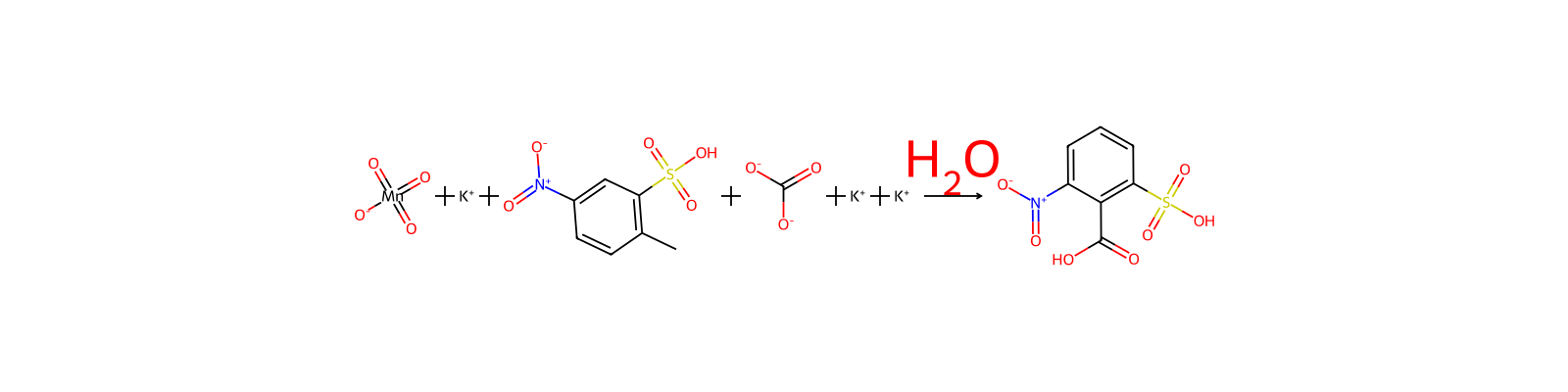
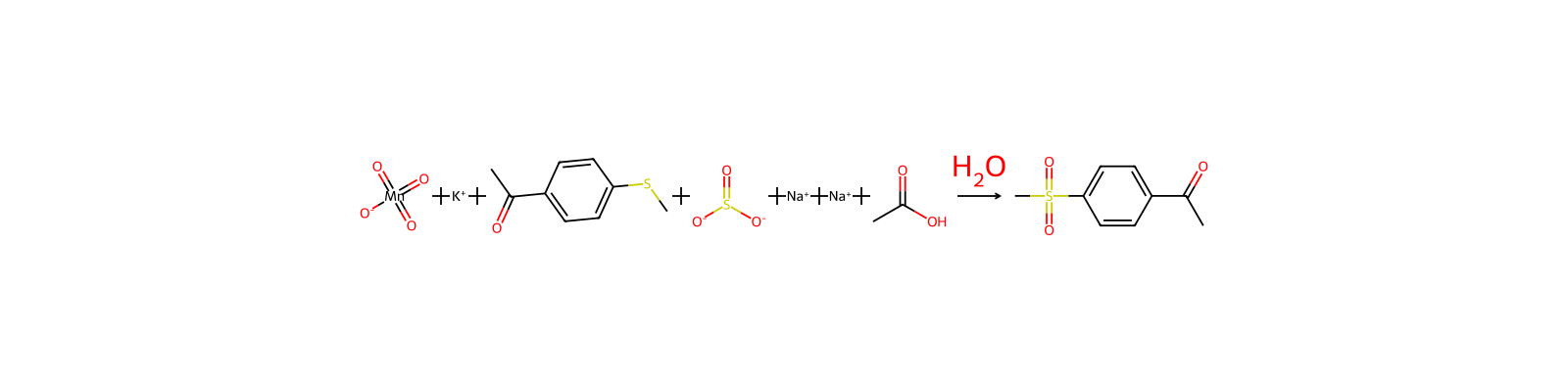
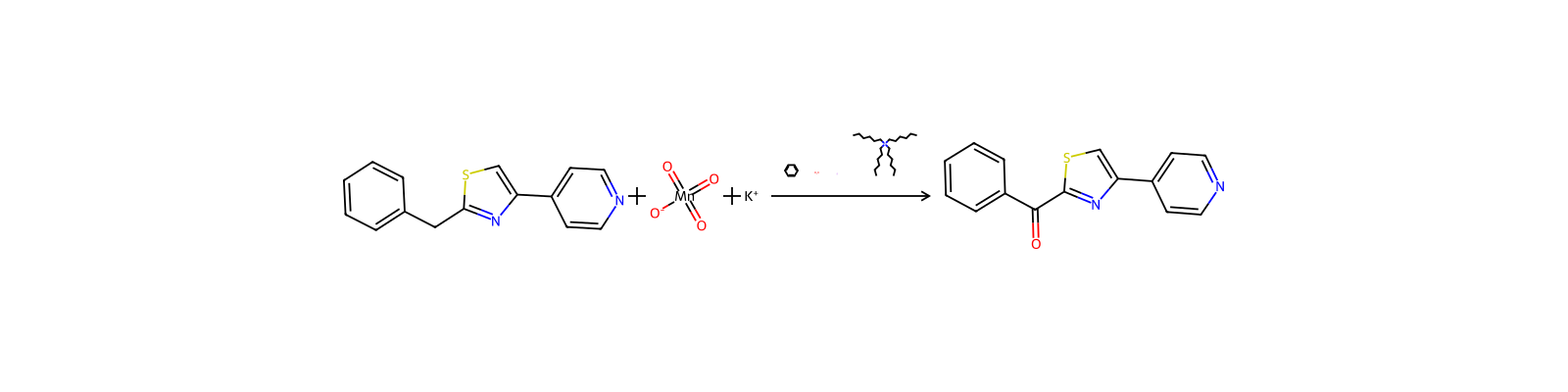
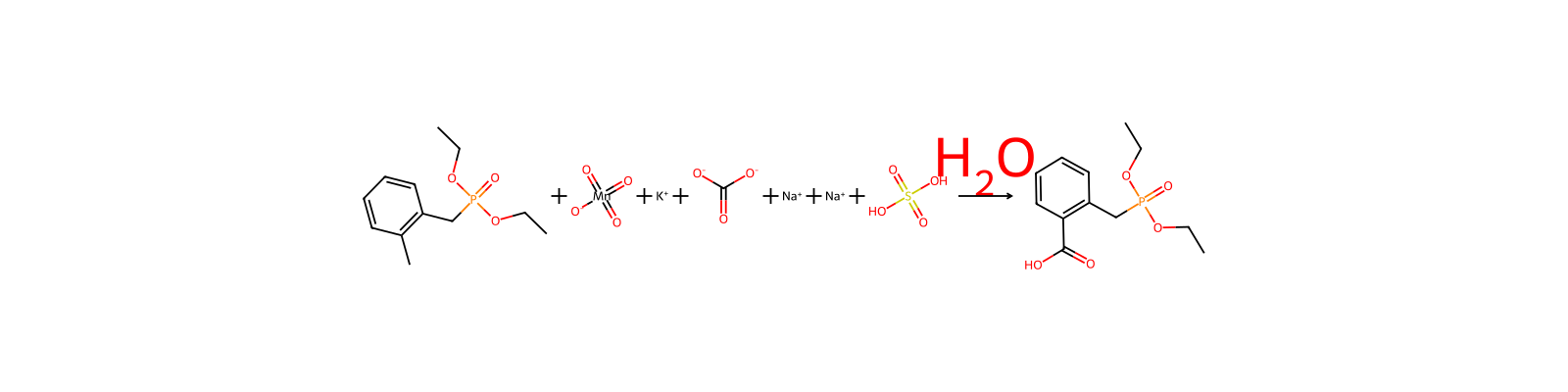
Bleaching resins, waxes, fats, oils, straw, cotton, silk and other fibers and chamois skins; dyeing wood brown; printing fabrics; washing carbon dioxide in manuf mineral waters; exterminating Oidium tuckeri; photography; tanning leathers; purifying water; with formaldehyde soln to expel formaldehyde gas for disinfecting; as an important reagent in analytical and synthetic organic chemistry.
THERAP CAT: Anti-infective (topical)
2023: 10,000,000 - <50,000,000 lb
14,000 tons/year
May be prepared by oxidizing manganese dioxide with potassium chlorate in potassium hydroxide soln, then completing the oxidation with chlorine or air & carbon dioxide.
(1) By oxidation of the manganate in an alkaline electrolytic cell. (2) A hot solution of the mangenate is treated with carbon dioxide; on cooling, the solution deposits crystals fo the permanganate.
May be manufactured by one-step electrolytic conversion of ferromanganese to permanganate, or by a two-step process involving the thermal oxidation of manganese oxide of a naturally occurring ore into potassium manganate followed by electrolytic oxidation to permanganate...
Roasting processes that employ manganese(IV) oxide:potassium hydroxide molar ratio of 1:2 to 1:3 (reaction mixture is a solid); heated to 300-400 °C; exposed to secondary oxidation at 190-210 °C.
Liquid-phase process with a manganese(IV) oxide:potassium hydroxide molar ratio greater than or equal to 1:5; molten mixture at 200-350 °C is oxygenated; separation of product.
Grades: technical, CP (chemically pure), USP
Formulations include ready to use liquids (0.004%-2.5%), pelleted/tableted (40%), crystals (80%-99.99%), and powder (41%).
ICC 237 Disinfectant, Sanitizer, Destainer, and Deodorizer; soluble concn, 0.01% potassium permanganate.
Chlorisol; soluble concn, 0.01% potassium permanganate.
For more Formulations/Preparations (Complete) data for POTASSIUM PERMANGANATE (10 total), please visit the HSDB record page.
Potassium permanganate
A chemical, other than a List I chemical, specified by regulation that, in addition to legitimate uses, is used in manufacturing a controlled substance in violation of the Act. (21 eCFR 1310.02)
Agriculture, Forestry, Fishing and Hunting
Permanganic acid (HMnO4), potassium salt (1:1): ACTIVE
解説過マンガン酸カリウム緑色光沢のある赤紫色結晶。空気中で安定。約 200℃で分解し,酸素を発生する。比重 2.70。水に易溶,アセトン,アルコールに少し溶ける。アルカリ,有機物により容易に分解。塩酸と反応し塩素を発生する。濃硫酸によりしばしば爆発が起り危険。酸化剤として広範な用途があり,過マンガン酸カリウム滴定 (酸化還元滴定 ) ,有機合成,殺菌,漂白などに広く用いられている。
用途サッカリン製造、医薬品
用途窒素酸化物測定用の酸化液調製用。
用途高感度比色分析及び高感度機器分析のおける酸化剤。
用途過マンガン酸カリウムの用途:酸化剤、漂白剤、医薬、分析用試薬。
用途汎用試薬、酸化還元滴定用標準液調製原料。
用途日本薬局方のおける酸化還元容量分析用標準液。
用途過マンガン酸カリウムの用途は非常に幅広く工業的にも実験室レベルでも使用されています例えば有機化学の実験では様々な有機物質の酸化反応に使用されますまた医療分野ではその消毒作用により器具の洗浄や傷口の消毒に利用されることもあります
用途還元性物質の定量分析(容量分析)
用途汎用試薬、調製液の原料、医薬品研究用。
用途酸化剤, 水銀分析前処理剤。
説明Potassium permanganate, is composed of dark purple, odorless crystals with a blue metallic sheen. It is soluble in water, decomposes at 465°F (240°C), and is a powerful oxidizing material. Potassium permanganate is a dangerous fire and explosion risk in contact with organic materials. Potassium permanganate is incompatible with sulfuric acid, glycerin, and ethylene glycol. The four-digit UN identification number is 1490. The primary uses of potassium permanganate are as an oxidizer, bleach, or dye; during radioactive decontamination of the skin; and in the manufacture of organic chemicals.
使用Potassium permanganate (KMnO4) is a dark purple-bluish sheen crystal with a slightly sweet taste. It is produced by oxidizing manganate in an electrolytic cell or by passing carbon dioxide through a hot solution of manganate and then cooling until permanganate crystals form. It is a strong oxidizing agent, particularly with organic matter, which makes it a good disinfectant, deodorizer, bleach, and antiseptic.
一般的な説明A purplish colored crystalline solid. Noncombustible but accelerates the burning of combustible material. If the combustible material is finely divided the mixture may be explosive. Contact with liquid combustible materials may result in spontaneous ignition. Contact with sulfuric acid may cause fire or explosion. Used to make other chemicals and as a disinfectant.
製造方法Potassium permanganate is produced from manganese ore containing at least 60% manganese dioxide, MnO2. The finely ground ore is mixed with 50%potassium hydroxide and heated at about 350°C in rotary kilns. This converts manganese dioxide to potassium manganate:MnO22+ 4KOH + O2→2K2MnO4+ 2H2OPotassium manganate obtained above is oxidized to the permanganate either by electrolysis or by chemical oxidation. Electrolytic oxidation is more common. Electrolytic cells have cathodes made of iron rods and nickel-plated anodes. Potassium manganate melt is extracted with water prior to its elec-trolysis and then electrolyzed at a cell voltage of 2.3V and current of about 1,400 amp. Permanganate is produced at theanode and water is reduced to gaseous hydrogen and hydroxyl ions at the cathode:2K2MnO44+ 2H2O →2KMnO4+ 2KOH + H2.
合成方法軟マンガン鉱を水酸化カリウムとともに酸化雰囲気で加熱処理し,水溶性のマンガン(Ⅵ)酸カリウムにして水で浸出し,浸出液を電解酸化
純化方法Crystallise it from hot water (4mL/g at 65o), then dry it in a vacuum desiccator over CaSO4. Phillips and Taylor [J Chem Soc 4242 1962] cooled an aqueous solution of KMnO4, saturated at 60o, to room temperature in the dark, and filtered it through a No.4 porosity sintered-glass filter funnel. The solution was allowed to evaporate in air in the dark for 12hours, and the supernatant liquid was decanted from the crystals, which were dried as quickly as possible with filter paper.
定義potassium permanganate: A compound,KMnO4, forming purple crystalswith a metallic sheen, soluble inwater (intense purple solution), acetone,and methanol, but decomposedby ethanol; r.d. 2.70; decompositionbegins slightly above 100°C and iscomplete at 240°C. The compound isprepared by fusing manganese(IV)oxide with potassium hydroxide toform the manganate and electrolysingthe manganate solutionusing iron electrodes at about 60°C.An alternative route employs productionof sodium manganate by a similarfusion process, oxidation withchlorine and sulphuric acid, thentreatment with potassium chloride tocrystallize the required product.Potassium manganate(VII) is widelyused as an oxidizing agent and as adisinfectant in a variety of applications,and as an analytical reagent.