
グアニジン塩酸塩
Guanidine Hydrochloride
データを補完しています。しばらくしてからページを更新すると最新の内容を表示できます
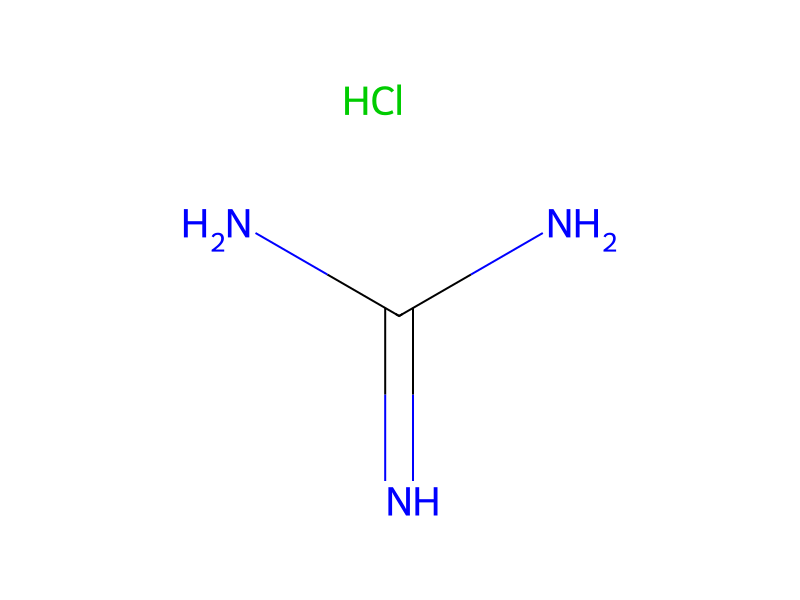
基本情報
- CAS
50-01-1- 標準SMILES
Cl.N=C(N)N- InChIKey
PJJJBBJSCAKJQF-UHFFFAOYSA-N- 分子式
- CH5N3.ClH
- 平均分子量
- 95.53 g/mol
- 単同位体質量
- 95.02502487
概要
Guanidine Hydrochloride is the hydrochloride salt form of guanidine, a strong basic compound with parasympathomimetic activity. Guanidine hydrochloride enhances the release of acetylcholine following a nerve impulse and potentiates acetylcholine actions on muscarinic and nicotinic receptors. It also appears to slow the rates of depolarization and repolarization of muscle cell membranes. (NCI05)
名称と識別子
- 優先名称
- Guanidine Hydrochloride
- IUPAC
- guanidine;hydrochloride
- 現地名
- グアニジン塩酸塩
- 英語名
- Guanidine hydrochloride
- 分子式
- CH5N3.ClH
- 分子量
- 95.53
名称と別名
Guanidine hydrochloride50-01-1Guanidinium chlorideguanidine HClAminoformamidine hydrochlorideGUANIDINE MONOHYDROCHLORIDECarbamidine hydrochlorideAminomethanamidine hydrochlorideIminourea hydrochloride3YQC9ZY4YBNSC-755884DTXSID7058757
名称をさらに表示
グアニジン塩酸塩塩酸グアニジングアニジン·塩酸グアニジン塩酸グアニジン·塩酸塩カルバミジン塩酸塩塩化グアニジニウムグアニジン 一酸グアニジンHCLグアニジン塩酸塩(塩酸グアニジン)塩化グアニジウムグアニジン 塩酸塩グアニジン 塩酸塩 溶液グアニジン塩酸塩 溶液GAClGdmClAMINOFORMAMIDINE HCLguanidiniumhydrochlorideGUANIDINE HYDROCHLORIDE 99%guanidine,monohydrochlorideGuanidine, hydrochloride (1:1)
Chloride, GuanidiniumGuanidium chlorideCHEBI:32735Chloride, GuanidiumHydrochloride, GuanidineRefChem:58639Monohydrochloride, GuanidineDTXCID4040763
データベース識別子
- CAS
50-01-1- PubChem CID
- 5742
- DTXSID
DTXSID7058757- ChEMBL
CHEMBL1200728- UNII
- 3YQC9ZY4YB
- EC Number
- 200-002-3
物性
構造計算による物性補完中
- 極性表面積
- 75.9 Ų
- 水素結合供与体数
- 4
- 水素結合受容体数
- 1
- 回転可能結合数
- 0
- 重原子数
- 5
- 形式電荷
- 0
- 複雑度
- 26.3
実験および物理化学的性質
CosmeticsBuffering
LogP-1.7
Density1.3 g/cm³
SolubilitySolubility in water, g/100ml at 20 °C: 215
Human Drugs
FDA approved drugs -> Active ingredient
FDA approved drugs -> Active ingredient
Melting Point
178-185 °C
183 °C
Physical Description
Large Crystals; Dry Powder; Liquid
HYGROSCOPIC CRYSTALLINE POWDER.
物理化学的性質
- 融点
- 180 · 180-185 °C(lit.)
- 比重(密度)
- 1.18 g/mL · 1.18 g/mL at 25 °C(lit.)
- 屈折率
- 20 · n20/D 1.465
- 貯蔵温度
- room temp
- 溶解性
- 2 O: · H2O: 6 M、透明、無色
- 外見
- クリスタル
- 酸解離定数(Pka)
安全と法規制
安全情報は参考情報です。供給元の安全データシート(SDS)、適用法令、専門家による評価に代わるものではありません。
GHS分類
GHS Classification
Warning
H302: Harmful if swallowed [Warning Acute toxicity, oral]
P264, P264+P265, P270, P280, P301+P317, P302+P352, P305+P351+P338, P321, P330, P332+P317, P337+P317, P362+P364, and P501 (click each P-code to see the statement)
This chemical does not meet GHS hazard criteria for 9.2% (37 of 404) of reports.
Warning
H302 (90.8%): Harmful if swallowed [Warning Acute toxicity, oral]
危険有害性情報
Regulatory Information
Chemical: Guanidine, monohydrochloride
Guanidine, hydrochloride (1:1) is listed on the EPA's Chemical Data Reporting (CDR) system. Manufacturers and importers of Guanidine, hydrochloride (1:1) are required to report information about their production and use of this chemical to the EPA under the Toxic Substances Control Act (TSCA). (40 eCFR Part 711)
Status: Active Update: 12-05-2021 https://echa.europa.eu/registration-dossier/-/registered-dossier/13899
Guanidinium chloride: Does not have an individual approval but may be used under an appropriate group standard
Fire HazardsCombustible.
EC ClassificationSymbol: Xn; R: 22-36/38; S: (2)-22
Chemical DangersOn combustion, forms toxic and corrosive fumes including hydrogen chloride and nitrogen oxides. The solution in water is a weak acid.
Hazard Classes and Categories
Acute Tox. 4 (90.8%)
Acute toxicity - category 4
Acute toxicity (Oral) - Category 4
Acute Tox. 4 *
安全と保護具
化学と産業
用途と製造
U.S. Production2023: 100,000 - <250,000 lb
Consumer UsesLaboratory chemicals
Industry UsesLaboratory chemicals
Use ClassificationCosmetics -> Buffering
General Manufacturing Information
Pharmaceutical and Medicine Manufacturing
Guanidine, hydrochloride (1:1): ACTIVE
応用分野
用途サルファ剤原料、帯電防
用途RNA抽出用。
用途合成繊維用帯電防止剤,葉酸合成原料,サルファ剤合成原料,たん白質可溶化剤
用途タンパク変性剤。
用途たん白質変性剤。
用途たん白変性剤、たん白質研究用。
使用Guanidine hydrochloride is used for purification of proteins and nucleic acids. It can be used as a medicine, organic synthesis intermediate and is used in dyes. It acts as an intermediate in the preparation of sulfadiazine, which is an important raw material for sulfamethyldiazine, sulfamethazine and folic acid. It is utilized in the synthesis of 2-amino-pyrimidine, 2- amino -6- methyl-pyrimidine and 2-amino -4,6 - dimethyl-pyrimidine. Also used in RNA isolation to dissociate nucleoproteins and inhibit RNase.
一般的な説明Guanidine hydrochloride (GdnHCl) is a well-known protein and enzyme denaturant. It is a small molecule and hydroscopic in nature. It is used to synthesis medicine, pesticide, dye and other organic compound, is the important material to make sulfanilamide medicine and folacin, and can be used as anti-static agent of compound fibre.
調製方法
製造方法The process for preparing guanidine hydrochloride is as follows:Step 1: Fritting - Combine dicyandiamide and ammonium chloride in a reactor with a 1:1.27 weight ratio and carry out a frit reaction at 170-230°C to obtain crude guanidine hydrochloride.Step 2: Dissolving - Dissolve the crude guanidine hydrochloride in water at a 1:1 ratio at normal temperature. Then, add ammonium salt alkaloid in an amount determined by the ammonium salt content in the crude guanidine hydrochloride.Step 3: Filtering - Remove raw materials and reaction by-products with filtration.Step 4: Dehydrating - Dehydrate the filtered ground mother liquor at a high temperature.Step 5: Crystallizing - Cool the supersaturated solution, concentrate, and crystallize to obtain high-purity guanidine hydrochloride.Step 6: Repeat steps 2-5 and add dicyandiamide in the reactor with the guanidine hydrochloride to carry out frit reaction at 170-230°C for 3-4 hours to obtain even higher purity guanidine hydrochloride. This step can be repeated several times if needed.Step 7: To obtain higher purity guanidine hydrochloride, subject the guanidine hydrochloride obtained in step 5 to steps 2-5 again, with the water ratio in step 2 adjusted to 1.5:1. This step can be repeated numerous times as required.
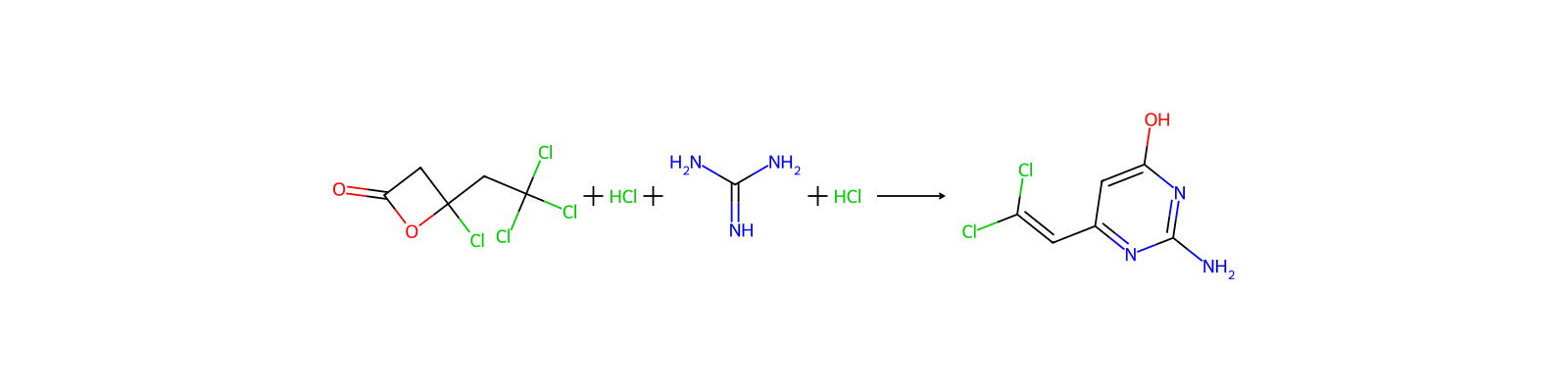
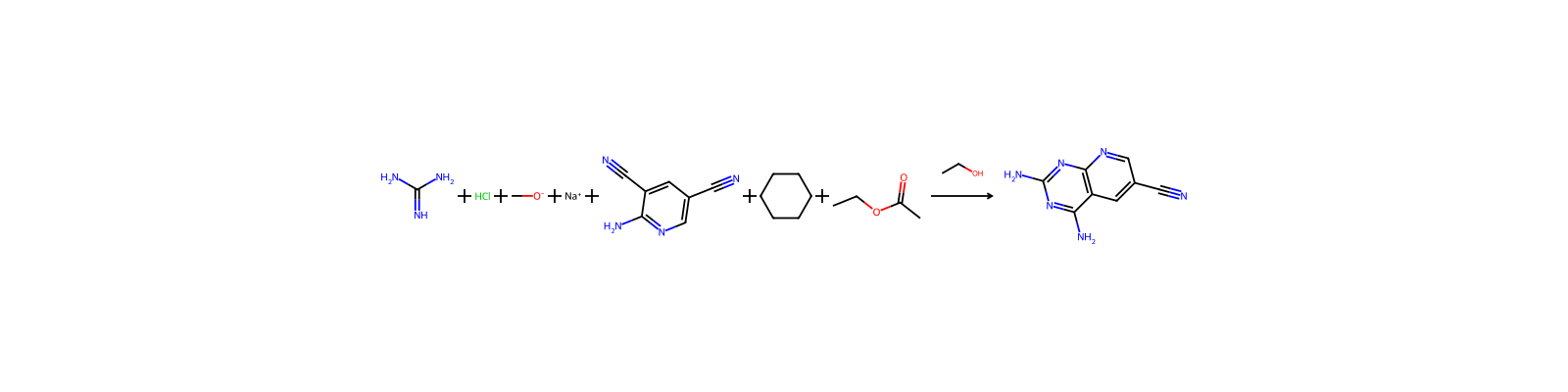
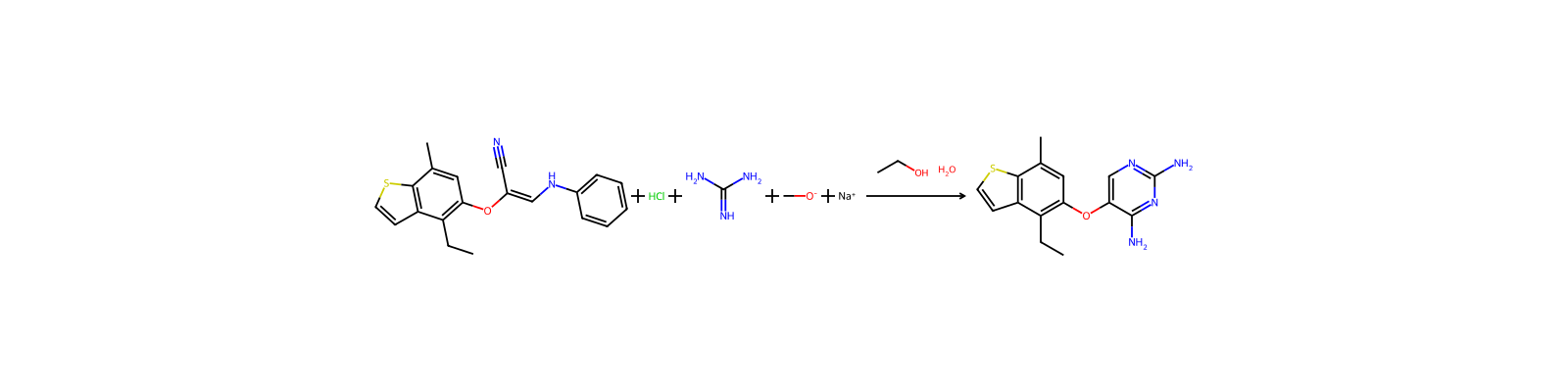
関連反応
510 件



化合物ノート
読み込み中…