
基本情報
- 標準SMILES
C[C@]12CC[C@H](O)CC1=CC[C@@H]1[C@@H]2CC[C@]2(C)C(=O)CC[C@@H]12- InChIKey
FMGSKLZLMKYGDP-USOAJAOKSA-N- 分子式
- C19H28O2
- 平均分子量
- 288.4 g/mol
- 単同位体質量
- 288.20893014
概要
Dehydroepiandrosterone is an androstanoid that is androst-5-ene substituted by a beta-hydroxy group at position 3 and an oxo group at position 17. It is a naturally occurring steroid hormone produced by the adrenal glands. It has a role as an androgen, a mouse metabolite and a human metabolite. It is a 3beta-hydroxy-Delta(5)-steroid, a 17-oxo steroid and an androstanoid.
名称と識別子
- 優先名称
- Dehydroepiandrosterone
- IUPAC
- (3S,8R,9S,10R,13S,14S)-3-hydroxy-10,13-dimethyl-1,2,3,4,7,8,9,11,12,14,15,16-dodecahydrocyclopenta[a]phenanthren-17-one
名称と別名
DehydroepiandrosteroneDHEAPRASTERONE53-43-0DehydroisoandrosteroneAndrostenoloneDiandron3beta-hydroxyandrost-5-en-17-one17-HormoforinIntrarosaPrasterona3-beta-Hydroxy-5-androsten-17-one
名称をさらに表示
PrasteronumVaginorm5,6-DehydroisoandrosteroneBiolaifEM-760DTXSID4020379NSC-9896Androst-5-en-17-one, 3-hydroxy-, (3beta)-
データベース識別子
- CAS
53-43-0- PubChem CID
- 5881
- DTXSID
DTXSID4020379- ChEMBL
CHEMBL90593- ChEBI
CHEBI:28689- UNII
- 459AG36T1B
- EC Number
- 200-175-5
- Nikkaji
- J4.147E
物性
構造計算による物性
- XLogP
- 3.2
- 極性表面積
- 37.3 Ų
- 水素結合供与体数
- 1
- 水素結合受容体数
- 2
- 回転可能結合数
- 0
- 重原子数
- 21
- 形式電荷
- 0
- 複雑度
- 508
実験および物理化学的性質
Drugs
DEA NFLIS-Drug Category -> Steroids
Pharmaceuticals -> Listed in ZINC15
LipidsLipids -> Sterol Lipids [ST] -> Steroids [ST02] -> C19 steroids (androgens) and derivatives [ST0202]
SpringerMaterials PropertiesChemical shift
LogP
3.23
3.23
Solubility0.0635 mg/mL
Dietary Ingredients
Dehydroepiandrosterone (DHEA)
DHEA
Human Drugs
FDA approved drugs -> Active ingredient
EMA approved medicines: Human medicine
FDA approved drugs -> Active ingredient
Pharmaceuticals
Endocrine DisruptorsPotential endocrine disrupting compound
Melting Point
140-141 °C
140 - 141 °C
Physical DescriptionSolid
Collision Cross Section
166 Ų [M+H-H2O]+ [CCS Type: DT; Method: single field calibrated with Agilent tune mix (Agilent)]
169.58 Ų [M+H]+ [CCS Type: TW; Method: calibrated with polyalanine and drug standards]
安全と法規制
GHS分類
GHS Classification
Danger
H302 (11.3%): Harmful if swallowed [Warning Acute toxicity, oral]
P203, P260, P261, P263, P264, P264+P265, P270, P271, P273, P280, P301+P317, P302+P352, P304+P340, P305+P351+P338, P317, P318, P319, P321, P330, P332+P317, P337+P317, P362+P364, P391, P403+P233, P405, and P501 (click each P-code to see the statement)
Aggregated GHS information provided per 159 reports by companies from 9 notifications to the ECHA C&L Inventory. Each notification may be associated with multiple companies.
危険有害性情報
Regulatory Information
Status: Active Update: 26-08-2022 https://echa.europa.eu/registration-dossier/-/registered-dossier/13358
Dehydroisoandosterone: Does not have an individual approval but may be used under an appropriate group standard
Other Safety InformationIMAP assessments - Androst-5-en-17-one, 3-hydroxy-, (3.beta.)-: Human health tier I assessment
Hazard Classes and CategoriesAcute Tox. 4 (11.3%)
毒性情報
Drug Induced Liver Injury
Drug-Induced Liver Injury Severity and Toxicity (DILIst)
Dehydroepiandrosterone
DILI Positive
DOI:10.1016/j.drudis.2019.09.022
化学と産業
薬理情報
ATC Code
A - Alimentary tract and metabolism
G - Genito urinary system and sex hormones
QA - Alimentary tract and metabolism
QG - Genito urinary system and sex hormones
Pharmacodynamics
DHEA is naturally produced from cholesterol through two cytochrome P450 enzymes. Cholesterol is converted to pregnenolone by the enzyme P450 scc (side chain cleavage); then another enzyme, CYP17A1, converts pregnenolone to 17α-Hydroxypregnenolone and then to DHEA. DHEA is increased by exercise and calorie restriction. Some theorize that the increase in endogenous DHEA brought about by calorie restriction is partially responsible for the longer life expectancy known to be associated with calorie restriction.
Mechanism of Action
DHEA can be understood as a prohormone for the sex steroids. DHEAS may be viewed as buffer and reservoir. As most DHEA is produced by the zona reticularis of the adrenal cortex, it is argued that there is a role in the immune and stress response. DHEAS/DHEA are useful to detect excess adrenal activity as seen in adrenal cancer or hyperplasia, including certain forms of congenital adrenal hyperplasia as it is produced nearly entirely by the adrenal glands. Women with polycystic ovary syndrome tend to have elevated levels of DHEAS.
Biological Half-Life12 hours
Metabolism/Metabolites
Hepatic. As shown by their high conversion ratios (in a study involving cynomolgus monkeys), the major circulating metabolites of DHEA are DHEA-S, androsterone glucuronide, and androstane-3 alpha,17 beta-diol-glucuronide. [PMID: 12970301]
Dehydroisoandrosterone has known human metabolites that include Dehydroisoandrosterone 3-glucuronide, 3,7-Dihydroxy-10,13-dimethyl-1,2,3,4,7,8,9,11,12,14,15,16-dodecahydrocyclopenta[a]phenanthren-17-one, and 3,16-Dihydroxyandrost-5-en-17-one.
MeSH Pharmacological Classification
Substances that augment, stimulate, activate, potentiate, or modulate the immune response at either the cellular or humoral level. The classical agents (Freund's adjuvant, BCG, Corynebacterium parvum, et al.) contain bacterial antigens. Some are endogenous (e.g., histamine, interferon, transfer factor, tuftsin, interleukin-1). Their mode of action is either non-specific, resulting in increased immune responsiveness to a wide variety of antigens, or antigen-specific, i.e., affecting a restricted type of immune response to a narrow group of antigens. The therapeutic efficacy of many biological response modifiers is related to their antigen-specific immunoadjuvanticity.
Absorption, Distribution and ExcretionFollowing a 50-mg DHEA PO dose in cynomolgus monkeys, systemic availability was only 3.1 +/- 0.4%. [PMID: 12970301]
Tissue LocationsAdipose Tissue
Cellular LocationsCytoplasm
Metabolite Pathways17-Beta Hydroxysteroid Dehydrogenase III Deficiency
用途と製造
UsesUse (kg; approx.) in Germany (2009): >75
Use ClassificationPharmaceuticals
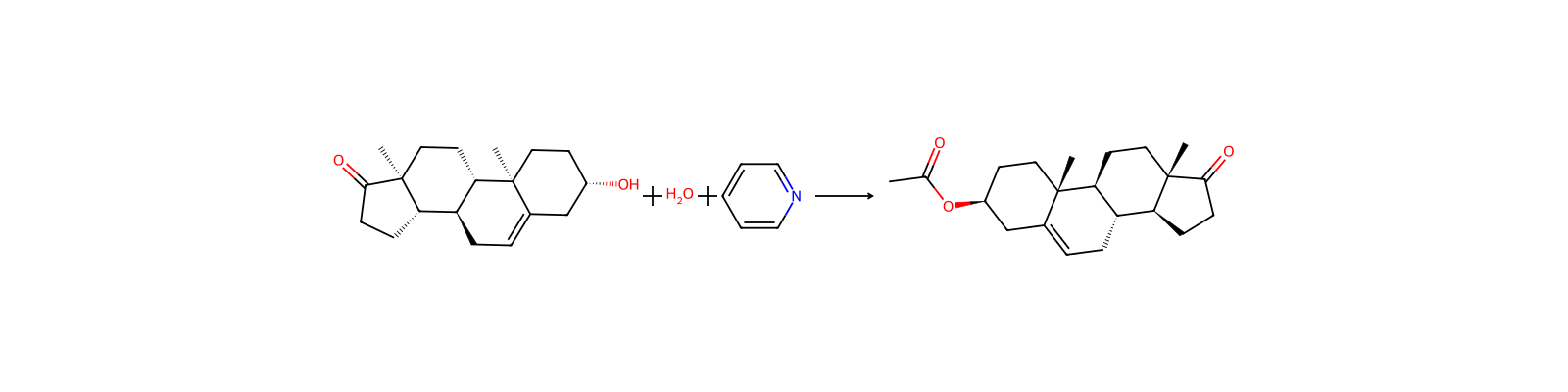
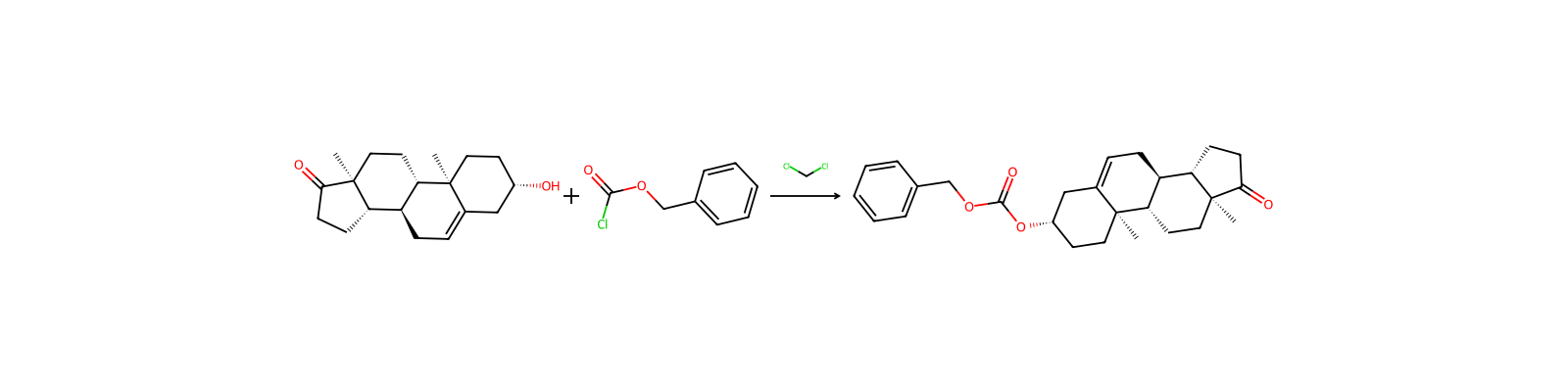
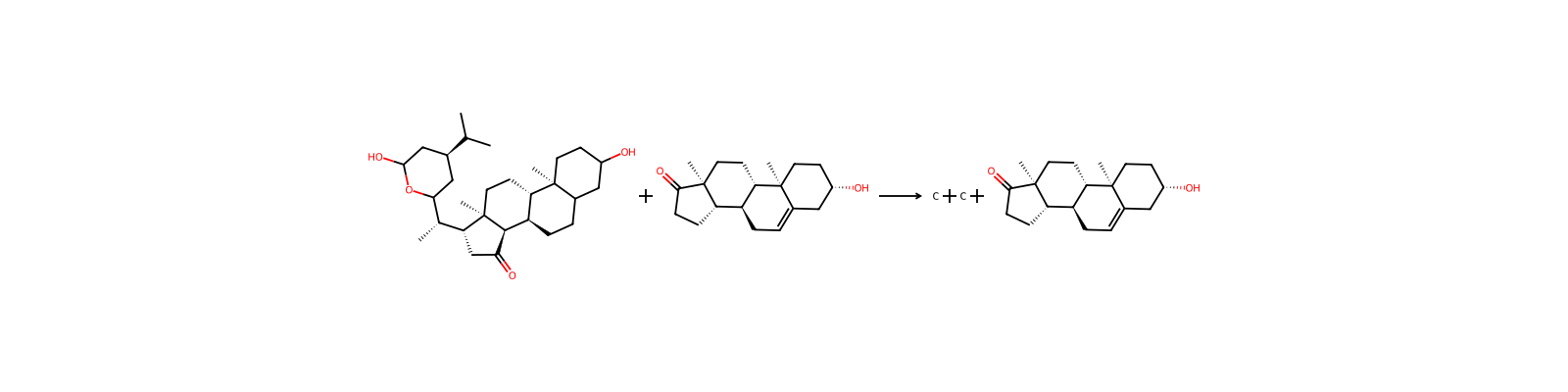
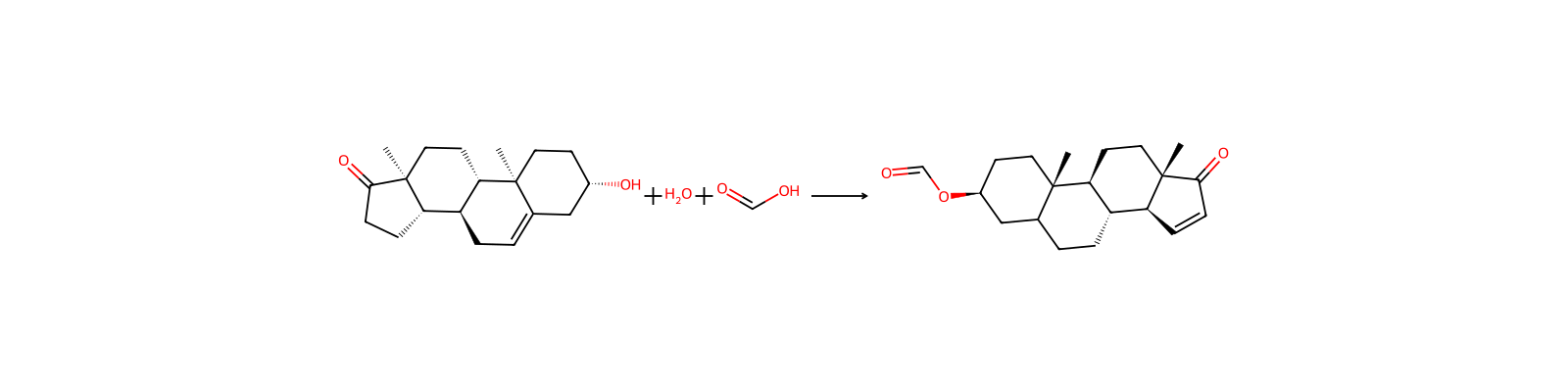
関連反応
92 件




関連ノート
読み込み中…