
アデノシン-5'-三りん酸
5'-Atp

基本情報
- CAS
56-65-5- 標準SMILES
Nc1ncnc2c1ncn2[C@@H]1O[C@H](COP(=O)(O)OP(=O)(O)OP(=O)(O)O)[C@@H](O)[C@H]1O- InChIKey
ZKHQWZAMYRWXGA-KQYNXXCUSA-N- 分子式
- C10H16N5O13P3
- 平均分子量
- 507.18 g/mol
- 単同位体質量
- 506.99574658
概要
ATP is an adenosine 5'-phosphate in which the 5'-phosphate is a triphosphate group. It is involved in the transportation of chemical energy during metabolic pathways. It has a role as a cofactor, a micronutrient, a nutraceutical and a fundamental metabolite. It is a purine ribonucleoside 5'-triphosphate and an adenosine 5'-phosphate. It is a conjugate acid of an ATP(3-).
名称と識別子
- 優先名称
- 5'-Atp
- IUPAC
- [[(2R,3S,4R,5R)-5-(6-aminopurin-9-yl)-3,4-dihydroxyoxolan-2-yl]methoxy-hydroxyphosphoryl] phosphono hydrogen phosphate
- 現地名
- アデノシン-5'-三りん酸
- 英語名
- Adenosine triphosphate
- 分子式
- C10H16N5O13P3
- 分子量
- 507.18
名称と別名
Adenosine triphosphate56-65-5TriphosphadenMyotriphosTriadenylGlucobasinAdetolAdynolAtipiAdephosAdenosine 5'-(tetrahydrogen triphosphate)Adenylpyrophosphoric acid
名称をさらに表示
アトリホスアデトールアデノシン三りん酸トリアデニルアデニルピロりん酸ATP【ヌクレオチド】ミオトリホスホスホビオン三りん酸α-(5'-アデノシル)アジノールトリホサデンカルデノシングルコバシンアデノシン-5'-三りん酸アデノシン5'-三りん酸トリホスファデンストリアジントリホスアデニンアデノシン5′-O-三りん酸({[({[(2R,3S,4R,5R)-5-(6-アミノ-9H-プリン-9-イル)-3,4-ジヒドロキシオキソラン-2-イル]メトキシ}(ヒドロキシ)ホスホリル)オキシ](ヒドロキシ)ホスホリル}オキシ)ホスホン酸ADENOSINE 5'-TRIPHOSPHATEATP-H((2R,3S,4R,5R)-5-(6-Amino-9H-purin-9-yl)-3,4-dihydroxytetrahydrofuran-2-yl)methyl tetrahydrogen triphosphateATP Sodium5’-atpATP.H2
5'-AtpAdenosine 5'-triphosphoric acidTriphosphoric acid adenosine esterDTXSID6022559adenosine 5' triphosphateadenylpyrophosphate8L70Q75FXECHEBI:15422
データベース識別子
- CAS
56-65-5- PubChem CID
- 5957
- DTXSID
DTXSID6022559- ChEMBL
CHEMBL14249- ChEBI
CHEBI:15422- UNII
- 8L70Q75FXE
- EC Number
- 200-283-2
- Nikkaji
- J10.680A
物性
構造計算による物性
- XLogP
- -5.7
- 極性表面積
- 279 Ų
- 水素結合供与体数
- 7
- 水素結合受容体数
- 17
- 回転可能結合数
- 8
- 重原子数
- 31
- 形式電荷
- 0
- 複雑度
- 800
実験および物理化学的性質
DrugsPharmaceuticals -> Listed in ZINC15
Cosmetics
Cosmetic ingredients (Adenosine Triphosphate) -> CIR (Cosmetic Ingredient Review)
Skin conditioning
Solubility1000.0 mg/mL; 862 mg/mL (magnesium salt)
Physical DescriptionSolid
Collision Cross Section
198.86 Ų [M-H]- [CCS Type: DT; Method: stepped-field]
185.74 Ų [M-H]- [CCS Type: DT; Method: single field calibrated with Agilent tune mix (Agilent)]
196.9 Ų [M+H]+ [CCS Type: DT; Method: single field calibrated with ESI Low Concentration Tuning Mix (Agilent)]
188.3 Ų [M-H]-
物理化学的性質
- 融点
- 144 °C · 144°C (rough estimate)
- 沸点
- 951.4 · 951.4±75.0 °C(Predicted)
- 比旋光度
- 22 · D22 -26.7° (c = 3.095)
- 比重(密度)
- 1 g/mL · 1.0 g/mL at 20 °C
- 貯蔵温度
- -20 °C · Keep in dark place,Inert atmosphere,Store in freezer, under -20°C
- 溶解性
- 可溶(水),Na,K塩は水に易溶,Ba塩は水に不溶
- 外見
- 凍結乾燥粉末
- 酸解離定数(Pka)
- 2 · pK2: 4.00(-1);pK3: 6.48(-2) (25°C)
- 色
- White to off-white
- PH
- 7 · 7.0 ± 0.1
- 水溶解度
- 100 mg/mL · Water : ≥ 100 mg/mL (197.17 mM)
- 化粧品成分の機能
- スキンコンディショニング
- InChIKey
- ZKHQWZAMYRWXGA-KQYNXXCUSA-N
- SMILES
- C(OP(=O)(O)OP(O)(=O)OP(O)(O)=O)[C@H]1O[C@@H](N2C3C(=C(N=CN=3)N)N=C2)[C@H](O)[C@@H]1O
- LogP
- -4.18 · -4.180 (est)
- CAS データベース
- 56 · 56-65-5(CAS DataBase Reference)
- EPAの化学物質情報
- Adenosine triphosphate (56-65-5)
化学的性質
化学的特性The structure of Adenosine triphosphate has an ordered carbon compound as a backbone, but the part that is really critical is the phosphorous part - the triphosphate. Three phosphorous groups are connected by oxygens to each other, and there are also side oxygens connected to the phosphorous atoms. Under the normal conditions in the body, each of these oxygens has a negative charge, and therefore repel each other. These bunched up negative charges want to escape - to get away from each other, so there is a lot of potential energy here.If you remove just one of these phosphate groups from the end, so that there are just two phosphate groups, the molecule is much happier. This conversion from ATP to ADP is an extremely crucial reaction for the supplying of energy for life processes. Just the cutting of one bond with the accompanying rearrangement is sufficient to liberate about 7.3 kilocalories per mole = 30.6 kJ/mol. This is about the same as the energy in a single peanut.hyperphysics.phy-astr.gsu.edu
安全と法規制
安全情報は参考情報です。供給元の安全データシート(SDS)、適用法令、専門家による評価に代わるものではありません。
GHS分類
GHS Classification
This chemical does not meet GHS hazard criteria for 100% (2 of 2) of all reports.
Not Classified
Aggregated GHS information provided per 2 reports by companies from 1 notifications to the ECHA C&L Inventory.
危険有害性情報
Regulatory Information
Chemical: Adenosine 5'-(tetrahydrogen triphosphate)
Adenosine triphosphate: Does not have an individual approval but may be used under an appropriate group standard
Other Safety InformationIMAP assessments - Adenosine 5'-(tetrahydrogen triphosphate): Environment tier I assessment
Hazard Classes and CategoriesNot Classified
毒性情報
Toxicity Summary
Safe in the present practices of use and concentration. Ingredient, concentration, and use information are available in documents discoverable at https://cir-reports.cir-safety.org
ATP is able to store and transport chemical energy within cells. ATP also plays an important role in the synthesis of nucleic acids. ATP can be produced by various cellular processes, most typically in mitochondria by oxidative phosphorylation under the catalytic influence of ATP synthase. The total quantity of ATP in the human body is about 0.1 mole. The energy used by human cells requires the hydrolysis of 200 to 300 moles of ATP daily. This means that each ATP molecule is recycled 2000 to 3000 times during a single day. ATP cannot be stored, hence its consumption must closely follow its synthesis.
Carcinogen ClassificationNo indication of carcinogenicity to humans (not listed by IARC).
Toxicity DataOral LD<sub>50</sub> in rats is > 2 g/kg.
安全データ
- wgk
- 3
- tsca
- TSCA listed
- 毒性
- dni-hmn:lym 10 mmol/L CNREA8 42,2092,82
- hs_code
- 2938909090
- safety_code
- 22-24/25
化学と産業
薬理情報
Pharmacodynamics
Adenosine triphosphate (ATP) is the nucleotide known in biochemistry as the "molecular currency" of intracellular energy transfer; that is, ATP is able to store and transport chemical energy within cells. ATP also plays an important role in the synthesis of nucleic acids. The total quantity of ATP in the human body is about 0.1 mole. The energy used by human cells requires the hydrolysis of 200 to 300 moles of ATP daily. This means that each ATP molecule is recycled 2000 to 3000 times during a single day. ATP cannot be stored, hence its consumption must closely follow its synthesis.
Mechanism of Action
ATP is able to store and transport chemical energy within cells. ATP also plays an important role in the synthesis of nucleic acids. ATP can be produced by various cellular processes, most typically in mitochondria by oxidative phosphorylation under the catalytic influence of ATP synthase. The total quantity of ATP in the human body is about 0.1 mole. The energy used by human cells requires the hydrolysis of 200 to 300 moles of ATP daily. This means that each ATP molecule is recycled 2000 to 3000 times during a single day. ATP cannot be stored, hence its consumption must closely follow its synthesis.
Metabolism/Metabolites
Metabolism of organophosphates occurs principally by oxidation, by hydrolysis via esterases and by reaction with glutathione. Demethylation and glucuronidation may also occur. Oxidation of organophosphorus pesticides may result in moderately toxic products. In general, phosphorothioates are not directly toxic but require oxidative metabolism to the proximal toxin. The glutathione transferase reactions produce products that are, in most cases, of low toxicity. Paraoxonase (PON1) is a key enzyme in the metabolism of organophosphates. PON1 can inactivate some organophosphates through hydrolysis. PON1 hydrolyzes the active metabolites in several organophosphates insecticides as well as, nerve agents such as soman, sarin, and VX. The presence of PON1 polymorphisms causes there to be different enzyme levels and catalytic efficiency of this esterase, which in turn suggests that different individuals may be more susceptible to the toxic effect of organophosphate exposure.
Tissue LocationsAdipose Tissue
Cellular LocationsCytoplasm
Metabolite Pathways2-Hydroxyglutric Aciduria (D And L Form)
用途と製造
Uses
CIR ingredient: Adenosine Triphosphate
For nutritional supplementation, also for treating dietary shortage or imbalance
Use ClassificationCosmetics -> Skin conditioning
General Manufacturing InformationAdenosine 5'-(tetrahydrogen triphosphate): ACTIVE
応用分野
解説アデノシン三リン酸,すべての生物に存在する化学物質でアデニン、リボース、3分子のリン酸により構成される。ATP(adenosine triphosphate)と略記する。
説明Adenosine triphosphate, also known as ATP, is a molecule that carries energy within cells. It is one of the most important biological compounds because of its role in supplying energy for life. ATP is the universal energy carrier used by all organisms to supply energy for biological functions. It is often referred to as the energy currency of cells.ATP also functions as a neurotransmitter that is stored and secreted with other neurotransmitters from the pancreas. ATP is a nucleotide consisting of the nucleoside adenosine with three attached phosphate groups (see Adenine). Like other nucleotides, ATP consists of three parts: a sugar, an amine base, and a phosphate group. The central part of the molecule in ATP is the sugar ribose. The amine base adenine is attached to the ribose, forming adenosine. Opposite the adenine on the ribose is attached a chain of three phosphate groups.
来歴ATP was first isolated by the German chemist Karl Lohmann (1898–1978) from muscle tissue extracts in 1929. Alexander Todd’s (1907–1997) research helped to clarify ATP’s structure, and it was first synthesized by Todd in 1948.
使用Adenosine triphosphate (ATP) plays a critical role in the transport of macromolecules such as proteins and lipids into and out of the cell. The hydrolysis of ATP provides the required energy for active transport mechanisms to carry such molecules across a concentration gradient.
調製方法
純化方法ATP is purified by precipitating it as the barium salt on adding excess barium acetate solution to a 5% solution of ATP in water. The precipitate is filtered off, washed with distilled water, dissolved in 0.2M HNO3 and again precipitated with barium acetate. The precipitate, after several washings with distilled water, is redissolved in 0.2M HNO3, and slightly more than an equivalent of 0.2M H2SO4 is added to precipitate all the barium as BaSO4 which is filtered off. The ATP is then precipitated by addition of a large excess of 95% ethanol. It is filtered off, washed several times with 100% EtOH and finally with dry diethyl ether. It is dried in vacuo. [Kashiwagi & Rabinovitch J Phys Chem 59 498 1955, Beilstein 26 III/IV 3654.]
上流・下流製品情報
上流原料
下流製品
補足説明
定義本品は、アデノシン(*)の誘導体であり、次の化学式で表される。参照表示名称:アデノシン
定義Adenosine triphosphate (ATP) is the source of energy for use and storage at the cellular level. It is an adenosine 5'-phosphate in which the 5'-phosphate is a triphosphate group. It is involved in the transportation of chemical energy during metabolic pathways.
関連反応
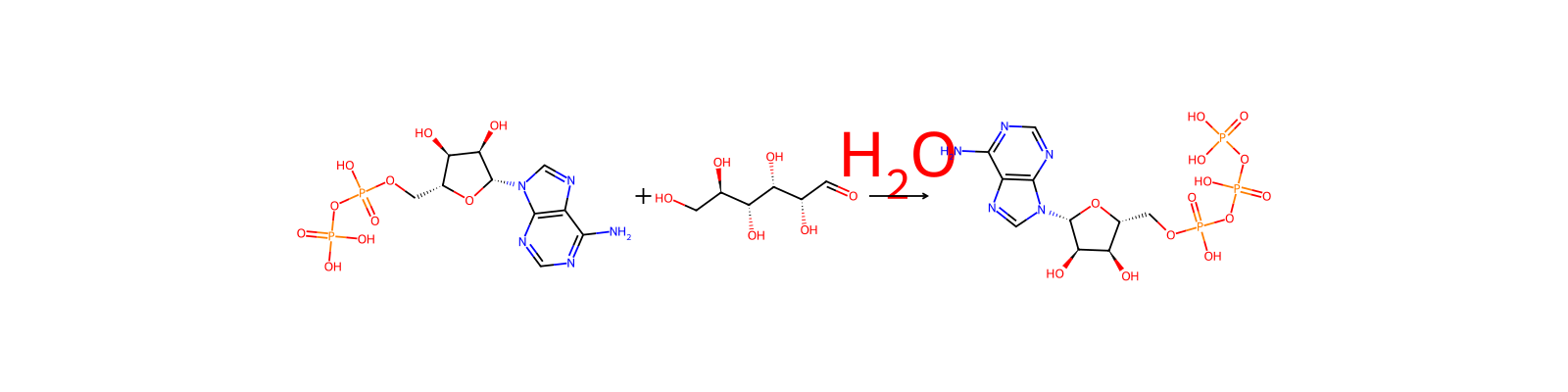
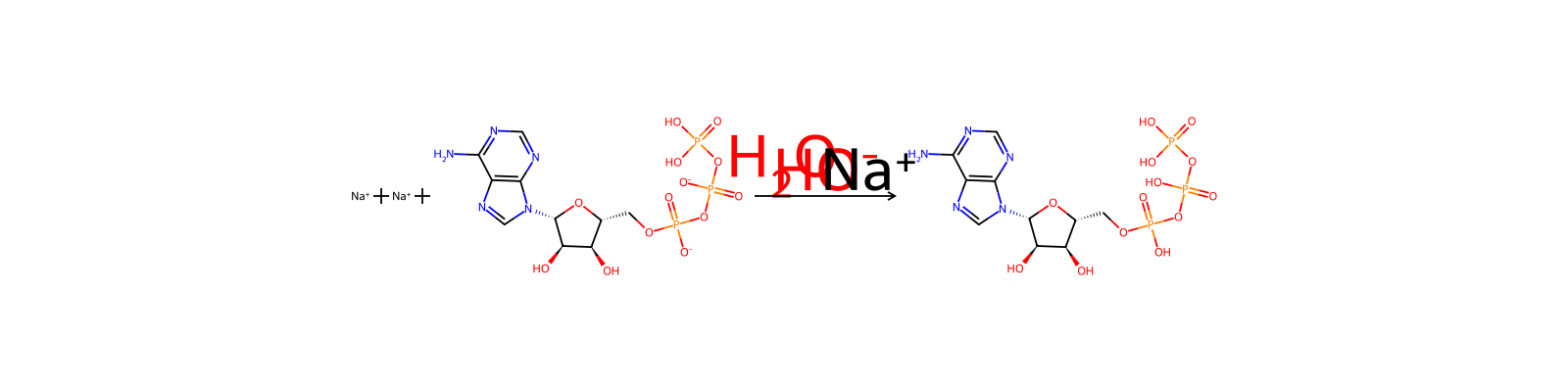
131 件





化合物ノート
読み込み中…