
3-クロロピバロイルクロリド
3-Chloro-2,2-dimethylpropanoyl chloride

基本情報
- CAS
4300-97-4- 標準SMILES
CC(C)(CCl)C(=O)Cl- InChIKey
MQZNDDUMJVSIMH-UHFFFAOYSA-N- 分子式
- C5H8Cl2O
- 平均分子量
- 155.02 g/mol
- 単同位体質量
- 153.9952203
概要
Chloropivaloyl chloride appears as a colorless liquid. Very toxic by ingestion, inhalation and skin absorption. Corrosive. Contact may severely irritate skin, eyes, and mucous membranes. Used to make other chemicals.
名称と識別子
- 優先名称
- 3-Chloro-2,2-dimethylpropanoyl chloride
- IUPAC
- 3-chloro-2,2-dimethylpropanoyl chloride
- 現地名
- 3-クロロピバロイルクロリド
- 英語名
- 3-Chloropivaloyl chloride
- 分子式
- C5H8Cl2O
- 分子量
- 155.02
名称と別名
3-Chloropivaloyl chloride4300-97-43-chloro-2,2-dimethylpropanoyl chlorideCHLOROPIVALOYL CHLORIDEPropanoyl chloride, 3-chloro-2,2-dimethyl-DTXSID0027567UNII-6UH44S0ZZF6UH44S0ZZFEINECS 224-311-8DTXCID307567MQZNDDUMJVSIMH-UHFFFAOYSA-3-CHLORO-2,2-DIMETHYLPROPIONOYL CHLORIDE
名称をさらに表示
3-クロロピバロイルクロリド2,2-ジメチル-3-クロロプロパン酸クロリド2,2-ジメチル-3-クロロプロピオン酸クロリド3-クロロ-2,2-ジメチルプロピオニルクロリド3-クロロ-2,2-ジメチルプロピオニル=クロリド塩化3-クロロ-2,2-ジメチルプロパノイル3-クロロ-2,2-ジメチルプロパノイル クロリドCPC3-CHLOROPIVALIC CHLORIDE3-CHLORO-2,2-DIMETHYLPROPIONYL CHLORIDEDe pivaloyl chlorideEsophagus EpitheliumChlorothaloyl chlorideB-Chloropivaloyl chloride
3Chloropivaloyl chlorideRefChem:93372betaChloropivaloyl chloride3Chloro2,2dimethylpropaneyl chlorideUN9263Propanoyl chloride, 3chloro2,2dimethyl224-311-8InChI=1/C5H8Cl2O/c1-5(2,3-6)4(7)8/h3H2,1-2H3
データベース識別子
- CAS
4300-97-4- PubChem CID
- 61345
- DTXSID
DTXSID0027567- ChEMBL
CHEMBL3183011- UNII
- 6UH44S0ZZF
- EC Number
- 224-311-8
- Nikkaji
- J26.727I
物性
構造計算による物性
- XLogP
- 2.2
- 極性表面積
- 17.1 Ų
- 水素結合供与体数
- 0
- 水素結合受容体数
- 1
- 回転可能結合数
- 2
- 重原子数
- 8
- 形式電荷
- 0
- 複雑度
- 98.6
実験および物理化学的性質
Chemical Classes
Toxic Gases & Vapors -> Acid Halides
Corrosives
Flash Pointabout 70 °F
Physical Description
Chloropivaloyl chloride appears as a colorless liquid. Very toxic by ingestion, inhalation and skin absorption. Corrosive. Contact may severely irritate skin, eyes, and mucous membranes. Used to make other chemicals.
Colorless liquid; [CAMEO]
物理化学的性質
- 沸点
- 85 · 85-86 °C60 mm Hg(lit.)
- 比重(密度)
- 1.199 g/mL · 1.199 g/mL at 25 °C(lit.)
- 屈折率
- 20 · n20/D 1.453(lit.)
- 闪点
- 145 °F · 145 °F
- 外見
- liquid
- 比重
- 1.199 · 1.199
- 色
- Clear, colourless
- 水溶解度
- 反応する
- InChI
- InChI=1S/C5H8Cl2O/c1-5(2,3-6)4(7)8/h3H2,1-2H3
- InChIKey
- MQZNDDUMJVSIMH-UHFFFAOYSA-N
- SMILES
- C(Cl)(=O)C(C)(C)CCl
安全と法規制
安全情報は参考情報です。供給元の安全データシート(SDS)、適用法令、専門家による評価に代わるものではありません。
GHS分類
GHS Classification
This chemical does not meet GHS hazard criteria for 2.2% (1 of 46) of reports.
Danger
H314 (97.8%): Causes severe skin burns and eye damage [Danger Skin corrosion/irritation]
P260, P261, P264, P264+P265, P271, P280, P284, P301+P330+P331, P302+P361+P354, P304+P340, P305+P354+P338, P316, P317, P319, P320, P321, P363, P403+P233, P405, and P501 (click each P-code to see the statement)
Aggregated GHS information provided per 46 reports by companies from 8 notifications to the ECHA C&L Inventory. Each notification may be associated with multiple companies.
危険有害性情報
Hazards IdentificationToxic/poison by inhalation (TIH/PIH)
Regulatory Information
PMN - indicates a commenced PMN (Pre-Manufacture Notices) substance.
REACH registered substance: 3-chloro-2,2-dimethylpropaneyl chloride (EC: 224-311-8)
Propanoyl chloride, 3-chloro-2,2-dimethyl-: Does not have an individual approval but may be used under an appropriate group standard
The New Jersey Worker and Community Right to Know Act requires public and private employers to provide information about hazardous substances at their workplaces. (N.J.S.A. 34:5A-1 et. seq.)
DOT LabelPoison Inhalation Hazard Corrosive
Fire Hazards
Excerpt from ERG Guide 156 [Substances - Toxic and/or Corrosive (Combustible / Water-Sensitive)]:
· Combustible material: may burn but does not ignite readily.
Health Hazards
Excerpt from ERG Guide 156 [Substances - Toxic and/or Corrosive (Combustible / Water-Sensitive)]:
· TOXIC and/or CORROSIVE; inhalation, ingestion or contact (skin, eyes) with vapors, dusts or substance may cause severe injury, burns or death.
化学と産業
用途と製造
UsesUsed as a chemical intermediate; [CAMEO]
General Manufacturing InformationPropanoyl chloride, 3-chloro-2,2-dimethyl-: ACTIVE
応用分野
用途有機合成原料。
説明3-Chloropivaloyl chloride (also known as 3-chloro-2, 2-dimethylpropionyl chloride) is a vital acylation reagent and isoxazolone cyclization reagent, is widely used in the organic synthesis industry, is used primarily as a medical intermediate and a pesticide intermediate at present, and is used as a synthetic raw material of a rubber additive and a photographic photosensitive material.
使用3-Chloropivaloyl Chloride is useful in the synthesis of compounds with antimicrobial and antioxidant activities.
一般的な説明A colorless liquid. Very toxic by ingestion, inhalation and skin absorption. Flash point near 70°F. Corrosive. Contact may severely irritate skin, eyes, and mucous membranes. Used to make other chemicals.
上流・下流製品情報
上流原料
下流製品
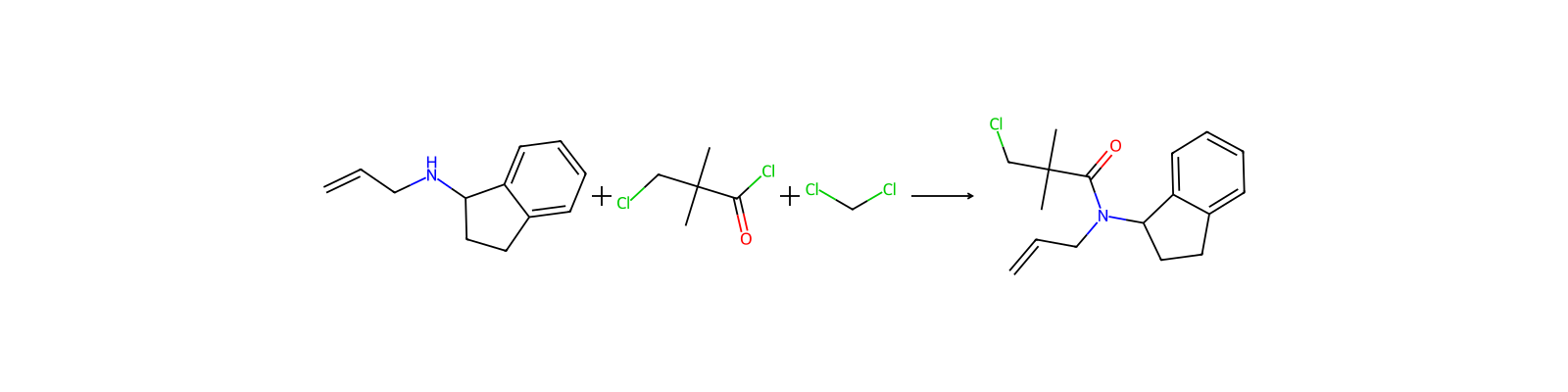
関連反応
71 件




化合物ノート
読み込み中…