ホームMCPワークベンチSkills
ホームワークベンチ通知マイページ
llms.txt · MCPガイドプライバシーポリシー · 利用規約 · サポートv1.8.0
  1. ホーム
  2. /化合物

臭素クロリド

BROMINE CHLORIDE (BrCl)

HCID 61697
ノートを作成反応を作成見積依頼を出す
印刷プレビュー

データを補完しています。しばらくしてからページを更新すると最新の内容を表示できます
基本情報概要名称と識別子物性安全と法規制化学と産業関連反応化合物ノート
部分構造検索類似構造を探す

基本情報

CAS
13863-41-7
標準SMILES
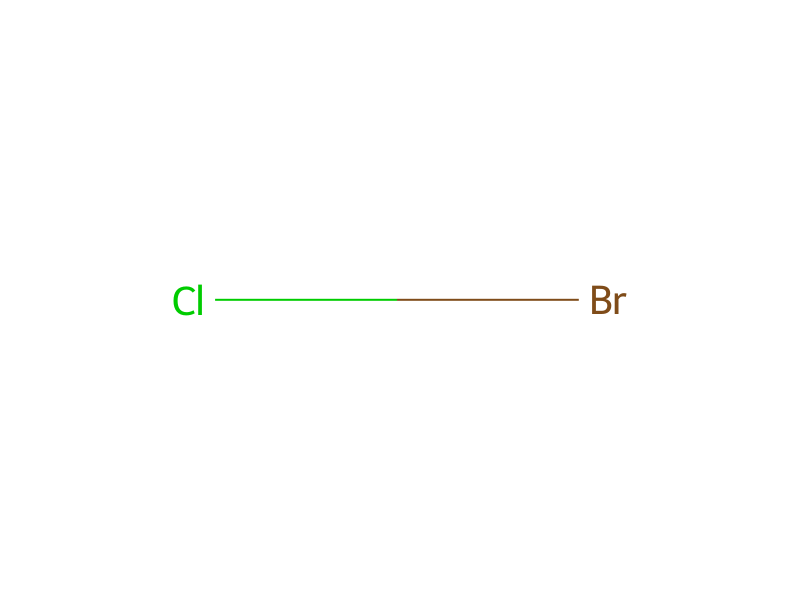
ClBr
InChIKey
CODNYICXDISAEA-UHFFFAOYSA-N
分子式
BrCl
平均分子量
115.36 g/mol
単同位体質量
113.88718978

概要

Bromine chloride appears as a reddish-yellow mobile liquid with an irritating odor. Toxic by ingestion or inhalation, and an irritant to skin, eyes and mucous membranes. Prolonged exposure of the containers to intense heat may result in their violent rupturing and rocketing. Used as an industrial disinfectant.

名称と識別子

優先名称
BROMINE CHLORIDE (BrCl)
現地名
臭素クロリド
英語名
Bromine chloride
分子式
BrCl
分子量
115.36

名称と別名

BROMINE CHLORIDEBromine chloride (BrCl)bromochlorideBromine monochloride13863-41-7UN29017G62XY5724DTXSID4035259UN-2901RefChem:121518DTXCID2015259237-601-4
名称をさらに表示
塩化臭素臭素クロリドブロモクロリド臭化塩素クロロブロミド一塩化臭素Chloro bromideBromo chlorideChlorine bromide
BrClCaswell No. 112AAEINECS 237-601-4EPA Pesticide Chemical Code 020504chlorobrominebromo-chlorineUNII-7G62XY5724HSDB 7820

データベース識別子

CAS
13863-41-7
PubChem CID
61697
DTXSID
DTXSID4035259
UNII
7G62XY5724
EC Number
237-601-4
Nikkaji
J95.101C

物性

構造計算による物性補完中

XLogP
1.8
極性表面積
0 Ų
水素結合供与体数
0
水素結合受容体数
0
回転可能結合数
0
重原子数
2
形式電荷
0
複雑度
2

実験および物理化学的性質

Chemical ClassesToxic Gases & Vapors -> Oxidizers
DensityDensity (at 25 °C): 2.32 g/ml
Color/Form · 2 件

Dark red liquid (<5 °C)

Reddish-yellow, mobile liquid

Solubility · 5 件

Soluble in ethanol and carbon disulfide

Soluble in ether

Reacts with water

Soluble in water

Solubility in water, g/100ml at 25 °C: (good)

Boiling Point · 3 件

5 °C (decomposes)

5 °C (decomposes)

5 °C

Decomposition · 2 件

Decomposes partly at room temperature to chlorine and bromine. The substance decomposes on contact with moisture producing toxic gases including chlorine and bromine.

Decomposes above 50 °F to produce highly toxic chlorine gas.

Melting Point · 2 件

-66 °C

-66 °C

Vapor PressureVapor pressure, kPa at 25 °C: 2.368
Food Contact SubstancesFCS -> FDA Inventory of Effective Food Contact Substance (FCS) Notifications

安全と法規制

安全情報は参考情報です。供給元の安全データシート(SDS)、適用法令、専門家による評価に代わるものではありません。

GHS分類

GHS Classification · 4 件

Danger

H272 (50%): May intensify fire; oxidizer [Danger Oxidizing liquids; Oxidizing solids]

P210, P220, P234, P260, P261, P264, P271, P273, P280, P301+P330+P331, P302+P361+P354, P304+P340, P305+P354+P338, P316, P317, P321, P363, P370+P378, P390, P391, P403+P233, P405, P406, and P501 (click each P-code to see the statement)

Aggregated GHS information provided per 2 reports by companies from 2 notifications to the ECHA C&L Inventory. Each notification may be associated with multiple companies.

危険有害性情報

Hazards IdentificationToxic/poison by inhalation (TIH/PIH)
Regulatory Information · 3 件

Chemical: Bromine chloride (BrCl)

Bromine chloride (BrCl): Does not have an individual approval but may be used as a component in a product covered by a group standard. It is not approved for use as a chemical in its own right.

The New Jersey Worker and Community Right to Know Act requires public and private employers to provide information about hazardous substances at their workplaces. (N.J.S.A. 34:5A-1 et. seq.)

DOT LabelPoison Gas Corrosive Oxidizer
Fire Hazards · 3 件

Excerpt from ERG Guide 124 [Gases - Toxic and/or Corrosive - Oxidizing]:

· Substance does not burn but will support combustion.

Not combustible but enhances combustion of other substances. Many reactions may cause fire or explosion. Gives off irritating or toxic fumes (or gases) in a fire. Risk of fire and explosion. See Chemical Dangers.

Fire PotentialNoncombustible, but is an oxidizer which may react with combustible materials and generate enough heat to start and support combustion.
Health Hazards · 2 件

化学と産業

薬理情報

Metabolism/Metabolites · 1 件

Bromine is mainly absorbed via inhalation, but may also enter the body through dermal contact. Bromine salts can be ingested. Due to its reactivity, bromine quickly forms bromide and may be deposited in the tissues, displacing other halogens. (L626)

用途と製造

Uses · 6 件

Used as a disinfectant and for wastewater treatment; [Hawley]

Using Disinfectants or Biocides [Category: Clean]

For bromine chloride (USEPA/OPP Pesticide Code: 020504) ACTIVE products with label matches. /SRP: Registered for use in the U.S. but approved pesticide uses may change periodically and so federal, state and local authorities must be consulted for currently approved uses./

Disinfectant, fungicide, algaecide and slimicide in recirculating and once-through cooling and process water systems, heat transfer systems, air washers and industrial scrubbing systems, containerized ponds and decorative fountains, industrial once-through cooling water systems, pulp and paper mills, wastewater systems ... Pests controlled are algae, bacteria, and fungal slime.

When bromine chloride dissolves in water, hypobromous acid is formed ... Therefore, hypobromous acid is the actual microbiocide.

Industrial disinfectant, especially for wastewaters

U.S. ProductionProduction volumes for non-confidential chemicals reported under the Inventory Update Rule. [Table#7512]
Methods of Manufacturing · 1 件

... Prepared by mixing bromine and chlorine in equimolar quantities. The reaction is exothermic and provision should be made for heat removal during production. At room temperature about 60 % of the mixed halogen is present as bromine chloride.

Formulations/Preparations · 5 件

Albemarle S909 Biocide (Albemarle Corp) bromine chloride 11%

Bromine Chloride (Great Lakes Chemical Corp) bromine chloride 99.5%

Bromine Chloride Disinfectant (Albemarle Corp) bromine chloride 99.1%

関連反応

48 件
反応記録を作成
HRID 25907 の反応式
HRID 25907反応物としてuspto-grants-1979_04
HRID 27799 の反応式
HRID 27799反応物としてuspto-grants-1980_09
HRID 125915 の反応式
HRID 125915反応物としてTraining data from https://doi.org/10.1039/C8SC04228D (2/10)
HRID 282240 の反応式
HRID 282240反応物としてTraining data from https://doi.org/10.1039/C8SC04228D (8/10)
HRID 326028 の反応式
HRID 326028反応物としてuspto-grants-1984_04
HRID 399326 の反応式
HRID 399326反応物としてuspto-grants-1998_10
HRID 463457 の反応式
HRID 463457反応物としてuspto-grants-1985_05
HRID 734804 の反応式
HRID 734804反応物としてuspto-grants-2009_09
1 / 6 ページ

化合物ノート

読み込み中…

このページの内容基本情報概要名称と識別子物性安全と法規制化学と産業関連反応化合物ノート
その他の操作
ノートを作成反応を作成見積依頼を出す
Physical Description · 3 件

Bromine chloride appears as a reddish-yellow mobile liquid with an irritating odor. Toxic by ingestion or inhalation, and an irritant to skin, eyes and mucous membranes. Prolonged exposure of the containers to intense heat may result in their violent rupturing and rocketing. Used as an industrial disinfectant.

Dark red liquid (<5 deg C); [HSDB] Dark liquid with harsh, penetrating odor; [CHEMINFO MSDS]

GAS WITH PUNGENT ODOUR.

Other Experimental Properties · 2 件

Heat of formation: 14.6 kJ/mol; molar entropy: 240.1 J/mol-K; heat capacity: 35.0 J/mol-K

Ionization energy: 11.01 eV

物理化学的性質

融点
-66 ℃ · -66℃ [HAW93]
沸点
2 at · decomposes evolving Cl2 at 10℃ [HAW93]
比重(密度)
5.062 g/L · 5.062g/L [LID94]
溶解性
2 O; · reacts with H2O; soluble in ethyl ether,CS
外見
不安定な赤褐色のガス
色
dark red liquid (<5C)
水溶解度
2 O、可溶性二硫化炭素、エーテル · 加水分解が容易な可溶性H2O、可溶性二硫化炭素、エーテル [HAW93]
比熱容量
0.3 J/ · Cp(gas): 0.3 J/(g·K), at 25℃
Henry's Law Constant
9.7 · 9.7×10-3 mol/(m3Pa) at 25℃, Burkholder et al. (2019)
EPAの化学物質情報
Bromine chloride (13863-41-7)

化学的性質

化学的特性A reddish-yellow mobile liquid or gas. Irritating, pungent odor.

Excerpt from ERG Guide 124 [Gases - Toxic and/or Corrosive - Oxidizing]:

· TOXIC and/or CORROSIVE; may be fatal if inhaled or absorbed through skin.

Hazards Summary · 1 件

Corrosive to eyes, skin, and respiratory tract; [CHEMINFO MSDS] Decomposes above 50 degrees F with release of chlorine gas; [Hawley] Contact with liquefied gas may cause frostbite; [CAMEO] Causes lachrymation. Inhalation of high concentration may cause pneumonitis and pulmonary edema; [ICSC] See Bromine.

DOT ID and Guide2901 124
Reactive GroupOxidizing Agents, Strong
UN ClassificationUN Hazard Class: 2.3; UN Subsidiary Risks: 5.1 and 8
FIFRA Requirements · 1 件

New Active Ingredients ... includes chemicals not previously registered as pesticides, as well as pesticide active ingredients initially registered after November 1, 1984 and that currently have active product registrations. By law, these pesticides must meet new safety standards, such as those described in the Food Quality Protection Act of 1996 and, if new safety standards are met, will be reviewed again on a 15-year cycle. Bromine chloride is designated by EPA as a New Pesticide Active Ingredient. Active Ingredient Number: 020504; Type of Pesticide: conventional - antimicrobial; Use Site: water cooling, sewage systems; Year: 1987.

Reactivity AlertsStrong Oxidizing Agent

安全と保護具

Fire Fighting · 2 件

Excerpt from ERG Guide 124 [Gases - Toxic and/or Corrosive - Oxidizing]:

In case of fire in the surroundings, use appropriate extinguishing media. In case of fire: keep cylinder cool by spraying with water. NO direct contact with water.

First Aid Measures · 3 件

Fresh air, rest. Half-upright position. Refer immediately for medical attention. Artificial respiration may be needed.

First rinse with plenty of water for at least 15 minutes, then remove contaminated clothes and rinse again. Refer immediately for medical attention.

Rinse with plenty of water (remove contact lenses if easily possible). Refer immediately for medical attention.

Accidental Release Measures · 2 件

· CALL 911. Then call emergency response telephone number on shipping paper. If shipping paper not available or no answer, refer to appropriate telephone number listed on the inside back cover.

· Do not touch or walk through spilled material.

First Aid · 2 件

Excerpt from ERG Guide 124 [Gases - Toxic and/or Corrosive - Oxidizing]:

General First Aid:

Safe StorageFireproof if in building. Provision to contain effluent from fire extinguishing. Separated from food and feedstuffs. See Chemical Dangers. Cool. Dry. Keep in a well-ventilated room. Store in an area without drain or sewer access.
Exposure Control and Personal Protection · 2 件

· Wear positive pressure self-contained breathing apparatus (SCBA).

TIH (Toxic Inhalation Hazard) - Term used to describe gases and volatile liquids that are toxic when inhaled. Some are TIH materials themselves, e.g., chlorine, and some release TIH gases when spilled in water, e.g., chlorosilanes. [ERG 2016].

Fire Fighting Procedures · 2 件

If material involved in fire: extinguish fire using agent suitable for type of surrounding fire (material itself does not burn or burns with difficulty). Cool all affected containers with flooding quantities of water. Apply water from as far a distance as possible. Do not use water on material itself. Keep run-off water out of sewers and water sources. Do not apply water to point of leak in tank car or container.

Wear positive pressure self-contained breathing apparatus when fighting fires involving this material.

Storage Conditions · 2 件

Fireproof if in building. Provision to contain effluent from fire extinguishing. Separated from food and feedstuffs ... Cool. Dry. Keep in a well-ventilated room. Store in an area without drain or sewer access.

When dry bromine chloride is stored in a pressurized cylinder (a closed system), no product composition change can occur.

Cleanup Methods · 1 件

Evacuate danger area! Consult an expert! Personal protection: gas-tight chemical protection suit including self-contained breathing apparatus. Do NOT let this chemical enter the environment. Ventilation. Remove gas with fine water spray. Shut off cylinder if possible. Isolate the area until the gas has dispersed. NEVER direct water jet on liquid.

Nonfire Spill ResponseExcerpt from ERG Guide 124 [Gases - Toxic and/or Corrosive - Oxidizing]:
Disposal Methods · 1 件

SRP: The most favorable course of action is to use an alternative chemical product with less inherent propensity for occupational harm/injury/toxicity or environmental contamination. Recycle any unused portion of the material for its approved use or return it to the manufacturer or supplier. Ultimate disposal of the chemical must consider: the material's impact on air quality; potential migration in soil or water; effects on animal and plant life; and conformance with environmental and public health regulations.

Spillage Disposal · 1 件

Evacuate danger area! Consult an expert! Personal protection: gas-tight chemical protection suit including self-contained breathing apparatus. Do NOT let this chemical enter the environment. Ventilation. Remove gas with fine water spray. Shut off cylinder if possible. Isolate the area until the gas has dispersed. NEVER direct water jet on liquid.

毒性情報

Treatment · 1 件

EYES: irrigate opened eyes for several minutes under running water. INGESTION: do not induce vomiting. Rinse mouth with water (never give anything by mouth to an unconscious person). Seek immediate medical advice. SKIN: should be treated immediately by rinsing the affected parts in cold running water for at least 15 minutes, followed by thorough washing with soap and water. If necessary, the person should shower and change contaminated clothing and shoes, and then must seek medical attention. INHALATION: supply fresh air. If required provide artificial respiration.

Health Effects · 1 件

Bromine vapour causes irritation and direct damage to the mucous membranes. Elemental bromine also burns the skin. The bromide ion is a central nervous system depressant and chronic exposure produces neuronal effects. This is called bromism and can result in central reactions reaching from somnolence to coma, cachexia, exicosis, loss of reflexes or pathologic reflexes, clonic seizures, tremor, ataxia, loss of neural sensitivity, paresis, papillar edema of the eyes, abnormal speech, cerebral edema, delirium, aggressiveness, and psychoses. (L625, L626, L627)

Ecotoxicity Values · 3 件

LC50; Species: Lepomis macrochirus (Bluegill sunfish); Concentration: 0.52 ppm for 96 hr; Conditions: static

LC50; Species: Salmo gairdneri (Rainbow trout); Concentration: 0.31 ppm for 96 hr; Conditions: static

LC50; Species: Daphnia magna (Water flea); Concentration: 1.07 ppm for 48 hr; Conditions; static

Adverse EffectsDermatotoxin - Skin burns.
Exposure Routes · 2 件

Serious local effects by all routes of exposure.

Oral (L626) ; inhalation (L626) ; dermal (L626)

Toxicity Summary · 1 件

Bromine is a powerful oxidizing agent and is able to release oxygen free radicals from the water in mucous membranes. These free radicals are also potent oxidizers and produce tissue damage. In additon, the formation of hydrobromic and bromic acids will result in secondary irritation. The bromide ion is also known to affect the central nervous system, causing bromism. This is believed to be a result of bromide ions substituting for chloride ions in the in actions of neurotransmitters and transport systems, thus affecting numerous synaptic processes. (L626, L627, A543)

Signs and Symptoms · 4 件

Cough. Sore throat. Shortness of breath. Wheezing. Laboured breathing. Symptoms may be delayed.

Redness. Burning sensation. Pain. Serious skin burns.

Watering of the eyes. Redness. Blurred vision. Pain. Burns.

Bromine vapour causes irritation and direct damage to the mucous membranes. Symptoms include lacrimation, rhinorrhoea, eye irritation with mucous secretions from the oropharyngeal and upper airways, coughing, dyspnoea, choking, wheezing, epistaxis, and headache. The bromide ion is a central nervous system depressant producing ataxia, slurred speech, tremor, nausea, vomiting, lethargy, dizziness, visual disturbances, unsteadiness, headaches, impaired memory and concentration, disorientation and hallucinations. This is called bromism. (L626, L627)

ICSC Environmental DataThe substance is very toxic to aquatic organisms. It is strongly advised not to let the chemical enter into the environment.
Human Toxicity Excerpts · 2 件

/SIGNS AND SYMPTOMS/ Short-term exposure: Lachrymation. The substance is corrosive to the eyes, the skin and the respiratory tract. Inhalation may cause asthma-like reactions. Inhalation may cause pneumonitis. Inhalation may cause lung edema, but only after initial corrosive effects on eyes and/or airways have become manifest. The symptoms of lung edema often do not become manifest until a few hours have passed, and they are aggravated by physical effort. Exposure may result in death. Long-term exposure: The substance may have effects on the respiratory tract and lungs , resulting in chronic inflammation and impaired functions.

/SIGNS AND SYMPTOMS/ Irritant to skin, eyes, and mucous membranes.

Carcinogen ClassificationNo indication of carcinogenicity to humans (not listed by IARC).
Antidote and Emergency Treatment · 3 件

Immediate first aid: Ensure that adequate decontamination has been carried out. If patient is not breathing, start artificial respiration, preferably with a demand-valve resuscitator, bag-valve-mask device, or pocket mask, as trained. Perform CPR as necessary. Immediately flush contaminated eyes with gently flowing water. Do not induce vomiting. If vomiting occurs, lean patient forward or place on left side (head-down position, if possible) to maintain an open airway and prevent aspiration. Keep patient quiet and maintain normal body temperature. Obtain medical attention. /Bromine, methyl bromide, and related compounds/

Basic treatment: Establish a patent airway (oropharyngeal or nasopharyngeal airway, if needed). Suction if necessary. Watch for signs of respiratory insufficiency and assist ventilations if necessary. Administer oxygen by nonrebreather mask at 10 to 15 L/min. Monitor for pulmonary edema and treat if necessary ... . Monitor for shock and treat if necessary ... . Anticipate seizures and treat if necessary ... . For eye contamination, flush eyes immediately with water. Irrigate each eye continuously with 0.9% saline (NS) during transport ... . Do not use emetics. For ingestion, rinse mouth and administer 5 ml/kg up to 200 ml of water for dilution if the patient can swallow, has a strong gag reflex, and does not drool. Administer activated charcoal ... . Cover skin burns with dry sterile dressings after decontamination ... . /Bromine, methyl bromide, and related compounds/

Advanced treatment: Consider orotracheal or nasotracheal intubation for airway control in the patient who is unconscious, has severe pulmonary edema, or is in severe respiratory distress. Positive-pressure ventilation techniques with a bag valve mask device may be beneficial. Consider drug therapy for pulmonary edema ... . Consider administering a beta agonist such as albuterol for severe bronchospasm ... . Monitor cardiac rhythm and treat arrhythmias if necessary ... . Start IV administration of D5W /SRP: "To keep open", minimal flow rate/. Use 0.9% saline (NS) or lactated Ringer's (LR) if signs of hypovolemia are present. For hypotension with signs of hypovolemia, administer fluid cautiously. Consider vasopressors if patient is hypotensive with a normal fluid volume. Watch for signs of fluid overload ... . Treat seizures with diazepam or lorazepam ... . Use proparacaine hydrochloride to assist eye irrigation ... . /Bromine, methyl bromide, and related compounds/

法規制情報

FIFRA Requirements · 1 件

New Active Ingredients ... includes chemicals not previously registered as pesticides, as well as pesticide active ingredients initially registered after November 1, 1984 and that currently have active product registrations. By law, these pesticides must meet new safety standards, such as those described in the Food Quality Protection Act of 1996 and, if new safety standards are met, will be reviewed again on a 15-year cycle. Bromine chloride is designated by EPA as a New Pesticide Active Ingredient. Active Ingredient Number: 020504; Type of Pesticide: conventional - antimicrobial; Use Site: water cooling, sewage systems; Year: 1987.

DHS Chemicals of Interest (COI) · 4 件

Bromine chloride

9.67

45

Weapons of Mass Effect chemical material that, if stolen or diverted, can be converted into weapons using simple chemistry, equipment, or techniques.

安全データ

tsca
TSCA listed
ridadr
UN 2901
hazard_class
2.3
有毒物質データの
13863-41-7(Hazardous Substances Data)

Maxxis Biocide (Albemarle Corp) bromine chloride 15%

Starbrom Plus Biocide (Albemarle Corp) bromine chloride 13.2%

General Manufacturing InformationBromine chloride (BrCl): ACTIVE
応用分野 · 3 件

解説BrCl(115.36).塩素-臭素の化合物はBrClのみが知られている.塩素と臭素との直接反応で得られる.室温では赤色の不安定な気体.低温ではかなり安定な赤黄色の固体または液体.BrCl分子からなり,Br-Cl2.138 Å.融点約-66 ℃,沸点約5 ℃.低温ではBrCl・4H2Oが安定な固体として得られている.殺菌剤,消毒剤に用いられる.[CAS 13863-41-7]森北出版「化学辞典(第2版)

使用Bromine chloride (BrCl) is an irritating red, smelly liquid used to treat industrial and sewage wastes.

一般的な説明A reddish-yellow mobile liquid with an irritating odor. Melting point -66°C. Toxic by ingestion or inhalation, and an irritant to skin, eyes and mucous membranes. Prolonged exposure of the containers to intense heat may result in their violent rupturing and rocketing. Used as an industrial disinfectant.

上流・下流製品情報

上流原料

ビフェントリン炭素ジオン

下流製品

クレンブテロール臭素酸