
基本情報
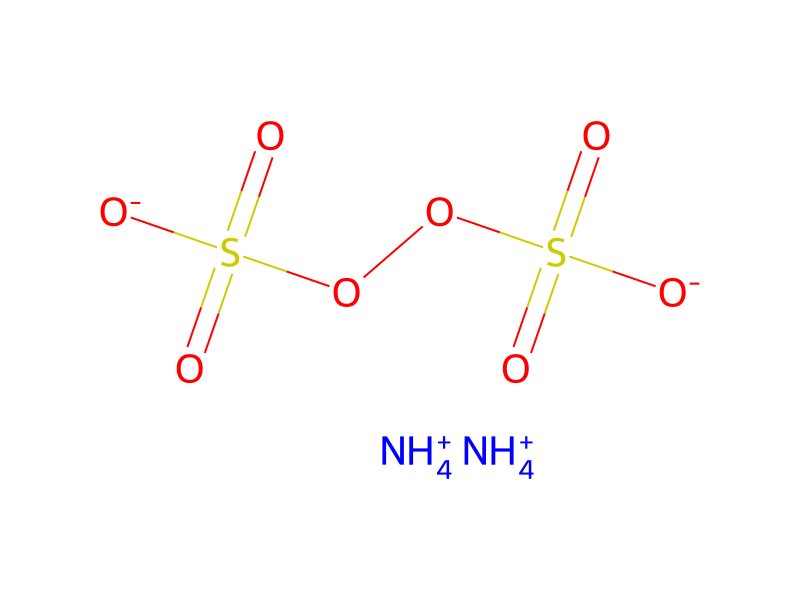
- 標準SMILES
O=S(=O)([O-])OOS(=O)(=O)[O-].[NH4+].[NH4+]- InChIKey
ROOXNKNUYICQNP-UHFFFAOYSA-N- 分子式
- H8N2O8S2
- 平均分子量
- 228.21 g/mol
- 単同位体質量
- 227.97220722
概要
Ammonium persulfate appears as a white crystalline solid. A strong oxidizing agent. Does not burn readily, but may cause spontaneous ignition of organic materials. Used as a bleaching agent and as a food preservative.
名称と識別子
- 優先名称
- Ammonium Persulfate
- IUPAC
- diazanium;sulfonatooxy sulfate
名称と別名
Ammonium persulfate7727-54-0Ammonium peroxydisulfateDiammonium peroxydisulfateDiammonium peroxydisulphateAmmonium persulphateDTXSID902969122QF6L357FDTXCID209691CHEBI:156543Peroxydisulfuric acid (((HO)S(O)2)2O2), ammonium salt (1:2)RefChem:5551
名称をさらに表示
Bis(Ammonium) Peroxodisulfate231-786-5Ammonium PeroxysulfateDiammonium PersulfatePeroxydisulfuric Acid, Diammonium SaltPersulfate d'ammoniumAmmonium peroxodisulfateAmmonium peroxydisulphate
データベース識別子
- CAS
7727-54-0- PubChem CID
- 62648
- DTXSID
DTXSID9029691- UNII
- 22QF6L357F
- EC Number
- 231-786-5
物性
構造計算による物性
- 極性表面積
- 152 Ų
- 水素結合供与体数
- 2
- 水素結合受容体数
- 8
- 回転可能結合数
- 1
- 重原子数
- 12
- 形式電荷
- 0
- 複雑度
- 206
実験および物理化学的性質
Chemical Classes
Other Classes -> Inorganic Oxidizing Agents
Reactive agents - 1st degree
Cosmetics
Cosmetic ingredients (Ammonium Persulfate) -> CIR (Cosmetic Ingredient Review)
Bleaching
OdorOdorless
Food AdditivesANTIMICROBIAL AGENT, FUMIGANT -> FDA Substance added to food
Density
1.98 at 68 °F (USCG, 1999) - Denser than water; will sink
1.982 g/cu cm
1.9 g/cm³
1.982 @25 °C
Color/Form
Platelike or prismatic (monoclinic) crystals, or white granular powder
Colorless, white monoclinic crystals
Solubility
Solubility in water: 83.5 g/100 g water at 25 °C
Freely soluble in water
Solubility in water, g/100ml at 20 °C: 58.2
Decomposition
When heated to decomposition it emits toxic fumes of /sulfur oxides, nitrogen oxides and ammonia/.
120 °C
Melting PointDecomposes at 120 °C
Food Contact SubstancesFCS -> FDA Inventory of Food Contact Substances Listed in 21 CFR
Physical Description
Ammonium persulfate appears as a white crystalline solid. A strong oxidizing agent. Does not burn readily, but may cause spontaneous ignition of organic materials. Used as a bleaching agent and as a food preservative.
Liquid; Large Crystals; Dry Powder
Odorless crystals or white powder; [ACGIH]
COLOURLESS CRYSTALS OR WHITE POWDER.
Other Experimental Properties
Strong oxidizer
Aqueous solution is acid and decomposes slowly at room temperature and rapidly at higher temperatures evolving O2 and forming NH4HSO4
Decomposes in water forming O2
When heated to decomposition it emits toxic fumes of SOx, NH3 and NOx.
安全と法規制
GHS分類
GHS Classification
Danger
H272: May intensify fire; oxidizer [Danger Oxidizing liquids; Oxidizing solids]
P210, P220, P233, P260, P261, P264, P264+P265, P270, P271, P272, P280, P284, P301+P317, P302+P352, P304+P340, P305+P351+P338, P319, P321, P330, P332+P317, P333+P317, P337+P317, P342+P316, P362+P364, P370+P378, P403, P403+P233, P405, and P501 (click each P-code to see the statement)
Danger
H334: May cause allergy or asthma symptoms or breathing difficulties if inhaled [Danger Sensitization, respiratory]
P233, P260, P271, P284, P304+P340, P342+P316, P403, and P501 (click each P-code to see the statement)
危険有害性情報
Regulatory Information
Chemical: Peroxydisulfuric acid ([(HO)S(O)2]2O2), ammonium salt (1:2)
Hazard Traits - Respiratory Toxicity
Peroxydisulfuric acid ([(HO)S(O)2]2O2), ammonium salt (1:2) is listed on the EPA's Chemical Data Reporting (CDR) system. Manufacturers and importers of Peroxydisulfuric acid ([(HO)S(O)2]2O2), ammonium salt (1:2) are required to report information about their production and use of this chemical to the EPA under the Toxic Substances Control Act (TSCA). (40 eCFR Part 711)
Peroxydisulfuric acid, diammonium salt: HSNO Approval: HSR001311 Approved with controls
The New Jersey Worker and Community Right to Know Act requires public and private employers to provide information about hazardous substances at their workplaces. (N.J.S.A. 34:5A-1 et. seq.)
Other Safety InformationPEC / SN / Other assessments - Ammonium, potassium and sodium persulfate in hairdressing: Health
DOT LabelOxidizer
Fire Hazards
Special Hazards of Combustion Products: Toxic oxides of nitrogen and sulfuric acid fumes may form in fire.
CAUTION: Ammonium nitrate products may explode if involved in fire or contaminated with hydrocarbons (fuels), organic matter, other contaminants or when hot molten and contained. Treat as an explosive (GUIDE 112).
Not combustible but enhances combustion of other substances. Gives off irritating or toxic fumes (or gases) in a fire. Risk of fire and explosion on contact with combustible substances or reducing agents.
Fire PotentialMaterial itself does not burn or burns with difficulty.
Health Hazards
Inhalation produces slight toxic effects. Contact with dust irritates eyes and causes skin rash. (USCG, 1999)
· Inhalation, ingestion or contact (skin, eyes) with vapors or substance may cause severe injury, burns or death.
Hazards Summary
Ammonium persulfate, used to 'boost' peroxide hair bleaches, causes contact urticaria and anaphylactoid reactions. [Marks, p. 177] Both ammonium persulfate and benzoyl peroxide are used to bleach flour. [Marks, p. 324] Used as a reducer and retarder in the development of photographs; [Kanerva, p. 1637] It may induce either Type I reactions (urticaria, anaphylaxis, and asthma) or Type IV reactions (allergic contact dermatitis). [Kanerva, p. 1513] A skin, eye, and respiratory tract irritant; A skin sensitizer; May cause urticaria and asthma; [ICSC] Frequent skin rashes are reported in workers exposed to persulfates (S2O8). Rats inhaling 4-20 mg/m3 of ammonium persulfate 23.5 hours/day for 7 days show signs of lung inflammation and loss of body weight. The TLV is proposed to reduce irritation of skin, throat, and respiratory tract. [ACGIH] Danger of sensitization of skin and airways; [MAK]
DOT ID and Guide1444 140
Reactive GroupSalts, Acidic
EC ClassificationSymbol: O, Xn; R: 8-22-36/37/38-42/43; S: (2)-22-24-26-37
UN ClassificationUN Hazard Class: 5.1; UN Pack Group: III
Reactivity AlertsStrong Oxidizing Agent
安全と保護具
Fire Fighting
Excerpt from ERG Guide 140 [Oxidizers]:
In case of fire in the surroundings, use appropriate extinguishing media. In case of fire: keep drums, etc., cool by spraying with water.
First Aid Measures
Fresh air, rest. Artificial respiration may be needed. Refer for medical attention.
First rinse with plenty of water for at least 15 minutes, then remove contaminated clothes and rinse again.
First rinse with plenty of water for several minutes (remove contact lenses if easily possible), then refer for medical attention.
Give one or two glasses of water to drink. Refer for medical attention .
Accidental Release Measures
· CALL 911. Then call emergency response telephone number on shipping paper. If shipping paper not available or no answer, refer to appropriate telephone number listed on the inside back cover.
· Keep combustibles (wood, paper, oil, etc.) away from spilled material.
First Aid
INHALATION: remove to fresh air.
General First Aid:
Safe StorageDry. Well closed. Separated from combustible substances, reducing agents, powdered metals and strong bases.
Exposure Control and Personal Protection· Wear positive pressure self-contained breathing apparatus (SCBA).
Fire Fighting Procedures
If material involved in fire: Cool all affected containers with flooding quantities of water. Use water in flooding quantities as fog. Apply water from as far a distance as possible. Extinguish fire using agent suitable for type of surrounding fire.
Nonfire Spill ResponseExcerpt from ERG Guide 140 [Oxidizers]:
Disposal Methods
SRP: The most favorable course of action is to use an alternative chemical product with less inherent propensity for occupational harm/injury/toxicity or environmental contamination. Recycle any unused portion of the material for its approved use or return it to the manufacturer or supplier. Ultimate disposal of the chemical must consider: the material's impact on air quality; potential migration in soil or water; effects on animal and plant life; and conformance with environmental and public health regulations.
Spillage Disposal
Personal protection: particulate filter respirator adapted to the airborne concentration of the substance. Do NOT let this chemical enter the environment. Sweep spilled substance into covered containers. Carefully collect remainder. Then wash away with plenty of water. Do NOT absorb in saw-dust or other combustible absorbents.
Preventive Measures
SRP: The scientific literature for the use of contact lenses by industrial workers is inconsistent. The benefits or detrimental effects of wearing contact lenses depend not only upon the substance, but also on factors including the form of the substance, characteristics and duration of the exposure, the uses of other eye protection equipment, and the hygiene of the lenses. However, there may be individual substances whose irritating or corrosive properties are such that the wearing of contact lenses would be harmful to the eye. In those specific cases, contact lenses should not be worn. In any event, the usual eye protection equipment should be worn even when contact lenses are in place.
If material not involved in fire: Keep material out of water sources and sewers. Build dikes to contain flow as necessary.
Personnel protection: Avoid breathing vapors or dusts. ... Avoid bodily contact with the material. Wash away any material which may have contacted the body with copious amounts of water or soap and water.
Isolation and Evacuation
Excerpt from ERG Guide 140 [Oxidizers]:
Immediate precautionary measure
毒性情報
Interactions
Ammonium persulphate (APS) and hydrogen peroxide (H2O2) are used as oxidants in many industrial processes and are the main constituents of standard hair bleaching products. In a previous study, it was demonstrated that aerosols of APS induce alterations in airway responsiveness. The present study examined whether exposure for 4 hr to a hair bleach composition (containing APS, potassium persulphate and H2O2) or H2O2 could induce airway hyperresponsiveness and/or an obstructive ventilation pattern in a rabbit model. Exposure to the aerosols altered neither baseline airway resistance, dynamic elastance, slope of inspiratory pressure generation nor arterial blood pressure and blood gas measurements. Similarly to APS, hair bleach aerosols containing > or =10.9 mg /per/ cu m persulphate (ammonium and potassium salt) in air and > or =1.36 mg /per/cu m H2O2 in air caused airway hyperresponsiveness to acetylcholine after 4 hr of exposure. Aerosolized H2O2 (> or =37 mg /per/ cu m in air) did not influence airway responsiveness to acetylcholine. The results demonstrate that hair bleaching products containing persulphates dissolved in H2O2 cause airway hyperresponsiveness to acetylcholine in rabbits.
Adverse EffectsSkin Sensitizer - An agent that can induce an allergic reaction in the skin.
Exposure RoutesThe substance can be absorbed into the body by inhalation of its aerosol and by ingestion.
Toxicity Summary
The CIR Expert Panel concluded that Ammonium, Potassium, and Sodium Persulfate are safe as used as oxidizing agents in hair colorants and hair lighteners designed for brief discontinuous use followed by thorough rinsing from the hair and skin. The Panel also concluded that the available data are insufficient for determining the safety of these persulfates in leave-on products and dentifrices.
Safe for use in cosmetics, with qualifications
Signs and Symptoms
Cough. Sore throat. Wheezing. Laboured breathing.
Redness. Burning sensation. Pain.
Redness. Pain.
Nausea. Diarrhoea. Vomiting. Sore throat.
ICSC Environmental DataThe substance is harmful to aquatic organisms.
Human Toxicity Excerpts
/HUMAN EXPOSURE STUDIES/ 12 of 49 professional hairdressers patch tested with ammonium persulphate gave positive reactions, in contrast to 1 of 118 patients who were not hairdressers. ... The rate of degradation of ammonium persulphate in petroleum and in aqueous solution was estimated, and found to be 24% in 6 months.
/HUMAN EXPOSURE STUDIES/ A cross sectional study was performed in 32 of 33 employees of a persulphate producing chemical plant. Eighteen of 23 workmen from the same plant with no exposure to persulphates were taken as controls. Also, information was collected from medical records of the seven subjects who had left the persulphate production for medical reasons since 1971. Data were recalled by a questionnaire, skin prick tests were performed with five environmental allergens, and ammonium and sodium persulphate (80 mg/mL). Specific immunoglobulin E (IgE) to the same environmental allergens as in the skin test, and total IgE were measured. Lung function and bronchial responsiveness to histamine were assessed by standard procedures. Workplace concentrations of ammonium and sodium persulphate were estimated by area and personal monitoring. The amount of persulphate was analyzed as sulphur by inductively coupled plasma emission spectrometry. Work related rhinitis was reported by one subject with exposure to persulphates, conjunctivitis and bronchitis were reportedly related to work by two controls. There were no cutaneous reactions to persulphates in either group. Four non-atopic subjects exposed to persulphates, and two controls, one atopic and one non-atopic, were considered to be hyperresponsive to histamine. Three subjects exposed to persulphates with bronchial hyperresponsiveness (provocation dose of histamine causing a 15% fall in forced expiratory volume in one second (PD15 FEV1) < or = 1 mg) did not show variability in peak expiratory flow of > or = 20%, the rest refused peak flow measurements. None of the variables showed significant differences between the groups (P > 0.05). Six of the ex- workers left because of work related contact dermatitis. Mean values for workplace concentrations of ammonium and sodium persulphate within the bagging plant were below 1 mg/cu m, and the maximal concentrations were 1.4 mg/cu m and 3.6 mg/cu m, respectively. /persulphates/
/HUMAN EXPOSURE STUDIES/ The relationships between asthma and rhinitis are still a crucial point in respiratory allergy and have scarcely been analyzed in occupational setting. /This study/ aimed to compare the clinical and inflammatory features of subjects with occupational asthma only (OA) to subjects with OA associated to occupational rhinitis (OAR) caused by persulphate salts. The clinical charts of 26 subjects diagnosed /with/ respiratory allergy caused by ammonium persulphate (AP), confirmed by specific inhalation challenge (SIC), were reviewed. Twenty-two out of twenty-six patients underwent pre-SIC-induced sputum challenge test (IS) and 24/26 underwent nasal secretion collection and processing. Twelve out of twenty-six patients received a diagnosis of OA-only and 14/26 of OAR. Duration of exposure before diagnosis, latency period between the beginning of exposure and asthma symptom onset, basal FEV(1), airway reactivity to methacholine and asthma severity did not differ in the two groups. Eosinophilic inflammation of upper and lower airways characterized both groups. Eosinophil percentage in IS tended to be higher in OAR [11.9 (5.575-13.925)%] than in OA-only [2.95 (0.225-12.5)%] (P = 0.31). Eosinophilia in nasal secretions was present both in subjects with OAR [55 (46-71)%] and in subjects with OA-only [38 (15-73.5)%], without any significant difference. /This/ result indicates that OA because of ammonium persulphate coexists with occupational rhinitis in half of the patients. Unexpectedly, rhinitis did not seem to have an impact on the natural history of asthma. The finding of nasal inflammation in subjects with OA-only without clinical manifestations of rhinitis supports the united airway disease concept in occupational respiratory allergy as a result of persulphates.
/CASE REPORTS/ ... A 24-year-old woman ... acquired dermatitis following contact with bleaching substances while working as a hairdresser. After changing her profession, the dermatitis disappeared. Following the private use of a hairdressing bleach containing ammonium persulphate, she suffered a severe anaphylactic reaction with unconsciousness. The patient also developed an anaphylactic reaction three hours following patch testing with the hairdresser battery. The rub test with ammonium persulphate (2.5%) in a 1:100 solution was positive.
For more Human Toxicity Excerpts (Complete) data for Ammonium peroxydisulfate (8 total), please visit the HSDB record page.
Non-Human Toxicity Excerpts
/LABORATORY ANIMALS: Acute Exposure/ Ammonium, Potassium, and Sodium Persulfate are inorganic salts used as oxidizing agents in hair bleaches and hair-coloring preparations. Persulfates are contained in hair lighteners at concentrations up to 60%, in bleaches and lighteners at up to 22% and 16%, respectively, and in off-the-scalp products used to highlight hair strands at up to 25%. They are used in professional product bleaches and lighteners at similar concentrations. Much of the available safety test data are for Ammonium Persulfate, but these data are considered applicable to the other salts as well. Acute dermal, oral, and inhalation toxicity studies are available, but only the latter are remarkable, with gross lesions observed in the lungs, liver, stomach, and spleen.
/LABORATORY ANIMALS: Acute Exposure/ ... It was the aim of this study to investigate whether inhaled ammonium persulphate affects the non-adrenergic, non-cholinergic (NANC) inhibitory innervation, the cholinergic nerve-mediated contraction or the muscular response to the spasmogens, carbachol or histamine, in the guinea pig epithelium-free, isolated trachea. Male guinea pigs inhaled aerosols containing ammonium persulphate (10 mg/m(3) for 30 min for 5 days during 3 weeks). Control animals inhaled saline aerosol. NANC relaxations to electrical field stimulation at 3 Hz were evaluated in whole tracheal segments as intraluminal pressure changes. Drugs inactivating peptide transmission, nitric oxide synthase, carbon monoxide production by heme oxygenase-2 and soluble guanylyl cyclase were used to assess the involvement of various inhibitory neurotransmitters. Carbachol and histamine cumulative concentration-response curves were obtained. In both groups, nitric oxide and carbon monoxide participated to the same extent as inhibitory neurotransmitters. In exposed animals, the tracheal NANC relaxations were reduced to 45.9 +/- 12.1% (p < 0.01). The cholinergic nerve-mediated contractions to electrical field stimulation and the muscular response to histamine were not modified by ammonium persulphate exposure. The muscular response to carbachol was unaffected up to 1 microM. Conversely, the response to the maximal concentration of carbachol (3 microM) was increased (p < 0.01). Ammonium persulphate inhalation at high concentrations impairs the nervous NANC inhibitory control in the guinea pig airways. ...
/LABORATORY ANIMALS: Subchronic or Prechronic Exposure/ In short-term and subchronic feeding studies the results were mixed; some studies found no evidence of toxicity and others found local damage to the mucous membrane in the gastrointestinal tract, but no other systemic effects. Short-term inhalation toxicity was observed when rats were exposed to aerosolized Ammonium Persulfate at concentrations of 4 mg/cu m and greater. Ammonium Persulfate (as a moistened powder) was not an irritant to intact rabbit skin, but was sensitizing (in a saline solution) to the guinea pig. It was slightly irritating to rabbit eyes.
/LABORATORY ANIMALS: Subchronic or Prechronic Exposure/ BALB/c mice were dermally treated on days 1 and 8, with dimethylsulfoxide (DMSO), 1% /ammonium persulfate/ (AP) or 5% AP (20 uL/ear). On day 15, the auricular lymph nodes were removed and an in vitro lymphocyte proliferation test (LPT) was performed. AP was tested for its ability to elicit an asthmatic response using a locally developed mouse model of chemical-induced asthma. On days 1 and 8, BALB/c mice received 20 uL AP (5%) or DMSO on each ear. On day 15, they received an intranasal instillation of AP (1%) or saline. Afterwards, ventilatory, inflammatory and immunological parameters were assessed. The LPT showed that in vitro stimulation of lymphocytes with AP leads to specific proliferation of lymphocytes from AP-sensitized mice. In vivo, AP induced, in AP-sensitized mice only, an 'early' ventilatory response (increased Penh (enhanced pause)) immediately after challenge, and airway hyper-reactivity to methacholine 22 hr later. Pulmonary inflammation was mainly characterized by neutrophils (10-15%). AP-sensitized mice showed an increase in total number of T helper (Th) and B lymphocytes together with an increased in vitro secretion of interleukin-4 (IL-4), IL-10 and IL-13 and an increase in total serum immunoglobulin E.
For more Non-Human Toxicity Excerpts (Complete) data for Ammonium peroxydisulfate (11 total), please visit the HSDB record page.
Probable Routes of Human Exposure
According to the 2006 TSCA Inventory Update Reporting data, the number of persons reasonably likely to be exposed in the industrial manufacturing, processing, and use of ammonium peroxydisulfate is 1000 or greater; the data may be greatly underestimated(1).
NIOSH (NOES Survey 1981-1983) has statistically estimated that 249,578 workers (81,412 of these are female) are potentially exposed to ammonium peroxydisulfate in the US(1).
Antidote and Emergency Treatment
/SRP:/ Immediate first aid: Ensure that adequate decontamination has been carried out. If patient is not breathing, start artificial respiration, preferably with a demand-valve resuscitator, bag-valve-mask device, or pocket mask, as trained. Perform CPR as necessary. Immediately flush contaminated eyes with gently flowing water. Do not induce vomiting. If vomiting occurs, lean patient forward or place on left side (head-down position, if possible) to maintain an open airway and prevent aspiration. Keep patient quiet and maintain normal body temperature. Obtain medical attention. /Inorganic acids and related compounds/
/SRP:/ Basic treatment: Establish a patent airway (oropharyngeal or nasopharyngeal airway, if needed). Suction if necessary. Watch for signs of respiratory insufficiency and assist respirations if needed. Administer oxygen by nonrebreather mask at 10 to 15 L/min. Monitor for pulmonary edema and treat if necessary ... . Monitor for shock and treat if necessary ... . For eye contamination, flush eyes immediately with water. Irrigate each eye continuously with 0.9% saline (NS) during transport ... . Do not use emetics. Activated charcoal is not effective. For ingestion, rinse mouth and administer 5 ml/kg up to 200 ml of water for dilution if the patient can swallow, has a strong gag reflex, and does not drool ... . Do not attempt to neutralize because of exothermic reaction. Cover skin burns with dry, sterile dressings after decontamination ... . /Inorganic acids and related compounds/
/SRP:/ Advanced treatment: Consider orotracheal or nasotracheal intubation for airway control in the patient who is unconscious, has severe pulmonary edema, or is in severe respiratory distress. Early intubation, at the first sign of upper airway obstruction, may be necessary. Positive-pressure ventilation techniques with a bag valve mask device may be beneficial. Consider drug therapy for pulmonary edema ... . Consider administering a beta agonist such as albuterol for severe bronchospasm ... . Monitor cardiac rhythm and treat arrhythmias as necessary ... . Start IV administration of D5W /SRP: "To keep open", minimal flow rate/. Use 0.9% saline (NS) or lactated Ringer's(LR) if signs of hypovolemia are present. For hypotension with signs of hypovolemia, administer fluid cautiously. Consider vasopressors if patient is hypotensive with a normal fluid volume. Watch for signs of fluid overload ... . Use proparacaine hydrochloride to assist eye irrigation ... . /Inorganic acids and related compounds/
Non-Human Toxicity Values
LD50 Rat ip 226 mg/kg
LD50 Rabbit iv 178 mg/kg
LC50 Rat inhalation >2950 mg/cu m 4 hr
LD50 Rat dermal >2000 mg/kg
For more Non-Human Toxicity Values (Complete) data for Ammonium peroxydisulfate (10 total), please visit the HSDB record page.
化学と産業
用途と製造
Uses
CIR ingredient: Ammonium Persulfate
Used as a bleaching and deodorizing agent, an echant for printed circuit boards, and in food preserving and electroplating; [Hawley] Occupational asthma reported in hairdresser; [Malo] Allergic contact dermatitis in hairdressers and bakers; [Marks]
Electroplating [Category: Plate]
Both oil base and water base fracturing fluids are being used in the fracturing industry. Water base, which includes alcohol-water mixtures and low strength acids, make up the majority of treating fluids. The common chemicals added to these fluids are polymers for viscosity development, crosslinkers for viscosity enhancement, pH control chemicals, gel breakers for polymer degradation following the treatment, surfactants, clay stabilizers, alcohol, bactericides, fluid loss additives and friction reducer. /Hydraulic fracturing/
Hydraulic fracturing uses a specially blended liquid which is pumped into a well under extreme pressure causing cracks in rock formations underground. These cracks in the rock then allow oil and natural gas to flow, increasing resource production. ... Chemical Name: Ammonium persulfate; Chemical Purpose: Allows a delayed break down of the gel; Product Function: Breaker.
... Used to desize cotton and sometimes as an additive in hydrogen peroxide bleaching.
U.S. Production
2023: 1,000,000 - <5,000,000 lb
Production volumes for non-confidential chemicals reported under the Inventory Update Rule. [Table#7922]
Production volume for non-confidential chemicals reported under the 2006 Inventory Update Rule. Chemical: Peroxydisulfuric acid, ammonium salt. Aggregated National Production Volume: 10 to < 50 million pounds.
Consumer UsesEmulsifier
Industry UsesBleaching agent
Methods of Manufacturing
All the peroxodisulfates /ammonium, potassium and sodium/ are made commercially by electrolytic processes. The traditional method was developed from the Degussa-Weissenstein process for making hydrogen peroxide, in which a solution containing ammonium sulfate and sulfuric acid was electrolyzed between platinum electrodes. Ammonium peroxodisulfate was crystallized directly from the spent electrolyte, and the other salts were made from this by adding alkali metal hydroxides and volatilizing the ammonia. In the 1970s, an improved electrolytic process was developed, giving all three peroxodisulfate salts directly from the corresponding hydrogen sulfate salts; one multipurpose cell could thus produce whichever salt was required. Cells of the old design used diaphragms of asbestos that were troublesome to maintain and would no longer be approved for safety reasons. Cells of the new design operate continuously and do not use a diaphragm.
... Produced by electrolytic oxidation of the appropriate hydrogen sulfate salt.
Electrolysis of concentrated solution of ammonium sulfate. Recovered by crystallization.
Household ProductsInformation on 14 consumer products that contain Ammonium peroxydisulfate in the following categories is provided:
Use Classification
Food Additives -> FLOUR_TREATMENT_AGENT -> JECFA Functional Classes
Cosmetics -> Bleaching
General Manufacturing Information
Wholesale and Retail Trade
Peroxydisulfuric acid ([(HO)S(O)2]2O2), ammonium salt (1:2): ACTIVE
関連反応
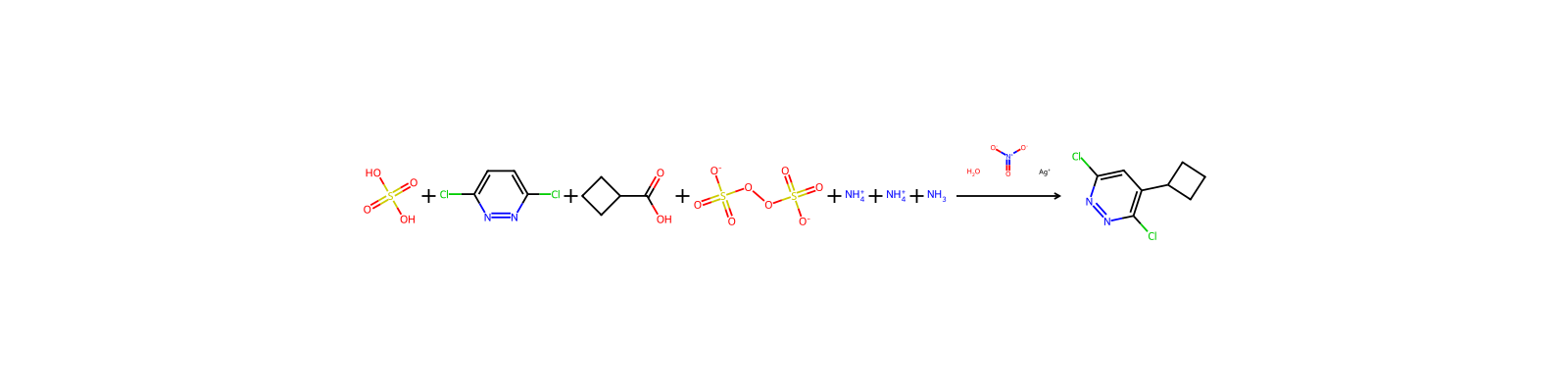
291 件




関連ノート
読み込み中…