
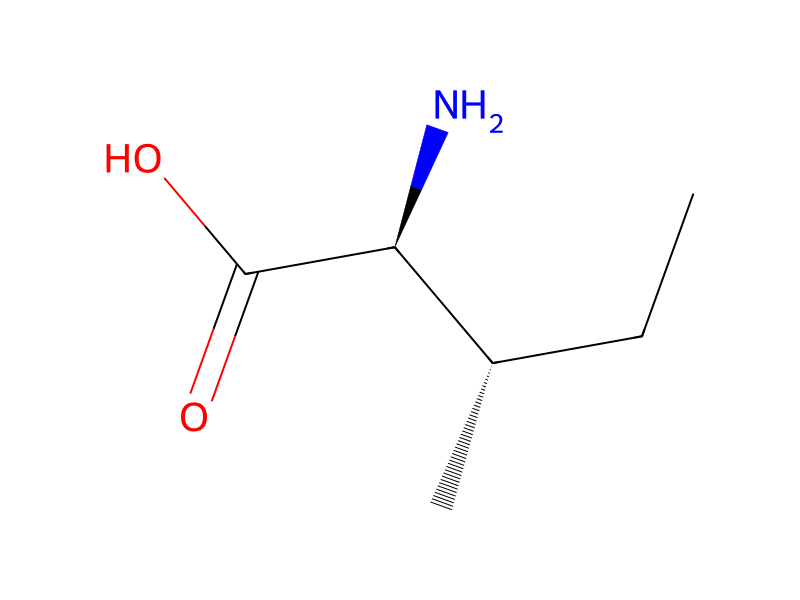
基本情報
- 標準SMILES
CC[C@H](C)[C@H](N)C(=O)O- InChIKey
AGPKZVBTJJNPAG-WHFBIAKZSA-N- 分子式
- C6H13NO2
- 平均分子量
- 131.17 g/mol
- 単同位体質量
- 131.09462866
概要
L-isoleucine is the L-enantiomer of isoleucine. It has a role as a mouse metabolite, a Saccharomyces cerevisiae metabolite, a plant metabolite, an Escherichia coli metabolite, a human metabolite and an algal metabolite. It is a L-alpha-amino acid, an aspartate family amino acid, an isoleucine and a proteinogenic amino acid. It is a conjugate base of a L-isoleucinium. It is a conjugate acid of a L-isoleucinate. It is an enantiomer of a D-isoleucine. It is a tautomer of a L-isoleucine zwitterion.
名称と識別子
- 優先名称
- L-Isoleucine
- IUPAC
- (2S,3S)-2-amino-3-methylpentanoic acid
- 現地名
- DL-イソロイシン
- 英語名
- DL-Isoleucine
- 分子式
- C6H13NO2
- 分子量
- 131.17
名称と別名
l-isoleucineIsoleucine73-32-5(2S,3S)-2-Amino-3-methylpentanoic acid2S,3S-Isoleucine(S)-Isoleucine(S,S)-Isoleucine2-Amino-3-methylvaleric aciderythro-L-IsoleucineL-IleIsoleucinaalpha-Amino-beta-methylvaleric acid
名称をさらに表示
DL-イソロイシン (四位置異性体混合物)DL-イソロイシンrac-(2R*,3R*)-2-アミノ-3-メチルペンタン酸DL-2-アミノ-3-メチル吉草酸(±)-イソロイシンDL‐イソロイシンイソロイシン 2DL-イソロイシン (ジアステレオ異性体混合物)2-AMINO-3-METHYLPENTANOIC ACIDFEMA 3295H-DL-ILE-OH(2RS,3RS)-2-Amino-3-methylpentanoic acidDL-Isoleucine (mixture of 4 stereoisomers)DL-Ile-OHH-DL-lle-OHDL-IsoleucinDL-ISOLEVCINEDL-ISOLEUCINE
Norvaline, 3-methyl-Valeric acid, 2-amino-3-methyl-Isoleucinumiso-leucine(2S,3S)-alpha-Amino-beta-methyl-n-valeric acid(2S,3S)-alpha-Amino-beta-merthylvaleric acid(S-(R*,R*))-2-Amino-3-methylpentanoic acid(2S,3S)-alpha-Amino-beta-merthyl-n-valeric acid
データベース識別子
- CAS
443-79-8、73-32-5- PubChem CID
- 6306
- DTXSID
DTXSID2046882- ChEMBL
CHEMBL1233584- ChEBI
CHEBI:17191- UNII
- 04Y7590D77、5HX0BYT4E3
- EC Number
- 200-798-2
- Nikkaji
- J2.818E
物性
構造計算による物性
- XLogP
- -1.7
- 極性表面積
- 63.3 Ų
- 水素結合供与体数
- 2
- 水素結合受容体数
- 3
- 回転可能結合数
- 3
- 重原子数
- 9
- 形式電荷
- 0
- 複雑度
- 103
実験および物理化学的性質
Chemical ClassesBiological Agents -> Amino Acids and Derivatives
LipidsFatty Acyls [FA] -> Fatty Acids and Conjugates [FA01] -> Amino fatty acids [FA0110]
Cosmetics
Cosmetic ingredients (Isoleucine) -> CIR (Cosmetic Ingredient Review)
Hair dyeing; Antistatic; Skin conditioning
LogP
log Kow = -1.72
-1.70
TasteBitter
Food AdditivesFLAVORING AGENT OR ADJUVANT, NUTRIENT SUPPLEMENT -> FDA Substance added to food
Color/Form
Waxy, shiny, rhombic leaflets from alcohol
Crystals
Solubility
Glistening rhombic or monoclinic plates from dilute alcohol. Decomposes at 292 °C. pK1 = 2.32; pK2 = 9.76. Solubility in water (g/L): 18.3 at 0 °C; 22.3 at 25 °C; 30.3 at 50 °C; 46.1 at 75 °C; 78.0 at 100 °C /Isoleucine, DL-form/
Sparingly soluble in hot alcohol (0.13% wt/wt at 80 °C), hot acetic acid. Insoluble in ether.
Solubility in water (g/L): 37.9 at 0 °C; 41.2 at 25 °C; 48.2 at 50 °C; 60.8 at 75 °C; 82.6 at 100 °C
In water, 3.44X10+4 mg/L at 25 °C
35 mg/mL
Dietary IngredientsIsoleucine
Boiling PointSublimes at 168-170 °C
DecompositionWhen heated to decomposition, it emits toxic fumes of /nitric oxide/.
Melting Point
284 °C (decomposes)
285.5 °C
物理化学的性質
- 融点
- 290 °C · 290 °C (dec.) (lit.)
- 比旋光度
- 20 · [α]D20 -2.0~+2.0°(c=4,HCl)
- 沸点
- 225.8 · 225.8±23.0 °C(Predicted)
- 比重(密度)
- 1.293 · 1.2930 (estimate)
- 屈折率
- 1.463 · 1.4630 (estimate)
- FEMA
- 3295 · 3295 | D,L-ISOLEUCINE
- 貯蔵温度
- Keep in dark place,Inert atmosphere,Room temperature
- 酸解離定数(Pka)
- 9.758 · pKa: 9.758(25°C)
- 外見
- 粉
- 色
- 白い
- 臭い (Odor)
- 100 %で。無臭 · 100.00%で。無臭
- においのタイプ
- 無臭
- 由来生物
- synthetic
- 水溶解度
- 22.3 g/L · 22.3g/L(25℃)
- Merck
- 14 · 14,5179
- JECFA Number
- 1422 · 1422
- BRN
- 1721796 · 1721796
- 安定性
- 安定。強力な酸化剤とは相容れない。
- 主な用途
- フレーバーそして香料
- 化粧品成分の機能
- スキンコンディショニング帯電防止ヘアコンディショニング
- InChI
- 1S/C6H13NO2/c1-3-4(2)5(7)6(8)9/h4-5H,3,7H2,1-2H3,(H,8,9)/t4-,5-/m1/s1
- InChIKey
- AGPKZVBTJJNPAG-UHFFFAOYSA-N
- SMILES
- CC[C@@H](C)[C@@H](N)C(O)=O
- LogP
- 0.73 · 0.73
- CAS データベース
- 443 · 443-79-8(CAS DataBase Reference)
- NISTの化学物質情報
- DL-Isoleucine(443-79-8)
- EPAの化学物質情報
- Isoleucine (443-79-8)
化学的性質
化学的特性dl-Isoleucine has a caramel, maple syrup odor and slightly bitter taste
安全と法規制
GHS分類
GHS Classification
This chemical does not meet GHS hazard criteria for 98.8% (169 of 171) of all reports.
Not Classified
Aggregated GHS information provided per 171 reports by companies from 3 notifications to the ECHA C&L Inventory.
危険有害性情報
Regulatory Information
Chemical: L-Isoleucine
Regulation (EC) No 1831/2003 (amended)
L-Isoleucine is listed on the EPA's Chemical Data Reporting (CDR) system. Manufacturers and importers of L-Isoleucine are required to report information about their production and use of this chemical to the EPA under the Toxic Substances Control Act (TSCA). (40 eCFR Part 711)
Status: Active Update: 07-04-2022 https://echa.europa.eu/registration-dossier/-/registered-dossier/20720
Isoleucine: Does not have an individual approval but may be used under an appropriate group standard
L-Isoleucine: Does not have an individual approval but may be used under an appropriate group standard
Other Safety InformationIMAP assessments - L-Isoleucine: Environment tier I assessment
Hazards SummaryMay cause irritation; Shown to have tumor promoting activity for bladder carcinomas; [Sigma-Aldrich MSDS]
FDA Requirements
L-Isoleucine is a food additive permitted for direct addition to food for human consumption, as long as 1) the quantity of the substance added to food does not exceed the amount reasonably required to accomplish its intended physical, nutritive, or other technical effect in food, and 2) any substance intended for use in or on food is of appropriate food grade and is prepared and handled as a food ingredient.
Drug products containing certain active ingredients offered over-the-counter (OTC) for certain uses. A number of active ingredients have been present in OTC drug products for various uses, as described below. However, based on evidence currently available, there are inadequate data to establish general recognition of the safety and effectiveness of these ingredients for the specified uses: isoleucine is included in weight control drug products.
Isoleucine used as a nutrient and/or dietary supplement in animal drugs, feeds, and related products is generally recognized as safe when used in accordance with good manufacturing or feeding practice.
Special Reports
NAS, Food and Nutrition Board, Institute of Medicine; Dietary Reference Intakes for Energy, Carbohydrate, Fiber, Fat, Fatty Acids, Cholesterol, Protein, and Amino Acids (Macronutrients). National Academy Press, Washington, D.C. (2009). [Table#7488]
Hazard Classes and CategoriesNot Classified
安全と保護具
Disposal Methods
SRP: Criteria for land treatment or burial (sanitary landfill) disposal practices are subject to significant revision. Prior to implementing land disposal of waste residue (including waste sludge), consult with environmental regulatory agencies for guidance on acceptable disposal practices.
SRP: At the time of review, regulatory criteria for small quantity disposal are subject to significant revision, however, household quantities of waste pharmaceuticals may be managed as follows: Mix with wet cat litter or coffee grounds, double bag in plastic, discard in trash.
SRP: Expired or waste pharmaceuticals shall carefully take into consideration applicable DEA, EPA, and FDA regulations. It is not appropriate to dispose by flushing the pharmaceutical down the toilet or discarding to trash. If possible return the pharmaceutical to the manufacturer for proper disposal being careful to properly label and securely package the material. Alternatively, the waste pharmaceutical shall be labeled, securely packaged and transported by a state licensed medical waste contractor to dispose by burial in a licensed hazardous or toxic waste landfill or incinerator.
毒性情報
Interactions
It has been well established that the branched chain amino acids (BCAA) compete with other large neutral amino acids (LNAA, particularly tryptophan and tyrosine) for membrane transport. Although the BCAA do not act as direct precursors for neurotransmitters, they can affect transport of certain LNAA across the blood-brain barrier, and thereby influence central nervous system concentrations of certain neurotransmitters.
... High dietary levels of leucine suppressed the growth of rats fed a low protein diet, and the growth suppression could be prevented by supplementation with isoleucine and valine.
Exposure RoutesAbsorbed from the small intestine by a sodium-dependent active-transport process
Toxicity Summary
Safe in the present practices of use and concentration. Ingredient, concentration, and use information are available in documents discoverable at https://cir-reports.cir-safety.org
(Applies to Valine, Leucine and Isoleucine) <br/>This group of essential amino acids are identified as the branched-chain amino acids, BCAAs. Because this arrangement of carbon atoms cannot be made by humans, these amino acids are an essential element in the diet. The catabolism of all three compounds initiates in muscle and yields NADH and FADH2 which can be utilized for ATP generation. The catabolism of all three of these amino acids uses the same enzymes in the first two steps. The first step in each case is a transamination using a single BCAA aminotransferase, with a-ketoglutarate as amine acceptor. As a result, three different a-keto acids are produced and are oxidized using a common branched-chain a-keto acid dehydrogenase, yielding the three different CoA derivatives. Subsequently the metabolic pathways diverge, producing many intermediates. <br/>The principal product from valine is propionylCoA, the glucogenic precursor of succinyl-CoA. Isoleucine catabolism terminates with production of acetylCoA and propionylCoA; thus isoleucine is both glucogenic and ketogenic. Leucine gives rise to acetylCoA and acetoacetylCoA, and is thus classified as strictly ketogenic. <br/>There are a number of genetic diseases associated with faulty catabolism of the BCAAs. The most common defect is in the branched-chain a-keto acid dehydrogenase. Since there is only one dehydrogenase enzyme for all three amino acids, all three a-keto acids accumulate and are excreted in the urine. The disease is known as Maple syrup urine disease because of the characteristic odor of the urine in afflicted individuals. Mental retardation in these cases is extensive. Unfortunately, since these are essential amino acids, they cannot be heavily restricted in the diet; ultimately, the life of afflicted individuals is short and development is abnormal The main neurological problems are due to poor formation of myelin in the CNS.
Plant ConcentrationsPlants with the highest amount of Isoleucine(1). [Table#7486]
Signs and SymptomsSymptoms of hypoglycemia
Natural Pollution Sources
L-Isoleucine is an essential branched-chain aliphatic amino acid found in many proteins. It is an isomer of leucine. It is important in hemoglobin synthesis and regulation of blood sugar and energy levels(1). /L-Isoleucine/
Isoleucine is one of the nine indispensable amino acids that cannot be synthesized to meet body needs in animals and therefore must be provided in the diet(1). It is isolated from beet-sugar mother liquors(2).
Human Toxicity Excerpts
/CASE REPORTS/ A 19-month-old boy with 2-methyl-3-hydroxybutyryl-CoA dehydrogenase (MHBD) deficiency, a defect of isoleucine degradation, had cognitive and motor development delay, spastic diplegia, dysmorphism, and occipital periventricular white matter lesions on MRI scan of the brain. The urinary accumulation of the isoleucine metabolites 2-methyl-3-hydroxybutyrate and tiglylglycine was only moderate under basal conditions. These abnormalities became more pronounced after a 100 mg/kg oral isoleucine challenge. Enzyme studies showed a markedly decreased activity of MHBD in fibroblasts and lymphocytes. Sequence analysis of the involved X-chromosome gene (HADH2), revealed the presence of 364C -->G mutation in the patient. His mother was heterozygous for the 364C-->G mutation, whereas the mutation was not found in the other members of the family (father, brother, and sister). This report indicates that an enzyme defect in the metabolism of branched-chain fatty acid oxidation and isoleucine may present features resembling sequelae of neonatal hypoxic-ischemic brain injury. All patients with MHBD deficiency identified so far are characterized by a neurologic phenotype rather than ketoacidotic attacks, unlike patients with the related isoleucine defect beta-ketothiolase deficiency.
/CASE REPORTS/ ... A further case of recently reported 2-methyl-3-hydroxybutyryl-CoA dehydrogenase (MHBD) deficiency, a disorder of isoleucine metabolism/ is reported/. The development of pronounced brain atrophy and symmetrical alterations of the basal ganglia were observed and the importance of specific enzymatic tests is emphasized, which should be performed if urinary metabolites suggest impaired catabolism of isoleucine.
/CASE REPORTS/ Three patients, from two Spanish families, with 2-methyl-3-hydroxybutyryl-CoA dehydrogenase (MHBD) deficiency, a recently described X-linked neurodegenerative inborn error of isoleucine metabolism /are reported/. Two of them are males with severe lactic acidosis suggestive of a mitochondrial encephalopathy, and the third is a female who was less severely affected, suggesting skewed X-inactivation. Molecular studies revealed a new missense mutation, 740A-->G, in one family and a previously described mutation, 388C-->T, in the other, causing the amino acid substitutions N247S and R130C, respectively. Both male patients died, one of them despite treatment with an isoleucine-restricted diet, but the disease has remained stable in the female patient after 1 year of treatment.
/CASE REPORTS/ ... A novel inborn error of metabolism /was/ identified in a child with an unusual neurodegenerative disease. The male patient was born at term and recovered well from a postnatal episode of metabolic decompensation and lactic acidosis. Psychomotor development in the first year of life was only moderately delayed. After 14 mo of age, there was progressive loss of mental and motor skills; at 2 years of age, he was severely retarded with marked restlessness, choreoathetoid movements, absence of directed hand movements, marked hypotonia and little reaction to external stimuli. Notable laboratory findings included marked elevations of urinary 2-methyl-3-hydroxybutyrate and tiglylglycine without elevation of 2-methylacetoacetate, mild elevations of lactate in CSF and blood, and a slightly abnormal acylcarnitine profile. These abnormalities became more apparent after isoleucine challenge. Enzyme studies showed absent activity of 2-methyl-3-hydroxybutyryl-CoA dehydrogenase (MHBD) in the mitochondrial oxidation of 2-methyl branched-chain fatty acids and isoleucine. Under dietary isoleucine restriction, neurologic symptoms stabilized over the next 7 months.
For more Human Toxicity Excerpts (Complete) data for L-Isoleucine (6 total), please visit the HSDB record page.
Carcinogen ClassificationNo indication of carcinogenicity to humans (not listed by IARC).
Non-Human Toxicity Excerpts
/LABORATORY ANIMALS: Acute Exposure/ Isoleucine, a branched chain amino acid, plays an important role in the improvement of glucose metabolism as evidenced by the increase of insulin-independent glucose uptake in vitro. This study evaluated the effect of isoleucine on glucose uptake and oxidation in fasted rats and on gluconeogenesis in vivo and in vitro. Oral administration of isoleucine decreased the plasma glucose level by 20% and significantly increased muscle glucose uptake by 71% without significant elevation of the plasma insulin level compared with controls at 60 min after administration. Furthermore, expiratory excretion of 14CO2 from [U-14C]glucose in isoleucine-administered rats was increased by 19% compared with controls. Meanwhile, isoleucine decreased AMP levels in the liver but did not affect hepatic glycogen synthesis. Under insulin-free conditions, isoleucine significantly inhibited glucose production when alanine was used as a glucogenic substrate in isolated hepatocytes. This inhibition by isoleucine was also associated with a decline in mRNA levels for phosphoenolpyruvate carboxykinase and glucose-6-phosphatase (G6Pase) and a decreased activity of G6Pase in isolated hepatocytes. These findings suggest that a reduction of gluconeogenesis in liver, along with an increase of glucose uptake in the muscle, is also involved in the hypoglycemic effect of isoleucine. In conclusion, isoleucine administration stimulates both glucose uptake in the muscle and whole body glucose oxidation, in addition to depressing gluconeogenesis in the liver, thereby leading to the hypoglycemic effect in rats.
/LABORATORY ANIMALS: Subchronic or Prechronic Exposure/ /In/ a subchronic feeding study L-isoleucine was administered to groups of 10 rats at dietary concentrations of 0, 1.25, 2.5, 5.0, or 8.0% for 13 weeks. The amino acid caused no changes in body weights, food consumption, or hematological parameters. At the highest dietary level, increased urine volumes and relative kidney weights and urine pH, together with some alterations in serum electrolytes, were clearly related to treatment. Minimal changes were observed at the 5.0% dietary level, although no histopathological alterations were observed in any organs of either gender. No alterations of any type were observed at the 2.5% dietary level (corresponding to about 1,800 mg/kg/day).
/LABORATORY ANIMALS: Chronic Exposure or Carcinogenicity/ There is evidence that isoleucine acts as a promoter of urinary bladder carcinogenesis in rats. Thus, ... 6-week-old rats /were exposed/ to low doses of N-butyl-N (4-hydroxybutyl) nitrosamine (BHBN), a known initiator of cancer of the urinary bladder, and ... their diets /were supplemented/ with isoleucine or leucine. After 40 weeks, the incidence of papillomas was significantly elevated in rats receiving isoleucine plus BHBN over that observed in the group receiving BHBN alone.
/LABORATORY ANIMALS: Chronic Exposure or Carcinogenicity/ In a follow-up study of similar design, ... the experimental period /was extended/ to 60 weeks and included diets supplemented with 2 or 4% isoleucine or leucine. In this case, both dose levels of both amino acids significantly increased bladder carcinoma incidence over groups receiving BHBN alone or groups receiving amino acids alone (see table). It thus appears that both leucine and isoleucine are potent promoters of bladder neoplasms in rats at dietary levels of 2% and above; a no-effect level was not identified in either of the above studies. There is no evidence that either amino acid is carcinogenic in the absence of an initiating agent. (a) = Dietary level refers to level of amino acid addition. N-butyl-N (4-hydroxybutyl) nitrosamine (BHNB) was administered at a dose below that known to induce bladder tumors. No papillomas or preneoplastic lesions were observed in the control groups or in the amino acid groups.
For more Non-Human Toxicity Excerpts (Complete) data for L-Isoleucine (9 total), please visit the HSDB record page.
Populations at Special Risk
2-methyl-3-hydroxybutyryl-CoA dehydrogenase (MHBD) deficiency is a recently described X-linked neurodegenerative inborn error of isoleucine metabolism.
Markedly elevated concentrations of branched chain amino acids (BCAA) and branched-chain alpha-keto acids are associated with maple-syrup urine disease; the latter is caused by an inborn error of metabolism in which branched-chain ketoacid dehydrogenase (BCKAD) is low or absent. BCAA imbalances appear not to cause these various diseases and physiological abnormalities, but rather result from them.
Probable Routes of Human ExposureNIOSH (NOES Survey 1981-1983) has statistically estimated that 18,202 workers (13,865 of these were female) were potentially exposed to isoleucine in the US(1).
Antidote and Emergency Treatment
/SRP:/ Immediate first aid: Ensure that adequate decontamination has been carried out. If patient is not breathing, start artificial respiration, preferably with a demand valve resuscitator, bag-valve-mask device, or pocket mask, as trained. Perform CPR if necessary. Immediately flush contaminated eyes with gently flowing water. Do not induce vomiting. If vomiting occurs, lean patient forward or place on the left side (head-down position, if possible) to maintain an open airway and prevent aspiration. Keep patient quiet and maintain normal body temperature. Obtain medical attention. /Poisons A and B/
/SRP:/ Basic treatment: Establish a patent airway (oropharyngeal or nasopharyngeal airway, if needed). Suction if necessary. Watch for signs of respiratory insufficiency and assist ventilations if needed. Administer oxygen by nonrebreather mask at 10 to 15 L/min. Monitor for pulmonary edema and treat if necessary ... . Monitor for shock and treat if necessary ... . Anticipate seizures and treat if necessary ... . For eye contamination, flush eyes immediately with water. Irrigate each eye continuously with 0.9% saline (NS) during transport ... . Do not use emetics. For ingestion, rinse mouth and administer 5 mL/kg up to 200 mL of water for dilution if the patient can swallow, has a strong gag reflex, and does not drool ... . Cover skin burns with dry sterile dressings after decontamination ... . /Poisons A and B/
/SRP:/ Advanced treatment: Consider orotracheal or nasotracheal intubation for airway control in the patient who is unconscious, has severe pulmonary edema, or is in severe respiratory distress. Positive-pressure ventilation techniques with a bag valve mask device may be beneficial. Consider drug therapy for pulmonary edema ... . Consider administering a beta agonist such as albuterol for severe bronchospasm ... . Monitor cardiac rhythm and treat arrhythmias as necessary ... . Start IV administration of D5W /SRP: "To keep open", minimal flow rate/. Use 0.9% saline (NS) or lactated Ringer's if signs of hypovolemia are present. For hypotension with signs of hypovolemia, administer fluid cautiously. Watch for signs of fluid overload ... . Treat seizures with diazepam or lorazepam ... . Use proparacaine hydrochloride to assist eye irrigation ... . /Poisons A and B/
法規制情報
FDA Requirements
L-Isoleucine is a food additive permitted for direct addition to food for human consumption, as long as 1) the quantity of the substance added to food does not exceed the amount reasonably required to accomplish its intended physical, nutritive, or other technical effect in food, and 2) any substance intended for use in or on food is of appropriate food grade and is prepared and handled as a food ingredient.
Drug products containing certain active ingredients offered over-the-counter (OTC) for certain uses. A number of active ingredients have been present in OTC drug products for various uses, as described below. However, based on evidence currently available, there are inadequate data to establish general recognition of the safety and effectiveness of these ingredients for the specified uses: isoleucine is included in weight control drug products.
Isoleucine used as a nutrient and/or dietary supplement in animal drugs, feeds, and related products is generally recognized as safe when used in accordance with good manufacturing or feeding practice.
安全データ
- wgk
- 3
- tsca
- TSCA listed
- hs_code
- 29224995
- risk_code
- 20/21/22-40
- 化審法
- (9)-1560 届出不要化学物質
- hazard_code
- Xn
- safety_code
- 22-24/25-36
- ストレージクラス
- 11 - Combustible Solids
化学と産業
薬理情報
Bionecessity
Isoleucine is a branched-chain aliphatic amino acid that is an essential constituent of the diet.
Table: Comparison of the Pool Sizes of Free and Protein-Bound Amino Acids in Rat Muscle [Table#7479]
Calculation of Estimated Average Requirement (EAR) and Recommended Dietary Allowance (RDA) for Isoleucine for Children Ages 7 Months Through 18 Years [Table#7480]
Older views of the nutritional classification of amino acids categorized them into two groups: indispensable (essential) and dispensable (nonessential). The nine indispensable amino acids /(histidine, isoleucine, leucine, lysine, methionine, phenylalanine, threonine, tryptophan, and valine)/ are those that have carbon skeletons that cannot be synthesized to meet body needs from simpler molecules in animals, and therefore must be provided in the diet. ...The definition of dispensable amino acids has become blurred as more information on the intermediary metabolism and nutritional characteristics of these compounds has accumulated. ... Dispensable amino acids /have been divided/ into two classes: truly dispensable and conditionally indispensable. Five amino acids /(alanine, aspartic acid, asparagine, glutamic acid, and serine)/ are termed dispensable as they can be synthesized in the body from either other amino acids or other complex nitrogenous metabolites. In addition, six other amino acids, including /(arginine, cysteine, glutamine, glycine, proline, and tyrosine)/, are conditionally indispensable as they are synthesized from other amino acids or their synthesis is limited under special pathophysiological conditions. This is even more of an issue in the neonate where it has been suggested that only alanine, aspartate, glutamate, serine, and probably asparagine are truly dietarily dispensable. /Amino acids/
For more Bionecessity (Complete) data for L-Isoleucine (15 total), please visit the HSDB record page.
PharmacodynamicsThey provide ingredients for the manufacturing of other essential biochemical components in the body, some of which are utilized for the production of energy, stimulants to the upper brain and helping you to be more alert.
Mechanism of Action
(Applies to Valine, Leucine and Isoleucine) This group of essential amino acids are identified as the branched-chain amino acids, BCAAs. Because this arrangement of carbon atoms cannot be made by humans, these amino acids are an essential element in the diet. The catabolism of all three compounds initiates in muscle and yields NADH and FADH2 which can be utilized for ATP generation. The catabolism of all three of these amino acids uses the same enzymes in the first two steps. The first step in each case is a transamination using a single BCAA aminotransferase, with a-ketoglutarate as amine acceptor. As a result, three different a-keto acids are produced and are oxidized using a common branched-chain a-keto acid dehydrogenase, yielding the three different CoA derivatives. Subsequently the metabolic pathways diverge, producing many intermediates. The principal product from valine is propionylCoA, the glucogenic precursor of succinyl-CoA. Isoleucine catabolism terminates with production of acetylCoA and propionylCoA; thus isoleucine is both glucogenic and ketogenic. Leucine gives rise to acetylCoA and acetoacetylCoA, and is thus classified as strictly ketogenic. There are a number of genetic diseases associated with faulty catabolism of the BCAAs. The most common defect is in the branched-chain a-keto acid dehydrogenase. Since there is only one dehydrogenase enzyme for all three amino acids, all three a-keto acids accumulate and are excreted in the urine. The disease is known as Maple syrup urine disease because of the characteristic odor of the urine in afflicted individuals. Mental retardation in these cases is extensive. Unfortunately, since these are essential amino acids, they cannot be heavily restricted in the diet; ultimately, the life of afflicted individuals is short and development is abnormal The main neurological problems are due to poor formation of myelin in the CNS.
Amino acids are selected for protein synthesis by binding with transfer RNA (tRNA) in the cell cytoplasm. The information on the amino acid sequence of each individual protein is contained in the sequence of nucleotides in the messenger RNA (mRNA) molecules, which are synthesized in the nucleus from regions of DNA by the process of transcription. The mRNA molecules then interact with various tRNA molecules attached to specific amino acids in the cytoplasm to synthesize the specific protein by linking together individual amino acids; this process, known as translation, is regulated by amino acids (e.g., leucine), and hormones. Which specific proteins are expressed in any particular cell and the relative rates at which the different cellular proteins are synthesized, are determined by the relative abundances of the different mRNAs and the availability of specific tRNA-amino acid combinations, and hence by the rate of transcription and the stability of the messages. From a nutritional and metabolic point of view, it is important to recognize that protein synthesis is a continuing process that takes place in most cells of the body. In a steady state, when neither net growth nor protein loss is occurring, protein synthesis is balanced by an equal amount of protein degradation. The major consequence of inadequate protein intakes, or diets low or lacking in specific indispensable amino acids relative to other amino acids (often termed limiting amino acids), is a shift in this balance so that rates of synthesis of some body proteins decrease while protein degradation continues, thus providing an endogenous source of those amino acids most in need. /Protein synthesis/
The mechanism of intracellular protein degradation, by which protein is hydrolyzed to free amino acids, is more complex and is not as well characterized at the mechanistic level as that of synthesis. A wide variety of different enzymes that are capable of splitting peptide bonds are present in cells. However, the bulk of cellular proteolysis seems to be shared between two multienzyme systems: the lysosomal and proteasomal systems. The lysosome is a membrane-enclosed vesicle inside the cell that contains a variety of proteolytic enzymes and operates mostly at acid pH. Volumes of the cytoplasm are engulfed (autophagy) and are then subjected to the action of the protease enzymes at high concentration. This system is thought to be relatively unselective in most cases, although it can also degrade specific intracellular proteins. The system is highly regulated by hormones such as insulin and glucocorticoids, and by amino acids. The second system is the ATP-dependent ubiquitin-proteasome system, which is present in the cytoplasm. The first step is to join molecules of ubiquitin, a basic 76-amino acid peptide, to lysine residues in the target protein. Several enzymes are involved in this process, which selectively targets proteins for degradation by a second component, the proteasome. /Amino acids/
Metabolism/Metabolites
Hepatic
The branched-chain amino acids (BCAA) -- leucine, isoleucine, and valine -- differ from most other indispensable amino acids in that the enzymes initially responsible for their catabolism are found primarily in extrahepatic tissues. Each undergoes reversible transamination, catalyzed by a branched-chain aminotransferase (BCAT), and yields alpha-ketoisocaproate (KIC, from leucine), alpha-keto-beta-methylvalerate (KMV, from isoleucine), and alpha-ketoisovalerate (KIV, from valine). Each of these ketoacids then undergoes an irreversible, oxidative decarboxylation, catalyzed by a branchedchain ketoacid dehydrogenase (BCKAD). The latter is a multienzyme system located in mitochondrial membranes. The products of these oxidation reactions undergo further transformations to yield acetyl CoA, propionyl CoA, acetoacetate, and succinyl CoA; the BCAA are thus keto- and glucogenic.
Once the amino acid deamination products enter the tricarboxylic acid (TCA) cycle (also known as the citric acid cycle or Krebs cycle) or the glycolytic pathway, their carbon skeletons are also available for use in biosynthetic pathways, particularly for glucose and fat. Whether glucose or fat is formed from the carbon skeleton of an amino acid depends on its point of entry into these two pathways. If they enter as acetyl-CoA, then only fat or ketone bodies can be formed. The carbon skeletons of other amino acids can, however, enter the pathways in such a way that their carbons can be used for gluconeogenesis. This is the basis for the classical nutritional description of amino acids as either ketogenic or glucogenic (ie, able to give rise to either ketones [or fat] or glucose). Some amino acids produce both products upon degradation and so are considered both ketogenic and glucogenic. /Amino acids/
Mutations in the HSD17B10 gene were identified in two previously described mentally retarded males. A point mutation c.776G>C was found from a survivor (SV), whereas a potent mutation, c.419C>T, was identified in another deceased case (SF) with undetectable hydroxysteroid (17beta) dehydrogenase 10 (HSD10) activity. Protein levels of mutant HSD10(R130C) in patient SF and HSD10(E249Q) in patient SV were about half that of HSD10 in normal controls. The E249Q mutation appears to affect HSD10 subunit interactions, resulting in an allosteric regulatory enzyme. For catalyzing the oxidation of allopregnanolone by NAD+ the Hill coefficient of the mutant enzyme is approximately 1.3. HSD10(E249Q) was unable to catalyze the dehydrogenation of 2-methyl-3-hydroxybutyryl-CoA and the oxidation of allopregnanolone, a positive modulator of the gamma-aminobutyric acid type A receptor, at low substrate concentrations. Neurosteroid homeostasis is critical for normal cognitive development, and there is increasing evidence that a blockade of isoleucine catabolism alone does not commonly cause developmental disabilities. The results support the theory that an imbalance in neurosteroid metabolism could be a major cause of the neurological handicap associated with hydroxysteroid (17beta) dehydrogenase 10 deficiency.
The HSD17B10 gene maps on chromosome Xp11.2, a region highly associated with X-linked mental retardation. This gene encodes HSD10, a mitochondrial multifunctional enzyme that plays a significant part in the metabolism of neuroactive steroids and the degradation of isoleucine. The HSD17B10 gene is composed of six exons and five introns. Its exon 5 is an alternative exon such that there are several HSD17B10 mRNA isoforms in brain. A silent mutation (c.605C-->A) and three missense mutations (c.395C-->G; c.419C-->T; c.771A-->G), respectively, cause the X-linked mental retardation, choreoathetosis, and abnormal behavior (MRXS10) and the hydroxyacyl-CoA dehydrogenase II deficiency...
Human type 10 17beta-hydroxysteroid dehydrogenase (HSD) is a homotetrameric protein located in mitochondria. This enzyme was alternatively named short chain L-3-hydroxyacyl-CoA dehydrogenase (SCHSD). This NAD(H)-dependent dehydrogenase is essential for the metabolism of branched-chain fatty acids and isoleucine ...
Absorption, Distribution and Excretion
Absorbed from the small intestine by a sodium-dependent active-transport process
Although the free amino acids dissolved in the body fluids are only a very small proportion of the body's total mass of amino acids, they are very important for the nutritional and metabolic control of the body's proteins. ... Although the plasma compartment is most easily sampled, the concentration of most amino acids is higher in tissue intracellular pools. Typically, large neutral amino acids, such as leucine and phenylalanine, are essentially in equilibrium with the plasma. Others, notably glutamine, glutamic acid, and glycine, are 10- to 50-fold more concentrated in the intracellular pool. Dietary variations or pathological conditions can result in substantial changes in the concentrations of the individual free amino acids in both the plasma and tissue pools. /Amino acids/
After ingestion, proteins are denatured by the acid in the stomach, where they are also cleaved into smaller peptides by the enzyme pepsin, which is activated by the increase in stomach acidity that occurs on feeding. The proteins and peptides then pass into the small intestine, where the peptide bonds are hydrolyzed by a variety of enzymes. These bond-specific enzymes originate in the pancreas and include trypsin, chymotrypsins, elastase, and carboxypeptidases. The resultant mixture of free amino acids and small peptides is then transported into the mucosal cells by a number of carrier systems for specific amino acids and for di- and tri-peptides, each specific for a limited range of peptide substrates. After intracellular hydrolysis of the absorbed peptides, the free amino acids are then secreted into the portal blood by other specific carrier systems in the mucosal cell or are further metabolized within the cell itself. Absorbed amino acids pass into the liver, where a portion of the amino acids are taken up and used; the remainder pass through into the systemic circulation and are utilized by the peripheral tissues. /Amino acids/
The intraerythrocytic malaria parasite derives much of its requirement for amino acids from the digestion of the hemoglobin of its host cell. However, one amino acid, isoleucine, is absent from adult human hemoglobin and must therefore be obtained from the extracellular medium. ... The mechanisms involved in the uptake of isoleucine by the intraerythrocytic parasite /are characterized/. Under physiologic conditions the rate of transport of isoleucine into human erythrocytes infected with mature trophozoite-stage Plasmodium falciparum parasites is increased to approximately 5-fold that in uninfected cells, with the increased flux being via the new permeability pathways (NPPs) induced by the parasite in the host cell membrane. Transport via the NPPs ensures that protein synthesis is not rate limited by the flux of isoleucine across the erythrocyte membrane. On entering the infected erythrocyte, isoleucine is taken up into the parasite via a saturable, ATP-, Na+-, and H+-independent system which has the capacity to mediate the influx of isoleucine in exchange for leucine (liberated from hemoglobin). The accumulation of radiolabeled isoleucine within the parasite is mediated by a second (high-affinity, ATP-dependent) mechanism, perhaps involving metabolism and/or the concentration of isoleucine within an intracellular organelle.
Tissue LocationsAll Tissues
Cellular LocationsCytoplasm
Metabolite Pathways2-Methyl-3-Hydroxybutryl CoA Dehydrogenase Deficiency
用途と製造
Uses
CIR ingredient: Isoleucine
An essential amino acid; [Merck Index] An isomer of leucine found in many proteins; [ChemIDplus] Used as a flavoring agent and nutritional supplement for foods; [FDA] Used a nutritional supplement and for biochemical research; [HSDB]
Medicine, nutrition, biochemical research.[Lewis RJ Sr; Hawley's Condensed Chemical Dictionary 15th ed Wiley (2007)
BIOLOGICAL ACTIVITIES: Antipellargic; essential; possible antiencephalopathic
Use (kg; approx.) in Germany (2009): >10000
The branched-chain amino acids may have antihepatic encephalopathy activity in some. They may also have anticatabolic and antitardive dyskinesia activity.
U.S. Production
2023: 29,804 lb
Production volumes for non-confidential chemicals reported under the Inventory Update Rule. [Table#7487]
Consumer UsesCatalyst
Industry UsesCatalyst
Methods of ManufacturingHydrolysis of protein (zein, edestin), amination of alpha-bromo-beta-methylvaleric acid.
Household ProductsInformation on 5 consumer products that contain Isoleucine in the following categories is provided:
Use Classification
Flavouring Agent -> FLAVOURING_AGENT -> JECFA Functional Classes
Flavoring Agents -> JECFA Flavorings Index
Cosmetics -> Hair dyeing; Antistatic; Skin conditioning
General Manufacturing Information
Pharmaceutical and Medicine Manufacturing
L-Isoleucine: ACTIVE
Isoleucine: ACTIVE
The amino acids that are incorporated into mammalian protein are alpha-amino acids, with the exception of proline, which is an alpha-imino acid. This means that they have a carboxyl group, an amino nitrogen group, and a side chain attached to a central alpha-carbon. Functional differences among the amino acids lie in the structure of their side chains. In addition to differences in size, these side groups carry different charges at physiological pH (e.g., nonpolar, uncharged but polar, negatively charged, positively charged); some groups are hydrophobic (e.g., branched chain and aromatic amino acids) and some hydrophilic (most others). These side chains have an important bearing on the ways in which the higher orders of protein structure are stabilized and are intimate parts of many other aspects of protein function.
応用分野
説明dl-Isoleucine is flavorless. It may be prepared from the corresponding aldehyde by Bucherer’s reaction.
調製方法
製造方法From the corresponding aldehyde by Bucherer’s reaction.
上流・下流製品情報
上流原料
サプライヤー50 社
北京华美互利生物化工010-56205725 · [email protected]
梯希爱(上海)化成工业发展有限公司021-67121386 · [email protected]
衢州润东化工有限公司0570-8789886 18892685668 · [email protected]
上海阿拉丁生化科技股份有限公司400-6206333 13167063860 · [email protected]
科瑞迪化学400-821-5857 021-64326257 · [email protected]
上海迈瑞尔生化科技有限公司4006356688 18621169109 · [email protected]
北京华威锐科化工有限公司0757-86329057 18934348241 · [email protected]
武汉易泰科技有限公司上海分公司18930552037 · [email protected]
宁波亿诺化学品有限公司86-574-27787657 · [email protected]
阿法埃莎(中国)化学有限公司400-6106006 · [email protected]
安耐吉化学&3A(安徽泽升科技股份有限公司)400-0056266 · [email protected]
上海瀚鸿科技股份有限公司021-54306202 13764082696 · [email protected]
上海柯维化学技术有限公司021-64609169 18901607656 · [email protected]
上海景颜化工科技有限公司13817811078 · [email protected]
张家港市思普生化有限公司512-0512-58992291,58992287 18606280718 · [email protected]
孝感深远化工有限公司15527621225; 15527621225 · [email protected]
山东西亚化学有限公司13355009207 13355009207 · [email protected]
玛雅试剂+86 (573) 82222445 (0)18006601000 452520369 · [email protected]
四川库利南科技有限公司400-1166-196 18981987031 · [email protected]
天津希恩思生化科技有限公司400 638 7771 · [email protected]
湖南汇百侍生物科技有限公司0731-85526065 13308475853 · [email protected]
斯百全化学(上海)有限公司021-021-021-67601398-809-809-809 15221380277 · [email protected]
上海源叶生物科技有限公司13636370518 · [email protected]
青岛保税区鲁联国际贸易有限公司0532-83893697 18561902820 · [email protected]
上海思域化工科技有限公司86-21-34053660 · [email protected]
TCI AMERICA800-4238616 · [email protected]
TOKYO CHEMICAL INDUSTRY CO., LTD.03-36680489 · [email protected]
TCI Europe320-37350700 · [email protected]
越林试剂021-62960152 · [email protected]
南京德尔诺医药科技有限公司02585057128;025-86957866 13952093866 · [email protected]
上海倍卓生物科技有限公司021-61119791,13386096464 · [email protected]
湖北威德利化学试剂有限公司186-02735115 18602735115 · [email protected]
苏州爱玛特生物科技有限公司0512-56316828 4008675858 · [email protected]
北京环宇世纪化学科技有限公司hysj_bj.com
上海将来实业股份有限公司021-61552785 · [email protected]
HBCChem, Inc.+1-510-219-6317 · [email protected]
上海毕得医药科技股份有限公司400-164-7117 18317119277 · [email protected]
日照力德士化工有限公司010-51268198 · [email protected]
郑州阿尔法化工有限公司0371-53732842 15981811963 · [email protected]
郑州鸿晟医药科技有限公司0371-0371-13526885213 15637198702 · [email protected]
美岚实业(上海)有限公司021-58958189 · [email protected]
上海爱蝶实业有限公司021-58957966 18930537195 · [email protected]
广拓化学(上海)有限公司021-60899189-8001 18918189673 · [email protected]
上海创赛科技有限公司400-6087598 15021221957 · [email protected]
无锡亚肽生物科技有限公司0510-83583050 13771062561 · [email protected]
上海孚一生物科技有限公司+86 (21) 61124340
湖北巨胜科技有限公司027-59599241 18871490274 · [email protected]
池州凯隆进出口贸易有限公司[email protected]
Sigma-Aldrich西格玛奥德里奇(上海)贸易有限公司021-61415566 800-8193336 · [email protected]
Accela ChemBio Inc.+1(858) 699-3322 · [email protected]
補足説明
定義本品は、次の化学式で表されるアミノ酸である。
定義ChEBI: A branched chain amino acid that consists of 3-methylpentanoic acid bearing an amino substituent at position 2.
関連反応
192 件


関連ノート
読み込み中…