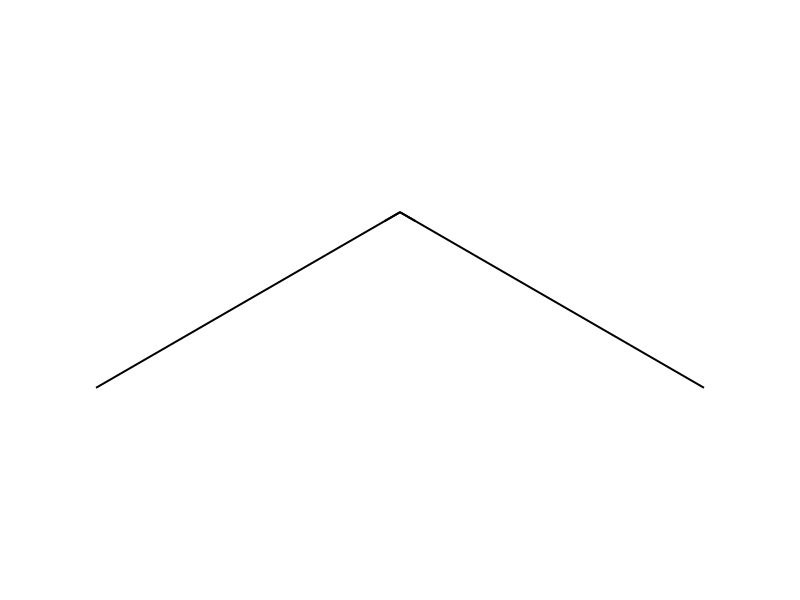
Propane
データを補完しています。しばらくしてからページを更新すると最新の内容を表示できます
74-98-6CCCATUOYWHBWRKTHZ-UHFFFAOYSA-NPropane appears as a colorless gas with a faint petroleum-like odor. It is shipped as a liquefied gas under its vapor pressure. For transportation it may be stenched. Contact with the unconfined liquid can cause frostbite by evaporative cooling. Easily ignited. The vapors are heavier than air and a flame can flash back to the source of leak very easily. The leak may be either a liquid or vapor leak. The vapors can asphyxiate by the displacement of air. Under prolonged exposure to fire or heat the containers may rupture violently and rocket.
74-98-6DTXSID5026386CHEMBL135416、CHEMBL4526341CHEBI:32879Toxic Gases & Vapors -> Simple Asphyxiants
Flammable agents - 4th degree
Cosmetic ingredients (Propane) -> CIR (Cosmetic Ingredient Review)
Propellant
log Kow = 2.36
2.36
2.36
0.59 at -58 °F (USCG, 1999) - Less dense than water; will float
0.493 at 25 °C
Relative density (water = 1): 0.5
0.59 at -58 °F
0.493 @25 °C
1.55(relative gas density)
安全情報は参考情報です。供給元の安全データシート(SDS)、適用法令、専門家による評価に代わるものではありません。
Danger
H220: Extremely flammable gas [Danger Flammable gases]
P203, P210, P222, P280, P377, P381, and P403 (click each P-code to see the statement)
Danger
H220 (99.5%): Extremely flammable gas [Danger Flammable gases]
P203, P210, P222, P280, P377, P381, P403, and P410+P403 (click each P-code to see the statement)
Chemical: Propane
Propane is listed on the EPA's Chemical Data Reporting (CDR) system. Manufacturers and importers of Propane are required to report information about their production and use of this chemical to the EPA under the Toxic Substances Control Act (TSCA). (40 eCFR Part 711)
REACH registered substance: Propane (EC: 200-827-9)
Propane: HSNO Approval: HSR001010 Approved with controls
The New Jersey Worker and Community Right to Know Act requires public and private employers to provide information about hazardous substances at their workplaces. (N.J.S.A. 34:5A-1 et. seq.)
Behavior in Fire: Containers may explode. Vapor is heavier than air and may travel a long distance to a source of ignition and flash back. (USCG, 1999)
· EXTREMELY FLAMMABLE.
Extremely flammable. Gas/air mixtures are explosive.
Vaporizing liquid may cause frostbite. Concentrations in air greater than 10% cause dizziness in a few minutes. 1% concentrations give the same effect in 10 min. High concentrations cause asphyxiation. (USCG, 1999)
/Propane/ is metabolized by microorganism via the malonyl succinate pathway.
In mice ... /propane/ was converted to isopropanol and acetone following inhalation. In the presence of microsomes prepared from liver homogenate of mice, the test substance was converted in vitro to isopropanol, too. The oxidation of isopropanol to acetone occurred in the presence of alcohol dehydrogenase. The metabolites were detected in blood, liver, kidney and brain of the exposed mice.
A death involving asphyxiation by propane inhalation is reported. The presence of propane was determined in blood, brain, kidney, liver, and lung by gas chromatography. The brain showed the highest level of propane, whereas the kidney exhibited the lowest level.
In mice exposed to a liquid gas mixture containing propane, butane, & isobutane, (at 17, 31, & 52%, respectively), death occurred within 15 seconds of exposure. Concn of the cmpd in lung tissue were max within 1 hr of death & decreased thereafter depending on the degree of putrefaction. No residues or only traces were detected by the 15th day postmortem. Max concn were observed in the adipose tissue 4 days after death & the cmpd were still detectable by the 15th day. /Propane, butane & isobutane mixture/
Inhalation represents the major route by which propane is absorbed systemically. Studies ... in human volunteers showed that blood levels of propane could be detected after exposure to 250-1,000 ppm. ... Compared to respiratory absorption, dermal penetration of propane can be considered to be very low. ... the distribution /in tissues/ can be expected to follow the same pattern observed for butane.
CIR ingredient: Propane
Used as a fuel, solvent, refrigerant, and propellant; [Hawley]
Petroleum Production and Refining [Category: Industry]
Component of liquid petroleum gas for commercial and industrial usage; feedstock in thermal cracking processes used to manufacture ethylene and propylene; refrigerant in chemical refining and gas processing operations; fuel in welding and cutting operations
読み込み中…
0.01 % (NIOSH, 2024)
Slightly soluble in acetone; soluble in ethanol; very soluble in ethyl ether, benzene, chloroform
100 vol water dissolve 6.5 vol at 17.8 °C, 753 mm Hg; 100 vol absolute alcohol dissolve 790 vol at 16.6 °C, 754 mm Hg; 100 vol ether dissolve 926 vol at 16.6 °C, 757 mm Hg; 100 vol chloroform dissolve 1299 vol at 21.6 °C, 757 mm Hg; 100 vol benzene dissolve 1452 vol at 21.5 °C, 757 mm Hg; 100 vol turpentine dissolve 1587 vol at 17.7 °C, 757 mm Hg
In water, 62.4 ppm at 25 °C
0.0624 mg/mL at 25 °C
Solubility in water, g/100ml at 20 °C: 0.007
-156 °F (gas) (USCG, 1999)
-156 °F
-156 °F (Closed cup)
-104 °C
-156 °F
NA (Gas)
化学的特性プロパン化学式C3H8は炭化水素の一種でありアルカン系に分類される無色で可燃性のガスです自然界では石油や天然ガスの採掘過程で得られるほか有機物が腐敗する過程でも生成されますプロパンはエネルギー源としての利用が最も知られており特に加熱や調理水の加熱自動車の燃料など多様な用途に使われています
化学的特性Propane is a colorless gas that is odorless when pure (a foul-smelling odorant is often added). Propane is released to the living environment from automobile exhausts, burning furnaces, natural gas sources, and during combustion of polyethylene and phenolic resins. Propane is both highly inflammable and explosive and needs proper care and management of workplaces. Its use in industry includes as a source for fuel and propellant for aerosols. Occupational workers exposed to liquefi ed propane have demonstrated skin burns and frostbite. Propane also causes depression effects on the CNS.
化学性质環境への影響が少ないプロパンは燃焼時に二酸化炭素水蒸気および一酸化炭素を放出しますがこれらは他の化石燃料と比較して少なく環境への負担が比較的軽微ですまた硫黄や有害な排出物がほとんどないためよりクリーンなエネルギー源として評価されています高いエネルギー効率プロパンは高いカロリー値を持つため少量で大きなエネルギーを生み出すことができますこれにより燃料としての効率が良く経済的な選択肢となり得ます用途の多様性家庭用の暖房調理給湯から工業用の熱源や自動車の燃料までプロパンの使用範囲は広いですまたリモートエリアや電力網から独立した場所でのエネルギー源としても役立ちます供給の安定性プロパンは世界中で豊富に存在し生産および供給が安定しているためエネルギーの安全保障に貢献しています
· Vapors may cause dizziness or asphyxiation without warning, especially when in closed or confined areas.
Propane is a simple asphyxiant. [LaDou, p. 558] Possible frostbite from contact with liquid; [NIOSH] Critical Effects for aliphatic hydrocarbon gases are CNS depression; cardiac sensitization; [ACGIH] Propane is in the list of Some volatile substances which may be abused by inhalation published on the web site of the U.N. International Drug Control Programme, indicating its potential to cause narcosis in workers. [Reference #1] Evaporating liquid can cause frostbite; Inhalation of high concentrations can cause CNS depression and cardiac arrhythmias; [ICSC]
1075 115
1978 115
1075 115
1978 115
Substance added directly to human food affirmed as generally recognized as safe (GRAS).
Propane used as a general purpose food additive in animal drugs, feeds, and related products is generally recognized as safe when used in accordance with good manufacturing or feeding practice.
Excerpt from ERG Guide 115 [Gases - Flammable (Including Refrigerated Liquids)]:
Shut off supply; if not possible and no risk to surroundings, let the fire burn itself out. In other cases extinguish with powder, carbon dioxide. In case of fire: keep cylinder cool by spraying with water. Combat fire from a sheltered position.
Fresh air, rest. Artificial respiration may be needed. Refer for medical attention.
ON FROSTBITE: rinse with plenty of water, do NOT remove clothes. Refer for medical attention .
First rinse with plenty of water for several minutes (remove contact lenses if easily possible), then refer for medical attention.
· CALL 911. Then call emergency response telephone number on shipping paper. If shipping paper not available or no answer, refer to appropriate telephone number listed on the inside back cover.
· ELIMINATE all ignition sources (no smoking, flares, sparks or flames) from immediate area.
· CALL 911. Then call emergency response telephone number on shipping paper. If shipping paper not available or no answer, refer to appropriate telephone number listed on the inside back cover.
· ELIMINATE all ignition sources (no smoking, flares, sparks or flames) from immediate area.
Excerpt from NIOSH Pocket Guide for Propane:
General First Aid:
General First Aid:
(General first aid procedures)
Behavior in fire: Containers may explode; vapor is heavier than air & may travel a long distance to a source of ignition & flash back.
The gas is heavier than air and may travel along the ground; distant ignition possible, and may accumulate in low ceiling spaces causing deficiency of oxygen. As a result of flow, agitation, etc, electrostatic charges can be generated ... On loss of containment this liquid evaporates very quickly displacing the air and causing a serious risk of suffocation when in confined areas.
· Wear positive pressure self-contained breathing apparatus (SCBA).
1000.0 [ppm]
Stop flow of gas. For small fires use dry chemicals. Cool adjacent areas with water spray.
If material on fire or involved in fire: Do not extinguish fire unless flow can be stopped. Use water in flooding quantities as fog. Cool all affected containers with flooding quantities of water. Apply water from as far a distance as possible.
Evacuation: If fire becomes uncontrollable or container is exposed to direct flame consider evacuation of one half mile radius.
Shut off supply; if not possible and no risk to surroundings, let the fire burn itself out; in other cases extinguish with powder, carbon dioxide ...
COMPRESSED GASES MAY BE STORED IN THE OPEN ONLY IF THEY ARE ADEQUATELY PROTECTED FROM THE WEATHER & DIRECT SUNLIGHT. STORAGE AREAS SHOULD BE LOCATED AT A SAFE DISTANCE FROM OCCUPIED PREMISES & NEIGHBORING DWELLINGS. /GASES & AIR, COMPRESSED/
Storage temp: ambient; venting: safety relief
Store cylinder outdoors without direct sunlight or heat radiation and with adequate ventilation. Provide electrical equipment with spark resistant construction.
Four main types of storage are used: high pressure storage aboveground, low pressure refrigerated storage aboveground, frozen earth storage, and underground cavern storage. 1) Aboveground pressure storage tanks are usually designed for a 1720 kPa (250 psi) working pressure ... 2) Refrigerated, aboveground storage tanks usually are designed for a few kPa (psi) of pressure. They must be coupled with refrigeration systems to cool the product ... to a temp equal to the product's boiling point @ the operating pressure of the tanks. Vapors are generally recondensed by refrigeration and returned to the tanks. 3) In frozen earth storage of propane, the walls and bottom of a pit in the ground are frozen and a dome is constructed over the pit. The pressure in the storage cavern is maintained @ nearly atmospheric pressure by refrigeration systems that cool the product to its boiling point @ storage pressure. Heat leaks into the cavity and vaporizes some of the propane; the vapor that is formed is compressed, cooled, and returned to the pit as liquid by the refrigeration system. ... 4) Underground storage caverns, which operate @ approx formation temp and @ the corresponding /liquified petrolem gas (LPG)/ vapor pressure ... must be of sufficient depth to develop an overburden pressure greater than the vapor pressure of the stored liquid. Mined storage caverns are about 60-152 m deep, whereas salt formation caverns may be from 106-1524 m deep ...
Fireproof. Cool.
Evacuate danger area! Consult an expert! Remove all ignition sources. Ventilation. NEVER direct water jet on liquid. (Extra personal protection: self-contained breathing apparatus.) ... Check oxygen content before entering area. Turn leaking cylinder with the leak up to prevent escape of gas in liquid state.
1) Remove all ignition sources. 2) Ventilate area of leak. 3) Stop flow of gas. If source of leak is a cylinder & the leak cannot be stopped in place, remove the leaking cylinder to a safe place in the open air, & repair the leak or allow the cylinder to empty.
SRP: The most favorable course of action is to use an alternative chemical product with less inherent propensity for occupational exposure or environmental contamination. Recycle any unused portion of the material for its approved use or return it to the manufacturer or supplier. Ultimate disposal of the chemical must consider: the material's impact on air quality; potential migration in soil or water; effects on animal, aquatic, and plant life; and conformance with environmental and public health regulations.
Propane may be disposed of by burning at a safe location or in a suitable combustion chamber.
Propane, when used as an aerosol propellant with isobutane in deodorant and antiperspirant products (65 to 70% by wt), has not been shown to cause skin irritation in 125 human volunteers who applied the aerosol products twice daily for 12 wk.
When dogs were exposed to 15-90% propane concn for 10 min, the heart was more sensitive to ventricular fibrillations induced by epinephrine than without propane treament.
TERRESTRIAL FATE: Based on a classification scheme(1), an estimated Koc value of 460(SRC), determined from a log Kow of 2.36(2) and a regression-derived equation(3), indicates that propane is expected to have moderate mobility in soil(SRC). Volatilization of propane from moist soil surfaces is expected to be an important fate process(SRC) given an estimated Henry's Law constant of 7.07X10⁻¹ atm-cu m/mole(SRC), derived from its vapor pressure, 7150 mm Hg(4), and water solubility, 62.4 mg/L(5). Propane is expected to volatilize from dry soil surfaces(SRC) based upon its vapor pressure(4). Using cell suspensions of microogranisms isolated from soil and water, propane was oxidized to acetone within 24 hours(6,7), suggesting that biodegradation may be an important fate process in soil and sediment.
AQUATIC FATE: Based on a classification scheme(1), an estimated Koc value of 460(SRC), determined from a log Kow of 2.36(2) and a regression-derived equation(3), indicates that propane is expected to adsorb to suspended solids and sediment(SRC). Volatilization from water surfaces is expected(3) based upon an estimated Henry's Law constant of 7.07X10⁻¹ atm-cu m/mole(SRC) derived from its vapor pressure, 7150 mm Hg(4), and water solubility, 62.4 mg/L(5). Using this Henry's Law constant and an estimation method(3), volatilization half-lives for a model river and model lake are 41 minutes and 2.6 days, respectively(SRC). According to a classification scheme(6), an estimated BCF of 13.1(SRC), from its log Kow(2) and a regression-derived equation(7), suggests the potential for bioconcentration in aquatic organisms is low(SRC). After 192 hr, the trace concn of propane contained in gasoline remained unchanged for both a sterile control and a mixed culture sample collected from ground water contaminated with gasoline(8). This indicates that biodegradation may not be an important fate process in water.
ATMOSPHERIC FATE: According to a model of gas/particle partitioning of semivolatile organic compounds in the atmosphere(1), propane, which has a vapor pressure of 7150 mm Hg at 25 °C(2), is expected to exist solely as a gas in the ambient atmosphere. Gas-phase propane is degraded in the atmosphere by reaction with photochemically-produced hydroxyl radicals(SRC); the half-life for this reaction in air is estimated to be 14 days(SRC), calculated from its rate constant of 1.15X10⁻¹² cu cm/molecule-sec at 25 °C(3). Propane does not contain chromophores that absorb at wavelengths >290 nm and therefore is not expected to be susceptible to direct photolysis by sunlight(4).
The substance can be absorbed into the body by inhalation.
inhalation, skin and/or eye contact (liquid)
Drowsiness. Unconsciousness.
ON CONTACT WITH LIQUID: FROSTBITE.
dizziness, confusion, excitation, asphyxia; liquid: frostbite
In gasoline: 0.07-0.08 vol %; in flue gas of municipal incinerator: < 0.4-0.5 ppm
Flue gases from a waste incinerator at Babylon, Long Island, NY was found to emit propane at concn generally less than 0.5 ppm(1). Propane is a product of gasoline(2-5), natural gas(5) and polyethylene(6) combustion. The average exhaust from 67 gasoline fueled vehicles was found to contain propane at a concn 0.1% by weight(3). The average concn of propane for the exhaust of 46 automobiles was 2.6, 1.6 and 2.2 weight % of total hydrocarbon according to the federal test procedure, hot soak test and the New York City cycle, respectively(4). Propane from car exhaust ranged in concn from 0.02 to 0.05 ppmV with an average for 8 samples of 0.03 ppmV(5). A Texaco refinery located in Tulsa, OK was attributed with emissions to the surrounding atmosphere where the propane concn was measured to be 95.5 and 189.8 ppbC for two min before and after 1:33 PM(6). The propane content of the air downwind of a Mobil natural gas facility in Rio Blanco, CO was 465.3 ppbC(7). Underwater hydrocarbon vent discharges from offshore oil production platforms contained propane at a concentration in the vapor phase at 2,000 umol/L of gas(8).
Gas-phase propane was detected in a Los Angeles tunnel at a concentration of 47 mg/L(1). Propane was detected in a tunnel at a concentration of 26 ug/cu m(2) which was about 4 times greater than the background propane levels of 5.8 ug/cu m(2). Propane was found in the Cassiar tunnel in Vancouver, BC, Canada in 1993 and 1995 at mass fractions of 0.81 and 0.047, respectively, as well as Tuscorora, Caldecott and Fort McHenry tunnels at mass fractions of 0.08, 0.07 and 0.03, respectively(3). Propane accounted for 0.88, 0.95 and 1.17% of the emissions on a Raleigh, NC highway, Dyanomenter, and an Atlanta, GA roadway, respectively(4). Gasoline containing propane (100 ug/g) emitted propane from the tail pipes of catalytic and non catalytic engines at rates of 650 and 9,300 ug/km(5). Propane emissions from cars driving in urban, suburban, rural and motorways were observed as 7.8, 3.69, 2.13 and 1.35 mg/km(6). Propane concentration in exhaust had mean concentration of 0.21 ppm(7). Propane was detected with annual means of 1 ug/cu m in London, England background and curbside and annual mean ranging from 4-21 ug/cu m in European cities(7). Propane was detected in gasoline vapors at concentrations ranging from 0.02-2.8 mg/ cu m(8).
Substance added directly to human food affirmed as generally recognized as safe (GRAS).
Propane used as a general purpose food additive in animal drugs, feeds, and related products is generally recognized as safe when used in accordance with good manufacturing or feeding practice.
Residues of propane are exempted from the requirement of a tolerance when used as a propellant in accordance with good agricultural practice as inert (or occasionally active) ingredients in pesticide formulations applied to growing crops or to raw agricultural commodities after harvest.
Residues of propane are exempted from the requirement of a tolerance when used as a propellant in accordance with good agricultural practice as inert (or occasionally active) ingredients in pesticide formulations applied to animals.
Propane
1
60000
Flammable chemical that can be released at a facility.
Organic synthesis, household and industrial fuel, manufacture of ethylene, extractant, solvent, gas enricher, refrigerant, aerosol propellant, mixture for bubble chambers
Used in flame control of weeds in corn, soybeans, cotton, tobacco, strawberries
(1972) NEGLIGIBLE
(1975) 9.3X10+7 G
(1984) 7.96X10+8 g
(1987) 1.51X10+6 bbl
(1988) 1.90X10+6 bbl
(1972) NEGLIGIBLE
(1975) 8.7X10+9 G
(1984) 5.27X10+9 g
(1986) 3.88X10+7 barrels
2023: 160,000,000,000 - <170,000,000,000 lb
This chemical is listed as a High Production Volume (HPV) (65FR81686). Chemicals listed as HPV were produced in or imported into the U.S. in >1 million pounds in 1990 and/or 1994. The HPV list is based on the 1990 Inventory Update Rule. (IUR) (40 CFR part 710 subpart B; 51FR21438).
(1972) 4.36X10+12 G
(1975) 2.7X10+9 G
(1984) 3.43X10+12 g
For more U.S. Production (Complete) data for PROPANE (6 total), please visit the HSDB record page.
Excluding propane gas grills, residential and commercial use accounts for 43% of all propane used in the U.S. Of the 107 million households in the U.S., 9.4 million depend on propane for one use or another... 53% of these households rely on propane for their primary heating fuel...
About 44 percent of the propane consumed in the U. S. is used in the petrochemical industry.
... Farm or agricultural uses of propane include crop drying, weed control, and fuel for farm equipment and irrigation pumps.
Removed from lower boiling hydrocarbons & permanent gases in petroleum refining & natural gas processing
Constituent of natural gas and of crude petroleum. Obtained by the so called "stabilization process" using fractional distillation under pressure.
Propane is obtained from natural gas by fractionation following absorption in oil, adsorption to surface-active agents, or refrigeration.
A unique feature of propane is that it is not produced for its own sake, but is a by-product of two other processes, natural gas processing and petroleum refining... Natural gas plant production of propane primarily involves extracting materials such as propane and butane from natural gas to prevent these liquids from condensing and causing operational problems in natural gas pipelines. Similarly, when oil refineries make major products such as motor gasoline and heating oil, some propane is produced as a by-product of those processes. It is important to understand that the by-product nature of propane production means that the volume made available from natural gas processing and oil refining cannot be adjusted when prices and/or demand for propane fluctuate.
A pressurized single phase disinfectant spray composition consists of 10-45 wt % water, 53-88% ethanol with balance being propane.
Grades: Research, instrument, pure: 99.35+% wt; technical: 97.50% wt.
Liquefied petroleum gas, known as lpg, is a mixture formed mainly of butane (about 62%) & propane (about 36%) ...
According to the Gas Processors Association HD5 specification for LPG as a transportation fuel, LPG must consist of 90% propane, no more than 5% propylene, and 5% other which is primarily butane and butylene. It is produced as a by-product of natural gas processing and petroleum refining. The components of LPG are gases at normal temperatures and pressures.
Food additives
Food Additives -> EXTRACTION_SOLVENT; PROPELLANT -> JECFA Functional Classes
Cosmetics -> Propellant
Utilities
Propane: ACTIVE
Propane naturally occurs as a gas at atmospheric pressure but can be liquefied if subjected to moderately increased pressure. It is stored and transported in its compressed liquid form, but by opening a valve to release propane from a pressurized storage container, it is vaporized into a gas for use.
Propane was prepared by the gas permeation membrane method for the calibration of air pollutant monitoring instruments.
Propane ... is a constituent in the paraffin fraction of crude oil and natural gas ... Propane is odorless when pure; a foul smelling odorant is often added when propane is used for fuel purposes.
Natural gas fraction ... propane (0.1 to 3%). /From table/
解説プロパン.湿性ガスの一成分.原油中に溶存する.石油系炭化水素の分解または改質により副生する.製法は,上記のガスより濃縮し,低温分留などにより分離する.構造は,エタンの水素原子の一つがメチル基と置換したもので,∠C-C-C112°を示す.弱い特異臭のある,空気より重い無色の気体.融点-187.69 ℃,沸点-42.07 ℃.爆発範囲2.4~9.5体積%.化学反応性は低いが,ゼオライト触媒を用いて芳香族炭化水素を合成するプロセスの原料となる.単独に,またはプロペン,ブタン,ブテンなどとの混合物で,液化石油ガスとして燃料に用いられる.また,潤滑油精製の脱ろう用溶剤に用いられる.
説明Propane is colourless and odourless, with a mercaptan odour. Like all fossil fuels, propane is a non-renewable energy source. Propane is a gas derived from natural gas and petroleum. It is found mixed with natural gas and petroleum deposits. Propane is called a ‘fossil fuel’ because it was formed millions of years ago from the remains of tiny sea animals and plants. Propane is a clean-burning, versatile fuel. It is used by nearly everyone, in homes, on farms, by business, and in industry mostly for producing heat and operating equipment. Propane is one of the many fossil fuels included in the liquefied petroleum gas (LPG) family. Because propane is the type of LPG most commonly used in the United States, propane and LPG are often used synonymously. Butane is another LPG often used in lighters.
使用Propane is used as a fuel gas, as a refrigerant,and in organic synthesis.
一般的な説明A colorless gas with a faint petroleum-like odor. PROPANE is shipped as a liquefied gas under its vapor pressure. For transportation PROPANE may be stenched. Contact with the unconfined liquid can cause frostbite by evaporative cooling. Easily ignited. The vapors are heavier than air and a flame can flash back to the source of leak very easily. The leak may be either a liquid or vapor leak. The vapors can asphyxiate by the displacement of air. Under prolonged exposure to fire or heat the containers may rupture violently and rocket.
使用用途1. ガス燃料 プロパンは単独で、または、プロペン・ブタン・等との混合物で、液化石油ガス (LPガス) として燃料に用いられています。 2. 冷媒 プロパンは、ガス吸収式冷凍機の冷媒としても用いられており、冷媒番号はR-290です。 3. その他 プロパンのその他の用途としては、潤滑油精製の脱蝋用溶剤など、溶剤としての用途が挙げられる他、エアロゾル剤としても用いられています。
合成方法炭化水素の熱分解
純化方法Purify propane by bromination of the olefinic contaminants. Propane is treated with bromine for 30minutes at 0o. Unreacted bromine is quenched, and the propane is distilled through two -78o traps and collected at -196o [Skell et al. J Am Chem Soc 108 6300 1986]. It autoignites at 450o and the flash point is -104o. It is highly FLAMMABLE and is available in metal cylinders. [Beilstein 1 H 103, 1 I 33, 1 II 71, 1 III 204, 1 IV 175.]
定義本品は、次の化学式で表される炭化水素である。