
1-アダマンタンアミン塩酸塩
Amantadine Hydrochloride

基本情報
- CAS
665-66-7- 標準SMILES
Cl.NC12CC3CC(CC(C3)C1)C2- InChIKey
WOLHOYHSEKDWQH-UHFFFAOYSA-N- 分子式
- C10H17N.ClH
- 平均分子量
- 187.71 g/mol
- 単同位体質量
- 187.11277726
概要
Amantadine Hydrochloride can cause developmental toxicity according to state or federal government labeling requirements.
名称と識別子
- 優先名称
- Amantadine Hydrochloride
- IUPAC
- adamantan-1-amine;hydrochloride
- 現地名
- 1-アダマンタンアミン塩酸塩
- 英語名
- 1-Adamantanamine hydrochloride
- 分子式
- C10H18ClN
- 分子量
- 187.71
名称と別名
Amantadine hydrochloride665-66-71-Adamantanamine hydrochlorideAmantadine HCl1-Aminoadamantane hydrochlorideAdamantanamine hydrochlorideMantadix1-Adamantylamine hydrochlorideOsmolexExp-105-1LysovirMantadine
名称をさらに表示
1-アダマンタンアミン塩酸塩アマンタジン塩酸塩ロティファミントリシクロ[3.3.1.13,7]デカン-1-アミン·塩酸アマゾロンシキタンアテネジントーファルミンマンタジックスボイダン1-アミノアダマンタン·塩酸塩アダミンシマジンマンタジンシンメトレルルシトンマンタダンビロフラールビラソール1-アダマンタンアミン·塩酸塩symmetrel1-ADAMANTANAMINE HCLADAMANTAN-1-AMINE HYDROCHLORIDEMantadanAmantadine hydrochlorid(3s,5s,7s)-adamantan-1-amine hydrochloride
NSC-83653M6Q1EO9TD0Tricyclo(3.3.1.1(sup 3,7))decan-1-amine, hydrochlorideNSC83653CHEBI:2619Osmolex erRefChem:54147Hydrochloride, Amantadine
データベース識別子
- CAS
665-66-7- PubChem CID
- 64150
- DTXSID
DTXSID50874031- ChEMBL
CHEMBL1569- UNII
- M6Q1EO9TD0
- EC Number
- 211-560-2
物性
構造計算による物性
- 極性表面積
- 26 Ų
- 水素結合供与体数
- 2
- 水素結合受容体数
- 1
- 回転可能結合数
- 0
- 重原子数
- 12
- 形式電荷
- 0
- 複雑度
- 144
実験および物理化学的性質
Human Drugs
Breast Feeding; Lactation; Milk, Human; Anti-Infective Agents; Antiparkinson Agents; Antiviral Agents; Dopamine Agents
FDA approved drugs -> Active ingredient
FDA approved drugs -> Active ingredient
Physical DescriptionDry Powder
Collision Cross Section138.6 Ų [M+H]+ [CCS Type: TW; Method: calibrated with polyalanine and drug standards]
物理化学的性質
- 融点
- 300 °C · >300 °C(lit.)
- 沸点
- 308.63 °C · 308.63°C (rough estimate)
- 比重(密度)
- 1.0276 · 1.0276 (rough estimate)
- 屈折率
- 1.61 · 1.6100 (estimate)
- 貯蔵温度
- 30 °C · Store below +30°C.
- 溶解性
- 2 O: · H2O: 50 mg/mL
- 外見
- 微結晶性粉末
- 酸解離定数(Pka)
- 10.71 · 10.71
- 色
- 白い
- 水溶解度
- 溶ける
- Merck
- 14 · 14,374
- BRN
- 4198854 · 4198854
- 主な用途
安全と法規制
安全情報は参考情報です。供給元の安全データシート(SDS)、適用法令、専門家による評価に代わるものではありません。
GHS分類
GHS Classification
Danger
H302 (99.5%): Harmful if swallowed [Warning Acute toxicity, oral]
P203, P260, P261, P264, P264+P265, P270, P271, P273, P280, P301+P317, P301+P330+P331, P302+P361+P354, P304+P340, P305+P354+P338, P316, P317, P318, P319, P321, P330, P363, P403+P233, P405, and P501 (click each P-code to see the statement)
Aggregated GHS information provided per 210 reports by companies from 11 notifications to the ECHA C&L Inventory. Each notification may be associated with multiple companies.
危険有害性情報
Regulatory Information
Chemical: Tricyclo[3.3.1.13,7]decan-1-amine, hydrochloride
Hazard Traits - Developmental Toxicity
Tricyclo[3.3.1.13,7]decan-1-amine, hydrochloride (1:1) is listed on the EPA's Chemical Data Reporting (CDR) system. Manufacturers and importers of Tricyclo[3.3.1.13,7]decan-1-amine, hydrochloride (1:1) are required to report information about their production and use of this chemical to the EPA under the Toxic Substances Control Act (TSCA). (40 eCFR Part 711)
REACH registered substance: Amantadine hydrochloride (EC: 211-560-2)
1-Adamantane ammonium chloride: Does not have an individual approval but may be used under an appropriate group standard
Hazard Classes and CategoriesAcute Tox. 4 (99.5%)
毒性情報
Treatment
There is no specific antidote for an overdose of Amantadine. However, slowly administered intravenous physostigmine in 1 and 2 mg doses in an adult2 at 1- to 2-hour intervals and 0.5 mg doses in a child3 at 5- to 10-minute intervals up to a maximum of 2 mg/hour have been reported to be effective in the control of central nervous system toxicity caused by amantadine hydrochloride. For acute overdosing, general supportive measures should be employed along with immediate gastric lavage or induction of emesis. Fluids should be forced, and if necessary, given intravenously. The pH of the urine has been reported to influence the excretion rate of Amantadine. (L1744)
化学と産業
薬理情報
Metabolism/Metabolites
No appreciable metabolism, although negligible amounts of an acetyl metabolite have been identified. Amantadine is well absorbed orally from the gastrointestinal tract. The mechanism of its antiparkinsonic effect is not fully understood, but it appears to be releasing dopamine from the nerve endings of the brain cells, together with stimulation of norepinephrine response. The antiviral mechanism seems to be unrelated. The drug interferes with a viral protein, M2 (an ion channel), which is needed for the viral particle to become "uncoated" once it is taken inside the cell by endocytosis. Metabolites are excreted in the urine (A308). Route of Elimination: It is primarily excreted unchanged in the urine by glomerular filtration and tubular secretion. Half Life: Mean half-lives ranged from 10 to 14 hours, however renal function impairment causes a severe increase in half life to 7 to 10 days.
FDA Pharmacological Classification
AMANTADINE HCL
M2 Protein Inhibitors [MoA]; Influenza A M2 Protein Inhibitor [EPC]
AMANTADINE HYDROCHLORIDE
Influenza A M2 Protein Inhibitor [EPC]; M2 Protein Inhibitors [MoA]
MeSH Pharmacological Classification
Agents used in the treatment of Parkinson's disease. The most commonly used drugs act on the dopaminergic system in the striatum and basal ganglia or are centrally acting muscarinic antagonists.
Agents used in the prophylaxis or therapy of VIRUS DISEASES. Some of the ways they may act include preventing viral replication by inhibiting viral DNA polymerase; binding to specific cell-surface receptors and inhibiting viral penetration or uncoating; inhibiting viral protein synthesis; or blocking late stages of virus assembly.
Any drugs that are used for their effects on dopamine receptors, on the life cycle of dopamine, or on the survival of dopaminergic neurons.
A subclass of analgesic agents that typically do not bind to OPIOID RECEPTORS and are not addictive. Many non-narcotic analgesics are offered as NONPRESCRIPTION DRUGS.
用途と製造
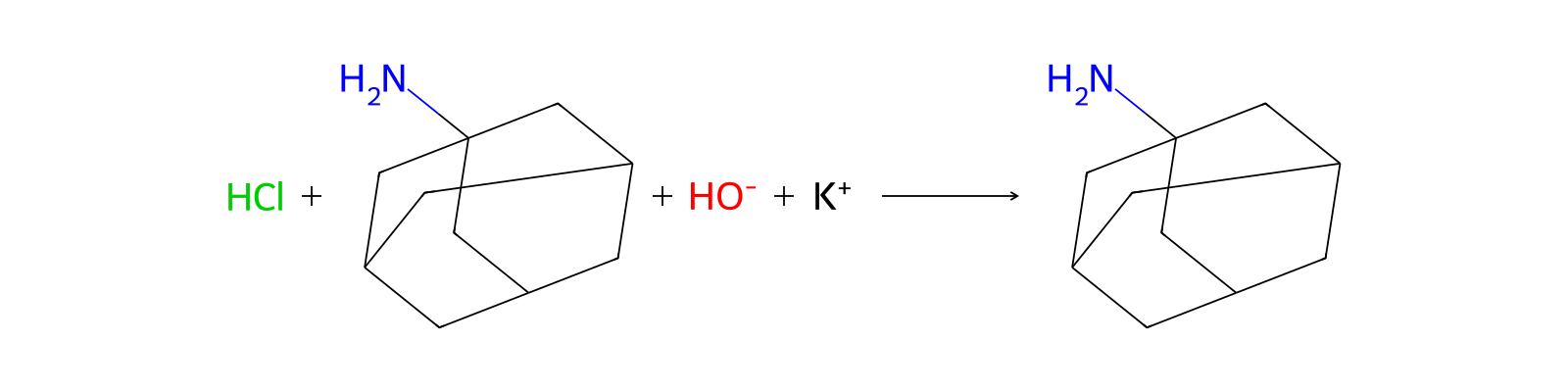
関連反応
25 件






化合物ノート
読み込み中…