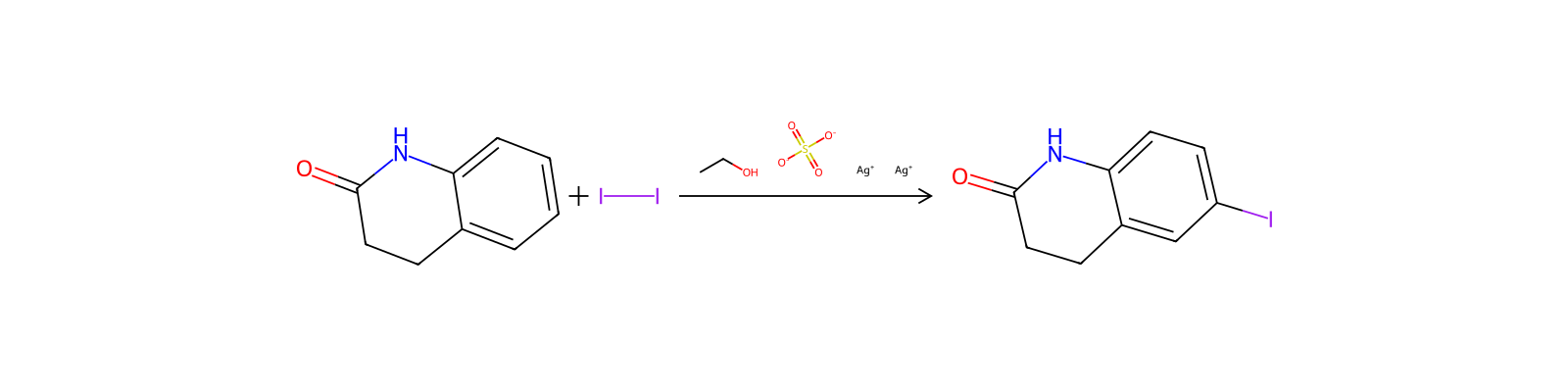
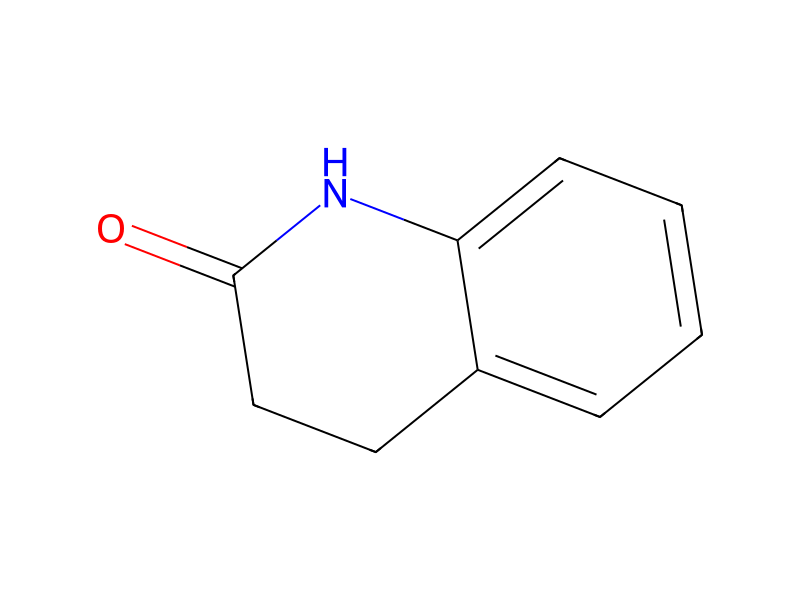
基本情報
- 標準SMILES
O=C1CCc2ccccc2N1- InChIKey
TZOYXRMEFDYWDQ-UHFFFAOYSA-N- 分子式
- C9H9NO
- 平均分子量
- 147.17 g/mol
- 単同位体質量
- 147.06841391
名称と識別子
- 優先名称
- Hydrocarbostyril
- IUPAC
- 3,4-dihydro-1H-quinolin-2-one
- 現地名
- 3,4-ジヒドロキノリン-2(1H)-オン
- 英語名
- 3,4-DIHYDROQUINOLIN-2(1H)-ONE
- 分子式
- C9H9NO
- 分子量
- 147.17
名称と別名
553-03-73,4-Dihydro-2(1H)-quinolinone3,4-Dihydroquinolin-2(1H)-oneHydrocarbostyril3,4-Dihydrocarbostyril3,4-Dihydro-2-quinolinolo-Aminohydrocinnamic acid lactam2-Oxo-1,2,3,4-tetrahydroquinoline2CKG6TX32FNSC-49170DTXSID40203816RefChem:788994
名称をさらに表示
1,2,3,4-テトラヒドロキノリン-2-オンヒドロカルボスチリル3,4-ジヒドロ-2(1H)-キノリノン3,4-ジヒドロキノリン-2(1H)-オン3,4-ジヒドロ-2(1H)-キノロン3,4-ジヒドロ-2-キノロン3,4-Dihydro-2-quinolinoneinoneDIHYDROCARBOSTYRILdihydro-α-quinolone
DTXCID70126307621-863-5942-197-41,2,3,4-tetrahydroquinolin-2-one3,4-dihydro-1H-quinolin-2-one2(1H)-Quinolinone, 3,4-dihydro-Dihydro-quinolinoneMFCD00016722
データベース識別子
- CAS
553-03-7- PubChem CID
- 64796
- DTXSID
DTXSID40203816- ChEMBL
CHEMBL388582- ChEBI
CHEBI:194726- UNII
- 2CKG6TX32F
- EC Number
- 621-863-5、942-197-4
- Nikkaji
- J6.725C
物性
構造計算による物性
- XLogP
- 1.1
- 極性表面積
- 29.1 Ų
- 水素結合供与体数
- 1
- 水素結合受容体数
- 1
- 回転可能結合数
- 0
- 重原子数
- 11
- 形式電荷
- 0
- 複雑度
- 167
実験および物理化学的性質
Solubility15.9 [ug/mL] (The mean of the results at pH 7.4)
物理化学的性質
- 融点
- 165 · 165-167 °C (lit.)
- 沸点
- 267.28 °C · 267.28°C (rough estimate)
- 比重(密度)
- 1.1135 · 1.1135 (rough estimate)
- 屈折率
- 1.52 · 1.5200 (estimate)
- 貯蔵温度
- Keep in dark place,Sealed in dry,Room Temperature
- 溶解性
- 30 mg/ml,DMSO: · DMF: 30 mg/ml,DMSO: 30 mg/ml,DMSO:PBS (pH 7.2) (1:6): 0.14 mg/ml
- 外見
- 結晶性粉末
- 酸解離定数(Pka)
- 14.76 · 14.76±0.20(Predicted)
- 色
- オフホワイト
- 水溶解度
- 水にわずかに溶ける。
- Merck
- 13 · 13,4800
- InChI
- InChI=1S/C9H9NO/c11-9-6-5-7-3-1-2-4-8(7)10-9/h1-4H,5-6H2,(H,10,11)
- InChIKey
- TZOYXRMEFDYWDQ-UHFFFAOYSA-N
- SMILES
- N1C2=C(C=CC=C2)CCC1=O
- CAS データベース
- 553 · 553-03-7(CAS DataBase Reference)
化学的性質
化学的特性Off-white crystalline powder
安全と法規制
GHS分類
GHS Classification
Warning
H302 (98.6%): Harmful if swallowed [Warning Acute toxicity, oral];H315 (100%): Causes skin irritation [Warning Skin corrosion/irritation];H317 (97.2%): May cause an allergic skin reaction [Warning Sensitization, Skin];H319 (100%): Causes serious eye irritation [Warning Serious eye damage/eye irritation];H335 (100%): May cause respiratory irritation [Warning Specific target organ toxicity, single exposure; Respiratory tract irritation]
P261, P264, P264+P265, P270, P271, P272, P280, P301+P317, P302+P352, P304+P340, P305+P351+P338, P319, P321, P330, P332+P317, P333+P317, P337+P317, P362+P364, P403+P233, P405, and P501 (click each P-code to see the statement)
Aggregated GHS information provided per 71 reports by companies from 7 notifications to the ECHA C&L Inventory. Each notification may be associated with multiple companies.;Information may vary between notifications depending on impurities, additives, and other factors. The percentage value in parenthesis indicates the notified classification ratio from companies that provide hazard codes. Only hazard codes with percentage values above 10% are shown. For more detailed information, please visit ECHA C&L website.
Not Classified;Reported as not meeting GHS hazard criteria by 1 of 1 companies. For more detailed information, please visit ECHA C&L website.
危険有害性情報
Hazard Classes and Categories
Acute Tox. 4 (98.6%);Skin Irrit. 2 (100%);Skin Sens. 1 (97.2%);Eye Irrit. 2 (100%);STOT SE 3 (100%)
Not Classified
安全データ
- wgk
- 2
- ridadr
- 2811
- hs_code
- 29337900
- risk_code
- 22-36/37/38-43
- hazard_code
- Xn,Xi
- hazard_note
- Irritant
- safety_code
- 26-36/37
- hazard_class
- 6.1(b)
- packing_group
- III
- Hazard Classifications
- Acute Tox. 4 OralEye Irrit. 2Skin Irrit. 2Skin Sens. 1STOT SE 3
- ストレージクラス
- 11 - Combustible Solids
化学と産業
応用分野
用途有機合成原料。
使用3,4-Dihydro-2-(1H)-quinolinone may be employed as medium supplement in the culture medium of Pseudomonas ayucida during enrichment culture experiments. It is used to prepare potent bicyclic peptide deformylase inhibitors with antibacterial effects. It is also used to synthesize substituted iminopiperidines as inhibitors of human nitric oxide synthase isoforms.
一般的な説明Series of 3,4-dihydro-2(1H)-quinolinone derivatives having sigma-1 receptor (σ1R) antagonist activity have been synthesized. 3,4-dihydro-2((1)H)-quinolinones have been synthesized using N-(1′-alkoxy)cyclopropyl-2-haloanilines as starting reagent. Cyclopropane ring expansion in the presence of palladium catalyst is the major step involved in the synthesis. Library of 3,4-dihydro-2(1H)-quinolinones have been synthesized through the rearrangement of β-lactam intermediates on the solid-phase
上流・下流製品情報
上流原料
下流製品
サプライヤー50 社
合肥曼奇诺生物医药技术有限公司19719236623 · [email protected]
上海麦克林生化科技股份有限公司021-50706066 15221275939 · [email protected]
宁波季诺化学品有限公司0574-87314919 057487319282 · [email protected]
河北展药生物科技有限公司15369953316 +8615369953316 · [email protected]
爱斯特(成都)生物制药股份有限公司+86-28-85122536 85324413 · [email protected]
Bridge Organics+1269-649-4200 · [email protected]
Dayang Chem (Hangzhou) Co.,Ltd.+86-0571-88938639 17705817739 · [email protected]
郑州鸿晟医药科技有限公司0371-55695890 15637198702 · [email protected]
上海赛可锐生物科技有限公司021-58000709 13120558703 · [email protected]
上海弘顺生物科技有限公司15901914505 · [email protected]
科瑞迪化学400-821-5857 021-64326257 · [email protected]
毕佳索(上海毕得医药科技股份有限公司)400-6005915 · [email protected]
韶远科技(上海)有限公司021-50795510 4000665055 · [email protected]
上海迈瑞尔生化科技有限公司4006356688 18621169109 · [email protected]
北京索莱宝科技有限公司010-50973130 17801761073 · [email protected]
安耐吉化学&3A(安徽泽升科技有限公司)021-58432009 400-005-6266 · [email protected]
太原市瑞和丰科贸有限公司+86 351 7031519 · [email protected]
安耐吉化学&3A(安徽泽升科技股份有限公司)400-0056266 · [email protected]
上海瀚鸿科技股份有限公司021-54306202 13764082696 · [email protected]
南京圣亿来化工有限公司19951936396 · [email protected]
上海钰康生物科技有限公司18939844854 · [email protected]
上海相辉医药科技有限公司13761987713 · [email protected]
Pure Chemistry Scientific Inc.001-857-928-2050 or 1-888-588-9418 · [email protected]
常熟泓德生物科技有限公司18951116523 17712623939 · [email protected]
天津希恩思生化科技有限公司400 638 7771 · [email protected]
上海勤利医药科技有限公司15921357166 · [email protected]
上海思域化工科技有限公司86-21-34053660 · [email protected]
赛默飞世尔科技(中国)有限公司800-810-5118 · [email protected]
上海特伯化学科技有限公司+86-21-60341587 · [email protected]
江苏艾康生物医药研发有限公司025-66113011 13913916777 · [email protected]
上海仁曲医药科技有限公司18171398856 2968382473 · [email protected]
越林试剂021-62960152 · [email protected]
苏州安尼康药物研发有限公司0512-69369885 · [email protected]
上海汇凯化学科技有限公司021-61995394 18916691159 · [email protected]
上海洪创医药科技有限公司18151128828 · [email protected]
苏州爱玛特生物科技有限公司0512-56316828 4008675858 · [email protected]
上海毕得医药科技股份有限公司400-164-7117 18317119277 · [email protected]
上海笛柏生物科技有限公司400-008-9730,021-54359730 400-008-9730 · [email protected]
上海石洋化工有限公司021-56795766 · [email protected]
上海御略医药科技有限公司021-60345187 13671753212 · [email protected]
上海永叶生物科技有限公司86-021-61559134 15921386130 · [email protected]
上海洽凡生化科技有限公司+86-021-61654350 · [email protected]
上海嵩爰化工科技有限公司010-1234567 18521000990 · [email protected]
上海拓目化工有限公司13391076197 · [email protected]
湖北巨胜科技有限公司027-59599241 18871490274 · [email protected]
Sigma-Aldrich西格玛奥德里奇(上海)贸易有限公司021-61415566 800-8193336 · [email protected]
山东中瀚医药科技有限公司15315818580 18562151612
九鼎化学(上海)科技有限公司4009209199 · [email protected]
武汉峰耀同辉化学制品有限公司027-87466205 15377579727 · [email protected]
南京世洲生物科技有限公司025-85563444 18351873721 · [email protected]
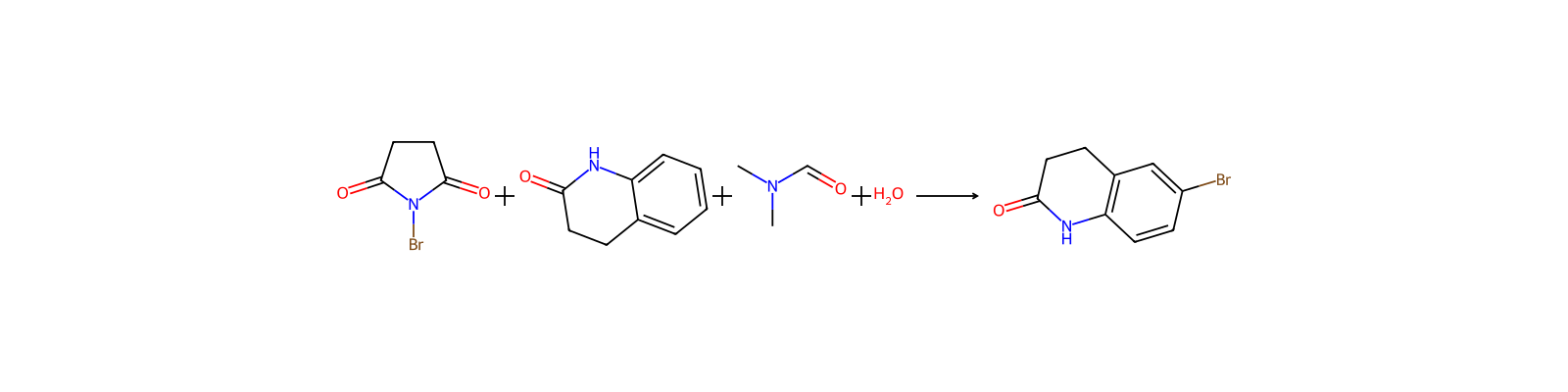
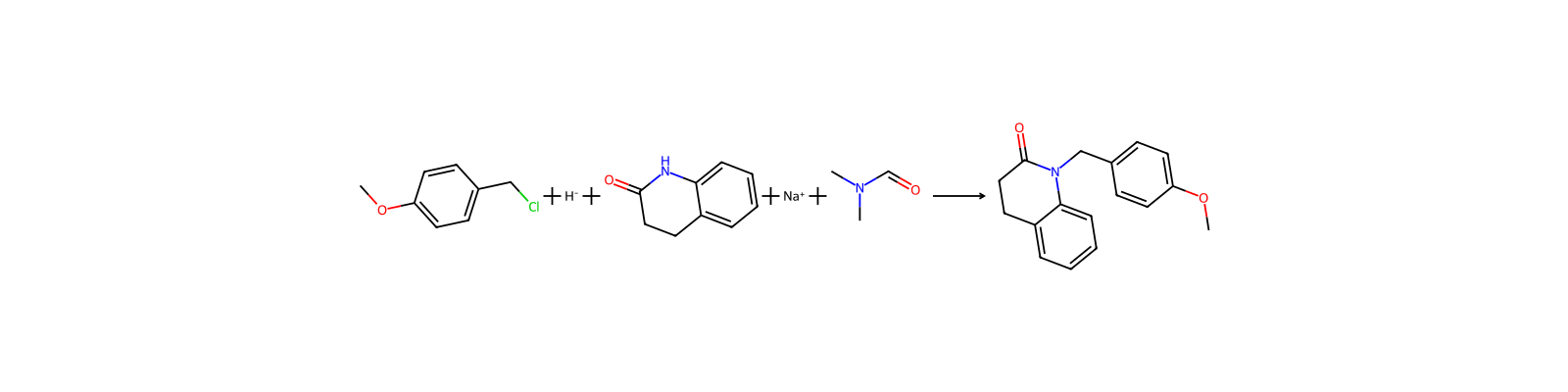
関連反応
136 件



関連ノート
読み込み中…