ホームMCPワークベンチSkills
ホームワークベンチ通知マイページ
llms.txt · MCPガイドプライバシーポリシー · 利用規約 · サポートv1.8.0
  1. ホーム
  2. /化合物

トリメチロールエタン

Trimethylolethane

HCID 6502
ノートを作成反応を作成見積依頼を出す
印刷プレビュー

データを補完しています。しばらくしてからページを更新すると最新の内容を表示できます

基本情報名称と識別子物性安全と法規制化学と産業関連反応化合物ノート
部分構造検索類似構造を探す

基本情報

CAS
77-85-0
標準SMILES
CC(CO)(CO)CO
InChIKey
QXJQHYBHAIHNGG-UHFFFAOYSA-N
分子式
C5H12O3
平均分子量
120.15 g/mol
単同位体質量
120.07864424

名称と識別子

優先名称
Trimethylolethane
IUPAC
2-(hydroxymethyl)-2-methylpropane-1,3-diol
現地名
トリメチロールエタン
英語名
1,1,1-Tris(hydroxymethyl)ethane
分子式
C5H12O3
分子量
120.15

名称と別名

1,1,1-TRIS(HYDROXYMETHYL)ETHANE77-85-0TrimethylolethaneMethriolMetriolPentaglycerineMethyltrimethanolmethaneEthylidynetrimethanolTris(hydroxymethyl)ethane1,1,1-TrimethylolethaneMethyltrimethylolmethane1,3-Propanediol, 2-(hydroxymethyl)-2-methyl-
名称をさらに表示
トリメチロールエタン2,2-ビス(ヒドロキシメチル)プロパン-1-オール1,1,1-トリメチロールエタン2-メチル-2-(ヒドロキシメチル)-1,3-プロパンジオールエチリジントリメタノール2-(ヒドロキシメチル)-2-メチルプロパン-1,3-ジオール1,1,1-エタントリイルトリス(メタノール)1,1,1-エタントリメタノール2,2-ビス(ヒドロキシメチル)-1-プロパノール2-ヒドロキシメチル-2-メチル-1,3-プロパンジオール2-メチル-2-ヒドロキシメチル-1,3-プロパンジオールペンタグリセロール(1,1,1-エタントリイル)トリスメタノールエチリジントリス(メタノール)エタン-1,1,1-トリスメタノール2-メチル-2-(ヒドロキシメチル)プロパン-1,3-ジオール2-(ヒドロキシメチル)-2-メチル-1,3-プロパンジオールエチリジントリスメタノール2-ヒドロキシメチル-2-メチルプロパン-1,3-ジオール1,1,1-トリス(ヒドロキシメチル)エタンTMETrimet1,1,1-Tri(hydroxymethyl)ethane2-METHYL-2-HYDROXYMETHYL-1,3-PROPANEDIOL
1,1,1-Trimethanolethane1,1,1-Tris(methylol)ethaneEthane, 1,1,1-tris(hydroxymethyl)-5D10NYN23WNSC-65581RefChem:409523201-063-92-(hydroxymethyl)-2-methylpropane-1,3-diol

データベース識別子

CAS
77-85-0
PubChem CID
6502
DTXSID
DTXSID2026444
UNII
5D10NYN23W
EC Number
201-063-9
Nikkaji
J35.167I

物性

構造計算による物性補完中

XLogP
-1.2
極性表面積
60.7 Ų
水素結合供与体数
3
水素結合受容体数
3
回転可能結合数
3
重原子数
8
形式電荷
0
複雑度
50.4

実験および物理化学的性質

PolymersOther Classes -> Alcohols and Polyols, Other
SpringerMaterials PropertiesDensity
Density1.210 g/cu cm at 20 °C
Color/Form · 2 件

White powder or needles from alcohol

Colorless crystals

Solubility · 3 件

Miscible in water and ethanol; insoluble in diethyl ether and benzene; very soluble in acetic acid

Soluble in water and ethanol

In water, 140 g per 100 g at 25 °C

Boiling Point · 2 件

283 °C

BP: 137 °C at 15 mm Hg

Melting Point204 °C
Food Contact Substances · 2 件

FCS -> FDA Cumulative Estimated Daily Intake (CEDI)

FCS -> FDA Inventory of Food Contact Substances Listed in 21 CFR

Physical Description · 2 件

Dry Powder

Colorless or white solid; [HSDB]

安全と法規制

安全情報は参考情報です。供給元の安全データシート(SDS)、適用法令、専門家による評価に代わるものではありません。

GHS分類

GHS Classification · 3 件

This chemical does not meet GHS hazard criteria for 90.6% (145 of 160) of all reports.

Not Classified

Aggregated GHS information provided per 160 reports by companies from 5 notifications to the ECHA C&L Inventory.

危険有害性情報

Regulatory Information · 4 件

Chemical: 1,3-Propanediol, 2-(hydroxymethyl)-2-methyl-

1,3-Propanediol, 2-(hydroxymethyl)-2-methyl- is listed on the EPA's Chemical Data Reporting (CDR) system. Manufacturers and importers of 1,3-Propanediol, 2-(hydroxymethyl)-2-methyl- are required to report information about their production and use of this chemical to the EPA under the Toxic Substances Control Act (TSCA). (40 eCFR Part 711)

Status: Active Update: 24-09-2019 https://echa.europa.eu/registration-dossier/-/registered-dossier/22381

1,3-Propanediol, 2-(hydroxymethyl)-2-methyl-: Does not have an individual approval but may be used under an appropriate group standard

Fire PotentialCombustible
Hazards SummaryAn irritant; [MSDSonline]
Hazard Classes and CategoriesNot Classified

安全と保護具

Disposal Methods · 1 件

SRP: The most favorable course of action is to use an alternative chemical product with less inherent propensity for occupational exposure or environmental contamination. Recycle any unused portion of the material for its approved use or return it to the manufacturer or supplier. Ultimate disposal of the chemical must consider: the material's impact on air quality; potential migration in soil or water; effects on animal, aquatic, and plant life; and conformance with environmental and public health regulations.

化学と産業

用途と製造

Uses · 6 件

Used to make varnishes, drying oils, and polyesters for polyurethane foams, alkyd surface coatings, lubricants, and hydraulic fluids; Also used as a heat stabilizer for polyvinyl chloride resins; [HSDB]

Painting (Solvents) [Category: Paint]

Conditioning agent; mfr of varnishes, alkyd and polyester resins, synthetic drying oils

Used in the manufacture of alkyd surface coatings and polyester resins (polyurethane foams). Heat stabilizer for polyvinyl chloride resins.

Polyethers are used in ethylene vinyl acetate and polyurethane adhesives.

CHEM INT FOR POLYESTERS FOR POLYURETHANE FOAMS

U.S. Exports · 2 件

(1979) No Data

(1981) No Data

U.S. Imports · 2 件

(1979) No Data

(1981) No Data

U.S. Production · 5 件

2023: 1,000,000 - <2,500,000 lb

(1979) 4.76X10+9 GRAMS (ESTIMATE)

(1981) 4.76X10+9 GRAMS (ESTIMATE)

Production volumes for non-confidential chemicals reported under the Inventory Update Rule. [Table#5275]

1,1,1-Tris(hydroxymethyl)ethane is listed as a High Production Volume (HPV) chemical (65FR81686). Chemicals listed as HPV were produced in or imported into the U.S. in >1 million pounds in 1990 and/or 1994. The HPV list is based on the 1990 Inventory Update Rule. (IUR) (40 CFR part 710 subpart B; 51FR21438).

Consumer UsesPigment
Industry UsesSurface modifier
Methods of Manufacturing · 1 件

Trimethylolethane is made by aldol condensation of propionaldehyde with formaldehyde, followed by reaction of the intermediate 2,2-bis(hydroxymethyl)propanal with excess formaldehyde in the presence of sodium hydroxide or lime as basic component. The resulting aqueous solution is freed from excess formaldehyde by distillation under pressure and further concentrated. The formate byproduct can be separated by extracting the trimethylolethane from the residue with organic solvents such as 2-propanol or by almost complete removal of the water and dissolving the trimethylolethane in acetone or methanol.

関連反応

42 件
反応記録を作成
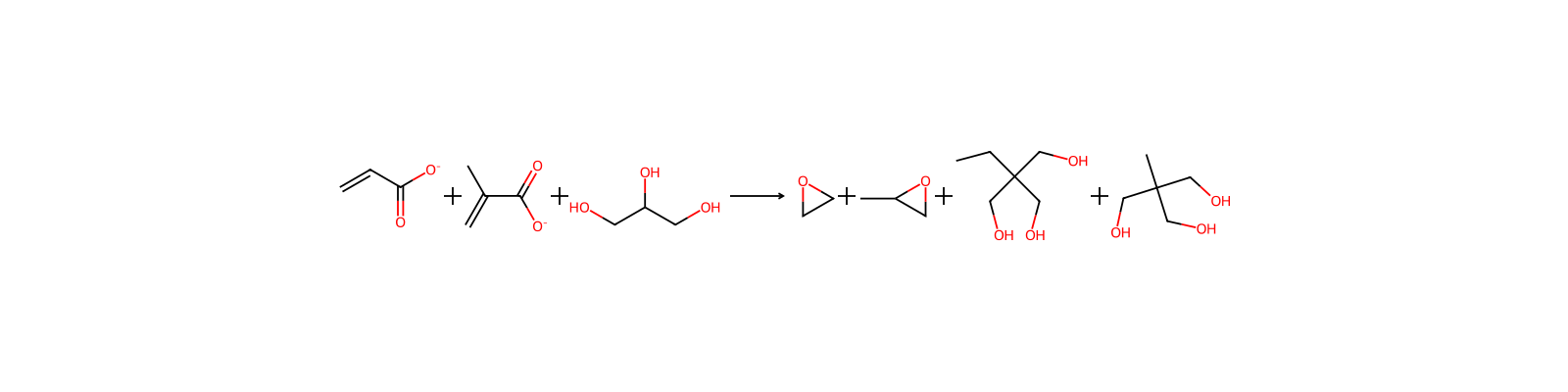
HRID 1146 の反応式
HRID 1146反応物としてuspto-grants-1998_03
HRID 66692 の反応式
HRID 66692反応物としてuspto-grants-1982_08
HRID 222778 の反応式
HRID 222778反応物としてuspto-grants-2012_06
HRID 237185 の反応式
HRID 237185生成物として反応物としてuspto-grants-2014_02
HRID 369560 の反応式
HRID 369560生成物としてuspto-grants-2000_10
HRID 414931 の反応式
HRID 414931反応物としてuspto-grants-2012_01
HRID 477066 の反応式
HRID 477066反応物としてuspto-grants-1989_12
HRID 485507 の反応式
HRID 485507反応物としてuspto-grants-1985_08
1 / 6 ページ

化合物ノート

読み込み中…

このページの内容基本情報名称と識別子物性安全と法規制化学と産業関連反応化合物ノート
その他の操作
ノートを作成反応を作成見積依頼を出す
Other Experimental Properties
Hygroscopic

物理化学的性質

融点
193 · 193-195 °C(lit.)
沸点
137 °C · 137°C 15mm
比重(密度)
1.0456 · 1.0456 (rough estimate)
屈折率
1.4056 · 1.4056 (estimate)
闪点
160 °C · 160°C
貯蔵温度
Inert atmosphere,Room Temperature
酸解離定数(Pka)
14.03 · 14.03±0.10(Predicted)
外見
結晶性粉末、結晶、および/またはチャンク
色
白い
水溶解度
溶ける
BRN
1304452 · 1304452
Henry's Law Constant
9 · 9.0×102 mol/(m3Pa) at 25℃, HSDB (2015)
InChI
1S/C5H12O3/c1-5(2-6,3-7)4-8/h6-8H,2-4H2,1H3
InChIKey
QXJQHYBHAIHNGG-UHFFFAOYSA-N
SMILES
CC(CO)(CO)CO
CAS データベース
77 · 77-85-0(CAS DataBase Reference)
NISTの化学物質情報
1 · 1,3-Propanediol, 2-(hydroxymethyl)-2-methyl-(77-85-0)
EPAの化学物質情報
1 · 1,3-Propanediol, 2-(hydroxymethyl)-2-methyl- (77-85-0)

化学的性質

化学的特性white crystalline powder, crystals and/or chunks

毒性情報

Environmental Fate · 3 件

TERRESTRIAL FATE: Based on a classification scheme(1), an estimated Koc value of less than 1(SRC), determined from a structure estimation method(2), indicates that 1,1,1-tris(hydroxymethyl)ethane is expected to have very high mobility in soil(SRC). Volatilization of 1,1,1-tris(hydroxymethyl)ethane from moist soil surfaces is not expected to be an important fate process(SRC) given an estimated Henry's Law constant of 1.1X10⁻⁸ atm-cu m/mole(SRC), using a fragment constant estimation method(3). 1,1,1-Tris(hydroxymethyl)ethane is not expected to volatilize from dry soil surfaces(SRC) based upon an estimated vapor pressure of 1.7X10⁻⁶ mm Hg(SRC), determined from a fragment constant method(4). 1,1,1-Tris(hydroxymethyl)ethane, present at 100 mg/L, reached 4 percent of its theoretical BOD in 4 weeks using an activated sludge inoculum at 30 mg/L and the Japanese MITI test(5), suggesting that biodegradation in soil is not an important environmental fate process(SRC).

AQUATIC FATE: Based on a classification scheme(1), an estimated Koc value of less than 1(SRC), determined from a structure estimation method(2), indicates that 1,1,1-tris(hydroxymethyl)ethane is not expected to adsorb to suspended solids and sediment(SRC). Volatilization from water surfaces is not expected(3) based upon an estimated Henry's Law constant of 1.1X10⁻⁸ atm-cu m/mole(SRC), developed using a fragment constant estimation method(4). 1,1,1-Tris(hydroxymethyl)ethane is not expected to undergo hydrolysis in the environment due to the lack of functional groups that hydrolyze under environmental conditions(3). According to a classification scheme(5), an estimated BCF of 3.2(SRC), from an estimated log Kow of -0.30(6)and a regression-derived equation(7), suggests the potential for bioconcentration in aquatic organisms is low. 1,1,1-Tris(hydroxymethyl)ethane, present at 100 mg/L, reached 4 percent of its theoretical BOD in 4 weeks using an activated sludge inoculum at 30 mg/L and the Japanese MITI test(8), suggesting that biodegradation in water is not an important environmental fate process(SRC).

ATMOSPHERIC FATE: According to a model of gas/particle partitioning of semivolatile organic compounds in the atmosphere(1), 1,1,1-tris(hydroxymethyl)ethane, which has an estimated vapor pressure of 1.7X10⁻⁶ mm Hg at 25 °C(SRC), determined from a fragment constant method(2), will exist in both the vapor and particulate phases in the ambient atmosphere. Vapor-phase 1,1,1-tris(hydroxymethyl)ethane is degraded in the atmosphere by reaction with photochemically-produced hydroxyl radicals(SRC); the half-life for this reaction in air is estimated to be 30 hours(SRC), calculated from its rate constant of 1.3X10⁻¹¹ cu cm/molecule-sec at 25 °C(SRC) that was derived using a structure estimation method(3). Particulate-phase 1,1,1-tris(hydroxymethyl)ethane may be removed from the air by wet or dry deposition(SRC). 1,1,1-Tris(hydroxymethyl)ethane does not contain chromophores that absorb at wavelengths >290 nm(4) and therefore is not expected to be susceptible to direct photolysis by sunlight(SRC).

Soil Adsorption/Mobility · 1 件

Using a structure estimation method based on molecular connectivity indices(1), the Koc of 1,1,1-tris(hydroxymethyl)ethane can be estimated to be less than 1(SRC). According to a classification scheme(2), this estimated Koc value suggests that 1,1,1-tris(hydroxymethyl)ethane is expected to have very high mobility in soil.

Artificial Pollution Sources · 1 件

1,1,1-Tris(hydroxymethyl)ethane's production and use in the manufacture of varnishes, alkyd and polyester resins, as a conditioning agent and synthetic drying oils(1) may result in its release to the environment through various waste streams(SRC).

Environmental Biodegradation · 2 件

AEROBIC: 1,1,1-Tris(hydroxymethyl)ethane, present at 100 mg/L, reached 4 percent of its theoretical BOD in 4 weeks using an activated sludge inoculum at 30 mg/L and the Japanese MITI test(1). In a study using gas chromatography to monitor substrate disappearance, 1,1,1-tris(hydroxymethyl)ethane, at an initial concentration of 50 ppm, did not biodegrade under aerobic conditions(2).

ANAEROBIC: In a study using gas chromatography to monitor substrate disappearance, 1,1,1-tris(hydroxymethyl)ethane, at an initial concentration of 50 ppm, did not biodegrade under anaerobic conditions(1).

Environmental Bioconcentration · 1 件

An estimated BCF of 3.2 was calculated for 1,1,1-tris(hydroxymethyl)ethane(SRC), using an estimated log Kow of -0.30(1) and a regression-derived equation(2). According to a classification scheme(3), this BCF suggests the potential for bioconcentration in aquatic organisms is low(SRC).

Volatilization from Water/Soil · 1 件

The Henry's Law constant for 1,1,1-tris(hydroxymethyl)ethane is estimated as 1.1X10⁻⁸ atm-cu m/mole(SRC) using a fragment constant estimation method(1). This Henry's Law constant indicates that 1,1,1-tris(hydroxymethyl)ethane is expected to be essentially nonvolatile from water surfaces(2). 1,1,1-Tris(hydroxymethyl)ethane's Henry's Law constant indicates that volatilization from moist soil surfaces is unlikely to occur(SRC). 1,1,1-Tris(hydroxymethyl)ethane is not expected to volatilize from dry soil surfaces(SRC) based upon an estimated vapor pressure of 1.7X10⁻⁶ mm Hg(SRC), determined from a fragment constant method(3).

Environmental Abiotic Degradation · 1 件

The rate constant for the vapor-phase reaction of 1,1,1-tris(hydroxymethyl)ethane with photochemically-produced hydroxyl radicals has been estimated as 1.3X10⁻¹¹ cu cm/molecule-sec at 25 °C(SRC) using a structure estimation method(1). This corresponds to an atmospheric half-life of about 30 hours at an atmospheric concentration of 5X10+5 hydroxyl radicals per cu cm(1). 1,1,1-Tris(hydroxymethyl)ethane is not expected to undergo hydrolysis in the environment due to the lack of functional groups that hydrolyze under environmental conditions(2). 1,1,1-Tris(hydroxymethyl)ethane does not contain chromophores that absorb at wavelengths >290 nm(2) and therefore is not expected to be susceptible to direct photolysis by sunlight(SRC).

Probable Routes of Human Exposure · 1 件

NIOSH (NOES Survey 1981-1983) has statistically estimated that 1090 workers were potentially exposed to 1,1,1-tris(hydroxymethyl)ethane in the US(1). Occupational exposure to 1,1,1-tris(hydroxymethyl)ethane may occur through inhalation and dermal contact with this compound at workplaces where it is produced or used(SRC).

Environmental Fate/Exposure Summary · 1 件

1,1,1-Tris(hydroxymethyl)ethane's production and use in the manufacture of varnishes, alkyd and polyester resins, as a conditioning agent and synthetic drying oils may result in its release to the environment through various waste streams. If released to air, an estimated vapor pressure of 1.7X10⁻⁶ mm Hg at 25 °C indicates 1,1,1-tris(hydroxymethyl)ethane will exist in both the vapor and particulate phases in the atmosphere. Vapor-phase 1,1,1-tris(hydroxymethyl)ethane will be degraded in the atmosphere by reaction with photochemically-produced hydroxyl radicals; the half-life for this reaction in air is estimated to be 30 hours. Particulate-phase 1,1,1-tris(hydroxymethyl)ethane will be removed from the atmosphere by wet or dry deposition. 1,1,1-Tris(hydroxymethyl)ethane does not contain chromophores that absorb at wavelengths >290 nm and therefore is not expected to be susceptible to direct photolysis by sunlight. If released to soil, 1,1,1-tris(hydroxymethyl)ethane is expected to have very high mobility based upon an estimated Koc of less than 1. Volatilization from moist soil surfaces is not expected to be an important fate process based upon an estimated Henry's Law constant of 1.1X10⁻⁸ atm-cu m/mole. 1,1,1-Tris(hydroxymethyl)ethane is unlikely to volatilize from dry soil surfaces based upon its vapor pressure. If released into water, 1,1,1-tris(hydroxymethyl)ethane is not expected to adsorb to suspended solids and sediment based upon the estimated Koc. 1,1,1-Tris(hydroxymethyl)ethane, present at 100 mg/L, reached 4 percent of its theoretical BOD in 4 weeks using an activated sludge inoculum at 30 mg/L and the Japanese MITI test, suggesting that biodegradation is not an important environmental fate process. Volatilization from water surfaces is not expected to be an important fate process based upon this compound's estimated Henry's Law constant. An estimated BCF of 3.2 suggests the potential for bioconcentration in aquatic organisms is low. Hydrolysis is not expected to be an important environmental fate process since this compound lacks functional groups that hydrolyze under environmental conditions. Occupational exposure to 1,1,1-tris(hydroxymethyl)ethane may occur through inhalation and dermal contact with this compound at workplaces where 1,1,1-tris(hydroxymethyl)ethane is produced or used. (SRC)

Antidote and Emergency Treatment · 3 件

/SRP:/ Immediate first aid: Ensure that adequate decontamination has been carried out. If patient is not breathing, start artificial respiration, preferably with a demand valve resuscitator, bag-valve-mask device, or pocket mask, as trained. Perform CPR if necessary. Immediately flush contaminated eyes with gently flowing water. Do not induce vomiting. If vomiting occurs, lean patient forward or place on the left side (head-down position, if possible) to maintain an open airway and prevent aspiration. Keep patient quiet and maintain normal body temperature. Obtain medical attention. /Poisons A and B/

/SRP:/ Basic treatment: Establish a patent airway (oropharyngeal or nasopharyngeal airway, if needed). Suction if necessary. Watch for signs of respiratory insufficiency and assist ventilations if needed. Administer oxygen by nonrebreather mask at 10 to 15 L/min. Monitor for pulmonary edema and treat if necessary ... . Monitor for shock and treat if necessary ... . Anticipate seizures and treat if necessary ... . For eye contamination, flush eyes immediately with water. Irrigate each eye continuously with 0.9% saline (NS) during transport ... . Do not use emetics. For ingestion, rinse mouth and administer 5 mL/kg up to 200 mL of water for dilution if the patient can swallow, has a strong gag reflex, and does not drool ... . Cover skin burns with dry sterile dressings after decontamination ... . /Poisons A and B/

/SRP:/ Advanced treatment: Consider orotracheal or nasotracheal intubation for airway control in the patient who is unconscious, has severe pulmonary edema, or is in severe respiratory distress. Positive-pressure ventilation techniques with a bag valve mask device may be beneficial. Consider drug therapy for pulmonary edema ... . Consider administering a beta agonist such as albuterol for severe bronchospasm ... . Monitor cardiac rhythm and treat arrhythmias as necessary ... . Start IV administration of D5W /SRP: "To keep open", minimal flow rate/. Use 0.9% saline (NS) or lactated Ringer's if signs of hypovolemia are present. For hypotension with signs of hypovolemia, administer fluid cautiously. Watch for signs of fluid overload ... . Treat seizures with diazepam or lorazepam ... . Use proparacaine hydrochloride to assist eye irrigation ... . /Poisons A and B/

安全データ

F
3
wgk
3
tsca
TSCA listed
rtecs
TY7137500
hs_code
29054910
化審法
(2)-243
safety_code
22-24/25
ストレージクラス
11 - Combustible Solids
有毒物質データの
77-85-0(Hazardous Substances Data)
General Manufacturing Information · 2 件

Plastics Product Manufacturing

1,3-Propanediol, 2-(hydroxymethyl)-2-methyl-: ACTIVE

応用分野 · 1 件

使用1,1,1-Tris(hydroxymethyl)ethane is an intermediate in the production of alkyd and polyester resins, powder coating resins, synthetic lubricants based on polyol esters, stabilizers for plastics, plasticizers, and pigment coatings. It is used in some phase change materials.

調製方法 · 2 件

1,1,1-Tris(hydroxymethyl)ethane (2-hydroxymethyl-2-methyl-1,3-propanediol) is made by aldol condensation of propionaldehyde with formaldehyde, followed by reaction of the intermediate 2,2-bis(hydroxymethyl)propanal with excess formaldehyde in the presence of sodium hydroxide or lime as basic component. The resulting aqueous solution is freed from excess formaldehyde by distillation under pressure and further concentrated. The formate byproduct can be separated by extracting the trimethylolethane from the residue with organic solvents such as 2-propanol or by almost complete removal of the water and dissolving the trimethylolethane in acetone or methanol.

純化方法Dissolve it in hot tetrahydrofuran, filter and precipitate it with hexane. It has also been crystallised from acetone/water (1:1). Dry it in a vacuum. [Beilstein 1 H 520, 1 IV 2780.]

上流・下流製品情報

上流原料

カルシウムオキシド水酸化ナトリウムホルマリンプロピオンアルデヒド

下流製品

3-メチル-3-オキセタンメタノール5-ヒドロキシメチル-2,2,5-トリメチル-1,3-ジオキサン