

基本情報
- 標準SMILES
CC(C)(C)OOC(C)(C)CCC(C)(C)OOC(C)(C)C- InChIKey
DMWVYCCGCQPJEA-UHFFFAOYSA-N- 分子式
- C16H34O4
- 平均分子量
- 290.44 g/mol
- 単同位体質量
- 290.24570957
概要
2,5-dimethyl-2,5-di-(tert-butylperoxy)hexane, [<= 52% with inert solid] is a clear, yellow liquid. (NTP, 1992)also for storage and transport mixed with inert solid.
名称と識別子
- 優先名称
- 2,5-Dimethyl-2,5-di-(tert-butylperoxy)hexane
- IUPAC
- 2,5-bis(tert-butylperoxy)-2,5-dimethylhexane
- 現地名
- 2,5-ジメチルー2,5-ビス(t-ブチルパーオキシ)ヘキサン
- 英語名
- 2,5-Dimethyl-2,5-di(tert-butylperoxy)hexane
- 分子式
- C16H34O4
- 分子量
- 290.44
名称と別名
78-63-72,5-Dimethyl-2,5-di(tert-butylperoxy)hexane2,5-Dimethyl-2,5-di-(tert-butylperoxy)hexaneVaroxPerhexa 3M40Trigonox 101-101/45CCRIS 4626DTXSID9025110EINECS 201-128-1NSC 38203BRN 1863369UNII-923755EYY5
名称をさらに表示
2,5-ジメチル-2,5-ビス(t-ブチルパ-オキシ)ヘキサン2,5-ジメチルー2,5-ビス(t-ブチルパーオキシ)ヘキサン2,5ジメチル2,5ジ(tブチルペルオキシ)ヘキサン2,5-ジメチル-2,5-ジ(tert-ブチルペルオキシ)ヘキサン2,5-ジメチル-2,5-ビス(T-ブチルパーオキシ)ヘキサンLUPEROX® 101, 2,5-BIS(TERT-ブチルペルオキシ)-2,5-ジメチルヘキサンLUPEROX® 101XL, 2,5-BIS(TERT-ブチルペルオキシ)-2,5-ジメチルヘキサン、 炭酸カリシウムおよびケイ素混合物luperoxTrigonox 101DPDHluperox1012,5-Dimethyl-2,5-di2,5-Dimethyl-2,5-di(tert-butyl2,5-DIMETHYL-2,5-DI(T-BUTYL-PEROXY)HEXANE2,5-BIS(TERT-BUTYLPEROXY)-2,5-DIMETHYLHEXANE2,5-DIMETHYL-2,5-BIS(TERT-BUTYLPEROXY)HEXANE2,5-Bis(tert-butyl peroxide)-2,5-dimethyhexane
VAROX DBPHNSC-38203Hexane, 2,5-dimethyl-2,5-di(tert-butylperoxy)-923755EYY52,5-Dimethyl-2,5-bis(tert-butylhydroperoxy)hexaneDTXCID005110EC 201-128-1Peroxide, (1,1,4,4-tetramethyl-1,4-butanediyl)bis((1,1-dimethylethyl)
データベース識別子
- CAS
78-63-7- PubChem CID
- 6545
- DTXSID
DTXSID9025110- ChEMBL
CHEMBL1874231- UNII
- 923755EYY5
- EC Number
- 201-128-1
- Nikkaji
- J2.829K
物性
構造計算による物性
- XLogP
- 3.9
- 極性表面積
- 36.9 Ų
- 水素結合供与体数
- 0
- 水素結合受容体数
- 4
- 回転可能結合数
- 9
- 重原子数
- 20
- 形式電荷
- 0
- 複雑度
- 252
実験および物理化学的性質
Chemical Classes
Other Classes -> Peroxides, Organic
Industrial compound
Solubilityless than 1 mg/mL at 73 °F (NTP, 1992)
Flash Point185 °F (NTP, 1992)
Boiling Point122 to 126 °F at 0.1 mmHg (NTP, 1992)
Melting Point46 °F (NTP, 1992)
Food Contact Substances
FCS -> FDA Cumulative Estimated Daily Intake (CEDI)
FCS -> FDA Inventory of Food Contact Substances Listed in 21 CFR
FCS -> FDA Inventory of Effective Food Contact Substance (FCS) Notifications
Physical Description
2,5-dimethyl-2,5-di-(tert-butylperoxy)hexane, [<= 52% with inert solid] is a clear, yellow liquid. (NTP, 1992)also for storage and transport mixed with inert solid.
2,5-dimethyl-2,5-di-(tert-butylperoxy)hexane is a clear, yellow liquid. (NTP, 1992)also for storage and transport mixed with inert solid.
CBI; Large Crystals; Other Solid; Liquid; Other Solid; Liquid
Clear yellow liquid; [CAMEO] Liquid; [Sigma-Aldrich MSDS]
物理化学的性質
- 融点
- 6 °C · 6 °C
- 沸点
- 55 · 55-57 °C7 mm Hg(lit.)
- 比重(密度)
- 0.877 g/mL · 0.877 g/mL at 25 °C(lit.)
- 蒸気圧
- 0.002 Pa · 0.002Pa at 20℃
- 屈折率
- 20 · n20/D 1.423(lit.)
- 闪点
- 149 °F · 149 °F
- 貯蔵温度
- 2 · 2-8°C
- 溶解性
- Chloroform (Soluble), Methanol (Sparingly)
- 外見
- Oil
- 色
- Colourless
- 水溶解度
- 混和しない
- Henry's Law Constant
- 3.9 · 3.9×10-3 mol/(m3Pa) at 25℃, Zhang et al. (2010)
- 安定性
- 不安定。阻害剤が含まれている可能性があります。強力な酸化剤、酸、還元剤、有機材料、粉末金属とは相容れない。
- InChI
- 1S/C16H34O4/c1-13(2,3)17-19-15(7,8)11-12-16(9,10)20-18-14(4,5)6/h11-12H2,1-10H3
- InChIKey
- DMWVYCCGCQPJEA-UHFFFAOYSA-N
- SMILES
- CC(C)(C)OOC(C)(C)CCC(C)(C)OOC(C)(C)C
- LogP
- 7.34 at · 7.34 at 20℃
- CAS データベース
- 78 · 78-63-7(CAS DataBase Reference)
- EPAの化学物質情報
- 2 · 2,5-Dimethyl-2,5-di-(tert-butylperoxy)hexane (78-63-7)
化学的性質
化学的特性colourless to light yellow liquid
安全と法規制
GHS分類
GHS Classification
Danger
H226 (11.8%): Flammable liquid and vapor [Warning Flammable liquids]
P210, P233, P234, P235, P240, P241, P242, P243, P264, P264+P265, P273, P280, P302+P352, P303+P361+P353, P305+P351+P338, P321, P332+P317, P337+P317, P362+P364, P370+P378, P403, P403+P235, P410, P411, P420, and P501 (click each P-code to see the statement)
Aggregated GHS information provided per 524 reports by companies from 16 notifications to the ECHA C&L Inventory. Each notification may be associated with multiple companies.
Danger
H242: Heating may cause a fire [Danger Self-reactive substances and mixtures; Organic peroxides]
危険有害性情報
Regulatory Information
Chemical: Peroxide, (1,1,4,4-tetramethyl-1,4-butanediyl)bis[(1,1-dimethylethyl)
Hazard Traits - Bioaccumulation; Environmental Persistence
Peroxide, 1,1'-(1,1,4,4-tetramethyl-1,4-butanediyl)bis[2-(1,1-dimethylethyl) is listed on the EPA's Chemical Data Reporting (CDR) system. Manufacturers and importers of Peroxide, 1,1'-(1,1,4,4-tetramethyl-1,4-butanediyl)bis[2-(1,1-dimethylethyl) are required to report information about their production and use of this chemical to the EPA under the Toxic Substances Control Act (TSCA). (40 eCFR Part 711)
Status: Active Update: 30-03-2023 https://echa.europa.eu/registration-dossier/-/registered-dossier/14360
Peroxide, (1,1,4,4-tetramethyl-1,4-butanediyl)bis[(1,1-dimethylethyl) 100%: Does not have an individual approval but may be used under an appropriate group standard
Other Safety InformationIMAP assessments - Peroxide, (1,1,4,4-tetramethyl-1,4-butanediyl)bis[(1,1-dimethylethyl): Human health tier I assessment
DOT Label
Organic Peroxide
Organic Peroxide
Fire Hazards
Excerpt from ERG Guide 145 [Organic Peroxides (Heat and Contamination Sensitive)]:
Excerpt from ERG Guide 145 [Organic Peroxides (Heat and Contamination Sensitive)]:
Health Hazards
Excerpt from ERG Guide 145 [Organic Peroxides (Heat and Contamination Sensitive)]:
Excerpt from ERG Guide 145 [Organic Peroxides (Heat and Contamination Sensitive)]:
Hazards Summary
Increased liver weights with corresponding hepatocellular hypertrophy observed in 7-day oral study of rats; [EPA - TSCATS] A strong oxidizing agent that can ignite combustible materials; May explode if heated or contaminated; [CAMEO] A skin and eye irritant; [NTP] May explode from shock, friction, or heat; A skin irritant; [ECHA REACH Registrations] An unstable oxidizer that may cause fire; An irritant; [Sigma-Aldrich MSDS] See 1,4-Bis(alpha-(t-butyldioxy)isopropyl)benzene, Di-tert-butyl peroxide, and Methyl ethyl ketone peroxide.
Reactive Group
Peroxides, Organic
Peroxides, Organic
Reactivity Alerts
Strong Oxidizing Agent
Explosive
Reactivity Profile
Peroxides, such as 2,5-DIMETHYL-2,5-DI-(TERT-BUTYLPEROXY)HEXANE, are good oxidizing agents. Organic compounds can ignite on contact with concentrated peroxides. Strongly reduced material such as sulfides, nitrides, and hydrides may react explosively with peroxides. There are few chemical classes that do not at least produce heat when mixed with peroxides. Many produce explosions or generate gases (toxic and nontoxic). Generally, dilute solutions of peroxides (<70%) are safe, but the presence of a catalyst (often a transition metal such as cobalt, iron, manganese, nickel, or vanadium) as an impurity may even then cause rapid decomposition, a buildup of heat, and even an explosion. Solutions of peroxides often become explosive when evaporated to dryness or near-dryness. Danger of explosion when dry. May explode from heat, shock, friction or contamination. May ignite combustibles (wood, paper, oil, clothing, etc.). May be ignited by heat, sparks or flames.
Peroxides, such as 2,5-DIMETHYL-2,5-DI-(TERT-BUTYLPEROXY)HEXANE, are good oxidizing agents. Organic compounds can ignite on contact with concentrated peroxides. Strongly reduced material such as sulfides, nitrides, and hydrides may react explosively with peroxides. There are few chemical classes that do not at least produce heat when mixed with peroxides. Many produce explosions or generate gases (toxic and nontoxic). Generally, dilute solutions of peroxides (<70%) are safe, but the presence of a catalyst (often a transition metal such as cobalt, iron, manganese, nickel, or vanadium) as an impurity may even then cause rapid decomposition, a buildup of heat, and even an explosion. Solutions of peroxides often become explosive when evaporated to dryness or near-dryness. Danger of explosion when dry. This compound may react violently on exposure to heat, shock or reducing agents. (NTP, 1992)
Air and Water Reactions
Insoluble in water.
Insoluble in water.
Hazard Classes and Categories
Flam. Liq. 3 (11.8%)
Flammable liquids - Category 4
Organic peroxides - Type C
安全と保護具
Fire Fighting
Excerpt from ERG Guide 145 [Organic Peroxides (Heat and Contamination Sensitive)]:
Excerpt from ERG Guide 145 [Organic Peroxides (Heat and Contamination Sensitive)]:
First Aid
Excerpt from ERG Guide 145 [Organic Peroxides (Heat and Contamination Sensitive)]:
EYES: First check the victim for contact lenses and remove if present. Flush victim's eyes with water or normal saline solution for 20 to 30 minutes while simultaneously calling a hospital or poison control center. Do not put any ointments, oils, or medication in the victim's eyes without specific instructions from a physician. IMMEDIATELY transport the victim after flushing eyes to a hospital even if no symptoms (such as redness or irritation) develop.
Nonfire Spill Response
Excerpt from ERG Guide 145 [Organic Peroxides (Heat and Contamination Sensitive)]:
Excerpt from ERG Guide 145 [Organic Peroxides (Heat and Contamination Sensitive)]:
Isolation and Evacuation
Excerpt from ERG Guide 145 [Organic Peroxides (Heat and Contamination Sensitive)]:
Excerpt from ERG Guide 145 [Organic Peroxides (Heat and Contamination Sensitive)]:
Personal Protective Equipment (PPE)
Excerpt from ERG Guide 145 [Organic Peroxides (Heat and Contamination Sensitive)]:
RECOMMENDED RESPIRATOR: Where the neat test chemical is weighed and diluted, wear a NIOSH-approved half face respirator equipped with an organic vapor/acid gas cartridge (specific for organic vapors, HCl, acid gas and SO2) with a dust/mist filter. (NTP, 1992)
毒性情報
Adverse EffectsOccupational hepatotoxin - Secondary hepatotoxins: the potential for toxic effect in the occupational setting is based on cases of poisoning by human ingestion or animal experimentation.
安全データ
- wgk
- 1
- tsca
- TSCA listed
- rtecs
- MO1835000
- ridadr
- UN 3108 5.2
- hs_code
- 29012990
- risk_code
- 8-36/37/38-7-36/38-10-41-37/38-68-38-2
- hazard_code
- O,Xn,Xi,E
- safety_code
- 7-17-36/37/39-3/7-26-14A-47-14-36/37-35
- hazard_class
- 5.2
- packing_group
- II
- Hazard Classifications
- Muta. 2Org. Perox. CSkin Irrit. 2
- ストレージクラス
- 4.1A - Other explosive hazardous materials
化学と産業
用途と製造
Uses
Used to vulcanize or cross-link elastomers and polyolefins; [EPA - TSCATS] Used as a polymer additive, crosslinking agent, for curing resins, and to make belting, rubber and plastic hose, other rubber products, and plastics; [Government of Canada: Screening Assessment]
Plastic Composites Manufacturing [Category: Industry]
U.S. Production2023: 2,500,000 - <4,000,000 lb
Consumer UsesNot Known or Reasonably Ascertainable
Industry UsesPlasticizer
General Manufacturing Information
Plastics Product Manufacturing
Peroxide, 1,1'-(1,1,4,4-tetramethyl-1,4-butanediyl)bis[2-(1,1-dimethylethyl): ACTIVE
応用分野
用途有機過酸化物(重合触媒)原料、架橋剤(合成ゴム、ポリエチレン)、PPの解重号剤(MFI改良剤)
一般的な説明2,5-Dimethyl-2,5-di(tert-butylperoxy)hexane, also known as trigonox 101, is a clear, yellow liquid. (NTP, 1992)also for storage and transport mixed with inert solid.
上流・下流製品情報
上流原料
サプライヤー50 社
阿诺西(上海)生物技术有限公司400-1107768 15058188853 · [email protected]
上海阿拉丁生化科技股份有限公司400-6206333 13167063860 · [email protected]
上海策嵘生物科技有限公司[email protected]
上海莉凯化工技术有限公司16628776521 · [email protected]
广州纳珑化工有限公司13192879270; 13192879270 · [email protected]
杭州品高化工有限公司0571-87658025 · [email protected]
武汉欣扬瑞和化学科技有限公司18171205315; 18171205315 · [email protected]
上海泰矶林实业有限公司02150630626 17717886015 · [email protected]
湖南嘉航医药科技有限公司85521272 15200744171 · [email protected]
江苏艾康生物医药研发有限公司025-025-66113011 15955137747 · [email protected]
Dayang Chem (Hangzhou) Co.,Ltd.+86-0571-88938639 17705817739 · [email protected]
武汉绿景丰华生物科技有限公司19972070065 · [email protected]
河北枫嘉新材料科技有限公司+86-0311-87836622 +86-18712993135 · [email protected]
衢州明锋化工有限公司0570-3062502 13819002126;13819008176 · [email protected]
TEKA-FAST LIMITED+8618601192704 · [email protected]
Syntechem Co.,Ltd[email protected]
上海迈瑞尔生化科技有限公司4006356688 18621169109 · [email protected]
江苏普乐司生物科技有限公司0513-66017706 18551496367 · [email protected]
梯希爱(上海)化工贸易有限公司021-61109150 · [email protected]
广东云星生物技术有限公司0751-18902340975/189023400307 18902340307 · [email protected]
上海瀚鸿科技股份有限公司021-54306202 13764082696 · [email protected]
辽宁中茂新材料有限公司+86-13656229759; +86-13656229759 · [email protected]
南通合润生物科技有限公司18362409333 · [email protected]
武汉市皇臻生物化工有限公司13795480948 · [email protected]
山东曜明化工有限公司15550028560 · [email protected]
山东西亚化学有限公司13355009207 13355009207 · [email protected]
玛雅试剂+86 (573) 82222445 (0)18006601000 452520369 · [email protected]
四川库利南科技有限公司400-1166-196 18981987031 · [email protected]
天津希恩思生化科技有限公司400 638 7771 · [email protected]
艾科试剂4008-755-333 18080918076 · [email protected]
赛默飞世尔科技(中国)有限公司800-810-5118 · [email protected]
北京伊诺凯科技有限公司400-810-7969 010-59572699 · [email protected]
北京京土恒盛化工科技有限公司00-13911456598 13911456598 · [email protected]
上海将来实业股份有限公司021-61552785 · [email protected]
HBCChem, Inc.+1-510-219-6317 · [email protected]
成都零六生物科技有限公司400-1166-196 13458535857 · [email protected]
湖北瑞今化学有限公司027 83642615 13995607107 · [email protected]
上海麦克林生化科技股份有限公司15221275939 15221275939 · [email protected]
池州凯隆进出口贸易有限公司[email protected]
Sigma-Aldrich西格玛奥德里奇(上海)贸易有限公司021-61415566 800-8193336 · [email protected]
天津荣燊化工有限公司18317763565; 18317763565 · [email protected]
上海波以尔化工有限公司021-50182298 021-50180596 · [email protected]
九鼎化学(上海)科技有限公司4009209199 · [email protected]
厦门志信化学有限公司+86-5922680277 +86-13806087780 · [email protected]
辽宁中茂新材料有限公司13656229759; 13656229759 · [email protected]
上海玻尔化学试剂有限公司19102157732 · [email protected]
艾吉析科技(上海)有限公司17721401538;17717235263 17721401538 · [email protected]
陕西缔都医药化工有限公司029-029-81120477 17792793610 · [email protected]
启源(广东)医药化工有限公司18026564465 · [email protected]
陕西缔都医药化工有限公司+86-29-81139210 +86-17392587031 · [email protected]
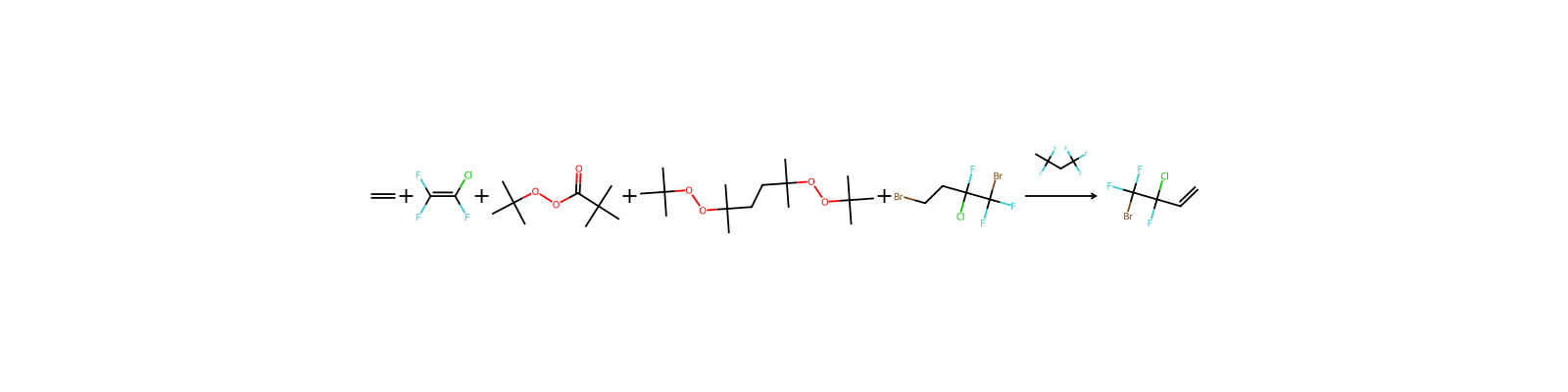
関連反応
9 件


関連ノート
読み込み中…