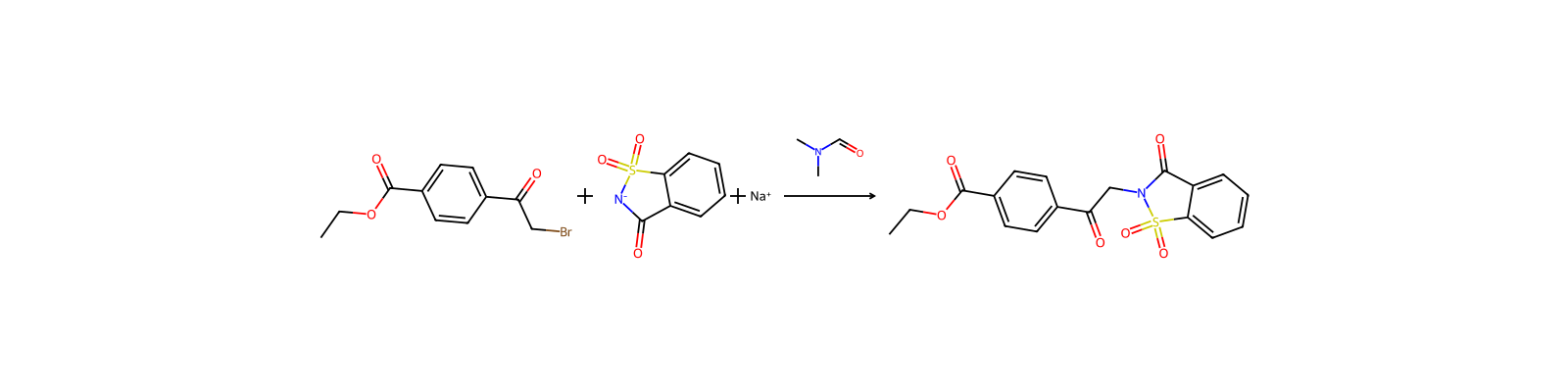
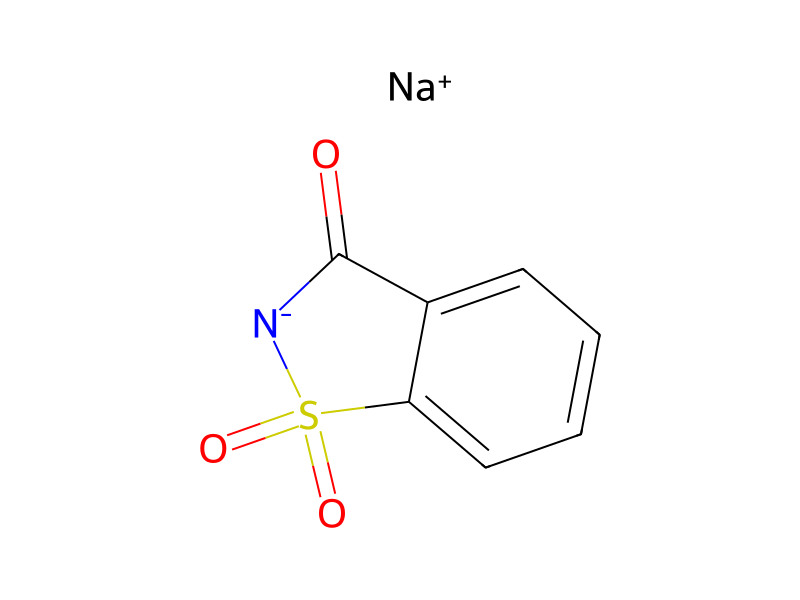
基本情報
- 標準SMILES
O=C1[N-]S(=O)(=O)c2ccccc21.[Na+]- InChIKey
WINXNKPZLFISPD-UHFFFAOYSA-M- 分子式
- C7H4NNaO3S
- 平均分子量
- 205.17 g/mol
- 単同位体質量
- 204.98095827
概要
Saccharin, sodium salt appears as odorless white crystals or crystalline powder. Aqueous solution is neutral or alkaline to litmus, but not alkaline to phenolphthalein. Effloresces in dry air. Intensely sweet taste. (NTP, 1992)
名称と識別子
- 優先名称
- Sodium saccharin
- IUPAC
- sodium 1,1-dioxo-1,2-benzothiazol-2-id-3-one
名称と別名
SACCHARIN SODIUM128-44-9Sodium saccharinSaccharin, sodiumSaccharin sodium anhydrousSodium saccharineSodium saccharinateSaccharinnatriumSucraSoluble glusideCrystalloseKristallose
名称をさらに表示
WillosettenDagutanMadhurinSucromatSaccharoidum natricumSaccharin sodium, anhydrousSodium benzosulphimideSodium saccharin, anhydrous
データベース識別子
- CAS
128-44-9- PubChem CID
- 656582
- DTXSID
DTXSID5021253- ChEMBL
CHEMBL2105416、CHEMBL2219743- ChEBI
CHEBI:32112- UNII
- I4807BK602
- EC Number
- 204-886-1
物性
構造計算による物性
- 極性表面積
- 60.6 Ų
- 水素結合供与体数
- 0
- 水素結合受容体数
- 4
- 回転可能結合数
- 0
- 重原子数
- 13
- 形式電荷
- 0
- 複雑度
- 308
実験および物理化学的性質
Chemical ClassesOther Uses -> Food Additives
CosmeticsOral care; Masking
FragrancesFragrance Ingredient (Saccharine, sodium salt) -> IFRA transparency List
Food AdditivesANTIMICROBIAL AGENT, FLAVOR ENHANCER, FLAVORING AGENT OR ADJUVANT, NON-NUTRITIVE SWEETENER, SOLVENT OR VEHICLE -> FDA Substance added to food
Solubilitygreater than or equal to 100 mg/mL at 68 °F (NTP, 1992)
Animal DrugsPharmaceuticals -> UK Veterinary Medicines Directorate List
Melting Pointgreater than 572 °F (Decomposes) (NTP, 1992)
Food Contact Substances
FCS -> FDA Inventory of Food Contact Substances Listed in 21 CFR
FCS -> FDA Inventory of Effective Food Contact Substance (FCS) Notifications
Physical Description
Saccharin, sodium salt appears as odorless white crystals or crystalline powder. Aqueous solution is neutral or alkaline to litmus, but not alkaline to phenolphthalein. Effloresces in dry air. Intensely sweet taste. (NTP, 1992)
Dry Powder; Liquid; Other Solid; Liquid
White odorless solid; Effloresces in dry air; [CAMEO] White odorless crystals; [Mallinckrodt Baker MSDS]
安全と法規制
GHS分類
GHS Classification
This chemical does not meet GHS hazard criteria for 95.6% (328 of 343) of all reports.
Not Classified
Aggregated GHS information provided per 343 reports by companies from 9 notifications to the ECHA C&L Inventory.
危険有害性情報
Regulatory Information
Chemical: 1,2-Benzisothiazol-3(2H)-one, 1,1-dioxide, sodium salt (1:1)
Regulation (EC) No 1831/2003 (amended)
1,2-Benzisothiazol-3(2H)-one, 1,1-dioxide, sodium salt (1:1) is listed on the EPA's Chemical Data Reporting (CDR) system. Manufacturers and importers of 1,2-Benzisothiazol-3(2H)-one, 1,1-dioxide, sodium salt (1:1) are required to report information about their production and use of this chemical to the EPA under the Toxic Substances Control Act (TSCA). (40 eCFR Part 711)
TP - indicates a substance that is the subject of a proposed TSCA section 4 test rule.
Status: Active Update: 29-03-2022 https://echa.europa.eu/registration-dossier/-/registered-dossier/14605
Sodium saccharin: Does not have an individual approval but may be used under an appropriate group standard
Other Safety InformationEvaluation - Chemicals that are unlikely to require further regulation to manage risks to environment
Fire HazardsFlash point data are not available for this chemical, but it is probably combustible. (NTP, 1992)
Health HazardsSYMPTOMS: Symptoms of ingestion of this compound include nausea, vomiting and diarrhea. It may also cause anorexia. Inhalation may result in coughing and sneezing.
Hazards Summary
Causes changes in psychophysiological tests in acute oral studies of monkeys; Causes kidney and bladder changes in 36-week constant oral studies of rats; [RTECS] Usually contains about 5% water; [NTP] Acceptable daily intake (ADI) of 0-5 mg/kg; [JECFA] The dihydrate is CAS# 6155-57-3; Contains 5-6% water; May cause mechanical eye irritation; [Mallinckrodt Baker MSDS]
Reactive GroupAmines, Phosphines, and Pyridines
Reactivity ProfileThis compound may react with oxidizing agents. (NTP, 1992). Very weak base in aqueous solution.
Air and Water ReactionsWater soluble.
Hazard Classes and CategoriesNot Classified
安全と保護具
Fire FightingFires involving this compound should be controlled with a dry chemical, carbon dioxide or Halon extinguisher. A water spray may also be used. (NTP, 1992)
First Aid
EYES: First check the victim for contact lenses and remove if present. Flush victim's eyes with water or normal saline solution for 20 to 30 minutes while simultaneously calling a hospital or poison control center. Do not put any ointments, oils, or medication in the victim's eyes without specific instructions from a physician. IMMEDIATELY transport the victim after flushing eyes to a hospital even if no symptoms (such as redness or irritation) develop.
Nonfire Spill Response
SMALL SPILLS AND LEAKAGE: If you spill this chemical, you should dampen the solid spill material with water, then transfer the dampened material to a suitable container. Use absorbent paper dampened with water to pick up any remaining material. Seal your contaminated clothing and the absorbent paper in a vapor-tight plastic bag for eventual disposal. Wash all contaminated surfaces with a soap and water solution. Do not reenter the contaminated area until the Safety Officer (or other responsible person) has verified that the area has been properly cleaned.
Personal Protective Equipment (PPE)
RECOMMENDED RESPIRATOR: Where the neat test chemical is weighed and diluted, wear a NIOSH-approved half face respirator equipped with a combination filter cartridge, i.e. organic vapor/acid gas/HEPA (specific for organic vapors, HCl, acid gas, SO2 and a high efficiency particulate filter). (NTP, 1992)
化学と産業
薬理情報
MeSH Pharmacological ClassificationSubstances that sweeten food, beverages, medications, etc., such as sugar, saccharine or other low-calorie synthetic products. (From Random House Unabridged Dictionary, 2d ed)
用途と製造
Uses
Used as a non-nutritive sweetener, flavor, and in formulations for electroplating-bath brighteners; [Merck Index] Permitted for use as an inert ingredient in non-food pesticide products; [EPA] Used as an antimicrobial agent, flavor enhancer/agent/adjuvant, non-nutritive sweetener, and solvent or vehicle; [FDA] Used to stabilize drugs with a phenothiazine nucleus; [NTP]
Electroplating [Category: Plate]
U.S. Production2023: 50,000 - <75,000 lb
Industry UsesEtching agent
Household ProductsInformation on 298 consumer products that contain Sodium saccharin in the following categories is provided:
Use Classification
Fragrance Ingredients
Food Additives -> SWEETENER -> JECFA Functional Classes
Food Additives -> SWEETENER -> JECFA Functional Classes
Cosmetics -> Oral care; Masking
General Manufacturing Information
Wholesale and Retail Trade
1,2-Benzisothiazol-3(2H)-one, 1,1-dioxide, sodium salt (1:1): ACTIVE
関連反応
1 件
関連ノート
読み込み中…