
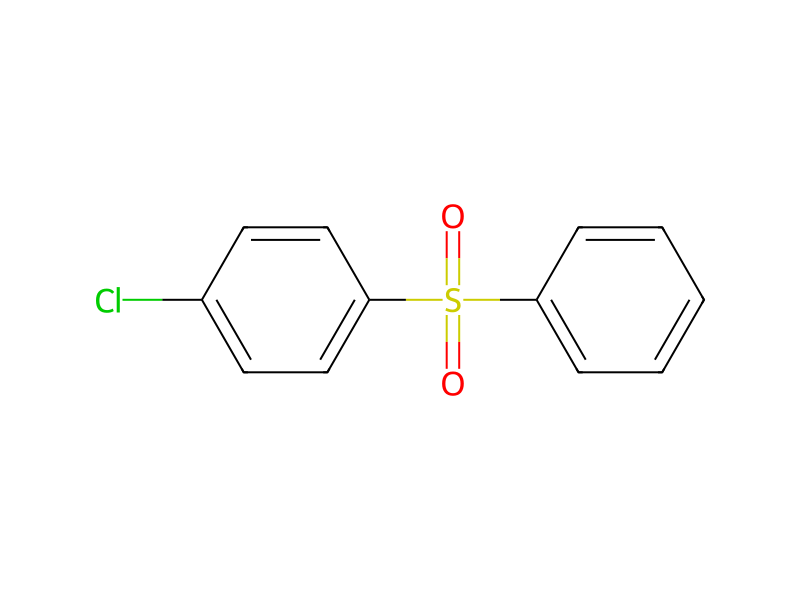
基本情報
- CAS
80-00-2- 標準SMILES
O=S(=O)(c1ccccc1)c1ccc(Cl)cc1- InChIKey
OFCFYWOKHPOXKF-UHFFFAOYSA-N- 分子式
- C12H9ClO2S
- 平均分子量
- 252.72 g/mol
- 単同位体質量
- 252.00117821
名称と識別子
- 優先名称
- Sulphenone
- IUPAC
- 1-(benzenesulfonyl)-4-chlorobenzene
- 現地名
- 4-クロロフェニルフェニルスルホン
- 英語名
- Sulfenone
- 分子式
- C12H9ClO2S
- 分子量
- 252.72
名称と別名
4-Chlorophenyl phenyl sulfone80-00-2SULPHENONESulfenone1-Chloro-4-(phenylsulfonyl)benzene4-Chlorodiphenyl sulfoneTrifensonSulfenonBenzene, 1-chloro-4-(phenylsulfonyl)-p-Chlorophenyl phenyl sulfoneCompound R-242p-Chlorophenyl phenyl sulphone
名称をさらに表示
4-クロロフェニルフェニルスルホンスルフェノンフェニル(4-クロロフェニル)スルホンフェニル4-クロロフェニルスルホン1-クロロ-4-(フェニルスルホニル)ベンゼン(4-クロロフェニル)フェニルスルホン4-クロロジフェニルスルホンスルフェロン(p-クロロフェニル)フェニルスルホン1-(ベンゼンスルホニル)-4-クロロベンゼンr242r-242SULFERONEent17,941SulphenoneRr-242-b[qr]
Sulfone, p-chlorophenyl phenylp-Monochlorophenyl phenyl sulfoneR-242-B4-Chlorodiphenyl sulphone4-ChlordifenylsulfonENT 17,941Caswell No. 211DDTXSID9042259
データベース識別子
- CAS
80-00-2- PubChem CID
- 6621
- DTXSID
DTXSID9042259- ChEMBL
CHEMBL3188889- UNII
- 7NVM546U2M
- EC Number
- 201-242-1
- Nikkaji
- J3.850D
物性
構造計算による物性
- XLogP
- 3.1
- 極性表面積
- 42.5 Ų
- 水素結合供与体数
- 0
- 水素結合受容体数
- 2
- 回転可能結合数
- 2
- 重原子数
- 16
- 形式電荷
- 0
- 複雑度
- 306
実験および物理化学的性質
SpringerMaterials Properties13C nuclear magnetic resonance spectrum
PesticidesPesticides -> Organochlorine Pesticides
LogPlog Kow = 3.25 /Estimated/
OdorSlight aromatic odor
TasteTasteless
Color/Form
Dimorphic crystals
Colorless crystals
White solid
Solubility
At 20 °C acetone (74.4 g/100mL), toluene (44.4 g/100mL), dioxane (65.6 g/100mL), isopropanol (21 g/100mL), hexane 0.4 g/100mL), xylene (18.2 g/100mL), carbon tetrachloride (4.9 g/100mL); slightly soluble in pet ether.
Readily sol in polar and aromatic org solvents
Insoluble in water
DecompositionWhen heated to decomposition it emits very toxic fumes of /hydrogen chloride and sulfur oxides/.
Melting Point98 °C
Vapor Pressure
0.0000039 [mmHg]
8.7X10⁻⁶ mm Hg at 25 °C /Estimated/
Henry's Law ConstantHenry's Law constant = 1.9X10⁻⁷ atm-cu/mole at 25 °C /Estimated/
Physical DescriptionColorless or white solid; [HSDB] White powder; [MSDSonline]
物理化学的性質
- 融点
- 90 · 90-94 °C(lit.)
- 沸点
- 389 °C · 389 °C / 719mmHg
- 比重(密度)
- 1.3319 · 1.3319 (estimate)
- 貯蔵温度
- -20 °C · -20°C Freezer, Under inert atmosphere
- 溶解性
- 74.4 g/100ml · アセトン: 可溶74.4 g/100ml at 20°C(lit.)
- 外見
- 個体
- 色
- ホワイトからオフホワイト
- Merck
- 14 · 14,8988
- Henry's Law Constant
- 5.2 · 5.2×101 mol/(m3Pa) at 25℃, HSDB (2015)
- 安定性
- 安定。強力な酸化剤とは相容れない。
- InChI
- 1S/C12H9ClO2S/c13-10-6-8-12(9-7-10)16(14,15)11-4-2-1-3-5-11/h1-9H
- InChIKey
- OFCFYWOKHPOXKF-UHFFFAOYSA-N
- SMILES
- Clc1ccc(cc1)S(=O)(=O)c2ccccc2
- CAS データベース
- 80 · 80-00-2(CAS DataBase Reference)
- NISTの化学物質情報
- 1 · Benzene, 1-chloro-4-(phenylsulfonyl)-(80-00-2)
- EPAの化学物質情報
- p-Chlorophenyl phenyl sulfone (80-00-2)
化学的性質
化学的特性Sulfenone is White solid. Insoluble inwater; soluble in hexane, xylene, carbon tetrachloride, and acetone.
安全と法規制
GHS分類
GHS Classification
Warning
H302 (100%): Harmful if swallowed [Warning Acute toxicity, oral]
P261, P264, P270, P271, P280, P301+P317, P302+P352, P304+P340, P317, P321, P330, P362+P364, and P501 (click each P-code to see the statement)
Aggregated GHS information provided per 45 reports by companies from 4 notifications to the ECHA C&L Inventory. Each notification may be associated with multiple companies.
危険有害性情報
Regulatory InformationBenzene, 1-chloro-4-(phenylsulfonyl)-: Does not have an individual approval but may be used as a component in a product covered by a group standard. It is not approved for use as a chemical in its own right.
Hazards SummaryEffects include weakness and weight loss in high-dose oral studies in dogs; [RTECS] An irritant; [MSDSonline]
Hazard Classes and CategoriesAcute Tox. 4 (100%)
安全と保護具
Disposal Methods
SRP: The most favorable course of action is to use an alternative chemical product with less inherent propensity for occupational exposure or environmental contamination. Recycle any unused portion of the material for its approved use or return it to the manufacturer or supplier. Ultimate disposal of the chemical must consider: the material's impact on air quality; potential migration in soil or water; effects on animal, aquatic, and plant life; and conformance with environmental and public health regulations.
毒性情報
Ecotoxicity Values
LD50 House sparrows oral >100 mg/kg
LD50 Redwinged blackbirds oral >100 mg/kg
LC50 Fundulus similis (Longnose killifish) 7500 ug/L/24 hr; 6000 ug/L/48 hr; static /Formulated product/
LC50 Mugil curema (White mullet) 11900 ug/L/48 hr; static /Formulated product/
Environmental Fate
TERRESTRIAL FATE: Based on a classification scheme(1), an estimated Koc value of 4,700(SRC), determined from a structure estimation method(2), indicates that sulphenone is expected to have slight mobility in soil(SRC). Volatilization of sulphenone from moist soil surfaces is not expected to be an important fate process(SRC) given an estimated Henry's Law constant of 1.9X10⁻⁷ atm-cu m/mole(SRC), using a fragment constant estimation method(3). Sulphenone is not expected to volatilize from dry soil surfaces(SRC) based upon an estimated vapor pressure of 8.7X10⁻⁶ mm Hg(SRC), determined from a fragment constant method(4). Biodegradation data were not available(SRC, 2005).
AQUATIC FATE: Based on a classification scheme(1), an estimated Koc value of 4,700(SRC), determined from a structure estimation method(2), indicates that sulphenone is expected to adsorb to suspended solids and sediment(SRC). Volatilization from water surfaces is not expected(3) based upon an estimated Henry's Law constant of 1.9X10⁻⁷ atm-cu m/mole(SRC), developed using a fragment constant estimation method(4). According to a classification scheme(5), an estimated BCF of 64(SRC), from an estimated log Kow of 3.2(6) and a regression-derived equation(7), suggests the potential for bioconcentration in aquatic organisms is moderate(SRC). Biodegradation data were not available(SRC, 2005).
ATMOSPHERIC FATE: According to a model of gas/particle partitioning of semivolatile organic compounds in the atmosphere(1), sulphenone, which has an estimated vapor pressure of 8.69X10⁻⁶ mm Hg at 25 °C(SRC), determined from a fragment constant method(2), will exist in both the vapor and particulate phases in the ambient atmosphere. Vapor-phase sulphenone is degraded in the atmosphere by reaction with photochemically-produced hydroxyl radicals(SRC); the half-life for this reaction in air is estimated to be 23 days(SRC), calculated from its rate constant of 7.1X10⁻¹³ cu cm/molecule-sec at 25 °C(SRC) that was derived using a structure estimation method(3). Particulate-phase sulphenone may be removed from the air by wet and dry deposition(SRC). Sulphenone does not absorb light at wavelengths >290(4) and therefore, is not expected to be susceptible to direct photolysis by sunlight.
Ecotoxicity Excerpts
/BIRDS and MAMMALS/ The acute oral toxicity, repellency and hazard potential of sulphenone to one or more of 68 species of wild and domestic birds was determined by standardized testing procedures. Redwinged blackbirds were the most sensitive of the bird species tested.
Soil Adsorption/Mobility
Using a structure estimation method based on molecular connectivity indices(1), the Koc for sulphenone can be estimated to be 4,700(SRC). According to a classification scheme(2), this estimated Koc value suggests that sulphenone is expected to have slight mobility in soil.
Artificial Pollution SourcesSulphenone's former production and use as an acaricide(1) and miticide(2) resulted in its direct release to the environment through various waste streams(SRC).
Environmental Bioconcentration
An estimated BCF of 64 was calculated for sulphenone(SRC), using an estimated log Kow of 3.2(1) and a regression-derived equation(2). According to a classification scheme(3), this BCF suggests the potential for bioconcentration in aquatic organisms is moderate(SRC).
Volatilization from Water/Soil
The Henry's Law constant for sulphenone is estimated as 1.9X10⁻⁷ atm-cu m/mole(SRC) using a fragment constant estimation method(1). This Henry's Law constant indicates that sulphenone is expected to be essentially nonvolatile from water surfaces(2). Sulphenone's Henry's Law constant indicates that volatilization from moist soil surfaces is not expected to occur(SRC). Sulphenone is not expected to volatilize from dry soil surfaces(SRC) based upon an estimated vapor pressure of 8.7X10⁻⁶ mm Hg(SRC), determined from a fragment constant method(3).
Non-Human Toxicity Excerpts/LABORATORY ANIMALS: Acute Exposure/ ...Moderately low oral toxicity to lab mammals. No skin irritation.
Environmental Abiotic Degradation
The rate constant for the vapor-phase reaction of sulphenone with photochemically-produced hydroxyl radicals has been estimated as 7.1X10⁻¹³ cu cm/molecule-sec at 25 °C(SRC) using a structure estimation method(1). This corresponds to an atmospheric half-life of about 23 days at an atmospheric concentration of 5X10+5 hydroxyl radicals per cu cm(1). Sulphenone is not expected to undergo hydrolysis in the environment due to the lack of hydrolyzable functional groups(3). Sulphenone does not absorb light at wavelengths >290(4) and therefore, is not expected to be susceptible to direct photolysis by sunlight.
Probable Routes of Human Exposure
Current occupational exposure and general population exposure should be low or non-existent since sulphenone is no longer produced or used in the US (May,2005). In the past, sulphenone was applied directly to apple and pears trees and green house plants as an acaricide and insecticide and exposure to this compound was primarily by inhalation and dermal contact. (SRC)
Environmental Fate/Exposure Summary
Sulphenone's former production and use as an acaricide and miticide resulted in its direct release to the environment through various wastes streams. If released to air, an estimated vapor pressure of 8.7X10⁻⁶ mm Hg at 25 °C indicates sulphenone will exist in both the vapor and particulate phases in the ambient atmosphere. Vapor-phase sulphenone will be degraded in the atmosphere by reaction with photochemically-produced hydroxyl radicals; the half-life for this reaction in air is estimated to be 23 days. Particulate-phase sulphenone will be removed from the atmosphere by wet and dry deposition. Sulphenone does not absorb light at wavelengths >290nm and therefore, is not expected to be susceptible to direct photolysis by sunlight. If released to soil, sulphenone is expected to have slight mobility based upon an estimated Koc of 4700. Volatilization from moist soil surfaces is not expected to be an important fate process based upon an estimated Henry's Law constant of 1.9X10⁻⁷ atm-cu m/mole. Sulphenone is not expected to volatilize from dry soil surfaces based upon its vapor pressure. If released into water, sulphenone is expected to adsorb to suspended solids and sediment based upon the estimated Koc. Volatilization from water surfaces is not expected to be an important fate process based upon this compound's estimated Henry's Law constant. An estimated BCF of 64 suggests the potential for bioconcentration in aquatic organisms is moderate. Hydrolysis is not expected to be an important environmental fate process since this compound lacks functional groups that hydrolyze under environmental conditions. Current occupational exposure and general population exposure should be low or non-existent since sulphenone is no longer produced or used in the US(5,2005). In the past, sulphenone was applied directly to apple and pears trees and green house plants as an acaricide and insecticide and exposure to this compound was primarily by inhalation and dermal contact. (SRC)
Antidote and Emergency Treatment
Basic treatment: Establish a patent airway. Suction if necessary. Watch for signs of respiratory insufficiency and assist ventilations if needed. Administer oxygen by nonrebreather mask at 10 to 15 L/min. Monitor for pulmonary edema and treat if necessary ... . Monitor for shock and treat if necessary ... . Anticipate seizures and treat if necessary ... . For eye contamination, flush eyes immediately with water. Irrigate each eye continuously with normal saline during transport ... . Do not use emetics. For ingestion, rinse mouth and administer 5 ml/kg up to 200 ml of water for dilution if the patient can swallow, has a strong gag reflex, and does not drool ... . Cover skin burns with dry sterile dressings after decontamination ... . /Poison A and B/
Advanced treatment: Consider orotracheal or nasotracheal intubation for airway control in the patient who is unconscious, has severe pulmonary edema, or is in respiratory arrest. Positive pressure ventilation techniques with a bag valve mask device may be beneficial. Monitor cardiac rhythm and treat arrhythmias as necessary ... . Start an IV with D5W /SRP: "To keep open", minimal flow rate/. Use lactated Ringer's if signs of hypovolemia are present. Watch for signs of fluid overload. Consider drug therapy for pulmonary edema ... . For hypotension with signs of hypovolemia, administer fluid cautiously. Watch for signs of fluid overload ... . Treat seizures with diazepam (Valium) ... . Use proparacaine hydrochloride to assist eye irrigation ... . /Poison A and B/
安全データ
- wgk
- 3
- tsca
- TSCA listed
- rtecs
- WR5775000
- 毒性
- LD50 orally in mice: 2.7 g/kg (Hazleton)
- hs_code
- 2930909899
- risk_code
- 20/21/22
- 化審法
- (3)-61
- hazard_code
- Xn
- safety_code
- 36
- Hazard Classifications
- Acute Tox. 4 DermalAcute Tox. 4 InhalationAcute Tox. 4 Oral
- ストレージクラス
- 11 - Combustible Solids
- 有毒物質データの
- 80-00-2(Hazardous Substances Data)
化学と産業
薬理情報
Absorption, Distribution and ExcretionNo significant tissue storage in chronic feeding tests /in lab mammals/.
用途と製造
Uses
Used as acaricide; Not currently registered with the EPA for use in the US; [HSDB]
Farming (Pesticides) [Category: Industry]
For sulphenone (USEPA/OPP Pesticide Code: 060510) there are 0 labels match. /SRP: Not registered for current use in the U.S., but approved pesticide uses may change periodically and so federal, state and local authorities must be consulted for currently approved uses./
Acaricide
A miticide
Methods of Manufacturing
Preparation: Bender, Pitt, US 2593001 (1952 to Stauffer Chem)
...By reaction of benzenesulfonic acid & chlorobenzene @ 250 °C...
Formulations/Preparations
Emulsifiable concn 4 lb/US gal; 50% wettable powder; field concn (wp) of order of 2-3 lb/100 US gal
Commercial product contains 80% sulfenone and 20% related diaryl sulfones.
Technical material consists of about 80% of this compound, with small amount of o- & m-isomers, bis-(p-chlorophenyl) sulfone, & diphenyl sulfone.
General Manufacturing Information
Benzene, 1-chloro-4-(phenylsulfonyl)-: ACTIVE
Insecticidal property of bis(p-chlorophenyl)sulfone: Unsymmetrical Deriv was developed for Insecticidal purposes by Stauffer chem. ...Compatible with all commonly-used spray materials. An acaricide with limited insecticidal properties, good residual & ovicidal activity on 2 spotted spider mite. Ovicide on apples & pears. No ...evidence of phytotoxicity except ...on sensitive greenhouse plants & certain sensitive varieties of apples or pears.
Discontinued by Stauffer Chemical Co.
応用分野
使用Sulfenone is an impurity of Dapson (D193250), an antibacterial used in the treatment of dermatitis herpetiformis.
一般的な説明4-Chlorophenyl phenyl sulfone is also referred to as sulphenone. It participates in palladium-catalyzed amidation reaction in the presence of low CO pressures and an iodide salt.
上流・下流製品情報
上流原料
サプライヤー67 社
梯希爱(上海)化成工业发展有限公司021-67121386 · [email protected]
上海阿拉丁生化科技股份有限公司400-6206333 13167063860 · [email protected]
武汉欣扬瑞和化学科技有限公司153-07155313 15307155313 · [email protected]
Dayang Chem (Hangzhou) Co.,Ltd.+86-0571-88938639 17705817739 · [email protected]
石家庄衍晟生物科技有限公司18332018567; 18332018567 · [email protected]
Syntechem Co.,Ltd[email protected]
安耐吉化学&3A(安徽泽升科技股份有限公司)400-0056266 · [email protected]
梯希爱(上海)化工贸易有限公司021-61109150 · [email protected]
山东李比希生物医药科技有限公司17866677155 · [email protected]
广东方信生物科技有限公司0751-2838688 13376594225 · [email protected]
济南德迈医药科技有限公司18669728830 15806766175 · [email protected]
山东李比希生物医药科技有限公司15318973357; 15318973357 · [email protected]
玛雅试剂+86 (573) 82222445 (0)18006601000 452520369 · [email protected]
广东元丰化学试剂有限公司0751-2829979 13376591640 · [email protected]
苏州盖德精细材料有限公司0512-66627360 13914021065 · [email protected]
上海健超生物科技有限公司150-2103-5486 18017383231 · [email protected]
TCI AMERICA800-4238616 · [email protected]
TOKYO CHEMICAL INDUSTRY CO., LTD.03-36680489 · [email protected]
TCI Europe320-37350700 · [email protected]
深圳振强药物研发有限公司0755-66853366 13670046396 · [email protected]
PT CHEM GROUP LIMITED+86-85511178; +86-85511178 · [email protected]
北京福源坊科技有限公司010-57903446 15869909019 · [email protected]
上海鑫圭生物科技有限公司15121041756 · [email protected]
上海麦克林生化科技股份有限公司15221275939 15221275939 · [email protected]
Sigma-Aldrich西格玛奥德里奇(上海)贸易有限公司021-61415566 800-8193336 · [email protected]
天津荣燊化工有限公司18317763565; 18317763565 · [email protected]
上海陶术生物科技股份有限公司+1-781-999-5354; +1-00000000000 · [email protected]
九鼎化学(上海)科技有限公司4009209199 · [email protected]
BOC Sciences16314854226; +8616314854226 · [email protected]
广东翁江化学试剂有限公司0751-2886766 13927870850 · [email protected]
Standardpharm Co. Ltd.86-714-3992388 · [email protected]
艾吉析科技(上海)有限公司17721401538;17717235263 17721401538 · [email protected]
湖北美钡新材料有限公司18271819653 · [email protected]
BOC Sciences16314854226 · [email protected]
上海昂提生物科技有限公司13764913901 · [email protected]
上海源叶生物科技有限公司13636370518 · [email protected]
南京安伦化工科技有限公司025-025-58367986 18913956109 · [email protected]
广州市金华大化学试剂有限公司020-84383047 · [email protected]
上海贤鼎生物科技有限公司021-021-52271985 17721149837 · [email protected]
武汉弘德悦欣医药科技有限公司027-83850116 18164090116 · [email protected]
陕西缔都医药化工有限公司029-81154043 17391733319 · [email protected]
Shaanxi Didu New Materials Co. Ltd+86-86-17392712779 +86-13289823923 · [email protected]
上海康恩博医药科技有限公司400-1388-521 17510465506 · [email protected]
上海臻励生物科技有限公司021-16621358918; 18516310516;16621358918;13045646768 · [email protected]
江苏艾康生物医药研发有限公司025-58851090 13913916777 · [email protected]
厦门盈融达化工有限公司+86-0592-6210733 · [email protected]
山东鸿图生物科技有限公司15966937598 · [email protected]
上海吉至生化科技有限公司021-4009004166/18616739031 18616739031 · [email protected]
TCI Chemicals (India) Pvt. Ltd.[email protected]
Aladdin Scientific[email protected]
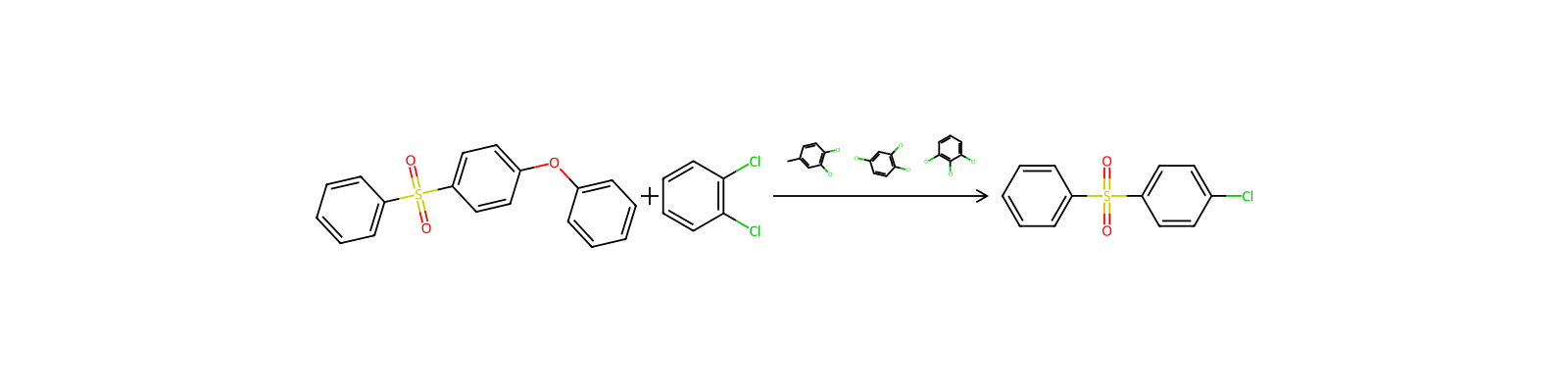
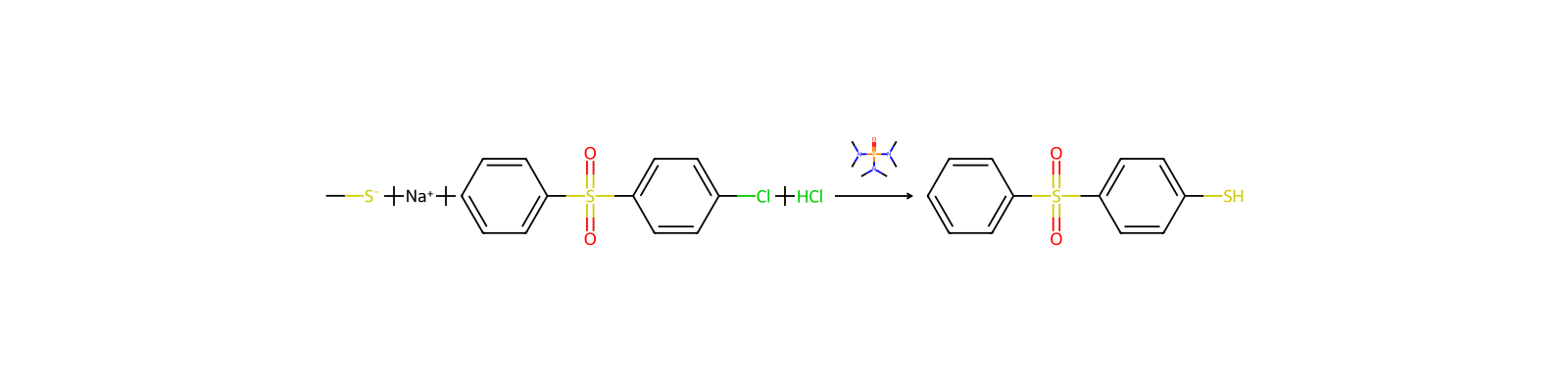
関連反応
8 件




化合物ノート
読み込み中…