
ビス(1-フェニル-1-メチルエチル)ペルオキシド
Dicumyl peroxide
データを補完しています。しばらくしてからページを更新すると最新の内容を表示できます

基本情報
- CAS
80-43-3- 標準SMILES
CC(C)(OOC(C)(C)c1ccccc1)c1ccccc1- InChIKey
XMNIXWIUMCBBBL-UHFFFAOYSA-N- 分子式
- C18H22O2
- 平均分子量
- 270.4 g/mol
- 単同位体質量
- 270.16197994
概要
Dicumyl peroxide is a white powder with a characteristic odor. (NTP, 1992)
名称と識別子
- 優先名称
- Dicumyl peroxide
- IUPAC
- 2-(2-phenylpropan-2-ylperoxy)propan-2-ylbenzene
- 現地名
- ビス(1-フェニル-1-メチルエチル)ペルオキシド
- 英語名
- Dicumyl peroxide
- 分子式
- C18H22O2
- 分子量
- 270.37
名称と別名
DICUMYL PEROXIDE80-43-3Cumene peroxideCumyl peroxidedicumylperoxideDi-CupPerkadox BPerkadox BCPercumyl DPerkadox SBDicumenyl peroxideLuperco
名称をさらに表示
過酸化ジクミルビス(1-メチル-1-フェニルエチル)=ペルオキシドビス(1-フェニル-1-メチルエチル)ペルオキシドビス(α,α-ジメチルベンジル)ペルオキシドジクミルペルオキシドジ(α-クミル)ペルオキシドビス(1-メチル-1-フェニルエチル)ペルオキシドペルカドックスBCビス(2-フェニルプロパン-2-イル)ペルオキシドジカップペルカドックスBクメンペルオキシドジαクミルパ-オキサイドジ-α-クミルパーオキサイドジクミルパーオキサイドジクミルペルオキシド (約60% 炭酸カルシウム含む)ビス(1-メチル-1-フェニルエチル)ペルオキシド (約60% 炭酸カルシウム含む)ビス(α,α-ジメチルベンジル)ペルオキシド (約60% 炭酸カルシウム含む)2-フェニル-2-[(2-フェニルプロパン-2-イル)ペルオキシ]プロパン{2-[(2-フェニルプロパン-2-イル)ペルオキシ]プロパン-2-イル}ベンゼンDCPBIS(1-METHYL-1-PHENYLETHYL)PEROXIDEBis(α,α-dimethylbenzyl) peroxide(peroxybis(propane-2,2-diyl))dibenzeneDicumyl peroxyidecumeneperoxideBIS(A A-DIMETHYLBENZYL) PEROXIDEdicup40di-cupr
LuperoxPercumyl D 40Kayacumyl DLuperox 500Luperox 500RLuperox 500TDicumene hydroperoxideDiisopropylbenzene peroxide
データベース識別子
- CAS
80-43-3- PubChem CID
- 6641
- DTXSID
DTXSID1025017- ChEMBL
CHEMBL1519055- UNII
- M51X2J0U9D
- EC Number
- 201-279-3
- Nikkaji
- J2.836C
物性
構造計算による物性補完中
- XLogP
- 4.3
- 極性表面積
- 18.5 Ų
- 水素結合供与体数
- 0
- 水素結合受容体数
- 2
- 回転可能結合数
- 5
- 重原子数
- 20
- 形式電荷
- 0
- 複雑度
- 254
実験および物理化学的性質
PolymersPlastics & Rubber -> Curing Agents (Aromatic)
CosmeticsCosmetics ingredient -> Fragrance
LogP
log Kow = 5.50
5.5
Density
1.02
1.0 g/cm³
Color/Form
Crystals from ethanol
Pale yellow to white granular solid
Solubility
less than 1 mg/mL at 73 °F (NTP, 1992)
In water, 0.4 mg/L at 25 °C
Solubility in water: none
Flash Point
Di-cup r, 160 °F (closed cup); di-cup t, 160 °F (closed cup)
71 °C c.c.
Endocrine DisruptorsPotential endocrine disrupting compound
Boiling Point
266 °F at 760 mmHg (decomposes) (NTP, 1992)
BP: 100 °C at 0.2 mm Hg
Decomposition
The substance decomposes rapidly on heating and under influence of light, causing fire and explosion hazard.
130 °C
Melting Point
40 °C
39 °C
Vapor Density
9.3 (NTP, 1992) - Heavier than air; will sink (Relative to Air)
Relative vapor density (air = 1): 9.3
物理化学的性質
- 融点
- 39 · 39-41 °C (lit.)
- 沸点
- 130 °C · 130°C
- 比重(密度)
- 1.56 g/mL · 1.56 g/mL at 25 °C (lit.)
- 蒸気密度
- 9.3 · 9.3 (vs air)
- 蒸気圧
- 15.4 mm · 15.4 mm Hg ( 38 °C)
- 屈折率
- 1.536 · 1.5360
- 闪点
- 230 °F · >230 °F
- 貯蔵温度
- 2 · 2-8°C
- 溶解性
- Chloroform (Slightly), DMSO (Slightly), Methanol (Slightly)
- 外見
- フレーク
- 色
- 白い
- 水溶解度
- 不溶性
- BRN
- 2056090 · 2056090
- Henry's Law Constant
- 2.2 · 2.2×10-1 mol/(m3Pa) at 25℃, HSDB (2015)
- 安定性
- 還元剤、重金属、濃酸、濃アルカリと激しく反応する。有機物と接触すると火傷することがあります。日光や熱にさらされると激しく分解することがあります。強力な酸化剤とは相容れない。
- InChI
- 1S/C18H22O2/c1-17(2,15-11-7-5-8-12-15)19-20-18(3,4)16-13-9-6-10-14-16/h5-14H,1-4H3
- InChIKey
- XMNIXWIUMCBBBL-UHFFFAOYSA-N
- SMILES
- CC(C)(OOC(C)(C)c1ccccc1)c2ccccc2
- LogP
- 5.6 at · 5.6 at 25℃
- CAS データベース
- 80 · 80-43-3(CAS DataBase Reference)
- EPAの化学物質情報
- Dicumyl peroxide (80-43-3)
化学的性質
化学的特性Dicumyl peroxide is a crystalline solid that melts at 42°C. It is insoluble in water and soluble in vegetable oil and organic solvents . It is used as a high-temperature catalyst in production of polystyrene plastics. The deflagration hazard potential of this peroxide was tested using 5 g of igniter in the revised time–pressure test, but no pressure rise was produced . Noller et al. found it to be an intermediate fire hazard.
安全と法規制
安全情報は参考情報です。供給元の安全データシート(SDS)、適用法令、専門家による評価に代わるものではありません。
GHS分類
GHS Classification
Danger
H242: Heating may cause a fire [Danger Self-reactive substances and mixtures; Organic peroxides]
P203, P210, P234, P235, P240, P264, P264+P265, P273, P280, P302+P352, P305+P351+P338, P318, P321, P332+P317, P337+P317, P362+P364, P370+P378, P391, P403, P405, P410, P411, P420, and P501 (click each P-code to see the statement)
This chemical does not meet GHS hazard criteria for < 0.1% (1 of 1287) of reports.
Danger
H242 (> 99.9%): Heating may cause a fire [Danger Self-reactive substances and mixtures; Organic peroxides]
危険有害性情報
Regulatory Information
Chemical: Peroxide, bis(1-methyl-1-phenylethyl)
Hazard Traits - Reproductive Toxicity
Peroxide, bis(1-methyl-1-phenylethyl) is listed on the EPA's Chemical Data Reporting (CDR) system. Manufacturers and importers of Peroxide, bis(1-methyl-1-phenylethyl) are required to report information about their production and use of this chemical to the EPA under the Toxic Substances Control Act (TSCA). (40 eCFR Part 711)
Status: Active Update: 26-04-2023 https://echa.europa.eu/registration-dossier/-/registered-dossier/14703
Substance: Bis(α,α-dimethylbenzyl) peroxide
Peroxide, bis(1-methyl-1-phenylethyl): Does not have an individual approval but may be used under an appropriate group standard
Other Safety InformationEvaluation - Peroxide, bis(1-methyl-1-phenylethyl) (dicumyl peroxide)
DOT LabelOrganic Peroxide
Fire Hazards
Excerpt from ERG Guide 145 [Organic Peroxides (Heat and Contamination Sensitive)]:
Combustible. Finely dispersed particles form explosive mixtures in air.
Fire Potential
... May ignite organic materials on contact.
Dangerous fire hazard by chemical reaction with reducing agents or exposure to heat. /Organic peroxides/
Health HazardsExcerpt from ERG Guide 145 [Organic Peroxides (Heat and Contamination Sensitive)]:
Hazards Summary
Causes somnolence in lethal-dose feeding studies of rats; Causes methemoglobinemia in subcutaneous injections of cats and rats; [RTECS] A strong oxidizer; May ignite on contact with organic substances; [Hawley] A skin, eye, and respiratory tract irritant; [ICSC] A skin, eye, and mucous membrane irritant; Increased methemoglobinemia in rats after 4 month feeding studies; [HSDB] A strong oxidizing agent; Explosive; [CAMEO] An irritant; [MSDSonline]
FDA RequirementsDicumyl peroxide is an indirect food additive for use only as a component of adhesives.
Reactive GroupPeroxides, Organic
EC ClassificationSymbol: O, Xi, N; R: 7-36/38-51/53; S: (2)-3/7-14-36/37/39-61
UN ClassificationUN Hazard Class: 5.2; UN Pack Group: II
Special Reports
Preliminary 2D Animation of Events Leading to 2017 Fire at Arkema Chemical Plant in Crosby, Texas.[U.S. Chemical Safety Board; Preliminary 2D Animation of Events Leading to 2017 Fire at Arkema Chemical Plant in Crosby, Texas; Available from, as of November 27, 2017: http://www.csb.gov/videos/preliminary-2d-animation-of-events-leading-to-2017-fire-at-arkema-chemical-plant-in-crosby-texas/]
Aringer L; Criteria Document for Exposure Limits-Benzoyl Peroxide, Cyclohexanone Peroxide, Dicumyl Peroxide, Methyl Ethyl Ketone Peroxide. Arbetarskyddsstyrelsen, Publikationsservice, 171 84 Solna, Sweden 64pp. (1985)
Mohan VK et al; J Hazard Mater 5 (3): 197-220 (1982). The evaluation of and potential for fire hazards regarding organic peroxides.
Watts P; Food Chem Toxicol 23 (10): 957-60 (1985). Peroxides, genes and cancer is reviewed.
安全と保護具
Fire Fighting
Excerpt from ERG Guide 145 [Organic Peroxides (Heat and Contamination Sensitive)]:
Use water spray, powder, foam, carbon dioxide.
First Aid Measures
Fresh air, rest.
First rinse with plenty of water for at least 15 minutes, then remove contaminated clothes and rinse again.
First rinse with plenty of water for several minutes (remove contact lenses if easily possible), then refer for medical attention.
Rinse mouth. Give one or two glasses of water to drink. Refer for medical attention .
First Aid
EYES: First check the victim for contact lenses and remove if present. Flush victim's eyes with water or normal saline solution for 20 to 30 minutes while simultaneously calling a hospital or poison control center. Do not put any ointments, oils, or medication in the victim's eyes without specific instructions from a physician. IMMEDIATELY transport the victim after flushing eyes to a hospital even if no symptoms (such as redness or irritation) develop.
Safe StorageFireproof. Separated from combustible substances, reducing agents, strong oxidants, strong acids, bases and heavy metals. Cooled. Keep in the dark. Well closed. Keep under inert gas.
Firefighting HazardsCarbon oxides
Fire Fighting ProceduresUse water spray, alcohol-resistant foam, dry chemical or carbon dioxide. Wear self-contained breathing apparatus for firefighting if necessary. Use water spray to cool unopened containers.
Storage ConditionsStore in original container. Keep container tightly closed in a dry and well-ventilated place. Recommended storage temperature 2-8 °C.
Cleanup Methods
ACCIDENTAL RELEASE MEASURES; Personal precautions, protective equipment and emergency procedures: Use personal protective equipment. Avoid dust formation. Avoid breathing vapors, mist or gas. Ensure adequate ventilation. Evacuate personnel to safe areas. Avoid breathing dust. Environmental precautions: Prevent further leakage or spillage if safe to do so. Do not let product enter drains. Discharge into the environment must be avoided. Methods and materials for containment and cleaning up: Sweep up and shovel. Contain spillage, and then collect with an electrically protected vacuum cleaner or by wetbrushing and place in container for disposal according to local regulations. Keep in suitable, closed containers for disposal. Contain spillage, pick up with an electrically protected vacuum cleaner or by wet-brushing and transfer to a container for disposal according to local regulations.
Nonfire Spill ResponseExcerpt from ERG Guide 145 [Organic Peroxides (Heat and Contamination Sensitive)]:
Disposal Methods
SRP: Recycle any unused portion of the material for its approved use or return it to the manufacturer or supplier. Ultimate disposal of the chemical must consider: the material's impact on air quality; potential migration in air, soil or water; effects on animal, aquatic and plant life; and conformance with environmental and public health regulations. If it is possible or reasonable use an alternative chemical product with less inherent propensity for occupational harm/injury/toxicity or environmental contamination.
Product: Burn in a chemical incinerator equipped with an afterburner and scrubber but exert extra care in igniting as this material is highly flammable. Offer surplus and non-recyclable solutions to a licensed disposal company. Contact a licensed professional waste disposal service to dispose of this material. Contaminated packaging: Dispose of as unused product.
Spillage Disposal
Remove all ignition sources. Sweep spilled substance into covered containers. If appropriate, moisten first to prevent dusting. Carefully collect remainder. Then store and dispose of according to local regulations. Do NOT let this chemical enter the environment. Personal protection: P2 filter respirator for harmful particles.
Preventive Measures
Gloves must be inspected prior to use. Use proper glove removal technique (without touching glove's outer surface) to avoid skin contact with this product. Dispose of contaminated gloves after use in accordance with applicable laws and good laboratory practices. Wash and dry hands.
ACCIDENTAL RELEASE MEASURES; Personal precautions, protective equipment and emergency procedures: Use personal protective equipment. Avoid dust formation. Avoid breathing vapors, mist or gas. Ensure adequate ventilation. Evacuate personnel to safe areas. Avoid breathing dust.
Avoid contact with skin and eyes. Avoid formation of dust and aerosols. Further processing of solid materials may result in the formation of combustible dusts. The potential for combustible dust formation should be taken into consideration before additional processing occurs. Provide appropriate exhaust ventilation at places where dust is formed. Keep away from sources of ignition - No smoking. Keep away from heat and sources of ignition.
Handle in accordance with good industrial hygiene and safety practice. Wash hands before breaks and at the end of workday.
For more Preventive Measures (Complete) data for Dicumyl peroxide (6 total), please visit the HSDB record page.
毒性情報
Interactions
Changes in the nasal mucosa after exposure to dicumyl peroxide ... were studied in rabbits. Albino Swedish rabbits were exposed to a mixture of fine polyethylene, ... dicumyl peroxide and an antioxidant or to dicumyl peroxide. Both were applied to the right nostril 3 times a day for 5 days per week at a concentration of 10 or 25 ppm in a quantity equal to 50 microliters of solution. Animals were exposed for 4 weeks and allowed to recover for 8 weeks with periodic examinations beginning at 1 hr. Signs of local irritation or damage were observed. Biopsies of the nasal mucosa were studied by light and transmission electron microscopy and by scanning microscopy. After 1 hr an increased amount of mucus containing red blood cells were seen. After 1 week exposure to either 10 ppm dicumylperoxide or 25 ppm dust an increased number of blood vessels was seen in some animals and aggregates of mucus with erythrocytes were found in all animals. At 1 month there were visible blood vessels on the medial and lateral sides of the nasal cavity not seen in unexposed rabbits. Exposure to dust at 10 ppm for 1 month did not result in any apparent changes in the mucosa. After instillation of dicumyl peroxide or the dust at 25 ppm for 1 month and a 2 month recovery, visible blood vessels were still observed and there was incr crusting and mucus in the nasal cavities of all rabbits. Scanning electron microscopy showed distortion of many cilia beginning as early as 1 hr after exposure. At 5 days areas lacking cilia but still covered with microvilli and areas with clusters of goblet cells appeared. Changes in the mucosa were more pronounced at 1 month with scattered islands without cilia in the mucosal carpet. Only partial recovery was apparent at 2 months after exposure terminated. ...
Environmental Fate
TERRESTRIAL FATE: Based on a classification scheme(1), an estimated Koc value of 322,900(SRC), determined from a structure estimation method(2), indicates that dicumyl peroxide is expected to be immobile in soil(SRC). Volatilization of dicumyl peroxide from moist soil surfaces is expected(SRC) given an estimated Henry's Law constant of 4.4X10⁻⁵ atm-cu m/mole(SRC), using a fragment constant estimation method(2). However, adsorption to soil is expected to attenuate volatilization(SRC). Dicumyl peroxide is not expected to volatilize from dry soil surfaces(SRC) based upon an estimated vapor pressure of 7.5X10⁻⁶ mm Hg at 25 °C(SRC), determined from a fragment constant method(2). Based on a 0% Theoretical BOD in 4 weeks using an activated sludge inoculum in the Japanese MITI test(3), biodegradation of dicumyl peroxide is not expected to be an important enviornmental fate process in soil(SRC).
AQUATIC FATE: Based on a classification scheme(1), an estimated Koc value of 322,900(SRC), determined from a structure estimation method(2), indicates that dicumyl peroxide is expected to adsorb to suspended solids and sediment(SRC). Volatilization from water surfaces is expected(3) based upon an estimated Henry's Law constant of 4.4X10⁻⁵ atm-cu m/mole(SRC), developed using a fragment constant estimation method(2). Using this Henry's Law constant and an estimation method(3), volatilization half-lives for a model river and model lake are 37 hours and 16 days, respectively(SRC). However, volatilization from water surfaces is expected to be attenuated by adsorption to suspended solids and sediment in the water column. The volatilization half-life from a model pond is about 21 years when adsorption is considered(4). According to a classification scheme(5), BCFs of 137-1470 measured in carp(6), suggest bioconcentration in aquatic organisms is high to very high. Based on a 0% Theoretical BOD in 4 weeks using an activated sludge inoculum in the Japanese MITI test(6), biodegradation of dicumyl peroxide is not expected to be an important enviornmental fate process in water(SRC).
ATMOSPHERIC FATE: According to a model of gas/particle partitioning of semivolatile organic compounds in the atmosphere(1), dicumyl peroxide, which has an estimated vapor pressure of 7.5X10⁻⁶ mm Hg at 25 °C(SRC), determined from a fragment constant method(2), will exist in both the vapor and particulate phases in the ambient atmosphere. Vapor-phase dicumyl peroxide is degraded in the atmosphere by reaction with photochemically-produced hydroxyl radicals(SRC); the half-life for this reaction in air is estimated to be 42 hours(SRC), calculated from its rate constant of 9.3X10⁻¹² cu cm/molecule-sec at 25 °C(SRC) that was derived using a structure estimation method(2). Particulate-phase dicumyl peroxide may be removed from the air by wet and dry deposition(SRC). Dicumyl peroxide has the potential to photolyze directly from natural sunlight based on UV absorption bands that extend beyond 290 nm(3).
Adverse EffectsMethemoglobinemia - The presence of increased methemoglobin in the blood; the compound is classified as secondary toxic effect
Exposure RoutesThe substance can be absorbed into the body by inhalation of its aerosol.
Toxicity Summary
IDENTIFICATION AND USE: Dicumyl peroxide is a pale yellow to white granular solid. It is used as a polymerization catalyst and vulcanizing agent. HUMAN STUDIES: Organic peroxides in contact with skin can cause irritation and even burns. A case of occupational asthma related to dicumyl peroxide has been reported. Otorhinolaryngologic examination revealed upper respiratory tract diseases in 33.3% of the workers exposed to dicumyl peroxide. ANIMAL STUDIES: In the most severe injuries induced in rabbit eyes there has been great chemosis and formation of gas bubbles in the conjunctiva, cornea, and anterior chamber. Conjunctiva has become necrotic and the cornea opaque. Dicumyl peroxide was a weak tumor promoter despite its high activity in inducing hyperplasia. Tumor promotion activity of organic peroxides is associated with free radical generation. Dicumyl peroxide causes more than 50% of malformed embryos at any dose in white Leghorn chicken embryos. Dicumyl peroxide gave inconsistent results when tested for mutagenicity using Salmonella typhimurium tester strains TA100 and TA104.
Signs and Symptoms
Cough. Sore throat.
Redness.
Redness.
Ongoing Test Status
The following link will take the user to the National Toxicology Program (NTP) Test Status of Agents Search page, which tabulates the results and current status of tests such as "Short-Term Toxicity Studies", "Long-term Carcinogenicity Studies", "Developmental Studies", "Genetic Toxicology Studies", etc., performed with this chemical. Testing status for dicumyl peroxide is available.[Available from, as of November 3, 2017: https://ntpsearch.niehs.nih.gov/?e=True&ContentType=Testing+Status]
EPA has released the Interactive Chemical Safety for Sustainability (iCSS) Dashboard. The iCSS Dashboard provides an interactive tool to explore rapid, automated (or in vitro high-throughput) chemical screening data generated by the Toxicity Forecaster (ToxCast) project and the federal Toxicity Testing in the 21st century (Tox21) collaboration. /The title compound was tested by ToxCast and/or Tox21 assays/[USEPA; ICSS Dashboard Application; Available from, as of September 21, 2017: http://actor.epa.gov/dashboard/]
ICSC Environmental DataThe substance is toxic to aquatic organisms. Bioaccumulation of this chemical may occur in fish.
Soil Adsorption/Mobility
Using a structure estimation method based on molecular connectivity indices(1), the Koc of dicumyl peroxide can be estimated to be 322,900(SRC). According to a classification scheme(2), this estimated Koc value suggests that dicumyl peroxide is expected to be immobile in soil(SRC).
Human Toxicity Excerpts
/SIGNS AND SYMPTOMS/ Organic peroxides in contact with skin can cause irritation and even burns. /Organic peroxides/
/CASE REPORTS/ We report the case of an electrical cable repairer who presented with symptoms suggestive of occupational asthma. A supervised workplace challenge test confirmed this diagnosis and laboratory challenge studies implicated heated polyethylene repair tape containing the chemical cross-linking agent dicumyl peroxide as the cause. Similar cross-linking processes are widely used in the cable manufacturing industry and the possibility of occupational asthma occurring in other settings may need to be considered.
/EPIDEMIOLOGY STUDIES/ The effect of dicumyl peroxide (DP) on the skin and upper respiratory tract (URT) was studied in 57 workers at an ... electro-cable plant. ... The dermatologic examination disclosed in 21.5% of the workers a variety of skin /conditions/; 5.3% had /serious/ skin diseases: in 3.5% of allergic nature and in 1.8% irritative contact dermatitides. Otorhinolaryngologic examination revealed upper respiratory tract diseases in 33.3% of the workers. ...
/EPIDEMIOLOGY STUDIES/ Workers (18) exposed to dicumyl peroxide in a chemical plant were subjected to examination of the nose by rhinoscopy, mucociliary function test and rhinomanometry. Eight other workers at the plant and 20 hospital workers were used as controls. The mucociliary function and nasal air flow were the same in subjects exposed and those not exposed to peroxide. Of the workers exposed to dicumyl peroxide had visible blood vessels in the mucosa on the anterior part of the nasal septum. Only 2 persons in the other groups had visible blood vessels. Both had a common cold at the time of the examination. ...
/EPIDEMIOLOGY STUDIES/ In the production of cross-linked polyethylene in the air of the working environment above the norm concentrations of acetophenon, dicumyl peroxide and antioxidant are established, which create unfavorable working conditions. During clinical and laboratory examinations of 55 workers, engaged in the production of cross-linked polyethylene, are registered subjective complaints from the irritating effect of the chemical noxae on the mucous membranes and skin. Methemoglobinaemia is found in 4 workers. There are deviations in the functional state of the liver (transaminase, APh, GGTP and triglycerides) in the group "maintaining staff". The same workers have also increased quantity of metabolite hippuric acid in the urine. On the grounds of the results, the group "maintaining staff" is determined as risk group. Recommendations are made for follow-up care and work in controlled parameters of the working environment.
Artificial Pollution SourcesDicumyl peroxide's production and use as a polymerization catalyst and vulcanizing agent(1) will result in its release to the environment through various waste streams(SRC).
Environmental BiodegradationAEROBIC: Dicumyl peroxide, present at 100 mg/L, reached 0% of its Theoretical BOD in 4 weeks using an activated sludge inoculum at 30 mg/L in the Japanese MITI test(1).
法規制情報
FDA RequirementsDicumyl peroxide is an indirect food additive for use only as a component of adhesives.
安全データ
- F
- 4.2
- wgk
- 2
- tsca
- TSCA listed
- rtecs
- SD8150000
- ridadr
- UN 3110 5.2
- 毒性
- LD50 orally in Rabbit: 4100 mg/kg
- PRTR法
- 第一種指定化学物質
- hs_code
- 29096000
- risk_code
- 7-36/38-51/53-36/37/38-20
- 化審法
- (3)-1086
- 消防法
- 危-5-PO-2-II
- hazard_code
- O,Xi,N,Xn
- safety_code
- 14-3/7-36/37/39-61-14A-45-26-36-17
- hazard_class
- 5.2
- packing_group
- II
- 環境リスク評価
- ジクミルパーオキサイド(80-43-3)
- Hazard Classifications
- Aquatic Chronic 2Eye Irrit. 2Org. Perox. FRepr. 1BSkin Irrit. 2
- ストレージクラス
- 5.2 - Organic peroxides and self-reacting hazardous materials
- 有毒物質データの
- 80-43-3(Hazardous Substances Data)
化学と産業
薬理情報
Absorption, Distribution and ExcretionLiquid peroxides can be absorbed through skin. /Organic peroxides/
用途と製造
Uses
Used as vulcanizing agent for rubber, a crosslinking agent for polyethylene, a synergist for flame retardants in polystyrene foams, and a curing agent for silicone rubber; [HSDB]
VULCANIZING AGENT FOR NATURAL & SYNTHETIC RUBBER; CROSSLINKING AGENT FOR POLYETHYLENE; SYNERGIST FOR FLAME RETARDANTS IN POLYSTYRENE FOAMS; CURING AGENT FOR SILICONE RUBBER
Polymerization catalyst and vulcanizing agent
U.S. Production
2023: 5,000,000 - <10,000,000 lb
(1975) GREATER THAN 4.54X10+5 GRAMS
Non-confidential 2016 Chemical Data Reporting (CDR) information on the production and use of chemicals manufactured or imported into the United States. Chemical: Peroxide, bis(1-methyl-1-phenylethyl):
Consumer UsesNot Known or Reasonably Ascertainable
Industry UsesCBI
Methods of Manufacturing
The reaction of cumene hydroperoxide with 2-phenyl-2-propanol in the presence of a mineral acid catalyst gives dicumyl peroxide in almost quantitative yield.
AUTOOXIDATION OF CUMENE
Formulations/Preparations"Di-cup" [GEO]. Trademark for a series of vulcanizing and polymerization agents containing dicumyl peroxide.
Household ProductsCosmetics product ingredient: Bis(a,a-dimethylbenzyl) peroxide
General Manufacturing Information
Rubber Product Manufacturing
Peroxide, bis(1-methyl-1-phenylethyl): ACTIVE
The dicumyl peroxide cure offers freedom from color opacity and resistance to ultraviolet light discoloration in white and transparent vulcanizates. In black compounds, dicumyl peroxide produces excellent compression set, low temperature flexibility, and aging resistance with nearly all rubber polymers except butyl. At 149 °C, the optimum cure time is 45 min: at 177 °C it is about 7 min. In continuous-vulcanization wire curing at 204-260 °C, the peroxide cures in seconds. Dicumyl peroxide does not function in hot-air curing. Furnace and thermal blacks increase the /required/ amount of dicumyl peroxide according to the amount of surface area present ... Dicumyl peroxide has the disadvantage of producing an objectionable odor to the cured stock.
Experiments in torsion, where the torque and normal forces were monitored continuously with time, were carried out on samples of natural rubber crosslinked with 1, 3, and 5 percent dicumyl peroxide. It was found that while the shear modulus increased as expected with amount of crosslinking agent, the individual derivatives of the strain energy function did not. Delta W/delta I2 increased only slightly with amount of peroxide, while delta W/delta I1 increased dramatically ... The authors found that at small strains delta W/delta I2 did not become negative for any of the samples tested contrary to results which have been reported in the literature. This is in spite of the fact that ... experiments were carried to smaller strains than had been reported previously.
応用分野
用途有機過酸化物(重合触媒)
使用Dicumyl peroxide(DCP) is used:in vulcanization of rubber as a crosslinking agent in the synthesis of polylactic acid composite fibers in the preparation of polyethylene composites in the synthesis of polyamide 112/ethylene vinyl acetate copolymer blends.
一般的な説明Dicumyl peroxide is a pale yellow to white granular solid with a characteristic odor. It is used as a polymerization catalyst and vulcanizing agent.
調製方法
純化方法Crystallise the peroxide from 95% EtOH (charcoal). Store it at 0o. Potentially EXPLOSIVE. [Beilstein 6 IV 3220.]
上流・下流製品情報
上流原料
下流製品
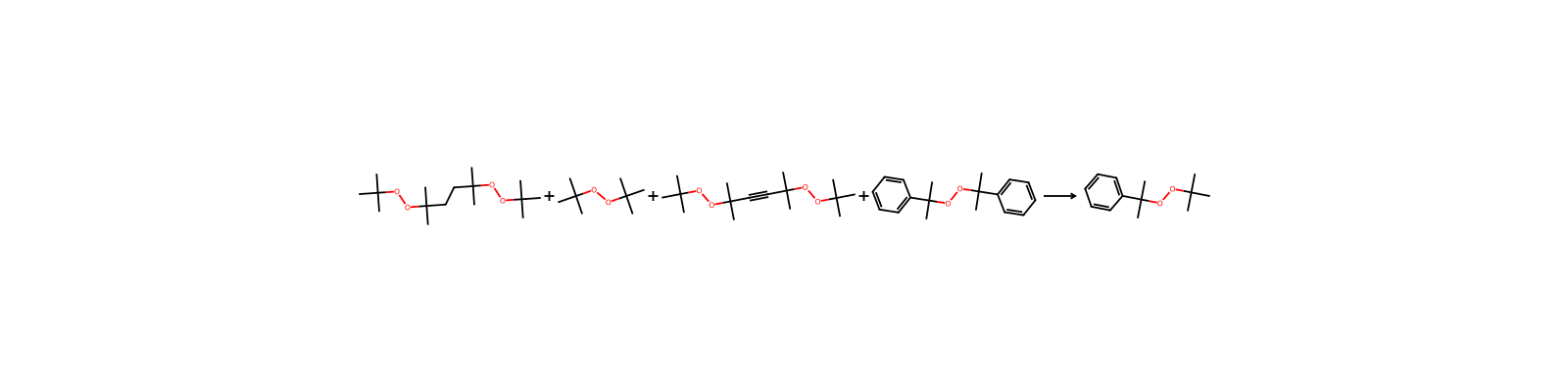
関連反応
45 件




化合物ノート
読み込み中…